 JAZZPROFILES lives in the music 2,059 Jazz Artists fully Profiled!
Fred Wesley
Last updated October 29, 2026
Listen on Spotify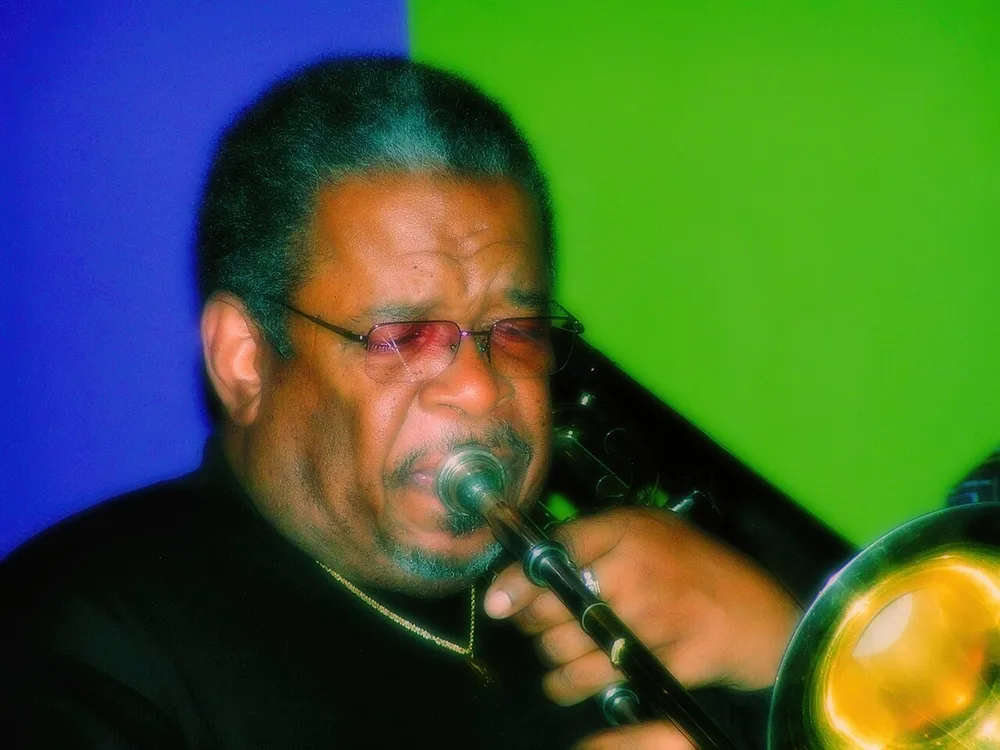
Fred Wesley at Funk n Waffles in Syracuse, New York, March 30, 2007 CC BY-SA 4.0 — Wikimedia Commons - https://commons.wikimedia.org/wiki/File:Fred_Wesley.jpg - BitterLemon123

Fred Wesley was born on July 4, 1943, in Columbus, Georgia, and grew up in Mobile, Alabama. His father, Fred Wesley Sr., was a high school teacher and big band leader who chaired the music department at Mobile's Central High School, and his grandmother taught piano. He started on piano, moved to trumpet, and played baritone horn and trombone at school. Around the age of twelve his father brought a trombone home, and he switched to it for good. He made his professional debut at twelve in a big band led by his school's music teacher, E.B. Coleman, and soon was sitting in with local R&B acts. He studied music at Alabama State University, played briefly with the Ike & Tina Turner Revue and with Hank Ballard & the Midnighters, and served in the U.S. Army as a bandsman until his discharge in 1967.
When he came out of the Army he formed a group called the Mastersound, which mixed R&B with hard bop and lasted less than a year. The trumpeter Waymon Reed then phoned to say that James Brown needed a trombonist, and Wesley took the job. He was on Brown's records by 1968, including "Say It Loud - I'm Black and I'm Proud" and "Mother Popcorn," left in 1969 after repeated clashes with Brown, and returned in 1971 as musical director and arranger, running the J.B.'s. It was the busiest stretch of his career. "Pass the Peas" (1972) reached No. 29 on the R&B chart, and he co-wrote "Hot Pants." "Doing It to Death" was credited to Fred Wesley & the J.B.'s, reached No. 1 on the soul singles chart and No. 22 on the Hot 100, and was certified gold by the RIAA in July 1973. Brown wrote the song and sang on it, but its title came from a phrase Wesley used. Under his own name he fronted the J.B.'s on Damn Right I Am Somebody and Breakin' Bread (both 1974), and AllMusic singles out his contributions to Brown's Black Caesar, Slaughter's Big Rip-Off and The Payback. He left Brown for good in 1975, together with the saxophonist Maceo Parker.
He joined George Clinton's Parliament-Funkadelic in time for Mothership Connection (1975) and led the Horny Horns, the horn section that worked on Clinton's and Bootsy Collins's records and made two Atlantic albums of its own, A Blow for Me, a Toot to You (1977) and Say Blow by Blow Backwards (1979), with Parker and the trumpeters Rick Gardner and Richard "Kush" Griffith. In the same years he was working in New York as a trombonist for the producer Creed Taylor, on the CTI and Kudu records of the mid-1970s: Hank Crawford's I Hear a Symphony (1975) and Hank Crawford's Back (1976), where he is also credited as a soloist, Esther Phillips's For All We Know (1976), Idris Muhammad's House of the Rising Sun (1976) and George Benson's Good King Bad (1976).
In 1978 he took Al Grey's trombone chair in the Count Basie Orchestra, a job he had wanted since boyhood, because his father's band played Basie's arrangements. He is credited on both volumes of Milt Jackson + Count Basie + The Big Band (Pablo, 1978) alongside the vibraphonist Milt Jackson. He left the band in 1979 because the pay was lower than he had been earning with Clinton. The early 1980s were mostly studio work in Los Angeles, including sessions for Earth, Wind & Fire, the Gap Band and Barry White and arrangements for Curtis Mayfield and Terry Callier, plus House Party (1980), whose title track became his best-known solo single.
He came back to jazz under his own name at the turn of the 1990s. To Someone (Hi Note, 1990), billed to the Fred Wesley Quartet, is a standards date with the pianist Joe Bonner, the bassist Ken Walker and the drummer Bruno Carr. New Friends (Minor Music, 1990) opens with Duke Ellington's "Rockin' in Rhythm" and brings together the pianist Geri Allen, the trombonists Steve Turre and Robin Eubanks, the drummer Bill Stewart, the bassist Anthony Cox, the singer Carmen Lundy and Parker. Comme Ci Comme Ça (1991), Swing & Be Funky (1993) and Amalgamation (1994) followed on Minor Music with the saxophonist Karl Denson as second horn on all three. In the early 1990s he toured as the JB Horns with Parker and the saxophonist Pee Wee Ellis, stayed on as Parker's featured trombonist until 1996, and then formed the Fred Wesley Group, now Fred Wesley and the New JBs. In 1994 he recorded West Coast Boogaloo with the San Diego soul-jazz band the Greyboy Allstars and toured with them in 1995, 1996 and 2012.
His memoir, Hit Me, Fred: Recollections of a Sideman, was published by Duke University Press in September 2002. He was an adjunct professor in the jazz studies department at the University of North Carolina at Greensboro from 2004 to 2006 and has worked as a visiting artist at Berklee College of Music and Columbia College Chicago. After meeting the clarinetist David Krakauer in New York around 2005 he joined him and the rapper and producer Socalled in the funk-klezmer project Abraham Inc., and in 2015 he made Generations with the organist Leonardo Corradi and the drummer Tony Match, a trio that remains his second working band. The same year he was inducted into the Alabama Jazz Hall of Fame. From the Blues and Back (LoEnd Records, September 21, 2023), with the New JBs, was his first studio album in more than a decade. In 2026 the Alabama Humanities Alliance named him an Alabama Humanities Fellow, the state's highest humanities honor, describing him as a Mobile native who lives in Montgomery, and on July 31, 2026 the PRISM Quartet released "Requiem for AJ," a ten-minute piece Wesley composed, with poetry by Ursula Rucker, for the quartet's Generate Music project on the ties between Black and Jewish Americans. He is 83 and still tours with the New JBs and the Generations trio.
Wesley is better known for funk than for jazz, and his career history says so. For most listeners his sound is the slippery, blues-bent trombone on James Brown's and Parliament-Funkadelic's records, set against Maceo Parker's alto, together with the horn arrangements that sit under those songs, and AllMusic notes that his vintage James Brown sides have been sampled endlessly in hip-hop. What makes him a jazz musician as well is the other half of the story: a childhood in a big band household, bebop and the trombone of J.J. Johnson as his listening, a chair in the Count Basie Orchestra in 1978 and 1979, the CTI and Kudu sessions with Creed Taylor, and a run of Minor Music records on which he plays Duke Ellington, "On Green Dolphin Street" and "Autumn Leaves" with working jazz rhythm sections. He has described his own music as a mixture of both, with the Brown material keeping him tied to that legacy and the jazz letting him play the music he loves. As an arranger he did much of the composing and horn writing behind Brown's J.B.'s, and the 2002 memoir is the standard first-person account of how that band worked.
- Doing It to Death (Fred Wesley & the J.B.'s, 1973, People) - The No. 1 soul single credited to Fred Wesley & the J.B.'s and certified gold in 1973, with Maceo Parker, the guitarist Jimmy Nolen and the drummer John "Jabo" Starks behind Brown's vocal. Spotify - Introduction to the JB's / Doing It to Death Listen
- A Blow for Me, a Toot to You (Fred Wesley & the Horny Horns, 1977, Atlantic) - The Horny Horns' first album, produced by George Clinton and Bootsy Collins, with Parker, the trumpeters Rick Gardner and Richard Griffith, and the Brecker Brothers credited on horns. Spotify - A Blow for Me, a Toot to You Listen
- I Hear a Symphony (Hank Crawford, 1975, Kudu) - Hank Crawford's highest-charting album, produced by Creed Taylor with Dave Matthews arranging strings and horns; Wesley and Barry Rogers are the trombones, with Eric Gale on guitar and Steve Gadd on drums.
- Milt Jackson + Count Basie + The Big Band, Vol. 1 (1978, Pablo) - Wesley in the trombone section of the Count Basie Orchestra behind Milt Jackson, with Norman Granz producing.
- New Friends (1990, Minor Music) - His most fully jazz leader date, with Geri Allen, Steve Turre, Robin Eubanks and Maceo Parker.
- Swing & Be Funky (1993, Minor Music) - A live set with Karl Denson, the trumpeter Hugh Ragin and the pianist Peter Madsen, built on repertoire he kept returning to, including "On Green Dolphin Street" and "For the Elders." Spotify - Bop to the Boogie Listen
- West Coast Boogaloo (The Greyboy Allstars with Fred Wesley, 1994, Greyboy) - The record that helped start the West Coast acid jazz revival, with Wesley on three tracks.
- From the Blues and Back (Fred & the New J.B.'s, 2023, LoEnd Records) - A return to his blues roots with his current band, including "High Heel Sneakers" and "Tobacco Road."
Fred Wesley: Full Discography
Discogs artist: Fred Wesley (29807) · Born July 4, 1943, Columbus, Georgia
Wesley's catalogue is too large to list in full: Discogs credits him on more than a thousand releases, most of them James Brown, Parliament-Funkadelic and Maceo Parker records and compilations, and files his own bands under several separate entries (Fred Wesley & The JB's, Fred & The New J.B.'s, Fred Wesley & The Horny Horns, JB Horns, the Fred Wesley Quartet and Generations). The tables below cover his leader and co-leader albums and a representative set of sideman credits, with catalog numbers and personnel where they could be confirmed.
Leader and Co-Leader Albums
| Album | Year | Label | Personnel & Notes | Listen | Buy |
|---|---|---|---|---|---|
| Damn Right I Am Somebody | 1974 | People (PE 6602) | Credited to Fred Wesley & The JB's. James Brown is the uncredited producer. Tracks include "Blow Your Head" and "Same Beat (Part 1)" | — | — |
| Breakin' Bread | 1974 | People (PE 6604) | Credited to Fred & The New J.B.'s, with Wesley credited for production management and liner notes and Brown as producer. Tracks include "Rockin' Funky Watergate," "Makin' Love" and "Funky Music Is My Style" | — | — |
| A Blow for Me, a Toot to You | 1977 | Atlantic (SD 18214) | Fred Wesley & The Horny Horns featuring Maceo Parker. Produced by George Clinton and Bootsy Collins. Wesley (trombone, vocals), Maceo Parker (tenor and alto saxophone), Rick Gardner and Richard Griffith (trumpets), the Brecker Brothers (horns), Bernie Worrell (keyboards), Bootsy Collins (bass, drums, guitar), Randy Crawford among the credited vocalists | Spotify | — |
| Say Blow by Blow Backwards | 1979 | Atlantic (SD 19254) | Fred Wesley & The Horny Horns featuring Maceo Parker. Wesley and Parker are credited with the horn arrangements, with Gardner and Griffith on horns, Bootsy Collins on bass and drums, and George Clinton credited with the album concept. Tracks include "We Came to Funk Ya" and "Mr. Melody Man" | — | — |
| House Party | 1980 | RSO / Curtom | Wesley produced and arranged the title track, which became his best-known solo single | Spotify - House Party | — |
| To Someone | 1990 | Hi Note (HNCD2002) | Billed to the Fred Wesley Quartet. Fred Wesley (trombone, producer), Joe Bonner (piano), Ken Walker (bass), Bruno Carr (drums). Ten tracks including "Sandu," "Work Song," "Autumn Leaves" and "The Way You Look Tonight" | — | — |
| New Friends | 1990 | Minor Music (MM 801016) | Wesley (trombone, arranger), Geri Allen (piano), Steve Turre and Robin Eubanks (trombones), Stanton Davis (trumpet, flugelhorn), Tim Green (tenor and soprano saxophones), Maceo Parker (alto saxophone), Anthony Cox (bass), Bill Stewart (drums), Carmen Lundy (vocals). Opens with Duke Ellington's "Rockin' in Rhythm" and includes "Peace Fugue" | — | — |
| Comme Ci Comme Ça | 1991 | Minor Music (MM 801020) | Produced by Wesley and Stephan Meyner. Wesley (trombone), Karl Denson (tenor and soprano saxophones, flute), Maceo Parker (alto saxophone), Hugh Ragin (trumpet, flugelhorn), Peter Madsen (piano), Rodney Jones (guitar), Anthony Cox (bass), Bill Stewart (drums), Teresa Carroll (vocals). Includes "On Green Dolphin Street" | — | — |
| Horn Riffs for DJ's (with Maceo Parker) | 1992 | Tuff City (TUF LP 0575) | Co-billed with Parker; a second volume followed on Tuff City in 1993 | — | — |
| Swing & Be Funky | 1993 | Minor Music (MM 801027) | Live album. Wesley (trombone, vocals), Karl Denson (saxophones, vocals), Hugh Ragin (trumpet, flugelhorn), Peter Madsen (piano, keyboards), Dwayne Dolphin (bass), Bruce Cox (drums). Six tracks including "For the Elders," "On Green Dolphin Street" and the title track | Spotify - Bop to the Boogie | — |
| Amalgamation | 1994 | Minor Music (MM 801045) | Same band as Swing & Be Funky. Eight tracks including "Careless Whisper," "Trick Bag" and "Soft Soul and All That Jazz" | — | — |
| The Final Blow | 1994 | AEM (AEM 25871-2) | Horny Horns compilation of previously unreleased material | — | — |
| Full Circle (From Be Bop to Hip Hop) | 1998 | Eagle (EAGCD017) | Produced by Wesley, with Bootsy Collins as co-producer and engineer. Thirteen tracks including "Funk School" and "Slide Man" | — | — |
| Wuda Cuda Shuda | 2003 | Hip Bop Essence (HIBD 8030) | Wesley (trombone, vocals, producer), Ernie Fields (saxophones, flute, bagpipes), Gary Winters (trumpet), Barney McAll (keyboards), Reggie Ward (guitar), Michael Mondesir (bass), Bruce Cox (drums), with Jonathan Miltat also producing | — | — |
| It Don't Mean a Thing If It Ain't Got That Swing | 2006 | Sons of Sound | Credited to Fred Wesley & The Swing'n Jazz All-Stars | — | — |
| Funk for Your Ass (A Tribute to the Godfather of Soul) | 2008 | Columbia Music Entertainment, Japan (COCB-53715) | Fred Wesley featuring Jab'o Starks and Clyde Stubblefield with Bootsy Collins. A remix companion, The Godfather of Soul Train (COCB-53716), appeared the same day | Spotify - Funk for Your Ass | — |
| With a Little Help from My Friends | 2010 | BHM Productions (BHM 1049-2) | Wesley (trombone, vocals, producer) with Nils Landgren and Victor Wesley (trombones), Peter Madsen (keyboards), Dwayne Dolphin (bass), Bruce Cox (drums), Reggie Ward (guitar), Paul Henderson (trumpet). Nine tracks including "Palms Up" and "Peace Fugue" | — | — |
| Generations (with Leonardo Corradi and Tony Match) | 2015 | Minor Music (MM 801148) | Organ trio record with Corradi (organ) and Match (drums). Ten tracks including "Back at the Chicken Shack," "The Sidewinder," "Caravan" and "House Party" | — | — |
| Studio Live Session | 2018 | LoEnd Records | Live studio set; a limited vinyl release, The Secret Studio Live Session, followed in 2020 | — | — |
| From the Blues and Back | 2023 | LoEnd Records (DV107) | Released September 21, 2023, credited to Fred & The New J.B.'s. Wesley (trombone, vocals, producer), Gary Winters (trumpet), Phillip Whack (tenor saxophone), Ernie Fields (baritone saxophone, flute), Martin Real (harmonica), Peter Madsen (keyboards), Reggie Ward (guitar), Dwayne Dolphin (bass), Bruce Cox (drums). Ten tracks including "High Heel Sneakers," "Tobacco Road" and "Rat Town Blues" | — | — |
With the J.B.'s, the JB Horns and Other Bands
| Album | Year | Label | Personnel & Notes | Listen | Buy |
|---|---|---|---|---|---|
| Doing It to Death (The J.B.'s) | 1973 | People (PE 5603) | The LP is credited to The J.B.'s. The title single was credited to Fred Wesley & The J.B.'s, reached No. 1 on the soul singles chart and No. 22 on the Hot 100, and was certified gold by the RIAA in July 1973. Personnel on the single: James Brown (vocal), Wesley (trombone), Maceo Parker (alto saxophone, flute), St. Clair Pinckney and Eldee Williams (tenor saxophones), Darryl Jamison, Jerone Sanford and Ike Oakley (trumpets), Jimmy Nolen and Hearlon Martin (guitars), Fred Thomas (bass), John "Jabo" Starks (drums) | Spotify - Introduction to the JB's / Doing It to Death | — |
| Pee Wee, Fred & Maceo (The J.B. Horns) | 1990 | Gramavision (R2 79462) | Pee Wee Ellis, Wesley and Maceo Parker as the JB Horns | — | — |
| Funky Good Time / Live (The J.B. Horns) | 1992 | Tokuma | Live JB Horns record | — | — |
| Bring the Funk On Down (The J.B.'s) | 1999 | P-Vine (Japan) | Reunion album with Wesley, Bootsy Collins, Pee Wee Ellis, Bobby Byrd and Clyde Stubblefield, dedicated to the memory of St. Clair Pinckney | — | — |
| West Coast Boogaloo (The Greyboy Allstars with Fred Wesley) | 1994 | Greyboy Records (GBRLP001) | Karl Denson (saxophones, flute, producer), Chris Stillwell (bass), Zak Najor (drums), Robert Walter (electric piano, organ), Elgin Park (guitar), Harold Todd (flute, tenor saxophone), Craig Levitz (percussion), with Wesley's trombone on three tracks | — | — |
| Tweet Tweet (Abraham Inc.) | 2009 | Label Bleu (LBLC 6711) | David Krakauer, Wesley and Socalled; guitarist Sheryl Bailey | — | — |
| Together We Stand (Abraham Inc.) | 2019 | Label Bleu (LBLC 6729) | The second album by Krakauer, Wesley and Socalled, reviewed in August 2020 | — | — |
Guest and Sideman Appearances (selected)
| Year | Project (Leader) | Title | Label | Catalog | Role | Notes |
|---|---|---|---|---|---|---|
| 1968 | James Brown | "Say It Loud - I'm Black and I'm Proud" | King | — | Trombone | The first of the hit singles Wesley played on with Brown |
| 1969 | James Brown | "Mother Popcorn" | King | — | Trombone | Wesley left the band later in 1969 and returned in 1971 |
| 1971 | James Brown | "Hot Pants" | Polydor | — | Trombone, co-writer | Wesley co-wrote the tune |
| 1972 | The J.B.'s | "Pass the Peas" | People | — | Trombone | No. 29 R&B; also on the album Food for Thought (1972). Personnel includes Jerone Sanford and Russell Crimes (trumpets), Jimmy Parker (alto saxophone), St. Clair Pinckney (tenor saxophone), Fred Thomas (bass) and John "Jabo" Starks (drums) |
| 1973 | James Brown | Black Caesar, Slaughter's Big Rip-Off, The Payback | Polydor | — | Musical director, arranger | The three albums AllMusic singles out for his contributions |
| 1975 | Parliament | Mothership Connection | Casablanca | — | Trombone, horn arranger | Followed by The Clones of Dr. Funkenstein (1976), Funkentelechy vs. the Placebo Syndrome (1977), Motor Booty Affair (1978) and Trombipulation (1980) |
| 1975 | Hank Crawford | I Hear a Symphony | Kudu | KU-26 | Trombone | Produced by Creed Taylor; the other trombone is Barry Rogers |
| 1976 | Bootsy's Rubber Band | Stretchin' Out in Bootsy's Rubber Band | Warner Bros. | — | Horns | Followed by Ahh... The Name Is Bootsy, Baby! (1977) and later Bootsy Collins records |
| 1976 | Hank Crawford | Hank Crawford's Back | Kudu | KU-33 | Trombone, soloist | Eric Gale and Jeremy Steig are also soloists |
| 1976 | Esther Phillips with Joe Beck | For All We Know | Kudu | KU-28 | Trombone | On one track |
| 1976 | Idris Muhammad | House of the Rising Sun | Kudu | KUDU 27 | Trombone | Produced by Creed Taylor |
| 1976 | George Benson | Good King Bad | CTI | CTI 6062 | Trombone | With David Sanborn, Steve Gadd and Ronnie Cuber in the band |
| 1978 | Hank Crawford | Cajun Sunrise | Kudu | KU-39 | Trombone | The last Kudu release |
| 1978 | Milt Jackson + Count Basie Orchestra | Milt Jackson + Count Basie + The Big Band, Vols. 1 and 2 | Pablo | 2310 822, 2310 823 | Trombone | Produced by Norman Granz; trombone section of Bill Hughes, Dennis Wilson, Mel Wanzo and Wesley |
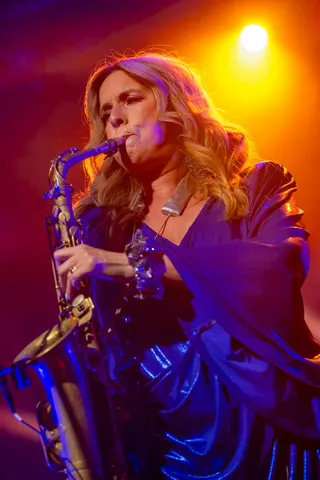
| 1999 | Candy Dulfer | What Does It Take | N-Coded | NC-4204-2 | Trombone | With Pee Wee Ellis |
| 2001 | Marcus Miller | M2 | Dreyfus Jazz | FDM 36623-2 | Guest | Grammy winner, Best Contemporary Jazz Album |
| 2002 | Karl Denson's Tiny Universe | The Bridge | Relaxed | RRCD002 | Trombone | Wesley and Hugh Ragin together on seven tracks |
| 2003 | Randy Brecker | 34th N Lex | ESC | — | Guest | Grammy winner, Best Contemporary Jazz Album |
| 2016 | Oz Noy | Who Gives a Funk | Abstract Logix | — | Guest | With Randy Brecker and Chris Potter |
Other credits
His credits also include records by Ray Charles, Lionel Hampton, Randy Crawford (Naked and True, 1995), Vanessa Williams (The Right Stuff, 1988), Earth, Wind & Fire (Faces, 1980), the Gap Band, the S.O.S. Band, Cameo, Curtis Mayfield (Heartbeat, 1979), Terry Callier (Turn You to Love, 1979), Van Morrison, Red Hot Chili Peppers (Freaky Styley, 1985), Deee-Lite (World Clique, 1990), De La Soul (Buhloone Mindstate, 1993), Dr. John (Creole Moon, 2001), Larry Goldings (Whatever It Takes, 1995), Nils Landgren (5000 Miles, 1999), Soulive (Doin' Something, 2001), Gov't Mule (The Deepest End, 2003), the Apples (Kings, 2010) and Brian Culbertson (Bringing Back the Funk, 2008), among others.
Book
Hit Me, Fred: Recollections of a Sideman (Duke University Press, September 2002, 344 pages), his memoir of his years as a sideman for James Brown, Parliament-Funkadelic and Bootsy's Rubber Band, and of his own groups.
- James Brown - his employer and bandleader from 1968 to 1975, with a break between 1969 and 1971.
- Maceo Parker and Pee Wee Ellis - fellow Brown alumni and his partners in the JB Horns; Parker was also his co-horn in the Horny Horns and his bandleader into the 1990s.
- George Clinton and Bootsy Collins - the Parliament-Funkadelic and Bootsy's Rubber Band records of 1975 to 1980, and later Full Circle (1998), co-produced by Collins.
- Hank Crawford, Esther Phillips, Idris Muhammad and George Benson - the Kudu and CTI sessions of 1975 and 1976 for Creed Taylor, most of them engineered or mixed by Rudy Van Gelder.
- Count Basie Orchestra and Milt Jackson - the 1978 Pablo sessions, in a trombone section with Bill Hughes, Dennis Wilson and Mel Wanzo.
- Karl Denson - second horn on three Minor Music albums from 1991 to 1994, then a bandleader who brought Wesley in for West Coast Boogaloo (1994) and The Bridge (2002).
- Geri Allen - pianist on New Friends (1990).
- Candy Dulfer, Randy Brecker and Marcus Miller - each has Wesley as a guest, on Dulfer's What Does It Take (1999), Brecker's 34th N Lex (2003) and Miller's M2 (2001).
- Oz Noy - guest on Noy's Who Gives a Funk (2016).
- Randy Crawford - credited among the vocalists on A Blow for Me, a Toot to You (1977), and her Naked and True (1995) lists Wesley.
- David Krakauer and Socalled - his partners in Abraham Inc., whose guitarist Sheryl Bailey plays on its albums.
- Leonardo Corradi and Tony Match - his Generations trio since 2015.
- Jab'o Starks, Clyde Stubblefield and Bootsy Collins - the rhythm section featured on Funk for Your Ass (2008).
- Others he has recorded or toured with, per his published credits: Ray Charles, Lionel Hampton, Van Morrison, De La Soul, the S.O.S. Band, Cameo, Dr. John, Trombone Shorty and Soulive.
More Jazz-Funk Artists
See all 210 Jazz-Funk artists →More American Jazz Artists
See all 646 American artists →- Spotify artist page
- Official website
- Discogs
- YouTube channel
- His profile on jazzprofiles.com
- r/CrossoverJazz
- Wikipedia: Fred Wesley
- Wikipedia: The J.B.'s
- Wikipedia: The Horny Horns
- Wikipedia: Doing It to Death
- AllMusic: Fred Wesley biography
- Jazz.com: Fred Wesley Jr.
- Duke University Press: Hit Me, Fred
- KNKX: A little jazz, a little funk, at 79, trombonist Fred Wesley is ready to play forever (2022)
- Atlanta Journal-Constitution: Fred Wesley, trombone player for James Brown, still brings the funk at 81 (2024)
- Alabama Humanities Alliance: Meet AHA's 2026 honorees
- PRISM Quartet: Requiem for AJ
- Kurland Agency: Fred Wesley biography (2026)
- All About Jazz: Abraham Inc., Together We Stand (2020)
- Discogs: Fred Wesley
- MusicBrainz: Fred Wesley