 JAZZPROFILES lives in the music 1,002 Jazz Artists fully Profiled!
 Art Tatum
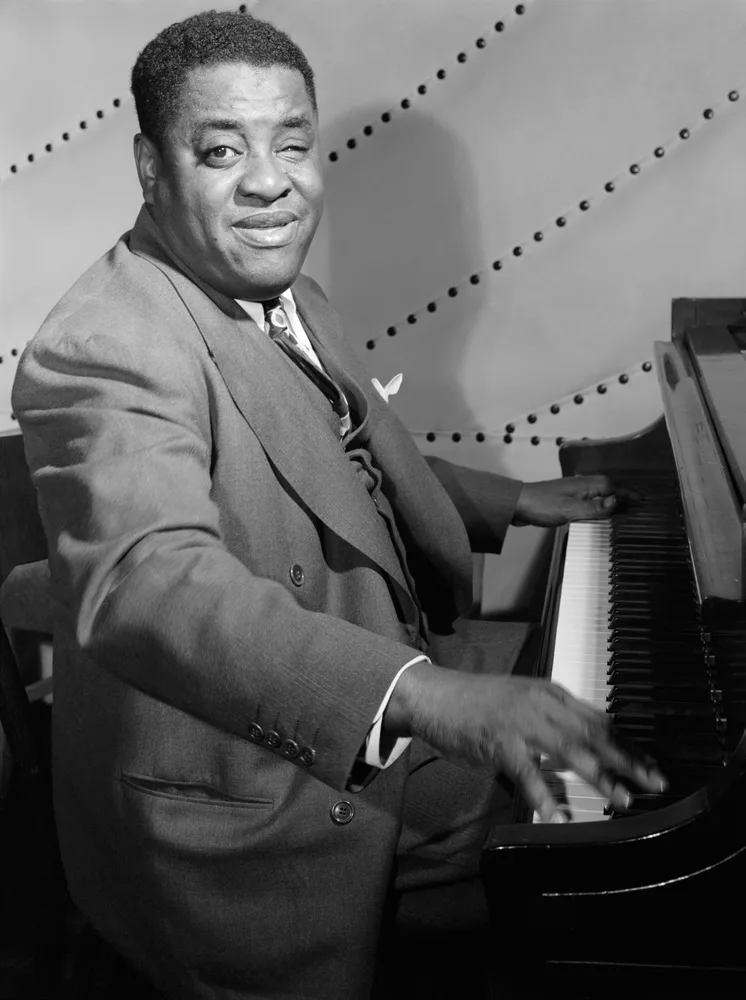
Art Tatum at the piano, Vogue Room, New York, N.Y., between 1946 and 1948 Public domain — Wikimedia Commons (William P. Gottlieb / Library of Congress Music Division) — https://commons.wikimedia.org/wiki/File:Art_Tatum,_Vogue_Room_1948_(Gottlieb).jpg
.jpg)
Arthur Tatum Jr. was born October 13, 1909, in Toledo, Ohio, to Mildred Hoskins, a domestic worker from Virginia, and Arthur Tatum Sr., a mechanic from North Carolina. He had impaired vision from infancy, likely caused by cataracts, and by age eleven, after several operations, could see only close objects and distinguish colors; an assault in his early twenties left him blind in one eye and severely limited in the other. He learned piano largely by ear, showing perfect pitch and an exceptional memory from childhood. He attended Toledo's Jefferson School, briefly enrolled at the School for the Blind in Columbus, Ohio in late 1924, and then transferred to the Toledo School of Music, where the visually impaired classical pianist Overton G. Rainey gave him formal lessons but discouraged jazz; Tatum taught himself the jazz idiom from radio, records, and piano rolls, absorbing Fats Waller, James P. Johnson, Earl Hines, and the semi-classical pianist Lee Sims along the way.
Tatum began performing professionally around Toledo in the mid-1920s and, after winning an amateur contest in 1927, hosted a daily program on local radio station WSPD that was carried nationally by the Blue Network in 1928-29. Touring musicians including Duke Ellington and Fletcher Henderson heard him in Toledo and were impressed, but Tatum felt unready for New York. In 1932 the singer Adelaide Hall, passing through Toledo, recruited him for her band; on August 5, 1932, he made his first studio recordings backing Hall, and on his arrival in New York he took part in a celebrated cutting contest at a Harlem venue against stride masters James P. Johnson, Fats Waller, and Willie "The Lion" Smith, playing arrangements of "Tea for Two" and "Tiger Rag" that reportedly left Johnson startled by what could be done with a familiar tune. His first solo studio recordings followed in March 1933 for Brunswick, including "Tiger Rag," "St. Louis Blues," "Sophisticated Lady," and "Tea for Two." Through the rest of the 1930s he worked residencies in New York (including his first solo job at the Onyx Club on 52nd Street), Cleveland, a year-long stand at Chicago's Three Deuces beginning in 1935, and Los Angeles, recording for Decca and Brunswick along the way. In 1938 he toured England for three months, appearing twice on BBC television.
Tatum formed a trio with guitarist Tiny Grimes and bassist Slam Stewart in 1943 that became one of the most commercially successful acts on 52nd Street, though he disbanded it in 1944 and did not lead another trio for eight years, preferring solo work; by early 1945 the Downbeat Club was reportedly paying him an unusually high $1,150 a week for solo sets. He won Esquire magazine's 1944 critics' poll for pianists and began playing formal concert halls that year as wartime conditions changed the entertainment business. His sextet side "Wee Baby Blues," with vocalist Big Joe Turner, sold roughly 500,000 copies in 1941, and a set of informal 1940-41 recordings later released as God Is in the House earned him a posthumous Grammy Award in 1974 for the 1973 recording year. He signed to Capitol Records at the end of the decade, recording 26 sides for the label beginning with a 1949 Los Angeles concert issued as Gene Norman Presents an Art Tatum Concert, and continuing with studio sessions issued as Art Tatum (1950) and Art Tatum Encores (1951). He reunited with Slam Stewart, now alongside guitarist Everett Barksdale, in a trio that recorded for Capitol in 1952 and toured with pianists Erroll Garner, Pete Johnson, and Meade Lux Lewis on a 1952 "Piano Parade" package tour. His popularity had cooled somewhat by the late 1940s as bebop, a style he never adopted, reshaped jazz's mainstream, though musicians continued to revere him.
Producer Norman Granz brought Tatum into the studio in late 1953 with an unprecedented brief: play whatever he wished. Over several sessions Tatum recorded 124 solo tracks, all but three of them released across what became an eleven-LP Clef Records series, The Genius of Art Tatum, later reissued complete as The Complete Pablo Solo Masterpieces; the series entered the Grammy Hall of Fame in 1978. Granz followed with seven further sessions between 1954 and 1956 pairing Tatum with other major jazz figures, yielding 59 tracks eventually reissued as eight Tatum Group Masterpieces volumes: trios with altoist Benny Carter and drummer Louie Bellson (The Tatum-Carter-Bellson Trio, Clef, 1955) and with vibraphonist Lionel Hampton and drummer Buddy Rich (The Lionel Hampton-Art Tatum-Buddy Rich Trio, Clef, 1956), a further Hampton-led session with Harry Edison, Rich, Red Callender, and Barney Kessel, a quartet with trumpeter Roy Eldridge (Clef, 1955), a reunion trio with Stewart and Barksdale, and quartets fronted by clarinetist Buddy DeFranco and tenor saxophonist Ben Webster (both Verve, 1958, recorded 1956). Critical response to the group sessions was mixed at the time, some writers finding the material unadventurous, but Tatum won DownBeat's critics' poll for pianists three years running starting in 1954. He toured with Stan Kenton's orchestra on its 1954 "Festival of Modern American Jazz," and appeared on television that April on The Spike Jones Show, one of the few surviving filmed records of his playing. His only film appearance had come earlier, in 1947's The Fabulous Dorseys.
Tatum stopped drinking in 1954 as his health declined, divorced his first wife Ruby Arnold in early 1955 after twenty years of marriage, and married Geraldine Williamson later that year. In August 1956 he played for the largest audience of his career, roughly 19,000 people at the Hollywood Bowl in a Granz-produced event, and the following month recorded his final studio session with Ben Webster. Too ill to continue touring, he returned home to Los Angeles, where musician friends gathered at his bedside on November 4, 1956; he died of uremia the next day, November 5, 1956, at age 47, at Queen of Angels Medical Center. He was inducted into the DownBeat Jazz Hall of Fame in 1964 and received a Grammy Lifetime Achievement Award in 1989, and Toledo has since honored him with a resource center at its Kent Branch Library (1989), a historical marker at his childhood home (2003), and a public sculpture (2009).
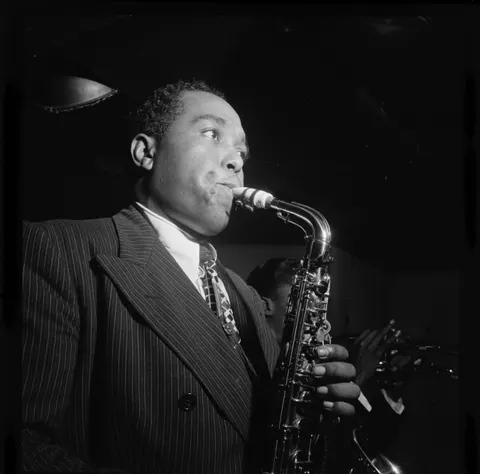
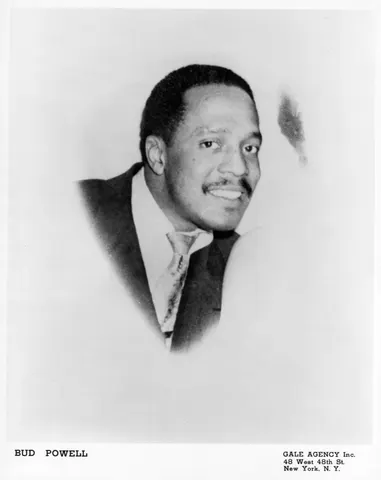
Tatum's technique was harmonically some three decades ahead of the jazz mainstream of his time: he layered dense substitute chords, extended harmony into elevenths and thirteenths, occasionally played in two keys at once, and expanded stride piano's left-hand vocabulary with tenths and wider intervals, all delivered with a clean, unhurried touch even at extreme tempo. Rather than build new melodic lines over a tune's changes, he tended to state or imply the original melody while layering fragmentary countermelodies and rhythmic displacement around it, and he could shift the number of notes per beat without losing the underlying pulse. Musicians rather than the general public first recognized what he had done: Charlie Parker reportedly took a dishwashing job at a club where Tatum played to study him at close range, Dizzy Gillespie cited his speed and harmonic daring as a spur to bebop's own ambitions, Coleman Hawkins dated his own stylistic development to hearing Tatum in Toledo in the 1920s, and pianists from Bud Powell and Oscar Peterson to Herbie Hancock and Chick Corea learned directly from his recordings; Mary Lou Williams credited him with teaching her how to control her touch without relying on the pedal. Some critics, including Gary Giddins, have argued his dense, non-linear style keeps casual listeners at arm's length, which Giddins suggests helps explain why his broader popular standing has never quite matched his standing among musicians.
- Piano Starts Here (1968, Columbia) - Compiles Tatum's solo studio debut for Brunswick (1933) with a later Shrine Auditorium concert recording, spanning the two ends of his solo career. Spotify - Piano Starts Here Listen
- God Is in the House (rec. 1940-41, rel. 1973, Onyx) - Informal after-hours recordings that won Tatum a posthumous 1974 Grammy Award for Best Jazz Performance by a Soloist. Spotify - God Is in the House Listen
- The Genius of Art Tatum (rec. 1953-54, Clef) - An eleven-LP series of unaccompanied solo sessions produced by Norman Granz, later reissued complete as The Complete Pablo Solo Masterpieces and inducted into the Grammy Hall of Fame in 1978. Spotify - Solo Masterpieces, Vol. 1 Listen
- The Tatum-Carter-Bellson Trio (1955, Clef) - The first of the Granz-produced Group Masterpieces sessions, pairing Tatum with altoist Benny Carter and drummer Louie Bellson.
- The Lionel Hampton-Art Tatum-Buddy Rich Trio (1956, Clef) - A trio session with vibraphonist Lionel Hampton and drummer Buddy Rich from the same Granz series. Spotify - The Art Tatum, Lionel Hampton, Buddy Rich Trio Listen
- The Art Tatum - Ben Webster Quartet (Verve, 1958, rec. September 1956) - Tatum's final studio session, paired with tenor saxophonist Ben Webster; widely regarded as one of the strongest Group Masterpieces volumes. Spotify - Tatum Group Masterpieces, Vol. 8 Listen
- The Complete Capitol Recordings (rec. 1949-52, rel. Capitol/Blue Note) - Gathers his late-1940s/early-1950s Capitol sides, including the 1949 Gene Norman concert and the 1952 Slam Stewart-Everett Barksdale trio. Spotify - The Complete Capitol Recordings Of Art Tatum Listen
Art Tatum: Full Discography
Identity confirmed via the live Discogs API, artist ID 265634 ("Art Tatum," birth/death dates and career profile matching). Discogs lists 1,594 releases credited to this artist ID across original 78s, LPs, and (overwhelmingly) later reissues and compilations built from a relatively small number of recording sessions; Tatum died in 1956, and the great majority of his catalog has been repackaged repeatedly ever since, including at least five separate named Discogs artist entities for his own working groups (Art Tatum Trio, Art Tatum And His Band, Art Tatum's All Stars, Art Tatum And His Swingsters, The Art Tatum - Ben Webster Quartet). Rather than itemize the reissue sprawl, the table below curates the sessions and releases of clearest historical significance, tracing his work from his 1932-33 recording debut through his final 1956 studio date, plus the landmark reissue packages under which most listeners now encounter that material.
As Leader / Co-Leader
| Album Title | Recording Date(s) | Release Date | Label | Catalog Number | Format(s) | Personnel | Role | Reissue History | Spotify | Buy | Notes |
|---|---|---|---|---|---|---|---|---|---|---|---|
| Solo debut sides ("Tea for Two" b/w "St. Louis Blues," "Tiger Rag," "Sophisticated Lady") | Recorded March 1933, New York | 1933 | Brunswick | Various 78 rpm singles | Shellac, 10" | Art Tatum (piano, solo) | Leader | Compiled decades later on Piano Starts Here (Columbia, 1968) and other reissue anthologies | — | — | Tatum's first solo studio recordings; "Tiger Rag" became a minor hit and demonstration of his speed |
| Piano Starts Here | 1933 solo sides plus a 1949 Shrine Auditorium concert recording | 1968 | Columbia | CS 9655 | Vinyl, LP, Compilation | Art Tatum (piano, solo) | Leader | Reissued on CD; a 2008 Zenph "re-performance" release used the same title | Spotify - Piano Starts Here | — | Pairs Tatum's earliest and among his latest documented solo recordings on one release |
| God Is in the House | Recorded November 11, 1940 and March 7 / July 26-27 / September 16, 1941, New York (informal after-hours recordings) | 1973 | Onyx Records | Onyx 205 | Vinyl, LP | Art Tatum (piano, solo) | Leader | None found | Spotify - God Is in the House | — | Released posthumously from amateur recordings of informal club sets; won Tatum a posthumous Grammy Award (Best Jazz Performance by a Soloist, 1973 recording year, presented 1974) and a Best Album Notes Grammy for annotator Dan Morgenstern |
| Gene Norman Presents an Art Tatum Concert | Recorded 1949, Shrine Auditorium, Los Angeles | 1952 | Columbia | GL 101 | Vinyl, LP, 10" | Art Tatum (piano, solo) | Leader | Later folded into Piano Starts Here and other compilations | — | — | Concert recording that led to Tatum's Capitol Records contract |
| Art Tatum | Recorded 1949-50 | 1950 | Capitol Records | H-216 | Vinyl, LP, 10" | Art Tatum (piano, solo) | Leader | Later reissued as part of The Complete Capitol Recordings | — | — | Studio solo sides for Capitol |
| Art Tatum Encores | Recorded 1950 | 1951 | Capitol Records | H-269 | Vinyl, LP, 10" | Art Tatum (piano, solo) | Leader | Later reissued as part of The Complete Capitol Recordings | — | — | |
| Art Tatum Trio | Recorded 1952 | 1953 | Capitol Records | Not confirmed in Discogs data | Vinyl, LP | Art Tatum (piano), Slam Stewart (bass), Everett Barksdale (guitar) | Leader | Later reissued as part of The Complete Capitol Recordings | — | — | Tatum's second working trio, replacing original guitarist Tiny Grimes with Barksdale |
| The Complete Capitol Recordings | Recorded 1949-52 | 1989 (2-volume LP set); reissued 1997 | Capitol Records (1989); Blue Note (1997) | Not confirmed in Discogs data | CD, Compilation | Art Tatum (piano, solo and trio tracks) | Leader | Combines the 1949 concert, solo studio sides, and the 1952 trio recordings | Spotify - The Complete Capitol Recordings Of Art Tatum | — | The standard modern compilation of Tatum's Capitol-era work |
| The Genius of Art Tatum | Recorded across several sessions, December 1953-1954, Los Angeles | 1954-56 (11-LP series) | Clef Records | MG C-612 through MG C-618 and later volumes | Vinyl, LP, Compilation, Box Set | Art Tatum (piano, solo) | Leader | Reissued complete as The Complete Pablo Solo Masterpieces (Pablo, 7-CD box, July 1991); inducted into the Grammy Hall of Fame in 1978 | Spotify - The Art Tatum Solo Masterpieces, Vol. 1 | — | Producer Norman Granz invited Tatum to record whatever he wished; 124 unaccompanied solo tracks resulted, all but three released |
| The Tatum-Carter-Bellson Trio | Recorded 1955 | 1955 | Clef Records | MG C-643 | Vinyl, LP | Art Tatum (piano), Benny Carter (alto sax), Louie Bellson (drums) | Leader (trio billing) | Reissued as The Tatum Group Masterpieces, Vol. 1 (Pablo, 1975) | — | — | First of the Group Masterpieces sessions |
| The Art Tatum - Roy Eldridge - Alvin Stoller - John Simmons Quartet | Recorded 1955 | 1955 | Clef Records | MGC 679 | Vinyl, LP | Art Tatum (piano), Roy Eldridge (trumpet), John Simmons (bass), Alvin Stoller (drums) | Leader (quartet billing) | Reissued as The Tatum Group Masterpieces, Vol. 2 (Pablo, 1990) | Spotify - Tatum Group Masterpieces, Vol 2 | — | |
| The Lionel Hampton-Art Tatum-Buddy Rich Trio | Recorded 1956 | 1956 | Clef Records | MG C-709 | Vinyl, LP | Art Tatum (piano), Lionel Hampton (vibraphone), Buddy Rich (drums) | Leader (trio billing) | Reissued as The Tatum Group Masterpieces, Vol. 3 (Pablo, 1975) | Spotify - The Art Tatum, Lionel Hampton, Buddy Rich Trio | — | |
| Lionel Hampton And His Giants | Recorded 1956 | 1956 | Norgran | Not confirmed in Discogs data | Vinyl, LP | Art Tatum (piano), Lionel Hampton (vibraphone), Harry Edison (trumpet), Buddy Rich (drums), Red Callender (bass), Barney Kessel (guitar) | Sideman (Hampton-led session) | Reissued as The Tatum Group Masterpieces, Vol. 4 and Vol. 5 (Pablo, 1975 & 1990) | — | — | Larger group session led by Hampton rather than a Tatum co-billing |
| Presenting the Art Tatum Trio | Recorded 1956 | 1957 | Verve | Not confirmed in Discogs data | Vinyl, LP | Art Tatum (piano), Slam Stewart (bass), Everett Barksdale (guitar) | Leader | Reissued as The Tatum Group Masterpieces, Vol. 6 (Pablo, 1975) | — | — | Reunion of the second Tatum trio |
| The Art Tatum - Buddy DeFranco Quartet | Recorded 1956 | 1958 | Verve | MGV-8229 | Vinyl, LP | Art Tatum (piano), Buddy DeFranco (clarinet), plus bass and drums | Leader (co-billed) | Reissued as The Tatum Group Masterpieces, Vol. 7 (Pablo, 1975) | — | — | |
| The Art Tatum - Ben Webster Quartet | Recorded September 11, 1956 | 1958 | Verve | MGV-8220 | Vinyl, LP | Art Tatum (piano), Ben Webster (tenor sax), Red Callender (bass), Bill Douglass (drums) | Leader (co-billed) | Reissued as The Tatum Group Masterpieces, Vol. 8 (Pablo, 1975; expanded CD reissue 1992) | Spotify - The Tatum Group Masterpieces, Vol. 8 | — | Tatum's final studio recording session, roughly two months before his death |
| The Complete Pablo Group Masterpieces | Recorded 1954-56 (all eight Group Masterpieces sessions) | 1990 (6-CD box) | Pablo Records | Not confirmed in Discogs data | CD, Box Set, Compilation | Art Tatum with Benny Carter, Louie Bellson, Roy Eldridge, Alvin Stoller, John Simmons, Lionel Hampton, Buddy Rich, Harry Edison, Red Callender, Barney Kessel, Buddy DeFranco, Ben Webster, Bill Douglass, Jo Jones, Everett Carter, Slam Stewart | Leader | The standard modern box-set edition of all eight Group Masterpieces volumes | Spotify - The Best Of The Pablo Group Masterpieces | — |
As Sideman
Tatum's own leader and co-leader catalog above accounts for the large majority of his recorded output; his handful of significant sideman credits predate his own recording career as a leader.
| Year | Project (Leader) | Title | Label | Catalog | Role | Notes |
|---|---|---|---|---|---|---|
| 1932 | Adelaide Hall | "I'll Never Be the Same" / "Strange as It Seems" | Not confirmed in Discogs data | Not confirmed in Discogs data | Piano (one of two pianists) | Recorded August 5, 1932; Tatum's first studio recordings of any kind, made shortly after Hall brought him to New York |
| 1941 | Art Tatum Sextet, featuring Big Joe Turner | "Wee Baby Blues" | Decca | Not confirmed in Discogs data | Piano, bandleader (billed sextet, Turner as featured vocalist) | Reported sales of roughly 500,000 copies, among Tatum's best-selling recordings |
| 1945 | Barney Bigard Sextet | Nine tracks recorded with Bigard's group | Not confirmed in Discogs data | Not confirmed in Discogs data | Piano | Recorded alongside solo material from the same year |
Discogs' listing for this artist ID also includes hundreds of further compilation and various-artists appearances (film soundtracks, jazz-history box sets, and the like) built from the sessions above; these are not itemized separately here.
- Tiny Grimes - guitarist in Tatum's first trio, 1943-1944, alongside bassist Slam Stewart.
- Slam Stewart - bassist in both Tatum trios, 1943-1944 and again 1951-1952 (with guitarist Everett Barksdale replacing Grimes).
- Everett Barksdale - guitarist in Tatum's second trio, 1951-1952 and on its 1952 Capitol recordings.
- Benny Carter - altoist on The Tatum-Carter-Bellson Trio (Clef, 1955), the first of the Group Masterpieces sessions.
- Lionel Hampton - vibraphonist on two of the Group Masterpieces sessions (1956), including the trio with drummer Buddy Rich.
- Roy Eldridge - trumpeter on a 1955 Clef quartet session with drummer Alvin Stoller and bassist John Simmons.
- Buddy DeFranco - clarinetist on a 1956 Verve quartet session, later issued as The Art Tatum - Buddy DeFranco Quartet.
- Ben Webster - tenor saxophonist on Tatum's final studio session, September 1956, issued as The Art Tatum - Ben Webster Quartet.
- Big Joe Turner - blues vocalist on the 1941 sextet side "Wee Baby Blues," one of Tatum's best-selling recordings.
- Norman Granz - producer who recorded Tatum's extensive 1953-1956 solo and group sessions for his Clef/Verve labels, later reissued on his own Pablo label.
- Wikipedia: Art Tatum
- Wikipedia: Art Tatum discography
- Wikipedia: The Genius of Art Tatum
- Wikipedia: The Tatum Group Masterpieces, Volume Eight
- Wikipedia: God Is in the House (Art Tatum album)
- Wikipedia: Grammy Lifetime Achievement Award
- Wikipedia: List of Grammy Hall of Fame Award recipients (Q-Z)
- AllMusic: Art Tatum biography
- Discogs: Art Tatum (artist 265634)
- Grammy.com: Art Tatum