 JAZZPROFILES lives in the music 1,002 Jazz Artists fully Profiled!
 Lester Young
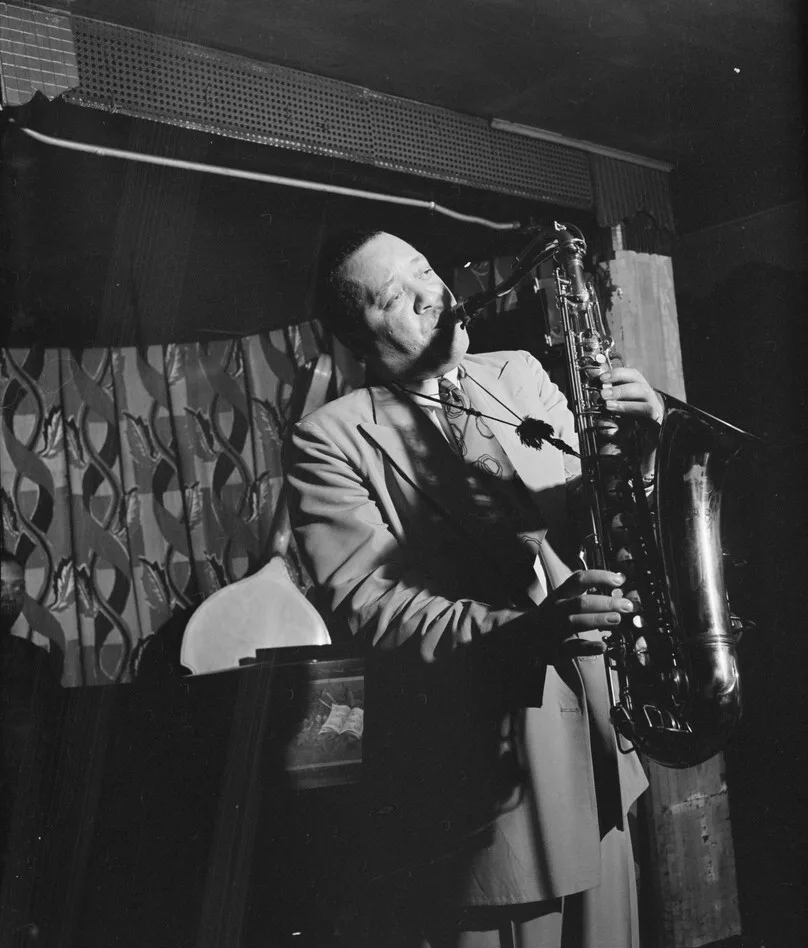
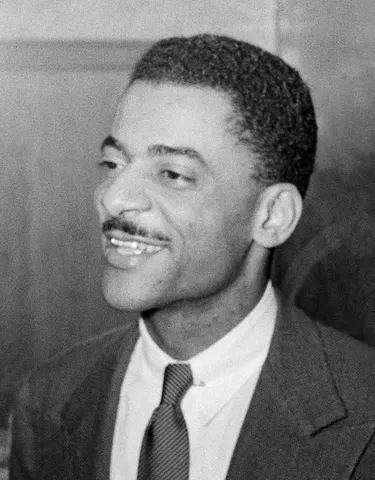
Lester Young performing at the Famous Door, New York, circa September 1946 Public Domain (William P. Gottlieb collection; released into the public domain February 16, 2010, in accordance with the photographer's wishes) — Wikimedia Commons — https://commons.wikimedia.org/wiki/File:Lester_Young_(Gottlieb_09431).jpg (original source: Library of Congress Music Division, digital ID gottlieb.09431)
.jpg)
Lester Willis Young was born August 27, 1909, in Woodville, Mississippi, to Willis Handy Young, a schoolteacher and bandmaster from Thibodaux, Louisiana, and Lizetta Johnson Young, a piano teacher from Woodville. The family settled in New Orleans's Algiers neighborhood, and by his teens Lester was touring with the Young Family Band, a carnival and vaudeville outfit his father drilled on drums, violin, and multiple reeds. In 1919 the family relocated to Minneapolis, where Young switched to tenor saxophone, absorbing the melodic economy of Louis Armstrong and, decisively, the light, floating tone of white C-melody saxophonist Frankie Trumbauer, whose 1927 solo on "Singin' the Blues" (with cornetist Bix Beiderbecke) Young later named as a formative model. In 1927, at eighteen, he left the family band rather than tour the segregated Deep South again, striking out on his own through Midwestern territory bands.
By 1932 Young had joined bassist Walter Page's Original Blue Devils in Oklahoma City, and by 1933 he had settled in Kansas City, working with Bennie Moten's band before joining pianist Count Basie's Kansas City outfit. He left Basie briefly in 1934 for a disastrous stint replacing Coleman Hawkins in Fletcher Henderson's New York orchestra, whose musicians, accustomed to Hawkins's dense, heavy-vibrato attack, gave Young's lighter approach a cold reception; he also passed briefly through Andy Kirk's Clouds of Joy before returning to Basie for good by 1936. His first recordings came that year under the pseudonymous billing "Jones-Smith, Incorporated" (Vocalion 3441, cut in Chicago; sources differ on whether the date was October 9 or November 9, 1936), a workaround for Basie's existing Decca contract. "Shoe Shine Boy" and "Oh, Lady Be Good" from that session made Young's floating, understated tenor sound an overnight sensation among musicians.
Through the Basie band's rise to national prominence from 1937 to 1940, Young became half of one of jazz's most storied internal rivalries: his cool, horizontal phrasing set against tenor sectionmate Herschel Evans's harder-driving, Hawkins-influenced sound, a contrast fans and bandmates treated as a running contest until Evans's death from a heart ailment in February 1939. Young's Basie-era features, cut for Decca, Vocalion, and Okeh, include "One O'Clock Jump" (1937) and, on the small-group Kansas City Seven session credited separately from the full orchestra, "Lester Leaps In" (Vocalion, recorded September 5, 1939). He was equally prolific in Basie-adjacent small-group dates: the Kansas City Six, recorded for Milt Gabler's Commodore label in New York in September 1938 (sources again disagree on the exact date, September 8 versus September 27), found Young switching to clarinet on several sides, including a widely noted solo on "I Want a Little Girl." It was also during these Basie years that Young formed his close friendship with Billie Holiday (no profile yet exists for her on JazzProfiles.com), whom he had met at a Harlem jam session in the early 1930s; the two toured together, and Young lived for a time in the apartment Holiday shared with her mother. Young began calling her "Lady Day," and Holiday, who considered Franklin D. Roosevelt the greatest man in the country, decided Young deserved an equivalent title and started calling him "Pres" (short for President), a name shortened by fellow musicians to "Prez." The two also recorded together extensively in small groups led on paper by pianist Teddy Wilson for Brunswick and Vocalion between 1937 and 1938, sessions now anthologized across Columbia's Quintessential Billie Holiday reissue series, on which Young's obbligato lines behind Holiday's vocals are counted among the most sympathetic instrumental accompaniment in jazz.
Young left the Basie band in December 1940, for reasons biographers still dispute (a superstitious refusal to play a gig falling on Friday the 13th versus a departure planned for months), and spent the early 1940s leading small groups on the West Coast, often alongside his drummer brother Lee Young and, from 1942, a young pianist named Jimmy Rowles. On July 15, 1942, in Los Angeles, Young cut a trio session for the small Philo label with pianist Nat "King" Cole (billed under a pseudonym for contractual reasons) and bassist Red Callender, supervised by a young promoter named Norman Granz; commercially unreleased at the time, the four sides ("Tea for Two," "I Can't Get Started," and others) finally appeared on Philo in 1945 and became one of the most prized items in Young's catalog. He returned to Basie for a ten-month stint beginning December 1943, recording small-group sides for Harry Lim's Keynote label ("These Foolish Things," "Just You, Just Me") along the way.
Young was inducted into the U.S. Army in September 1944 while touring with Basie in Los Angeles. Unlike white bandleaders such as Glenn Miller and Artie Shaw, who were assigned to service bands, Young was placed in the regular infantry with no opportunity to play his horn. Stationed at Fort McClellan, Alabama, he was found with marijuana and alcohol among his possessions, court-martialed, and did not contest the charges. He served roughly a year in an army detention barracks before receiving a dishonorable discharge in late 1945, an experience biographers regard as a lasting psychological wound; Young later commemorated it in the tune "D.B. Blues." From 1946 he joined Norman Granz's touring Jazz at the Philharmonic troupe, a fixture of his work for the next decade, and recorded steadily for Aladdin (1945-1947), Savoy (1944, 1949-1950), and, from the early 1950s on, almost exclusively for Granz's Norgran, Clef, and Verve labels. Landmark dates from this period include Lester Young with the Oscar Peterson Trio (recorded 1952) and, after a November 1955 hospitalization for a nervous breakdown, a run of acclaimed reunion sessions in January 1956: The Jazz Giants '56 (January 12, with Roy Eldridge, Teddy Wilson, Vic Dickenson, Freddie Green, Gene Ramey, and Jo Jones) and Pres and Teddy (January 13, reuniting Young with Teddy Wilson). Pres and Sweets, a quintet date with trumpeter Harry "Sweets" Edison backed by Oscar Peterson, Herb Ellis, Ray Brown, and Buddy Rich, followed in November 1955.
On December 8, 1957, Young appeared on the live CBS broadcast The Sound of Jazz, reuniting on camera with Billie Holiday for a rendition of her "Fine and Mellow" alongside Coleman Hawkins, Ben Webster, Roy Eldridge, and Gerry Mulligan; critic Nat Hentoff, present in the control room, later wrote that Young's solo reduced the crew to tears, and the performance is widely regarded as one of the most emotionally direct moments ever captured on television. Young toured Europe with Miles Davis and the Modern Jazz Quartet in 1956, but his health, undermined by years of heavy drinking and poor eating, continued to deteriorate. In March 1959 he traveled to Paris for an engagement at the Blue Note club with a rhythm section led by drummer Kenny Clarke, recording his final studio session there on March 2 (issued as Lester Young in Paris, Verve MG V-8378, 1960). Exhausted and drinking heavily on almost no food, he suffered severe internal bleeding on the flight back to New York and died in his hotel room in the early hours of March 15, 1959, at age 49. Holiday, from whom he had been estranged for several years, attended his funeral and reportedly told a companion she would be the next to go; she died four months later, on July 17, 1959.
Young's tenor sound was a direct rebuke to the instrument's dominant model in the 1920s and early 1930s, the thick-toned, heavily vibratoed, harmonically aggressive style of Coleman Hawkins. Drawing instead on the light, airy phrasing of C-melody saxophonist Frankie Trumbauer, Young played with a soft attack, minimal vibrato, and a way of floating just behind or across the beat rather than driving hard through it, giving his lines a horizontal, melodic quality where Hawkins's were vertical and chordal. He was also an accomplished clarinetist, heard to striking effect on the 1938 Kansas City Six sides. Young's rhythmic freedom and harmonic curiosity anticipated bebop by nearly a decade and were an acknowledged influence on John Coltrane and, more directly, on Charlie Parker's own rhythmic conception. His most direct legacy, though, is the entire postwar "cool" tenor lineage: when Woody Herman assembled the reed section for his Second Herd in 1947, arranger Jimmy Giuffre built "Four Brothers" explicitly around players who had absorbed Young's sound wholesale, Zoot Sims, Stan Getz, Herbie Steward, and baritone saxophonist Serge Chaloff (soon joined by fellow Young disciple Al Cohn), a section sound that in turn shaped Gerry Mulligan, Warne Marsh, and Paul Desmond. Beyond music, Young is widely credited with helping popularize "cool" as a term of approval and pieces of the era's hipster slang more broadly (he used "bread" for money), and his taciturn, wordplay-filled speech and his signature flat-brimmed porkpie hat became inseparable from his image; Charles Mingus's 1959 elegy "Goodbye Pork Pie Hat" (later retitled "Theme for Lester Young") and Wayne Shorter's "Lester Left Town" are among the direct musical tributes his death prompted.
- "Shoe Shine Boy" / "Oh, Lady Be Good" (rec. 1936, rel. 1937, Vocalion) - Young's recording debut, cut under the pseudonym Jones-Smith, Incorporated to sidestep Count Basie's Decca contract; his solos made him an overnight sensation among musicians.
- Kansas City Style / The Kansas City Six sessions (rec. 1938, Commodore) - Small-group Basie-orbit dates for Milt Gabler, notable for Young's rare switch to clarinet.
- King Cole, Lester Young, Red Callender Trio (rec. July 15, 1942, rel. 1945, Philo) - An informal trio date with pianist Nat "King" Cole (billed pseudonymously) and bassist Red Callender, supervised by a young Norman Granz years before Jazz at the Philharmonic.
- The Jazz Giants '56 (rec. January 12, 1956, Norgran) - A celebrated return-to-form session with Roy Eldridge, Teddy Wilson, Vic Dickenson, Freddie Green, Gene Ramey, and Jo Jones, cut days before Pres and Teddy. Spotify - The Jazz Giants '56 Listen
- Pres and Teddy (rec. January 13, 1956, rel. 1957, Verve) - A studio reunion with pianist Teddy Wilson, his partner on the classic 1930s Billie Holiday sides. Spotify - Pres and Teddy Listen
- Pres and Sweets (rec. November 1, 1955, rel. 1956, Norgran) - A quintet date with trumpeter Harry "Sweets" Edison, backed by Oscar Peterson, Herb Ellis, and Ray Brown.
- Lester Young in Paris (rec. March 2, 1959, rel. 1960, Verve) - Young's final studio recording, cut in a Paris hotel days before his death, with a rhythm section led by drummer Kenny Clarke.
- The Sound of Jazz (CBS television broadcast, December 8, 1957) - Young's reunion on camera with Billie Holiday for "Fine and Mellow," alongside Coleman Hawkins and Gerry Mulligan; one of the most celebrated filmed performances in jazz history.
Lester Young: Full Discography
Identity confirmed via the live Discogs API, artist ID 258433 ("Lester Young," realname Lester Willis Young, matching birth date August 27, 1909, Woodville, Mississippi, and death date March 15, 1959, New York City). Discogs credits Young on approximately 2,950 releases in total. The overwhelming majority of that figure is reissue and compilation packaging: Young's short original catalog of studio and live sessions, cut mostly for small independent labels between 1936 and 1959, has been repackaged on 10-inch and 12-inch LP, EP, and CD across dozens of labels and countries (particularly France, Japan, and Italy) for close to nine decades, often under different titles for the same underlying session. This table does not attempt to itemize that reissue history; it lists the original sessions of genuine historical significance, with major reissue vehicles noted where relevant.
As Leader / Co-Leader
| Album Title | Recording Date(s) | Release Date | Label | Catalog Number | Format(s) | Personnel | Role | Reissue History | Spotify | Buy | Notes |
|---|---|---|---|---|---|---|---|---|---|---|---|
| "Shoe Shine Boy" / "Evenin'" (Jones-Smith, Incorporated) | Recorded 1936, Chicago (sources differ: October 9 vs. November 9) | 1937 | Vocalion | 3441 | Shellac, 10" | Lester Young (tenor sax), Carl Smith (trumpet), Count Basie (piano), Walter Page (bass), Jo Jones (drums) | Leader (billed as Jones-Smith, Incorporated to avoid conflict with Basie's Decca contract) | Reissued repeatedly on Columbia/CBS Basie-Young compilations, including The Lester Young Story Volume 1 (1976) | Not confirmed | — | Young's recording debut; his solos on this session and "Oh, Lady Be Good" (same date) were an immediate sensation among musicians |
| Kansas City Six / "Kansas City Style" | Recorded September 1938, New York (sources differ: September 8 vs. September 27) | 1952 (Commodore FL 20,021); sides originally issued on 78s in 1938 | Commodore | FL 20,021 | Vinyl, LP, Comp | Lester Young (clarinet, tenor sax), Buck Clayton (trumpet), Eddie Durham (electric guitar), Freddie Green (guitar), Walter Page (bass), Jo Jones (drums) | Co-leader | Reissued as Kansas City Six and Five (1979, Commodore/CBS) and The "Kansas City" Sessions (1997, Commodore) | Not confirmed | — | Small-group Basie-orbit session produced by Milt Gabler; notable for Young's rare, celebrated switch to clarinet, including his solo on "I Want a Little Girl" |
| King Cole, Lester Young, Red Callender Trio | Recorded July 15, 1942, Los Angeles | 1945 | Philo Recordings | P-1 | Shellac, 12" | Lester Young (tenor sax), Nat "King" Cole (piano, billed under a pseudonym for contractual reasons), Red Callender (bass) | Leader | Reissued as The King Cole Trio With Lester Young & Red Callender (1958, Score) and folded into later Aladdin/Cole compilations | Not confirmed | — | Cut informally, supervised by a young Norman Granz years before he founded Jazz at the Philharmonic; commercially unreleased for three years |
| Lester Young / Keynote sides | Recorded 1943-1944, New York | 1944-1945 on 78s | Keynote Records | Various singles | Shellac, 10" | Lester Young (tenor sax) with small groups including Johnny Guarnieri, Slam Stewart, and others (personnel varies by session) | Leader | Reissued complete as The Complete Lester Young / The Complete Keynote Collection (1986-1990, Mercury 830-920-2) | Not confirmed | — | Cut for producer Harry Lim during Young's interim period between his two stints with Basie; includes "These Foolish Things" and "Just You, Just Me" |
| Aladdin sides | Recorded 1945-1947, Los Angeles | Various singles, 1946-1948 | Aladdin Records | Various | Shellac, 10" | Lester Young (tenor sax) with quartets/quintets including pianist Dodo Marmarosa and others (personnel varies by session) | Leader | Reissued complete as The Complete Aladdin Recordings of Lester Young (1995, Blue Note CDP 7243 8 32787 2 5) | Not confirmed | — | A prolific run of West Coast small-group sides cut soon after Young's 1945 discharge from the army |
| Lester Young With the Oscar Peterson Trio | Recorded 1952 | 1954 | Norgran Records | MG N-5 (Volume #1); a second volume followed as MG N-6 | Vinyl, LP | Lester Young (tenor sax), Oscar Peterson (piano), Barney Kessel or Freddie Green (guitar), Ray Brown (bass), J.C. Heard or Buddy Rich (drums, varies by session) | Leader | Reissued on Verve (314 521 451-2, 1997) | Not confirmed | — | Two Granz-produced volumes pairing Young with the Peterson rhythm section; a related 1956 session was issued separately as The President Plays With the Oscar Peterson Trio (Norgran MG N-1054) |
| Pres and Sweets | Recorded November 1, 1955, Radio Recorders, Hollywood | 1956 | Norgran Records | MG N-1043 | Vinyl, LP | Lester Young (tenor sax), Harry "Sweets" Edison (trumpet), Oscar Peterson (piano), Herb Ellis (guitar), Ray Brown (bass), Buddy Rich (drums) | Co-leader (with Harry Edison) | Reissued on Verve, including the Immortal Jazz on Verve series | Not confirmed | — | |
| The Jazz Giants '56 | Recorded January 12, 1956, Fine Sound Studios, New York | 1956 | Norgran Records | MG N-1056 | Vinyl, LP | Lester Young (tenor sax), Roy Eldridge (trumpet), Teddy Wilson (piano), Vic Dickenson (trombone), Freddie Green (guitar), Gene Ramey (bass), Jo Jones (drums) | Co-leader (billed to all as "The Jazz Giants") | Reissued on Verve as The Jazz Giants (825 672-2) | Spotify - The Jazz Giants '56 | — | Recorded a day before Pres and Teddy, at the same Fine Sound sessions, and widely regarded as marking Young's post-hospitalization return to form |
| Pres and Teddy | Recorded January 13, 1956, Fine Sound Studios, New York | 1957 | Verve Records (Clef series) | MG V-8205 | Vinyl, LP | Lester Young (tenor sax), Teddy Wilson (piano), Gene Ramey (bass), Jo Jones (drums) | Co-leader | Reissued multiple times on Verve, including combined with Pres and Sweets as Pres and Teddy and Oscar (1976) | Spotify - Pres and Teddy | — | A studio reunion with Young's classic 1930s Billie Holiday-session partner |
| Going For Myself... | Recorded 1957-1958 | 1958 | Verve Records (Clef series) | MG V-8298 | Vinyl, LP | Lester Young (tenor sax), Harry "Sweets" Edison (trumpet), with rhythm sections varying across the sessions collected on the album | Co-leader (with Harry Edison) | Reissued on CD, including a 2009 Lone Hill Jazz edition | Not confirmed | — | Combines material from more than one Granz-produced Young/Edison date |
| Laughin' to Keep from Cryin' | Recorded 1958 | 1959 | Verve Records | MG V-8316 | Vinyl, LP | Lester Young (tenor sax) with Roy Eldridge, Nat Adderley, and a rhythm section (personnel varies by track) | Leader | Reissued on CD | Not confirmed | — | Among Young's last studio dates cut in New York before the final Paris session |
| Lester Young in Paris | Recorded March 2, 1959, Paris | 1960 | Verve Records | MG V-8378 | Vinyl, LP | Lester Young (tenor sax), Rene Utreger (piano), Jimmy Gourley (guitar), Jamil Nasser (bass), Kenny Clarke (drums) | Leader | Reissued as Le Dernier Message de Lester Young (2002, Gitanes Jazz Productions) | Not confirmed | — | Young's final studio recording, cut in Paris days before he flew back to New York and died |
As Sideman (selected major credits)
| Year | Project (Leader) | Title | Label | Catalog | Role | Notes |
|---|---|---|---|---|---|---|
| 1937-1940 | Count Basie Orchestra | Various singles including "One O'Clock Jump" (1937) and "Jumpin' at the Woodside" (1938) | Decca, Vocalion, Okeh | Various | Tenor Saxophone | Young's studio work with the full Basie orchestra through its rise to national prominence; anthologized complete as Classic Columbia, Okeh and Vocalion: Lester Young with Count Basie (1936-1940) (2008, Mosaic Records box set) |
| 1939 | Count Basie's Kansas City Seven | "Lester Leaps In" / "Dickie's Dream" | Vocalion | 5118 | Tenor Saxophone (featured soloist) | A small-group session billed to Basie's Kansas City Seven, not to Young; "Lester Leaps In" became one of Young's signature compositions and a jam-session standard |
| 1937-1938 | Teddy Wilson / Billie Holiday | Various singles including "This Year's Kisses," "Mean to Me," and "I Must Have That Man" | Brunswick, Vocalion | Various | Tenor Saxophone | Small-group sessions led on paper by pianist Teddy Wilson, featuring Young's obbligato lines behind Holiday's vocals; anthologized across Columbia's Quintessential Billie Holiday reissue series, volumes 3-6 |
| 1944-1950 | Lester Young (own name) | Various Savoy singles | Savoy Records | Various | Leader / Tenor Saxophone | Sessions cut for Savoy during and around Young's Basie stints and after his 1945 army discharge; reissued as The Complete Savoy Recordings |
| 1946 onward | Jazz at the Philharmonic (Norman Granz) | Various live JATP volumes | Clef, Norgran, Verve | Various | Tenor Saxophone | Young was a regular member of Granz's touring all-star troupe for roughly a decade beginning in 1946; individual JATP volumes are not itemized here |
| 1957 | The Sound of Jazz (CBS television broadcast, various artists) | The Sound of Jazz | CBS / Columbia (soundtrack LP) | CL 1098 | Tenor Saxophone | Broadcast live December 8, 1957; Young's solo on "Fine and Mellow" alongside Billie Holiday, Coleman Hawkins, Ben Webster, Roy Eldridge, and Gerry Mulligan is one of the most celebrated performances in jazz television history |
Young's broader sideman work, particularly the sheer volume of Jazz at the Philharmonic live recordings issued across dozens of Clef/Norgran/Verve volumes from the late 1940s through the 1950s, is not itemized exhaustively here; the table above covers the sessions of clearest historical importance.
- Count Basie Orchestra - featured tenor soloist through the band's rise to national prominence, 1936-1940, and again for a ten-month stint from December 1943; drafted into the army in September 1944 while touring with the band.
- Billie Holiday - close friend and recurring recording partner from the mid-1930s through the 1957 CBS Sound of Jazz broadcast; the two gave each other their signature nicknames, "Lady Day" and "Pres." No profile yet exists for her on JazzProfiles.com.
- Teddy Wilson - led the 1937-1938 small-group sessions with Holiday that Young co-starred on, and reunited with Young for the 1956 Verve session Pres and Teddy.
- Fletcher Henderson - briefly led the orchestra Young joined in 1934 to replace Coleman Hawkins, a stint musicians and critics agree did not suit Young's contrasting style.
- Nat "King" Cole and Red Callender - trio partners on the informally recorded July 1942 Philo session, supervised by a young Norman Granz.
- Oscar Peterson, Herb Ellis, and Ray Brown - rhythm section on the 1955 Norgran session Pres and Sweets, alongside trumpeter Harry Edison.
- Serge Chaloff and Zoot Sims - among the Woody Herman "Four Brothers" saxophonists whose sound was directly modeled on Young's, cementing his stylistic legacy into the following generation rather than a personal collaboration.
- Wikipedia: Lester Young
- Britannica: Lester Young
- Mississippi Encyclopedia: Lester Young
- Discogs: Lester Young (artist 258433) - identity, birth/death dates, and release-crediting verified via the live Discogs API
- Wikipedia: The Jazz Giants '56
- Wikipedia: Pres and Teddy
- Wikipedia: Pres and Sweets
- Wikipedia: Going for Myself
- Wikipedia: The Sound of Jazz
- WBGO: The moving performance of Billie Holiday & Lester Young on 'The Sound of Jazz' TV program
- Swing and Beyond: "Countless Blues" and "I Want a Little Girl" (1938) Lester Young with Eddie Durham and Buck Clayton
- Swing and Beyond: "Four Brothers" (1947) Woody Herman with Zoot Sims, Serge Chaloff, Herbie Steward and Stan Getz
- J.P.'s Blog: President Meets King: Wherein Lester Young and Nat Cole Both Rule
- Wikimedia Commons: File:Lester Young (Gottlieb 09431).jpg - portrait license and provenance