 JAZZPROFILES lives in the music 1,002 Jazz Artists fully Profiled!
 Joshua Redman
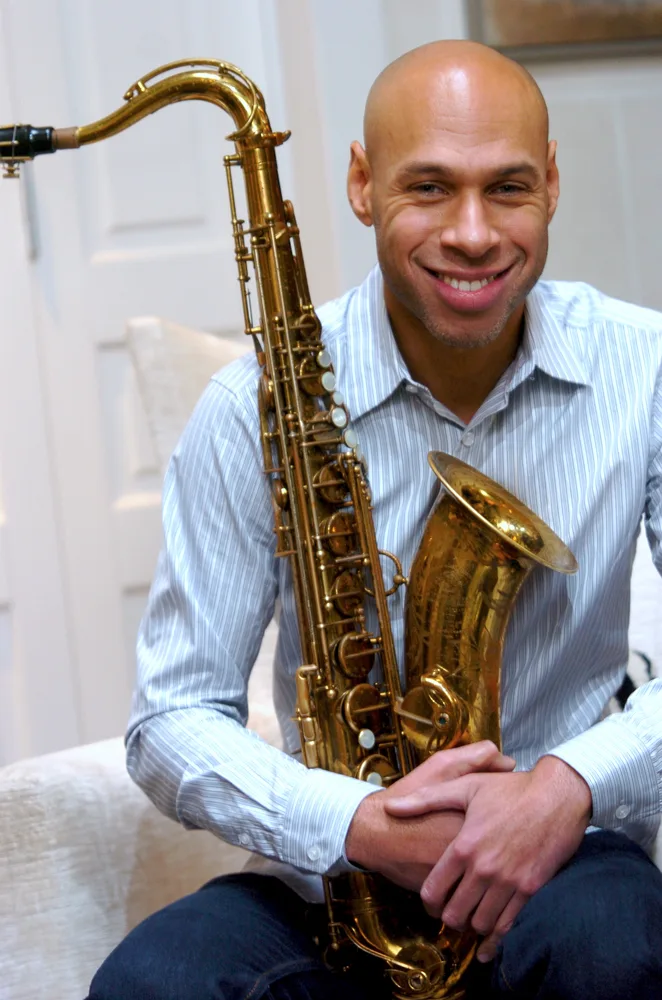
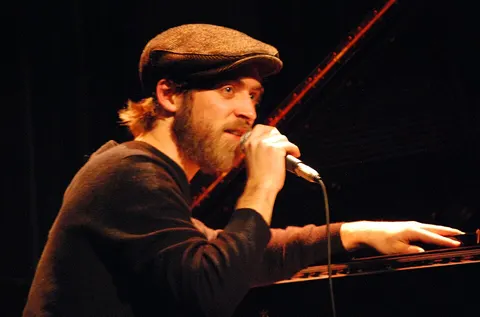
Joshua Redman in Paris, December 1, 2008 CC BY-SA 4.0 — Wikimedia Commons — https://commons.wikimedia.org/wiki/File:Joshua_Redman_2008.jpg (photograph by Nicolas Richoffer, own work)

Joshua Redman Shedroff was born February 1, 1969, in Berkeley, California, to the tenor saxophonist Dewey Redman and Renee Shedroff, a dancer and librarian. He grew up with his mother, and his first musical environment was not a jazz club but the Center for World Music in Berkeley, where she studied South Indian dance and where his earliest lessons in improvisation came on recorder from the gamelan player Jody Diamond. He took up clarinet at nine and switched to tenor saxophone a year later, and he has always described himself as self-taught on the horn. The records he absorbed were as much John Coltrane, Ornette Coleman, Cannonball Adderley and his father as the Beatles, Aretha Franklin, the Temptations, Earth, Wind and Fire, Prince, the Police and Led Zeppelin. He graduated from Berkeley High School in 1986 after four years in its jazz ensemble.
Music was not the plan. Redman took a degree in social studies at Harvard University in 1991, graduating summa cum laude and elected to Phi Beta Kappa, and had already been accepted to Yale Law School. He deferred entrance for what he expected to be a single year and moved to Brooklyn to share rent with friends. Within months he was gigging across the New York scene with Brad Mehldau, Peter Martin, Mark Turner, Peter Bernstein, Roy Hargrove, Christian McBride, Kevin Hays and Jorge Rossy. In 1991 he won the Thelonious Monk International Jazz Saxophone Competition. He never went to law school.
Warner Bros. signed him almost immediately, and the run that followed made him the most visible young saxophonist in jazz. His self-titled debut appeared March 23, 1993, and drew a Grammy nomination; Wish, out that September, put him in a quartet with Pat Metheny, Charlie Haden and Billy Higgins, three musicians a generation ahead of him, with two tracks cut live at the Village Vanguard. The touring version of that band, with Christian McBride in Haden's chair, became the Joshua Redman Quartet. MoodSwing, recorded over three days at the Power Station in March 1994 with Mehldau, McBride and the then almost unknown drummer Brian Blade, is the record most often named as the definitive statement of that period. A week of Vanguard nights in March 1995 produced Spirit of the Moment, with Peter Martin on piano and Christopher Thomas on bass. He kept moving: Freedom in the Groove (1996) added Peter Bernstein's guitar and a backbeat, Timeless Tales (For Changing Times) (1998) built a whole program from standards and songs by Bob Dylan, Joni Mitchell, Stevie Wonder and Prince, and Beyond (2000) and Passage of Time (2001) introduced a new working quartet of Aaron Goldberg, Reuben Rogers and Gregory Hutchinson.
The 2000s were about dismantling the format. A January 2002 trio session at Sear Sound with organist Sam Yahel and Brian Blade came out as Yaya3 on Loma; the same three musicians, recording again at Sear Sound that March, became the Joshua Redman Elastic Band on Elastic, an electric, groove-driven record that drew as much on funk and soul as on bebop. Momentum (Nonesuch, 2005) extended it with a guest list that ran from Flea and Questlove to vibraphonist Stefon Harris and guitarist Kurt Rosenwinkel. Meanwhile Redman had taken on an institutional role: in 2000 he was named artistic director for SFJAZZ's spring season, and with the organization's executive director Randall Kline he founded the SFJAZZ Collective, the composer-focused octet whose first season in 2004 was built around the music of Ornette Coleman. He held the tenor chair and the musical directorship until announcing a hiatus from both jobs in March 2007. That April Nonesuch released Back East, his first piano-less trio record, cut with three separate rhythm sections and three guest saxophonists: Chris Cheek, Joe Lovano and his father. Compass (2009) pushed the same idea further into a double trio of two basses and two drummers.
From late 2009 he put much of his energy into a genuine collective. James Farm, with Aaron Parks, Matt Penman and Eric Harland, wrote and voted as a band of equals and made two Nonesuch albums, James Farm (2011) and City Folk (2014). Around them he assembled a catalog of one-off contexts: Walking Shadows (2013), a ballad record produced by Brad Mehldau with string arrangements by Patrick Zimmerli, Dan Coleman and Mehldau; Trios Live (2014), drawn from club dates at the Jazz Standard and Blues Alley; The Bad Plus Joshua Redman (2015), a full-album merger with Ethan Iverson, Reid Anderson and Dave King that earned him a Grammy nomination for his solo on "Friend or Foe"; and Nearness (2016), a duo record with Mehldau assembled from a 2011 European tour. On December 8, 2013 he joined the all-star band that saluted Herbie Hancock at the Kennedy Center Honors.
Still Dreaming, recorded at Sear Sound in April 2017 with Ron Miles on cornet, Scott Colley on bass and Brian Blade, is the most personal record he has made. It takes its shape from Old and New Dreams, the 1976 to 1987 quartet in which his father played alongside Don Cherry, Charlie Haden and Ed Blackwell, all four of them Ornette Coleman alumni. Then in September 2019 the MoodSwing quartet reconvened at Sear Sound for the first time in twenty-five years; those sessions produced RoundAgain (2020) and LongGone (2022), each musician contributing compositions. He moved to Blue Note for where are we (2023), a set of songs about American places built around the singer Gabrielle Cavassa and cut at Esplanade Studios in New Orleans, his first album to feature vocals, and followed it with Words Fall Short (June 2025), recorded in three days at Oktaven Audio in Mount Vernon, New York, with an entirely new young rhythm section of Paul Cornish, Philip Norris and Nazir Ebo.
Redman arrived fully formed technically, and the criticism that dogged his early Warner Bros. years was that he was too fluent, too well-schooled, too obviously the industry's chosen young man. What the catalog since has shown is a musician who kept refusing the position that fluency offered him. His tone on tenor is broad, dry and slightly grainy, closer to Dewey Redman's Texas inheritance than to the Coltrane lineage his technique might suggest, and his phrasing is built on long, rhythmically displaced lines that resolve later than expected. He is a genuine composer, not a saxophonist who also writes: Come What May and LongGone are entirely his, and the James Farm book is some of the most carefully constructed small-group writing of the 2010s. The through-line across the organ trio, the string record, the piano-less trio, the double trio, the Bad Plus merger and the vocal album is a refusal to settle into one working band, and it has kept a career that began in 1993 from calcifying. DownBeat's critics named him Tenor Saxophonist of the Year in 1993 and Jazz Artist of the Year in 1994, gave Wish Album of the Year in 1994, and returned him to the top of the tenor category in 2011; JazzTimes named him Best New Artist in 1992.
- MoodSwing (rec. March 1994, rel. 1994, Warner Bros.) - The quartet album with Brad Mehldau, Christian McBride and Brian Blade that defined his early reputation, and the band he would reconvene twenty-five years later. Spotify - MoodSwing Listen
- Wish (1993, Warner Bros.) - His second album, with Pat Metheny, Charlie Haden and Billy Higgins, including two tracks recorded live at the Village Vanguard. Spotify - Wish Listen
- Spirit of the Moment: Live at the Village Vanguard (rec. March 21-26, 1995, rel. 1995, Warner Bros.) - A week of Vanguard sets with Peter Martin, Christopher Thomas and Brian Blade, and the best document of the working quartet at full stretch. Spotify - Spirit Of The Moment Listen
- Beyond (rec. May 1999, rel. 2000, Warner Bros.) - The first record by the Aaron Goldberg, Reuben Rogers and Gregory Hutchinson quartet, entirely his own compositions, with Mark Turner guesting on one track. Spotify - Beyond Listen
- Back East (rec. 2006, rel. 2007, Nonesuch) - His first piano-less trio album, recorded with three different bass-and-drums pairings and three guest saxophonists, one of them his father. Spotify - Back East Listen
- Still Dreaming (rec. April 2017, rel. 2018, Nonesuch) - A quartet with Ron Miles, Scott Colley and Brian Blade, written in the shadow of Old and New Dreams, the band his father shared with Don Cherry, Charlie Haden and Ed Blackwell. Spotify - Still Dreaming Listen
- RoundAgain (rec. September 2019, rel. 2020, Nonesuch) - The MoodSwing quartet reunited after twenty-five years, with all four members contributing tunes. Spotify - RoundAgain Listen
- where are we (2023, Blue Note) - His Blue Note debut and first album with a singer, built around Gabrielle Cavassa and a set of songs about American places, with Aaron Parks on piano. Spotify - where are we Listen
Joshua Redman: Full Discography
Identity confirmed against the live Discogs API, artist ID 95092 ("Joshua Redman," the American saxophonist born February 1, 1969 in Berkeley, California), disambiguated from Discogs 253092 (his father, Dewey Redman) and from the separate billing entries 1719690 (Joshua Redman Quartet), 355429 (Joshua Redman Elastic Band) and 12333247 (Joshua Redman Trio), which are catalogued as distinct artists on Discogs even though the leader is the same man. Discogs credits him on 363 items across those entries, of which 34 are leader roles, 175 are sideman appearances and 108 are track-level appearances on compilations and samplers.
This discography is curated, not exhaustive. The first table lists his leader and co-leader catalog in full, including the collective and duo projects he is co-billed on. The second table is a representative selection of his sideman and guest work, chosen for significance rather than completeness, and it does not attempt to itemize the samplers, film soundtracks, promotional discs and compilation appearances that make up most of the remaining count. Every row below was checked at individual release level rather than from the artist-releases index, and personnel and track restrictions are taken from each release's own credit block. The Buy column is uniformly —.
As Leader / Co-Leader
| Album Title | Recording Date(s) | Release Date | Label | Catalog Number | Format(s) | Personnel | Role | Reissue History | Spotify | Buy | Notes |
|---|---|---|---|---|---|---|---|---|---|---|---|
| Joshua Redman | 1992, Skyline and Power Station, New York City | March 23, 1993 | Warner Bros. | 9 45242-2 | CD, Cassette | Kevin Hays (piano, tracks 1, 2, 4, 5, 7-11), Mike LeDonne (piano, 6), Christian McBride (bass, 1-5, 7-11), Paul LaDuca (bass, 6), Gregory Hutchinson (drums, 1, 2, 4, 5, 7-11), Clarence Penn (drums, 3), Kenny Washington (drums, 6) | Leader, tenor saxophone | Widely reissued on CD and digitally | Spotify - Joshua Redman | — | Debut album; earned his first Grammy nomination. A separate promotional disc, Introducing Joshua Redman, circulated the same year |
| Wish | 1993, Power Station, New York City (tracks 1-8); Village Vanguard, New York City (9-10) | September 21, 1993 | Warner Bros. | 9 45365-2 | CD, Cassette | Pat Metheny (guitar), Charlie Haden (bass), Billy Higgins (drums) | Leader, tenor saxophone | Reissued on CD and digitally | Spotify - Wish | — | DownBeat Album of the Year, 1994. The band toured as the Joshua Redman Quartet with Christian McBride replacing Haden |
| MoodSwing | March 8-10, 1994, Power Station, New York City | 1994 | Warner Bros. | 9 45643-2 | CD, Cassette | Brad Mehldau (piano), Christian McBride (bass), Brian Blade (drums) | Leader, saxophone, all compositions | Reissued on CD, vinyl and digitally | Spotify - MoodSwing | — | Billed to the Joshua Redman Quartet. The same four musicians reconvened in 2019 for RoundAgain and LongGone |
| Spirit of the Moment: Live at the Village Vanguard | March 21-26, 1995, Village Vanguard, New York City | 1995 | Warner Bros. | W2 45923 | 2xCD | Peter Martin (piano), Christopher Thomas (bass), Brian Blade (drums) | Leader, saxophones | Reissued on CD and digitally | Spotify - Spirit Of The Moment | — | Recorded live to two-track analog over six nights |
| Blues for Pat: Live in San Francisco | Live in San Francisco, 1994 | 1995 | Jazz Door | JD 1282 | 2xCD | Pat Metheny (guitar), Christian McBride (bass), Billy Higgins (drums) | Co-billed leader, tenor saxophone | None documented | Not located | — | A European issue outside the Warner Bros. catalog, credited to the Joshua Redman Quartet featuring Metheny, McBride and Higgins |
| Freedom in the Groove | April 10-13, 1996, Power Station, New York City | September 20, 1996 | Warner Bros. | 9362-46330-2 | CD, Cassette | Peter Martin (piano), Peter Bernstein (guitar), Christopher Thomas (bass), Brian Blade (drums) | Leader, tenor, alto and soprano saxophone, all compositions and arrangements | Reissued on CD and digitally | Spotify - Freedom In The Groove | — | Reached number 27 on the US Heatseekers chart |
| Timeless Tales (For Changing Times) | 1998, Avatar Studios, New York City | September 22, 1998 | Warner Bros. | 9 47052-2 | CD | Brad Mehldau (piano), Larry Grenadier (bass), Brian Blade (drums) | Leader, producer, arranger, tenor, alto and soprano saxophone | Reissued on CD and digitally | Spotify - Timeless Tales | — | A program of standards interleaved with songs by Stevie Wonder, Joni Mitchell, Bob Dylan, Lennon and McCartney, and Prince, separated by seven short solo interludes |
| Beyond | May 1999, Avatar Studios, New York City | April 4, 2000 | Warner Bros. | 9362-47465-2 | CD, Cassette | Aaron Goldberg (piano), Reuben Rogers (bass), Gregory Hutchinson (drums); Mark Turner (guest tenor saxophone, track 4) | Leader, producer, composer, arranger, tenor, alto and soprano saxophone | Reissued on CD and digitally | Spotify - Beyond | — | First album by the Goldberg/Rogers/Hutchinson quartet; all compositions his own |
| Passage of Time | June 2000, Avatar Studios, New York City | March 27, 2001 | Warner Bros. | 9 47997-2 | CD | Aaron Goldberg (piano), Reuben Rogers (bass), Gregory Hutchinson (drums) | Leader, producer, tenor saxophone | Reissued on CD and digitally | Spotify - Passage Of Time | — | Billed to the Joshua Redman Quartet; a single continuous suite in eight parts |
| Yaya3 | January 2002, Sear Sound, New York City | 2002 | Loma Records | 9362-48277-2 | CD | Sam Yahel (Hammond organ, keyboards), Brian Blade (drums) | Co-leader, co-producer, tenor and soprano saxophone | None documented | Not located | — | The trio's first record under this name; the same three musicians became the Joshua Redman Elastic Band two months later |
| Elastic | March 2002, Sear Sound, New York City | September 10, 2002 | Warner Bros. | 9362-48279-2 | CD | Sam Yahel (Hammond B3, Fender Rhodes, Wurlitzer, clavinet, synthesizers, grand piano), Brian Blade (drums), Bashiri Johnson (percussion, tracks 1, 2, 6, 7, 9) | Leader, co-producer, tenor, alto and soprano saxophone | Reissued digitally | Spotify - Elastic | — | Billed to the Joshua Redman Elastic Band |
| Momentum | Bennett Studios (Englewood, New Jersey), Royaltone Studios (North Hollywood), Sear Sound (New York City) | May 24, 2005 | Nonesuch | 7559-79864-2 | CD | Sam Yahel (keyboards, organ, synth bass), Jeff Ballard or Brian Blade (drums); guests Flea and Me'Shell NdegeOcello (bass), Stefon Harris (vibraphone), Kurt Rosenwinkel, Peter Bernstein, Jeff Parker and Eric Krasno (guitar), Questlove (drums), Nicholas Payton (trumpet) | Leader, co-producer, tenor and soprano saxophone, organ | Reissued digitally | Spotify - Momentum | — | Second Elastic Band album; includes readings of Led Zeppelin's "The Crunge," Sheryl Crow's "Riverwide" and Ornette Coleman's "Lonely Woman" |
| Back East | May 19-20 and June 18, 2006, Avatar Studios, New York City | April 24, 2007 | Nonesuch | 7559-79993-8 | CD | Three rhythm sections: Larry Grenadier (bass) with Ali Jackson (drums), tracks 1-2 and 8-11; Christian McBride with Brian Blade, 3-4; Reuben Rogers with Eric Harland, 5-7. Guest saxophonists Chris Cheek, Joe Lovano and Dewey Redman | Leader, producer, saxophone | Reissued digitally | Spotify - Back East | — | His first piano-less trio record, and the last on which he and his father both play |
| Compass | March 24-26, 2008, Avatar Studios, New York City | January 13, 2009 | Nonesuch | 7559-79923-0 | CD | Larry Grenadier and Reuben Rogers (bass), Brian Blade and Gregory Hutchinson (drums) | Leader, producer, tenor and soprano saxophone, composer on 1-7, 9, 11-12 | Reissued digitally | Spotify - Compass | — | Extends the trio idea into a double trio of two basses and two drummers on several tracks |
| James Farm | August 26-29, 2010, the Clubhouse, Rhinebeck, New York | April 26, 2011 | Nonesuch | 7559-79778-0 | CD | Aaron Parks (piano, Fender Rhodes, pump and Hammond home organ, Prophet-5, tack piano), Matt Penman (bass), Eric Harland (drums) | Co-leader in a collective band; tenor saxophone on 1-9, soprano on 10 | Reissued digitally | Spotify - James Farm | — | Produced by the band collectively; all four members write |
| Walking Shadows | September 27-29, 2012, Avatar Studios, New York City | May 7, 2013 | Nonesuch | 532288-2 (US) | CD, LP | Brad Mehldau (piano, vibraphone, tubular bells), Larry Grenadier (bass), Brian Blade (drums), plus a string and wind ensemble conducted by Dan Coleman | Leader, tenor saxophone (1-6, 8-12) and soprano saxophone (7) | Japanese edition (Nonesuch WPCR-15016) adds a bonus track | Spotify - Walking Shadows | — | A ballad album produced by Mehldau, with string arrangements by Patrick Zimmerli, Dan Coleman and Mehldau |
| Trios Live | October 2009, Jazz Standard, New York City (tracks 1, 5-7); February 2013, Blues Alley, Washington, D.C. (2-4) | June 17, 2014 | Nonesuch | 541805-2 | CD | Matt Penman (bass, 1, 5-7), Reuben Rogers (bass, 2-4), Gregory Hutchinson (drums) | Leader, arranger, tenor saxophone (1, 2, 4, 6, 7) and soprano saxophone (3, 5) | Reissued digitally | Spotify - Trios Live | — | Two piano-less trios drawn from club engagements four years apart |
| City Folk | January 4-7, 2014, Brooklyn Recording, Brooklyn, New York | October 27, 2014 | Nonesuch | 7559-79535-5 | CD | Aaron Parks (piano and a large keyboard array), Matt Penman (bass), Eric Harland (drums, dulcimer, marching bass drum, shaker) | Co-leader in a collective band, saxophone | Reissued digitally | Spotify - City Folk | — | Second and, to date, last James Farm album |
| The Bad Plus Joshua Redman | Brooklyn Recording, Brooklyn, New York | May 26, 2015 | Nonesuch | 548920-2 | CD, LP | Ethan Iverson (piano), Reid Anderson (bass), Dave King (drums) | Co-leader, co-producer, tenor saxophone | Reissued digitally | Spotify - The Bad Plus Joshua Redman | — | Grammy nomination for his improvised solo on "Friend or Foe" |
| Nearness | July 7 and November 12, 14, 16, 23 and 24, 2011, recorded live in Europe | September 9, 2016 | Nonesuch | NONLP79456 (LP) | LP, CD | Brad Mehldau (piano) | Co-leader, saxophone | Reissued digitally | Spotify - Nearness | — | A saxophone-and-piano duo record assembled from six concerts on a 2011 tour |
| Still Dreaming | April 2-3, 2017, Sear Sound, New York City | May 25, 2018 | Nonesuch | 7559-79330-9 | LP, CD | Ron Miles (cornet), Scott Colley (bass), Brian Blade (drums) | Leader, producer, sleeve notes, tenor saxophone | Reissued digitally | Spotify - Still Dreaming | — | Written in response to Old and New Dreams, the 1976-1987 band of Dewey Redman, Don Cherry, Charlie Haden and Ed Blackwell. Six of the eight pieces are band originals |
| Come What May | May 8-9, 2018, Sear Sound, New York City | March 29, 2019 | Nonesuch | 585291-2 | CD, LP | Aaron Goldberg (piano), Reuben Rogers (bass), Gregory Hutchinson (drums) | Leader, producer, tenor saxophone, composer of all seven pieces | Reissued digitally | Spotify - Come What May | — | The Beyond/Passage of Time quartet reunited after seventeen years |
| Sun on Sand | Sear Sound and Power Station, New York City | October 4, 2019 | Nonesuch | 075597946383 | CD | Brooklyn Rider (Johnny Gandelsman and Colin Jacobsen, violin; Nicholas Cords, viola; Eric Jacobsen, cello), Scott Colley (bass), Satoshi Takeishi (drums) | Featured soloist, tenor saxophone | Reissued digitally | Spotify - Sun on Sand | — | Composed and arranged throughout by Patrick Zimmerli; reached number 9 on the US Classical Albums chart |
| RoundAgain | September 10-12, 2019, Sear Sound Studio C, New York City | July 10, 2020 | Nonesuch | 075597921090 | LP, CD | Brad Mehldau (piano), Christian McBride (bass), Brian Blade (drums) | Co-leader, producer, liner notes, tenor saxophone, composer of three of the seven pieces | Reissued digitally | Spotify - RoundAgain | — | Credited to Redman, Mehldau, McBride and Blade. The MoodSwing quartet's first recording in twenty-five years; each member contributes at least one tune. Preceded by two rehearsal gigs at the Falcon, Marlboro, New York, September 7 and 8, 2019 |
| LongGone | September 10-12, 2019, Sear Sound Studio C, New York City; "Rejoice" recorded live in 2007 at the Herbst Theatre, San Francisco | September 2022 | Nonesuch | 075597910018 | LP, CD | Brad Mehldau (piano), Christian McBride (bass), Brian Blade (drums) | Co-leader, producer, tenor and soprano saxophone, all compositions | Reissued digitally | Spotify - LongGone | — | Nominated for Best Jazz Instrumental Album at the 65th Grammy Awards. Five new originals plus a live "Rejoice," a tune first recorded on MoodSwing |
| where are we | Esplanade Studios, New Orleans | September 15, 2023 | Blue Note | 00602455253002 | CD, LP | Gabrielle Cavassa (vocals on 1-4, 6, 8, 9, 11, 13; guitar on 13), Aaron Parks (piano), Joe Sanders (bass), Brian Blade (drums); guests Kurt Rosenwinkel (guitar, 2), Joel Ross (vibraphone, 3), Nicholas Payton (trumpet, 6), Peter Bernstein (guitar, 7) | Leader, producer, arranger, saxophone | Reissued digitally | Spotify - where are we | — | His first album for Blue Note and his first to feature a singer; a program of songs about American places |
| Words Fall Short | November 30 to December 2, 2024, Oktaven Audio, Mount Vernon, New York | June 20, 2025 | Blue Note | 602475915102 | LP, CD | Paul Cornish (piano), Philip Norris (bass), Nazir Ebo (drums); guests Melissa Aldana (tenor saxophone, A2), Skylar Tang (trumpet, B1), Gabrielle Cavassa (vocals, B4) | Leader, producer, composer, tenor saxophone (A1, A2, A4, B1, B4) and soprano saxophone (A2, B2, B3) | — | Spotify - Words Fall Short | — | Recorded with an entirely new young rhythm section |
As Sideman (selected major credits)
| Year | Project (Leader) | Title | Label | Catalog | Role | Notes |
|---|---|---|---|---|---|---|
| 1992 | Elvin Jones | Youngblood | Enja | — | Tenor saxophone, tracks 1-3, 5, 6, 8, 10 | His first significant recorded appearance, alongside Javon Jackson |
| 1992 | Dewey Redman | Choices | Enja | CD 7073-2 | Tenor saxophone, tracks 1, 4, 5 | Recorded July 29-30, 1992, Tom Tedesco Studio, Paramus, New Jersey; father and son on the same date |
| 1992 | Paul Motian and the Electric Bebop Band | Paul Motian and the Electric Bebop Band | JMT | 514 004-2 | Tenor saxophone | Recorded April 1992 at Power Station, New York City, with Kurt Rosenwinkel and Brad Shepik on guitars; issued 1993 |
| 1992 | Dewey Redman | African Venus | Venus | TKCV-79013 | Tenor saxophone, tracks 2, 3, 5 | Recorded December 11, 1992, Sound On Sound Studio, New York City; issued 1994 |
| 1993 | Joe Lovano | Tenor Legacy | Blue Note | CDP 527014 | Tenor saxophone | A two-tenor date with Lovano |
| 1994 | Christian McBride | Gettin' to It | Verve | — | Saxophone, tracks 1, 2, 6, 8, 9 | McBride's debut as a leader |
| 1994 | Roy Hargrove | With the Tenors of Our Time | Verve | — | Featured soloist on two tracks | A summit of five tenor saxophonists around Hargrove's quintet |
| 1994 | Milt Jackson | The Prophet Speaks | Qwest | 9 45591-2 | Guest tenor saxophone, tracks 1, 3, 4, 5, 8, 12 | With Cedar Walton, John Clayton, Billy Higgins and guest vocalist Joe Williams |
| 1995 | McCoy Tyner | Prelude and Sonata | Milestone | MCD-9244-2 | Tenor saxophone, one track | |
| 1996 | Ray Brown Trio | Some of My Best Friends Are... The Sax Players | Telarc | — | Tenor saxophone, tracks 3, 8, 17 | |
| 1997 | Chick Corea and Friends | Remembering Bud Powell | Stretch | — | Tenor saxophone, tracks 1-3, 7-9 | Also documented in a live version and on video |
| 1998 | Mark Turner | Mark Turner | Warner Bros. | — | Additional tenor saxophone, tracks 1, 3, 4 | Turner's Warner Bros. leader debut |
| 1998 | Nicholas Payton | Payton's Place | Verve | — | Tenor saxophone, track 4 | |
| 1999 | Aaron Goldberg | Turning Point | J Curve | — | Tenor saxophone, track 5 | Goldberg's leader debut, made while he was in Redman's quartet |
| 1999 | Cedar Walton | Roots | Astor Place | TCD-4010 | Tenor saxophone and soloist, tracks 1, 2, 9 | |
| 2002 | Roy Haynes | Love Letters | Eighty-Eight's | — | Tenor saxophone, tracks 1, 4, 7 | |
| 2004-2007 | SFJAZZ Collective | Inaugural Season Live 2004; Live 2005 (Coltrane); Live 2006 (Hancock); Live 2007 (Monk) | SFJAZZ Records | various | Tenor and soprano saxophone, co-producer, musical director | Four annual live box sets from the octet he co-founded, each pairing new member compositions with the work of one modern master |
| 2005 | Kurt Rosenwinkel | Deep Song | Verve | B0003928-02 | Tenor saxophone (tracks 1, 3-10) and co-producer | |
| 2006 | John Psathas / New Zealand Symphony Orchestra | View from Olympus | Rattle | — | Saxophone soloist | Psathas's concerto for saxophone and drum kit; named Best Classical Album at the 2007 New Zealand music awards |
| 2006 | Reuben Rogers | The Things I Am | Renwick | RE-01 | Tenor saxophone, tracks 5 and 10 | |
| 2007 | Sam Yahel Trio | Truth and Beauty | Origin | 82479 | Tenor saxophone | The Elastic Band personnel under Yahel's name |
| 2009 | Allen Toussaint | The Bright Mississippi | Nonesuch | 7559-79928-7 | Tenor saxophone, track 10 | |
| 2010 | Brad Mehldau | Highway Rider | Nonesuch | 518655-2 | Soprano saxophone (1-1, 1-5, 2-2, 2-5, 2-6, 2-8) and tenor saxophone (1-2, 1-7, 2-1, 2-3) | Mehldau's double album with orchestra, produced by Jon Brion |
| 2010 | Trondheim Jazz Orchestra and Eirik Hegdal | Triads and More | MNJ Records | — | Special guest soloist | |
| 2012 | Ferenc Nemeth | Triumph | Dreamers Collective | DCR 1002 | Tenor and soprano saxophone | |
| 2018 | Walter Smith III, Harish Raghavan and Eric Harland | Twio | Whirlwind | WR4718LP | Guest tenor saxophone, tracks 3 and 9 | Christian McBride guests on four other tracks |
| 2018 | Joey Alexander | Eclipse | Motema | — | Featured soloist, tracks 2, 7, 8 | |
| 2021 | Vince Mendoza | Freedom Over Everything | Modern Recordings | 538668092 | Tenor saxophone, track 4 | With the Czech National Symphony Orchestra |
| 2022 | Tigran Hamasyan | StandArt | Nonesuch | — | Featured saxophone, track 4 | |
| 2026 | Gabrielle Cavassa | Diavola | Blue Note | — | Saxophone | Cavassa's own leader debut, following their 2023 collaboration |
Sourcing notes
Personnel, catalog numbers, formats, recording dates and track restrictions were taken from each release's own Discogs entry, fetched individually rather than from the artist index, and cross-checked against Wikipedia's album articles where those exist. Spotify album identifiers were confirmed one by one through the Spotify Web API against title, billing and track count. Where a recording date is given without a day, that is the level of detail the release itself carries. AllMusic and All About Jazz refuse automated fetches and contributed nothing.
- Brad Mehldau - the longest of his partnerships: pianist on MoodSwing (1994) and Timeless Tales (1998), producer and arranger of Walking Shadows (2013), duo partner on Nearness (2016), and a quarter of the quartet on RoundAgain (2020) and LongGone (2022).
- Christian McBride and Brian Blade - the MoodSwing rhythm section; McBride also played on the 1993 debut and toured in the quartet that recorded Wish, and Blade has appeared on more Redman records than any other musician, from MoodSwing through the Elastic Band, Still Dreaming and where are we.
- Pat Metheny, Charlie Haden and Billy Higgins - the band on Wish (1993) and the live Blues for Pat (1995), recorded in San Francisco in 1994 with McBride on bass.
- Sam Yahel - organ and keyboards in the trio that recorded as Yaya3 in January 2002 and then as the Joshua Redman Elastic Band on Elastic (2002) and Momentum (2005); co-producer of both Elastic Band records.
- Aaron Goldberg, Reuben Rogers and Gregory Hutchinson - his working quartet on Beyond (2000) and Passage of Time (2001), reassembled seventeen years later for Come What May (2019).
- Aaron Parks, Matt Penman and Eric Harland - James Farm, the collective band he formed with them in late 2009, credited as co-writers and co-producers on James Farm (2011) and City Folk (2014). Parks and Harland also played on Back East and where are we.
- Dewey Redman - his father, on whose Choices (recorded July 1992, Enja) and African Venus (recorded December 1992, Venus) he plays tenor, and who returns as a guest saxophonist on Back East (2007), the last record the two made together.
- Larry Grenadier - bassist on Timeless Tales (1998), Back East (2007), Compass (2009) and Walking Shadows (2013).
- The SFJAZZ Collective - founding tenor saxophonist and musical director, 2004 to 2007, alongside Miguel Zenón, Nicholas Payton, Josh Roseman, Bobby Hutcherson, Renee Rosnes, Robert Hurst and Brian Blade in the inaugural band.
- Elvin Jones, Chick Corea, Paul Motian, Milt Jackson, Roy Haynes, Kurt Rosenwinkel - among the leaders he has recorded with as a sideman, beginning with Jones's Youngblood in 1992.
- Peter Bernstein, Nicholas Payton, Joel Ross and Kurt Rosenwinkel - the guest soloists on where are we (2023), one per track.
- Wikipedia: Joshua Redman
- Discogs: Joshua Redman, artist 95092, queried through the API at release level for every credit described above
- Wikipedia: SFJAZZ Collective
- Wikipedia: Old and New Dreams
- Wikipedia: MoodSwing
- Wikipedia: Wish
- Wikipedia: Spirit of the Moment
- Wikipedia: Beyond
- Wikipedia: Back East
- Wikipedia: Still Dreaming
- Wikipedia: RoundAgain
- Wikipedia: Where Are We
- Wikipedia: Words Fall Short
- Flagey, Brussels: Pierre, Redman, Legnini, Bareket, January 10, 2020 (via the Internet Archive)
- Jazz'halo concert review: Flagey, Antoine Pierre and Joshua Redman
- Wikimedia Commons: File:Joshua Redman 2008.jpg
- Spotify album and artist identifiers verified through the Spotify Web API