 JAZZPROFILES lives in the music 1,765 Jazz Artists fully Profiled!
Toshio Oida
Last updated October 21, 2026
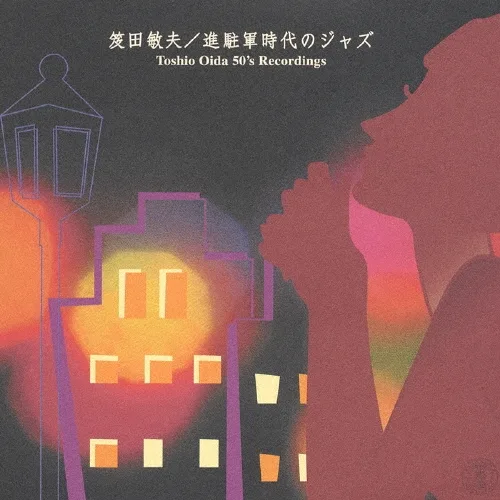
Cover of *Toshio Oida 50's Recordings* (進駐軍時代のジャズ), Polystar Jazz Library, 2003, a collection of his 1950s recordings. Standard copyright, all rights reserved, held by the rights holder of the Polystar Jazz Library release. This is not a Creative Commons or public-domain image; it is an album cover shown as an honestly disclosed editorial identification image. — https://tower.jp/item/1046968 (Tower Records Japan product page; the image is a retailer-hosted cover image, https://cdn.tower.jp/za/o/8W/zaP5_G5184948W.JPG)

Toshio Oida (笈田敏夫), known to fans by the nickname "Geso" (ゲソ), was a singer of American standards who became one of the best-known male jazz vocalists in postwar Japan. Japan Times, in its obituary, called him a pioneer among Japanese jazz singers, and a Japanese news-reference obituary reported that he took first place in the male jazz-vocal category of the Swing Journal readers' poll 26 times. He was also a television personality, a film and stage actor, a radio host and a jazz critic, which is why his name turns up in pop and variety contexts as well. The jazz thread is the continuous one: from the late 1940s to a concert in the spring of 2003 he sang standards, mostly in English, with jazz bands and rhythm sections.
He was born in Berlin on February 21, 1925, the eldest son of the pianist Mitsuyoshi Oida (笈田光吉, 1902 to 1964), who with Seishu Sonoda (園田清秀) championed absolute-pitch training. Berlin is a birthplace only: he grew up in Japan, attended Keio University's elementary school and then the university itself, and graduated from the economics faculty in 1957. During the war he learned English-language popular songs and, by one dictionary account, found jazz through Bing Crosby. He was conscripted into the navy and was in Oita when the war ended.
After the war he went back to Keio and sang with a Hawaiian band, then with his friend Setsuo Ohashi (大橋節夫), with whom he stayed close for decades. In 1946 he turned professional in Ohashi's group, the Honey Islanders. He then became a vocalist with Hiroshi Watanabe's Star Dusters and with the Blue Coats Orchestra, a big band founded in 1946 and usually described as Japan's oldest, where a Japanese television database dates his contract-singer status to 1950. He also worked the clubs that entertained American troops, and made his first records with the Blue Coats in 1953. That same year he made his record debut with Victor; a 1954 set of Mercury sides is documented in the Tom Lord discography with accompaniment that included Mitsuru Ono and the American drummer J. C. Heard.
The 1950s made him a star. From 1953 to 1960 he appeared on NHK's year-end Kohaku Uta Gassen eight years running, singing "La Vie en Rose" the first year and later "Alexander's Ragtime Band" (1957), "All the Way" (1958), "Pretend" (1959) and "Stardust" (1960); the singer Peggy Hayama was his opponent on the red-versus-white bill three times. In the early days of live television he once made more than 30 live appearances in a single month. He played the villain Charlie Sakurada, a drummer, in the Nikkatsu film Arashi o yobu otoko with Yujiro Ishihara, and later acted in the NHK drama Yokohama Monogatari (1982), in which he played George Kikuchi.
In the early 1960s he was sidelined from show business for a time, according to Japanese sources, and he came back through the jazz clubs and recordings that carry most of his catalogue.
That catalogue begins in earnest in the 1970s. In 1973 he sang on the Victor LP Eiji Kitamura At The Junk Vol.1, a club date led by the clarinetist Eiji Kitamura. In March 1976 he recorded It Was A Very Good Year for the audiophile label Three Blind Mice at Epicurus Studio in Tokyo, with arrangements by the guitarist Shoji Yokouchi and the tenor saxophonist Akira Miyazawa in the horn section; it remains the album most often named as his representative work. A direct-to-disc live recording with an audience followed in April 1977 (Always, a 200-copy limited release), then the jazz-funk-leaning Longest Dream (Express, 1981) with the Belgian harmonica player Toots Thielemans as a guest, and Forever (Carnival, 1985), a standards album with Hidehiko Matsumoto on tenor saxophone and Isoo Fukui on bass. In 1987 he took part in Matsumoto's 40th anniversary concert at NHK Hall, singing "Georgia On My Mind" with an arrangement by Norio Maeda and the big band of Tatsuya Takahashi. His New York album Goodnight Sweetheart (All Art, 1989) put him in front of the American drummer Grady Tate, the trombonist Al Grey, the pianist Bobby Tucker and the bassist Paul West. A 1957 radio recording by an all-star NHK band, issued decades later as Dynamic Jazz (2009), preserves him singing "Dark Eyes" with Hideo Shiraki on drums.
Recognition arrived in the 1980s and 1990s: a Mizushima Sanae Jazz Vocal Award encouragement prize in 1985; the Nanri Fumio Award, named for the trumpeter Fumio Nanri, in the mid-1980s (sources differ between 1985 and 1986); the 42nd Arts Festival Award in 1987 for his concert series "Geso's Whimsical Concert" (ゲソの気まぐれコンサート), Vol. 5, subtitled "Year One of American Pops in Japan"; the grand prize of the Tsumura Jazz Vocal Award in 1994; and the Order of the Sacred Treasure, fourth class, in 1995. He gave a concert in New York in 1994, hosted the "Weekend Jazz" segment on Radio Kansai, and kept performing to the end. His last concert in the "Geso's Whimsical Concert" series was held on April 28, 2003, and his last live show took place in Takarazuka on July 20, 2003.
Toshio Oida passed away on September 2, 2003, at a Tokyo hospital, of renal pelvic cancer, at the age of 78. The 2003 Japan Jazz Vocal Award gave him a posthumous special achievement prize, and the Japan Record Awards gave him a special achievement award the same year. His grave is at Hasedera in Minato, Tokyo.
Oida was an interpreter of the American songbook in English. A magazine profile from 1954 compared his singing to Bing Crosby, Frankie Laine and Perry Como, and the Japan Times obituary singled out his versions of Frank Sinatra and Bing Crosby standards as his best-known work. German reference sources place him in the swing and mainstream-jazz tradition, and the repertoire on his albums bears that out: "The Way You Look Tonight", "Basin Street Blues", "Body And Soul", "They Can't Take That Away From Me", "My Funny Valentine", "Days Of Wine And Roses", "Mood Indigo", "But Beautiful".
His recordings take two quite different shapes. The Three Blind Mice album of 1976 is a small-group studio date in the label's audiophile style, with a rhythm section, clarinet or saxophone obbligati and, on three tracks, a string quartet, all under Yokouchi's arrangements. Goodnight Sweetheart is a New York session with a rhythm section and two trombones. Longest Dream is the outlier: produced and arranged by the keyboardist Chikara Ueda, it sets "Master Blaster (Jammin')" and Lee Morgan's "The Sidewinder" beside Gershwin and Ellington tunes in a jazz-funk setting.
His identity was not only jazz. He was a Kohaku regular, a television host and an actor, he appears on a children's television theme, a 1972 musical album and Christmas-song compilations, and the 1987 Arts Festival award that honored his "American pops" concert series was given for pops rather than for a jazz record. The prizes that named him as a jazz singer are the Mizushima Sanae and Tsumura Jazz Vocal Awards, the Nanri Fumio Award and the posthumous Japan Jazz Vocal Award, and the repertoire, the sidemen and the readers' poll all point the same way.
- It Was A Very Good Year (1976, Three Blind Mice TBM-64) - Recorded March 17 and 18, 1976 at Epicurus Studio, Tokyo, arranged by Shoji Yokouchi, with Akira Miyazawa on tenor saxophone, Koji Fujika on clarinet and Yasuo Osawa on piano. YouTube - It Was A Very Good Year, full album · YouTube - "Basin Street Blues" Listen · Buy
- Always (1977, Lob) - A direct-to-disc live recording with an audience at Pioneer Studio, Tokyo, on April 18, 1977, with Yoku Tamura on piano; a limited release of 200 copies that was never put on sale. Buy
- Longest Dream (1981, Express ETJ-85020) - Produced and arranged by Chikara Ueda, with Toots Thielemans on harmonica on three tracks, including "My Longest Dream". YouTube - Longest Dream, full album Listen · Buy
- Forever (1985, Carnival RKL-8803) - Twelve standards arranged by Sakurako Ogyu, with Hidehiko Matsumoto on tenor saxophone, Shoji Suzuki on clarinet and Isoo Fukui on bass. Buy
- Goodnight Sweetheart (1989, All Art 292E 6047) - Recorded in New York with Grady Tate, Bobby Tucker, Paul West, Al Grey and Joel Helleny. Buy
- Eiji Kitamura At The Junk Vol.1 (1973, Victor SJV-631) - Oida as guest vocalist on a club date led by Eiji Kitamura, with Satoru Oda on tenor saxophone.
Toshio Oida (笈田敏夫): Full Discography
Japanese jazz and standards singer, born February 21, 1925 in Berlin; passed away September 2, 2003 in Tokyo. Discogs artist 2763082 (real name 笈田敏夫; group affiliation listed there: ホーム・クッキーズ). The Discogs list for him is short: about seven releases under his own name and a dozen compilation or guest appearances. Many of his postwar singles and radio recordings are not catalogued there. Chronological within each section.
Name variations on record: 笈田敏夫, Toshio Oida.
Leader
| Album | Year | Label | Personnel | Notes | Listen | Buy |
|---|---|---|---|---|---|---|
| It Was A Very Good Year | 1976 | Three Blind Mice, TBM-64 | Toshio Oida (vocals); Akira Miyazawa (tenor saxophone); Akitoshi Igarashi (alto saxophone); Koji Fujika (clarinet); Yasuo Osawa (piano); Shoji Yokouchi (guitar, arranger); Ikuo Shiosaki (guitar); Kunimitsu Inaba, Takashi Mizuhashi (bass); Hiroshi Sunaga (drums); Hiroshi Koizumi, Tadaaki Ono (violins); Konosuke Ono (viola); Yoshio Hattori (cello) | Recorded March 17 and 18, 1976 at Epicurus Studio, Tokyo. Ten tracks: "Dream A Little Dream Of Me", "If", "The Way You Look Tonight", "Basin' Street Blues", "Alone Again", "It Was A Very Good Year", "I Get A Kick Out Of You", "They Can't Take That Away From Me", "Body And Soul", "Mountain Greenery". Produced by Takeshi Fujii, engineered by Yoshihiko Kannari. Reissued on CD in 1997 (XRCD). Discogs release 5486752, master 1235602. | Full album on YouTube | Amazon |
| Always | 1977 | Lob (no catalog number) | Toshio Oida (vocals); Yoku Tamura (piano); bass and drums not identified | Studio live direct-to-disc recording with a live audience at Pioneer Studio, Tokyo, April 18, 1977. A limited edition of 200 copies made for the label's first anniversary and not put on sale. Eight tracks including "Cheek To Cheek", "What A Difference A Day Made", "Too Young", "I Get A Kick Out Of You", "Lover Come Back To Me" and "Singin' In The Rain". Produced by Keiichiro Ebihara. Discogs release 37205307. | not found | Amazon |
| Longest Dream | 1981 | Express, ETJ-85020 | Toshio Oida (vocals); Chikara Ueda (arranger, keyboards, producer); Toots Thielemans (harmonica, three tracks); Genji Sawai (alto saxophone); Mikinori Fujiwara (tenor saxophone); Takaaki Hayakawa (trombone); Hiroshi Okano, Toshio Araki (trumpets); Takao Naoi (electric guitar); Kazuya Sugimoto (electric bass); Haruo Shudai (drums); Tatsuji Yokoyama (percussion); Suzi Kim (backing vocals) | Recorded July 1 to 29, 1981 at Toshiba EMI Studio and Tamco Studio, Tokyo. Ten tracks including "52nd Street", "Master Blaster (Jammin')", "My Longest Dream", "They Can't Take That Away From Me", "Anything Goes", "The Sidewinder" and "Don't Get Around Much Anymore". Discogs styles: Vocal, Fusion. Discogs release 7265928, master 3234310. | Full album on YouTube | Amazon |
| Forever | 1985 | Carnival, RKL-8803 | Toshio Oida (vocals); Sakurako Ogyu (piano, arranger); Hidehiko Matsumoto (tenor saxophone, "My Funny Valentine" and "Days Of Wine And Roses"); Shoji Suzuki (clarinet, "Blue Skies"); Tomoya Tsukahara (guitar); Isoo Fukui (bass); Takaaki Nishikawa (drums) | Twelve tracks including "My Funny Valentine", "I've Got You Under My Skin", "On A Slow Boat To China", "Love Is A Many-Splendored Thing", "Days Of Wine And Roses", "I Left My Heart In San Francisco", "The Man She Loves", "It Was A Very Good Year" and "Mona Lisa". Discogs release date February 21, 1985 (his sixtieth birthday); the German Wikipedia gives 1984. Liner notes by Shoichi Yui. Discogs release 14544000, master 1846488. | not found | Amazon |
| Goodnight Sweetheart | 1989 | All Art, 292E 6047 | Toshio Oida (vocals); Bobby Tucker (piano); Paul West (bass); Grady Tate (drums); Crusher Bennett (congas); Al Grey, Joel Helleny (trombones) | New York session. Twelve tracks including "Sentimental Journey", "There's No You", "Where Can I Go Without You", "Will You Still Be Mine", "I'm A Fool To Want You", "Let's Fall In Love", "But Beautiful", "By Myself", "Mood Indigo" and "Goodnight Sweetheart". Released November 21, 1989. Discogs release 19348648. | not found | Amazon |
| My Way (mini-album) | undated | Self-released, GESO78 | Toshio Oida (vocals) | CD mini-album on his own imprint; four tracks: "I Love Songs", "I Love Jazz", "I Love Everyone", "I Walked Along The My Way". Discogs release 28222024. | not found | Amazon |
Co-Leader
| Album | Year | Label | Co-billed with | Notes | Listen | Buy |
|---|---|---|---|---|---|---|
| Song From Moulin Rouge / Watsa Malla U (78 rpm single, 笈田敏夫 / 小原重徳とブルー・コーツ) | undated | Nippon Mercury | Shigenori Obara and the Blue Coats (小原重徳とブルー・コーツ) | 10-inch shellac, mono. Discogs gives no date; the Blue Coats are the big band with which he began his recording career in the early 1950s. Discogs release 16709373. | not found | Amazon |
Guest, sideman and compilation appearances
Chronological, drawn from the Discogs entry for Oida and from credit pages for the releases below. Where Discogs lists him on a compilation without naming the track, the entry says so.
| Year | Release | Actual leader | Label | Notes | Listen | Buy |
|---|---|---|---|---|---|---|
| 1957 (issued 2009) | Dynamic Jazz | NHK All Stars (Fumio Nanri, Kyosuke Kami and Munehiro Okuda conducting) | Polydor, UCCJ-4064 | Oida sings "Dark Eyes" (track 8); Hideo Shiraki is the drummer on that track. Originally recorded for NHK broadcast on October 20 and 30, 1957; other vocalists include Tib Kamayatsu and Masae Kowaki. Discogs release 38665932. | not found | Amazon |
| 1972 | 魔犬ライナー0011変身せよ! (7-inch EP) | Various | Asahi Sonorama, APM-4018 | Children's television theme; Oida credited with vocals, music by Takeo Yamashita. Discogs release 19317109. | not found | Amazon |
| 1972 | みゅーじかる: 死神 (Musical: Shinigami) | Various | King Records, NAS-331 | Musical cast album; Discogs lists Oida as an appearance without a per-track credit. Discogs release 4997164. | not found | Amazon |
| 1973 | Eiji Kitamura At The Junk / Vol.1 | Eiji Kitamura | Victor, SJV-631 | Oida credited with vocals alongside Kitamura (clarinet), Satoru Oda (tenor saxophone), Koichi Kawabe (trombone), Yuzuru Sera (piano), Ichiro Masuda (vibraphone), Ikuo Shiosaki (guitar), Yukio Ikezawa (bass) and Hiroshi Sunaga (drums). Six tracks, including "Shine", "Rosetta", "Body And Soul" and "After You've Gone". Reissued in quadraphonic as On Stage. Discogs release 9114610. | not found | Amazon |
| 1975 | 日本のジャズ歌手たち - ジャズ・コン華やかなりし頃 - (Japanese Jazz Singers) | Various | Victor, SPX-1031~2 | Two-LP compilation of early Japanese jazz vocalists; Discogs lists Oida as a track appearance without naming the track. Discogs release 21648961. | not found | Amazon |
| 1977 | Epicurus One | Various | Yamaha, YM-1017 | Promotional sampler from the Epicurus Studio sessions (Three Blind Mice circle); Discogs lists Oida as a track appearance without naming the track. Discogs release 5240596. | not found | Amazon |
| 1981 | サンタとうたうクリスマス | Various | Polydor, 20MX 3030 | Christmas-song compilation; track appearance. Discogs master 2091133; reissued as Merry Christmas (Doremifa, 1993). | not found | Amazon |
| undated | クリスマスのうた | Various | Doremifa Records | 10-inch Christmas-song LP; track appearance. Discogs release 15196868. | not found | Amazon |
| 1987 | 40 Years Anniversary | Hidehiko Matsumoto | RCA, RHL-8475 | Recorded at Matsumoto's 40th anniversary memorial concert at NHK Hall on April 8, 1987. Oida is credited with vocals on "Georgia On My Mind" (A4), which Norio Maeda arranged and Tatsuya Takahashi & Tokyo Union performed; Matsumoto plays tenor saxophone. Discogs release 27314490. | not found | Amazon |
| 1995 | オフ・オフ・マザー・グース | Various (Jun Sakurai, producer) | Disques Kizna, TOCT-9286 | Mother Goose nursery-rhyme project; Oida is a track appearance (track 20, "ひと財産" on the YouTube listing). Discogs release 3619703. | "ひと財産" on YouTube | Amazon |
| 1998 | The Super Extended Resolution Sound Of TBM | Various | First Impression Music / Three Blind Mice, FIM XRCD 018 | Audiophile XRCD sampler of the Three Blind Mice catalog; Discogs lists Oida as a track appearance without naming the track. Discogs release 4779481. | not found | Amazon |
| 2007 | 天地聡子大全 フーコのコマソン・パラダイス | Fuko Amachi (天地総子) | Solid Records | Compilation of commercial-jingle recordings; Oida appears per Discogs. Discogs release 38630814. | not found | Amazon |
- Akira Miyazawa - tenor saxophone on It Was A Very Good Year (Three Blind Mice, 1976), on "The Way You Look Tonight", "Basin Street Blues", "I Get A Kick Out Of You", "They Can't Take That Away From Me" and "Body And Soul".
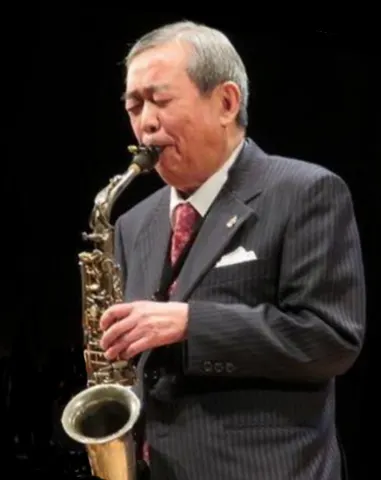
- Hidehiko Matsumoto - tenor saxophone on "My Funny Valentine" and "Days Of Wine And Roses" on Forever (1985); Oida also sang "Georgia On My Mind" at Matsumoto's 40th anniversary concert at NHK Hall on April 8, 1987.
- Isoo Fukui - bass on Forever (1985).
- Eiji Kitamura - the clarinetist and leader of Eiji Kitamura At The Junk Vol.1 (Victor, 1973), on which Oida is credited with vocals.
- Norio Maeda and Tatsuya Takahashi - arranger and big band behind "Georgia On My Mind" at the 1987 Matsumoto anniversary concert (released on the LP 40 Years Anniversary).
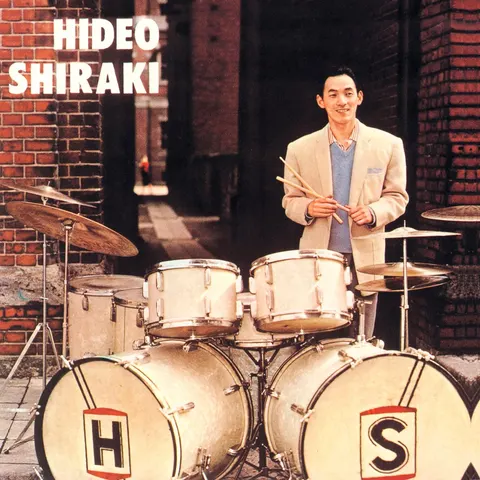
- Hideo Shiraki - drums on "Dark Eyes", Oida's feature in the 1957 NHK broadcast sessions issued as Dynamic Jazz (2009).
- Paul West - bass on Goodnight Sweetheart (All Art, 1989), alongside Grady Tate on drums, Bobby Tucker on piano, Al Grey and Joel Helleny on trombones and "Crusher" Bennett on congas.
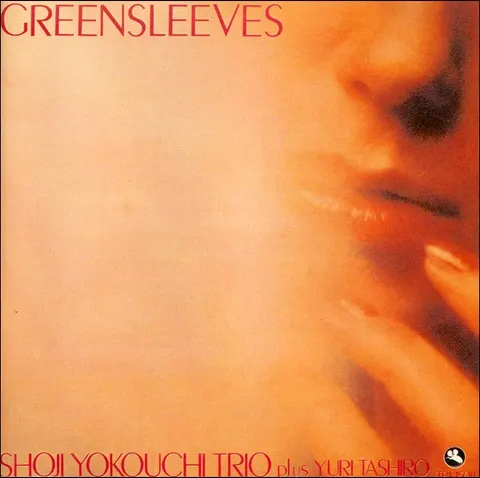
- Shoji Yokouchi - arranger and guitarist on It Was A Very Good Year; Koji Fujika (clarinet), Yasuo Osawa (piano), Hiroshi Sunaga (drums), Takashi Mizuhashi and Kunimitsu Inaba (bass) and Akitoshi Igarashi (alto saxophone) are on the same session.
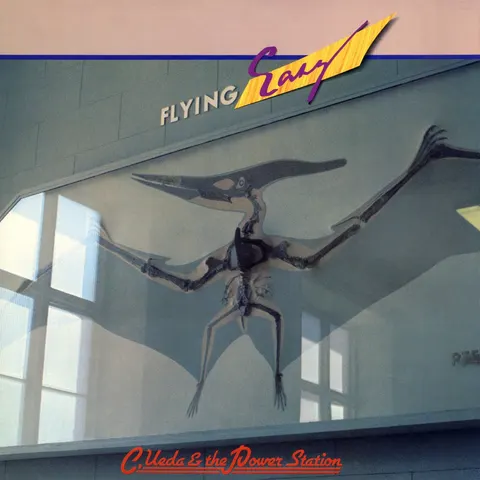
- Toots Thielemans and Chikara Ueda - guest harmonica and producer-arranger of Longest Dream (1981).
- Sakurako Ogyu and Shoji Suzuki - arranger-pianist and clarinetist on Forever (1985).
- Yoku Tamura - pianist on the direct-to-disc Always (1977).
- Setsuo Ohashi - friend and first professional employer, in the Honey Islanders.
- Mitsuru Ono and J. C. Heard - accompanists on his 1954 Mercury sessions.
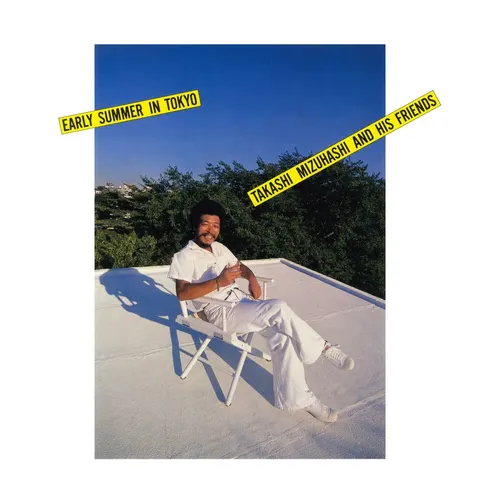
- Takashi Mizuhashi - one of the two bassists on It Was A Very Good Year (Three Blind Mice TBM-64, recorded 17 and 18 March 1976), playing on A3, A4, B2, B3 and B4 beside Kunimitsu Inaba.
More Mainstream Jazz Artists
See all 412 Mainstream Jazz artists →More Japanese Jazz Artists
See all 262 Japanese artists →- Discogs: Toshio Oida
- MusicBrainz: Toshio Oida
- Wikidata: Toshio Oida
- Wikipedia (Japanese): 笈田敏夫
- Japan Times obituary, September 3, 2003
- YouTube - It Was A Very Good Year, full album
- Toshio Oida on JazzProfiles.com
- r/JapaneseJazz
- Wikipedia (Japanese): 笈田敏夫 - birth, family, education, the Kohaku appearances and the awards list.
- Wikipedia (German): Toshio Oida - style comparisons, the 1953 and 1954 recordings, album notes and film credits, citing Tom Lord's The Jazz Discography, William Minor's Jazz Journeys to Japan and Toru Mitsui's Made in Japan.
- Japan Times: obituary of Toshio Oida, September 3, 2003
- imidas: 笈田敏夫 ジャズ歌手の草分け、死去 - career summary, the 26 Swing Journal poll wins, the 2003 final concerts.
- Kotobank: 笈田敏夫 - wartime and early career, awards list.
- THE TV: 笈田敏夫 - Stardusters and Blue Coats dates.
- Wikipedia (Japanese): ブルーコーツ
- Discogs: Toshio Oida, artist 2763082
- Discogs: It Was A Very Good Year, TBM-64
- Discogs: Longest Dream, ETJ-85020
- Discogs: Forever, RKL-8803
- Discogs: Goodnight Sweetheart, 292E 6047
- Discogs: Always, Lob
- Discogs: Eiji Kitamura At The Junk Vol.1
- Discogs: Hidehiko Matsumoto, 40 Years Anniversary
- Discogs: NHK All Stars, Dynamic Jazz