 JAZZPROFILES lives in the music 1,572 Jazz Artists fully Profiled!
 Isoo Fukui
Last updated August 30, 2026
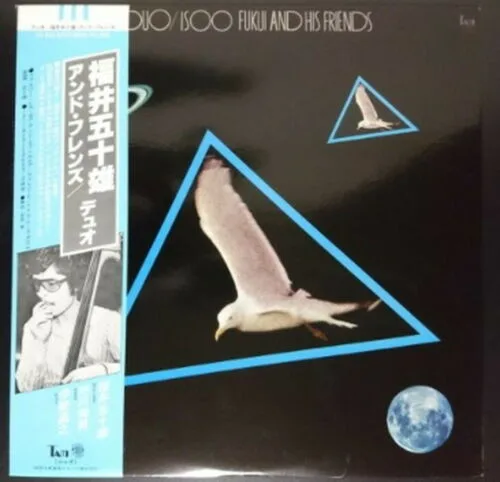
Cover (with obi strip featuring an inset artist photo) for Isoo Fukui and His Friends' "Duo" (1977, Trio Records), used as a stand-in — no free-licensed photo of Fukui could be located after a genuine search. Standard copyright, all rights reserved — held by Trio Records. This is not a Creative Commons–licensed image; it is used here as an honestly-disclosed editorial stand-in for a real photo. — Downloaded directly from the release's Discogs listing (https://www.discogs.com/release/8031488-Isoo-Fukui-His-Friends-Duo), cover scan hosted at i.discogs.com. Saved locally as portrait.jpg in this folder.
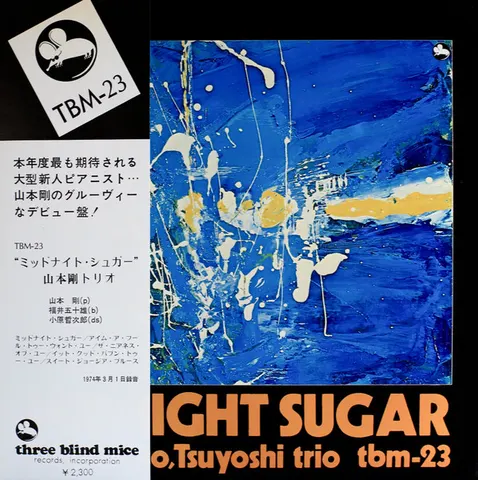
Isoo Fukui, born October 10, 1945, in Fukuoka Prefecture, is best known for a single, essential session: on March 1, 1974, he played bass on Midnight Sugar at Aoi Studio in Tokyo, the debut album of pianist Tsuyoshi Yamamoto, with drummer Tetsujiro Obara completing the trio. The album won the Swing Journal Jazz Disc Award and Best Engineering Award that year and established Yamamoto as one of the two defining artists on Three Blind Mice, the label most responsible for the international Japanese-jazz reissue wave. It has since been reissued by Light in the Attic and remains, half a century on, one of the records most cited as an entry point to the genre.
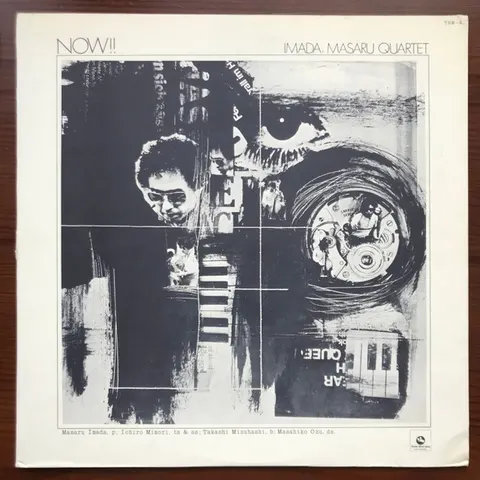
Fukui is described in secondary coverage as one of a small handful of 1970s players who genuinely reshaped how the bass functioned in Japanese jazz — playing both double bass and cello with a sound built around soul, rhythm, and a modal sensibility rather than conventional walking lines. He played on the Yamamoto Trio's second album, Misty, the same year, and spent much of the decade as a fixture of the Masaru Imada Trio, including Poppy (1973, also on Three Blind Mice), Green Caterpillar (1975), and One for Duke (1975). He also recorded extensively with the Hideo Ichikawa Trio through the mid-to-late 1970s.
He led his own dates under several billings across the same period — the Isoo Fukui Quartet (Sunrise/Sunset, 1976), Isoo Fukui And His Friends (Duo, 1977), and Isoo Fukui & Flyin' ('Round About Midnight, 1981) — but his own name almost never carried an album beyond these. His discography as a headline artist stayed thin throughout his career; his significance rests overwhelmingly on the sessions he shaped rather than the ones he led.
Fukui's playing is characterized in secondary sources as unusually soulful and rhythmically forward for its era, with a modal sensibility that set his contribution to Midnight Sugar and the Masaru Imada Trio records apart from more conventional straight-ahead walking-bass approaches common in Japanese piano-trio jazz of the period.
Isoo Fukui: Full Discography
Discogs artist ID 1943512 (福井五十雄). Identity confirmed via matching Discogs profile facts plus a WebSearch synthesis corroborating and expanding on the Midnight Sugar details. 51 credits total on the primary entity: 1 Main, 48 Appearance, 2 UnofficialRelease. A separate Discogs entity, "Isoo Fukui And His Friends" (16789363), carries his 1977 Duo leader date as its own Main credit.
As Leader
| Album | Year | Label | Billed as | Notes | Listen | Buy |
|---|---|---|---|---|---|---|
| Sunrise/Sunset | 1976 | — | Isoo Fukui Quartet | Amazon | ||
| Duo | 1977 | Trio Records | Isoo Fukui And His Friends | Source of this profile's stand-in cover image | Amazon | |
| 'Round About Midnight | 1981 | — | Isoo Fukui & Flyin' | Amazon | ||
| Crescent | 1989 | — | Noriki with Fukui | His one clean Main credit on the primary Discogs entity | Amazon |
The essential session — Tsuyoshi Yamamoto Trio
| Album | Year | Notes | Listen |
|---|---|---|---|
| Midnight Sugar | 1974 | Recorded March 1, 1974, Aoi Studio, Tokyo, with Tsuyoshi Yamamoto (piano) and Tetsujiro Obara (drums). Won the Swing Journal Jazz Disc Award and Best Engineering Award, 1974. Yamamoto's debut, and the album that established him as one of Three Blind Mice's two defining artists alongside Isao Suzuki. Reissued by Light in the Attic. | Spotify |
| Misty | 1974 | The trio's second album the same year | Spotify |
| Now's the Time | 1974 | Isao Suzuki & Sunao Wada with the Tsuyoshi Yamamoto Trio, George Otsuka Quintet +2 |
Sideman — the Masaru Imada Trio (1972-1979)
| Album | Year | Label | Notes |
|---|---|---|---|
| Toya, Shigeko with the Imada, Masaru Trio | 1972 | — | |
| Yuh Sings for You | 1973 | — | With Eiji Kitamura |
| Poppy | 1973 | Three Blind Mice | |
| Yokohama Concert | 1973 | — | With Shigeko Toya |
| Ascent (Imada Masaru Recital Live) | 1974 | — | |
| Green Caterpillar | 1975 | — | Masaru Imada Trio +2 |
| One for Duke | 1975 | — | |
| Blue Eyes | 1979 | — |
Sideman — the Hideo Ichikawa Trio and other leaders
| Album | Year | Leader | Notes |
|---|---|---|---|
| On the Trade Wind | n.d. | Hideo Ichikawa | |
| Invitation | 1976 | Hideo Ichikawa | |
| Tomorrow | 1976 | Hideo Ichikawa Trio | |
| Skyscraper | 1977 | Hideo Ichikawa Trio | |
| Fresh | 1976 | The Cats | |
| When the World Was Young | 1978 | Mitsuaki Kanno Trio | |
| Star Mythology | 1984 | Sakurako Ogyu Trio | |
| Emotion | 1998 | Takeshi Kurita Trio | |
| Live in Tokyo / Live in Tokyo Volume II | 1982 / 1984 | Bobby Enriquez |
Reissue-era compilations
| Compilation | Year | Notes |
|---|---|---|
| Shibuya Jazz Classics — Nobukazu Takemura Collection, Three Blind Mice Issue | 2005 | |
| The Three Blind Mice 45 Box | 2012 | Isao Suzuki Trio/Quartet / Tsuyoshi Yamamoto Trio |
Scale note
The tables above cover his single leader credit plus the sideman work most relevant to his documented career (the Tsuyoshi Yamamoto Trio and Masaru Imada Trio years). A substantial run of 1980s-2000s vocal-jazz session credits (Kingo Hamada, Toshio Oida, Kaoruko Hazuki, and others) was not individually catalogued.
- Tsuyoshi Yamamoto - Midnight Sugar (1974) and Misty (1974).
- Tetsujiro Obara - Drummer alongside Fukui on Midnight Sugar.
- Masaru Imada - Extensive trio work, 1972-1979.
- Hideo Ichikawa - Trio work, 1976-77.
More Mainstream Jazz Artists
See all 351 Mainstream Jazz artists →More Japanese Jazz Artists
See all 70 Japanese artists →- Isoo Fukui's full profile on JazzProfiles.com
- r/JapaneseJazz
- Discogs artist page
- Spotify — Midnight Sugar
- Isoo Fukui — Discogs artist 1943512 (profile and full paginated release list retrieved via the Discogs API)
- WebSearch synthesis of lightintheattic.net, elusivedisc.com, allmusic.com, and Wikipedia coverage of "Sugar (trio)" and Masaru Imada
- Spotify Web API catalog lookups