 JAZZPROFILES lives in the music 1,765 Jazz Artists fully Profiled!
Motohiko Hamase
Last updated October 21, 2026
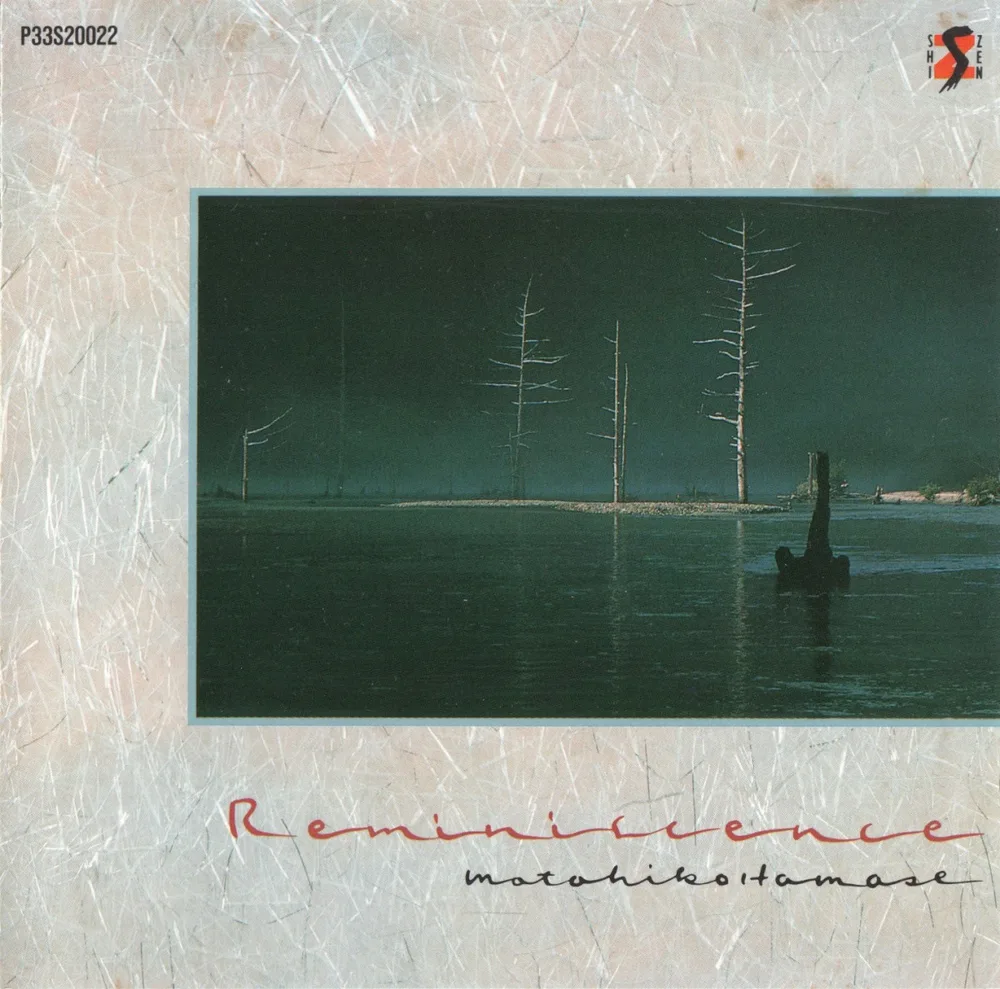
Cover of Reminiscence (Shi Zen, 1986), one of the albums recommended in the profile. Standard copyright, all rights reserved, held by Shi Zen and its successor rights holders. This is not a Creative Commons or public-domain image; it is an album cover shown as an honestly disclosed editorial identification image. — https://musicbrainz.org/release/ad5c5e77-da6f-49f4-9f33-289cf894f03f (image: https://coverartarchive.org/release/ad5c5e77-da6f-49f4-9f33-289cf894f03f/front-1200)
Motohiko Hamase (濱瀬元彦) is a Japanese bassist, composer and music theorist who has lived two musical lives in sequence and is now living them side by side. He was born on 15 April 1952 in Aichi Prefecture and left Keio University without graduating. From 1976 he worked as a sideman on acoustic and electric bass in the Tokyo jazz and fusion scene, then withdrew from that circuit in the mid-1980s and began releasing solo records built on fretless bass, sequencers and long, slowly turning ambient structures. Those records are what the rest of the world found in the 2010s and 2020s. The jazz is still in them, and he has gone on writing about it, teaching it and playing it.
His own biography says he has played in jazz groups since 1976 under leaders including Hidefumi Toki, Isao Suzuki, Mikio Masuda, Kazumasa Akiyama, Yasuaki Shimizu and George Otsuka. The record trail starts with Suzuki. On 19 and 27 October 1976 at Epicurus Studio in Tokyo, the Isao Suzuki Sextet cut Ako's Dream for Three Blind Mice (TBM-76). Hamase is on bass and electric bass, Suzuki on cello, Kazumi Watanabe and Akiyama on guitars, Tsuyoshi Yamamoto on piano, electric piano and synthesizer, and Akira Doi on drums. The next summer, on 24 July 1977 at the Denen Colosseum in Tokyo, Suzuki's group played "Feel Like Makin' Love" for the festival live set Jazz of Japan Live Under The Sky '77 (Flying Disk), with Hamase on electric bass, Doi, Akiyama and Watanabe again, Masanori Sasaji on Fender Rhodes and Noriko Miyamoto singing.
The end of 1977 was crowded. On 12 October, at Onkio Haus in Tokyo, he played electric and acoustic bass on tenor saxophonist Takao Uematsu's Straight Ahead (Trio Records), a sextet date with Masuda on keyboards, Hitoshi Okano on trumpet, Arihide Kurata on drums and Tatsuji Yokoyama on percussion; its opener "White Fire" was picked up forty years later for BBE's compilation J Jazz: Deep Modern Jazz From Japan 1969-1984. From 1 to 3 December he was the bassist on Masuda's own Moon Stone (Better Days) at Nippon Columbia's first studio, alongside Watanabe, Akiyama and drummer Hideo Yamaki. On 29 and 30 December he played bass on Moritat, the Philips album by the vocalist Minami Yasuda, with Masuda on piano, Kohsuke Mine on tenor saxophone, Hideo Miyata on harmonica, Hisaya Miyagi on violin and Hiroshi Murakami on drums.
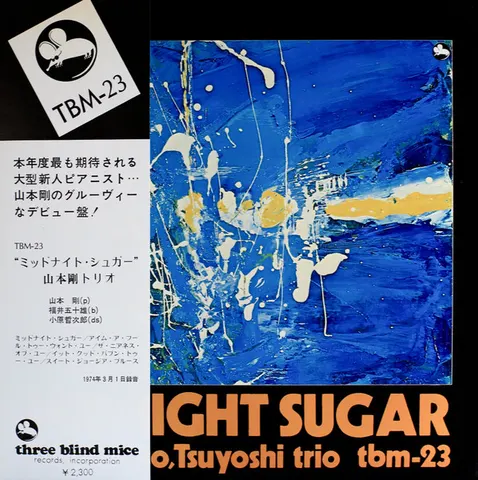
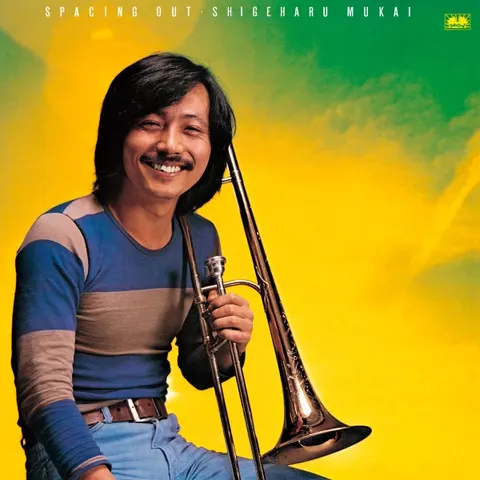
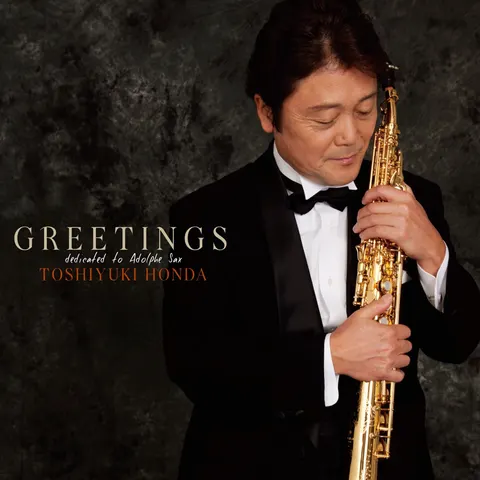
He kept that pace into the early 1980s. He is the electric bassist on Isao Suzuki & New Family's Mongolian Chant (Paddle Wheel, recorded 20 and 21 April 1980 at King Records Studio), where Shigeharu Mukai and Toshiyuki Honda are billed as guests. He is credited on Kazumasa Akiyama's Beyond The Door (Flying Dog, 1979) and Noriko Miyamoto's Vivid (Trio Records, 1979). Around Yasuaki Shimizu he played on the experimental pop records Shimizu produced and arranged for, among them Shimizu's own IQ 179 (1981), Tomoko Aran's 神経衰弱 (1981) and 色彩感覚 (1982), and Naomi Akimoto's One Night Stand (1982), a set of swing standards that opens with "On A Slow Boat To China" and includes "Sing Sing Sing". He is also the bassist on a 1982 live album credited simply to a group called Jazz, with Shimizu on tenor saxophone, Masanori Sasaji on keyboards and Yamaki on drums, that plays "Night In Tunisia" and "All The Things You Are"; the same group name returned on a 2004 studio album, also titled Night In Tunisia. Outside jazz he is credited on Pierre Barouh's Le Pollen (1982) and on the soundtrack to Katsuhiro Otomo's Domu (1984), where he plays what Discogs lists as wood bass. In print he published Fretless Bass Technique (Rittor Music, 1980) and Super Mechanical Training for Electric Bass (Rittor Music, 1982).
In 1982 he formed an experimental unit called Lager (ラーゲル), which ran until 1985. Around then he stopped taking session work. Japanese Wikipedia attributes the decision to a sense that his music did not fit what the industry wanted and that few players understood it. He turned to solo recording, and his first records came out on the Shi Zen label: Reminiscence on 25 January 1986 and Intaglio on 25 November 1986, both recorded at Sound Design Studio in Tokyo. On 12 June 1987 he played a live set at Spiral Garden in Aoyama with the pianist and synthesist Toshio Kaji and the percussionist Yasunori Yamaguchi, as part of the Eat Newsic Concert No. 3; Yamaguchi's playing that night led him to invite Yamaguchi into the studio for the next album. That was #Notes of Forestry, recorded at Studio Farm in Tokyo in March 1988 with the pianist Satsuki Shibano and co-produced for Wacoal Art Center by Yoshio Ojima, the first CD on Spiral's Newsic label (32CD-N001). The live set from the year before finally came out in 1993 on Hamase's own Lung label as Anecdote. Technodrome (Newsic, 1993) followed, and it was the first album he made entirely alone, recording, editing and programming everything including the bass on a computer.
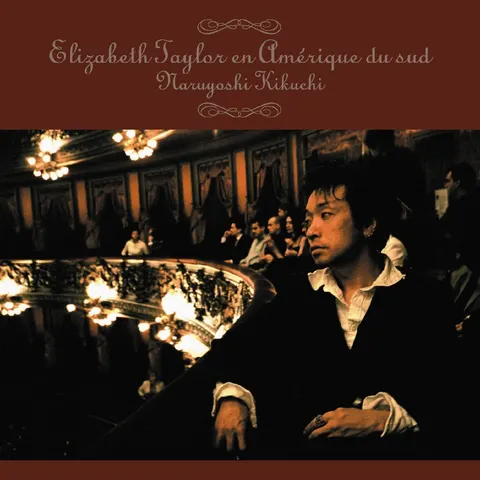
The writing runs alongside the records. Bass Line Book appeared from Zen-On in 1987, followed by Blue Notes and Tonality (Zen-On, 1992), which proposes a theory of how the blue note develops and a tonal system for improvisation and composition; in explaining blue notes, he put forward a hypothetical lower harmonic series. He founded a private music school, Lung (ラング), to train working players. Naruyoshi Kikuchi, the saxophonist and writer, later gave the approach the name "Lung method" and praised its importance. In 2013 Iwanami Shoten published his チャーリー・パーカーの技法 (English title Syntax in the Musical Language of Charlie Parker), a structural analysis of Parker's improvisations drawn from more than 600 scores and written from a player's point of view. He also contributed to two lecture books by Kikuchi and Yoshio Ootani: M/D: A Study of Miles Dewey Davis III (Esquire Magazine Japan, 2008) and Albert Ayler at the University of Tokyo (Bungeishunju, 2009).
In 2008 he formed the Motohiko Hamase E.L.F Ensemble, which plays his own compositions in new arrangements and was described on Japanese Wikipedia as a human-powered techno-jazz unit. Kikuchi joined as guest and producer. On 13 April 2010 the group recorded a concert at JZ Brat in Shibuya, released by Airplane Label as "The End Of Legal Fiction" Live At JZ Brat: Hamase on a six-string fretless bass built by Jan Knooren and run through a guitar synthesizer, Rei Shimizu on a second bass and electronics, Katsutoshi Narisawa on piano and synthesizer, Yoichi Okabe on percussion, and Kikuchi on saxophone.
His older records returned to circulation from 2018. Studio Mule in Europe issued new recordings of Intaglio (10 August 2018) and Reminiscence (19 October 2018), played entirely by Hamase on six-string fretless bass, with Kaji on piano for Intaglio. In May 2020 the Swiss label WRWTFWW Records reissued #Notes of Forestry, Technodrome and Anecdote on vinyl and CD, with a numbered box set of 60 signed by Hamase. His official site lists a new mix, Technodrome Variant, in October 2022, and says he resumed live solo shows combining digital and acoustic instruments. In June 2025 he resumed jazz performances with the pianist Toshiyuki Daitoku. A concert at JZ Brat in Shibuya with Rei Shimizu and Yoichi Okabe was billed for 26 August 2026 under the tags ambient, experimental, improvised and jazz. He turned 74 in April 2026.
Hamase's instrument on his later records is a six-string fretless bass built by Jan Knooren, and on the 2010 live album he runs it through a guitar synthesizer. On the 1970s sideman records he is an electric and acoustic bassist working inside the fusion and jazz-funk sessions of the period, under Masuda's electric piano or Suzuki's cello, in sextets and behind a vocal feature. The solo records are a different proposition. They are slow, tonal and built from short repeating cells, and Dean Suzuki, reviewing #Notes of Forestry in Audion (July 1990) and Ear Magazine (April 1991), heard minimalism influenced by Steve Reich, with a Zen-like calm, a less insistent pulse and a more complex, sometimes dissonant harmony that stays tonal. He singled out the title track for its jazz-tinged bass and flute solos set inside strict post-minimal structures.
Technodrome is where he says out loud what he is doing. In his own liner essay he describes it as a response to house music and to recent records by Brian Eno (Nerve Net) and Jon Hassell (City: Works of Fiction), an attempt to express urban consciousness through the repetition of very short phrases and a sense of time that binds rather than develops. He calls the style ambient house. One of its tracks, "End Of Legal Fiction", he describes as aimed at believers in jazz mythology, and the album was the first he made entirely alone. His records have also been compared to those of Jon Hassell and Midori Takada.
The jazz did not disappear. The theory books, the Parker analysis and the Kikuchi lecture contributions are all about improvised language, the E.L.F Ensemble plays at JZ Brat in Shibuya with a saxophonist and a second bassist, and the venue lists his shows under jazz as well as ambient and experimental music. The 2018 Studio Mule re-recordings are catalogued by Discogs under both Electronic and Jazz.
- Ako's Dream (Isao Suzuki Sextet, 1976, Three Blind Mice TBM-76) - The earliest record on which he is credited, recorded in October 1976 with Isao Suzuki, Kazumi Watanabe, Kazumasa Akiyama, Tsuyoshi Yamamoto and Akira Doi. Hamase plays bass and electric bass. YouTube - Ako's Dream, full album Listen · Buy
- Intaglio (1986, Shi Zen 1342-91) - His second solo record, issued in November 1986 and re-recorded for Studio Mule in 2018. YouTube - Intaglio, full album Listen · Buy
- Reminiscence (1986, Shi Zen 1342-74) - The first solo record, issued ten months before Intaglio. YouTube - Reminiscence, full album Listen · Buy
- #Notes of Forestry (1988, Newsic 32CD-N001) - Recorded in March 1988 with Satsuki Shibano on piano and Yasunori Yamaguchi on percussion; the record most often cited for the post-minimal reading of his work. YouTube - #Notes of Forestry, full album Listen
- Anecdote (1993, Lung 30CD-0001) - The June 1987 live set from Spiral Garden, with material from the first solo records in its original trio form. Hamase himself describes those pieces as products of his jazz influences. YouTube - Anecdote Listen
- Technodrome (1993, Newsic 28CD-NO19) - The all-alone, computer-built album that he describes as ambient house. YouTube - Invisible City Listen · Buy
- "The End Of Legal Fiction" Live At JZ Brat (Motohiko Hamase E.L.F Ensemble and Naruyoshi Kikuchi, 2010, Airplane Label AP1041) - His re-imagining of the solo catalogue as a jazz-club quintet, recorded 13 April 2010. YouTube - release trailer Listen · Buy
Motohiko Hamase (濱瀬元彦) - Full Discography
Japanese bassist, composer and music theorist. Born 15 April 1952, Aichi Prefecture. Discogs artist 386061.
Name variations on record: M. Hamase, 浜瀬元彦, 濱瀬元彦. Discogs also lists "Hamase Motohiko" in Japanese name order.
Group affiliations: Isao Suzuki Sextet, 鈴木勲グループ, Jazz, 濱瀬元彦 E.L.F Ensemble. Lager (1982 to 1985) is named in his official biography.
Leader
| Album | Year | Label | Personnel | Notes | Listen | Buy |
|---|---|---|---|---|---|---|
| Reminiscence | 1986 | Shi Zen, 1342-74 (28SD) | Motohiko Hamase (composer) | Vinyl LP released 25 January 1986. Eight tracks: "Childhood", "Plateau", "Doll", "Tree", "Intermezzo", "Duplicated Scene", "Alphaville", "Reminiscence". Recorded at Sound Design Studio, Tokyo. Discogs master 487929. | Full album on YouTube | Amazon |
| Intaglio | 1986 | Shi Zen, 1342-91 (28SD) | Motohiko Hamase (electric bass, synthesizers, computer programming, producer) | Vinyl LP released 25 November 1986. Seven tracks: "Circlet", "Lung", "Intaglio", "Elan Vital", "Oiseaux A La Pluie", "Aborigine", "Symptom". Recorded at Sound Design Studio, Tokyo. Fixed retail price 2,800 yen. Discogs master 1049308. | Full album on YouTube | Amazon |
| #Notes of Forestry (樹木の音階) | 1988 | Newsic / Wacoal Art Center, 32CD-N001 | Motohiko Hamase (bass, electric bass solo, synthesizer, sequence programming, composer, producer), Satsuki Shibano (acoustic piano), Yasunori Yamaguchi (percussion) | CD, the first release on Spiral's Newsic label. Four tracks: "#Notes of Forestry", "Pascal", "Spiral for Multipul Instruments", "Nude". Recorded at Studio Farm, Tokyo, March 1988, mixed at Onkio Haus Studio, March 1988; mixed by Juli Kawai; synthesizer manipulated by Akila Takahashi and Hamase; co-produced for Wacoal Art Center by Yoshio Ojima. About 39 minutes. Discogs master 1381147. Reviewed by Dean Suzuki in Audion (July 1990) and Ear Magazine (April 1991). | Full album on YouTube | Amazon |
| Anecdote (Live at Spiral Garden '87) | 1993 | Lung, 30CD-0001 | Motohiko Hamase (fretless bass, synthesizers, computer programming, composer), Toshio Kaji (acoustic piano, synthesizer), Yasunori Yamaguchi (acoustic percussion) | CD on Hamase's own label. Recorded live on 12 June 1987 at Spiral Garden, Aoyama Spiral, Tokyo, at the Eat Newsic Concert No. 3, and mastered at Hitokuchizaka studio, Tokyo, on 8 January 1993. Twelve tracks, including "Aborigine", "Lung", "Symptom", "Circlet", "Elan Vital", "Pascal Variant", "Intaglio", "Duplicated Scene" and "Plateau". Live mixing by Hiromi Ishii. Discogs master 1750721. | Title track on YouTube | Amazon |
| Technodrome | 1993 | Newsic / Wacoal Art Center, 28CD-NO19 | Motohiko Hamase (all instruments, programming, editing, mixing); Harmo Saxophone Quartet on "Lattice": Kinichi Nakamura (soprano saxophone), Akemi Endo (alto), Shinichi Iwamoto (tenor), Katsuki Tochio (baritone) | CD. Eight tracks: "Invisible City", "Technodrome", "Imagery", "Opaque", "End Of Legal Fiction", "Chirico", "Moriana", "Lattice (For Saxophone Quartet)". The first album he made entirely alone; co-produced by Yoshio Ojima. "Lattice" was composed in 1988 for piano, percussion and bass and arranged for saxophone quartet in 1990; the Harmo Saxophone Quartet premiered it on 8 March 1991 at Ishibashi Memorial Hall. Discogs master 1752967. | Invisible City on YouTube | Amazon |
| Intaglio (new recording) | 2018 | Studio Mule, Studio Mule 8 | Motohiko Hamase (six-string fretless bass, composer, producer), Toshio Kaji (piano, composer, producer), Rei Shimizu (mixing, engineering, mastering) | Vinyl LP released 10 August 2018, a new recording of the 1986 album in which a few pieces were dropped and new ones added. Seven tracks: "Circlet", "Rain Calls For Bird", "Lung", "Symptom", "Elan Vital", "Aborigine", "Intaglio". Cover photograph by Yuichi Tanizawa. Discogs master 1425419. | 1986 original on YouTube | Amazon |
| Reminiscence (new recording) | 2018 | Studio Mule, studio mule 10 | Motohiko Hamase (six-string fretless bass, all performances, composer) | Vinyl LP released 19 October 2018, a new recording of the 1986 album. Seven tracks: "Childhood", "Intermezzo", "Tree", "Reminiscence", "Water Meadow", "Doll", "Na Mo Che". All bass solos played on a six-string fretless bass made by Jan Knooren. Discogs master 1507473. | Title track on YouTube | Amazon |
| #Notes of Forestry / Technodrome / Anecdote (box set) | 2020 | WRWTFWW Records, WRWTFWW0034 / 0035 / 0036 | Motohiko Hamase and the original personnel of the three albums | Three reissues in a hardcover slipcase, edition of 60, with an insert signed by Hamase. Each title was also released separately on vinyl and CD in May 2020, overseen by the artist and with liner notes. Part of the label's Esplanade series. | WRWTFWW page for #Notes of Forestry | Amazon |
Technodrome Variant, a new mix of Technodrome made in 2021, is announced on his official site as a new album release dated 1 October 2022; it is not listed on his Discogs artist page.
Co-Leader
| Album | Year | Label | Co-billed with | Personnel | Notes | Listen | Buy |
|---|---|---|---|---|---|---|---|
| "The End Of Legal Fiction" Live At JZ Brat | 2010 | Airplane Label, AP1041 | Motohiko Hamase E.L.F Ensemble and Naruyoshi Kikuchi | Motohiko Hamase (six-string fretless Knooren bass with guitar synthesizer, producer), Rei Shimizu (bass), Katsutoshi Narisawa (grand piano, synthesizer), Yoichi Okabe (percussion), Naruyoshi Kikuchi (saxophone, producer) | CD recorded live at JZ Brat, Shibuya, on 13 April 2010. Seven tracks: "Technodrome", "Imagery", "Burning Angels", "End Of Legal Fiction", "Opaque", "# Notes Of Forestry", "Anecdote". Mastered by Hideki Ataka and Rei Shimizu. | Release trailer on YouTube | Amazon |
Guest and Sideman Appearances
| Album | Year | Label | Actual leader | His credit and the band | Notes | Listen | Buy |
|---|---|---|---|---|---|---|---|
| Ako's Dream | 1976 | Three Blind Mice, TBM-76 | Isao Suzuki Sextet | Bass, electric bass. With Isao Suzuki (cello), Akira Doi (drums), Kazumasa Akiyama and Kazumi Watanabe (guitars), Tsuyoshi Yamamoto (piano, electric piano, synthesizer) | Recorded 19 and 27 October 1976 at Epicurus Studio, Tokyo. Four tracks: "Ako's Dream", "Isao Family", "Feel Like Makin' Love", "Seven Come Eleven". Produced by Takeshi Fujii; recording engineer Yoshihiko Kannari. Discogs master 496716. | Full album on YouTube | Amazon |
| Jazz Of Japan Live Under The Sky '77 | 1977 | Flying Disk, VIJ-9001/9002 | Various (2LP festival set) | Electric bass on side B, "Feel Like Makin' Love", with 鈴木勲グループ (Isao Suzuki's group): Akira Doi (drums), Kazumasa Akiyama and Kazumi Watanabe (electric guitars), Masanori Sasaji (Fender Rhodes), Isao Suzuki and Tatsuji Yokoyama (percussion), Noriko Miyamoto (vocals) | Recorded 24 July 1977 at Denen Colosseum, Tokyo. Hamase appears only on that track. Discogs master 2163811. | not found | Amazon |
| Straight Ahead | 1977 | Trio Records, PAP-9100 | Takao Uematsu | Electric bass, acoustic bass. With Takao Uematsu (tenor saxophone), Hitoshi Okano (trumpet), Mikio Masuda (piano, electric piano, synthesizer), Arihide Kurata (drums), Tatsuji Yokoyama (percussion) | Recorded 12 October 1977 at Onkio Haus, Tokyo. Six tracks: "White Fire", "Mysterious Jump", "Fancy Free", "Afro Blue", "Invitation", "Samba To Kiki". "White Fire" was later included on BBE's compilation J Jazz: Deep Modern Jazz From Japan 1969-1984 (2018). Discogs master 859883. | "White Fire" on YouTube | Amazon |
| Moon Stone | 1978 | Better Days, YX-7583-ND | Mikio Masuda | Electric bass. With Mikio Masuda (electric piano, organ, clavinet, synthesizer), Kazumi Watanabe (electric guitar), Kazumasa Akiyama (electric guitar, vocals), Hideo Yamaki (drums) | Recorded 1 to 3 December 1977 at Nippon Columbia's first studio, Tokyo. Seven tracks including "Mickey's Samba", "Funky Wave", "Moon Stone" and "Space Coaster". Produced by Masuda. Hamase is also credited on "Mickey's Samba" and "Moon Stone" in the 2016 compilation More Better Days (Better Days, COCB-54184/5). Discogs master 978866. | Title track on YouTube | Amazon |
| Moritat (お定のモリタート) | 1978 | Philips, RJ-7428 | Minami Yasuda (安田南) | Bass. With Minami Yasuda (vocals), Mikio Masuda (piano), Kohsuke Mine (tenor saxophone), Hideo Miyata (harmonica), Hisaya Miyagi (violin), Hiroshi Murakami (drums) | Recorded 29 and 30 December 1977. Eight tracks, from "Somebody Loves Me" and "Golden Earrings" to "Moon River" and "I'm Walkin'". Discogs master 553109. | Title track on YouTube | Amazon |
| New York (compilation) | 1978 | GT Music reissue, MHCL 30127 (2013) | Various | Bass on "Central Park" (track 5), led by Kazumasa Akiyama, with Hideo Yamaki (drums), Masanori Sasaji (electric piano, synthesizer), Tatsuji Yokoyama (percussion), Noriko Miyamoto (vocals) | Eight-track album originally recorded and released in 1978; Hamase is credited on the Discogs entry for the 2013 reissue. Discogs master 1035895. | not found | Amazon |
| Beyond The Door | 1979 | Flying Dog, FLD-10015 | Kazumasa Akiyama with Next Page | Bass. With Kazumasa Akiyama (guitar), Akira Doi (drums), Masanori Sasaji (keyboards), Jimmy Murakawa and Noriko Miyamoto (chorus) | Eight tracks, including "Mi's Song", "Central Park" and "Capricorn Knight". Discogs master 1507474. | not found | Amazon |
| Vivid | 1979 | Trio Records, 3B-1023 | Noriko Miyamoto | Bass. With Noriko Miyamoto (vocals), Noboru Doi (drums), Kazumasa Akiyama (guitar), Masanori Sasaji (keyboards), Tatsuji Yokoyama (percussion) | Eight tracks, including "Feel Like Makin' Love" and "Love Me More". Produced by Atsuhiro Sugita. Discogs master 1211117. | not found | Amazon |
| Mongolian Chant | 1980 | Paddle Wheel, K28P-6035 | Isao Suzuki & New Family, with Shigeharu Mukai and Toshiyuki Honda as billed guests | Electric bass. With Isao Suzuki (bass, piccolo bass, Hammond organ, arranger), Shigeo Hirayama (drums), Takayuki Kato (guitars, electric sitar), Ichiro Doi (electric piano), Toshiyuki Honda (soprano and alto saxophone, flute), Shigeharu Mukai (trombone), Shuji Miyake (trumpet, flugelhorn) | Recorded 20 and 21 April 1980 at King Records Studio, Tokyo. Five tracks: "Mongolian Chant", "Misperception", "Joy", "Falcon", "Impression Of Charles Mingus". Discogs master 700450. | Title track on YouTube | Amazon |
| Guitar Workshop Vol. 3 Direct Disk | 1980 | Invitation, VIH-6062 | Kenji Omura, Kazumasa Akiyama, Katsutoshi Morizono, June Yamagishi | Electric bass on "Hawaiian Village" (side B) | Direct-to-disc recording, 29 September and 3 October 1979. Discogs master 1103909. | Full album on YouTube | Amazon |
| IQ 179 | 1981 | B&M, YF-7027-B | Yasuaki Shimizu | Acoustic bass on "Shashin" (side B) | Twelve-track album; sound produced by Yasuaki Shimizu. Discogs master 765106. | "Crow" on YouTube | Amazon |
| 神経衰弱 (Shinkei Suijaku) | 1981 | Warner Bros. Records, L-12502W | Tomoko Aran (亜蘭知子) | Acoustic bass on side B, track 2. Produced by Daikoh Nagato and Yasuaki Shimizu, who also plays tenor saxophone, flute and synthesizer | Ten tracks. Discogs master 988775. | Title track on YouTube | Amazon |
| 色彩感覚 (Shikisaikankaku) | 1982 | Warner Bros. Records, M-12512 | Tomoko Aran | Bass. Yasuaki Shimizu plays saxophone; Masanori Sasaji arranges and produces the sound | Ten tracks, including "Love Is The Moment", "Swing Easy", "Blue Note" and "Nostalgia". Discogs master 1165661. | "The Married Man" on YouTube | Amazon |
| One Night Stand | 1982 | Invitation, VIH-28084 | Naomi Akimoto (秋本奈緒美) | Bass. Yasuaki Shimizu plays saxophone; Masanori Sasaji produces and plays keyboards | Ten tracks of standards, including "On A Slow Boat To China", "Sing Sing Sing", "Come Rain Or Come Shine" and "Speak Low". Discogs master 1375228. | "Speak Low" on YouTube | Amazon |
| Jazz Live | 1982 | Better Days, YF-7054-BD | Jazz (a group) | Bass. With Yasuaki Shimizu (tenor saxophone), Masanori Sasaji (keyboards), Hideo Yamaki (drums) | Six tracks: "Night In Tunisia", "Clash", "Hamadryad", "Sting", "All The Things You Are", "Axe". Discogs master 2690324. | "Night In Tunisia" on YouTube | Amazon |
| Le Pollen (花粉) | 1982 | Columbia, YF-7056 | Pierre Barouh | Bass. Arrangements by Ryuichi Sakamoto, Yasuaki Shimizu, Keiichi Suzuki, Nobuyuki Shimizu, Yukihiro Takahashi and others | Nine-track album of French and Japanese songs. Discogs master 201152. | "Le Pollen" on YouTube | Amazon |
| Off Shore (compilation) | 1983 | CBS/Sony, 25AH 1424 | Haruomi Hosono, Ryuichi Sakamoto, Shigeru Suzuki, Masaki Matsubara, Masataka Matsutoya, Tatsuro Yamashita, Kazumasa Akiyama | Bass on "Central Park" (side B, track 3) | Nine-track compilation. Discogs master 637809. | not found | Amazon |
| 童夢 (Domu: A Child's Dream) | 1984 | Starchild, K28G-7184 | 伊豆一彦 | Bass (listed as wood bass) | Soundtrack to Katsuhiro Otomo's manga Domu; cover illustration by Otomo. Discogs master 1507221. | Album on YouTube | Amazon |
| ムーンフラワー (Moon Flower) | 1985 | Taurus, 28TR-2086 | Keiko Mizukoshi | Double bass (wood bass) on "Remember" (side B, track 4) | Twelve-track album. Discogs release 9294194. | "My Pure Love" on YouTube | Amazon |
| Plays Japanese Songs II | 1999 | Firebird, KIJC 9243 | Gary Karr | Supervised by (credit on Discogs) | Double-bass album of Japanese songs recorded 2 and 3 December 1998 at Ark Hall, Muse, Tokorozawa, Saitama. Discogs master 1890147. | Album on YouTube | Amazon |
| Night In Tunisia | 2004 | Absord Music Japan, ABCS-62-63 | Jazz (a group) | Electric bass | Six tracks: "There Is No Greater Love", "Zep", "Night In Tunisia", "Spankin' Stuff", "Stella By Starlight", "Yatagan". Recorded at Columbia Studios, Tokyo. 2CD set. Discogs release 22327597. | not found | Amazon |
Compilation and Mix Appearances
| Release | Year | Label | Notes |
|---|---|---|---|
| Shizen Collection '86 | 1986 | Shi Zen, 1342-87 (25SD) | Compilation of Shi Zen label artists, on which Discogs lists him as a contributing artist. Discogs master 1397368. |
| Newsic Sampler | 1990 | Newsic (cassette, promo) | Includes "Notes Of Forestry". |
| Equipment - Selection From The Ambient Works Of NEWSIC | 1992 | Wacoal Art Center / Newsic, 25CD-N015 | Includes "Pascal" and "#Notes Of Forestry", both composed, produced and performed by Hamase. |
| More Better Days | 2016 | Better Days, COCB-54184/5 | Reissue compilation; Hamase plays electric bass on "Mickey's Samba" and "Moon Stone" (both from Mikio Masuda's Moon Stone). |
| J Jazz: Deep Modern Jazz From Japan 1969-1984 | 2018 | BBE, BBE434CCD | Includes "White Fire" by Takao Uematsu, with Hamase on electric and acoustic bass. |
| DJ and radio mixes featuring his music | 2018-2024 | Various | His tracks have been used in DJ Pluto's Galaxy Blues (2018), Chihei Hatakeyama's Isolatedmix 93 (2019), Sleep D's Clubsport #16 (2019) and Para One's Ile Europa Vol. 3 (2024), all mixes or mixtapes. |
Books and Method Publications
- Fretless Bass Technique (Rittor Music, 1980)
- Super Mechanical Training for Electric Bass (Rittor Music, 1982)
- Bass Line Book (Zen-On, 1987)
- Performer Perfect Reference (JICC, 1990)
- New Method for Electric Bass (Lung Inc., 1991) and a companion video, Basic Theory of Performance Technique (for Electric Bass) (Lung Inc., 1992)
- Blue Notes and Tonality (Zen-On, 1992)
- Structure of Score Reading for Guitar and Bass: Theory (1996), for Guitar: Practice (1996) and for Bass: Practice (1997), all Zen-On
- Syntax in the Musical Language of Charlie Parker: The Structural Analysis of the Improvisations (チャーリー・パーカーの技法, Iwanami Shoten, 2013)
- Contributions to Naruyoshi Kikuchi and Yoshio Ootani, M/D: A Study of Miles Dewey Davis III (Esquire Magazine Japan, 2008) and Albert Ayler at the University of Tokyo (Bungeishunju, 2009)
- Isao Suzuki - the bandleader on his earliest credited record, Ako's Dream (Three Blind Mice, 1976), on the live version of "Feel Like Makin' Love" on Jazz of Japan Live Under The Sky '77 (Flying Disk, 1977), and on Mongolian Chant (Paddle Wheel, 1980), where Hamase plays electric bass. Discogs also lists "Isao Suzuki Sextet" and "鈴木勲グループ" among his group affiliations.
- Mikio Masuda - leader of Moon Stone (Better Days, December 1977), where Hamase plays electric bass; also the pianist on Takao Uematsu's Straight Ahead (Trio Records, October 1977) and on Minami Yasuda's Moritat (Philips, December 1977), both with Hamase on bass.
- Kazumi Watanabe - guitarist on Ako's Dream (1976), on the 1977 live version of "Feel Like Makin' Love", and on Moon Stone (1978).
- Tsuyoshi Yamamoto - pianist, electric pianist and synthesizer player on Ako's Dream (1976).
- Yasuaki Shimizu - saxophonist, arranger and producer on the records Hamase played on in 1981 and 1982: Shimizu's own IQ 179, Tomoko Aran's 神経衰弱 and 色彩感覚, Naomi Akimoto's One Night Stand, and the live album credited to the group Jazz, where Shimizu plays tenor saxophone.
- Kohsuke Mine - tenor saxophonist on Minami Yasuda's Moritat (1978), with Hamase on bass.
- Shigeharu Mukai and Toshiyuki Honda - billed guests (trombone, and alto and soprano saxophone and flute) on Isao Suzuki & New Family's Mongolian Chant (1980), where Hamase plays electric bass.
- Takao Uematsu - tenor saxophonist and leader of Straight Ahead (Trio Records, 1977), on which Hamase plays electric and acoustic bass.
- Kazumasa Akiyama - guitarist on Ako's Dream (1976); Hamase is credited on his Beyond The Door (Flying Dog, 1979) and on "Central Park", Akiyama's track on the 1978 compilation New York.
- Toshio Kaji and Yasunori Yamaguchi - piano and percussion on the 1987 Spiral Garden live set released as Anecdote; Yamaguchi also plays on #Notes of Forestry, and Kaji plays piano on the 2018 Intaglio.
- Satsuki Shibano and Yoshio Ojima - pianist and co-producer on #Notes of Forestry (1988); Ojima also co-produced Technodrome.
- Naruyoshi Kikuchi - saxophonist and producer on the 2010 JZ Brat live album with the E.L.F Ensemble, and co-author with Yoshio Ootani of the two lecture books to which Hamase contributed.
- Rei Shimizu, Katsutoshi Narisawa and Yoichi Okabe - the rest of the E.L.F Ensemble on the 2010 JZ Brat live album.
- Hiroshi Murakami - drummer on Moritat, the Minami Yasuda album recorded on 29 and 30 December 1977 with Masuda on piano and Kohsuke Mine on tenor saxophone.
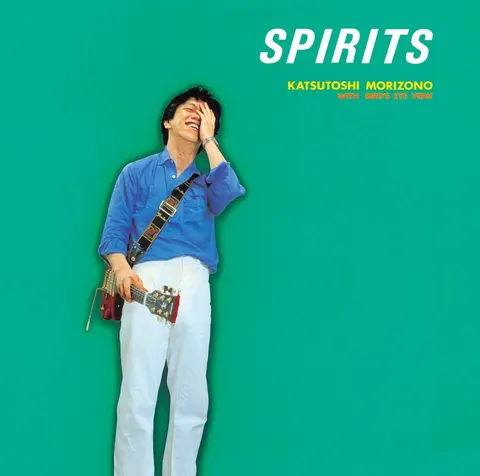
- Katsutoshi Morizono - fellow player on Guitar Workshop Vol. 3 Direct Disk (Invitation, 1980), on which Morizono sings and plays electric guitar and Hamase plays electric bass.
More Jazz Fusion Artists
See all 351 Jazz Fusion artists →More Japanese Jazz Artists
See all 262 Japanese artists →- Official site (English)
- Official YouTube channel
- Instagram: @motohiko_hamase_live
- Discogs: Motohiko Hamase
- WRWTFWW Records: #Notes of Forestry
- Motohiko Hamase on JazzProfiles.com
- r/JapaneseJazz
- Official biography (English)
- Official books list
- Official discography notes and press reviews
- Wikipedia (Japanese): 濱瀬元彦
- Wikipedia (German): Hamase Motohiko
- Wikidata: Q15178618
- Discogs: Motohiko Hamase, artist 386061
- Discogs: Ako's Dream, Isao Suzuki Sextet, Three Blind Mice TBM-76
- Discogs: Moon Stone, Mikio Masuda, Better Days YX-7583-ND
- The Vinyl Factory: Hamase albums reissued on WRWTFWW (2020)
- Tokyo Gig Guide: Motohiko Hamase at JZ Brat, 26 August 2026