 JAZZPROFILES lives in the music 1,765 Jazz Artists fully Profiled!
Masaaki Hiyama
Last updated October 21, 2026
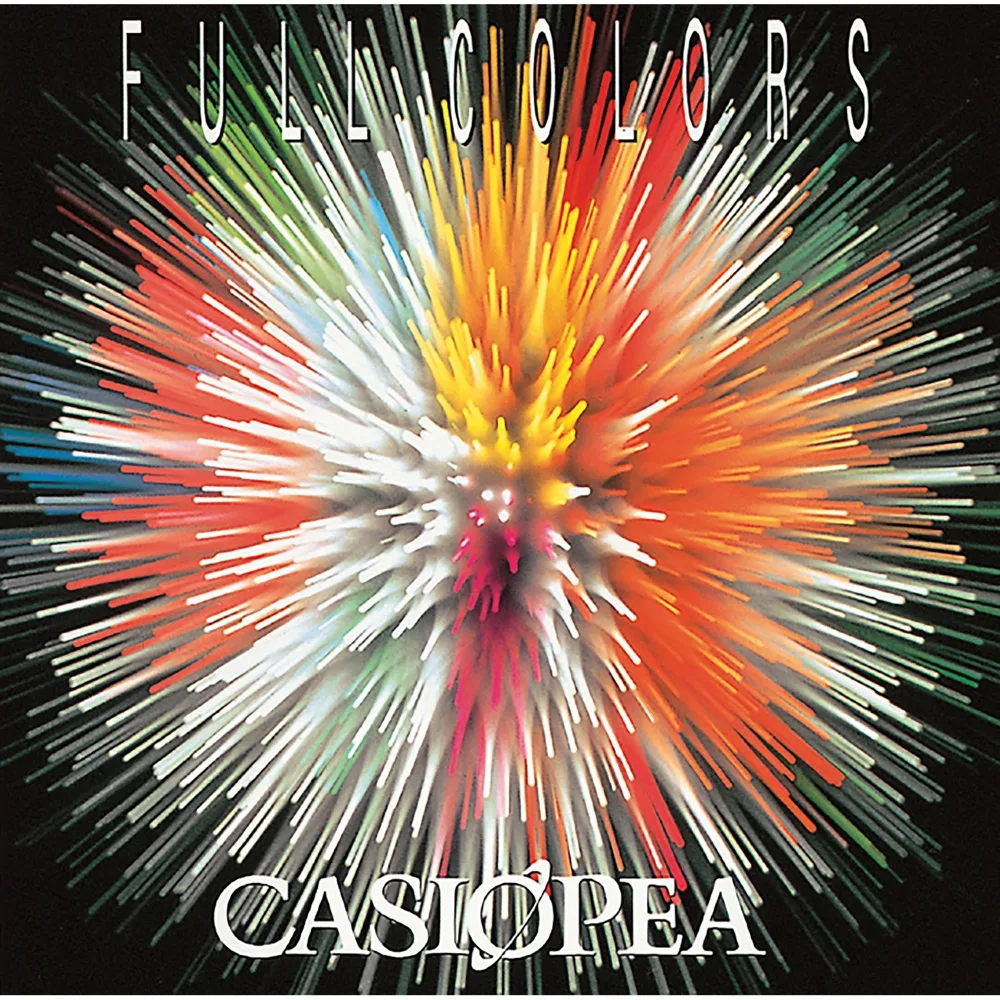
Cover of *Full Colors* (Pioneer LDC, 1991) by Casiopea, the band in which Masaaki Hiyama was the drummer from 1990 to 1992. It is not a photograph of him. Standard copyright, all rights reserved, held by the label and rights holders of the release. This is not a Creative Commons or public-domain image; it is an album cover shown as an honestly disclosed editorial identification image. — https://music.apple.com/jp/album/full-colors/1801654180 (Apple Music artwork, 1000 x 1000 version)
Masaaki Hiyama (日山正明, Hiyama Masaaki) is a Tokyo-born drummer who has never released an album under his own name. Discogs lists 15 credits for him, every one as a band member or sideman, and 12 of them are Casiopea releases: he was the drummer of Casiopea from 1990 to August 1992. He was born in Tokyo on 2 September 1959; his own profile, his Instagram biography, Japanese Wikipedia, Wikidata and MusicBrainz all give that date. Much of what follows comes from a long interview he gave to the web magazine Cheer Up! WEB in November 2024, the fullest account of his life that has been published.
He says it started with television. As a primary school child he watched The Monkees Show, was drawn to its drummer, Micky Dolenz, and went to the record department of the Matsuzakaya department store in Ueno to buy Monkees LPs. Later he saw what he recalls as the farewell concert of The Tigers at the Budokan on television and was taken by Peeh (Minoru Hitomi), who drummed on a platform above the band. In junior high school a friend introduced him to soul music and he began going dancing in Roppongi discos; the records he names are Rare Earth, the Temptations, the O'Jays, the Stylistics, James Brown and the Motown catalogue, including Stevie Wonder. He had played snare drum in school ensembles, and in his upper primary years he took two or three lessons at an instrument shop in Ochanomizu, but the snare and hi-hat his grandparents bought him went into a storeroom. He began to play seriously after leaving junior high school, when he was given a drum set that came with an instructional record by Hiro Tsunoda. At about 17 he took lessons for roughly a year in the drum and percussion departments of Shobi Ongakuin, a music college, where he learned the rudiments, and around the same age he played in a Deep Purple cover band with Hideki Watanabe, later of the group C-C-B.
His route into professional work ran through Akihabara. He bought a drum kit at the LAOX instrument store there and played in amateur bands he met around it, one of which opened with four songs for a concert by Casiopea and Tokyo Otoboke Cats at Toho Seimei Hall in Shibuya. A friend who had worked as an assistant to the guitarist Ginji Ogawa played him a cassette of Ogawa's group Crosswind live, and the two started a Crosswind copy band. Ogawa heard about it, sat in on a session, and later met Hiyama by chance at a record shop and asked whether he wanted to play in Crosswind. That was 1979. According to Japanese Wikipedia, Ogawa formed Crosswind in July 1976, and it went inactive in 1984. By Hiyama's account the lineup was renewed when he became its drummer: the bassist Shigeru Watanabe, of Monta & Brothers, and the keyboardist Yuzo Hayashi were the first rhythm section with him, and when Watanabe dropped out he recommended the bassist Tatsuhiko Hizawa. The only recording of Hiyama with the group on Discogs is two previously unreleased tracks, "Itazura Risu" and "Totemo Ookina Jungle Gym," on a 2007 reissue of a live set, with Hizawa on bass.
Hizawa then brought him toward jazz. Hiyama says that when Crosswind's activity faded, Hizawa told him that the tenor saxophonist Hidehiko Matsumoto wanted a drummer who was good at sixteenth-note grooves, and that he went to an audition-style session at Matsumoto's jazz school in Sasazuka. His biographies date his joining the group to 1980. He remembers Matsumoto as a man who was never without the saxophone, strict about rhythm and about what he wanted from a drummer, and he describes himself at that point as close to an amateur in jazz. The quartet played Roppongi's Birdland every Thursday night, three one-hour stages from 8 p.m., and he says the drummer Masahiko Ozu played the first and third stages while Hiyama took the second and watched, and that Ozu gave him some advice for a time. Visitors to the room, in his recollection, included George Kawaguchi, Motohiko Hino, Lew Tabackin, the pianist Mark Soskin and the drummer Ushio Sakai, and he played with some of them. He toured the Soviet Union with Matsumoto's group in 1981. The notes on his own YouTube archive say the tour began with a concert in Khabarovsk in May, took in six cities including Moscow and Irkutsk, and returned to Khabarovsk in June; the concert of 22 June 1981, with Matsumoto on tenor saxophone, Masayoshi Yoneda on piano, Hizawa on bass, Tatsuji Yokoyama on percussion and Hiyama on drums, survives on video there.
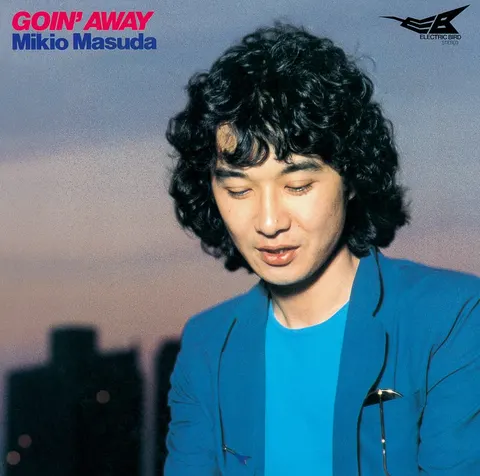
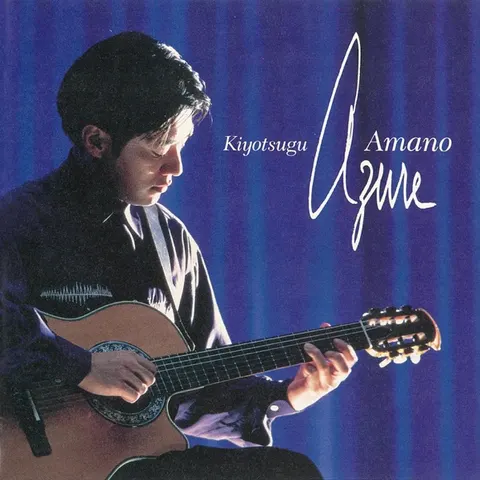
The one commercial recording from this period that can be checked is Chi Chi (Invitation, 1982) by the pianist Mikio Masuda. Discogs credits Hiyama on drums beside Hizawa on bass and guitar, Kiyotsugu Amano (credited as Kiyotsugo Amano) on guitar and Yokoyama on percussion, with the drummer Yuichi Togashiki as a guest on three tracks. Victor reissued it on CD on 21 September 2016 in its "ADLIB presents Victor Wa-Fusion 40W" series. His YouTube archive adds live footage of the same group in November 1982, and of the singer Yasuko Agawa with a special band led by Masuda in November 1982 and January 1983, in which Amano, Hizawa and Hiyama were the guitar, bass and drums, with a horn section that included the tenor saxophonist and flautist Takeru Muraoka. The archive also holds 1983 sessions with the singer 仲村裕美 (Hiromi Nakamura), with Amano on guitar and arrangement, Hizawa on bass and Hiyama on drums. In 1983, according to his biographies, he played live with the singer Anli Sugano, and from about 1985 he worked in the trio of the pianist 西直樹 (Naoki Nishi) and in a group led by a guitarist named Kazumasa Akiyama (秋山一将), who may be the guitarist profiled here as Kazumasa Akiyama, though the sources do not say so. In 1989 he began teaching in the drum department of the Muse Ongakuin music school.
He joined Casiopea in 1990, by a long route. By his account he had been following the band since about the time Akira Jimbo replaced its first drummer, Takashi Sasaki, and a school friend's contact in the band's office got him an introduction at Roppongi Pit Inn. Jimbo was kind to him, he says, and a tape he gave Jimbo led to a place in the band of the vocalist Kusunoki, who had guested with Casiopea and shared its office, and so to a closer acquaintance with the members. Issei Noro had told him earlier, "I hear you're playing with Matsumoto, let me hear a tape sometime." Then one night Noro phoned and asked, "Want to do Casiopea?" Japanese Wikipedia says Hiyama and the bassist Yoshihiro Naruse joined together in 1990, after Tetsuo Sakurai and Jimbo left, and that members were chosen partly for their ability to keep working together, Hiyama having been in Crosswind around the time of Casiopea's debut. He was 30.
The new lineup of Noro, Minoru Mukaiya, Naruse and Hiyama recorded The Party in April 1990 at a studio in Mitaka, Tokyo, and Japanese Wikipedia says the audio and the video were captured in a single take. Pioneer LDC issued it on 25 June 1990 as a CD (PICL-1006) and as the laserdisc The Party Visual Stack, which includes a drum solo leading into a bass solo. In November 1990 came an 8 cm CD single, "Splendor" backed with "Illusion," which Japanese Wikipedia describes as a candidate theme for the 1991 Pioneer Paris-Dakar Rally. Full Colors followed on 25 May 1991, with the percussionists Carlos Kanno, Gen Date and Gen Ogami as guests on tracks 5, 7 and 9, and with a 15 minute video, Motion Picture from Full Colors. In 1991 he also drummed on Paradise Lost (CBS/Sony), an album by the composer Shigeaki Saegusa on which Discogs credits three drummers, Hiyama among them, with Naruse as one of two electric bassists and Yuji Toriyama on electric guitar. His own profile adds that he played in Saegusa's band at the opening ceremony of the World Table Tennis Championships.
In February 1992 the band went to Australia. A fan history of the band says it spent about 20 days at Gotham Studio in Melbourne, and Japanese Wikipedia gives the recording dates of Active as 30 January to 21 February 1992, with the engineer Ross Cockle and the percussionist Alex Pertout on the credits. The same fan history says the shape of the studio and the dry climate gave the room a natural echo, so his drums were recorded without digital effects. Active came out on 25 May 1992 (PICL-1036). During the stay Casiopea played a live show at The Metro in Melbourne, which was filmed for the laserdisc Made in Melbourne and recorded for the CD We Want More (PICL-1039, 25 August 1992), whose 36 minute "Time Capsule Medley" strings together passages from the band's earlier albums. Sleeve notes on the 1994 CD of the same night, also called Made in Melbourne (PICL-1070), give the date as 26 February 1992; Japanese Wikipedia says 25 February.
He left that August. Japanese Wikipedia and English Wikipedia both attribute his departure to illness, and Japanese Wikipedia dates it to August 1992; the fan history says he asked to leave and was out of drumming for a long time afterward, and his own interview says only that he rested and then resumed sessions with the guitarist Kiyotsugu Amano. Noriaki Kumagai, then 22, came in as his replacement in 1992, according to Japanese Wikipedia, and has his own profile as Noriaki Kumagai. In all, Hiyama is credited on four Casiopea albums, The Party, Full Colors, Active and We Want More, and three video works. The compilation Schedir (Pioneer LDC, 1996) collects tracks from those three studio albums, and Aguri Suzuki Selected for F-1 (1993) draws on them as well.
From 1993 he spent two years in the band of the singer Goro Noguchi. In 2001 he, Amano and the bassist Gregg Lee played as the Amano/Gregg/Hiyama Project, at Jirokichi in Koenji on 28 January, Satin Doll in Roppongi on 19 February and 4 June, King Bee in Higashi-Nakano on 18 April and Chofu GINZ on 16 June; the pianist Keiji Matsumoto joined them from February, the singer Akiko Ohara sat in during June, and the cassette recordings of those nights are on his channel, along with a 2002 single by the singer dorlis, "Daphne Leaf," with Amano arranging and Hiyama on drums. In the 2000s he also played for two years in the band of the Lilies, a former idol group, and joined the guitarist ITANI (Nozomi Itani), a Tokyo-based guitarist who returned from Germany in 1997. ITANI's own site lists Hiyama as the group's drummer from 2009 to 2015, and its album Station to Station (BQ Records BQR-2058), released on 1 November 2012, credits him on drums. A Yamaha artist-relations blog post of 4 December 2012 covers the album's release show at Silver Elephant and remarks how well his fusion-leaning approach worked against the distorted guitar rock. On 25 December 2013 the group played Otsuka Welcomeback, with the guitarist 本庄寛国 and the bassist 仁村茂 beside him, and in September 2013, ITANI's site says, Noro sat in with the group at an event. Japanese Wikipedia also lists him on Swingin' Street (SUPA Records, 2004) by the singer dorlis and on a 1983 album by Hiromi Nakamura; neither release lists him in its Discogs credits.
In the 2024 interview he says teaching now takes more of his time than playing. He gives lessons at Takagi's Home, a music shop and school in Setagaya, Tokyo, which keeps a lesson page for him, and he has an Instagram account and a YouTube channel, 日山正明Archives, which describes itself as an archive of a drummer who played a small part in the history of Japanese fusion and has uploads dated as recently as April 2026. Japanese Wikipedia reports that Warner Music Japan is issuing The Party (Audio Stack) and Full Colors on LP in October 2026, and Light in the Attic lists Full Colors (WPJL-10340) as the album's first vinyl release, naming Hiyama in its description of the lineup.
A good deal is not on the public record. He has made no album under his own name, and the Casiopea albums are the only part of his career that is documented in detail. His birthplace is given only as the city, and the dates of most of his live recordings are known only from the notes he has posted himself. As far as the sources show he is living and still teaching.
Hiyama's own account of his listening is the best guide to his playing. In the 2024 interview he names Tony Williams, Harvey Mason, Steve Gadd, Elvin Jones, Vinnie Colaiuta and Dave Weckl as drummers he still loves and as the core of how he thinks about rhythm, groove and swing. Tony Williams, Harvey Mason and Elvin Jones are profiled on this site. The piece of music he chose for the 2014 Cheer Up! feature is "What's Going On" from Donny Hathaway's live album, and he says there was a time he seriously wished he could play like Fred White on that record.
Both the sources and his own account place him on the jazz side of a fusion band. Japanese Wikipedia calls him a jazz drummer when it describes his joining Casiopea, Matsumoto's quartet is where he says he learned jazz, and a Japanese jazz and fusion blog calls him a basically jazz drummer next to his successor Kumagai, whom it hears as a more technical fusion player. The same blogger writes that his playing sat well with Naruse's, that his drum solos were plain and that he supplied fewer strokes than the band's flashier drummers, while calling him one of the writer's favourite drummers and hearing him strongly in "Domino Line" and "Black Joke" on We Want More. That is one listener's opinion, not a measure.
The recordings suggest a drummer who adapts to the leader. The Casiopea albums of 1990 to 1992 are tagged Jazz and Fusion, Smooth Jazz and Jazz-Funk on Discogs, Chi Chi is tagged Jazz and Latin, Jazz-Funk, and the Crosswind reissue Jazz and Rock, Fusion; all 15 of his Discogs credits carry the Jazz genre tag. In Active the band, by the fan history's account, set out to change its sound and style, and the engineer Ross Cockle suggested favouring a more acoustic sound. His later work with ITANI is guitar-led hard rock with a fusion edge, according to the Yamaha post.
- Full Colors (1991, Pioneer LDC PICL-1016, Casiopea) - The second album of the lineup of Noro, Mukaiya, Naruse and Hiyama, with Carlos Kanno, Gen Date and Gen Ogami on percussion on three tracks. Apple Music - Full Colors Listen · Buy
- The Party (1990, Pioneer LDC PICL-1006, Casiopea) - The first album of the new lineup, recorded in April 1990 in Mitaka and captured, according to Japanese Wikipedia, in a single take with the video. Apple Music - The Party Listen
- Active (1992, Pioneer LDC PICL-1036, Casiopea) - Recorded in Melbourne between 30 January and 21 February 1992, with the engineer Ross Cockle and the percussionist Alex Pertout. Apple Music - active Listen · Buy
- We Want More (1992, Pioneer LDC PICL-1039, Casiopea) - The live CD from The Metro in Melbourne, released the month he left. Apple Music - We Want More Listen · Buy
- Made in Melbourne (1994, Pioneer LDC PICL-1070, Casiopea) - The other half of the Melbourne concert, 12 tracks, including a drum solo, "The March at Metro." Apple Music - Made in Melbourne Listen
- Chi Chi (1982, Invitation VIH-28102, Mikio Masuda) - His one documented session from the early 1980s, with Hizawa, Amano and Yokoyama. Apple Music - Chi Chi · YouTube - Chi Chi, full album Listen
Masaaki Hiyama (日山正明) - Full Discography
Japanese drummer. Born 2 September 1959, Tokyo. Discogs artist 2878762. He has no release under his own name: every credit below is as a band member or sideman, and the list is grouped by band and by role.
Name variations on record: 日山正明 (no romanised variants are listed).
Bands he has played in: Casiopea (1990 to 1992), Crosswind (from 1979), the Hidehiko Matsumoto group (from 1980), ITANI (2009 to 2015).
Counts: Discogs lists 15 credits for him, of which 14 are officially issued releases and one is an unofficial DVD (shown at the end of the Casiopea section). Twelve are Casiopea releases. Listen links are given only where a matching release could be confirmed; the Buy column is a plain Amazon search link for the release.
Leader
No release is credited to him as leader or co-leader.
Casiopea (drummer, 1990 to August 1992)
Casiopea is the Japanese fusion band led by the guitarist Issei Noro. Japanese Wikipedia credits Hiyama with four of its albums (The Party, Full Colors, Active and We Want More) and three video works made while he was a member. In the lineup of those releases Noro plays guitar, Minoru Mukaiya keyboards and Yoshihiro Naruse bass, with Hiyama on drums. Catalogue numbers and dates are from the Discogs release records and from Japanese Wikipedia.
| Title | Year | Label | Personnel | Notes | Listen | Buy |
|---|---|---|---|---|---|---|
| The Party (Audio Stack) | 1990 | Pioneer LDC, PICL-1006 | Issei Noro (guitar), Minoru Mukaiya (keyboards), Yoshihiro Naruse (bass), Masaaki Hiyama (drums) | Released 25 June 1990. Recorded in April 1990 at a studio in Mitaka, Tokyo, with the video taken in a single take (Japanese Wikipedia). Twelve tracks from "Cyber Zone" to "Daisekai." Produced by Taketsune Kubo, engineered and mixed by Koji Sugimori. Also issued on cassette (PITL-1006). Discogs release 3801420. | Apple Music | Amazon |
| The Party Visual Stack (laserdisc) | 1990 | Pioneer LDC, PILL-5002 | Noro, Mukaiya, Naruse, Hiyama | Released 25 June 1990, 54 minutes, 13 items including "Drums Solo ~ Bass Solo." Directed by Hideaki Tsushima, film director Joji Ide. Discogs release 13713611. | not found | Amazon |
| Splendor (8 cm CD single) | 1990 | Pioneer LDC, PIDL-1013 | Noro, Mukaiya, Naruse, Hiyama | Released 25 November 1990. "Splendor" and "Illusion." Japanese Wikipedia describes it as a candidate theme for the 1991 Pioneer Paris-Dakar Rally. Discogs release 15607563. | Splendor on YouTube (Casiopea 3rd - Topic) | Amazon |
| Full Colors | 1991 | Pioneer LDC, PICL-1016 | Noro (electric guitar), Mukaiya (keyboards), Naruse (bass), Hiyama (drums); Carlos Kanno (bongos, percussion), Gen Date (congas, percussion), Gen Ogami (timbales, percussion) on tracks 5, 7 and 9 | Released 25 May 1991. Twelve tracks, 45 minutes 26 seconds, from "Fightman" to "Top Wind." Recorded at Studio Jive, Sound Sky Studio and Epicurus Studio, Tokyo. Cover art by Hidetake Awano, engineer Koji Sugimori, mastered by Tohru Kotetsu. Discogs release 3800494. | Apple Music · The Sky on YouTube (Casiopea 3rd - Topic) | Amazon |
| Motion Pictures from Full Colors (laserdisc) | 1991 | Pioneer LDC, PIML-1100 | Noro, Mukaiya, Naruse, Hiyama | Eight inch laserdisc, 15 minutes: "Fight Man," "Purple Hours," "The Sky," "Fight Man Part 2." Japanese Wikipedia gives 25 May 1991, the day of the album; Discogs gives 25 May 1990. Discogs release 25321957. | not found | Amazon |
| WWF1万人募金プロジェクト (The Sky / Purple Hours) | 1991 | Pioneer LDC, LPR-043T0 | Noro, Mukaiya, Naruse, Hiyama | Promotional CD single, not for sale, issued for a charity appeal. Discogs release 25330114. | not found | not for sale |
| Active | 1992 | Pioneer LDC, PICL-1036 | Noro (guitar), Mukaiya (keyboards), Naruse (bass), Hiyama (drums), Alex Pertout (percussion), Doron Kipen (Fairlight operator, per Japanese Wikipedia) | Released 25 May 1992. Eleven tracks from "New History" to "Back to the Nature." Recorded 30 January to 21 February 1992 at Gotham Audio in Melbourne, engineered by Ross Cockle. Discogs release 3803242. | Apple Music · Eccentric Games on YouTube (Casiopea 3rd - Topic) | Amazon |
| Made in Melbourne (laserdisc) | 1992 | Pioneer LDC, PILL-5109 | Noro, Mukaiya, Naruse, Hiyama | Live at The Metro, Melbourne; the notes printed on the 1994 CD give 26 February 1992 (Japanese Wikipedia says 25 February). Fourteen items including "The March at Metro (Drums Solo)" and "The Bass Greetings (Bass Solo)." Also on VHS (PIVL-5109). Discogs release 25280623. | not found | Amazon |
| We Want More | 1992 | Pioneer LDC, PICL-1039 | Noro (electric and acoustic guitar), Mukaiya (keyboards), Naruse (bass), Hiyama (drums) (Japanese Wikipedia) | Released 25 August 1992, live at The Metro, Melbourne. Five tracks, 43 minutes 41 seconds: "Navigators," the 36 minute "Time Capsule Medley," "Private Sunday," "Back to the Nature" and "Tokimeki." Executive producer Yoshiaki Mizutani. Reissued by Geneon in 2006 (GNCL-1079). The Discogs release record, 7909973, carries no personnel credits. | Apple Music | Amazon |
| Aguri Suzuki Selected for F-1 | 1993 | Pioneer LDC, PICL-1054 | Noro, Mukaiya, Naruse, Hiyama | Compilation released 25 May 1993, ten tracks drawn from The Party, Full Colors, Active and the "Splendor" single, selected under the supervision of the racing driver Aguri Suzuki. Discogs release 25376122. | Apple Music | Amazon |
| Made in Melbourne (CD) | 1994 | Pioneer LDC, PICL-1070 | Noro (guitar), Mukaiya (keyboards), Naruse (bass), Hiyama (drums) | Released 23 March 1994. Twelve tracks from the Melbourne concert, from "Fightman" to "Messengers," including "The March at Metro (Drums Solo)." Sleeve notes read "Recorded at The Metro, Melbourne, on 26th February, 1992." Discogs release 3807006. | Apple Music | Amazon |
| Schedir | 1996 | Pioneer LDC, PICL-1131 | Noro, Mukaiya, Naruse, Hiyama | Compilation released 25 September 1996, 18 tracks: six from The Party, six from Full Colors, five from Active, and the "Splendor" single. Discogs release 31618018. | not found | Amazon |
| Made in Melbourne & The Party (DVD) | 2001 | Not on label (Taiwan) | Noro, Mukaiya, Naruse, Hiyama | Unofficial DVD compiling the two laserdisc concerts. Discogs release 28140610. Listed for completeness; not an official release. | not applicable | not applicable |
Other recordings as sideman
| Title | Year | Label | Personnel | Notes | Listen | Buy |
|---|---|---|---|---|---|---|
| Mikio Masuda, Chi Chi | 1982 | Invitation, VIH-28102 | Mikio Masuda (keyboards, percussion, chorus, arranger), Tatsuhiko Hizawa (bass, guitar), Kiyotsugo Amano (guitar), Masaaki Hiyama (drums), Tatsuji Yokoyama (percussion); guests Yuichi Togashiki (drums on tracks A1, A5, B1) and Rie Murakami (chorus) | Ten tracks: "Song of Fantasy," "Refreshing," "Mozambique," "Just Hanging," "Escrava da Alegria," "Feelings of Love," "Potos," "Walkin' in the City," "Right On" and "Here, There and Everywhere." Producer Tetsu Hoshika. Reissued on CD by Victor (VICJ-77036) on 21 September 2016. Discogs release 4269810. | Apple Music · YouTube, full album | Amazon |
| Shigeaki Saegusa, 失楽園 (Paradise Lost) | 1991 | CBS/Sony, CSCR 8359 | Shigeaki Saegusa (composer, arranger, executive producer); drums by Masaaki Hiyama, Masaharu Ishikawa and Yuichi Togashiki; electric bass by Tim Graham and Yoshihiro Naruse; electric guitar by Makoto Matsushita and Yuji Toriyama; Hirotaka Izumi (piano, synthesizer); Susumu Kazuhara Group (horns); vocals by Emi Kaneko (track 7) and Yukie Okura (track 3) | Released 1 February 1991. Eight tracks from "The Road to Paradise" to "Chain Parasitic Kin." Discogs lists the credits without track assignments. Hiyama's own channel posts three of the tracks, "The Road to Paradise," "Autumn of the Middle Ages" and "Aria to Death," with himself on drums. Discogs release 12509929. | not found | Amazon |
| Crosswind, "Live" [Unknown Days] | 2007 | Altavoz, ALT-506 | Tracks 5 and 6: Ginji Ogawa (guitar), Tatsuhiko Hizawa (bass), Jimmy Hayashi (keyboards), Masaaki Hiyama (drums). Other tracks by a different lineup. | Reissue CD in a papersleeve. Tracks 5 and 6, "Itazura Risu" and "Totemo Ookina Jungle Gym," are previously unreleased. Hiyama's channel dates the same two performances to about 1980 at Hitachi Lo-D Plaza, Tokyo. Discogs release 3570045. | Totemo Ookina Jungle Gym on YouTube (Hiyama's channel) | Amazon |
| ITANI, Station to Station | 2012 | BQ Records, BQR-2058 | Itani (guitar), 仁村茂 (bass), Masaaki Hiyama (drums); guests Tim Donahue (fretless guitar), Singo Otani (seven-string guitar), 宮川直巳 (guitar) and 南たけし (drums) | Released 1 November 2012. Hiyama is credited as the drummer on ITANI's own site and discography page. Not listed under his Discogs credits. | Apple Music | Amazon |
Credits named by other sources, not confirmed from the release credits
| Title | Year | Label | Source | Notes |
|---|---|---|---|---|
| Hiromi Nakamura (仲村裕美), Swonderful (スワンダフル) | 1983 | Victor | Japanese Wikipedia | Listed in his Wikipedia entry. His channel posts three 1983 tracks by the singer, "Teach Me Tonight," "I Will Wait for You" and "All I Ever Need Is You," with Amano on guitar and arrangement, Hizawa on bass and Hiyama on drums. |
| dorlis, Swingin' Street | 2004 | SUPA Records | Japanese Wikipedia | Listed in his Wikipedia entry. The Discogs release records carry no credits. His channel posts two tracks from a 2002 single by the singer, "Daphne Leaf" and "Hitorigoto mitai ni Aishiteta," with Amano arranging and Nishijima on bass. |
Archive recordings on his own YouTube channel
Hiyama's channel, 日山正明Archives, publishes live footage and cassette recordings from his career with personnel in the video notes. These are not commercial releases. Links go to the videos.
| Date given | Group | Personnel in the notes | Videos |
|---|---|---|---|
| 22 June 1981, Khabarovsk | Hidehiko Matsumoto Group, Soviet Union tour | Hidehiko Matsumoto (tenor and soprano saxophone), Masayoshi Yoneda (piano, keyboards), Tatsuhiko Hizawa (bass), Tatsuji Yokoyama (percussion), Masaaki Hiyama (drums) | "Passion Dance" · "Misty" · "The City in the Morning" · "Isn't She Lovely" · "Ringo Oiwake" |
| About 1980, Tokyo (Hitachi Lo-D Plaza) | Crosswind | Ginji Ogawa (guitar), Tatsuhiko Hizawa (bass), Jimmy Yuzo Hayashi (keyboards), Masaaki Hiyama (drums) | "Itazura Risu" · "Totemo Ookina Jungle Gym" |
| November 1982 | Mikio Masuda group | Mikio Masuda (piano), Kiyotsugu Amano (guitar), Tatsuhiko Hizawa (bass), Masaaki Hiyama (drums), Tatsuji Yokoyama (percussion) | "Feelings of Love" |
| November 1982 and January 1983 | Yasuko Agawa with Mikio Masuda's special band | Yasuko Agawa (vocals), Mikio Masuda (keyboards), Kiyotsugu Amano (guitar), Tatsuhiko Hizawa (bass), Masaaki Hiyama (drums), Tatsuji Yokoyama (November 1982) or 中島御 (January 1983) on percussion, Joy (chorus); in January 1983 a horn section of Shin Kazuhara (trumpet), Takeru Muraoka (tenor saxophone, flute) and Tadanori Kokawa (trombone) | "Meu Amor," November 1982 · "Meu Amor," January 1983 · "Searching" · "Sentimental Journey" · "My Funny Valentine" |
| 2001 | Amano/Gregg/Hiyama Project | Kiyotsugu Amano (guitar), Gregg Lee (bass), Masaaki Hiyama (drums); Keiji Matsumoto (piano, keyboards) and Akiko Ohara (vocals) on some dates | Jirokichi, Koenji, 28 January 2001 · King Bee, Higashi-Nakano, 18 April 2001 · Satin Doll, Roppongi, 4 June 2001 |
- Casiopea - the band of which he was drummer from 1990 to August 1992, on The Party, Full Colors, Active and We Want More, and on the video works The Party Visual Stack, Motion Picture from Full Colors and Made in Melbourne.
- Issei Noro - Casiopea's guitarist, who by Hiyama's account phoned to ask him to join; ITANI's website says he sat in with ITANI in September 2013.
- Minoru Mukaiya - Casiopea's keyboardist on all of the above.
- Yoshihiro Naruse - the bassist who joined Casiopea at the same time in 1990 and was the other half of the rhythm section on all of the above; also on Saegusa's Paradise Lost (1991).
- Tetsuo Sakurai and Akira Jimbo - the bassist and drummer whose places he and Naruse took in 1990.
- Noriaki Kumagai - the drummer who replaced him in 1992.
- Mikio Masuda - pianist and leader of Chi Chi (Invitation, 1982), on which Hiyama is the drummer.
- Kiyotsugu Amano - guitarist on Chi Chi (credited there as Kiyotsugo Amano); Hiyama's interview says he resumed sessions with Amano after leaving Casiopea.
- Yuji Toriyama - electric guitarist on Shigeaki Saegusa's Paradise Lost (1991), on which Hiyama is one of three credited drummers.
- Hidehiko Matsumoto - the tenor saxophonist whose group Hiyama joined in 1980 and toured the Soviet Union with in 1981, according to his own biographies and the footage on his channel; no commercial recording of that group with Hiyama has been confirmed.
- Masahiko Ozu - the drummer who, by Hiyama's account, played the first and third stages of Matsumoto's quartet at Birdland and advised him.
- Anli Sugano - vocalist in whose band he played live in 1983, according to his biographies; no recording has been confirmed.
- Yasuko Agawa - the singer fronting Masuda's special band in live footage from November 1982 and January 1983 on Hiyama's channel, and named on his lesson page; no commercial recording with Hiyama has been confirmed.
- Takeru Muraoka - tenor saxophonist and flautist in the horn section of the January 1983 Agawa and Masuda footage, according to the video notes.
- Keiji Matsumoto - pianist with the Amano/Gregg/Hiyama Project in 2001, according to the notes to the cassette recordings on Hiyama's channel.
- Tatsuhiko Hizawa - bassist on Chi Chi and on the two Crosswind tracks, bassist in Matsumoto's 1981 Soviet tour band, and the man Hiyama credits with bringing him toward Matsumoto's group.
- Masayoshi Yoneda and Tatsuji Yokoyama - pianist and percussionist in the Matsumoto group's 1981 Soviet tour band; Yokoyama is also the percussionist on Chi Chi.
- Gregg Lee - bassist of the 2001 Amano/Gregg/Hiyama Project.
- Ginji Ogawa and Crosswind - the guitarist's fusion group, which Hiyama joined in 1979.
- Shigeaki Saegusa - composer and leader of Paradise Lost (CBS/Sony, 1991).
- ITANI (Nozomi Itani) - the guitarist and group for whom he was drummer from 2009 to 2015, including on Station to Station (2012).
- Goro Noguchi - the singer in whose band he played from 1993 for two years.
- Hiromi Nakamura (仲村裕美) and dorlis - singers on 1983 and 2002 recordings that Hiyama has posted on his channel, both with Amano on guitar.
More Jazz Fusion Artists
See all 351 Jazz Fusion artists →More Japanese Jazz Artists
See all 262 Japanese artists →- YouTube channel: 日山正明Archives
- Instagram: @masaaki_hiyama
- Discogs: Masaaki Hiyama
- MusicBrainz: 日山正明
- Cheer Up! WEB interview, November 2024
- Takagi's Home: Hiyama drum lessons page
- Masaaki Hiyama on JazzProfiles.com
- r/JapaneseJazz
- Cheer Up! WEB: 日山正明インタビュー (November 2024)
- Cheer Up! WEB: 日山正明さん (2014)
- Takagi's Home: 日山正明ドラム教室
- Wikipedia (Japanese): 日山正明
- Wikipedia: Casiopea
- Wikipedia (Japanese): カシオペア (バンド)
- Wikipedia (Japanese): THE PARTY
- Wikipedia (Japanese): FULL COLORS
- Wikipedia (Japanese): WE WANT MORE
- Wikipedia (Japanese): 小川銀次
- Wikipedia (Japanese): 松本英彦
- YouTube: 日山正明Archives, Matsumoto Group Soviet Union Tour, 22 June 1981
- YouTube: 日山正明Archives, Yasuko Agawa with Mikio Masuda special band, January 1983
- YouTube: 日山正明Archives, Amano/Gregg/Hiyama Project live, 28 January 2001
- Wikidata: Q11505274
- Discogs: Masaaki Hiyama, artist 2878762
- Discogs: Mikio Masuda, Chi Chi (Invitation VIH-28102)
- Discogs: Casiopea, Made in Melbourne (Pioneer PICL-1070)
- Victor Entertainment: Mikio Masuda, Chi Chi reissue (VICJ-77036)
- ITANI official site: profile and discography
- Yamaha artist blog: ITANI LIVE (4 December 2012)
- Casiopea fan history, part 6
- Casiopea fan history, part 7
- Adlib Blog: Casiopea, We Want More
- Adlib Blog: Casiopea, Dramatic
- Light in the Attic: Casiopea, Full Colors (vinyl)