 JAZZPROFILES lives in the music 1,765 Jazz Artists fully Profiled!
Takashi Sasaki
Last updated October 21, 2026
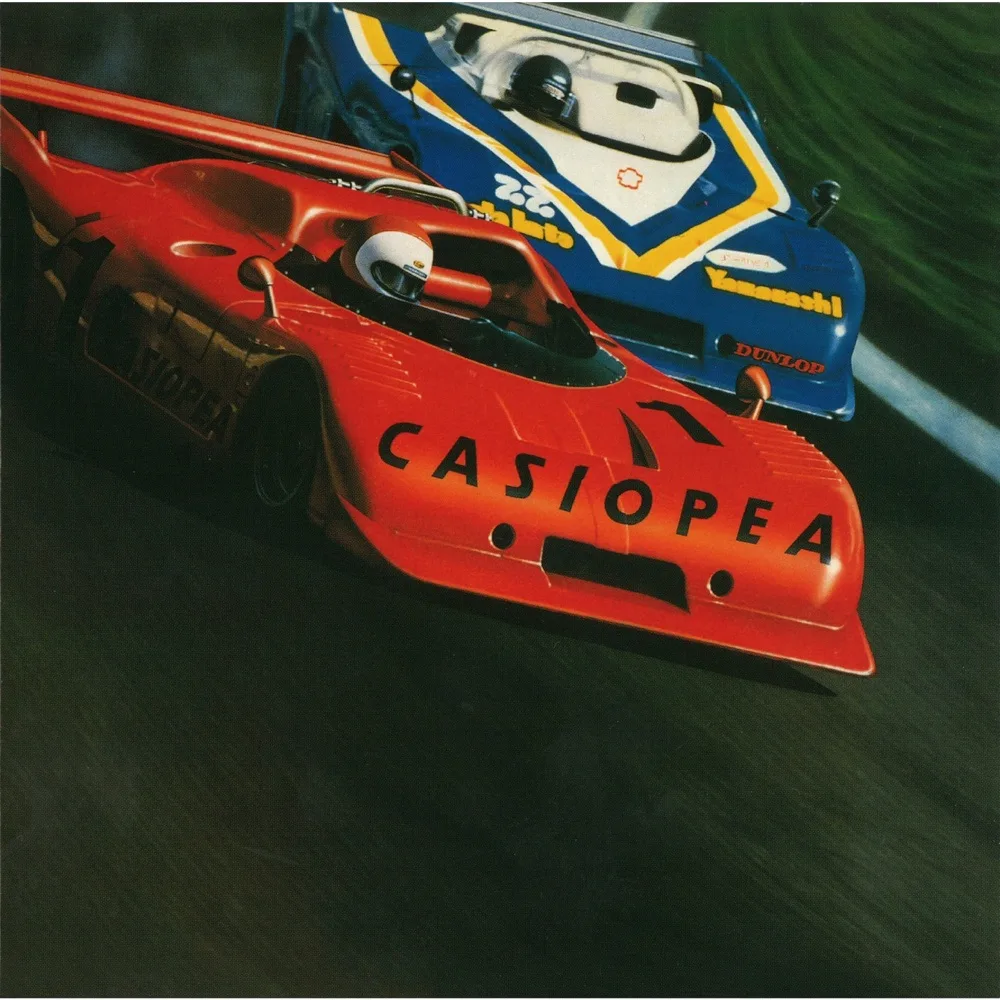
Cover of *CASIOPEA* (Alfa, 1979), the debut album on which Takashi Sasaki played drums, one of the albums recommended in his profile. Album artwork, shown for identification; it is not a photograph of the artist. Standard copyright, all rights reserved, held by Alfa Music / Sony Music Direct (Japan). This is not a Creative Commons or public-domain image; it is an album cover shown as an honestly disclosed editorial identification image. — Apple Music album page https://music.apple.com/us/album/casiopea/1535034715 (artwork at 1000 x 1000 px)
Takashi Sasaki (佐々木隆) is a Japanese drummer who played on the first two albums by Casiopea, the group that went on to become one of the best-known names in Japanese fusion. He has no album under his own name, and no interview with him in his own words has been published that this page can draw on. What is known comes from the credits on the records, a short Japanese Wikipedia entry, and a trail of musicians' blogs and venue listings that runs from 1977 to 2021.
Japanese Wikipedia gives his birth year as 1956 and his birthplace as Tokyo, and says his family home is in Nishi-Ogikubo, in Suginami Ward. It lists his schooling as Nihon University's own junior and senior high school, then the university's College of Art. His exact birth date is not reliably published: the Japanese Wikipedia infobox says 27 August, while Wikidata and MusicBrainz say 17 November, and none of the three cites a source. Only the year is given here. The same entry says that while still a student he played jazz and fusion in Tokyo live houses in bands with the saxophonist Takeshi Itoh and the arranger and keyboardist Masanori Sasaji, again without a source.
In 1977 he became the drummer of Casiopea, then still an amateur band, in time for the second Yamaha EastWest amateur band contest it entered. Japanese Wikipedia's Casiopea entry says the drum chair had been unsettled and was only fixed on Sasaki by the time of the final; the English entry says the band held auditions after its 1976 drummer, Tohru "Rika" Suzuki, left, and chose him. At the 1977 contest Casiopea took the best group award and guitarist Issei Noro won best guitarist for the second year running. The line-up that stayed together into the recording studio was Noro, bassist Tetsuo Sakurai, keyboardist Minoru Mukaiya and Sasaki.
The debut, CASIOPEA, came out on Alfa on 25 May 1979 (ALR-6017). The rhythm tracks were cut at Alfa's studio in Shibaura, Tokyo, with the American engineer Al Schmitt, and the horn section was added in New York at the Power Station studio on 10 February 1979: Randy Brecker on trumpet, Michael Brecker on tenor saxophone and David Sanborn on alto saxophone, with Jun Fukamachi arranging and conducting. All eight pieces are by Noro. The obi strip billed the band as thrilling, fast and superbly technical, a tagline that stuck to the group for decades.
SUPER FLIGHT followed on 25 November 1979 (Alfa ALR-6029), finished on 13 October. Discogs credits Sasaki with drums and handclaps, and credits Kanya Kazama as a guest drummer and Penny Itoh on percussion. Japanese Wikipedia describes it as the more melodic, pop-leaning record against the hard-edged debut, and notes that it carries the first recording of "Asayake," later one of the band's signature pieces, and "I Love New York," the single used in Japan Air Lines' New York advertising, which Alfa issued on 15 November 1979 (ALR-1017). The same entry says the second album outsold the first.
Between those two releases and his exit, the four also made a record that does not carry the Casiopea name. Spiral Fusion (Toshiba, TP-60352, 20 December 1979 according to Discogs) is an album by the Electone player Tatsuya Koguma: Koguma on the Yamaha Electone E-70, with Mukaiya on electric piano, Noro on guitar, Sakurai on bass and Sasaki on drums. Six of its seven titles are jazz standards ("Summertime," "Misty," "Caravan," "La Chanson d'Orphee," "Watermelon Man," "Satin Doll"), plus "Space Core."
He did not leave the band at once. A footnote in Casiopea's Japanese Wikipedia entry, citing Mukaiya's 1995 book, says the decision to part over differences in musical direction came after SUPER FLIGHT was finished, but that Sasaki kept playing the live dates already booked, and that the band met his successor, Akira Jimbo, during that stretch. Jimbo's first record with the group, the live album THUNDER LIVE, was released on 21 April 1980. A fan who taped Casiopea's 31 December 1979 show at Roppongi Pit Inn wrote in 2022 that it was probably Sasaki's last with the band, and that the audience had no idea a change was coming; he singles out Sasaki's drum solo in "Sailing Alone" that night. English Wikipedia and a 2008 Jakarta Post profile of Sakurai give 1980 for Jimbo's arrival, while Discogs dates Sasaki's membership 1977 to 1979.
In March 1982 he was in the studio for Full Sail (Philips, 28PL-31), the second album by guitarist Hiroki Miyano, billed on the label as Hiroki Miyano and Bird On The Wind. Discogs credits Sasaki as a band member on drums alongside Makoto Saito on bass, Mitsuhiro Sonoyama on flute and saxophones and Masashi Hirashita on keyboards, with Toshiyuki Honda on soprano saxophone, Shigeharu Mukai on trombone, Sybil Thomas on vocals and others as guests. The album had no CD edition until 12 November 2025, when STEPS Records issued a remastered UHQCD (STPR-54). The same year Toshiba issued a five-LP Electone box set, Electone Popular Collection: New Love Sounds, whose first record, led by Koguma, credits Sasaki with drums on all twelve of its tracks, with Makoto Saito on bass, Masaru Komatsu on guitar and Andy Hiyama on percussion.
The trail then thins. On 22 January 2011 the drummer Funky Sueyoshi wrote on his blog that Sasaki had dropped by his bar one day and now played there every month with his own trio, Throw, and that he had watched him play for the first time the night before and been astonished by his technique. Sueyoshi added that he had heard Sasaki had spent periods away from active playing. Japanese Wikipedia lists three other projects: Narusasa, with Casiopea's bassist Yoshihiro Naruse; his own band Dazzle, with bassist 小山卓 and guitarist 中山隆司; and a duo called Ratio with the bassist 武士守廣, all based at the Hachioji live house X.Y.Z.→A. Naruse himself told HMV in November 2014 that, during Casiopea's break from 2006, fans who ran a Casiopea cover band asked him to appear at events with the group's first drummer, Sasaki, and that the experience helped push him to propose the group's restart, which came in 2013 as CASIOPEA 3rd.
From November 2015 the documentation turns dense, thanks to the bassist Katsuyuki Kariya's blog. Sasaki became the drummer of the Okazaki Trio, led by the guitarist Takeshi Okazaki, with Kariya on bass, first billed as the trio's "Sasaki version" at X.Y.Z.→A on 25 November 2015 in place of its regular drummer, Kunihiko Miura. Kariya wrote the next day that it was his third time playing with Sasaki and that he sometimes divided one bar into nine or eleven beats in ways Kariya could not follow. From June 2017 the trio's monthly dates moved to the Hachioji live bar Gurumama, and Kariya's blog lists Sasaki on drums at monthly dates there through to 25 March 2021, the latest dated listing found; the 21 January 2021 date was cancelled. Around the monthly dates came special billings: on 17 January 2018, "Funky Sueyoshi vs Takashi Sasaki," a twin-drum night with the trio at the club Ongakushitsu DX in Shinjuku Ward; Okazaki Trio dates at Bar aLive in Shinjuku, including 18 January and 30 March 2019, billed as all original compositions by Okazaki; on 21 May 2019, "Kariopeya," Kariya's Casiopea-covers unit with the keyboardist HEYSKE, at Ongakushitsu DX; and from August 2019 Kariokasahei (仮岡佐兵), a four-piece of Kariya, Okazaki, Sasaki and HEYSKE at the same venue. The trio opened a YouTube channel in November 2020.
Two things remain unknown: why he stepped back for long stretches of the decades between 1982 and 2011, and what, if anything, he recorded in them. No source gives his own account of leaving Casiopea.
Sasaki's reputation rests on two Alfa albums recorded when he was in his early twenties, in the period when Japanese fusion was still partly called crossover. Discogs files the albums under jazz with the styles Jazz-Funk and Fusion, and files Spiral Fusion under Fusion, Jazz-Funk and Prog Rock and Full Sail under Fusion, Jazz-Funk and Latin Jazz.
No source records what he listened to or who he studied with, so influences are not stated here. What exists are descriptions of how he played, all from other people. Writing in 2022 about the 1979 shows, the music marketer Hiro Kashimi said Sasaki's playing was built on four independent limbs and fine finger technique, with phrases in the manner of Steve Gadd and fast tom fills reminiscent of Billy Cobham, and that among Japanese drummers of the time he was the closest to Gadd; Kashimi also found his rhythm more dynamic than that of other Japanese fusion groups such as Prism, Space Circus and The Square, a judgement he ties to the 16-beat feel of the period. Funky Sueyoshi, seeing him in 2011, described polyrhythms built from five-beat and seven-beat phrases and cymbal legato backed by solid technique. Kariya's 2015 remark about nine- and eleven-beat bars points the same way. These are listeners' and colleagues' impressions rather than statements by Sasaki himself.
His records show range within fusion more than a single style: the hard-edged, fast debut, the melodic SUPER FLIGHT, a standards-and-groove Electone session, and the Latin-flavoured Full Sail. In the 2010s he turned to a guitar trio playing the guitarist's own originals.
- CASIOPEA (1979, Alfa ALR-6017) - The debut, with Randy Brecker, Michael Brecker and David Sanborn guesting, and the record that carries "Time Limit," "Swallow" and "Black Joke." Spotify - CASIOPEA · YouTube - Swallow Listen · Buy
- SUPER FLIGHT (1979, Alfa ALR-6029) - His second and last Casiopea album, with "Asayake" and "I Love New York." Spotify - SUPER FLIGHT Listen · Buy
- Spiral Fusion (Tatsuya Koguma feat. Casiopea, 1979, Toshiba TP-60352) - The four Casiopea players behind an Electone organist, on jazz standards. YouTube - full album (fan upload) Listen
- Full Sail (Hiroki Miyano and Bird On The Wind, 1982, Philips 28PL-31) - A 1982 band session with horn guests, first on CD in 2025. YouTube - full album (fan upload) · Billboard JAPAN - 2025 CD Listen
- Okazaki Trio live, 26 November 2020 - Sasaki on drums with Takeshi Okazaki and Katsuyuki Kariya, from the trio's own channel. YouTube - Hayabusa 389 Listen
Takashi Sasaki (佐々木隆) - Full Discography
Japanese drummer, born 1956 in Tokyo (exact birth date not reliably published). Drummer of Casiopea on its first two albums, 1977 to 1979. Discogs artist 780594.
Name variations on record: 佐々木隆.
Group affiliations: Casiopea (1977-1979). Later working groups named on Japanese Wikipedia and in venue listings: Throw, Narusasa, Dazzle, Ratio, the Okazaki Trio and Kariokasahei (none of these has a commercial release).
Leader releases: none. No album has been issued under his own name.
Band member: Casiopea (1977-1979)
| Album | Year | Label | Personnel | Notes | Listen | Buy |
|---|---|---|---|---|---|---|
| CASIOPEA | 1979 | Alfa, ALR-6017 | Issei Noro (electric and acoustic guitar, vocals), Minoru Mukaiya (electric piano, acoustic piano, synthesizer, Yamaha EX-1 electric organ, vibraphone), Tetsuo Sakurai (electric bass), Takashi Sasaki (drums); guests Randy Brecker (trumpet), Michael Brecker (tenor saxophone), David Sanborn (alto saxophone), Tomato Strings | Released 25 May 1979. Eight tracks, all by Noro: "Time Limit", "Tears of the Star", "Space Road", "Midnight Rendezvous", "Far Away", "Swallow", "Dream Hill", "Black Joke". Rhythm tracks recorded at Studio Alfa, Shibaura, Tokyo, December 1978 to March 1979, with Al Schmitt, Norio Yoshizawa and Yasuhiko Terada engineering; horns recorded at the Power Station, New York, 10 February 1979, with Neil Dorfsman engineering and Jun Fukamachi arranging and conducting; strings arranged by Hiroki Inui. Producers Kazusuke Obi and Shinji Sawada; executive producers Kunihiko Murai and Shoro Kawazoe. Illustration by Toshikuni Okubo; photography by Taishi Hirokawa; art direction by Hideaki Masago. Discogs credits Sasaki with drums. | Spotify | Amazon |
| Super Flight | 1979 | Alfa, ALR-6029 | Issei Noro (electric and fretless guitar, handclaps), Minoru Mukaiya (electric piano, acoustic piano, organ, pedal bass synthesizer, synthesizer, handclaps), Tetsuo Sakurai (electric and fretless bass), Takashi Sasaki (drums, handclaps); guests Kanya Kazama (drums), Penny Itoh (percussion), Debrah Correll (vocals), Koji Hatori and Toshio Araki (trumpets), Eiji Arai (trombone), Jake H. Concepcion (alto saxophone), Takeru Muraoka (tenor saxophone), Shunzo Sunahara (baritone saxophone), Tomato Strings, Jun Fukamachi (conductor) | Released 25 November 1979. Nine tracks: "Take Me", "Flying", "Dune", "Asayake", "I Love New York", "Sailing Alone", "Orion", "Magic Ray", "Mighty Mouse". Recorded and remixed at Studio Alfa, Shibaura, finishing 13 October 1979. Engineered by Norio Yoshizawa. Producers Shinji Sawada and Shunsuke Miyazumi. Illustration by Toshikuni Okubo; liner notes by Jun Takemura. Discogs credits Sasaki with drums and handclaps. | Spotify | Amazon |
| I Love New York / Magic Ray (7 inch single) | 1979 | Alfa, ALR-1017 | Credited to Casiopea; no personnel listed on Discogs | Released 15 November 1979, ten days before Super Flight, which carries both tracks. A promotional pressing also exists. | Spotify (on Super Flight) | Amazon |
Sideman albums (credited by name)
| Album | Year | Label | Actual leader | Personnel | Notes | Listen | Buy |
|---|---|---|---|---|---|---|---|
| Spiral Fusion (スパイラル・フュージョン; YouTube uploads title it "Tatsuya Koguma feat. Casiopea") | 1979 | Toshiba, TP-60352 | Tatsuya Koguma (小熊達弥) | Tatsuya Koguma (Yamaha Electone E-70, arrangements, producer), Minoru Mukaiya (electric piano), Issei Noro (electric guitar), Tetsuo Sakurai (electric bass), Takashi Sasaki (drums) | Discogs gives 20 December 1979. Seven tracks: "Summertime", "Misty", "Caravan", "La Chanson d'Orphee", "Watermelon Man", "Space Core", "Satin Doll". Co-produced by Yasunori Sato; mixed by Tameo Kawada, Teruo "Mu" Murakami and Koguma; illustration by Kazuo Hakamada; art direction by Takenobu Igarashi. The Japanese Electone collectors' site electone-maniax lists the same five-piece line-up. | Full album on YouTube (fan upload) · Caravan on YouTube | Amazon |
| エレクトーン・ポピュラー大全集 ニュー・ラブ・サウンズ (Electone Popular Collection: New Love Sounds), five-LP box | 1982 | Toshiba, TP60413-17 | Various Electone players; first LP led by Tatsuya Koguma | On the Koguma LP: Tatsuya Koguma (Electone, arrangements), Takashi Sasaki (drums), Makoto Saito (electric bass), Masaru Komatsu (electric guitar), Andy Hiyama (percussion) | Sasaki is credited on all twelve tracks of Koguma's LP (side A: 愛のオルゴール, 宇宙のファンタジー, ウイズアウト・ユー, 中国女, ひまわり, ミッシェル; side B: いそしぎ, おらいでの夏, ライディーン, ウイー・ア―・オール・アロン, ムーンライト・セレナーデ, シェルブールの雨傘, as Discogs transcribes them). Discogs lists two variant pressings (releases 22149922 and 25367353) that differ in cover printing and obi colour. The other four LPs in the set feature other Electone players and drummers. | not found | Amazon |
| Full Sail (listed on the label as "Hiroki Miyano & Bird On The Wind") | 1982 | Philips, 28PL-31 | Hiroki Miyano | Hiroki Miyano (guitar, arrangements, composer), Takashi Sasaki (drums), Makoto Saito (bass), Mitsuhiro Sonoyama (flute, soprano and tenor saxophones), Masashi Hirashita (keyboards); guests Soichi Noriki (keyboards), Masato Kawase and Tatsuji Yokoyama (percussion), Toshiyuki Honda (soprano saxophone), Shigeharu Mukai (trombone), Masatsugu Shinozaki (violin), Kayoko Ishu and Sybil Thomas (vocals) | Recorded 2 to 11 March 1982 and remixed 15 to 17 and 27 March 1982. Nine tracks: "Estrada", "Carrot Walk", "La Mer", "Moonlight Mist", "Libra", "Sybil's Dream", "Cool Chaser", "Bottle Keep", "Spanish Wave". Strings and horns arranged by Yasuo Higuchi on three tracks; produced by Masaharu Honjo; recorded and remixed by Yuji Yamashita; cover photograph by Mitchell Funk. First issued on CD on 12 November 2025 by STEPS Records (STPR-54, UHQCD, remastered from the original master). | Full album on YouTube (fan upload) | Amazon |
Compilations and video
Chronological. Each of these re-presents Casiopea recordings from the early Alfa years; Sasaki's credit is limited to the tracks noted.
| Year | Release | Artist | Label | Sasaki credit | Listen | Buy |
|---|---|---|---|---|---|---|
| 1994 | Act-One: Live History (VHS) | Casiopea | Alfa, ALLA-9704 / ALVA-9704 | Drums, credited alongside Akira Jimbo; released 26 October 1994 | not found | Amazon |
| 1999 | 20th Anniversary Best (2 CD) | Casiopea | Alfa, TOCT-24254-54/5 | Drums and handclaps on four tracks: "Black Joke", "Far Away", "Midnight Rendezvous", "Take Me"; released 26 November 1999 | not found | Amazon |
| 2009 | CASIOPEA Debut 30th Anniversary Legend of CASIOPEA (Blu-spec CD box, MHCL-20003 to MHCL-20028) | Casiopea | Sony Music Direct | Listed among the participants in the Billboard JAPAN catalogue entry, and named among the drummers in retail listings; released 27 May 2009 | not found | Amazon |
| 2009 | Best of Casiopea (Alfa Collection) | Casiopea | GT Music (SMDR), S70382C (edition for sale outside Japan) | Drums on track 4, "I Love New York" | Apple Music | Amazon |
| 2012 | Ultimate Best: Early Alfa Years (SACD hybrid) | Casiopea | GT Music, MHCL 10098 | Drums on five tracks: "Black Joke", "Midnight Rendezvous", "I Love New York", "Space Road", "Take Me"; released 25 April 2012 | Apple Music | Amazon |
Live bookings without a release
No recording of the following is known to be commercially available, but they document his work after the Alfa years. Dates are as announced in the sources.
- Throw (his own trio): playing monthly at Funky Sueyoshi's bar in January 2011 (the post does not name the town), per Sueyoshi's blog of 22 January 2011.
- Okazaki Trio ("Sasaki version"): from 25 November 2015, Live Bar X.Y.Z.→A, Hachioji; from 23 June 2017, Live Bar Gurumama, Hachioji; listed through 25 March 2021. Takeshi Okazaki (guitar), Katsuyuki Kariya (bass), Takashi Sasaki (drums). Channel: https://www.youtube.com/@triookazaki2298
- "Funky Sueyoshi vs Takashi Sasaki: twin drums with the Okazaki Trio", Ongakushitsu DX, Shinjuku Ward, 17 January 2018.
- Okazaki Trio at Bar aLive, Shinjuku, 18 January and 30 March 2019.
- Kariopeya (Casiopea songs, with HEYSKE on keyboards), Ongakushitsu DX, 21 May 2019.
- Kariokasahei (Katsuyuki Kariya, Takeshi Okazaki, Takashi Sasaki, HEYSKE), Ongakushitsu DX, 2 August and 6 November 2019.
Not credited to him
Discogs artist 780594 also carries a run of recording, mixing, assistant-engineer and technical credits between 1978 and 2022, on releases by artists such as T-Square, Eric Miyashiro, Grace Mahya, Jim O'Rourke, the Tsuyoshi Yamamoto Trio, Eric Alexander, Yoko Oginome, Masato Nakamura and Dreams Come True. Those are engineering and production credits, a different line of work from the drummer's, and Discogs separately lists a recording engineer named Takashi Sasaki (born 1971, Niigata). They are not counted here. A 1994 "additional musician" credit on the hard rock album Thrill Show by Lance Of Thrill is also left out, since nothing ties it to the drummer.
Sources
- Discogs: Takashi Sasaki, artist 780594
- Discogs: Casiopea, Casiopea, Alfa ALR-6017
- Discogs: Casiopea, Super Flight, Alfa ALR-6029
- Discogs: Casiopea, I Love New York, Alfa ALR-1017
- Discogs: Tatsuya Koguma, Spiral Fusion, Toshiba TP-60352
- Discogs: Hiroki Miyano, Full Sail, Philips 28PL-31
- Discogs: Casiopea, Act-One: Live History
- Discogs: Casiopea, 20th Anniversary Best
- Discogs: Casiopea, Best of Casiopea (Alfa Collection)
- Discogs: Casiopea, Ultimate Best: Early Alfa Years
- Wikipedia (Japanese): CASIOPEA (アルバム)
- Wikipedia (Japanese): SUPER FLIGHT
- electone-maniax: Tatsuya Koguma record listing
- Billboard JAPAN: Full Sail (STEPS Records, 2025)
- Billboard JAPAN: CASIOPEA 3rd feature, discography listing
- Funky Sueyoshi blog, 22 January 2011
- Katsuyuki Kariya's blog (Okazaki Trio, Kariopeya, Kariokasahei listings)
- Casiopea - the group he drummed for from 1977 to 1979, on CASIOPEA and SUPER FLIGHT (both Alfa, 1979), with later anthologies drawing on those albums.
- Issei Noro - guitarist and sole composer of the debut; on all three 1979 records with Sasaki, including Spiral Fusion.
- Tetsuo Sakurai - bassist, the rhythm-section partner on both Casiopea albums and on Spiral Fusion; he also wrote "Sailing Alone."
- Minoru Mukaiya - keyboardist, on both Casiopea albums and on Spiral Fusion.
- Akira Jimbo - his successor on drums from 1980; the two are credited together on the 1994 video Act-One: Live History.
- Tatsuya Koguma - Electone player and leader of Spiral Fusion (1979) and of the first LP of the 1982 Toshiba Electone box set.
- Hiroki Miyano - guitarist and leader of Full Sail (1982), with Makoto Saito, Mitsuhiro Sonoyama and Masashi Hirashita as the core band.
- Toshiyuki Honda and Shigeharu Mukai - guests on Full Sail (soprano saxophone and trombone).
- Randy Brecker, Michael Brecker, David Sanborn - horn guests on CASIOPEA (1979), see Randy Brecker, Michael Brecker and David Sanborn.
- Takeshi Okazaki and Katsuyuki Kariya - guitarist and bassist of the Okazaki Trio, 2015 to 2021, and with HEYSKE the other members of Kariokasahei.
- Funky Sueyoshi - drummer; wrote about Sasaki in 2011 and shared a twin-drum bill with him on 17 January 2018.
- Yoshihiro Naruse - Casiopea's bassist, who in 2014 recalled doing events with Sasaki during the band's hiatus; Japanese Wikipedia also credits the two with a duo, Narusasa.
More Jazz Fusion Artists
See all 351 Jazz Fusion artists →More Japanese Jazz Artists
See all 262 Japanese artists →- Discogs: Takashi Sasaki
- MusicBrainz: 佐々木隆
- Okazaki Trio on YouTube
- Wikipedia (Japanese): 佐々木隆 (ミュージシャン)
- Takashi Sasaki on JazzProfiles.com
- r/JapaneseJazz
- Discogs: Takashi Sasaki, artist 780594
- Discogs: Casiopea, Casiopea, Alfa ALR-6017, 1979
- Discogs: Casiopea, Super Flight, Alfa ALR-6029, 1979
- Discogs: Tatsuya Koguma, Spiral Fusion, Toshiba TP-60352, 1979
- Discogs: Hiroki Miyano, Full Sail, Philips 28PL-31, 1982
- Wikipedia (Japanese): 佐々木隆 (ミュージシャン)
- Wikipedia (Japanese): カシオペア (バンド)
- Wikipedia (Japanese): CASIOPEA (アルバム)
- Wikipedia (Japanese): SUPER FLIGHT
- Wikipedia: Casiopea
- Wikidata: Q11382431
- MusicBrainz: 佐々木隆
- Hiro Kashimi: 1979年のカシオペアと初代ドラマー佐々木隆さん (note, 2022)
- Funky Sueyoshi blog: カシオペア初代ドラマー佐々木隆 (22 January 2011)
- HMV&BOOKS online: 鳴瀬善博インタビュー (15 November 2014)
- otonano: 野呂一生が語るCASIOPEAのアルファ・イヤーズ Part 1
- Billboard JAPAN: Full Sail (STEPS Records, 2025)
- Katsuyuki Kariya's blog: Okazaki Trio, Sasaki version, 25 November 2015
- Katsuyuki Kariya's blog: Live Bar X.Y.Z.→A 3Days, 26 November 2015
- Katsuyuki Kariya's blog: Okazaki Trio, Bar aLive, 30 March 2019
- Katsuyuki Kariya's blog: Okazaki Trio, Hachioji, 25 March 2021
- Ongakushitsu DX: January 2018 schedule
- electone-maniax: Tatsuya Koguma record listing