 JAZZPROFILES lives in the music 1,765 Jazz Artists fully Profiled!
Masahiro Kikuchi
Last updated October 21, 2026
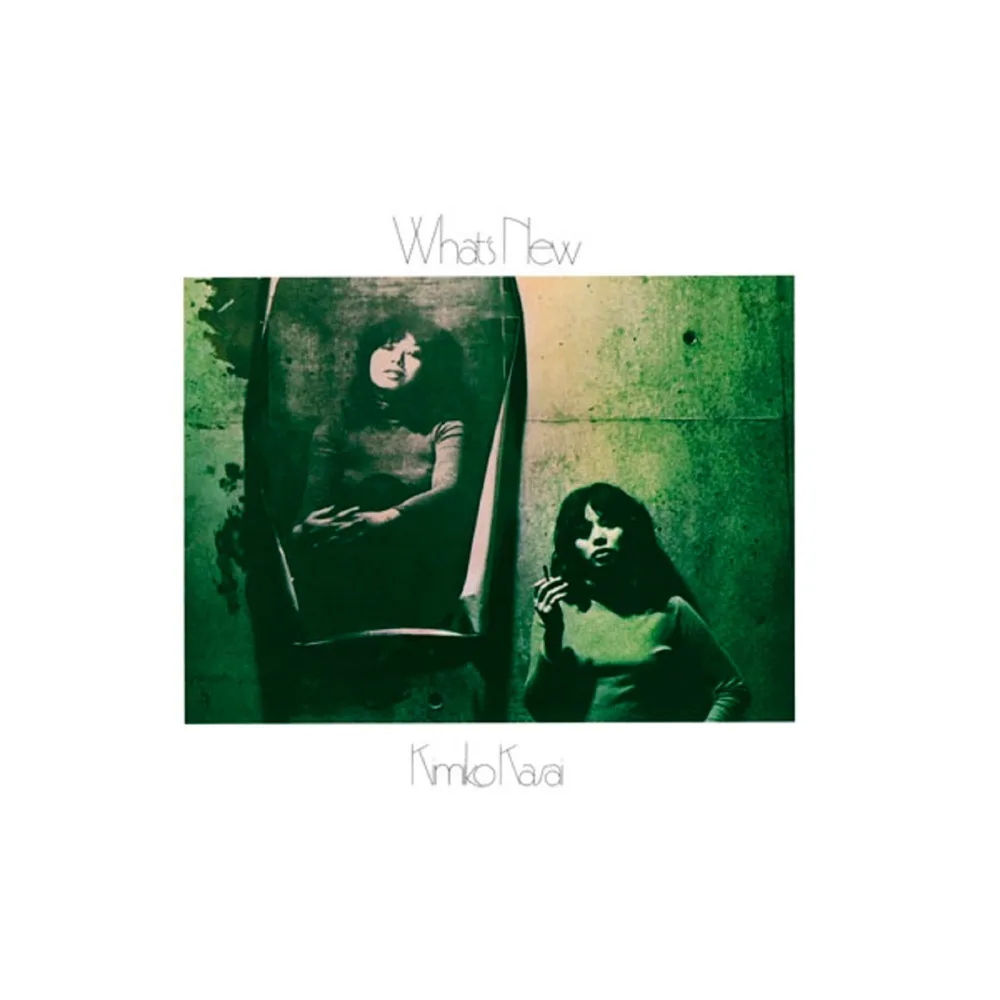
Cover of *What's New* (CBS/Sony, 1973) by Kimiko Kasai, the album on which the Masahiro Kikuchi Trio accompanies her. It is not a photograph of Masahiro Kikuchi. Standard copyright, all rights reserved, held by Sony Music Labels Inc. This is not a Creative Commons or public-domain image; it is an album cover shown as an honestly disclosed editorial identification image. — https://music.apple.com/jp/album/%E3%83%9B%E3%83%AF%E3%83%83%E3%83%84-%E3%83%8B%E3%83%A5%E3%83%BC/1655614307 (Apple Music artwork, 1000 x 1000 version)
Masahiro Kikuchi (菊地雅洋, also written 菊池雅洋) was a Tokyo jazz pianist and organist who never released an album under his own name; the only release billed to him is a Yamaha demonstration single. His trio accompanied the singer Kimiko Kasai on What's New (CBS/Sony, 1973), he played piano on her Yellow Carcass in the Blue (Three Blind Mice, 1971), and between 1970 and 1972 he was a keyboardist, on piano, electric piano and Hammond organ, in the sextet led by his older brother, the pianist Masabumi Kikuchi (菊地雅章). The two are different people, and their near-identical names are mixed up in several places, so this page keeps to credits that name him.
Family, training and dates. The only biographical note on him comes from JazzTokyo, which in 2013 published a Japanese translation of Ethan Iverson's interview with Masabumi. Its headnote describes Masabumi's younger brother Masahiro as a jazz pianist and a graduate of Tokyo University of the Arts, and gives his years as 1942 to 2008. The same note lists an older brother, the composer Masaharu Kikuchi. In the interview, taped in the summer of 2012, Masabumi said he had two brothers, one a year older and one three years younger; that the younger one had died; and that he was a gifted pianist. Masabumi added that he had learned a lot from him, that after hearing him play he judged him ready and brought him into his band, and that he sometimes played organ there.
The dates conflict. Discogs gives March 23, 1940 for his birth and March 15, 2008 for his death, without naming a source. A 1942 birth fits Masabumi's "three years younger" (Masabumi was born on October 19, 1939); 1940 would make the brothers five months apart. The two sources agree that he died in 2008. The month and day of his birth, the day of his death and his birthplace (Tokyo) rest on Discogs alone, and no obituary or other death notice is available online. No interview with him, no teacher's name and no account of how he learned the instrument has been found.
With Masabumi Kikuchi's sextet, 1970 to 1972. Masabumi came home in 1969 from studying at Berklee in the United States and recorded with a sextet that had two keyboards and two drummers (Setagaya Records' description of the lineup). On Re-confirmation (Philips, recorded at Victor Studio in Tokyo on March 16, 1970), Masahiro plays Fender electric piano beside his brother, with Kohsuke Mine on alto saxophone, Yoshio Ikeda on bass and Hiroshi Murakami and Keiji Kishida on drums. The Tokyo record shop Setagaya Records describes the album's "twin keyboards" as Masabumi and his real younger brother, and ARBAN's annotation to its 2019 interview with Murakami lists the same lineup and marks this album as the one where Murakami joined.
The credits that follow all name him. In October and November 1970 the sextet recorded the two-LP Collaboration with Sadao Watanabe's quartet, on which Discogs lists him on organ and electric piano and Japanese Wikipedia lists him on organ. On November 13, 1970, at Sankei Hall in Tokyo, the sextet played the live set released in 1971 as Masabumi Kikuchi In Concert (the "Dancing Mist" album): Discogs credits him with Hammond organ on "Dancing Mist" and electric piano on "Yellow Carcass in the Blue," and Tower Records' reissue notes list him on organ and electric piano. Discogs also credits him with organ on the Sankei Hall side of the double album All About Dancing Mist. In 1972 he is the organist on the sextet's soundtrack to the Toho film Hairpin Circus, directed by Kiyoshi Nishimura, where the singer Kimiko Kasai is also in the cast and the band includes Yoshio Suzuki on bass and Motohiko Hino on drums. On Poo-Sun (1970) he is not a listed player, though one Discogs track credit names him as writer of "Puzzle Ring."
Elsewhere in 1970. On April 30, 1970, at a jazz festival at Shibuya Public Hall in Tokyo, he played piano in trombonist Hiroshi Suzuki's sextet on the piece "Mira" (Discogs prints it as "Miller"), with Ichiro Mimori on tenor saxophone, Shigeo Suzuki on alto saxophone, Kimio Koizumi on bass and Kazuyoshi Okayama on drums. The concert was issued as Sensational Jazz '70 (Nippon Columbia, July 28, 1970), and the sextet's lineup is printed on Columbia Japan's page for the 2012 CD reissue.
With Kimiko Kasai, 1971 and 1973. On July 11 and 13, 1971, at AOI Studio in Tokyo, he was the pianist on Yellow Carcass in the Blue (Three Blind Mice TBM-8), billed as Kimiko Kasai with the Kosuke Mine Quartet, with Mine on alto and soprano saxophone, Suzuki on bass and Murakami on drums. Discogs credits Masabumi Kikuchi, Kasai and Akie Shimizu as writers of the title song, and the same piece appears on the sextet's live album.
What's New followed in February 1973 (Japanese Wikipedia dates the sessions to February 16 and 23), Kasai's second album for CBS/Sony after Satin Doll with Gil Evans. Discogs credits the Masahiro Kikuchi Trio, with Suzuki on bass and Murakami on drums, as her accompanists on eleven standards that run about 44 minutes. Japanese Wikipedia notes that, unlike her recordings with American musicians, it was made with a Japanese jazz trio. In a September 2026 article on Sony's reissue of fourteen Kasai albums, the Mikiki writer Anri Suetsugu called it a small-room, intimate record and recommended "But Beautiful," recalling that Masabumi had once told him it was his brother's piano that first made him aware of a beautiful piano sound. In an interview published on July 23, 2026, Kasai herself remembered Masabumi's younger brother as the pianist on the album and as a very skilled player. Sony reissued the album on July 22, 2026 (SICJ 40068).
Other credits. He is billed by name on one release, an undated Yamaha Music Foundation seven-inch, Jazz (YM-1037), a demonstration record for a new electronic organ, on which he plays organ with Jun Nomura on bass and Tetsujiro Obara on drums. Discogs also credits him as arranger of three tracks on Super Dance - Oh God (Teichiku, 1991), a Latin dance album by Hisao Sudo and the New Down Beats Orchestra; no second source ties that credit to the pianist.
Two further items rest on thinner evidence. Discogs lists "Masahiro Kikuchi" as pianist on five tracks of Johnny Hartman's Hartman Sings Trane's Favorites (Capitol, Tokyo, November 1972), but Discogs's entry for the 1995 Blue Note compilation For Trane and Noal Cohen's Hartman discography credit Masabumi Kikuchi for the same session, and Cohen calls "Masahiro" and "Masahiko" later misprints; which brother played is not settled. And Japanese Wikipedia's article on the 1971 television drama Aozameta Gogo (蒼ざめた午後) names a pianist 菊池雅洋 among the musicians for Itaru Oki's score, without citing a source.
What is not known. Nothing found gives his birthplace beyond Discogs, his teachers, any recording after 1973 other than the 1991 arranging credit, or the circumstances of his death. No photograph of him has been located.
No source names his teachers or influences. What the record does show is range across settings: acoustic piano behind a vocalist on What's New and Yellow Carcass in the Blue, Fender electric piano and Hammond organ in his brother's two-keyboard, two-drummer sextet, and organ on a Yamaha demonstration disc. Discogs files the sextet records under fusion and avant-garde jazz (Re-confirmation), modal and avant-garde jazz (In Concert) and the Mine quartet date under modal and post-bop (Yellow Carcass in the Blue), while What's New is a program of standards about love (Mikiki's description) that Discogs tags soul-jazz.
The only descriptions of his touch come from people who worked with or wrote about him. Masabumi, interviewed in 2012, said that he had been absorbed in Thelonious Monk until he heard his brother play and decided he was already accomplished, and Mikiki quotes him as saying his brother's piano first made him aware of a beautiful piano sound. Kimiko Kasai's 2026 recollection is that he was very skilled. Suetsugu's 2026 article hears a lyrical quality in his fingering on "But Beautiful" and a good fit with the trio.
- What's New (Kimiko Kasai, CBS/Sony SOPL 183, 1973) - Eleven standards with the Masahiro Kikuchi Trio, Yoshio Suzuki on bass and Hiroshi Murakami on drums; the record that carries his trio's name. Apple Music - What's New · YouTube - What's New (title track) Listen
- Yellow Carcass in the Blue (Kimiko Kasai with the Kosuke Mine Quartet, Three Blind Mice TBM-8, 1971) - Piano in Kohsuke Mine's quartet, recorded July 11 and 13, 1971. YouTube - full album Listen · Buy
- Re-confirmation (Masabumi Kikuchi Sextet, Philips FX-8501, 1970) - The sextet's first record with Masahiro, on Fender piano, in the two-keyboard, two-drummer lineup. Apple Music - Re-Confirmation Listen
- Masabumi Kikuchi In Concert (Philips FX-8515, 1971) - The live "Dancing Mist" set from Sankei Hall, with Masahiro on Hammond organ and electric piano. Apple Music - In Concert Listen
- Collaboration (Masabumi Kikuchi Sextet with the Sadao Watanabe Quartet, Philips FS-5052/3, 1970) - Two LPs with Watanabe's quartet; he is credited on organ and electric piano. YouTube - full album Listen
- Hairpin Circus (Masabumi Kikuchi Sextet, Philips FX-8521, 1972) - The soundtrack, with Masahiro on organ. YouTube - full album Listen
- Sensational Jazz '70 Vol. 2 (Nippon Columbia, 1970) - His piano on the Hiroshi Suzuki Sextet's "Mira," recorded live at Shibuya Public Hall. Apple Music - Sensational Jazz '70 Vol. 2 Listen
Masahiro Kikuchi (菊地雅洋) - Full Discography
Japanese jazz pianist and organist, 1942 to 2008 (Discogs gives March 23, 1940 and March 15, 2008). Discogs artist 2731573. He has no album under his own name: the one release billed to him is a Yamaha demonstration single, and every other credit below is as accompanist, sextet member or contributor. He is not the pianist Masabumi Kikuchi (菊地雅章), his older brother, who has his own profile.
Name variations on record: 菊地雅洋, 菊池雅洋.
Group affiliations on Discogs: Masabumi Kikuchi Sextet, Kosuke Mine Quartet, Hiroshi Suzuki Sextet; and the Masahiro Kikuchi Trio (a separate Discogs entry credited on What's New).
Counts: Discogs lists 13 credits for him: 1 as a named artist (the Yamaha single) and 12 as a sideman, arranger or contributor. All 13 appear below, followed by two credits that come from other sources and have no Discogs entry. Listen links are given only where a matching release could be confirmed; the Buy column is a plain Amazon search link for the release.
Billed to him
| Title | Year | Label | Personnel | Notes | Listen | Buy |
|---|---|---|---|---|---|---|
| Jazz | n.d. | Yamaha Music Foundation, YM-1037 | Masahiro Kikuchi (organ), Jun Nomura (bass), Tetsujiro Obara (drums) | Seven-inch single, made in Japan, described on Discogs as a demonstration record for a new electronic organ. Tracks: "You and Night and Music," "No Problem," "Somebody Loves Me," "I Remember Clifford." No year is given. Discogs release 14878466. | not found | Amazon |
With Kimiko Kasai
| Album | Year | Label | Personnel | Notes | Listen | Buy |
|---|---|---|---|---|---|---|
| Yellow Carcass in the Blue | 1971 | Three Blind Mice, TBM-8 | Kimiko Kasai (vocals), Kohsuke Mine (alto and soprano saxophone), Masahiro Kikuchi (piano), Yoshio Suzuki (bass), Hiroshi Murakami (drums) | Billed Kimiko Kasai with the Kosuke Mine Quartet. Recorded July 11 and 13, 1971 at AOI Studio, Tokyo. Tracks: "Alone Together," "Blues in C Minor," "River Dry," "'Round Midnight," "Yellow Carcass in the Blue" (credited to Masabumi Kikuchi, Kasai and Akie Shimizu), "Be Still My Soul." Producer Takeshi Fujii; recorded by Yoshihiko Kannari. CD reissue TBMCD-1808 (2000). Discogs release 6392641, master 507878. | YouTube | Amazon |
| What's New (ホワッツ・ニュー) | 1973 | CBS/Sony, SOPL 183 | Kimiko Kasai (vocals), with the Masahiro Kikuchi Trio: Masahiro Kikuchi (piano), Yoshio Suzuki (bass), Hiroshi Murakami (drums) | Recorded February 16 and 23, 1973 (Japanese Wikipedia); Mikiki gives February 1973. Eleven standards, about 44 minutes: "But Not for Me," "Guess Who I Saw Today," "The Old Feeling," "They Can't Take That Away from Me," "Body and Soul," "Close Your Eyes," "But Beautiful," "I Thought About You," "Glad to Be Unhappy," "What's New," "The End of a Love Affair." Producer Kiyoshi Itoh; liner notes Yozo Iwanami; photograph Tadayuki Naito; design Mitsuro Yamada. Reissued as SICP-10043 (2007 SACD hybrid), SICP-20146 (June 10, 2009) and SICJ 40068 (July 22, 2026). Discogs release 5688541, master 979746. | Apple Music · YouTube (title track) | Amazon |
| Shibuya Jazz Classics - Nobukazu Takemura Collection - Three Blind Mice Issue (compilation) | 2005 | Solid Records, CDSOL-1110/1 | Disc 1, track 4, "Be Still, My Soul": Kohsuke Mine (sopranino and alto saxophone), Masahiro Kikuchi (piano), Yoshio Suzuki (bass), Hiroshi Murakami (drums) | Two-CD compilation released September 10, 2005. The track is the closing piece of Yellow Carcass in the Blue (written by Suzuki); the instrumental version here is credited to the same four players. Discogs release 3346226. | not found | Amazon |
With the Masabumi Kikuchi Sextet
Masabumi Kikuchi's sextet of 1970 to 1972 had two keyboards and two drummers, and Masahiro was the second keyboardist. The sextet's records are credited to Masabumi Kikuchi; only the credits that name Masahiro are listed.
| Album | Year | Label | Personnel | Notes | Listen | Buy |
|---|---|---|---|---|---|---|
| Re-confirmation (再確認そして発展) | 1970 | Philips, FX-8501 | Masabumi Kikuchi (piano), Masahiro Kikuchi (Fender electric piano), Kohsuke Mine (alto saxophone), Yoshio Ikeda (bass, electric bass), Hiroshi Murakami and Keiji Kishida (drums) | Recorded March 16, 1970 at Victor Studio, Tokyo. Tracks: "Tenacious Prayer Forever," "Roaming in Darkness," "Love Token," "Silence, Horizon and a Dawn," "Piece to Peace," "Young Bloods." Producer Masaharu Honjo. CD reissue UCCJ-9203 (October 7, 2015). Setagaya Records and Tower Records Japan list the same lineup. Discogs release 4170325, master 700410. | Apple Music | Amazon |
| Collaboration (コラボレイション) | 1970 | Philips, FS-5052/3 | Masabumi Kikuchi Sextet: Masabumi Kikuchi (piano, electric piano), Kohsuke Mine (soprano saxophone), Masahiro Kikuchi (organ, electric piano), Yoshio Ikeda (bass), Hiroshi Murakami and Keiji Kishida (drums). Sadao Watanabe Quartet: Sadao Watanabe (alto and sopranino saxophone), Yoshiaki Masuo (guitar), Yoshio Suzuki (bass, electric bass), Hiro Tsunoda (drums) | Two LPs, recorded October 8 and 13 and November 14, 1970. Discogs credits him on organ and electric piano, Japanese Wikipedia on organ. Discogs release 7236311, master 859985. | YouTube | Amazon |
| Poo-Sun | 1970 | Philips, FX-8506 | Masabumi Kikuchi (piano, electric piano), Kohsuke Mine (soprano and alto saxophone), Hideo Ichikawa (electric piano, organ), Yoshio Ikeda (bass), Hiroshi Murakami and Motohiko Hino (drums), Keiji Kishida (percussion) | Masahiro Kikuchi is not a listed player. Discogs credits him at track level as writer of "Puzzle Ring" (B3), while the same page lists Masabumi as writer of tracks A, B1 and B3; the conflict is unresolved. Recorded in August and September 1970 at Victor Studio, Tokyo. Discogs release 3641759, master 462717. | Apple Music | Amazon |
| Masabumi Kikuchi In Concert (ダンシング・ミスト 菊地雅章イン・コンサート) | 1971 | Philips, FX-8515 | Masabumi Kikuchi (electric piano on "Dancing Mist," piano on "Yellow Carcass in the Blue"), Masahiro Kikuchi (Hammond organ on "Dancing Mist," electric piano on "Yellow Carcass in the Blue"), Kohsuke Mine (soprano saxophone, percussion), Yoshio Ikeda (bass), Hiroshi Murakami and Keiji Kishida (drums) | Recorded live at Sankei Hall, Tokyo on November 13, 1970. Two long pieces of about 26 and 19 minutes. Tower Records Japan's reissue notes (UCCJ-9206, October 7, 2015) list him on organ and electric piano. Discogs release 3573297, master 700442. | Apple Music | Amazon |
| All About Dancing Mist (オール・アバウト・ダンシング・ミスト) | 1971 | Philips, FS-5072/3 | Side D, "Dancing Mist at the Sankei Hall": Masabumi Kikuchi (electric piano), Masahiro Kikuchi (organ), Kohsuke Mine (soprano saxophone), Yoshio Ikeda (bass), Hiroshi Murakami and Keiji Kishida (drums) | Two-LP set; the other sides use other lineups, including Joe Henderson and Terumasa Hino on side A. His credit is on side D only, and it rests on Discogs alone. Discogs release 7535147. | YouTube | Amazon |
| Hairpin Circus / A Short Story for Image (ヘアピン・サーカス, original soundtrack) | 1972 | Philips, FX-8521 | Masabumi Kikuchi (piano, Fender piano), Masahiro Kikuchi (organ), Kohsuke Mine (soprano saxophone), Yoshio Suzuki (bass, electric bass), Motohiko Hino and Yoshiyuki Nakamura (drums) | Soundtrack of the 1972 Toho film Hairpin Circus (director Kiyoshi Nishimura, from a novel by Hiroyuki Itsuki; Kimiko Kasai is in the cast). Recorded in 1972 at Mouri Studio and Victor Studio, Tokyo. The BRIDGE reissue lists him as organist. Discogs release 5975202, master 539078. | YouTube | Amazon |
Other credits
| Album | Year | Label | Personnel | Notes | Listen | Buy |
|---|---|---|---|---|---|---|
| Sensational Jazz '70 Vol. 1/2 (センセーショナル・ジャズ'70, various artists) | 1970 | Nippon Columbia, PSS-10025/6-J | On "Mira" (Discogs: "Miller," written by Andrew Hill), the Hiroshi Suzuki Sextet: Hiroshi Suzuki (trombone), Ichiro Mimori (tenor saxophone), Shigeo Suzuki (alto saxophone), Masahiro Kikuchi (piano), Kimio Koizumi (bass), Kazuyoshi Okayama (drums) | Two-LP live set from a jazz festival at Shibuya Public Hall, Tokyo, April 30, 1970; released July 28, 1970. Columbia Japan's page for the 2012 CD (COCB-54039/40) prints the same sextet lineup. Discogs release 4093624, master 499427. | Apple Music (Vol. 2) | Amazon |
| Hartman Sings Trane's Favorites (Johnny Hartman) | 1973 | Capitol (Japan), ECP-88108 | Johnny Hartman (vocals); Discogs lists Masahiro Kikuchi (piano), Yoshio Suzuki (bass) and Hiroshi Murakami (drums) on A2 "Violets for Your Furs," A3 "My Favorite Things," B1 "Greensleeves," B2 "Nature Boy" and B4 "On a Clear Day" | Discogs dates these tracks to November 25, 1972 at Toshiba Studio, Tokyo; Noal Cohen's discography gives Shiba East Studio. The pianist credit is disputed: Discogs's entry for the 1995 Blue Note compilation For Trane credits Masabumi Kikuchi for the same tracks, and Cohen's discography credits Masabumi and describes "Masahiro" and "Masahiko" as later misprints. Liner notes by Hiraku Aoki. Discogs release 4616936, master 1950301. | not found | Amazon |
| Super Dance - Oh God (Hisao Sudo and New Down Beats Orchestra) | 1991 | Teichiku Records, TECD-14130 | Arranger on track 2 "Sunflower," track 4 "Quizas, Quizas, Quizas" and track 9 "Flamingo" | CD released July 21, 1991; Discogs tags it Latin (rumba). The arranger credit is Discogs's; no other source was found tying it to the pianist. Discogs release 20561620. | not found | Amazon |
Credits from other sources, without a Discogs entry
| Work | Year | Source | Notes |
|---|---|---|---|
| Aozameta Gogo (蒼ざめた午後), television drama | 1971 | Japanese Wikipedia | Daytime drama produced by Tokai Television for the Fuji TV network, aired January 11 to March 26, 1971. The article lists music by Itaru Oki and names the musicians as 菊池雅洋 (piano), 長谷川伸二 (flute, saxophone), 紙上理 (bass), 久富保 (drums) and Oki (trumpet). The article cites no source for the credit and spells the pianist's surname with the 池 character. |
| Named among pianists in the collaborator list of the guitarist Ryo Kawasaki | n.d. | Japanese Wikipedia | The list covers leader, sideman and session work and carries no citation, so no recording is attached to it. |
- Masabumi Kikuchi - his older brother, and the leader of the sextet in which Masahiro played piano, electric piano and organ on Re-confirmation, Collaboration, In Concert and Hairpin Circus. The relationship is stated by Masabumi himself (2012) and in JazzTokyo's headnote. Masabumi also co-wrote the title song of Yellow Carcass in the Blue.
- Kimiko Kasai - the singer on Yellow Carcass in the Blue (1971) and What's New (1973), where his trio accompanied her; she is also in the cast of the film Hairpin Circus.
- Yoshio Suzuki - bass on What's New and Yellow Carcass in the Blue, in the bass chair of the Watanabe quartet on Collaboration and on Hairpin Circus.
- Hiroshi Murakami - drums on What's New, Yellow Carcass in the Blue, Re-confirmation, Collaboration and In Concert.
- Kohsuke Mine - saxophonist in Masabumi's sextet and the leader of the quartet on Yellow Carcass in the Blue.
- Sadao Watanabe and Yoshiaki Masuo - alto and sopranino saxophone, and guitar, in the Watanabe quartet half of Collaboration (1970).
- Motohiko Hino - drums on the Hairpin Circus soundtrack (1972).
- Hiroshi Suzuki - trombonist and leader of the sextet in which Masahiro played piano on "Mira" at Shibuya Public Hall on April 30, 1970.
- Tetsujiro Obara - drummer on the Yamaha Music Foundation demonstration record Jazz.
- Yoshio Ikeda, Keiji Kishida, Hiro Tsunoda, Jun Nomura - fellow musicians on the sextet, Collaboration and Yamaha records above.
- Itaru Oki - composed the music for the 1971 television drama Aozameta Gogo; Japanese Wikipedia lists a pianist of Masahiro's name in the score's ensemble, without a source.
- Johnny Hartman - the singer on the Tokyo sessions of November 1972 on which the piano credit is disputed between Masahiro and Masabumi.
More Jazz Fusion Artists
See all 351 Jazz Fusion artists →More Japanese Jazz Artists
See all 262 Japanese artists →- Discogs: Masahiro Kikuchi
- MusicBrainz: Masahiro Kikuchi (pianist)
- Apple Music: Kimiko Kasai, What's New
- JazzTokyo: Masabumi Kikuchi interview by Ethan Iverson (Japanese translation, 2013)
- Ethan Iverson: Interview with Masabumi Kikuchi (original English)
- Masahiro Kikuchi on JazzProfiles.com
- r/JapaneseJazz
- Discogs: Masahiro Kikuchi, artist 2731573
- Discogs: Kimiko Kasai, What's New (CBS/Sony SOPL 183, 1973)
- Discogs: Kimiko Kasai with Kosuke Mine Quartet, Yellow Carcass in the Blue (Three Blind Mice TBM-8, 1971)
- Discogs: Masabumi Kikuchi Sextet, Re-confirmation (Philips FX-8501, 1970)
- Discogs: Masabumi Kikuchi Sextet with Sadao Watanabe Quartet, Collaboration (Philips, 1970)
- Discogs: Masabumi Kikuchi Sextet, Masabumi Kikuchi In Concert (Philips FX-8515, 1971)
- Discogs: Masabumi Kikuchi Sextet, Hairpin Circus (Philips FX-8521, 1972)
- Discogs: Various, Sensational Jazz '70 Vol. 1/2 (Columbia PSS-10025/6-J, 1970)
- Discogs: Masahiro Kikuchi, Jun Nomura, Tetsujiro Obara, Jazz (Yamaha Music Foundation YM-1037)
- JazzTokyo: Interview #116, Masabumi Kikuchi by Ethan Iverson (2013)
- Ethan Iverson, Do The Math: Interview with Masabumi Kikuchi
- Mikiki: Kimiko Kasai reissue feature by Anri Suetsugu (Japanese, September 7, 2026)
- Mikiki: the same feature in English translation (September 18, 2026)
- Mikiki: Anri Suetsugu on Masabumi Kikuchi's interview series (September 10, 2015)
- Mynavi News (from Rolling Stone Japan): Kimiko Kasai interview (July 23, 2026)
- Sony Music Japan: We Want Jazz, fifth series, fourteen Kimiko Kasai titles (June 26, 2026)
- Wikipedia (Japanese): What's New (Kimiko Kasai album)
- Wikipedia (Japanese): 菊地雅章
- Wikipedia (Japanese): 渡辺貞夫
- Wikipedia (Japanese): 蒼ざめた午後
- Columbia Japan: Sensational Jazz '70 (COCB-54039/40, 2012)
- ARBAN: Hiroshi Murakami interview, part 3 (Takao Ogawa, March 28, 2019)
- Setagaya Records: Masabumi Kikuchi Sextet, Re-confirmation
- Tower Records Japan: Re-confirmation reissue (UCCJ-9203)
- Tower Records Japan: Masabumi Kikuchi In Concert reissue (UCCJ-9206)
- BRIDGE: Hairpin Circus reissue, with the musicians' credits
- Noal Cohen: Johnny Hartman discography
- Discogs: Johnny Hartman, Hartman Sings Trane's Favorites (Capitol ECP-88108)