 JAZZPROFILES lives in the music 1,765 Jazz Artists fully Profiled!
Daisaku Kume
Last updated October 21, 2026
Listen on Spotify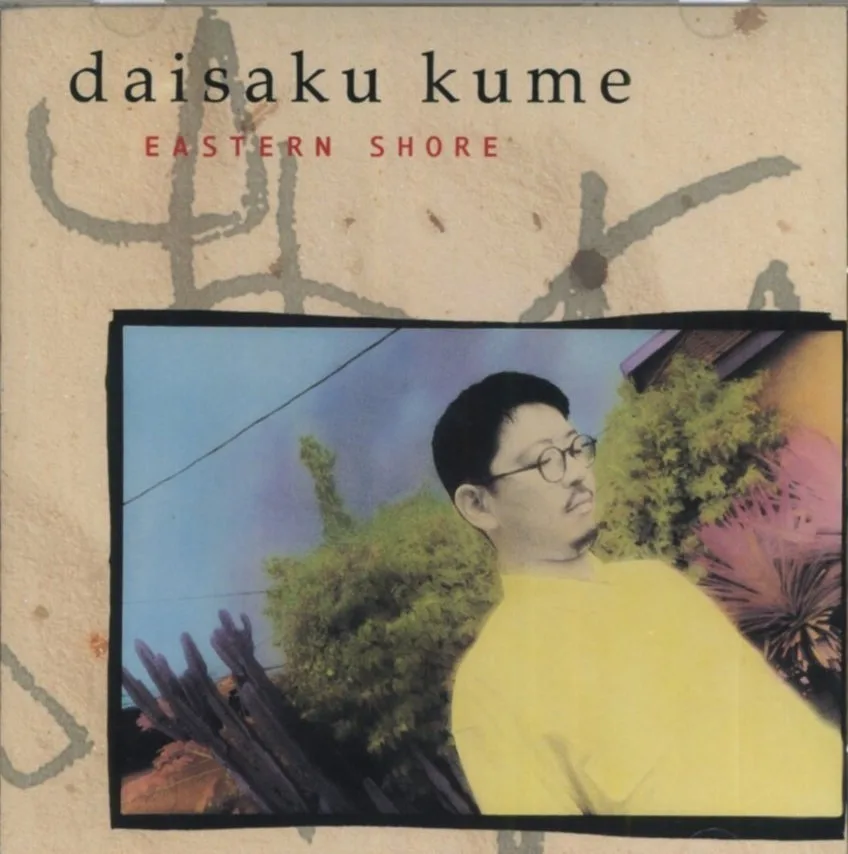
Daisaku Kume on the cover of Eastern Shore (Moo Records, 1993). Album artwork, shown for identification; not Creative Commons. Standard copyright, all rights reserved, held by Moo Records and the credited creators. This is not a Creative Commons or public-domain image; it is an album cover shown as an honestly disclosed editorial identification image. — https://coverartarchive.org/release/77afa6de-8ee6-4ca6-9e6d-463460c20196/front (MusicBrainz release page: https://musicbrainz.org/release/77afa6de-8ee6-4ca6-9e6d-463460c20196)
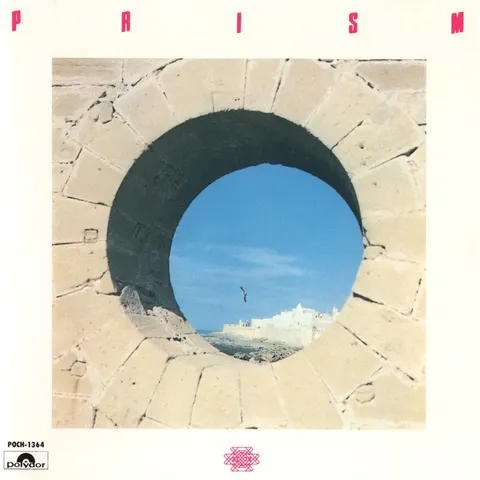
Daisaku Kume (久米大作, Kume Daisaku in Japanese order) was born in Tokyo on 23 July 1957, the son of the actor and narrator Akira Kume (久米明). He went to Meisei Gakuen High School and later studied at the College of Art of Nihon University. According to the guitarist Akira Wada's biography, he was still a high-school student when Wada, then putting together live sessions around Tokyo with the bassist Ken Watanabe, brought him in on keyboards. That group became Prism, and Kume is credited on electric piano on its first album, Prism (Polydor, 1977), and on piano, electric piano and synthesizer on Second Thoughts/Second Move (1978) and on III (recorded in the autumn of 1978 and issued in 1979). By the time of the double album Prism Live in November 1979 he is listed only as a guest.
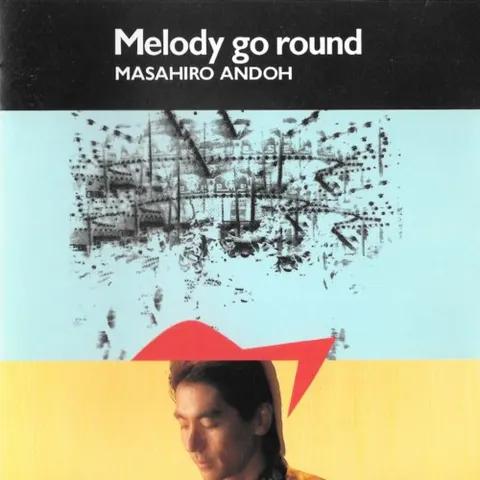
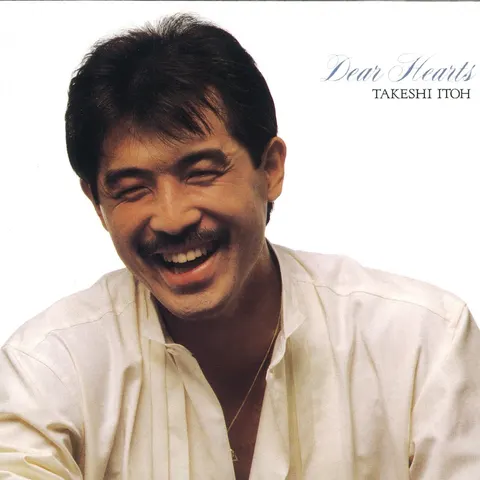
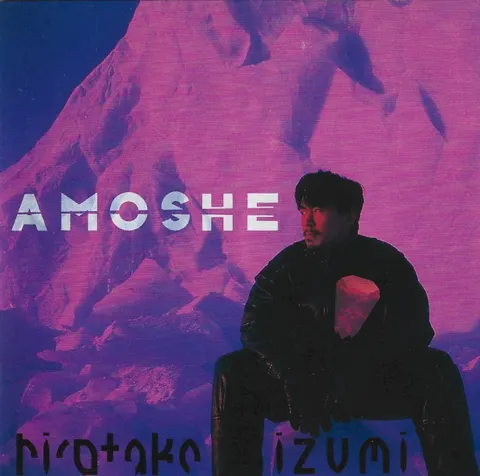
In 1979 he moved to The Square, the band later renamed T-Square, where he is credited on keyboards on Rockoon (CBS/Sony, April 1980), the Sony Walkman commercial single I'm Walkman (1980), It's Magic (1981) and the album Magic (November 1981). He shares the keyboard and arranging credit on Rockoon with Shiro Sagisu, and on Magic the arranging credits are spread across the band, which included the guitarist Masahiro Andoh and the saxophonist Takeshi Itoh. Japanese Wikipedia lists nine Square pieces that he wrote or co-wrote, among them "Rockoon", "Larisa", "Sunshine Sunshine" and "I Luv U". He left in 1981, and Hirotaka Izumi took over the keyboard chair from 1982.
His next stop was a very different band. In 1981 he joined the percussionist Kiyohiko Semba's Haniwa All Stars, an experimental art-rock group, and Discogs credits him on keyboards and percussion on Haniwa (CBS/Sony, 1983). With Semba he also formed the duo Haniwa-chan, whose Kanashibari (CBS/Sony, 1984) has him on keyboards. In May 1984 a seven-inch flexi-disc of his was given away with the keyboard magazine Keyple, a tongue-in-cheek instructional record whose title translates roughly as a course in keyboard bluff and showy phrases. In 1985 he married the singer Saki Kubota, who left the entertainment business and now works as a church musician under her own name, Sayuri Kume; he has produced and played on her records.
Through the late 1980s and 1990s he worked as a session keyboardist, arranger and composer across pop, rock and stage music. Discogs lists credits for him on releases by Cornelius, Pizzicato Five, Flipper's Guitar, Kahimi Karie and many others. A notable screen credit was the music for Takeshi Kitano's 1989 debut film Sono Otoko, Kyobo ni Tsuki (Violent Cop), whose soundtrack album appeared in September 1990 on Samurai Music Corporation and includes a rearrangement of Erik Satie's "Gnossienne No. 1". In the same month came 9 Picture Cards: The Ear of Marco Polo (Electric Bird, 1990), billed to Daisaku Kume & Selah, a nine-track album that Discogs files as electronic and jazz fusion. He plays keyboards, vibraphone and melodica, and arranged and co-produced it, with a band that includes the drummer Jun Aoyama, the bassist Vagabond Suzuki, the percussionist Kiyohiko Semba and the saxophonist Hiroyasu Yaguchi.
His own name came to the front in 1993 with Eastern Shore (Moo Records, a Tokuma Japan imprint; Japanese release 25 November 1993), which Japanese Wikipedia counts as his third solo album and which was issued in the United States through Mesa/Bluemoon. Produced by Yoshio Maki and recorded in the Los Angeles area and Tokyo in the spring of 1993, it is atmospheric and electronic, closer to new age and ambient music than to jazz; a modern reviewer at FOND/SOUND calls it a mix of electronic music, Japanese new age and jazz. Forever & Never followed in 1995 (Moo Records), recorded between December 1994 and February 1995 in North Hollywood with both an instrumental and a vocal version of "Never Knew Love". Discogs classifies it as pop. That same year he became music director of the stage production Ghetto, directed by Tamiya Kuriyama, and he has since written and directed music for many of Kuriyama's productions.
From 1998 to 2003 he was a core member of the Asian Fantasy Orchestra, a Japan Foundation touring ensemble, and Discogs credits him on keyboards on its Asian Tour 1998 album (Polydor, 1999). In 2003 Prism recorded new versions of its older pieces for the SACD sets Present I and Present II (Universal J), and Kume is credited on keyboards on both. In 2004 he wrote the music for the television anime Tsukuyomi: Moon Phase and, according to Japanese Wikipedia, appeared as the Kume Daisaku Unit at the JAZZJAPAN event at the Maison de la Culture du Japon in Paris. In 2005 he started the blues band GIBIER du MARI with the singer Natsuki Mari and Nobu Saito, and he served as general music director of the Meitetsu Little World Ethnic and Earth Orchestra, a community orchestra of ethnic instruments, which played at the Aichi World Expo that year. His score for the stage play Yakiniku Dragon (2006) was part of a production that won the Grand Prize at the 16th Yomiuri Theatre Awards and the Grand Prix at the 8th Asahi Stage Arts Awards, and its soundtrack was released in 2011. In 2009 and 2010 he orchestrated L'Arc-en-Ciel's "Hurry Xmas" and "Bless" and worked on VAMPS' Sweet Dreams unplugged.
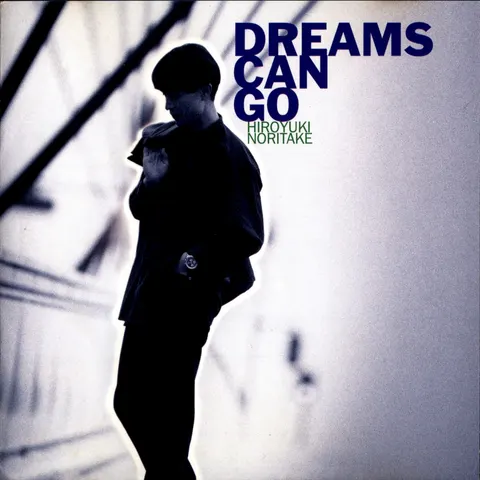
The jazz side of his catalogue grew again after 2008. Someone Loves You (Universal Strategic Marketing Japan, released 6 August 2008) was credited to the Kume Daisaku Orchestra, an eleven-piece band with a brass quintet that included Wada on guitar, the drummer Hiroyuki Noritake, the bassist Vagabond Suzuki, the percussionist Kumiko Takara, the woodwind player Steve Sacks and brass players Maki Mizutani, Teppei Kawakami, Chiho Aida and Momo Sato; the label described it as jazz groove with colourful harmony. Island Rhapsody (MMP, released 6 June 2011) is a thirteen-track album that he composed, arranged and recorded himself at the Master's Crib studio in Pasadena, California, between June and September 2010, with Yoshio Maki producing. In 2011 he played piano on "Tohoku", a single recorded on 31 July at Genonsha Studio 246 in Tokyo for the victims of the 11 March earthquake and tsunami, with the singer Shizuru Ohtaka and the clarinetist Kazutoki Umezu; it was sold only at their live performances. On 19 September 2011 he played the Tokyo club Jirokichi with the guitarist Hirokuni Korekata, Vagabond Suzuki, Semba and the drummer Yasuo Sano, a night issued as the DVD Live! (Atoss International, January 2012). His own YouTube channel also carries live clips from 2010 and 2011 of a project billed 4DK, with the guitarist Kyoji Yamamoto, including one titled "Out of Fusion".
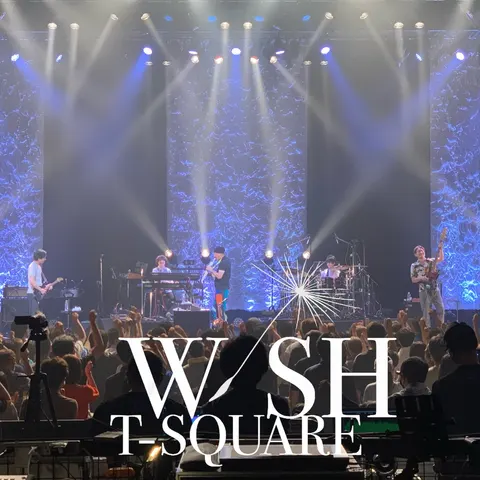
He has also worked in a chamber setting as pianist and producer of Birth of Aria, a project with cello, violin, marimba and voice whose EP Birth of Aria (TheGLEE, 2017) and Traveling Music (2019, with the singer Kahimi Karie as guest) both appear on Discogs under Jazz. He rejoined his old band for T-Square's fortieth-anniversary album It's a Wonderful Life! (Orange Lady, November 2018), playing keyboards and electric piano alongside Andoh, Itoh, Noritake, Izumi and the drummer Satoshi Bandoh, and was credited again on T-Square's forty-fifth-anniversary album Vento de Felicidade (Orange Lady, May 2023). He teaches keyboard and composition at the Mesa House music school in Tokyo. He turned 69 in July 2026.
Kume's place in jazz is mainly through fusion, and it should be said plainly that it competes with a much larger body of other work. Of the roughly 160 releases that Discogs credits him on, about 40 percent carry a jazz genre tag (most of them Prism, Square and T-Square albums, fusion compilations and his own later leader dates), while a similar share are tagged pop or rock: studio and arranging work for pop acts, theatre, film and anime scores, a new age solo record, an experimental art-rock band and a blues band. He is a keyboardist and composer first and a jazz bandleader second, and the jazz and the non-jazz parts of his career run side by side rather than one replacing the other.
The jazz core is the first generation of Japanese fusion. Prism, formed by Akira Wada and Ken Watanabe in 1975, drew on Santana, Return to Forever and Al Di Meola; The Square, led by Andoh, was developing the style that became T-Square. Kume's credits in both bands are for piano, electric piano and synthesizer, and his Square writing credits include "Larisa", "Sunshine Sunshine" and "I Luv U". His later jazz records use more acoustic colour: the brass-led arrangements of Someone Loves You and the chamber instrumentation of Birth of Aria. His 2012 DVD with Korekata, Suzuki, Semba and Sano is classified by Discogs as free improvisation. Away from jazz, his Violent Cop score is spare synthesizer and piano music that reworks Satie, and Eastern Shore is an atmospheric album that Discogs files under new age. The keyword tags on his own YouTube channel include jazz fusion, jazz, brass orchestra and electric piano.
- Second Thoughts/Second Move (1978, Polydor MR-3107, Prism) - The second Prism album, with Kume on piano, electric piano and synthesizer alongside Wada, Ken Watanabe, Toru Suzuki, Katsutoshi Morizono and Kouki Itoh. YouTube - Second Thoughts/Second Move Listen · Buy
- Prism III (1979, Polydor MR 3160, Prism) - Recorded in October and November 1978, with Kume on electric piano and piano. YouTube - Prism III Listen
- Rockoon (1980, CBS/Sony 25AP 1798, The Square) - His first Square album, credited with keyboards and arrangements, with Andoh on guitar and Itoh on alto saxophone and Lyricon. YouTube - Rockoon Listen · Buy
- 9 Picture Cards: The Ear of Marco Polo (1990, Electric Bird KICP-65, Daisaku Kume & Selah) - Keyboards, vibraphone and melodica with a nine-piece band, filed by Discogs as jazz fusion. YouTube - full album Listen
- Sono Otoko, Kyobo ni Tsuki (1990, Samurai Music Corporation BCCA-8; vinyl reissue by WRWTFWW, 2023) - The score for Takeshi Kitano's Violent Cop. YouTube - full album · Spotify - Main Theme Listen
- Eastern Shore (1993, Moo Records TKCB-70145) - The solo record that reached American listeners, ambient and electronic rather than jazz. YouTube - full album Listen
- Someone Loves You (2008, Universal UICZ-4183, Kume Daisaku Orchestra) - His brass-and-rhythm-section jazz fusion album. YouTube - Someone Loves You Listen
- Island Rhapsody (2011, MMP MP-10252) - Thirteen pieces that he composed, arranged and performed himself, filed by Discogs as jazz fusion. YouTube - Island Rhapsody Listen · Buy
- Birth of Aria, "Kaze no Higashi" (live, 2019, Blues Alley Japan) - The chamber-jazz trio-plus project, from his own orchestra channel. YouTube - Kaze no Higashi Listen
Daisaku Kume (久米大作) - Full Discography
Japanese keyboardist, composer and arranger, born 23 July 1957 in Tokyo. Discogs artist 404597.
Name variations on record: D. Kume, D.Kume, Daisaku, Kume Daisaku, Kume, Daisaku, Kume Daisuke, ビック久米, 久米 大作, 久米大作.
Group affiliations: Prism, The Square / T-Square, Haniwa All Stars, はにわちゃん (Haniwa-chan), Asian Fantasy Orchestra, Gibier du Mari, Kume Daisaku Orchestra, Daisaku Kume & Selah, Mo' Music, Kao's M-Unique, Birth of Aria.
Discogs credits him on about 160 distinct releases, most of them as a session keyboardist, arranger or guest on pop, rock and compilation records. The tables below give his own releases, co-billed releases and the band and group records where he has a jazz-fusion credit; the long tail of session and compilation appearances follows as a chronological list.
Leader (solo and own-name releases)
| Album | Year | Label | Personnel | Notes | Listen | Buy |
|---|---|---|---|---|---|---|
| 久米大作の「キーボード・ハッタリ&見栄フレーズ講座」 | 1984 | Jiyukokuminsha (no catalog number) | Daisaku Kume (keyboards, producer) | 7-inch flexi-disc, 33 1/3 rpm, given away with the keyboard magazine Keyple No. 3 (May 1984). An instructional record in two sides of demonstrations on a Yamaha DX7 and grand piano; Discogs classifies it as electronic, education. | not found | not found |
| 9 Picture Cards: The Ear of Marco Polo (as Daisaku Kume & Selah) | 1990 | Electric Bird, KICP-65 | Daisaku Kume (keyboards, Macintosh computer, vibraphone, melodica, arranger, producer); Jun Aoyama (drums); Mecken and Vagabond Suzuki (bass); Kiyohiko Semba (percussion); Hidehiko Urayama (guitar, charango); Hiroki Komazawa (steel guitar); Hiroyasu Yaguchi (saxophones); Shinji Kano (synthesizer); Yasuhiro Kobayashi (accordion); Takashi Shinozaki (oboe); Osamu Fukui (bassoon); Neko Saito (violin); Mamiko Sasaki and Yoshitaka Minami (vocals, humming) | Nine tracks including "Jordan", "Dance Ternate", "Indigo Queen", "Spanish Harlem" and "Tango Mania". Discogs genre: electronic, jazz; style: fusion. | YouTube, full album | Amazon |
| その男、凶暴につき = Sono Otoko, Kyobo ni Tsuki (Violent Cop, original soundtrack) | 1990 | Samurai Music Corporation, BCCA-8; vinyl reissue WRWTFWW, wrwtfww071 (2023) | Daisaku Kume | Eight tracks including "Main Theme", "End Title" and two Satie-derived pieces titled "Gnossienne I"; CD released 21 September 1990. The 2023 vinyl reissue was a limited run of 500 copies. | YouTube, full album · Spotify, Main Theme | Amazon |
| Eastern Shore = 水の東 | 1993 | Moo Records, TKCB-70145 (Japan); Moo Records, R2 79064 (US edition) | Daisaku Kume; Shinji Kano (synthesizer, musical assistance, tracks 1, 3, 4, 6) | Ten tracks including "Close To Love", "Asian Eyes", "Sai-Chen (Meet You There)", "Eastern Shore" and "The Lost Field". Japanese release 25 November 1993; produced by Yoshio Maki. Discogs genre: electronic, style: new age. | YouTube, full album | Amazon |
| Forever & Never | 1995 | Moo Records, TKCB-70721 | Daisaku Kume | Eleven tracks including instrumental and vocal versions of "Never Knew Love". Recorded 15 December 1994 to 7 February 1995 at Audio & Video Studios, North Hollywood. Discogs genre: pop. | not found | Amazon |
| Someone Loves You (as Kume Daisaku Orchestra) | 2008 | Universal Strategic Marketing Japan, UICZ-4183 | Daisaku Kume (piano, keyboards, producer); Akira Wada (guitar); Vagabond Suzuki (bass); Hiroyuki Noritake (drums); Kumiko Takara (percussion, vibraphone, marimba); Maki Mizutani and Teppei Kawakami (trumpet); Chiho Aida (euphonium); Momo Sato (tuba); Steve Sacks (woodwind) | Nine tracks including "Red Wing", "My Lost City", "An American In Paris" and the title track. SHM-CD released 6 August 2008. Discogs genre: jazz, classical; style: fusion. | YouTube, title track | Amazon |
| Island Rhapsody | 2011 | MMP, MP-10252 | Daisaku Kume (composer, arranger, performer) | Thirteen tracks including "In A Sudden Rain", "Island Rhapsody", "Life In The Soup Bowl" and "Sai-Chen". Recorded 15 June to 2 September 2010 at the Master's Crib studio, Pasadena, California; released 6 June 2011; produced by Yoshio Maki. Discogs genre: jazz; style: fusion. | YouTube, title track | Amazon |
Co-leader (single and live releases billed jointly)
| Album | Year | Label | Co-billed with | Notes | Listen | Buy |
|---|---|---|---|---|---|---|
| 東北 = Tohoku | 2011 | N'Datcha Record, 001 | Shizuru Ohtaka (vocals, lyrics); Kazutoki Umezu (composer, arranger, clarinet) | Single with one track, dedicated to the victims of the 11 March 2011 earthquake; recorded at Genonsha Studio 246 on 31 July 2011 with Kume on piano. Sold only at live performances. | not found | not found |
| Live! (DVD) | 2012 | Atoss International, ATDV-265 | Hirokuni Korekata (guitar); Vagabond Suzuki (bass); Daisaku Kume (keyboards); Kiyohiko Semba (percussion); Yasuo Sano (drums) | Recorded live at Jirokichi, Tokyo, 19 September 2011; ten pieces including "Manteca". Discogs genre: jazz; style: free improvisation. | not found | Amazon |
Group and band records (Prism, The Square / T-Square, Haniwa, and others)
The credit column states what the release page itself lists for him; where Discogs shows him as an appearance without naming an instrument, it says so.
| Album | Year | Group | Label | His credit | Notes | Listen | Buy |
|---|---|---|---|---|---|---|---|
| Prism | 1977 | Prism | Polydor, MR 3072 | Electric piano (credited on the 2003 SACD reissue) | Debut album. | YouTube | Amazon |
| Love Me | 1977 | Prism | Polydor, DR 6129 | Keyboards | 7-inch single, August 1977. | not found | not found |
| Second Thoughts/Second Move | 1978 | Prism | Polydor, MR-3107 | Piano, electric piano, synthesizer | With Akira Wada and Katsutoshi Morizono (guitars), Ken Watanabe (bass), Toru Suzuki (drums) and Kouki Itoh (organ, synthesizers). | YouTube | Amazon |
| Sunset Cruise | 1978 | Prism | Polydor, DR 6228 | Acoustic piano, electric piano | 7-inch single, August 1978. | not found | not found |
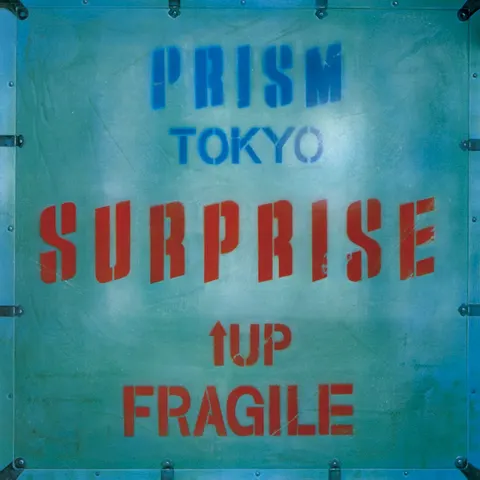
| III | 1979 | Prism | Polydor, MR 3160 | Electric piano, piano | Recorded October to November 1978. | YouTube | Amazon |
| Prism Live | 1979 | Prism | Polydor, MRA9646/7 | Guest | Double live LP released 1 November 1979. | not found | not found |
| Present I | 2003 | Prism | Universal J, UPGH-1007 | Keyboards | SACD, released 21 May 2003. | not found | not found |
| Present II | 2003 | Prism | Universal J, UPGH-1008 | Keyboards (guest) | SACD of new versions of earlier Prism pieces, released July 2003. | not found | not found |
| 1977 Live At Sugino Kodo | 2004 | Prism | Universal, UPCH-1344/5 | Acoustic piano, electric piano | Two discs of 1977 concerts, released 21 May 2004. | not found | not found |
| Beneath The Sea | 2004 | Prism | Polydor / Universal, BPD-1004 | Keyboards | Promotional mini-CD. | not found | not found |
| 30th anniversary LIVE! [Homecoming 2007] | 2007 | Prism | Music Air Networks, MUBA-1025/26 | Keyboards | Two-DVD set. | not found | not found |
| Rockoon | 1980 | The Square | CBS/Sony, 25AP 1798 | Keyboards, arranger (with Shiro Sagisu) | Released 1 April 1980, with Masahiro Andoh (guitar), Takeshi Itoh (saxophone, Lyricon, flute), Jun Aoyama (drums) and Kiyohiko Semba (percussion). | YouTube, title track | Amazon |
| I'm Walkman | 1980 | The Square | CBS/Sony, 07SP 496 | Keyboards | 7-inch single; the A-side is the television commercial song for the Sony Walkman. | not found | not found |
| It's Magic | 1981 | The Square | CBS/Sony, 07SH 1087 | Keyboards | 7-inch single. | not found | not found |
| Magic = マジック | 1981 | The Square | CBS/Sony, 28AH 1368 | Keyboards, arranger | Released 1 November 1981; his last album with the band as a full member. | not found | Amazon |
| 脚線美の誘惑 = Kyakusenbi No Yuhwaku | 1982 | The Square | CBS/Sony, 28AH 1505 | Synthesizer (track 6) | Guest credit on a single track. | not found | not found |
| Stars And The Moon | 1984 | The Square | CBS/Sony, 28AH 1809 | Listed on Discogs | Credit not itemized on the release page. | not found | not found |
| Gravity | 1998 | T-Square | Village Records, VRCL 2123 | Listed on Discogs | Credit not itemized on the release page. | not found | not found |
| T-Square 35th Anniversary The Box More | 2013 | T-Square | Village Records, VRCL-30018 | Listed on Discogs | Limited-edition box set. | not found | not found |
| It's a Wonderful Life! | 2018 | T-Square & The Square Reunion | Orange Lady, OLCH-10013-14 | Keyboards, electric piano | Fortieth-anniversary album, released 14 November 2018; includes "Old School Babies". With Masahiro Andoh, Takeshi Itoh, Hirotaka Izumi, Keizoh Kawano, Hiroyuki Noritake, Satoshi Bandoh and others. | not found | Amazon |
| Crème De La Crème | 2021 | T-Square | Aldelight, MHCL 10141~7 | Listed on Discogs | Compilation box (SACD and Blu-ray), released 28 July 2021. | not found | not found |
| Vento De Felicidade = しあわせの風 | 2023 | T-Square | Orange Lady, OLCH 10028-30 | Keyboards, electric piano | Forty-fifth-anniversary album, released 31 May 2023, with Masahiro Andoh, Takeshi Itoh, Hiroyuki Noritake, Satoshi Bandoh and others. | not found | Amazon |
| Haniwa = はにわ | 1983 | Kiyohiko Semba and His Haniwa All Stars | CBS/Sony, 28AH-1557 | Keyboards, percussion | Discogs genre: folk, world and country; style: art rock, experimental, prog rock. | not found | not found |
| かなしばり = Kanashibari | 1984 | はにわちゃん (Haniwa-chan) | CBS/Sony, 28AH 1770 | Keyboards | Released 25 August 1984; recorded May to July 1984 at CBS/Sony Shinanomachi studio. | not found | not found |
| イン・コンサート = In Concert | 2005 | Kiyohiko Semba and the Haniwa All Stars | GL Visual, MHBL 1039 | Keyboards | DVD reissue, 23 November 2005. | not found | not found |
| Asian Tour 1998 | 1999 | Asian Fantasy Orchestra | Polydor | Keyboards | Discogs genre: jazz; style: avant-garde jazz. | not found | not found |
| Gibier du Mari | 2006 | Gibier du Mari | Avex Trax, AVCD-17919/B | Group member (blues band with Natsuki Mari and Nobu Saito) | Discogs genre: rock. | not found | not found |
| Kao's M-Unique | 2013 | Kaori Takahashi / Kao's M-Unique | KAO Records | Keyboards (tracks 1, 4, 5, 6, 7) | Discogs genre: jazz; style: contemporary jazz, fusion. | not found | not found |
| Live!! | 2014 | Kaori Takahashi / Kao's M-Unique | Atoss International, ATDV-336 | Keyboards | DVD, released 27 May 2014. | not found | not found |
| Birth of Aria | 2017 | Birth of Aria | TheGLEE, GPHR-17016 | Piano, producer | EP of four tracks ("Aquarium Girl", "Broken Sky", "Birth Of Aria", "My Sweet Lips"), recorded 20 and 21 June 2017, released 20 September 2017; with Udai Shika (cello), Leina Ushiyama (violin), Saki Miura (marimba) and Ayumi Otsu (vocals). | not found | Amazon |
| Traveling Music | 2019 | Birth of Aria | TheGLEE, GPHR-18022 | Producer (his name is not itemized for an instrument on the release page) | EP of five tracks, released 6 February 2019, with Kahimi Karie as guest vocalist. | YouTube, "Kaze no Higashi" live | Amazon |
Production credits on other artists' records
| Album | Year | Artist | Label | Credit |
|---|---|---|---|---|
| Gospel | 1988 | Chu Kosaka, Makoto Iwabuchi | Michtam Records | Producer; also credited as an appearance. |
| はじめの日 = Hajime No Hi | 1996 | Sayuri Kume | not itemized | Producer; Sayuri Kume is his wife, the former singer Saki Kubota. |
| One Too Many Chocolat | 1998 | Chocolat | not itemized | Producer. |
| Shanghai Red | 2003 | WeiWei Wuu | not itemized | Producer. |
Other credited appearances (session, guest and compilation)
Chronological list of the remaining releases on which Discogs lists him (keyboards, arranging or guest credits on pop, rock, soundtrack and compilation records; the instrument is not itemized here): undated, Prism, Best And Best; 1977, 大村憲司, 渡辺香津美, 森園勝敏 & 山岸潤史, Guitar Work Shop; 1978, Katsutoshi Morizono, Bad Anima; 1979, 中原理恵, Heart Of Gold; 1980, Noriyo Ikeda, Dream In The Street; 1980, Pao, You; 1980, Kenji Omura, Kazumasa Akiyama, Katsutoshi Morizono, June Yamagishi, Guitar Workshop Vol. 3 Direct Disk; 1980, Nachiko, 1st - 薬屋の娘; 1980, Shiro Sagisu With Somethin' Special, Pole Position 2 Original Soundtrack = ポールポジション 2 オリジナルサントラ盤; 1980, Sagisu / Stanley, Sagisu / Stanley; 1981, Tamori, Radical Hystery Tour; 1982, Kenji Kitajima, A Criminal Aesthetics; 1982, Pegmo / ポンキッキちびっこ合唱隊 / ガチャピン, ムック, SOS ペンペン コンピュータ / あさがお体操 / 新体操 / ネコ・イヌ・ボク; 1982, Various, Sony Walkman Demonstration Tape; 1982, Various, Sony Walkman Demonstration Tape; 1983, 村下孝蔵, 初恋〜浅き夢みし〜; 1983, The Square, Light Up (Best Selection); 1983, The Square, The Best Of The Square; 1984, Yas-Kaz, 縄文頌; 1984, 久保田早紀, 夜の底は柔らかな幻; 1984, P.J. & Cool Runnings, Rising Up; 1984, 久保田早紀, ピアニッシモで… / 夜の底は柔らかな幻; 1984, Various, Drivin' Fusion Sounds 60 = ドライヴィン・フュージョン・サウンズ 60; 1984, 雪村いづみ, 青いカナリヤ / 想い出のワルツ; 1984, 久保田早紀 = Saki Kubota, お友達 = Otomodachi; 1985, Saki Kubota = 久保田早紀, Best Collection = ベスト・コレクション; 1985, Various, Sailin' Fusion; 1985, 川島なお美, 小林聡美, ひばり児童合唱団, キュルトヘンの帽子; 1985, Various, Drivin' Fusion; 1986, Various, Pop Fusion Box 50 = ポップ・フュージョン・Box 50; 1987, Sayuri Kume = 久米小百合, Tehillim 33 = テヒリーム33; 1988, 仙波清彦, Buson; 1988, 久米小百合, 百万本のバラ; 1989, Midori Karashima, Gently; 1989, The Gentle Wind, Tears Of Nature; 1990, Chakra, 南洋でヨイショ; 1990, Marina, A Piece Of Cake!; 1991, Flipper's Guitar, Doctor Head's World Tower = ヘッド博士の世界塔; 1991, The Flipper's Guitar = フリッパーズ・ギター, Groove Tube; 1991, 渡辺 徹, ビタミンCM; 1992, Clémentine, En Privé (Vol #270 Pour Tokyo); 1992, Royal Philharmonic Orchestra Plays T-Square, Classics; 1992, Various, Jazz Jersey; 1992, Yoshitaka Minami, New Standard; 1992, Yoshitaka Minami = 南佳孝, 風の旅人; 1992, Tokyo's Coolest Combo by Request ✻ ✻ ✻, 20 Coolest Hits; 1993, Pizzicato Five, Bossa Nova 2001; 1993, Pizzicato Five, Instant Replay; 1993, Cornelius, The Sun Is My Enemy; 1993, Various, Asia Music; 1993, Cornelius, Holidays In The Sun E.P.; 1993, Cornelius, Perfect Rainbow; 1993, Various, 宮沢賢治 メンタル・サウンド・スケッチ 星めぐりの歌; 1994, Cornelius, The First Question Award; 1994, Nokko, Colored; 1994, Pizzicato Five, Overdose; 1994, Nokko, 人魚; 1995, Kahimi Karie, Leur L'Existence; 1995, Pizzicato Five, Pizzicato Five TYO - Big Hits And Jet Lags 1991-1995; 1995, Pizzicato Five, Romantique 96; 1995, Flipper's Guitar, Singles; 1995, Various, Access: Nippon (A Cross Section Of Our Music Today) Midem '95; 1995, First Impression, What's New; 1996, Pizzicato Five, A Message Song From Pizzicato Five; 1996, Pizzicato Five, Combinaison Spaciale EP; 1996, Semba Kiyohiko, Jasmine Talk; 1996, hàl, Another Side Of Life; 1996, 中谷美紀, 食物連鎖; 1996, Various, おいしい関係 Original Soundtrack; 1996, 今野登茂子, Torch; 1997, Konishi, Yasuharu, Building On A Strong Foundation; 1997, hàl, Way Of My Attitude; 1997, 大貫亜美, 吉村由美, Solosolo; 1997, Yoshitaka Minami, Sketch Of Life; 1997, Dr.K Project, With Friends - Feed Back; 1998, Kahimi Karie, The Best Of Trattoria Years Plus More; 1998, Various, Atom Kids - Tribute To The King "O.T."; 1999, Pizzicato Five, Pizzicato Five™; 1999, MONA, Future Nature EP; 2000, Pizzicato Five, The Fifth Release From Matador; 2000, Various, Viva La Generation Readymade 2000; 2001, Kahimi Karie, My Suitor; 2001, Pizzicato Five, Çà Et Là Du Japon; 2001, Pizzicato Five, Pizzicato Five R.I.P. Big Hits & Jet Lags: 1998-2001; 2001, Coba, Attrice Della Neve; 2001, Various, Zone Of The Enders Z.O.E Original Soundtrack; 2001, クレイジーキャッツ, 植木等, ハナ肇, 谷啓, ハナ肇とクレイジー・キャッツ, クレイジーキャッツ デラックスボックス; 2001, Super Guitar Tribute Band, #1; 2001, West Los Angeles Holiness Nichigo NCM2 Choir, One Love, One Heart; 2002, Various, World Is Waiting For Us - A Compilation Readymade International 2002; 2002, Natsuki Mari, La Parole; 2002, Various, 戦争に反対する唯一の手段は。: ピチカート・ファイヴのうたとことば = Music And Words Of Pizzicato Five: A Tribute Album; 2002, Monsieur Kamayatsu, Je M'appelle Monsieur~我が名はムッシュ; 2003, Yasuharu Konishi, Readymade Digs Disney; 2003, Konishi Yasuharu, "ATOM Is Born" The Remixies; 2004, Puffy Amiyumi, Hi Hi Puffy Amiyumi: Music From The Cartoon Network Series; 2005, 中島美嘉, Music; 2005, クレイジーキャッツ, コンプリートシングルス Harahoro盤; 2006, Smap, Pop Up! SMAP; 2006, Various, Heat Is On 2006 = 發燒專門店2006; 2007, Various, にほんのうた 第一集; 2007, Prism, Blue...; 2009, VAMPS, Sweet Dreams; 2009, Yuri Matsuo And Friends, Tribute To Miyako; 2009, Various, にほんのうた 第三集; 2010, L'ArcenCiel, Bless; 2010, Saki Kubota, Farewell Concert 1984.11.26; 2012, L'ArcenCiel, Butterfly; 2012, HALLOWEEN JUNKY ORCHESTRA, Halloween Party; 2012, Round Table Featuring Nino, Singles Best 2002 - 2012 Memories; 2014, 小川美潮, 檸檬の月+3; 2015, Giovanni Venosta & Sonata Islands, Nippon Eldorado Kabaret; 2016, Various, Esther's Dreams; 2018, Various, The History Of Urawa Rock'n'Roll Center ~ウラワ・ロックンロール・センターの軌跡 1973~1986~; 2019, Chakra, Live & Unreleased; 2025, Rayzd, Are You Connected To Yourself?.
Sources
- Discogs: Daisaku Kume, artist 404597
- Discogs: Eastern Shore, TKCB-70145
- Discogs: Forever & Never, TKCB-70721
- Discogs: Island Rhapsody, MP-10252
- Discogs: Someone Loves You, UICZ-4183
- Discogs: 9 Picture Cards, KICP-65
- Discogs: Live!, ATDV-265
- Discogs: Violent Cop soundtrack, BCCA-8
- Wikipedia (Japanese): 久米大作
- Akira Wada - guitarist and co-founder of Prism; Kume is credited on the Prism albums of 1977, 1978 and 1979, and Wada plays guitar on Kume's Someone Loves You (2008).
- Ken Watanabe - Prism's bassist; Kume's bandmate on Second Thoughts/Second Move (1978) and III (1979).
- T-Square - his band as The Square from 1979 to 1981 (Rockoon, I'm Walkman, It's Magic, Magic), and a returning guest on It's a Wonderful Life! (2018) and Vento de Felicidade (2023).
- Masahiro Andoh - the band's guitarist and leader; on Rockoon, Magic and both anniversary albums.
- Takeshi Itoh - saxophonist and Lyricon player on Rockoon, Magic and both anniversary albums.
- Hiroyuki Noritake - drummer on Someone Loves You (2008) and on both T-Square anniversary albums.
- Hirotaka Izumi - his successor on keys in T-Square from 1982; both are credited on It's a Wonderful Life! (2018).
- Satoshi Bandoh - drummer on the two T-Square anniversary albums; the description of a 2019 Birth of Aria live clip on Kume's own channel also names him, with Wada, Kyoji Yamamoto and Vagabond Suzuki, though that is an uploader's note and not a printed credit.
- Kazutoki Umezu - clarinetist who composed and arranged "Tohoku" (2011), with Kume on piano and the singer Shizuru Ohtaka.
- Kiyohiko Semba - percussionist and leader of the Haniwa All Stars; with Kume on Rockoon (1980), Haniwa (1983), Kanashibari (1984), 9 Picture Cards (1990), Live! (2012) and both T-Square anniversary albums.
- Vagabond Suzuki - bassist on 9 Picture Cards, Someone Loves You and Live!.
- Hirokuni Korekata and Yasuo Sano - guitarist and drummer of the 2011 Jirokichi concert issued as Live!.
- Yoshio Maki - producer of Eastern Shore, Forever & Never, Island Rhapsody and Birth of Aria.
- Kyoji Yamamoto - guitarist in the 4DK quartet clips on Kume's YouTube channel.
- Asuka Kaneko - violinist named in a FOND/SOUND review as the player on "Into Your Heart" from Eastern Shore; this is a review credit and not a printed one.
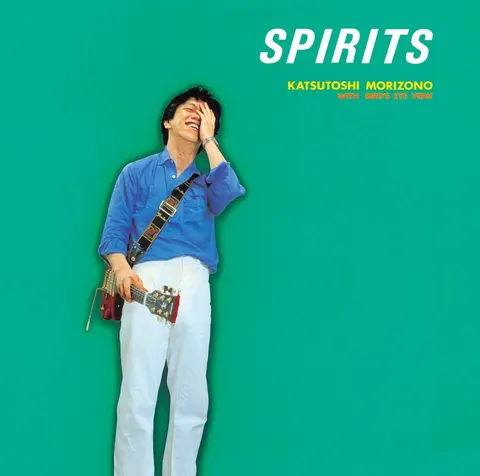
- Katsutoshi Morizono - keyboards on his Bad Anima (Electric Bird, 1978), on the first Guitar Work Shop (1977) and on Guitar Workshop Vol. 3 Direct Disk (1980); the two were also Prism bandmates on Prism (1977) and Second Thoughts/Second Move (1978).
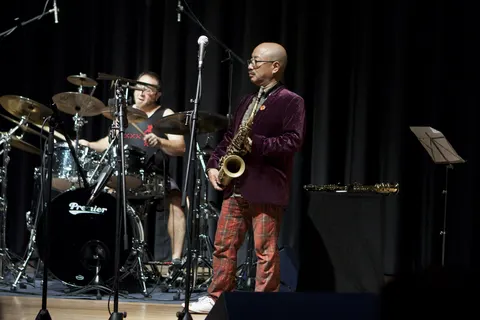
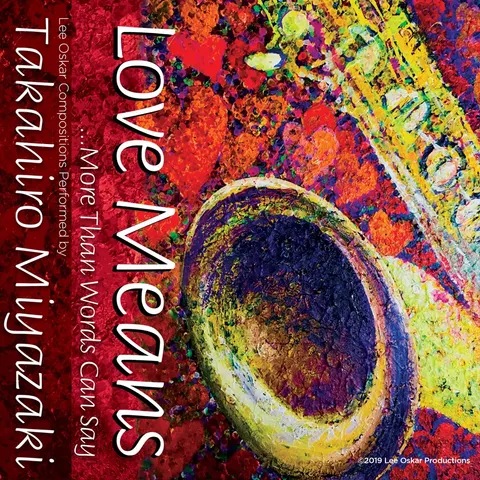
- Takahiro Miyazaki - saxophonist credited with Kume on "Japanese Soul Brothers," the T-Square bonus-disc recording on Gravity (1998).
- Mansaku Kimura - drummer on Prism's Present I and Present II (2003), Blue... (2007) and the 2007 thirtieth anniversary concert recording, all of which list Kume on keyboards.
More Jazz Fusion Artists
See all 351 Jazz Fusion artists →More Japanese Jazz Artists
See all 262 Japanese artists →- Spotify artist page
- YouTube channel: K Daik
- YouTube channel: Kume Daisaku Orchestra-Mix
- Discogs: Daisaku Kume
- MusicBrainz artist page
- Daisaku Kume on JazzProfiles.com
- r/JapaneseJazz
- Wikipedia (Japanese): 久米大作
- Wikidata: Q11369583
- Discogs: Daisaku Kume, artist 404597
- FOND/SOUND: Daisaku Kume, Eastern Shore (1993)
- Newtone Records: Violent Cop original soundtrack reissue
- Sister Ray: Violent Cop original soundtrack
- Discogs: Prism, Second Thoughts/Second Move
- Discogs: The Square, Rockoon
- Discogs: Kume Daisaku Orchestra, Someone Loves You
- Discogs: Island Rhapsody
- Discogs: T-Square, It's a Wonderful Life!
- Discogs: T-Square, Vento De Felicidade