 JAZZPROFILES lives in the music 2,303 Jazz Artists fully Profiled!
Weldon Irvine
Last updated November 6, 2026
Listen on Spotify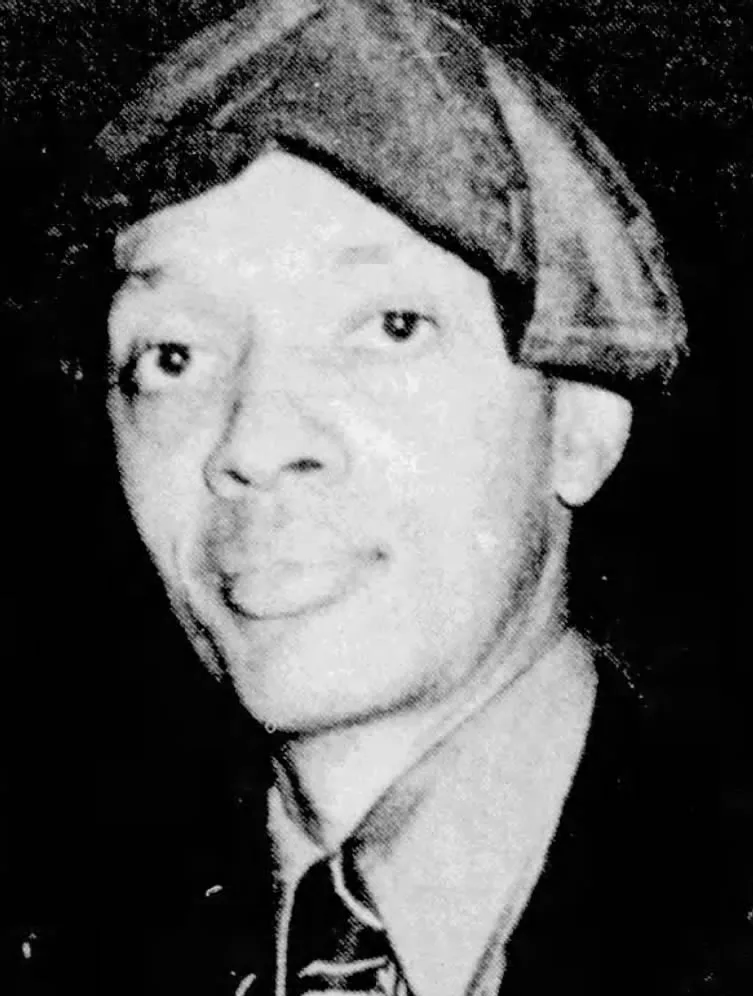
Weldon Irvine, photographed for the New York Amsterdam News, published December 17, 1977 (cropped from a newspaper page) Public domain (a 1977 United States newspaper photograph published without a copyright notice; Wikimedia Commons template PD-US-no-notice) — Wikimedia Commons (https://commons.wikimedia.org/wiki/File:Weldon_Irvine,_New_York_Amsterdam_News_1977_12_17_pg39_(cropped).jpg), from the New York Amsterdam News, December 17, 1977, page 39; photographer not credited

Weldon Jonathan Irvine Jr. was born in Hampton, Virginia, on October 27, 1943. His grandparents raised him on the campus of Hampton Institute, where his grandfather was dean of the men's college and his grandmother played upright bass in regional classical groups. He graduated from George P. Phenix High School in 1961, started on piano as a teenager, and studied literature at Hampton, although music had become his first love once he discovered jazz. In 1965 he moved to New York City and settled in the St. Albans section of Queens, which remained his home base for the rest of his life.
In New York he went to work for Nina Simone as her organist, arranger, bandleader and road manager. Simone first sang "To Be Young, Gifted and Black" to a crowd of about 50,000 at the Harlem Cultural Festival on August 17, 1969, and recorded it two months later at New York's Philharmonic Hall, in the concert released in January 1970 as Black Gold. Irvine wrote the lyrics and played organ on that album. The title came from Lorraine Hansberry's autobiographical play, and the song was written in memory of Hansberry, who died in 1965 at the age of 34. Issued as a single, it reached No. 8 on the R&B chart and No. 76 on the Hot 100 in January 1970, and it is widely regarded as an anthem of the Black pride movement. His own jazz credits begin in the same period. He plays tambourine on Freddie Hubbard's Straight Life, recorded on November 16, 1970 with Herbie Hancock, George Benson, Ron Carter, Jack DeJohnette and Joe Henderson, and the album includes Hubbard's thirteen-minute performance of Irvine's composition "Mr. Clean."
His own records began on a label he ran himself. Liberated Brother (Nodlew Music, 1972) was produced by Irvine, who plays piano, RMI electric piano, Moog synthesizer and melodica on it, with Napoleon Revels and Chip Lyles on drums and percussion, Tommy Smith on guitar and James Stroud on tenor saxophone. It carries his own first recording of "Mr. Clean." Time Capsule (Nodlew Music, 1973) followed, and in 1974 he released In Harmony on the Strata-East label. He also wrote for the stage: Wikipedia calls him a playwright, and his musical Young, Gifted and Broke played the Billie Holiday Theatre in Brooklyn, the start of a long association with that theater.
RCA signed him in 1974. Cosmic Vortex (Justice Divine), recorded at RCA's Studio D in New York with Irvine producing, arranging and conducting, was a large-scale record built around his lyrics and vocals, with Cornell Dupree on guitar, Bob Cranshaw on bass, Lenny White among four drummers and Jimmy Owens among three trumpeters. Spirit Man (1975) dropped the vocals and put the keyboards and electronics in front, with Sonny Fortune on alto saxophone. Its opening track, "We Gettin' Down," was later sampled by A Tribe Called Quest on "Award Tour" from Midnight Marauders (1993). Sinbad (1976), his third RCA album, brought in Don Blackman on piano and lead vocals, Eric Gale, Steve Gadd, Michael Brecker and Randy Brecker, and covered Stevie Wonder's "Don't You Worry 'Bout a Thing" and Marvin Gaye's "What's Goin' On." A profile compiled by his high school's alumni project says he also led a seventeen-piece group in which, at various times, Billy Cobham, Randy Brecker, Bennie Maupin and Don Blackman played. His leader albums became sparse after the 1970s: The Sisters (1979), then Weldon & The Kats (Nodlew Music, 1989).
The records returned to circulation through hip-hop and the rare-groove scene. In Harmony and Weldon & The Kats were reissued by Luv N' Haight in 1992, and Music Is the Key, a 1994 collection on that label, introduced him to a new audience. He mentored many New York hip-hop artists, among them Q-Tip and Mos Def. He played keys on "Astronomy (8th Light)" on Black Star's Mos Def & Talib Kweli Are Black Star (1998) and contributed to Mos Def's Black on Both Sides (1999). His last major project was The Amadou Project: The Price of Freedom (1999), an album of new songs by hip-hop, jazz, funk and R&B artists made in response to the police shooting of Amadou Diallo. In 2000 he sang the vocal introductions and played Fender Rhodes on parts of Late Night Blues, the album by the British drum and bass producer Big Bud.
Irvine took his own life on April 9, 2002, in Uniondale, New York, at the age of 58. A memorial concert on January 18, 2003 at The Bottom Line in Manhattan, produced by the Black Spectrum Theatre of Jamaica, Queens, brought together Marcus Miller, Don Blackman, Lenny White and other musicians who had worked with him or learned from him. Madlib, Mr. Dibbs and Breakestra recorded "Suite for Weldon" in 2003, and Madlib released the full-length A Tribute to Brother Weldon in 2004. The documentary Digging for Weldon Irvine, directed by Victorious De Costa, appeared in 2019. In 2023 the Japanese company P-Vine acquired the master recordings and copyrights held by his estate, including "To Be Young, Gifted and Black," and has since issued new vinyl singles and a compilation from the catalog.
Irvine wrote and played where jazz harmony, funk grooves and gospel feeling meet. His keyboard work is electric from the early 1970s, with RMI electric piano, Moog and other synthesizers, and AllMusic hears the instrumental Spirit Man as running parallel to Herbie Hancock's fusion records in imagination and force. The same reviewer describes Cosmic Vortex as a record that explores spiritual and political ground on the scale major-label money allows, with an unusual emphasis on lyrics and vocals, and describes Sinbad as inspired by the soul-searching records of Marvin Gaye and Stevie Wonder. The Discogs artist profile places him among the contributors to the 1970s Black Arts Movement, and credits him with more than 500 songs and a large body of stage plays.
His standing is different on each side of the line this profile sits on. On the jazz side he is a keyboardist and composer with real credits, among them Freddie Hubbard's Straight Life and the "Mr. Clean" that Hubbard recorded. On the pop and soul side he is the lyricist of a chart single that became a civil rights anthem, and a soul and funk bandleader described as an artist of moderate success but large influence. The largest part of his reputation came afterward, from hip-hop producers who sampled his records, from the rare-groove and acid jazz collectors who reissued them, and from the younger musicians he taught and advised in Queens. Sony Music Japan's biography notes that his records are more popular with club listeners and DJs than with jazz audiences, while Black jazz listeners and hip-hop artists continue to respect him.
- Liberated Brother (1972, Nodlew Music) - His first album, self-produced on his own label, with the first recording of "Mr. Clean." Spotify - Liberated Brother Listen
- Time Capsule (1973, Nodlew Music) - The second self-released record, with "Deja Vu" and "Feelin' Mellow." Spotify - Time Capsule Listen
- Cosmic Vortex (Justice Divine) (1974, RCA Victor) - His RCA debut, a vocal-heavy record with large horn and rhythm sections and a title piece of nearly nine minutes. Spotify - Cosmic Vortex (Justice Divine), title track Listen
- Spirit Man (1975, RCA) - The instrumental album, with "We Gettin' Down," "Jungle Juice" and "Yasmin," and the record hip-hop producers have drawn on most visibly. Spotify - Spirit Man Listen
- Sinbad (1976, RCA Victor) - A New York studio band including Eric Gale, Steve Gadd and Michael Brecker, with covers of Wonder and Gaye. Spotify - Sinbad Listen
- Straight Life (Freddie Hubbard, 1970, CTI) - Irvine's composition "Mr. Clean" runs 13:37 on this album, and he plays tambourine.
- Black Gold (Nina Simone, 1970, RCA Victor) - The live album with the first recorded performance of "To Be Young, Gifted and Black," with Irvine's lyric and his organ.
- The Amadou Project: The Price of Freedom (1999, Nodlew Music) - His last large project, with hip-hop, jazz and R&B artists. Spotify - The Price of Freedom Listen
Weldon Irvine: Full Discography
Discogs artist: Weldon Irvine (20585) · Real name Weldon Jonathan Irvine Jr. · Born October 27, 1943, Hampton, Virginia
Leader: Albums
Irvine recorded under his own name from 1972 to 1999 and again in releases assembled after his death. Catalog numbers are those of the original issue. Personnel for the RCA albums follows Wikipedia's listings, and the Nodlew Music and Strata-East entries follow the credits on the original LPs as listed on Discogs. Nodlew Music also appears as a publisher credit on his RCA records.
| Album | Year | Label | Personnel & Notes | Listen | Buy |
|---|---|---|---|---|---|
| Liberated Brother | 1972 | Nodlew Music (NM-1001) | Produced by Irvine, who plays piano, RMI electric piano, Moog synthesizer (on "Juggah Buggah" and "Sister Sanctified") and melodica (on "Homey"). Chip Lyles and Napoleon Revels (drums, percussion), Roland Wilson (Fender bass), Tommy Smith (electric guitar), Preston Williams (flugelhorn), James Stroud (tenor saxophone); engineered by George Klabin. Tracks: "Liberated Brother," "Here's Where I Came In," "Blues Wel-Don," "Mr. Clean," "Gloria," "Homey," "Juggah Buggah," "Sister Sanctified." | Spotify | — |
| Time Capsule | 1973 | Nodlew Music (NM-1002) | Produced and arranged by Irvine; engineered by George Klabin. Tracks: "Time Capsule," "Feelin' Mellow," "Soul Sisters," "Deja Vu," "Watergate---Don't Bug Me!," "Spontaneous Interaction," "I Am," "Bananas." | Spotify | — |
| Cosmic Vortex (Justice Divine) | 1974 | RCA Victor (APL1-0703) | Recorded at RCA's Studio D, New York. Irvine produced, arranged and conducted, and plays keyboards, soprano saxophone and vocals. Henry Grate Jr., Cornell Dupree and Joe Caro (guitar); Bob Cranshaw, Gordon Edwards and George Murray (bass); Wesley "Gator" Watson, Jimmy Young, Lenny White and Chipper Lyles (drums); Napoleon Revels (percussion); Bud Johnson Jr. (congas, bongos); Gene Jefferson (tenor saxophone); Jimmy Owens, Roy Roman and Everett "Blood" Hollins (trumpet); Bill Barnwell (flute); Nalo and Ojuleba (vocals). All eight songs by Irvine, including "Love Your Brother," "Walk That Walk; Talk That Talk," "Cosmic Vortex (Justice Divine)" and "Quiet (In Memory of Duke Ellington)." AllMusic rates it four stars. | Spotify (title track) | — |
| In Harmony | 1974 | Strata-East (SES-19749) | Produced by Irvine; recorded and remixed at Sound Ideas Studio, New York, on February 19, 1974, with "Virginia" Joe Jones also featured on keyboards. Tracks: "Fat Mouth," "Turkish Bath," "Pleasure, Pain & Me," "Down Home," "Marjorie Moon," "Sweet Georgia Brown," "What Are You Doing for the Rest of Your Life," "Gemini Mood." Reissued by Luv N' Haight in 1992 (LHLP004). | — | — |
| Spirit Man | 1975 | RCA (APL1-0909) | Instrumental, with Irvine on piano, electric piano, clavinet and synthesizer, and conducting. Cleveland Freeman (electric bass), Wesley "Gator" Watson (drums), Henry Grate Jr. (guitar), Bud Johnson Jr. (congas, bongos), Charles Sullivan and Everett "Blood" Hollins (trumpet), Sonny Fortune (alto saxophone), Floyd Butler and Harry Elston (background vocals on "We Gettin' Down"). Tracks: "We Gettin' Down," "Softly," "Pogo Stick," "Blast Off," "Jungle Juice," "Yasmin," "The Power and the Glory." "We Gettin' Down" was sampled by A Tribe Called Quest on "Award Tour" (1993). AllMusic rates it four stars. | Spotify | — |
| Sinbad | 1976 | RCA Victor (APL1-1363) | Irvine plays keyboards and synthesizer and conducts. Don Blackman (piano, lead vocals), Cornell Dupree and Eric Gale (guitar), Chris Parker and Steve Gadd (drums), Gordon Edwards (bass), Richard Tee (piano), Napoleon Revels-Bey (percussion), Michael Brecker (tenor saxophone), Randy Brecker (trumpet), Phil Bodner (baritone saxophone), George Young (alto saxophone), Alan Raph (bass trombone), Wayne Andre (trombone), and Adrienne Albert, Bunny McCullough and Deborah McDuffie (background vocals). Includes covers of Stevie Wonder's "Don't You Worry 'Bout a Thing" and Marvin Gaye's "What's Goin' On?" AllMusic rates it four stars. | Spotify | — |
| The Sisters | 1979 | Saucerman Records (SM9801, 1998 edition) | First issued in 1979 according to MusicBrainz; the Saucerman edition is dated 1998. | — | — |
| Weldon & The Kats | 1989 | Nodlew Music (1003) | Reissued by Luv N' Haight in 1992 (LHLP 007) and in Japan in 2012. The trumpeter Tom Browne plays on one track. | — | — |
| Music Is the Key | 1994 | Luv N' Haight (LHCD004) | Compilation of earlier recordings on the label that reissued his 1970s albums, released May 24, 1994. | Spotify (title track) | — |
| Keyboards Wild DJ's Smile | 1995 | Tuff City | Keyboard collection from Tuff City, which also issued his two Keyboard Riffs for DJ's volumes in 1993. | — | — |
| Embrace the Positive (as Weldon & The Poets) | 1997 | Nodlew Music | Credited to Weldon & The Poets on some editions, which give the title as Spoken Melodies "Embrace the Positive". | — | — |
| The Amadou Project: The Price of Freedom | 1999 | Nodlew Music (NMCD1007) | His last major project: new songs by hip-hop, jazz, funk and R&B artists in response to the shooting of Amadou Diallo. | Spotify | — |
| Young, Gifted and Broke | 2012 | SHOUT! Productions (SHOUT 215/216) | Japanese release named for his stage musical of the same title. | — | — |
| Live at Dean Street | 2015 | Squatty Roo | Live recording listed on Wikipedia; details not confirmed. | — | — |
Singles and Reissues (selected)
| Year | Title | Label | Notes |
|---|---|---|---|
| 1975 | "Jungle Juice" / "Yasmin" | — | Single from Spirit Man. |
| 1976 | "I Love You" / "What's Goin' On?" | — | Single from Sinbad. |
| 2006 | Cosmic Vortex (Justice Divine) | BMG Japan (BVCJ-37491) | Japanese reissue of the 1974 album. |
| 2012 | Cosmic Vortex (Justice Divine) + Sinbad + Spirit Man | Get On Down | Three-CD box set. |
| 2015 | "We Gettin' Down" | AOE | Limited 7 inch single. |
| 2021 | "Fat Mouth" / "Turkish Bath"; "Deja Vu"; "Mr. Clean" | Dynamite Cuts | Three 7 inch singles. |
| 2024 | "Only Yesterday" / "Musical"; "Morning Sunrise" / "Think I'll Stay a While" | P-Vine Records | Limited 7 inch singles. |
| 2025 | Diggin' "Groove Diggers" Best of Weldon Irvine Selected by Muro | P-Vine Records | Limited-edition LP compilation. |
As Sideman and Guest (selected)
Wikipedia and Discogs list Irvine on many more records than these, including a large number of compilations. The rows below are the credits whose role is documented.
| Year | Project (Leader) | Title | Label | Role | Notes |
|---|---|---|---|---|---|
| 1970 | Freddie Hubbard | Straight Life | CTI | Tambourine; composer | Recorded November 16, 1970. Includes Irvine's "Mr. Clean" (13:37). |
| 1970 | Nina Simone | Black Gold | RCA Victor (LSP-4248) | Organ; lyricist | Live at Philharmonic Hall, New York, 1969. Includes "To Be Young, Gifted and Black." |
| 1971 | Richard "Groove" Holmes | Comin' On Home | Blue Note | Credited | Listed on Wikipedia; instrument not confirmed. |
| 1998 | Black Star (Mos Def and Talib Kweli) | Mos Def & Talib Kweli Are Black Star | Rawkus | Keys | "Astronomy (8th Light)." |
| 1999 | Mos Def | Black on Both Sides | Rawkus | Contributor | Wikipedia lists him as a contributor. |
| 2000 | Big Bud | Late Night Blues | Good Looking Records | Vocal introductions, Fender Rhodes | Vocal introductions on the first CD; co-wrote and sang "Return of Spiritman" and played Fender Rhodes on it and on "Persian Blues." |
| 2001 | Big Bud | Earth Volume 5 (compilation) | Good Looking Records | Vocals, Fender Rhodes, Hammond organ | "Amigo Mio." |
| 2002 | Donald Blackman | Listen | Expansion Records | Credited | Listed on Wikipedia; instrument not confirmed. |
Tributes
A Tribute to Brother Weldon (Stones Throw, 2004) is Madlib's tribute album, recorded under the name Monk Hughes. "Suite for Weldon" (2003) is a tribute by Madlib, Mr. Dibbs and Breakestra. The full list of Irvine's credits is on Discogs.
- Nina Simone - his employer and bandleader partner from the mid-1960s, for whom he played organ and wrote the lyric of "To Be Young, Gifted and Black" (1969-70).
- Freddie Hubbard - recorded Irvine's "Mr. Clean" on Straight Life (1970), with Irvine on tambourine.
- Herbie Hancock, George Benson, Ron Carter, Jack DeJohnette and Joe Henderson - the other musicians on the Straight Life date.
- Cornell Dupree, Eric Gale, Steve Gadd, Michael Brecker and Randy Brecker - guitarists, drummer and horn players on his RCA albums (Dupree on Cosmic Vortex and Sinbad, the others on Sinbad).
- Don Blackman - pianist and lead vocalist on Sinbad and a fellow Queens keyboardist.
- Lenny White, Bob Cranshaw, Jimmy Owens and Sonny Fortune - rhythm section and horn players on Cosmic Vortex and Spirit Man.
- Bernard Wright - the Queens keyboardist who learned from Irvine and wrote "Won't You Let Me Love You" with him.
- Tom Browne - the trumpeter whose first professional job, in 1975, was with Irvine, and who plays on Weldon & The Kats (1989).
- Billy Cobham and Bennie Maupin - named as members of his large group in the 1970s.
- Mos Def, Talib Kweli and Q-Tip - the hip-hop artists he advised and played with, including keys on Black Star's "Astronomy (8th Light)" (1998).
- Madlib - made A Tribute to Brother Weldon (2004).
- Marcus Miller - played at the January 2003 memorial concert.
More Jazz-Funk Artists
See all 262 Jazz-Funk artists →More American Jazz Artists
See all 820 American artists →- Wikipedia: Weldon Irvine
- Wikipedia: To Be Young, Gifted and Black
- Wikipedia: Black Gold (Nina Simone album)
- Wikipedia: Straight Life (Freddie Hubbard album)
- Wikipedia: Cosmic Vortex - Justice Divine
- Wikipedia: Spirit Man (album)
- Wikipedia: Sinbad (album)
- Wikipedia: A Tribute to Brother Weldon
- Discogs: Weldon Irvine
- MusicBrainz: Weldon Irvine
- Phenix High School alumni story: Weldon Jonathon Irvine Jr.
- Sony Music Japan: Weldon Irvine profile
- QNS: Jamaica funk reunion brings out jazz stars
- Last.fm: Weldon Irvine biography