 JAZZPROFILES lives in the music 2,303 Jazz Artists fully Profiled!
Olu Dara
Last updated November 3, 2026
Listen on Spotify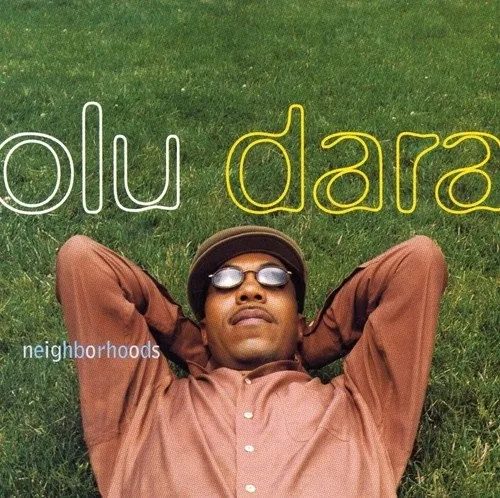
Olu Dara on the cover of his album Neighborhoods (Atlantic, 2001) Album cover art (not a CC-licensed artist photo), used as the only available image showing the artist — Cover Art Archive - https://coverartarchive.org/release/8ee2a885-24d2-406a-8b2f-0c0a3c42a7c1/front
Olu Dara was born Charles Jones III on January 12, 1941, in Natchez, Mississippi. His mother, Ella Mae Jones, came from Canton, Mississippi, and his father, Charlie R. Jones, was a traveling musician who sang with a vocal quartet called the Melodiers. As a child he took piano and clarinet lessons. He has told interviewers that his first horn came from a man who said to blow into it as if inflating a balloon, and that he was soon picking out cartoon themes by ear. He studied at Tennessee State University, starting as a pre-med major and switching to music theory and composition, and from 1959 to 1964 he was a musician in the U.S. Navy, a posting that took him to Africa and the Caribbean and that he has called a priceless education.
In 1964 he moved to New York City and took the name Olu Dara, Yoruba for "The Lord is good." By his own account he barely played for years, getting by in Brooklyn and listening to other people's bands, and he bought a horn again around 1970. He worked in rhythm and blues bands first, then moved toward jazz with help from the saxophonists Bill Barron and Sam Rivers. In the early 1970s he toured with Art Blakey's Jazz Messengers, a job he has said he took without ever having played bebop and left because the form bored him. He reportedly began singing on a Blakey tour of Spain, improvising words to fill the space.
The loft-jazz scene of the mid-1970s was where he became a fixture. He played on Oliver Lake's Heavy Spirits and Carlos Garnett's Let This Melody Ring On in 1975, then on trumpet on David Murray's debut as a leader, Flowers for Albert (India Navigation, 1976), and on Frank Lowe's Doctor Too-Much (1977). In the 1980s he became a regular in the bands of Murray and Henry Threadgill: Ming (Black Saint, 1980) and Home (1982) with Murray's octet, the two Murray big-band volumes of Live at Sweet Basil (1984), and Threadgill's Sextett on cornet for When Was That? (About Time, 1982) and Just the Facts and Pass the Bucket (1983). He recorded with James Blood Ulmer on Are You Glad to Be in America? (cut in one day, January 17, 1980) and Free Lancing (1981), with Julius Hemphill on Flat-Out Jump Suite (1980), with Cecil McBee on Flying Out (1982), with James Newton on The African Flower (Blue Note, 1985) and with Don Pullen on The Sixth Sense (1985). He also played in Bill Laswell's group Material, on Memory Serves (1981) and The Third Power (1991). AllMusic's Chris Kelsey described him in this period as a daring, roots-bound soloist with a modern imagination and a big, burnished tone in the manner of Louis Armstrong and Roy Eldridge, and JazzTimes credited him as a mentor to the M-Base circle around Steve Coleman.
Alongside the sideman work he led his own groups, the Okra Orchestra and the Natchezsippi Dance Band, and wrote for the theater. JazzTimes lists him as composer and musical director for several August Wilson plays, among them Ma Rainey's Black Bottom, Joe Turner's Come and Gone and The Piano Lesson, and as a collaborator of the choreographer Dianne McIntyre. He wrote a musical melodrama, From Natchez to New York, that was broadcast on NPR and staged at the Smithsonian. He played on Cassandra Wilson's Days Aweigh (JMT, 1987) and Blue Light 'Til Dawn (Blue Note, 1993). In 1994 he played cornet on "Life's a Bitch," a track on Illmatic, the debut album of his son, the rapper Nas. He also appeared in Robert Altman's 1996 film Kansas City.
He did not record under his own name until he was 57. Nas had been urging him to make a record, and when Atlantic called, Dara said yes. In the World: From Natchez to New York, produced by Yves Beauvais and Dara and released on February 17, 1998, was a set of his own songs on which he sang and played cornet, trumpet and guitar, and it reached No. 19 on the Billboard Traditional Jazz Albums chart. Stereophile named it Recording of the Month for May 1998. Nas rapped on "Jungle Jay." The follow-up, Neighborhoods (Atlantic, February 20, 2001), added Dr. John on organ and electric piano and Cassandra Wilson on "Used to Be." Reviews split. Robert Christgau liked it better than the debut, while AllMusic's Scott Yanow called it mostly outside jazz and disappointing. He has released no studio album under his own name since.
He kept appearing on other people's records through the 2000s: Cassandra Wilson's Belly of the Sun (2002), the Dirty Dozen Brass Band's Medicated Magic (2002), Corey Harris's Downhome Sophisticate (2002) and Daily Bread (2005), and Ulmer's No Escape from the Blues: The Electric Lady Sessions (2003). On his son's God's Son (2002) he plays on "Dance," and on "Bridging the Gap" from Street's Disciple (2004) he delivers the hook and a spoken account of his own path, a single that peaked at No. 94 on the Billboard Hot 100. Time Out New York listed a tribute show uptown in March 2012 with Cassandra Wilson and Amiri Baraka among the performers, and the Festival of New Trumpet Music gave him its 2025 Award of Recognition. Real Gone Music reissued In the World: From Natchez to New York on green vinyl on February 6, 2026. Dara turned 85 on January 12, 2026.
Dara is a jazz cornetist by training and a blues and folk songwriter by temperament, and he says so plainly: AllMusic noted that his 1998 debut was only tangentially related to his free-jazz work, and Time Out called him a cornetist by trade, a bluesman by default and a griot because storytelling is his calling. His records mix Delta blues and country-blues guitar with Ghanaian highlife, Caribbean calypso and soca, funk, reggae and New Orleans second-line rhythm, over lyrics about food, women, street vendors and Harlem. He half-speaks rather than sings, and he gives his bands wide room to improvise. On the horn he has a big, burnished tone, often muted with a Harmon mute used as a plunger, which critics have compared to Louis Armstrong and Roy Eldridge and, at other times, to Hugh Masekela, and he has been called an heir to Don Cherry. He says he never practices, plays old Olds Ambassador cornets and a Gibson ES-125 guitar. His jazz credentials rest on the loft-era records with David Murray, Henry Threadgill, James Blood Ulmer and Julius Hemphill and on his work with Cassandra Wilson, while the work that made his name on his own is mostly blues, funk and folk.
- In the World: From Natchez to New York (1998, Atlantic) - His debut as a leader, made at 57, with all songs by Dara and Nas guesting on "Jungle Jay." Spotify - Okra Listen
- Neighborhoods (2001, Atlantic) - The second and, to date, last leader album, with Dr. John and Cassandra Wilson among the guests. Spotify - Neighborhoods Listen
- Ming (1980, Black Saint) - The David Murray Octet's debut, with Dara in the front line alongside Henry Threadgill, Butch Morris and George Lewis.
- When Was That? (1982, About Time) - The Henry Threadgill Sextett's debut, with Dara on cornet next to Craig Harris on trombone.
- Are You Glad to Be in America? (1980, Rough Trade) - The James Blood Ulmer album that introduced his singing, cut in one day with David Murray, Oliver Lake and Dara.
- Blue Light 'Til Dawn (1993, Blue Note) - Cassandra Wilson's 1993 album, with Dara's cornet in a band that mixes blues and jazz. Spotify - Blue Light 'Til Dawn Listen
- Illmatic (1994, Columbia) - Nas's debut, on which Dara plays cornet on "Life's a Bitch."
Olu Dara: Full Discography
Discogs artist: Olu Dara (174747) | Born Charles Jones III, January 12, 1941, Natchez, Mississippi
Olu Dara has two studio albums under his own name, both on Atlantic. The larger part of his recorded work is as a sideman and guest, from the New York loft-jazz records of the 1970s and 1980s to his son Nas's albums. The sideman table below lists the principal credits with catalog numbers where they could be confirmed; it is a representative selection, not an exhaustive list.
As Leader
| Album | Year | Label | Personnel & Notes | Charts | Listen | Buy |
|---|---|---|---|---|---|---|
| In the World: From Natchez to New York | 1998 | Atlantic (83077-2) | Released February 17, 1998; recorded 1997. Produced by Yves Beauvais and Olu Dara. Dara (lead and backing vocals, cornet, trumpet, guitar, bass drum, percussion), Nas (vocals, track 10, "Jungle Jay"), Kwatei Jones-Quartey (acoustic and electric guitar, percussion), Ivan Ramirez (electric guitar), Rudy "Obadeli" Herbert (organ), Alonzo Gardner (bass), Greg Bandy (drums), Richard James (congas), Cantrese Alloway, Darada David, Joyce Malone and Melba Joyce (backing vocals). All songs by Dara. Reissued on green vinyl by Real Gone Music (LPRGM2044C), February 6, 2026 | No. 19 Billboard Traditional Jazz Albums | Spotify - Okra | — |
| Neighborhoods | 2001 | Atlantic (7567-83391-2) | Released February 20, 2001. Produced by Yves Beauvais. Dara (vocals, cornet, woodwinds, guitar, handclaps, harmonica), John Abrams (tenor saxophone), Kwatei Jones-Quartey and Ivan Ramirez (guitar), Dr. John (organ, electric piano), Rod Williams (organ, piano), Fredger "Said" Dupree (electric piano), Alonzo "Skip" Gardner (bass), Larry Johnson and Greg Bandy (drums), Coster Massamba (percussion, vocals), Cantrese Alloway, Rucyl Mills and Terrill Joyner (backing vocals), Cassandra Wilson (vocals, track 9, "Used to Be"). Songs by Dara, except "Out on the Rolling Sea" (traditional) and "Used to Be" (co-written with Ah-Keisha McCants) | — | Spotify - Neighborhoods | — |
| Herbman (DJ Logic Remixes) | 2001 | Ropeadope Records (PR 300517) | 12-inch single with three versions of "Herbman" from Neighborhoods: Strut, Dub and A Capella | — | — | — |
As Sideman and Guest (selected major credits)
| Year | Project (Leader) | Title | Label | Catalog | Role | Notes |
|---|---|---|---|---|---|---|
| 1970 | Terumasa Hino (billed as Group Everything Everything Everything) | Journey to Air | Love Records | TP-103 | Credited, instrument not confirmed | Recorded March 1970 at Upsurge Studio, New York, with Dave Holland, Dave Liebman, Steve Grossman and Motohiko Hino |
| 1971 | Jack McDuff | Who Knows What Tomorrow's Gonna Bring? | Blue Note | BST 84358 | Credited, instrument not confirmed | |
| 1973 | Roy Brooks and the Artistic Truth | Ethnic Expressions | Im-Hotep Records | CS-030 | Credited, instrument not confirmed | |
| 1973 | Doug Carn | Revelation | Black Jazz Records | BJQD/16 | Credited, instrument not confirmed | |
| 1975 | Carlos Garnett | Let This Melody Ring On | Muse | Not confirmed | Credited, instrument not confirmed | |
| 1975 | Oliver Lake | Heavy Spirits | Arista | AL 1008 | Credited, instrument not confirmed | |
| 1976 | David Murray | Flowers for Albert | India Navigation | IN 1026 | Trumpet | Murray's debut as a leader, recorded live at the Ladies' Fort, New York, June 26, 1976, with Fred Hopkins and Phillip Wilson. Reissued as Flowers for Albert: The Complete Concert |
| 1976 | Hamiet Bluiett | Endangered Species | India Navigation | IN 1025 | Credited, instrument not confirmed | |
| 1977 | Frank Lowe | Doctor Too-Much | Kharma | PK-2 | Trumpet | Recorded May 21, 1977, with Wadada Leo Smith on trumpet as well |
| 1978 | Phillip Wilson Quartet | Live at Moers Festival | Moers Music | momu 01062 | Credited, instrument not confirmed | |
| 1980 | Julius Hemphill | Flat-Out Jump Suite | Black Saint | BSR 0040 | Trumpet | With Abdul Wadud (cello) and Warren Smith (percussion) |
| 1980 | David Murray Octet | Ming | Black Saint | BSR 0045 | Credited, instrument not confirmed | Recorded July 25 and 28, 1980, with Henry Threadgill, Lawrence "Butch" Morris, George Lewis, Anthony Davis, Wilber Morris and Steve McCall |
| 1980 | James Blood Ulmer | Are You Glad to Be in America? | Rough Trade | ROUGH 16 | Trumpet | Recorded January 17, 1980, with David Murray and Oliver Lake; a remixed US edition followed on Artists House in 1981 |
| 1981 | Material | Memory Serves | Celluloid | CEL N.Y. 5007 | Trumpet | Group led by Bill Laswell; reissued on Restless (7 72653-2) in 1992 |
| 1981 | James Blood Ulmer | Free Lancing | Columbia | ARC 37493 | Trumpet | Spotify - Free Lancing |
| 1982 | David Murray Octet | Home | Black Saint | BSR 0055 | Credited, instrument not confirmed | |
| 1982 | Henry Threadgill Sextett | When Was That? | About Time | AT-1004 | Cornet | The Sextett's debut; recorded November 1981 with Craig Harris (trombone) and Fred Hopkins (bass) |
| 1982 | Cecil McBee | Flying Out | India Navigation | IN 1053 | Cornet | Chamber-jazz date with John Blake (violin), David Eyges (cello) and Billy Hart (drums) |
| 1982 | Elliott Sharp | Nots | Not confirmed | Not confirmed | Credited, instrument not confirmed | |
| 1983 | Henry Threadgill Sextett | Just the Facts and Pass the Bucket | About Time | AT-1005 | Cornet | Recorded March 1983 |
| 1983 | Nona Hendryx | Nona | RCA Victor | AFL1-4565 | Credited, instrument not confirmed | |
| 1983 | Jamaaladeen Tacuma | Show Stopper | Gramavision | GR 8301 | Credited, instrument not confirmed | |
| 1984 | David Murray Big Band | Live at Sweet Basil, Volumes 1 and 2 | Black Saint | Not confirmed | Credited, instrument not confirmed | Two volumes from the same engagement |
| 1985 | The Don Pullen Quintet | The Sixth Sense | Black Saint | BSR 0088 | Credited, instrument not confirmed | Recorded June 12 and 13, 1985, with Fred Hopkins and Bobby Battle |
| 1985 | James Newton | The African Flower: The Music of Duke Ellington and Billy Strayhorn | Blue Note | BT 85109 | Cornet | Recorded June 24 and 25, 1985, with Roland Hanna and Billy Hart; Spotify - The African Flower |
| 1987 | Cassandra Wilson | Days Aweigh | JMT | 834 412-2 | Cornet, vocals | Recorded May 1987, Brooklyn |
| 1988 | Charles Brackeen Quartet | Attainment | Silkheart | SHLP 110 | Credited, instrument not confirmed | |
| 1988 | Charles Brackeen Quartet | Worshippers Come Nigh | Silkheart | SHLP 111 | Credited, instrument not confirmed | |
| 1991 | Material | The Third Power | Axiom | 422-848 417-2 | Credited, instrument not confirmed | |
| 1993 | Cassandra Wilson | Blue Light 'Til Dawn | Blue Note | CDP 0777 7 81357 2 2 | Cornet (track 5) | Produced by Craig Street; Spotify - Blue Light 'Til Dawn |
| 1994 | Nas | Illmatic | Columbia | CK 57684 | Cornet on "Life's a Bitch" | His son's debut album |
| 1996 | Various | Kansas City (soundtrack to Robert Altman's film) | Verve | 529 554-2 | Cornet (tracks 3 to 5, 7 and 9 to 11) | Soloist on tracks 10 and 11 |
| 1999 | Cassandra Wilson | Traveling Miles | Blue Note | 7243 8 54123 2 5 | Cornet (two tracks) | A tribute to Miles Davis |
| 2002 | Cassandra Wilson | Belly of the Sun | Blue Note | 7243 5 35072 2 0 | Trumpet | Recorded partly at the Clarksdale train depot in Mississippi |
| 2002 | Corey Harris | Downhome Sophisticate | Rounder | 11661-3194-2 | Credited, instrument not confirmed | |
| 2002 | The Dirty Dozen Brass Band | Medicated Magic | Ropeadope | 7567-93120-2 | Credited, instrument not confirmed | |
| 2002 | Nas | God's Son | Columbia | CK 86930 | Plays on "Dance" | |
| 2003 | James Blood Ulmer | No Escape from the Blues: The Electric Lady Sessions | Hyena | TMF 9312 | Credited, instrument not confirmed | |
| 2003 | The Be Good Tanyas | Chinatown | Nettwerk America | 0 6700 30304 2 7 | Credited, instrument not confirmed | |
| 2004 | Nas | Street's Disciple | Columbia | C2K 92065 | Featured vocalist on "Bridging the Gap" | The single peaked at No. 94 on the Billboard Hot 100 |
| 2005 | Corey Harris | Daily Bread | Rounder | 11661-3219-2 | Credited, instrument not confirmed | |
| 2021 | Julius Hemphill | The Boyé Multi-National Crusade for Harmony | New World Records | Not confirmed | Credited, instrument not confirmed | Archive release |
Other credited appearances
Rhys Chatham, Factor X (1984) and Die Donnergötter (1987); Conjure, Music for the Texts of Ishmael Reed (1984); Craig Harris, Tributes (1985) and Cold Sweat Plays J. B. (1999); Bill Laswell, Deconstruction: The Celluloid Recordings (1993); the soundtrack of Robert Altman's Kansas City (1996) and KC After Dark (1997) by the Kansas City Band; Guy Davis, You Don't Know My Mind (1998); Tim Berne, Empire Box (1998); David Murray, The Tip and Jug-A-Lug (both 1995); Jean-Paul Bourelly, Trance Atlantic (Boom Bop II) (2002); The Harlem Experiment, The Harlem Experiment (2007); The Brawner Brothers, This Is Where You Wanna Be (2007).
Honors
Festival of New Trumpet Music, Award of Recognition, 2025.
- David Murray - trumpet on his debut Flowers for Albert (1976), then a member of his octet and big band on Ming (1980), Home (1982) and Live at Sweet Basil (1984).
- Henry Threadgill - cornet in the first lineups of the Henry Threadgill Sextett on When Was That? (1982) and Just the Facts and Pass the Bucket (1983); Dara also wrote the first track of Threadgill's Easily Slip Into Another World (1988).
- Cassandra Wilson - cornet or trumpet on Days Aweigh (1987), Blue Light 'Til Dawn (1993), Traveling Miles (1999) and Belly of the Sun (2002); she sings "Used to Be" on his Neighborhoods (2001).
- James Blood Ulmer - trumpet on Are You Glad to Be in America? (1980) and Free Lancing (1981), and a credit on No Escape from the Blues (2003).
- Julius Hemphill - on Flat-Out Jump Suite (1980) and on the archive release The Boyé Multi-National Crusade for Harmony (2021).
- Oliver Lake - on Heavy Spirits (1975), and a fellow front-line player on the Ulmer date of 1980.
- Cecil McBee - cornet on his chamber-jazz date Flying Out (1982).
- James Newton - cornet on The African Flower: The Music of Duke Ellington and Billy Strayhorn (1985).
- Frank Lowe - trumpet on Doctor Too-Much (1977), alongside Wadada Leo Smith.
- Terumasa Hino - on the March 1970 New York session released as Journey to Air.
- Jack McDuff - on the organist's album Who Knows What Tomorrow's Gonna Bring?
- Art Blakey - toured with the Jazz Messengers in the early 1970s.
- Bill Laswell - Dara plays on the Material albums Memory Serves (1981) and The Third Power (1991).
- Nas - his son; Dara plays on Illmatic (1994) and God's Son (2002) and is a featured vocalist on "Bridging the Gap" (2004).
- Don Pullen, Hamiet Bluiett, Charles Brackeen, Carlos Garnett, Doug Carn, Roy Brooks, Phillip Wilson, Jamaaladeen Tacuma and Elliott Sharp - loft-era and 1980s leaders who recorded him as a sideman.
- Coster Massamba, Kwatei Jones-Quartey, Alonzo Gardner and Greg Bandy - members of the bands on his two Atlantic albums.
- Corey Harris, Dr. John and the Dirty Dozen Brass Band - blues and New Orleans collaborators on his own records and theirs.
More Avant-Garde Jazz Artists
See all 417 Avant-Garde Jazz artists →More American Jazz Artists
See all 820 American artists →- Wikipedia: Olu Dara
- Wikipedia: In the World: From Natchez to New York
- Wikipedia: Neighborhoods (Olu Dara album)
- Wikipedia: Bridging the Gap (Nas song)
- AllMusic: Olu Dara, biography by Chris Kelsey
- Encyclopedia.com: Dara, Olu 1941-
- JazzTimes: Olu Dara, Mr. Dara's Neighborhood (2001)
- Stereophile: Recording of May 1998, In the World
- All About Jazz: Olu Dara
- Time Out New York: The Life and Times of Olu Dara
- Festival of New Trumpet Music: 2025 festival and Award of Recognition
- Discogs: Olu Dara
- MusicBrainz: Olu Dara