 JAZZPROFILES lives in the music 2,303 Jazz Artists fully Profiled!
Brian Auger
Last updated November 7, 2026
Listen on Spotify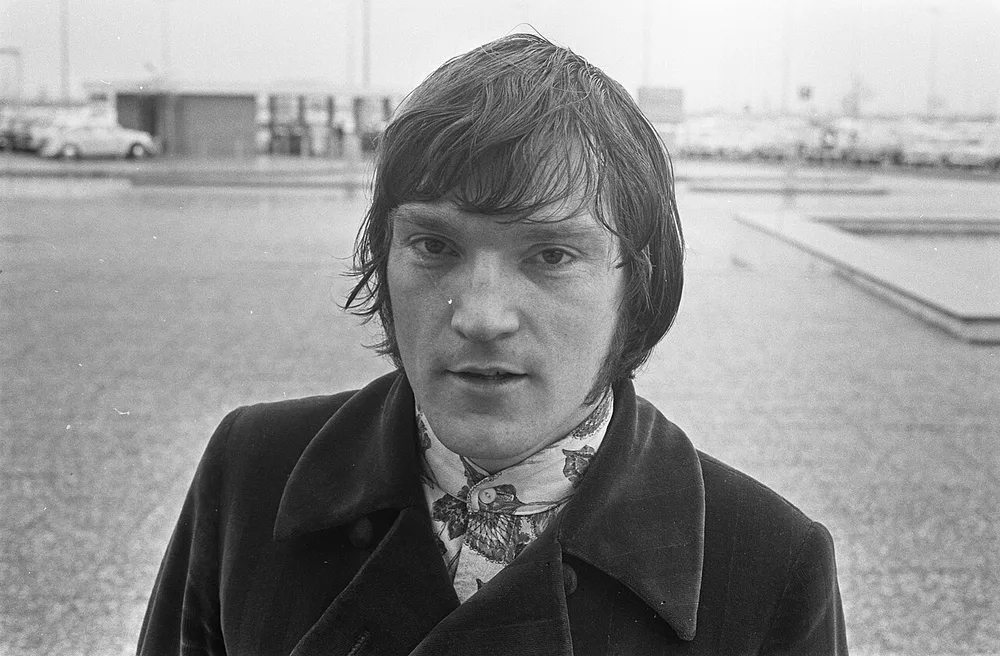
Brian Auger at Amsterdam Airport Schiphol, April 29, 1968 CC0 (Creative Commons Zero, public domain dedication) — Wikimedia Commons - https://commons.wikimedia.org/wiki/File:Aankomst_Engelse_popzangeres_Julie_Driscoll_op_Schiphol,_Bestanddeelnr_921-2977.jpg - Eric Koch / Anefo, Nationaal Archief, Netherlands

Brian Auger was born on July 18, 1939, in Hammersmith, West London. His father owned a Kastner pianola, and from about the age of four he pumped its pedals and watched the keys move, which is how he first worked out the keyboard. His family's house was bombed in the war and he was evacuated with his sister to a household just south of Leeds for about two years, where a piano in the house let him pick out tunes he heard on the radio. He never took lessons. His older brother brought home jazz records on 78, including Duke Ellington, Louis Armstrong and Kid Ory, and at about ten he found the American Forces Network jazz hour on a radio he had rigged with an aerial out of the bedroom window. Oscar Peterson's "Tenderly" was the record that made him want to play, and school friends who knew the Jazz Messengers pointed him to Horace Silver, whose tunes he learned.
His first professional jobs came through the Soho club scene. Tenor saxophonist Jimmy Skidmore, father of saxophonist Alan Skidmore, called him for a Flamingo Club gig, and he also worked in vibraphonist Dave Morse's quintet; Freestyle Records later listed Tommy Whittle, Dick Morrissey and Tubby Hayes among the British saxophonists he played with in those years. He then ran his own piano trio at the Flamingo with Rick Laird on bass and Phil Kinorra on drums, opening for visiting bands and sharing bills with Tubby Hayes and Ronnie Scott. Laird played in his early Trinity from July 1963 and in the Brian Auger Group of 1964, which included a young guitarist named John McLaughlin; Laird later became a founding member of McLaughlin's Mahavishnu Orchestra. Auger and McLaughlin took whatever work was available, mostly weekend sets on American air force and army bases, and by Auger's account no recording of that band was made because British labels doubted that British jazz would sell.
The organ arrived by accident. Auger heard Jimmy Smith's Back at the Chicken Shack in a Shepherd's Bush record shop and could not place the sound. Rik Gunnell, who ran the Flamingo all-nighters, kept telling him to get an organ because every band he booked had one. When Georgie Fame fell ill with sunstroke, Gunnell sent Auger to cover a run of dates, the first at the Roaring 20s on Carnaby Street, on Fame's own Hammond. He told a curious musician afterward that he had been playing the organ for about 45 minutes. He bought a Hammond L, then a B-3 after seeing a picture of one on a Jimmy McGriff album, and moved from pianist to organist for good. Auger describes himself in those years as a jazz snob, and says the jamming and session work of the mid-1960s, including a harpsichord part on the Yardbirds' "For Your Love" in 1965, changed his mind about rock and blues.
In 1965 he formed the Steampacket with Long John Baldry, Julie Driscoll, Vic Briggs and Rod Stewart. Contractual trouble kept the band from making official records, though nine promotional tracks were cut in late 1965 and issued in France in 1970. When it ended, Auger built a new Trinity around Driscoll, recording for Giorgio Gomelsky's Marmalade label: Open (1967) and Definitely What! (1968), then the double album Streetnoise (1969). Driscoll's version of Bob Dylan's "This Wheel's on Fire" reached No. 5 on the UK singles chart in June 1968 and No. 13 in Canada, and Open reached No. 12 on the UK albums chart. Streetnoise reached No. 41 on Billboard's album chart and mixed Auger originals with covers of Miles Davis's "All Blues," Nina Simone's "Take Me to the Water," Laura Nyro's "Save the Country," the Doors' "Light My Fire" and Richie Havens's "Indian Rope Man." The group toured the United States, opened for Led Zeppelin at the Rose Palace in Pasadena on May 2 and 3, 1969, and appeared with the Monkees on the NBC special 33 1/3 Revolutions Per Monkee. Both "Save Me" and "This Wheel's on Fire" also did well in Italy, a country he kept returning to and where he met his wife, Ella, at a Milan club in 1967; they married in London in 1968.
Driscoll left after Streetnoise, and the Trinity continued as a quartet with Gary Boyle on guitar, Dave Ambrose on bass and Clive Thacker on drums. Their RCA Victor album Befour (1970) reached No. 184 on Billboard and includes Herbie Hancock's "Maiden Voyage" and Eddie Harris's "Listen Here." In 1970, shortly after leaving the short-lived Wassenaar Arrangement jazz-rock commune near The Hague, Auger formed Brian Auger's Oblivion Express, a name he chose half in jest because he expected a band that mixed jazz with rock to be the quickest route to oblivion. The first lineup was Auger on keyboards and lead vocals, Jim Mullen on guitar, Barry Dean on bass and Robbie McIntosh on drums, and the debut album (RCA Victor SF 8170) opens with McLaughlin's "Dragon Song," which McLaughlin had played him in a New York studio. As a songwriter he had three pieces, "On Thinking It Over," "Tomorrow City" and "Trouble," recorded by Sarah Vaughan on A Time in My Life (Mainstream, 1971). Auger produced the 1971 album by Mogul Thrash, whose members Roger Ball and Malcolm Duncan later helped found the Average White Band, as McIntosh and Steve Ferrone, two Oblivion Express drummers, also did. The Express made A Better Land (1971), Second Wind (1972, No. 170 on Billboard), Closer to It! (1973), Straight Ahead (1974), the two-volume Live Oblivion (1974 and 1976) and Reinforcements (1975) for RCA Victor, with Alex Ligertwood on vocals in the middle years, and Happiness Heartaches (1977) for Warner Bros. By January 1976 he was writing liner notes from California.
Later work moved between rock, soul and jazz without settling. He reunited with Driscoll, by then Julie Tippetts, for Encore (1978), and on July 27, 1978, he played keyboards in Tokyo with the Tony Williams All Stars, a band that also had Ronnie Montrose, Mario Cipollina and Billy Cobham. In the mid-1980s he toured with Kim Simmonds, Gregg Errico and Tim Bogert as Maestro, played on the Italian singer Mango's Odissea (1986), served as musical director of the German television series Villa Fantastica (1989), and toured and recorded the live album Access All Areas (1993) with Eric Burdon. From 2000 he joined the trio CAB as a guest and then a billed member alongside Dennis Chambers, Tony MacAlpine and Bunny Brunel, and CAB 2 was nominated for the Grammy for Best Contemporary Jazz Album at the 44th Annual Grammy Awards. Oblivion Express was revived in 2005 with his son Karma Auger on drums and daughter Savannah Auger on vocals. He made Language of the Heart (2012) with Jeff "Skunk" Baxter and Julian Coryell as guests, Train Keeps A-Rolling (2013) with Jeff Golub, and toured Japan and Europe in 2014. In 2018 Freestyle Records issued Full Circle: Live at Bogie's, which the label presented as his first jazz piano album, recorded with his piano trio at a venue that gave a different trio a night for a week. In 2022 the Soul Bank label issued the compilation Auger Incorporated and a five-LP Trinity box set, Far Horizons, followed in 2023 by the six-disc Complete Oblivion, and Strut reissued Oblivion Express albums in 2026, including Reinforcements in June. In 2022 he was living in Los Angeles, and a documentary about his career, I Speak Music, was reported in March 2025 to be in preparation.
Auger came to the Hammond organ as a modern-jazz pianist, and the playing keeps that background. The harmonic vocabulary comes from the pianists he admired, Horace Silver and the keyboard players in Miles Davis's groups, and the attack comes from Jimmy Smith, over a rhythm section that leans on rock and soul grooves. His own account of the Oblivion Express project is that he wanted to build a bridge between the rock and jazz scenes and lead people wherever they wanted to go, laying jazz harmony and improvisation over a funk rhythm section and a soul singer, an approach he was taking before "fusion" had become a category. He quotes Duke Ellington's line that there are only two kinds of music, good and bad, as the reason he kept changing direction. Jazz repertoire runs through both of his main bands, from Miles Davis's "All Blues" and Herbie Hancock's "Maiden Voyage" to Eddie Harris's "Listen Here" and John McLaughlin's "Dragon Song."
The rock, soul and pop sides of his career are large, and they are stated here plainly. The Steampacket, the Yardbirds session and the Driscoll hit single made him a name in British rock and pop in the 1960s, the Trinity and Oblivion Express played to rock audiences across Europe and the United States, and he is generally described as a jazz-rock and rock keyboardist. The jazz side rests on his Flamingo Club apprenticeship, the jazz repertoire on albums from Streetnoise onward, his Tokyo date with the Tony Williams All Stars, his work in CAB, and a 2002 Grammy nomination in a jazz category. In the late 1980s a new generation of British clubgoers rediscovered his early-1970s records and he began to be called the godfather of acid jazz. He says Eddie Piller, who founded the Acid Jazz label, told him that Closer to It! had been the template for the label, and the Brand New Heavies and the James Taylor Quartet cited him. Hip-hop producers also borrowed from him; Yasiin Bey (Mos Def) built "If You Can Huh! You Can Hear" on the Oblivion Express live version of "Maiden Voyage."
- Streetnoise (1969, Marmalade) - The double album by Julie Driscoll, Brian Auger and the Trinity, and the best single picture of his 1960s band, with "All Blues," "Take Me to the Water" and "Indian Rope Man" beside his own "Tropic of Capricorn." Spotify - Streetnoise Listen
- Befour (1970, RCA Victor) - The Trinity as a quartet without Driscoll, with Gary Boyle on guitar and a version of Herbie Hancock's "Maiden Voyage." The record that points from the 1960s band toward Oblivion Express.
- Brian Auger's Oblivion Express (1971, RCA Victor) - The debut of the fusion band, opening with John McLaughlin's "Dragon Song" and also carrying "Total Eclipse" and "The Sword." Spotify - Brian Auger's Oblivion Express Listen
- Closer to It! (1973, RCA Victor) - The album that Eddie Piller told him was the template for the Acid Jazz label; it includes "Compared to What," "Inner City Blues" and "Whenever You're Ready." Spotify - Closer to It! Listen
- Straight Ahead (1974, RCA Victor) - Steve Ferrone on drums and Jack Mills on guitar, five tracks including "Bumpin' On Sunset" and the title piece. Spotify - Straight Ahead Listen
- Happiness Heartaches (1977, Warner Bros.) - The last Oblivion Express album of the 1970s and the first on Warner Bros., with Lenny White on drums, Alex Ligertwood on vocals and a seven-track program that includes "Got to Be Born Again" and "Paging Mr. McCoy." Spotify - Happiness Heartaches Listen
- CAB 2 (2001, Tone Center) - With Dennis Chambers, Tony MacAlpine and Bunny Brunel, nominated for the Grammy for Best Contemporary Jazz Album. Spotify - CAB 2 Listen
- Full Circle: Live at Bogie's (2018, Freestyle) - The Brian Auger Piano Trio playing standards and tributes, including "A Night in Tunisia," "Chelsea Bridge," "Little Sunflower" and "All Blues"; the label billed it as his first jazz piano album. Spotify - Full Circle: Live at Bogie's Listen
Brian Auger: Full Discography
Discogs artists: Brian Auger (30185) · Brian Auger's Oblivion Express (346461) · Brian Auger & The Trinity (254576) · Born July 18, 1939, Hammersmith, London
Auger records under several billings, so the leader tables below are grouped the way the records were released: the Trinity years with Julie Driscoll, the Oblivion Express, albums under his own name, and the CAB trio. Compilations and box sets are listed separately, and credits on other artists' records come last. The list is selective for compilations and reissues, which are numerous; the full list is on Discogs.
Leader: Julie Driscoll, Brian Auger & The Trinity (1965 to 1970)
| Album | Year | Label | Personnel & Notes | Charts | Listen | Buy |
|---|---|---|---|---|---|---|
| Rock Generation, Volume 6: The Steampacket (Or the First Supergroup) | 1970 | BYG Records (529.706) | Nine promotional tracks cut in late 1965 and issued in France in 1970. Brian Auger (organ, vocals), Long John Baldry, Rod Stewart and Julie Driscoll (vocals), Victor Briggs (guitar), Ricky Brown (bass), Mick Waller (drums). Includes "Back at the Chicken Shack" and "The In-Crowd" | — | — | |
| Open (Julie Driscoll, Brian Auger & The Trinity) | 1967 | Marmalade (607002) | Produced by Giorgio Gomelsky. Auger (organ, piano, arrangements), Gary Boyle (lead guitar), David Ambrose (bass), Clive Thacker (drums), Julie Driscoll (vocals); engineer John Timperley. Includes "In and Out," "Black Cat," "Tramp," "Break It Up" and "Season of the Witch" | No. 12 UK Albums | Spotify | — |
| Definitely What! (Brian Auger & The Trinity) | 1968 | Marmalade; US issue Atco (SD 33-273) | Produced by Giorgio Gomelsky; Eddy Offord engineering. Auger with Clive Thacker (drums) and David Ambrose (bass), plus brass, flute, cello, viola and violin sections arranged by Auger and Richard Hill. Includes "A Day in the Life," "Red Beans and Rice," "Bumpin' on Sunset" and the title piece | Spotify | — | |
| Streetnoise (Julie Driscoll, Brian Auger & The Trinity) | 1969 | Marmalade (608005/6) | Double LP, produced by Giorgio Gomelsky. Auger (organ), Julie Driscoll (vocals), David Ambrose (electric bass), Clive Thacker (drums). Covers include "All Blues," "Take Me to the Water," "Save the Country," "Light My Fire" and "Indian Rope Man"; Auger's "Tropic of Capricorn" opens side one | No. 41 Billboard Top LPs | Spotify | — |
| Befour (Brian Auger & The Trinity) | 1970 | RCA Victor (SF 8101) | Auger (organ, piano, electric piano, vocals), Gary Boyle (lead guitar, vocals), David Ambrose (bass, guitar, harmony vocals), Clive Thacker (drums, percussion, harmony vocals), with Roger Sutton, Mick Waller and Colin Allen on some tracks. Includes "Maiden Voyage," "Listen Here," "Pavane" and "I Wanna Take You Higher" | No. 184 Billboard Top LPs | — | — |
Leader: Brian Auger's Oblivion Express
| Album | Year | Label | Personnel & Notes | Charts | Listen | Buy |
|---|---|---|---|---|---|---|
| Brian Auger's Oblivion Express | 1970 (issued 1971) | RCA Victor (SF 8170) | Auger (keyboards, lead vocals, producer), Jim Mullen (lead guitar), Barry Dean (bass), Robbie McIntosh (drums); engineer Eddy Offord. Opens with John McLaughlin's "Dragon Song"; also "Total Eclipse," "The Light," "On the Road," "The Sword" and the title piece | Spotify | — | |
| A Better Land | 1971 | RCA Victor (LSP-4540) | Auger (organ, electric piano, piano, vocals, producer), Jim Mullen (guitars, vocals), Barry Dean (bass, vocals), Robbie McIntosh (drums, percussion). Includes "Dawn of Another Day," "Marai's Wedding," "Trouble," "On Thinking It Over" and "Tomorrow City" | Spotify | — | |
| Second Wind | 1972 | RCA Victor | Auger (organ, piano, electric piano), Jim Mullen (guitar), Barry Dean (bass), Robbie McIntosh (drums, percussion), Alex Ligertwood (vocals). Includes "Truth," "Freedom Jazz Dance" and the title piece | No. 170 Billboard Top LPs | Spotify | — |
| Closer to It! | 1973 | RCA Victor (APL1-0140) | Auger (organ, piano, electric piano, Moog, Mellotron, vocals, producer), Jack Mills (lead guitar), Barry Dean (bass), Godfrey McLean (drums), Lennox Langton (congas). Includes "Whenever You're Ready," "Happiness Is Just Around the Bend," "Compared to What," "Inner City Blues" and "Voices of Other Times" | Spotify | — | |
| Straight Ahead | 1974 | RCA Victor (APL1-0454) | Auger (organ, electric piano, piano, Moog, string machine, vocals), Jack Mills (guitar), Barry Dean (bass), Steve Ferrone (drums), Lennox Langton (congas), Mirza Al Sharif (timbales, percussion). Five tracks: "Beginning Again," "Bumpin' on Sunset," "Straight Ahead," "Change" and "You'll Stay in My Heart" | Spotify | — | |
| Live Oblivion, Vol. 1 | 1974 | RCA (CPL1-0645) | Recorded by Wally Heider. Auger (organ, electric piano), Jack Mills (lead guitar), Barry Dean (bass), Steve Ferrone (drums), Alex Ligertwood (lead vocals, percussion). "Beginning Again," "Don't Look Away," "Bumpin' on Sunset" and "Truth" | Spotify | — | |
| Reinforcements | 1975 | RCA Victor (APL1-1210) | Recorded at Trident Studios, London, March 1975. Auger (organ, electric piano, piano, Moog, string machine, producer), Jack Mills (lead guitar), Clive Chaman (bass, flute), Dave Dowle (drums), Lennox Langton (congas, percussion), Alex Ligertwood (vocals, rhythm guitar, percussion). Includes "Brain Damage," "Foolish Girl" and "Future Pilot." Reissued on vinyl by Strut on June 19, 2026 | Spotify | — | |
| Live Oblivion, Vol. 2 | 1976 | RCA (CPL2-1230) | Double LP. Same band as Vol. 1: Auger, Jack Mills, Barry Dean, Steve Ferrone and Alex Ligertwood. Includes "Freedom Jazz Dance," "Maiden Voyage," "Compared to What" and "Inner City Blues." Liner notes dated California, January 1976 | — | — | |
| Happiness Heartaches | 1977 | Warner Bros. (BS 2981) | Auger (Hammond organ, electric piano, piano, ARP and string synthesizers, producer), Lenny White (drums, percussion), Clive Chaman (bass), Jack Mills (lead guitar), Lennox Langton (congas), Alex Ligertwood (vocals, rhythm guitar). Seven tracks including "Back Street Bible Class," "Gimme a Funky Break," "Got to Be Born Again" and "Paging Mr. McCoy" | Spotify | — | |
| Keys to the Heart | 1987 (issued 1996) | One Way (OW 32189) | Auger (Hammond organ, piano, synthesizers, vocals) with Dick Morrissey (tenor and soprano saxophone), Steve Dawson (trumpet), Rick Hannah (guitars), Steve Evans (bass) and Larry Vann (drums) | Spotify | — | |
| Voices of Other Times | 1999 | Sanctuary | Studio album; label and year from Wikipedia. Not itemized further | — | — | |
| Looking in the Eye of the World | 2005 | Ghostown | Studio album of the revived band. Includes "Light My Fire" and "Season of the Witch" | Spotify | — | |
| Live at the Baked Potato | 2005 | Ghostown | Live set. Auger (electric organ, keyboards, vocals), Karma Auger (drums, vocals), Savannah Auger (vocals), Derek Frank (bass). Includes "Freedom Jazz Dance," "Straight Ahead," "Indian Rope Man" and "Bumpin' on Sunset" | — | — | |
| Live in Los Angeles (with Alex Ligertwood) | 2015 | Freestyle Records (FSRCD109) | Auger (Hammond B3, Fender Rhodes), Karma Auger (drums, backing vocals), Alex Ligertwood (vocals). Includes "Freedom Jazz Dance," "Compared to What" and "Second Wind" | Spotify | — | |
| Brian Auger's Oblivion Express Play the Trinity Hits (featuring Savannah Grace) | 2022 | Soul Bank Music | Studio album of Trinity-era material; details not itemized | — | — |
Leader: Under His Own Name and Other Billings
| Album | Year | Label | Personnel & Notes | Charts | Listen | Buy |
|---|---|---|---|---|---|---|
| Encore (Brian Auger & Julie Tippetts) | 1978 | Warner Bros. (BSK 3153) | Reunion with Julie Driscoll, by then Julie Tippetts. Auger (Hammond organ, electric pianos, acoustic piano, synthesizers), David McDaniels (bass), David Crigger (drums), George Doering (guitar). Includes "Don't Let Me Be Misunderstood," "Freedom Highway" and "Future Pilot" | — | — | |
| Search Party | 1981 | Headfirst (HF-9702) | Released June 12, 1981. Auger on Hammond organ, Rhodes, acoustic piano and synthesizers, with Ho Young Kim (guitar) and Steve Evans (bass). Six tracks including "Planet Earth Calling" and "Red Alert" | — | — | |
| Here and Now | 1982 (issued 1984) | Polydor (823 753-1) | Recorded in Italy. Auger on Hammond organ, Rhodes, Steinway grand and synthesizers, with Julius Farmer (bass) and Alfredo Golino (drums). Includes "The Hurricane" and "Happiness Is Just Around the Bend" | — | — | |
| Access All Areas (Eric Burdon Brian Auger Band) | 1993 | SPV (SPV 086-93812 DOCD) | Live set with Eric Burdon (vocals), Auger (keyboards), Karma Auger (drums), Dave Meros (bass), Larry Wilkins (guitar), Richard Regueira (percussion) | — | — | |
| Captured Live (Rudy Rotta & Brian Auger) | 2005 | Slang (SR003) | Auger on Hammond organ and electric piano, billed with the Italian blues guitarist Rudy Rotta | — | — | |
| Mod Party (Brian Auger & The Trinity featuring Savannah Grace) | 2011 (issued 2013) | Ghostown (VSCD4215) | Trinity-era songs including "Save Me," "Tiger," "Road to Cairo" and "This Wheel's on Fire." Auger (organ, electric piano, synthesizer), Karma Auger (drums, percussion, producer) | — | — | |
| Language of the Heart | 2012 | Ghostown | Seven tracks. Auger (Hammond B3, Rhodes, synthesizer, piano, vocals) with Andre Manga (bass), Franck Balloffet (guitar), Karma Auger (congas), Savannah Auger (vocals), Phil Bunch (percussion, keyboards) and Remi Kabaka (talking drum, congas); Jeff "Skunk" Baxter plays guitar solo on one track and Julian Coryell guitar on another | Spotify | — | |
| Train Keeps A-Rolling (Jeff Golub with Brian Auger) | 2013 | E1 / eOne (EOM-CD-2490) | Eleven tracks including "The Cat," "Isola Natale," "Pusherman," "Happiness Is Just Around the Bend" and "Whenever You're Ready" | — | — | |
| Full Circle: Live at Bogie's (The Brian Auger Piano Trio) | 2018 | Freestyle Records (FSRCD126) | Released October 26, 2018. Piano-trio live set that the label presented as his first jazz piano album. Includes "A Night in Tunisia," "Chelsea Bridge," "Little Sunflower," "There Is No Greater Love," "All Blues" and his own "Victor's Delight," written in tribute to Victor Feldman. Karma Auger is credited as a performer | Spotify | — |
Leader: CAB (Tony MacAlpine, Bunny Brunel, Dennis Chambers)
| Album | Year | Label | Personnel & Notes | Charts | Listen | Buy |
|---|---|---|---|---|---|---|
| CAB | 2000 | Tone Center (TC-40072) | Founding trio of Bunny Brunel (bass, keyboards), Dennis Chambers (drums) and Tony MacAlpine (guitar, keyboards). Auger plays organ on one track, "One for Stern" | Spotify | — | |
| CAB 2 | 2001 (Discogs dates the master 2000) | Tone Center (TC 40142) | Auger (keyboards, B3 organ) now a billed member alongside Brunel, Chambers and MacAlpine. Nominated for Best Contemporary Jazz Album at the 44th Annual Grammy Awards | Grammy nominee | Spotify | — |
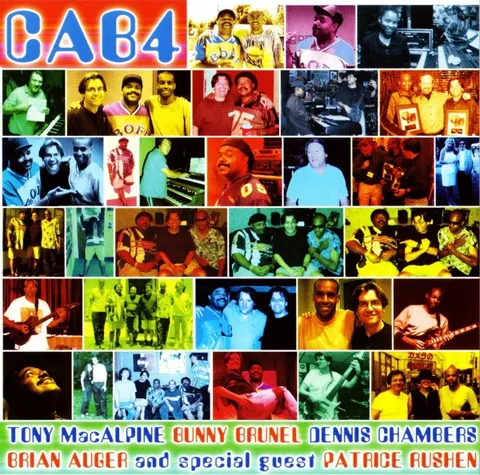
| CAB 4 | 2003 | Favored Nations (FN2340-2) | Auger (keyboards, Hammond B3) with Brunel, Chambers, MacAlpine and, on piano and keyboards, Patrice Rushen. Includes "BB's Rhumba" and "Cloud 10" | — | — | |
| Theatre de Marionnettes | 2009 | Brunel | Fourth studio album by the group; year as listed by Wikipedia | — | — |
Compilations, Box Sets and Reissues (selected)
| Title | Year | Label | Notes |
|---|---|---|---|
| Jools & Brian (Julie Driscoll with Brian Auger & The Trinity) | 1969 | Capitol | Compilation of the early singles |
| The Best of Brian Auger | 1977 | RCA Victor | Oblivion Express era compilation |
| Auger Rhythms: Brian Auger's Musical History | 2003 | Ghostown | Career-spanning compilation |
| Back to the Beginning: The Brian Auger Anthology | 2015 | Soul Bank Music | Includes early piano-trio recordings |
| Back to the Beginning... Again: The Brian Auger Anthology, Volume 2 | 2016 | Soul Bank Music | |
| Introspection | 2020 | Sunset Blvd | Compilation |
| Auger Incorporated | 2022 | Soul Bank Music (SBM009CD) | Opens with piano performances of "The Preacher" and "Poinciana" that Auger places around 1962 or 1963 |
| Far Horizons: The Trinity Box Set | 2022 | Soul Bank Music | Five-LP box reissuing Open, Definitely What!, Streetnoise and Befour |
| Complete Oblivion | 2023 | Soul Bank Music (SBM025CD) | Six-disc box of the Oblivion Express catalog, released September 15, 2023 |
Guest and Sideman Appearances (selected)
Credits below were read from the individual release pages. Where a track list is given, it is the one printed on the credit.
| Album | Year | Actual leader | His credit | Listen | Buy |
|---|---|---|---|---|---|
| "For Your Love" (single) | 1965 | The Yardbirds | Harpsichord on the session; he had been called in to play Hammond organ but the studio had only the harpsichord | — | — |
| Mogul Thrash | 1971 | Mogul Thrash | Producer (RCA Victor SF8156); also piano on "St. Peter." Roger Ball and Malcolm Duncan of the band later helped found the Average White Band | — | — |
| Doldinger Jubilee Concert | 1974 | Passport, with Auger, Johnny Griffin, Alexis Korner, Volker Kriegel and Pete York | Organ on "Handmade," "Freedom Jazz Dance," "Rockport" and "Rock Me Baby" (Atlantic ATL 50 070) | — | — |
| Live in Tokyo 1978 | recorded July 27, 1978 | Tony Williams Group (Tony Williams All Stars) | Organ and keyboards, with Ronnie Montrose (guitar), Mario Cipollina (bass) and Billy Cobham (guest drums); the set includes "Dragon Song," "Tropic of Capricorn" and "Red Alert" (Hi Hat HHCD3095) | — | — |
| Odissea | 1986 | Mango | Organ (Fonit Cetra CDL 2) | — | — |
| Thinking Out Loud | 1995 | Frank Gambale | Hammond B3 on "No-Neck Louie" and "My Little Viper" (JVC JVC-2045-2) | — | — |
| Jing Chi | 2001 | Jing Chi (Vinnie Colaiuta, Robben Ford, Jimmy Haslip) | Organ on one track, number 7 (Tone Center TC 40212) | — | — |
| Fruit from the Loom | 2007 | Billy Cobham | Organ; tracks not itemized in the credit | — | — |
| Groove and More | 2013 | Dennis Chambers | Organ, featured on "Aircraft" and "Running on Line" (Soul Trade STCD 1028) | — | — |
| Grand Cru | 2018 | Tea, with special guest Brian Auger | Hammond B3 and Fender Rhodes on tracks 1 to 3, 5 to 7, 9 and 11 (Teajuana Music TM-77770) | — | — |
Credits as Composer or Writer (not performances)
| Album | Year | Leader | His credit |
|---|---|---|---|
| A Time in My Life | 1971 | Sarah Vaughan | Composer of "On Thinking It Over," "Tomorrow City" and "Trouble" (Mainstream MRL-340); all three first appeared on A Better Land |
| Workin' on a Groovy Thing | 1969 | Richard "Groove" Holmes | Composer of "Isola Natale" (World Pacific Jazz ST-20153) |
| Sama Layuca | 1974 | McCoy Tyner | Wrote the liner notes (Milestone M-9056); not a performance |
- Julie Driscoll - lead singer of the Steampacket and of the Trinity from 1967 to 1969; later Julie Tippetts; reunited with him for Encore (1978).
- John McLaughlin - guitarist in his 1964 group; wrote "Dragon Song," which opens the first Oblivion Express album.
- Jimmy Smith - the organist whose Back at the Chicken Shack sent him to the Hammond.
- Jim Mullen, Barry Dean, Robbie McIntosh, Jack Mills, Steve Ferrone, Clive Chaman, Alex Ligertwood - Oblivion Express members across the 1970s; Ferrone and McIntosh later played in the Average White Band.
- Lenny White - the drummer on Happiness Heartaches (1977).
- Gary Boyle, Dave Ambrose, Clive Thacker, Rick Laird - Trinity members on and around Befour; Laird became the Mahavishnu Orchestra's bassist.
- Tony Williams - led the All Stars band in which Auger played organ and keyboards at a Tokyo show on July 27, 1978.
- Billy Cobham - guest drummer at that Tokyo show; Auger is also credited on organ on Cobham's Fruit from the Loom (2007).
- CAB and Dennis Chambers - the Tone Center-era band with Tony MacAlpine and Bunny Brunel; Auger guested on CAB (2000) and was a billed member from CAB 2 (2001) onward.
- Sarah Vaughan - recorded three Auger compositions on A Time in My Life (1971).
- Johnny Griffin, Alexis Korner, Volker Kriegel, Pete York and Passport - the other billed names on the live Doldinger Jubilee Concert (1974), a Passport date led by Klaus Doldinger, on which Auger plays organ on four tracks.
- Frank Gambale - Auger plays Hammond B3 on two tracks of Gambale's Thinking Out Loud (1995).
- Jeff Golub - co-billed on Train Keeps A-Rolling (2013).
- Long John Baldry, Rod Stewart - fellow members of the Steampacket (1965 to 1966).
- Eric Burdon - touring and recording partner in the early 1990s, including Access All Areas (1993).
- Karma Auger and Savannah Auger - his son and daughter, drummer and vocalist in the revived Oblivion Express.
- Robben Ford - Auger plays organ on one track of Ford's trio album Jing Chi (2001, Tone Center).
More Crossover Jazz Artists
See all 264 Crossover Jazz artists →More British Jazz Artists
See all 32 British artists →- Wikipedia: Brian Auger
- Wikipedia: Brian Auger and the Trinity
- Wikipedia: Julie Driscoll
- Wikipedia: This Wheel's on Fire
- Wikipedia: Streetnoise
- Wikipedia: Rick Laird
- Wikipedia: Open Fire (Ronnie Montrose album)
- All About Jazz: Brian Auger, To Oblivion and Beyond (interview by Maurizio Comandini, May 25, 2022)
- Bandcamp Daily: UK Organ Maestro Brian Auger is the Godfather of Acid Jazz (Andy Thomas, September 19, 2022)
- Grammy.com: Brian Auger
- Discogs: Brian Auger
- Discogs: Brian Auger's Oblivion Express
- Discogs: Brian Auger & The Trinity
- WCLK: Brian Auger talks with Jamal Ahmad as Oblivion Express boxed set drops (September 29, 2023)
- Big Issue: Brian Auger documentary, I Speak Music (March 1, 2025)
- Freestyle Records: Full Circle, Live at Bogie's (2018)
- Piccadilly Records: Reinforcements, 2026 Strut reissue