 JAZZPROFILES lives in the music 1,572 Jazz Artists fully Profiled!
 Anbessa Orchestra
Last updated September 12, 2026
Listen on Spotify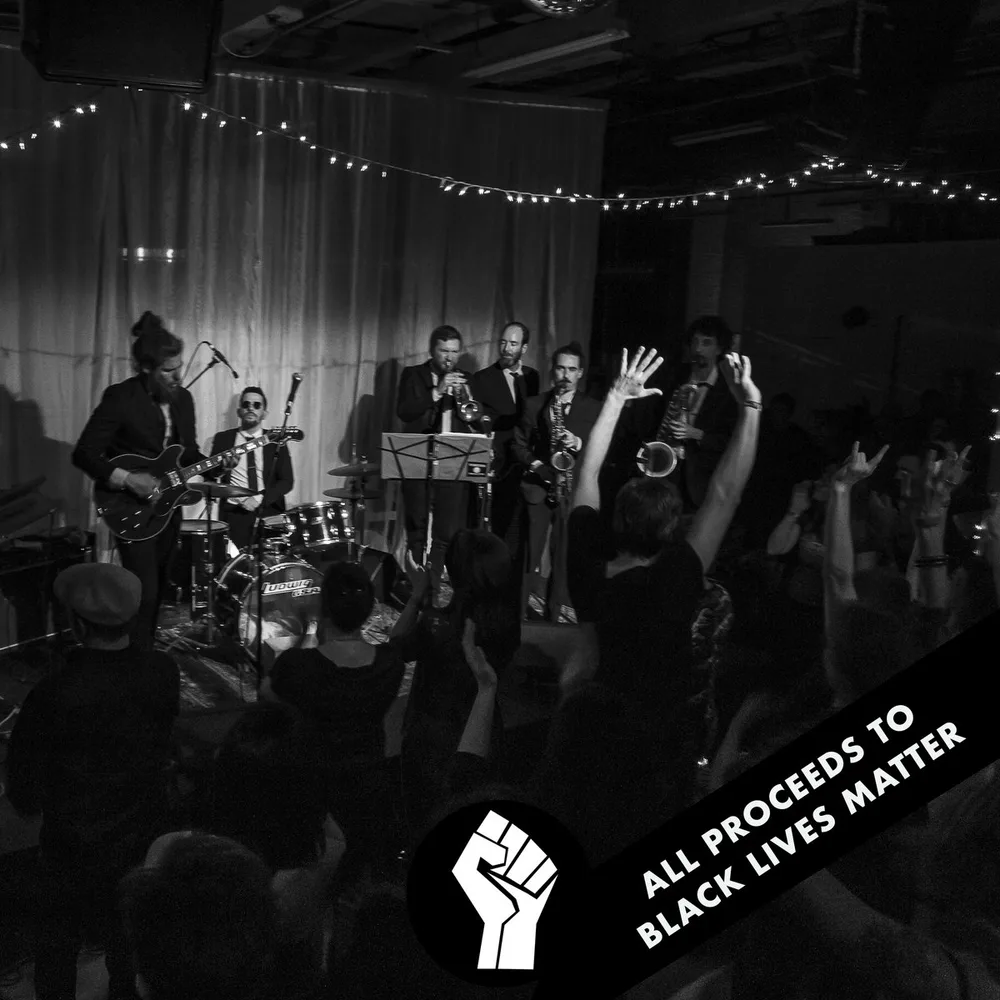
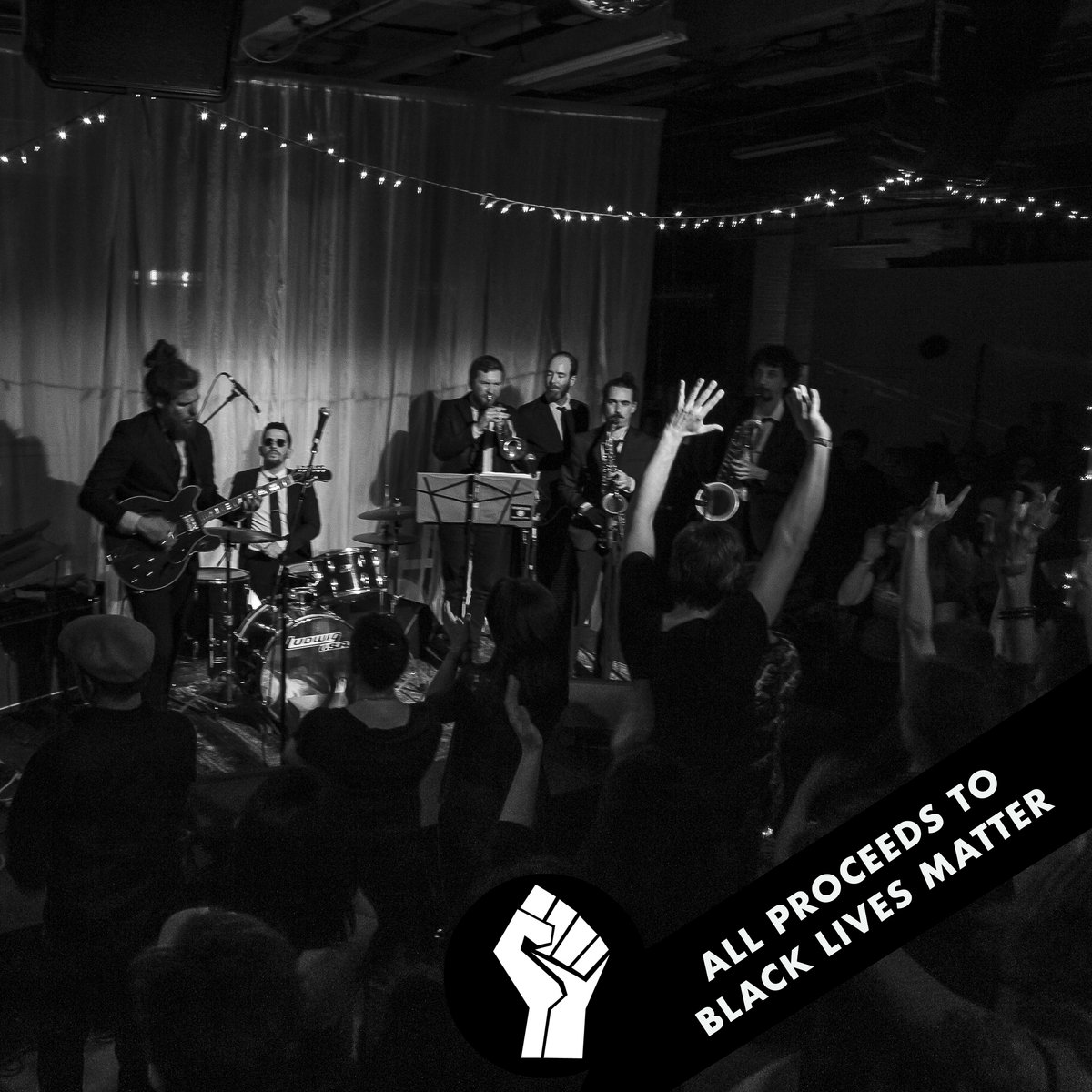
Anbessa Orchestra on stage at New City Brewery, Easthampton, Massachusetts, November 22, 2019, in front of a packed dance floor with hands in the air. Five of the seven musicians are visible: a guitarist at the left (Nadav Peled), a drummer behind him, and a three-horn front line of trumpet and two saxophones. Per the album's credits the band that night was Billy Aukstik (trumpet), Bill Todd (alto saxophone and flute), Eden Bareket (baritone saxophone), Peled (guitar), Micha Gilad (keys), Ran Livneh (bass) and Eran Fink (drums); which horn player is which cannot be resolved from the photograph itself. This is the front cover of the band's self-released live album *Anbessa Orchestra live at New City Brewery 11/22/19* (2020); the black-and-white photograph is by Julian Parker Smith. Album cover art (not a CC-licensed artist photo) - used as the only available image showing the band. Copyright Anbessa Orchestra / photographer Julian Parker Smith. The band self-released the record and donated all proceeds to Black Lives Matter. — Bandcamp, the band's own album page - https://anbessaorchestra.bandcamp.com/album/anbessa-orchestra-live-at-new-city-brewery-11-22-19 (image file https://f4.bcbits.com/img/a1079382714_10.jpg)
Anbessa Orchestra is a seven-piece Brooklyn band that plays Ethiopian music, and almost nobody in it is Ethiopian. Its founder, the Israeli guitarist Nadav Peled, moved back to New York in 2012 after a stretch at home in Israel and set out to build something around a repertoire he had fallen for there. "I just called some of my best friends who are also incredible musicians," he told Blue-in-Green:RADIO in 2020. "Most of the guys I knew from Israel and or got together kind of on the NY scene." That is the band's whole origin story, and it explains its composition: six of the seven chairs across its history have been filled by Israeli or American players who came out of New York jazz rooms, not out of the Ethiopian diaspora.
Peled had the jazz credentials to make those calls. He picked up the guitar at 11, switched to electric at 14, recorded a progressive-rock album at 17, and played the Barby, Israel's largest rock venue, before deciding at 19 that jazz was the main interest. A scholarship took him to the New School for Jazz and Contemporary Music in New York, where he studied with Junior Mance, Peter Bernstein, Charli Persip and Jack Wilkins and worked the Sweet Rhythm and Fat Cat rooms. Back in Israel during a break he won the America-Israel Cultural Foundation's Excellence in Jazz Guitar award, played with Yuval Cohen of the 3 Cohens and with saxophonist Erez Barnoy, toured with the reggae group Zvuloon Dub System, and served as musical arranger for Beit Avi Chai's Sigd program, a celebration of Ethiopian Jewish music and culture commissioned by the Jerusalem Municipality. That last credit is where the Ethiopian thread starts.
The band's first name was LIONS, which is what "anbessa" means in Amharic. Under that name it played New York clubs and cut a self-titled six-track EP at Excello Studios in November and December 2014, released February 5, 2015. The personnel on it is the classic lineup: Wayne Tucker on trumpet, Eyal Vilner on alto, Eden Bareket on baritone, Peled on guitar and writing everything that was not a cover, Dor Heled on keyboards, Tamir Shmerling on bass and Eran Fink on drums. Ariel Shafir recorded and mixed it and co-produced with Peled; Steve Fallone mastered. Half the record is Ethiopian standards ("Aynotche Terabu," "Yematibela Wef," "Zelel Zelel") and half is Peled originals, including the track "LIONS," which the German label Trikont picked up for its 2016 compilation Beyond Addis Volume 2: Modern Ethiopian Dance Grooves Inspired By Swinging Addis (US-0477), placing the band alongside Akalé Wubé, Jungle By Night and The Sorcerers on the international Ethio-groove circuit.
By mid-2016 the group had the Anbessa Orchestra name and a foothold. It held down annual New Year's Eve shows at Barbès in Park Slope, and on July 1, 2016 it opened for the Ethiopian keyboardist and composer Hailu Mergia at Pioneer Works in Red Hook, a booking WNYC flagged in its Gig Alert series that day. New York Music Daily reviewed a Barbès set from that spring and got at what makes the band work live: "the horns are tight and so is the rhythm section, and when somebody takes off on a solo, they make it count."
The second record, Negestat ("Kings"), arrived March 30, 2018, self-released on an all-analog vinyl LP recorded with Shafir at Dreamland Recording Studios. It is the band's most ambitious writing: seven tracks, all Peled originals, each built from a specific piece of Ethiopian musical material. "Gurage," premiered by PopMatters on March 2, 2018, is his take on the Gurage people's traditional beat and a nod to the singer Mahmoud Ahmed. "Gize Suite" adapts a krar part from Misrak Mammo's "Gizie Biyasayegnem" for the horn section. "Get'err" ("Village") came from Peled working out how to make an electric guitar sound like a krar, the five-string Ethiopian lyre. "Yeleleu Hager Lidj" ("Son of No Country") is about the refugee crisis. The vinyl sold out. Later that year the band turned up in an unexpected place: United Airlines commissioned four acts around the world to rework Gershwin's "Rhapsody in Blue" for its Rhapsody Remastered project, and Anbessa's version, cut at Billy Aukstik's Hive Mind Recording in Brooklyn, was released October 31, 2018.
After Negestat the band worked in singles and swapped its bass chair, with Ran Livneh replacing Shmerling. "Tch'elema" ("Darkness," October 21, 2019) was written on the Ethiopian Antchi Hoye scale, which Peled chose deliberately: it has a harsh timbre but is used for joyous occasions, so the tune could be angry about "governmental chaos, climate change, refugees crises" and still point at a brighter future. PopMatters premiered it. "Werik'i" ("Gold," February 10, 2020) is its opposite, a three-bar-cycle ballad led by Vilner's flute; Afropop Worldwide, which had already called the band "one of the top Ethio-jazz outfits stateside," posted it on February 4, 2020. Both were recorded and mixed by Aukstik at Hive Mind and mastered by Alex Abrash. The pandemic then produced two more releases. On June 5, 2020 the band put out a full concert recorded at New City Brewery in Easthampton, Massachusetts on November 22, 2019, with all proceeds donated to Black Lives Matter; that set has a substitute front line, with Aukstik himself on trumpet, Bill Todd on alto and flute and Micha Gilad on keys, and Bareket the only horn player from the studio band still in his chair. "Gobez" ("Brave," April 15, 2021) was written and tracked remotely during quarantine as a tribute to healthcare workers, which is why the sleeve carries a lioness.
The band kept touring after that, adding the Ethiopian-Israeli singer Gili Yalo as a guest on dates including a Next Stage Arts show at Cooper Field in Putney, Vermont on August 8, 2021, its Vermont debut. Peled told the Brattleboro Reformer that week that a new album with expanded instrumentation, synthesizers and guest vocalists was due by the end of the year. It has not appeared: the last commercially released Anbessa Orchestra recording found is "Gobez." Peled has since relocated to Los Angeles, where he leads his own trio, and describes Anbessa Orchestra on his own site as "dedicated to combining elements of Ethiopian music with a dose of American jazz."
The band's method is to take a specific piece of Ethiopian musical vocabulary and give it to a New York horn section. Peled writes from the scales first: the pentatonic modes that carry fixed emotional associations in Ethiopian practice (tizita for nostalgia, Antchi Hoye for celebration despite its sharp sound), the 6/8 pulses, the odd phrase lengths, and the sound of the krar transposed onto an electric guitar with a surf-adjacent attack. Over that sit two saxophones and a trumpet playing lines closer to a soul-revue front line than to a big band, and a rhythm section that plays for dancers. The productions are analog by policy, tracked and usually mixed to tape, on the argument that the music simply sounds better that way and that tape forces complete takes instead of edits. Peled names his sources plainly: Mahmoud Ahmed, Hailu Mergia, Tilahoun Gessesse and Mulatu Astatke, the man who coined Ethio-jazz in the first place, alongside two American ones, the Budos Band and Charles Bradley; his own guitar bio adds Fela Kuti, Ali Farka Touré and Charlie Parker. The jazz element is not stylistic pastiche but structural: charts with real solo space, a band of players who hold separate jazz careers, and horn writing by a New School graduate. PopMatters, which premiered two of the singles, settled on "No one does Ethio-Jazz quite like Anbessa Orchestra."
- Negestat (2018, self-released) - The band's fullest statement: seven Peled originals cut all-analog at Dreamland, each grown from a particular Ethiopian scale, rhythm or instrument. The vinyl pressing sold out. Spotify - Negestat Listen
- Anbessa Orchestra EP (2015, self-released) - The debut, half Ethiopian standards and half originals, recorded at Excello in late 2014 with the founding seven. Its track "LIONS" carried the band's original name and got them onto Trikont's Beyond Addis Volume 2. Spotify - Anbessa Orchestra EP Listen
- Tch'elema (Darkness) (2019, self-released) - The single that reset the band's sound after Negestat, written on the Antchi Hoye scale and premiered by PopMatters. First appearance of Ran Livneh on bass. Spotify - Tch'elema Listen
- Werik'i (Gold) (2020, self-released) - A ballad on an unusual three-bar cycle, carried by Eyal Vilner's flute rather than the horn section, and the band's best-covered release in the world-music press. Spotify - Werik'i Listen
- Anbessa Orchestra live at New City Brewery 11/22/19 (2020, self-released, Bandcamp only) - Ten tracks from a Massachusetts club date, the only full document of the live band that built the group's reputation, with proceeds donated to Black Lives Matter. Bandcamp Listen
- Gobez (Brave) (2021, self-released) - Written and recorded remotely during the 2020 lockdown as a tribute to healthcare workers, and the last released Anbessa recording found. Spotify - Gobez Listen
Anbessa Orchestra: Full Discography
Anbessa Orchestra is a self-releasing band with a small, fully documented catalogue: one EP, one album, four standalone singles, one live album and two appearances on other people's projects. Everything below is listed. Discogs is almost no help here: group artist ID 5122376 carries an empty profile, no member list and only two entries in total (Negestat and the Beyond Addis Volume 2 track appearance), with no personnel credits on either. The personnel and production credits in this file therefore come from the band's own Bandcamp credit fields, which are per-release and specific, and are cross-checked against Spotify and Apple Music for dates. The Buy column is - throughout: no affiliate program is set up for this site.
The band has never worked with a record label. Every release marked "self-released" was issued by the band itself; Discogs files Negestat as "Not On Label."
As Leader / Co-Leader
| Album Title | Recording Date(s) | Release Date | Label | Catalog Number | Format(s) | Personnel | Role | Reissue History | Spotify | Buy | Notes |
|---|---|---|---|---|---|---|---|---|---|---|---|
| Anbessa Orchestra (EP) | November and December 2014, Excello Studios, Brooklyn | February 5, 2015 | Self-released | none | Digital, 6 tracks | Wayne Tucker (trumpet), Eyal Vilner (alto saxophone), Eden Bareket (baritone saxophone), Nadav Peled (guitar, compositions, arrangements), Dor Heled (keyboards), Tamir Shmerling (bass), Eran Fink (drums) | Band; Peled leader, composer and arranger | None | Spotify | - | Produced by Nadav Peled and Ariel Shafir. Recorded and mixed by Ariel Shafir; assistant engineer Charles Dechants; mastered by Steve Fallone. Tracks: Aynotche Terabu / Yematibela Wef / LIONS / Nagatti Si Jedha / Le'b / Zelel Zelel. Mix of 1960s-70s Ethiopian standards and Peled originals. Titled Anbessa Orchestra - EP on Apple Music, EP on Bandcamp. |
| Negestat | Not confirmed; Dreamland Recording Studios, all analog | March 30, 2018 | Self-released (Discogs: "Not On Label") | none | Vinyl LP; Digital, 7 tracks | Not credited on the release. The "Gurage" single drawn from these sessions credits Wayne Tucker (trumpet), Eyal Vilner (alto saxophone), Eden Bareket (baritone saxophone), Nadav Peled (guitar, composition, arrangement), Dor Heled (keyboards), Tamir Shmerling (bass), Eran Fink (drums) | Band; all seven tracks written and arranged by Peled | None; vinyl edition sold out | Spotify | - | Discogs release 12904741, US, filed under Funk/Soul, style Afrobeat. Produced, recorded and mixed by Ariel Shafir and Nadav Peled. Tracks: Negestat (Kings) / Gurage / Gize Suite / Get'err (Village) / K'etema (City) / Yeleleu Hager Lidj (Son of No Country) / T'sahai (Sun). Discogs spells track B2 "K'edema"; Bandcamp, Spotify and Apple Music all give "K'etema," which is used here. |
| Anbessa Orchestra live at New City Brewery 11/22/19 | November 22, 2019, New City Brewery, Easthampton, Massachusetts | June 5, 2020 | Self-released | none | Digital, 10 tracks (Bandcamp only) | Billy Aukstik (trumpet), Bill Todd (alto saxophone, flute), Eden Bareket (baritone saxophone), Nadav Peled (guitar, compositions, arrangements), Micha Gilad (keys), Ran Livneh (bass), Eran Fink (drums) | Band, live | None | Not on Spotify. Bandcamp | - | Recorded by Chris Seremet; cover photograph by Julian Parker Smith. All proceeds donated to Black Lives Matter. Presented by Laudable Productions as part of the Planetary Party series curated by Edo Mor. Substitute front line: Aukstik and Todd replace Tucker and Vilner, Gilad replaces Heled. All music by Peled except Yematibela Wef (Assefa Abate), Kelkay Yelelbebet (Zemena and Abebe Mellese), Belommi Benna and Dera (Mahmoud Ahmed), Zelel Zelel (Aregahegn Worash); Gize Suite parts 1-2 arranged by Peled from Misrak Mammo's "Gizie Biyasayegnem." |
Singles
| Title | Release Date | Label | Format | Personnel | Spotify | Buy | Notes |
|---|---|---|---|---|---|---|---|
| "Gurage" | March 2, 2018 | Self-released | Digital single | Nadav Peled (composition, arrangement, guitar), Wayne Tucker (trumpet), Eyal Vilner (alto saxophone), Eden Bareket (baritone saxophone), Dor Heled (keyboards), Tamir Shmerling (bass), Eran Fink (drums) | Not issued as a standalone Spotify single; the track appears on Negestat | - | Produced, recorded and mixed by Ariel Shafir and Nadav Peled at Dreamland Recording Studios. Advance track from Negestat, premiered by PopMatters on the release day. A tribute to the Gurage people's traditional beat and to the singer Mahmoud Ahmed. Bandcamp |
| "Rhapsody in Blue (United Airlines Rhapsody Remastered)" | October 31, 2018 | United Airlines commission, issued under the band's name | Digital single, 1 track | Not credited | Spotify | - | One of four commissioned reworkings of Gershwin's "Rhapsody in Blue," to which United holds the rights, by acts around the world. Recorded at Billy Aukstik's Hive Mind Recording in Brooklyn. Confirmed as an Anbessa Orchestra credit via the Spotify API (album 6ZPrQKvt7asqJuZykYBFZM). Not listed on the band's own Bandcamp or Discogs. |
| "Tch'elema (Darkness)" | October 21, 2019 | Self-released | Digital single, 1 track | Wayne Tucker (trumpet), Eyal Vilner (alto saxophone), Eden Bareket (baritone saxophone), Nadav Peled (guitar, compositions, arrangements), Dor Heled (keyboards), Ran Livneh (bass), Eran Fink (drums) | Spotify | - | Recorded and mixed at Hive Mind Recording, Brooklyn, by Billy Aukstik; mixed by Aukstik and Peled; mastered by Alex Abrash at AA Mastering; art by Bella Wattles. Written on the Ethiopian Antchi Hoye scale. Premiered by PopMatters. First release with Ran Livneh on bass. Titled "Tch'elema" on Spotify and Apple Music, "Tch'elema (Darkness)" on Bandcamp. |
| "Werik'i (Gold)" | February 10, 2020 | Self-released | Digital single, 1 track | Nadav Peled (composition, arrangement, guitar), Eyal Vilner (flute), Wayne Tucker (trumpet), Eden Bareket (baritone saxophone), Dor Heled (organ), Ran Livneh (bass), Eran Fink (drums) | Spotify | - | Same Hive Mind team as "Tch'elema": recorded by Billy Aukstik, mixed by Aukstik and Peled, mastered by Alex Abrash, art by Bella Wattles. Built on a three-bar harmonic cycle, unusual for the band. Posted by Afropop Worldwide on February 4, 2020, six days ahead of release. |
| "Gobez (Brave)" | April 15, 2021 | Self-released | Digital single, 1 track | Wayne Tucker (trumpet), Eyal Vilner (alto saxophone), Eden Bareket (baritone saxophone), Nadav Peled (guitar, composition, arrangement), Dor Heled (keyboards), Ran Livneh (bass), Eran Fink (drums) | Spotify | - | Written and recorded remotely during the 2020-21 quarantine. Mixed by Jake Leckie; sound design by Billy Aukstik; mastered by Alex Abrash; art by Julia Zipporah. Dedicated to healthcare workers, which is why the sleeve shows a lioness. The most recent Anbessa Orchestra release found. |
Compilation Appearances
| Year | Compilation | Track | Label | Catalog | Format | Notes |
|---|---|---|---|---|---|---|
| 2016 | Beyond Addis Volume 2: Modern Ethiopian Dance Grooves Inspired By Swinging Addis | "Lions" | Trikont | US-0477 | CD compilation, Germany | Track 14 of 14, alongside Akalé Wubé with Manu Dibango, Jungle By Night, The Sorcerers, The Daktaris, The Malcouns and Les Frères Smith. Discogs release 9916139. The track is the band's own composition "LIONS" from the 2015 EP, carrying their original band name. |
Notes on what could not be confirmed
- Recording dates for Negestat. Only the release date (March 30, 2018) and the studio (Dreamland) are documented. No session dates were found.
- Personnel for Negestat itself. The album's Bandcamp page carries a release date and nothing else. The lineup listed above is the one credited on "Gurage," recorded in the same sessions at the same studio with the same production team and released four weeks earlier as the album's advance single. This is a strong inference rather than a direct credit, and it is flagged as such.
- Personnel and production credits for the United Airlines "Rhapsody in Blue." None published. The Hive Mind Recording location comes from Peled's own account in a 2020 interview.
- The announced fourth release. In August 2021 Peled told the Brattleboro Reformer that a new album with synthesizers and guest vocalists was due by the end of that year. No such release has appeared on Bandcamp, Spotify, Apple Music or Discogs as of this build.
- No physical release exists for anything except Negestat. The EP, all four singles and the live album are digital only.
- Nadav Peled - guitar, all original compositions and all arrangements, and the band's founder and only constant. An Israeli guitarist trained at the New School for Jazz and Contemporary Music under Junior Mance, Peter Bernstein, Charli Persip and Jack Wilkins, and winner of the America-Israel Cultural Foundation's Excellence in Jazz Guitar award. Now based in Los Angeles.
- Eden Bareket - baritone saxophone on every Anbessa release found, from the 2014 EP sessions through the 2021 "Gobez" single, including the 2019 live album where the rest of the horn section was substituted. A full member, not a guest, and the longest-serving player in the band after Peled himself.
- Eyal Vilner - alto saxophone from the founding lineup, and flute on "Werik'i," where he takes the lead voice. Leads his own swing big band in New York.
- Wayne Tucker - trumpet from the founding lineup through "Gobez." A Grammy-nominated New York trumpeter, composer and arranger, a 2009 graduate of the SUNY Purchase jazz program, leader of Wayne Tucker and the Bad Mothas, and a sideman for Dee Dee Bridgewater among many others.
- Eran Fink - drums and congas on every studio release from the EP through "Gobez."
- Dor Heled - keyboards on every studio release from the EP through "Gobez," playing organ on "Werik'i."
- Tamir Shmerling - bass from the founding lineup through Negestat and the "Gurage" single in 2018. Also the bassist in Wayne Tucker's Bad Mothas.
- Ran Livneh - bass from "Tch'elema" (2019) onward, including the live album and "Gobez."
- Billy Aukstik - the band's engineer from 2019 on, at his own Hive Mind Recording in Brooklyn, and a frequent substitute trumpeter with the group after first subbing on a Brooklyn New Year's Eve gig. He plays the trumpet chair on the 2019 live album and did the sound design on "Gobez." Also a member of Gili Yalo's US band.
- Ariel Shafir - producer, recording and mixing engineer on the 2015 EP (Excello Studios) and on Negestat and its "Gurage" single (Dreamland Recording Studios), co-producing both with Peled.
- Bill Todd (alto saxophone, flute) and Micha Gilad (keys) - the substitute chairs on the November 2019 New City Brewery live recording.
- Hailu Mergia - the Ethiopian keyboardist and Walias Band veteran the group opened for at Pioneer Works on July 1, 2016. Peled lists him among his own collaborators.
- Gili Yalo - Ethiopian-Israeli singer, guest vocalist on Anbessa Orchestra dates including the August 8, 2021 Next Stage Arts show in Putney, Vermont.
- Alex Abrash (mastering, AA Mastering), Steve Fallone (mastering, EP), Jake Leckie (mix, "Gobez"), Chris Seremet (live recording), Bella Wattles and Julia Zipporah (single artwork), Julian Parker Smith (live album cover photograph) - the production and design personnel across the catalogue.

More Ethio-Jazz Artists
More American Jazz Artists
See all 567 American artists →- Official site
- Bandcamp
- Spotify artist page
- Discogs
- Apple Music
- America-Israel Cultural Foundation: Anbessa Orchestra
- r/IsraelJazz
- Blue-in-Green:RADIO, February 19, 2020: Imran Mirza, "Nadav Peled (Anbessa Orchestra): Golden Moments" - the band's formation, Peled's 2012 return to New York, the scale-based writing method, the analog recording policy, the Billy Aukstik relationship, the United Airlines commission, and the influence list
- Anbessa Orchestra on Bandcamp - per-release credit fields for the EP, "Gurage," "Tch'elema," "Werik'i," "Gobez" and the live album, and all release dates
- America-Israel Cultural Foundation: Anbessa Orchestra - the seven-piece lineup with instruments
- America-Israel Cultural Foundation: Nadav Peled - Peled's training, teachers, the Excellence in Jazz Guitar award, Zvuloon Dub System, the Beit Avi Chai Sigd arranging commission, and the band's original name LIONS
- Nadav Peled official site - his Los Angeles base, his description of Anbessa Orchestra, and his influence list
- Discogs: Anbessa Orchestra (artist 5122376) - read via the authenticated Discogs API
- Discogs: Anbessa Orchestra, Negestat (release 12904741) - the March 30, 2018 date, the US vinyl LP format and the "Not On Label" self-release
- Discogs: Beyond Addis Volume 2 (release 9916139) - Trikont US-0477, 2016, with "Lions" as track 14
- PopMatters, March 2, 2018: Adriane Pontecorvo, "Anbessa Orchestra Offers Up Some Swinging Ethio-jazz on 'Gurage' (premiere)"
- PopMatters: "Ethio-jazz's Anbessa Orchestra Aim For a Better Day on 'Tch'elema' (premiere)"
- Afropop Worldwide, February 4, 2020: Ben Richmond, "LISTEN: Ethio-Funk Band Anbessa Orchestra's 'Werik'i'"
- New York Music Daily, June 26, 2016: "Anbessa Orchestra Plays a Killer Barbes Show, Then Heads to Red Hook" - the July 1, 2016 Pioneer Works date opening for Hailu Mergia
- WNYC Gig Alerts, July 1, 2016: "Gig Alert: Anbessa Orchestra"
- WNYC Gig Alerts: "Anbessa Orchestra at Barbès" - the annual New Year's Eve shows and the Ethiopiques lineage
- Brattleboro Reformer, August 2021: "Anbessa Orchestra brings Ethiopian-Jazz sounds to Cooper Field" - the 2021 lineup, the Gili Yalo guest slot, the pentatonic-scale explanation and the announced but unreleased album
- Sharks Eat Meat, April 4, 2018: "Review: Anbessa Orchestra" - the Barbès New Year's Eve shows and the meaning of "anbessa"
- Pioneer Works: Hailu Mergia w/ Anbessa Orchestra