 JAZZPROFILES lives in the music 1,002 Jazz Artists fully Profiled!
 Jon Hendricks
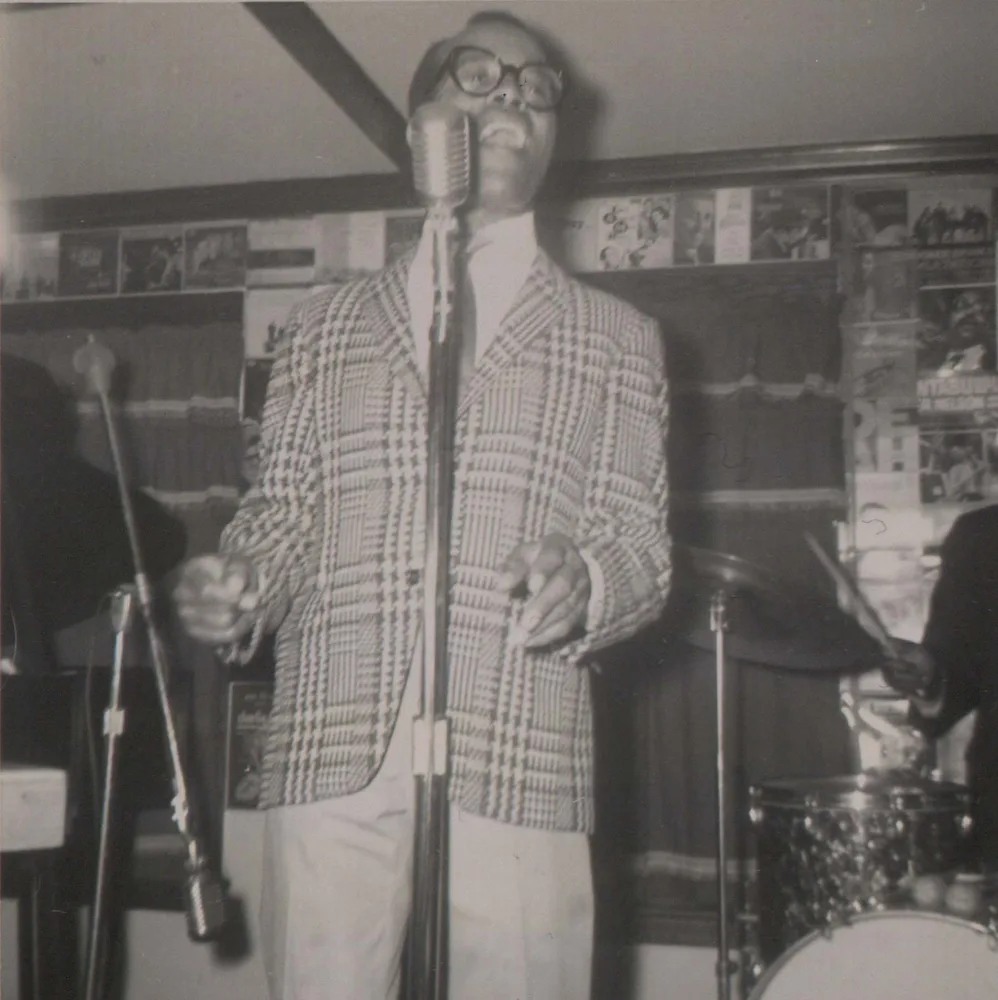
Jon Hendricks performing at Lennie's on the Turnpike, Peabody, Massachusetts, 1965 CC BY 4.0 — Wikimedia Commons — https://commons.wikimedia.org/wiki/File:Jon_Hendricks,_1965_-_6322836102.jpg (originally from the Salem State University Archives and Special Collections' Lennie's on the Turnpike Collection via Flickr, license confirmed by FlickreviewR on the file page)

John Carl "Jon" Hendricks was born September 16, 1921, in Newark, Ohio, one of fourteen siblings in the family of an African Methodist Episcopal pastor. The family moved several times before settling in Toledo, where the Hendricks household regularly hosted touring jazz musicians and Jon began singing professionally at parties and dinners around age seven. A neighbor on the same Toledo street, a young piano prodigy named Art Tatum, gave him informal early musical guidance. As a teenager Hendricks sang with a radio harmony group called the Swing Buddies, contributing money to support the family, and worked around Toledo and Detroit until he was drafted.
Hendricks served in the U.S. Army during World War II, taking part in the Normandy landings in June 1944 before being attached to quartermaster headquarters in France. After Black soldiers in his unit were targeted by military police for socializing with French women, Hendricks and others went on the run with army supplies before being recaptured; a court-martial in November 1945 sentenced him to eleven months in the stockade. He returned home to study pre-law at the University of Toledo on the G.I. Bill, teaching himself drums along the way, before deciding to pursue music and lyric-writing full time. He moved to New York in 1952, where he began writing songs and absorbed the emerging vocalese style pioneered by King Pleasure and Eddie Jefferson, who set lyrics to recorded jazz instrumental solos.
In New York, Hendricks partnered with singer Dave Lambert on vocalese arrangements of Count Basie big-band recordings; unable to assemble enough singers to cover all the horn parts live, the pair (soon joined by singer Annie Ross) turned to overdubbing their own voices multiple times in the studio. The result, Sing a Song of Basie (1958, ABC-Paramount, with pianist Nat Pierce, bassist Eddie Jones and drummer Sonny Payne backing the trio, produced by Creed Taylor), became a surprise bestseller and a landmark in recorded jazz: Ross sang the high trumpet parts, Hendricks the fast tenor-saxophone lines, both carrying Hendricks's own lyrics note for note against the original solos. Lambert, Hendricks & Ross became "The Hottest New Group in Jazz" on the cover of DownBeat in September 1959, and their 1961 album High Flying (Columbia, with the Ike Isaacs Trio, produced by Teo Macero) won the Grammy Award for Best Performance by a Vocal Group at the 1962 ceremony. Hendricks's lyric-writing over this period included setting words to Ben Webster's tenor solo on Duke Ellington's "Cotton Tail" and composing "I Remember Clifford" (a tribute to trumpeter Clifford Brown, set to Benny Golson's tune), later recorded by numerous singers. When Annie Ross left the group in 1962 due to illness, singer Yolande Bavan replaced her as Lambert, Hendricks & Bavan; the group disbanded for good in 1964, and Dave Lambert was killed in a highway accident in 1966.
Hendricks pursued a solo and small-group career through the 1960s and 1970s, recording A Good Git-Together (1959, World Pacific, with guitarist Wes Montgomery and saxophonist Pony Poindexter) and staging Evolution of the Blues Song, a narrated musical history of the blues, at the Monterey Jazz Festival in 1960. He recorded and toured with George Russell, sang on Art Blakey and the Jazz Messengers' Buhaina (1973), and moved his family first to Mill Valley, California, and then, in 1968, to London for five years, partly to give his children a different environment. Back in the Bay Area in the 1970s, he worked as a jazz critic for the San Francisco Chronicle, released Tell Me the Truth (1975, Arista, produced by Ben Sidran, with guitarist Boz Scaggs and Hendricks's wife Judith among the credited musicians), and began a long teaching career at Sonoma State University and the University of California, Berkeley.
Hendricks's later decades brought renewed visibility. His 1982 album Love (Muse, billed to Jon Hendricks & Company) featured his daughter Michele Hendricks; in 1985 he wrote all the lyrics for the Manhattan Transfer's Vocalese, an album built from his vocalese technique that drew a then-record-tying twelve Grammy nominations and won two, including Best Jazz Vocal Performance, Duo or Group. Hendricks himself won the Grammy for Best Male Jazz Vocal Performance that year for his own vocal turn with Bobby McFerrin on "Another Night in Tunisia," a track from that same album. His 1990 album Freddie Freeloader (Denon, produced by Hendricks) assembled an all-star cast including George Benson, Al Jarreau, Bobby McFerrin, Wynton Marsalis, Stanley Turrentine, and the Count Basie Orchestra, built around a Miles Davis composition. He was named an NEA Jazz Master in 1993, sang in Wynton Marsalis's Pulitzer Prize-winning oratorio Blood on the Fields, and in 2000 returned to the University of Toledo as Distinguished Professor of Jazz Studies, receiving an honorary doctorate and later becoming the first American jazz artist to lecture at the Sorbonne in Paris. He continued performing into his nineties, touring in 2003 with the "Four Brothers" vocal quartet alongside Kurt Elling, Mark Murphy, and Kevin Mahogany, guesting on the 3 Cohens' Family (2011) alongside Anat Cohen, Yuval Cohen, and Avishai Cohen, and appearing on record as recently as 2016. Jon Hendricks passed away on November 22, 2017, in Manhattan, at age ninety-six; his full lyricization of Miles Davis's Miles Ahead had its concert premiere in New York earlier that same year.
Hendricks did not invent vocalese outright (King Pleasure and Eddie Jefferson preceded him in setting words to recorded jazz solos), but he is the figure most responsible for turning it into a fully developed art form and a working career, writing dense, witty, syllable-perfect lyrics that tracked entire instrumental solos, choruses, and even whole horn sections at the speed the originals were played. Critic Leonard Feather called him the "Poet Laureate of Jazz," and Time magazine dubbed him the "James Joyce of Jive" for the sheer verbal density of his writing. His work with Lambert, Hendricks & Ross established the vocalese trio as a viable jazz format and directly shaped the vocabulary of later vocalese and vocal-jazz singers, including the group he mentored into being with the Manhattan Transfer's Vocalese, and singers such as Kurt Elling, Mark Murphy, and the New York Voices who extended the same tradition.
- Sing a Song of Basie (1958, ABC-Paramount, Lambert, Hendricks & Ross) - The trio's landmark debut, built by overdubbing three voices into a note-for-note vocalese recreation of Count Basie band arrangements; produced by Creed Taylor. Spotify - Sing a Song of Basie Listen
- High Flying (1961, Columbia, Lambert, Hendricks & Ross) - Winner of the Grammy Award for Best Performance by a Vocal Group at the 1962 ceremony, recorded with the Ike Isaacs Trio.
- A Good Git-Together (1959, World Pacific) - Hendricks's first major outing as a solo leader, with Wes Montgomery on guitar.
- Tell Me the Truth (1975, Arista) - A Bay Area-recorded solo album produced by Ben Sidran, made during Hendricks's years as a San Francisco jazz critic and educator.
- Vocalese (1985, Atlantic, the Manhattan Transfer) - Every lyric on this landmark, twelve-Grammy-nominated album was written by Hendricks, who also sang on "Another Night in Tunisia," winning his own Grammy for the performance alongside Bobby McFerrin.
- Freddie Freeloader (1990, Denon) - Hendricks's last studio album as leader, an all-star date built around a Miles Davis theme with George Benson, Al Jarreau, Bobby McFerrin, Wynton Marsalis, and Stanley Turrentine.
- Family (2011, Anzic Records, 3 Cohens) - As a guest: Hendricks sings on two tracks of this 3 Cohens album, alongside Anat Cohen, Yuval Cohen, and Avishai Cohen. Spotify - Family
Jon Hendricks: Full Discography
Identity confirmed via the live Discogs API: Jon Hendricks, artist ID 253478 (realname John Carl Hendricks, profile matches birth/death dates and career), and the group Lambert, Hendricks & Ross, artist ID 333644. Hendricks's own Discogs artist page lists 40 releases directly credited to him (22 albums, 11 singles/EPs, 6 compilations, 1 miscellaneous release) plus 137 further appearance credits and over 2,000 track-level credits, the great majority of these being later reissues and compilations of the same handful of original recordings. He was primarily a member of a working trio rather than a prolific solo leader, so the table below covers the significant releases of both bodies of work rather than itemizing every reissue.
As Member of Lambert, Hendricks & Ross (and successor lineups)
| Album Title | Recording Date(s) | Release Date | Label | Catalog Number | Format(s) | Personnel | Role | Reissue History | Spotify | Buy | Notes |
|---|---|---|---|---|---|---|---|---|---|---|---|
| Sing a Song of Basie | Recorded August 26 - November 26, 1957 | 1958 | ABC-Paramount | ABC-223 | Vinyl, LP, Album, Mono | Dave Lambert, Jon Hendricks, Annie Ross (vocals), Nat Pierce (piano), Eddie Jones (bass), Sonny Payne (drums); produced by Creed Taylor | Group member (vocalese lyrics by Hendricks) | Reissued repeatedly, including a 2011 pairing with the 1959 follow-up Sing Along with Basie | Spotify - Sing a Song of Basie | — | Built by overdubbing the trio's three voices to reproduce Count Basie band arrangements note for note, out of necessity after enough singers to cover the horn parts live could not be assembled; a pioneering use of studio overdubbing in jazz |
| Sing Along with Basie | Not specified in Discogs data | 1959 | Roulette | R-52018 | Vinyl, LP, Album, Mono | Joe Williams, Dave Lambert, Jon Hendricks, Annie Ross, with the Count Basie Orchestra | Group member | Reissued 2011 paired with Sing a Song of Basie | — | — | Follow-up to the debut, this time recorded with the actual Basie band rather than a small rhythm section |
| The Swingers! (with Zoot Sims) | Not specified in Discogs data | 1959 | Vogue Productions (UK) | EPV 1247 | Vinyl, 7", 45 RPM, EP | Lambert, Hendricks & Ross with Zoot Sims (tenor sax), Jim Hall (guitar), Freddie Green (guitar), Russ Freeman (piano), Eddie Jones (bass), Sonny Payne (drums); produced by Richard Bock | Group member | None found | — | — | A rare studio pairing of the trio with a small jazz combo rather than a big band |
| Sing Ellington | Not specified in Discogs data | 1960 | Columbia | CS 8310 | Vinyl, LP, Stereo | Lambert, Hendricks & Ross with the Ike Isaacs Trio | Group member | None found | — | — | A vocalese tribute to Duke Ellington's book, following the same format as the Basie albums |
| Everybody's Boppin' | Not specified in Discogs data | 1960 | Philips (UK) | SBBE 9020 | Vinyl, 7", 45 RPM, EP | Lambert, Hendricks & Ross | Group member | None found | — | — | The confirmed pressing is this UK EP; no US LP release of the same title could be confirmed |
| High Flying | Not specified in Discogs data | 1961 | Columbia | CL 1675 | Vinyl, LP, Album, Mono | Lambert, Hendricks & Ross with the Ike Isaacs Trio: Gildo Mahones (piano), Ike Isaacs (bass), Jimmy Wormworth (drums); produced by Teo Macero | Group member | Reissued on CD | — | — | Winner, Grammy Award for Best Performance by a Vocal Group, awarded at the 1962 ceremony |
| The Real Ambassadors | Recorded 1961 | 1962 | Columbia Masterworks | OL 5850 | Vinyl, LP, Album, Mono (gatefold) | Louis Armstrong, Dave Brubeck, Lambert, Hendricks & Ross, Carmen McRae | Group member (featured) | None found | — | — | Dave Brubeck's jazz-musical project satirizing Cold War-era "jazz ambassador" tours; the trio's last major joint recording before Annie Ross's 1962 departure |
As Leader / Co-Leader (solo and later ensembles)
| Album Title | Recording Date(s) | Release Date | Label | Catalog Number | Format(s) | Personnel | Role | Reissue History | Spotify | Buy | Notes |
|---|---|---|---|---|---|---|---|---|---|---|---|
| A Good Git-Together | Not specified in Discogs data | 1959 | World Pacific | WP-1283 | Vinyl, LP, Album, Mono | Jon Hendricks (vocals, liner notes), Pony Poindexter (alto sax), Wes Montgomery (guitar), Monk Montgomery (bass), Ike Isaacs (bass), Gildo Mahones (piano), Jimmy Wormworth / Walter Bolden (drums); produced by Richard Bock | Leader | None found | — | — | Hendricks's first major outing as a solo leader |
| Evolution of the Blues Song | Recorded live, Monterey Jazz Festival | 1961 | Columbia | CS 8383 | Vinyl, LP, Stereo | Jon Hendricks with a jazz ensemble and narration | Leader | None found | — | — | Document of the narrated blues-history stage piece Hendricks created and performed at the 1960 Monterey Jazz Festival |
| Fast Livin' Blues | Not specified in Discogs data | 1962 | Columbia | CL 1805 | Vinyl, LP, Album, Mono (promo pressing) | Jon Hendricks | Leader | None found | — | — | |
| ¡Salud! João Gilberto | Not specified in Discogs data | 1963 | Reprise Records | R-6089 | Vinyl, LP, Album, Mono | Jon Hendricks | Leader | None found | — | — | Hendricks's own bossa nova-themed tribute date, subtitled "Originator of the Bossa Nova" |
| Recorded in Person at the Trident | Not specified in Discogs data | 1965 | Smash Records | MGS 27069 | Vinyl, LP, Album, Mono | Jon Hendricks | Leader | None found | — | — | Live recording |
| Sons and Daughters | Not specified in Discogs data | 1967 | Verve Records | VK-10512 | Vinyl, 7", 45 RPM, Single, Promo | Jon Hendricks | Leader | None found | — | — | A promotional single, not an LP |
| No More | Not specified in Discogs data | 1968 | Verve Records | VS 572 | Vinyl, 7", 45 RPM | Jon Hendricks | Leader | None found | — | — | A UK single, recorded during Hendricks's London years |
| Tell Me the Truth | Not specified in Discogs data | 1975 | Arista | AL 4043 | Vinyl, LP, Album | Jon Hendricks (vocals) with Boz Scaggs (lead guitar, track A3), Eddie Duran (guitar), Melvin Seals (organ), Thomas Rutley (bass), Eddie Marshall / Lenny McBrowne (drums), Judith Hendricks (choir, track B4); produced by Ben Sidran, remixed by Bruce Botnick | Leader | None found | — | — | Recorded during Hendricks's years as a San Francisco Chronicle jazz critic |
| Love | Recorded 1982 | 1982 | Muse | MR 5258 | Vinyl, LP, Album | Jon Hendricks & Company, featuring daughter Michele Hendricks (vocals), David Hazeltine (piano), Marvin "Smitty" Smith (drums), James Leary / John Williams / Jon Burr (bass) | Leader (billed to Jon Hendricks & Company) | None found | — | — | |
| Vocalese | Recorded 1985 | 1985 | Atlantic | 781 266-1 | Vinyl, LP, Album, Stereo | The Manhattan Transfer, lyrics by Jon Hendricks throughout; Hendricks himself sings on "Another Night in Tunisia" (with Bobby McFerrin) and "Ray's Rockhouse" | Lyricist (album-wide) and featured guest vocalist (2 tracks) | None found | — | — | Credited to the Manhattan Transfer, not Hendricks, but built entirely from his lyrics; received a then-record-tying 12 Grammy nominations and won 2, including Best Jazz Vocal Performance, Duo or Group; Hendricks's own guest turn on "Another Night in Tunisia" won Best Male Jazz Vocal Performance |
| Freddie Freeloader | Not specified in Discogs data | 1990 | Denon | COCY-6302 | CD, Album, Stereo | Jon Hendricks & Friends, produced by Hendricks; guests including George Benson, Al Jarreau, Bobby McFerrin, Wynton Marsalis, Stanley Turrentine, and the Count Basie Orchestra (per Wikipedia and AllMusic; the individual performer credits are not broken out in the Discogs release data for this pressing) | Leader / Producer | None found | — | — | Grammy-nominated; Hendricks's final studio album as leader, built around a Miles Davis theme |
| Boppin' at the Blue Note | Recorded live | 1995 | Telarc Jazz | CD-83320 | CD, Album, Stereo | Jon Hendricks and the All-Stars, live at New York's Blue Note | Leader | None found | — | — |
As Guest / Featured Vocalist (selected)
| Year | Project (Leader) | Title | Label | Role | Notes |
|---|---|---|---|---|---|
| 1973 | Art Blakey & the Jazz Messengers | Buhaina | Prestige (PR-10067) | Guest vocals | Hendricks sings on "Moanin'" and "Along Came Betty" |
| 1998 | Lionel Hampton, with Stéphane Grappelli | Live at the Blue Note | Telarc Jazz (CD-83455) | Guest vocals | |
| 2011 | 3 Cohens (Anat Cohen, Yuval Cohen, Avishai Cohen) | Family | Anzic Records (ANZ7002) | Vocals, tracks 7 and 10 | Confirmed at the release level via the Discogs API: Hendricks sings "On the Sunny Side of the Street" (track 7) and "Roll 'Em Pete" (track 10), alongside Aaron Goldberg (piano) and Gregory Hutchinson (drums) |
| 2016 | JC Hopkins Biggish Band | Meet Me at Minton's | Not specified in Discogs data | Guest vocals | Recorded when Hendricks was 93 |
Hendricks's Discogs "Appearance" credits (137 releases, spanning 1953 to well after his death via reissues) also include earlier vocal-group work backing Louis Jordan and King Pleasure recordings in the 1950s before his own recording career began, and numerous later compilation and various-artist packages featuring the Basie-era Lambert, Hendricks & Ross material; not itemized exhaustively here.
- Dave Lambert & Annie Ross - co-founders of Lambert, Hendricks & Ross (1957-1962), the vocalese trio built around Hendricks's lyrics; Ross was later replaced by Yolande Bavan through the group's 1964 dissolution.
- Creed Taylor - produced Sing a Song of Basie (1958) for ABC-Paramount.
- Count Basie - the subject of the group's breakthrough album and repeated later collaborations, including live Basie Orchestra dates through the 1980s.
- Wes Montgomery - guitarist on Hendricks's 1959 solo date A Good Git-Together.
- The Manhattan Transfer - Hendricks wrote every lyric on the group's 1985 album Vocalese and performed on it, including a Grammy-winning duet with Bobby McFerrin on "Another Night in Tunisia."
- Anat Cohen, Yuval Cohen, and Avishai Cohen - the 3 Cohens, on whose 2011 album Family Hendricks guests as vocalist on two tracks.
- Wynton Marsalis - Hendricks sang in Marsalis's Pulitzer Prize-winning Blood on the Fields and later lyricized Miles Davis's Miles Ahead in full, premiered in 2017.
- Wikipedia: Jon Hendricks
- Wikipedia: Lambert, Hendricks & Ross
- Wikipedia: Sing a Song of Basie
- Wikipedia: Vocalese (album)
- National Endowment for the Arts: Jon Hendricks, NEA Jazz Master (1993)
- DownBeat: Jon Hendricks Dies at 96
- Discogs: Jon Hendricks (artist 253478)
- Discogs: Lambert, Hendricks & Ross (artist 333644)
- Discogs: 3 Cohens - Family (release 6099198)