 JAZZPROFILES lives in the music 1,765 Jazz Artists fully Profiled!
Ichiko Hashimoto
Last updated October 21, 2026
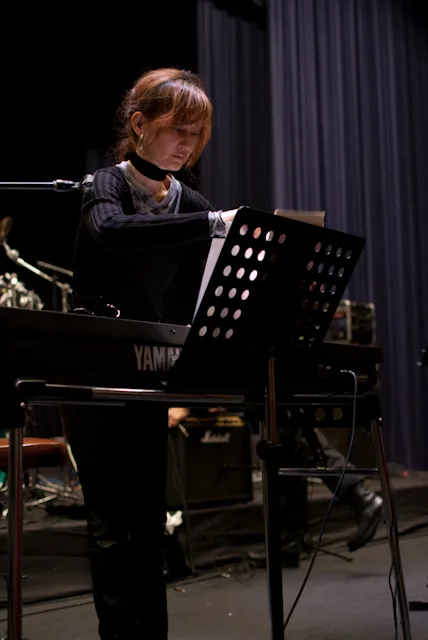
Ichiko Hashimoto at a rehearsal for the YMO Tribute Vol.4 concert, 16 January 2010. CC BY 2.0 — https://commons.wikimedia.org/wiki/File:YMO_Tribute_Vol.4_Ichiko_Hashimoto_Rehearsal_(4280991571).jpg

Ichiko Hashimoto (橋本一子) is a Japanese pianist, singer and composer whose career does not sit inside one genre, and a profile that treated her only as a jazz pianist would leave out most of what she has released. The jazz thread is real and it surfaces at intervals: the four-pianist concert LP Twilight Monologues in 1984 alongside Aki Takase, Masahiko Satoh and Takashi Kako; the keyboard chair in Kazumi Watanabe's Mobo band; two Miles Davis tribute piano-trio albums in 1999 and 2001; and the Ub-X trio from 2006. Around it sit new wave, ambient and Japanese-language pop records, bossa nova, and a large body of film, game and anime scoring, including RahXephon and Code Geass. Her own label's profile heads her name with "Improviser, Composer, SongWriter, Arranger" and describes the music as non-genre. Japanese Wikipedia says she came to be recognised as a jazz pianist while noting that several of her albums sit well away from jazz, and that is the fair way to read the catalogue.
She was born on 1 July 1952 in Kobe, left the city as a child, lived in Kumamoto and then settled in Tokyo. She began piano at five, attended Tokyo Metropolitan Ueno High School, and graduated from the piano department of Musashino Academia Musicae in 1975, having started performing while still a student. Her earliest credit on Discogs is from 1978: Sketch of My Life by the Yoshio Ikeda Quintet (Seven Seas), on which she is credited with vocals and piano next to Aki Takase on piano, Motohiko Hino on drums and Suetoshi Shimizu on saxophones.
In the spring of 1980 she joined the support band on Yellow Magic Orchestra's first domestic tour, Technopolis 2000-20, which ran from 21 March to 15 April; Japanese Wikipedia says she stood in for Akiko Yano, who was away on maternity leave. Discogs credits her on keyboards on TV-YMO (Alfa, 1993), a collection of the group's television appearances, alongside Ryuichi Sakamoto and Yano. In 1981 she and the multi-instrumentalist Atsuo Fujimoto released Colored Music as the duo Colored Music, an electronic new wave record that the club and reissue scene has since taken up again; it was reissued on CD in 2008 and again in 2018, the year the duo released a second album, Individual Beauty. Fujimoto has been her closest collaborator ever since, on drums, bass and guitar. Over the same months she was a keyboardist in Akira Sakata's Sakata Orchestra, credited on fortepiano on 4 O'Clock (Better Days, August 1981), where Kazutoki Umezu and the trombonist Shigeharu Mukai are in the band, and on piano and vocals on Berlin 28 (Better Days, 1982), recorded live at the Berlin Philharmonie on 6 November 1981 with Shuichi Ponta Murakami among the drummers.
The mid-1980s are where the jazz and non-jazz lines first cross. In 1984 she released Ichiko on JVC's Music Interior series, a record of solo piano and synthesizer-and-voice pieces that Discogs files under ambient and modern classical. The same year Lunatic Records issued Twilight Monologues, a live split LP of four pianists, Satoh, Takase, Hashimoto and Kako, recorded at Yamaha Hall in Hiroshima across four dates between 17 June and 22 July 1984. It has four tracks, one on each date, and Discogs does not say which is hers. She also played piano, keyboards and voice on Kazumi Watanabe's Mobo Club (1984), keyboards and vocals on Mobo Live (1985), and vocals on Mobo Splash (1985), the album with American saxophonists as guests; Umezu played on the last two, Sakata was a guest on Mobo Club and Mobo Live, and Murakami was on drums throughout. Watanabe produced her own Beauty (Domo, 1985), which Discogs tags as new wave and ambient, and she appears on piano, keyboards and vocals on Atsuo Fujimoto's Beat Jazz LP (Better Days, 1986) and on Umezu's Diva project (1988).
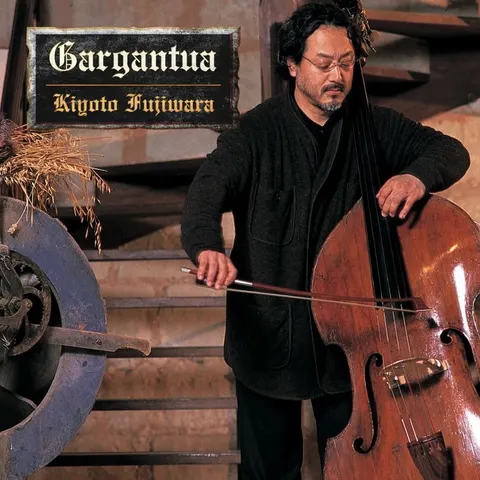
Her Polydor albums of 1986 to 1990 mix directions without settling on one. Vivant (1986), High Excentrique (1988) and D.M. (1989) are new wave and pop; Mood Music (1987) is an album of jazz and bossa nova standards, among them "The Girl from Ipanema," "Night and Day," "Moanin'" and "April in Paris"; and High Excentrique Piano Music (1989) is a live concert of Debussy and Messiaen recorded at Aoyama Round Theatre on 27 February 1989. The 1990s continued in the same way: the game score for Loom (1991), Japanese-language pop on Romantic Rain (1992), and the bossa nova album Under Water (1994), which includes Jobim's "Aguas de Marco" and which JazzTokyo later described as her guitar-and-vocal bossa record. In February 1994 she was recorded live at the New York jazz club Sweet Basil, on keyboards and voice, with the bassist Kiyoto Fujiwara's group, which included Thomas Chapin on alto saxophone and Peter Madsen on piano; the recording was released in Japan in 1999 as Live at Sweet Basil NYC.
The jazz records proper begin in 1998, when she formed a piano trio with Fujimoto and the bassist Nobuyoshi Ino. Miles Away, recorded at GOK Sound on 14 and 15 August 1999 and issued on 25 November by Tokuma Japan's ONOFF imprint, is a trio album of Miles Davis-associated repertoire: "Milestones," "Blue in Green," "E.S.P.," "Freedom Jazz Dance," "Giant Steps," "Nefertiti" and others, closing with a vocal title track. Miles Blend, recorded on 19 and 20 December 2000 and released on 25 April 2001, repeats the formula with "All Blues," "Sorcerer," "Pinocchio" and "Fall" and adds three Hashimoto originals, "Aroma," "Edge of Circle" and "Depth." Her label's profile calls it her second jazz album after Miles Away. Between them, in 2000, she released Phantasmagoria, an electronic and string-quartet record that has nothing to do with either.
In 2002 she scored the television anime RahXephon and also voiced a character in it, Maya Kamina, repeating both roles for the 2003 film RahXephon: Pluralitas Concentio; the three television soundtrack albums and the film soundtrack are the releases she is best known for outside Japan. She was music director for the dance opera UZME at the 2005 Aichi Expo, and the trio's next move came in 2006, when the group was renamed Ub-X and released Ub-X on EWE Records on 22 March. All eleven pieces are Hashimoto compositions, with Ino on bass and Fujimoto on drums. Her label's profile says it topped the J-jazz charts at both Tower Records and HMV and that a German tour followed in May 2006. Vega (EWE, 18 April 2007) added Brazilian material, "Mais Que Nada" and "The Girl from Ipanema," to a set of originals, and Japanese Wikipedia records a joint live appearance with Naruyoshi Kikuchi in 2007. In 2009 she founded her own label, najanaja, whose first releases included Arc'd-X, a record of electronic jazz and bossa made with the programmer AQ Ishii.
The later work keeps both strands going. She scored the Code Geass: Akito the Exiled films, with soundtrack albums released in 2013 and 2016, and in 2016 recorded Duo, a bossa nova album with the guitarist and singer Yoshiro Nakamura; Kenny Inaoka reviewed their 24 March 2017 concert at Motion Blue Yokohama for JazzTokyo. view (najanaja, 21 July 2021) was her first solo album in twelve years and a return to jazz standards, with "All the Things You Are," "Giant Steps," "My Foolish Heart," "Blackbird," "Beijo Partido" and "Danny Boy" beside originals; the label's notes name Kikuchi on alto saxophone, Shinpei Ruike on trumpet and Fujimoto on drums. Ub-X was still playing in 2025, including a live-recording evening at Dogenzaka Classics in Tokyo on 11 October 2025. She turned 74 in July 2026.
Hashimoto is a borderline case for a jazz catalogue, and the plain description is that she is a pianist-composer who has a jazz career inside a wider one. The jazz-tagged records on Discogs cluster from 1998 onward, with Mood Music and the 1984 Twilight Monologues as earlier exceptions; the 1980s and 1990s are mostly new wave, ambient, pop and bossa nova, and the soundtrack work (Hakuchi, RahXephon, Code Geass, Loom) is a body of its own. The jazz identity is documented, though: Japanese Wikipedia and Last.fm describe her as a jazz pianist, the Jazz Shiryokan musician database lists her, and she plays regularly at jazz rooms such as Dolphy in Yokohama.
As a trio pianist she works from the Miles Davis repertoire on Miles Away and Miles Blend, choosing the modal and post-bop end of it: Wayne Shorter's "E.S.P.," "Nefertiti," "Pinocchio" and "Fall," Herbie Hancock's "Sorcerer," and the standards Davis recorded, such as "Green Dolphin Street" and "Stella by Starlight." The jazz sits at its most original on the two Ub-X albums, where the trio plays her own compositions (all eleven on Ub-X, seven of nine on Vega) and brings in bossa nova on the second. Her voice is part of that sound and she describes it as a "voice instrument" rather than conventional singing.
Outside the trio she moves between registers on purpose. The 1980s records come out of new wave and synthesizer pop, the 1990s bossa and piano records borrow from Jobim and João Gilberto, and the soundtracks use orchestral and electronic writing; Arc'd-X (2009) folds jazz harmony into breakbeat production. Her own list of collaborators, on her English-language profile, runs from jazz (Yosuke Yamashita, Aki Takase, Kazumi Watanabe, Irene Schweizer, Han Bennink) to contemporary classical (Yuji Takahashi, Aki Takahashi) and electronic music (YMO, DJ Cloud).
- Miles Away (1999, ONOFF/Tokuma Japan TKCB-71775) - The first of two Miles Davis tribute trio albums, with Nobuyoshi Ino on bass and Atsuo Fujimoto on drums, recorded in two days in August 1999. YouTube - Miles Away, full album Listen · Buy
- Miles Blend (2001, ONOFF/Tokuma Japan TKCB-72109) - The same trio, December 2000, with three Hashimoto originals among the Shorter, Hancock and Davis tunes. Not found on a streaming service. Buy
- Ub-X (2006, EWE Records EWSA-0115) - The trio's all-original album, and the release that moved the group from a Miles tribute to a band with its own name. Spotify - Ub-X · Apple Music - Ub-X Listen · Buy
- Vega (2007, EWE Records EWSA-0131) - Second Ub-X album, with originals plus "Mais Que Nada" and "The Girl from Ipanema." Apple Music - Vega Listen · Buy
- Twilight Monologues (1984, Lunatic 001) - The best-documented jazz-piano appearance of her early years, a four-pianist live LP with Satoh, Takase and Kako, recorded in Hiroshima. YouTube - Twilight Monologues Listen
- Mood Music (1987, Polydor 28MX2541) - Her album of jazz and bossa nova standards, twelve years before the Miles records. YouTube - Mood Music Listen · Buy
- view (2021, najanaja NAJA-010) - The late-career solo album, with standards and originals and horn guests. Apple Music - view Listen · Buy
Ichiko Hashimoto (橋本一子) - Full Discography
Japanese pianist, vocalist, composer and arranger, born 1 July 1952 in Kobe. Discogs artist 259135. Her catalogue spans jazz trio records, new wave and ambient solo albums, Japanese-language pop, bossa nova, and film, game and anime scores; the Notes column says which is which.
Name variations on record: Hashimoto Ichiko, I. Hashimoto, Ichiko, 橋本一子, 橋本 一子, and the misprints Ichiki Hashimoto, Ichiko Hashimoro and 橋下一子.
Group affiliations: Colored Music, Ub-X, Mobo Band, Sakata Orchestra, Ichiko & The Rehabilitations, どくとる梅津Diva.
Leader
| Album | Year | Label | Personnel | Notes | Listen | Buy |
|---|---|---|---|---|---|---|
| Ichiko | 1984 | JVC, VIJ-28035 | Ichiko Hashimoto (piano, synthesizer, vocals) | LP in JVC's Music Interior series. Song titles in Japanese with English subtitles on the sleeve. Solo piano and synthesizer-and-voice pieces; Discogs tags it Ambient and Modern Classical. | not found | Amazon |
| Kira (7 inch flexi) | 1985 | Jiyukokuminsha, SK-276 | Ichiko Hashimoto | Instructional flexi disc given away with the keyboard magazine Keyple No. 8. A piano version on one side and a synthesizer version on the other. | not found | not found |
| Beauty | 1985 | Domo, 28MX 2522 | Ichiko Hashimoto; produced by Kazumi Watanabe | Ten tracks, including "I Love Your Music," "Cinnamon and Clove" and "Naja Naja." A 2004 compilation credits "I Love Your Music" with Watanabe on guitar, Atsuo Fujimoto on bass and guitar and Mansaku Kimura on drums. Discogs tags it New Wave, Ambient, New Age and Experimental. | not found | Amazon |
| Vivant | 1986 | Polydor, 28MX 2530 | Ichiko Hashimoto | Ten tracks, including "Juke Box," "Land of a 1000 Dances" and "La Belle Excentrique." New wave and experimental pop. | not found | Amazon |
| Flavoury Music | 1987 | Self-released cassette, TMI15322 | Ichiko Hashimoto (vocals, piano, synthesizer, lyrics), Atsuo Fujimoto (drums, bass, guitar, saxophone, keyboards), Matto (tabla) | Image album for her novel フレバリーガールはお茶の時間に旅をする (Kumon Publishing, 14 October 1987). Recorded at GOK Sound Studio. | not found | not found |
| Mood Music | 1987 | Polydor, 28MX2541 | Ichiko Hashimoto | Jazz and bossa nova standards: "The Girl from Ipanema," "Poinciana," "Night and Day," "How Insensitive," "Moanin'," "One Note Samba," "A Stranger in Paradise," "April in Paris" and "Je Te Veux." Discogs tags it Jazz and Latin. | YouTube | Amazon |
| Hold On I'm Comin' (mini CD single) | 1988 | Polydor, H10P40006 | Ichiko Hashimoto | Two tracks: "Hold On I'm Comin'" and "Money," both from High Excentrique. | not found | not found |
| High Excentrique | 1988 | Polydor, 28MX2553 | Ichiko Hashimoto (lyrics, music, producer); arranged by Ichiko & The Rehabilitations | Released 25 October 1988. Ten songs including "Crazy People in the Secret Club," "Sweet Sweet Diamond" and "Blue Cathedral." New wave pop. | not found | Amazon |
| High Excentrique Piano Music (ハイ・エキセントリック・ピアノ・ミュージック) | 1989 | Polydor, H00P20325 | Ichiko Hashimoto (piano), Aki Takahashi (piano), Ryoichi Fujimori (cello), Neko Saito Quartet (strings) | Live at Aoyama Round Theatre, Tokyo, 27 February 1989; released 25 May 1989. Debussy preludes and Messiaen's Vingt Regards sur l'Enfant-Jesus. Classical repertoire. | not found | Amazon |
| D.M. | 1989 | Polydor, H00P20360 | Ichiko Hashimoto (vocals, synthesizer, piano, guitar, producer), Naruyoshi Kikuchi (baritone saxophone), Atsuo Fujimoto (bass, guitar), Osamu Matsumoto (trombone), Tsuneo Imahori (guitar), Katsuhiro Hayashi (drums), AQ Ishii (synthesizer programming), Neko Saito Quartet and Great Eida Strings | Released 25 November 1989; recorded at Key-Stone Studios, Tokyo, July and August 1989. Pop-leaning, with horns and strings. | not found | Amazon |
| Je M'aime | 1990 | Polydor, POCH-1004 | Ichiko Hashimoto | Released 25 April 1990. Twelve tracks, several re-recorded from Beauty and Vivant ("Naja Naja," "Izabel in Future," "Seed," "Kitsune"). Pop. | not found | Amazon |
| ロマンティックな雨 (Romantic Rain) | 1992 | Moon Records, AMCM-4132 | Ichiko Hashimoto (vocals, piano, synthesizer, guitar, arrangements), Atsuo Fujimoto (guitar, synthesizer, arrangement), Kenji Takamizu (bass), Hideo Yamaki and Jun Aoyama (drums), Ryo Yonemitsu (guitar, synthesizer, arrangements), Febian Reza Pane (piano), Neko Saito and strings | Released 25 May 1992. Twelve Japanese-language songs. Discogs tags it Jazz and Pop. | Apple Music | Amazon |
| Under Water (アンダーウォーター ~水の中のボッサ・ノーヴァ) | 1994 | Aeolus, APCD-S001 (reissued by Tokuma Japan, TKCB-71357, 1998) | Ichiko Hashimoto | Released 1 November 1994. Twelve tracks of bossa nova, among them Jobim's "Aguas de Marco" and "Tim Tim por Tim Tim." Reissued 8 April 1998. Discogs tags it Jazz. | not found | Amazon |
| Water Forest (水の中の森) | 1997 | Dan Flex/Tokuma Japan, TKCB-71122 | Ichiko Hashimoto | Released 21 April 1997. Thirteen tracks mixing originals with "Someday My Prince Will Come," "Close to You" and "When You Wish Upon a Star." Discogs tags it Classical. | not found | Amazon |
| Najanaja (ナジャナジャ) | 1998 | Dan Flex/Tokuma Japan, TKCB-71356 | Ichiko Hashimoto (vocals, piano, guitar) | Released 8 April 1998. Ten tracks with Japanese and English titles. Discogs tags it Jazz and Classical. | not found | Amazon |
| Miles Away | 1999 | ONOFF/Tokuma Japan, TKCB-71775 | Ichiko Hashimoto (piano, vocal on the title track), Nobuyoshi Ino (bass), Atsuo Fujimoto (drums) | Recorded 14 and 15 August 1999 at GOK Sound by Yoshiaki Kondo; mastered at Sony Shinanomachi Studio; released 25 November 1999. Eleven tracks, 53 minutes: "Milestones," "On Green Dolphin Street," "Blue in Green," "E.S.P.," "Nem Um Talvez," "Someday My Prince Will Come," "Freedom Jazz Dance," "Stella by Starlight," "Giant Steps," "Nefertiti" and the closing title track. Produced by Hashimoto; project director Ryoji Fukui. Discogs tags it Jazz. | Full album on YouTube | Amazon |
| Phantasmagoria (ファンタスマゴリア |
2000 | ONOFF/Tokuma Japan, TKCB-72017 | Ichiko Hashimoto (composer, producer, keyboards, piano, voice, guitar), Atsuo Fujimoto (drums, electric bass, guitar), AQ Ishii (programming), Chieko Kinbara (violin), Masashi Horisawa (cello) and string quartet | Released 27 September 2000. Eleven pieces including the suite "Buenos Aires to Paris" and "Requiem." Electronic and avant-garde; Discogs tags it Avantgarde, Psychedelic, Electro and Ambient. | not found | Amazon |
| Miles Blend | 2001 | ONOFF/Tokuma Japan, TKCB-72109 | Ichiko Hashimoto (piano, voice, producer), Nobuyoshi Ino (bass), Atsuo Fujimoto (drums) | Recorded 19 and 20 December 2000 at GOK Sound; mastered January 2001 at Sony Shinanomachi Studio; released 25 April 2001. Ten tracks: "All Blues," "Sorcerer," "Alice in Wonderland," "Pinocchio," "Autumn Leaves," "Aroma," "There Is No Greater Love," "Fall," "Edge of Circle" and "Depth," the last three by Hashimoto. Liner notes by Yo Nakagawa. Discogs tags it Jazz and Hard Bop. | not found | Amazon |
| view | 2021 | najanaja, NAJA-010 | Ichiko Hashimoto (piano, voice), Atsuo Fujimoto (drums, bass), with Naruyoshi Kikuchi (alto saxophone) and Shinpei Ruike (trumpet) named in the label notes | Released 21 July 2021; executive producer Masahiro Maeda. Eleven tracks: "Blue," "View," "All the Things You Are," "Blackbird," "Giant Steps," "Beijo Partido," "My Foolish Heart," "Good Girl," "Danny Boy," "Planet" and "Before and After the Introduction." Her first solo album in twelve years. Apple Music files it under Jazz. | Apple Music | Amazon |
Co-Leader and Group Releases
| Album | Year | Label | Co-billed with | Personnel | Notes | Listen | Buy |
|---|---|---|---|---|---|---|---|
| Colored Music (as Colored Music) | 1981 | Better Days/Nippon Columbia, YF-7031-N | Atsuo Fujimoto | Ichiko Hashimoto, Atsuo Fujimoto; additional players named on the sleeve include Shuichi Murakami, Tamio Kawabata, Kiyohiko Semba and Mansaku Kimura (roles not given) | Eight tracks: "Colored Music," "Anticipation," "Ei Sei Raku," "Sanctuary," "Too Much Money," "Love Hallucination," "Third Eye - Clear Light" and "Heartbeat." Written by Hashimoto and Fujimoto. Electronic new wave; reissued on CD in 2008 and again in 2018. Discogs also lists a 2016 7 inch club-edit single (Columbia) and a 2020 12 inch from Rush Hour. | not found | Amazon |
| Twilight Monologues (トワイライトモノローグス) | 1984 | Lunatic Records, Lunatic 001 | Masahiko Satoh, Aki Takase, Takashi Kako | Four pianists, one track each on four different dates; Discogs does not say which track is Hashimoto's | Recorded live at Yamaha Hall, Hiroshima: 17 June (A1, "The Night Has a Thousand Eyes"), 8 July (A2, "Tori"), 14 July (B2, "Someday") and 22 July 1984 (B1, "Mizu No Kaidan - Odoru Yoru"). Produced by Koichiro Suzuki. Discogs tags it Contemporary Jazz. | Full album on YouTube | Amazon |
| Ub-X | 2006 | EWE Records, EWSA-0115 | Ub-X | Ichiko Hashimoto (piano, vocals, composer), Nobuyoshi Ino (bass), Atsuo Fujimoto (drums) | Released 22 March 2006. Eleven tracks, all composed by Hashimoto: "Li-Mo," "Parallel," "Lara," "Rin," "Ubique," "Monolith," "Laiseca," "Mars-Brasileiro," "Entrance," "Lapin" and "Bona Dea." Discogs tags it Jazz. | Spotify / Apple Music | Amazon |
| Vega | 2007 | EWE Records, EWSA-0131 | Ub-X | Ichiko Hashimoto (piano, vocals, synthesizer), Nobuyoshi Ino (bass, vocals), Atsuo Fujimoto (drums, vocals) | Released 18 April 2007. Nine tracks: Hashimoto originals ("Call Me," "Nova," "Life Is..," "zizi," "Adventure," "Luziluzir," "Homeless in Home") plus "Mais Que Nada" and "The Girl from Ipanema." Hashimoto plays the OASYS synthesizer on "Luziluzir." Discogs tags it Jazz, Contemporary Jazz and Bossa Nova. | Apple Music | Amazon |
| Arc'd-X | 2009 | najanaja, DDCZ-1618 | AQ Ishii | Ichiko Hashimoto (producer, vocals, keyboards, guitar), AQ Ishii (producer, DJ mix, voice), Toru Odajima (saxophone, flute); Atsuo Fujimoto executive producer | Released 8 July 2009. Eight tracks, including "Jazzz," "Bossa Cruise" and "Love Scope." Electronic jazz; Discogs tags it Acid Jazz, Broken Beat, Breakbeat and Techno. | not found | Amazon |
| Duo | 2016 | Jump World, DDCZ-2087 | Yoshiro Nakamura | Ichiko Hashimoto, Yoshiro Nakamura | Released 22 June 2016. Eleven tracks of bossa nova and Brazilian-leaning pop, including "My Cherie Amour," "So Many Stars" and "Samba de Verao," with originals "Horizonte" and "Sonho de Vento." Discogs tags it Jazz and Bossa Nova. | Apple Music | Amazon |
| Individual Beauty (as Colored Music) | 2018 | Ultra Vybe | Atsuo Fujimoto | Colored Music (Hashimoto, Fujimoto) | The duo's second album, released 23 May 2018, 37 years after the first. Listed on Discogs as a master under Colored Music. | not found | Amazon |
| Too Much Money / Skyfire (7 inch promo single) | undated | Better Days, TD-1065 | Colored Music, Atsuo Fujimoto, Eri Ohno | Colored Music; Ichiko Hashimoto, Atsuo Fujimoto, Eri Ohno | Promotional 7 inch with "Too Much Money" on side A and "Skyfire" on side B. Discogs tags it Jazz and Rock. | not found | not found |
Film, Game and Television Scores
| Title | Year | Label | Notes | Listen | Buy |
|---|---|---|---|---|---|
| Loom (Lucasfilm Games soundtrack) | 1991 | MELDAC, MECG-30001 | Released 13 March 1991. Nine tracks, "Cygna's Theme" among them, from the Japanese PC Engine release of the game. Small CD run. Discogs tags it Classical. | not found | not found |
| Hakuchi original soundtrack (映画 白痴) | 1999 | Victor, VICL-60484 | Released 20 November 1999. Score for Macoto Tezka's film Hakuchi, with pieces by Satie (including two Gnossiennes) and a Mussorgsky-Ravel excerpt alongside Hashimoto's own compositions. | not found | Amazon |
| RahXephon O.S.T. 1 | 2002 | Victor, VICL-60870 | Released 2 May 2002. Anime soundtrack. Includes the Maaya Sakamoto vocal "Hemisphere," and Mayumi Hashimoto on vocals on two tracks. | Apple Music | Amazon |
| RahXephon O.S.T. 2 | 2002 | Victor, VICL-60871 | Released 21 June 2002. Twenty tracks, with "Yume No Tamago" in its English version ("Egg of the Dream"). | Apple Music | Amazon |
| RahXephon O.S.T. 3 | 2002 | Victor, VICL-60915 | Released 21 August 2002. Includes "Midday Dream" and "Guten Morgen." | Apple Music | Amazon |
| RahXephon: Pluralitas Concentio O.S.T. (ラーゼフォン 多元変奏曲) | 2003 | Victor, VICL-61105 | Released 23 April 2003. Film soundtrack including Maaya Sakamoto's theme "Tune the Rainbow." | Apple Music | Amazon |
| RahXephon CD Box | 2007 | Victor, VICL-62311 to 62314 | Released 4 April 2007. Limited-edition box of the television soundtracks with booklet and slipcase. | not found | not found |
| Code Geass: Akito the Exiled Original Soundtrack | 2013 | - | Score for the OVA film series; Apple Music lists the release as 11 September 2013. | Apple Music | Amazon |
| Code Geass: Akito the Exiled Original Soundtrack 2 | 2016 | - | Second soundtrack volume; Apple Music lists the release as 2 March 2016. | Apple Music | Amazon |
| ばるぼら (Barbara) original soundtrack | 2021 | - | Score for the film directed by Macoto Tezka; Apple Music lists the release as 24 March 2021. | Apple Music | Amazon |
Sideman and Guest Appearances
| Album | Year | Leader | Hashimoto's credit | Notes | Listen | Buy |
|---|---|---|---|---|---|---|
| Sketch of My Life | 1978 | Yoshio Ikeda Quintet | Vocals, piano | Seven Seas SKS-3002(S), released through King Records. Yoshio Ikeda (bass, composer), Suetoshi Shimizu (tenor and soprano saxophone), Aki Takase (piano), Motohiko Hino (drums). Four long pieces, including "Whispering Weeds" and "Nature Awakening." Her earliest credit on Discogs. | not found | Amazon |
| 4 O'Clock | 1981 | Sakata Orchestra (Akira Sakata) | Fortepiano | Better Days YF-7026-N, released August 1981. Akira Sakata (alto saxophone, alto clarinet, composer, arranger), Kazutoki Umezu (alto saxophone, bass clarinet), Shigeharu Mukai (trombone, bass trombone), Shuichi Chino (fortepiano, organ), Tamio Kawabata (electric bass), Hiroshi Yoshino (bass), Nobuo Fujii and Tony Koba (drums), Kiyohiko Semba (percussion) and a horn section. Four tracks: "What Time Is It?," "4 O'Clock," "E? E!! E?" and "Trapper." | not found | Amazon |
| Berlin 28 (ベルリン28) | 1982 | Sakata Orchestra (Akira Sakata) | Piano, vocals | Better Days YF-7047-N, released February 1982; recorded live at the Berlin Philharmonie on 6 November 1981. Three tracks: "What Time Is It?," "E? E!! E?" and "Chic Tac." With Akira Sakata (alto saxophone), Shigeharu Mukai (trombone), Shuichi Chino (organ, synthesizer), Tamio Kawabata (electric bass), Nobuo Fujii and Shuichi Murakami (drums), and percussion by Kiyohiko Semba, Hiromitsu Katada and Motoaki Senba. | not found | Amazon |
| Mobo Club (Mobo 倶楽部) | 1984 | Kazumi Watanabe | Piano, keyboards, voice | DOMO 28MX 2512; recorded at Polydor Studio and Onkio Haus, Tokyo, July to September 1984. Mobo Band: Watanabe, Mitsuru Sawamura (saxophones), Ken Watanabe and Gregg Lee (bass), Shuichi Murakami (drums), Kiyohiko Semba (percussion); Akira Sakata guests on alto saxophone and voice. Discogs tags it Free Jazz, Fusion and Experimental. | not found | Amazon |
| Mobo Splash | 1985 | Kazumi Watanabe | Vocals | DOMO 28MX2525; recorded at Media Sound, New York, and Polydor Studios, Tokyo, April to August 1985. With Nobuyoshi Ino (bass), Shuichi Murakami (drums), Kazutoki Umezu, David Sanborn and Michael Brecker (saxophones). Discogs tags it Fusion and Jazz-Funk. | not found | Amazon |
| Mobo Live | 1985 | Kazumi Watanabe | Keyboards (A2, A3, B1, B2, B4), vocals (A3) | DOMO 28MX 2519; live album produced by Watanabe. Saxophones by Mitsuru Sawamura, Kazutoki Umezu, Akira Sakata and Hiroaki Katayama; Shigeharu Mukai on trombone on one track; Shuichi Murakami and Kiyohiko Semba on drums. | not found | Amazon |
| Beat Jazz | 1986 | Atsuo Fujimoto's Beat Jazz | Piano, keyboards, vocals | Better Days YF-7114-BD, released 21 January 1986. With Fujimoto (bass, guitar, keyboards, percussion), Mansaku Kimura (drums), Taizo Sakai (guitar), Toru Odajima (saxophone), Tetsuji Yoshida (trumpet). Includes a track titled "Colored Music." Discogs tags it Fusion, Art Rock and New Wave. | not found | Amazon |
| Diva | 1988 | どくとる梅津Diva (Kazutoki Umezu) | Keyboards, voice | NEC Avenue N28U-14. Umezu (saxophones, clarinets, toy piano, producer), Midori Takada (marimba, percussion), Reichi (drums). Discogs tags it Avant-garde Jazz, Free Jazz and Minimal. | not found | Amazon |
| TV-YMO | 1993 | Yellow Magic Orchestra | Keyboards | Alfa ALLA-109, released 21 December 1993; a collection of the group's television appearances from 1980 to 1983. Ryuichi Sakamoto, Akiko Yano, Haruomi Hosono, Yukihiro Takahashi and Kenji Omura are also credited. | not found | Amazon |
| Live at Sweet Basil NYC | 1999 | Kiyoto Fujiwara & Manhattan Graffiti Four | Keyboards, voice | Absord Music Japan ABCJ-86, released 23 December 1999; recorded live at Sweet Basil, New York, 21 February 1994. Kiyoto Fujiwara (bass), Thomas Chapin (alto saxophone, flute), Allen Won (tenor and soprano saxophone), Peter Madsen (piano, organ), Shunsuke Fuke (drums), Gabriel Jarrett (percussion). Includes "Freedom Jazz Dance" and "Blue Bossa." Discogs tags it Jazz. | not found | Amazon |
| Lupin the Third: Mine Fujiko to Iu Onna original soundtrack | 2012 | Naruyoshi Kikuchi | Featured on "Shin Arashigaoka" | Columbia COCX-37721, released 19 December 2012. Track 2, performed by Kikuchi y Pepe Tormento Azucarar with Hashimoto featured. | not found | Amazon |
Compilations and other listed appearances
- Best Selection = フュージョン全曲集 (Polydor H32P20059, 1986), compilation billed to Kazumi Watanabe, Ichiko Hashimoto, Masaru Imada, Toshinori Kondo and Fumio Karashima; tracks include "Afternoon in the Park," "Fu-Ren," "I Love Your Music" and "Cinnamon and Clove."
- Shibuya Jazz Clash - No Wave in Jap Jazz and Funk '75-'86 (Solid Records CDSOL-1096, 2004), compilation including "I Love Your Music" (Hashimoto, vocals and synthesizer; Kazumi Watanabe, guitar; Atsuo Fujimoto; Mansaku Kimura) and Colored Music's "Heart Beat."
- Mobo Special (Yamaha/DOMO, 1985), promotional compilation of Kazumi Watanabe's Mobo recordings.
- Credited on Discogs without an itemised role: Hiroko Taniyama (谷山浩子) Toki no Shojo (1981), Mizu no Naka no Lion (1984) and Country Girl (1990); Kiyohiko Senba and His Haniwa All Stars Haniwa (1983); Reiko Kashiwagi Dream of Dream (Toshiba, 1984); Keizo Inoue Boys, Be Ambitious! (1984); Tetsuo Sakurai Dewdrops (1986); Yoshiro Nakamura Literario (Portazul, 1990) and Esquina (1991); Macoto Tezka presents Reiko Okano Fancy Dance (1988); Reiko Okano and Baku Yumemakura Music for 陰陽師 (2000); Chieko Kinbara Silence (2001) and Paradise (2004); Atsuo Fujimoto Dokoni mo nai Land (najanaja, 2010); and the RahXephon Sound Drama (Victor, 2002).
- Aki Takase - fellow pianist on the live split album Twilight Monologues (Lunatic, 1984), and credited on piano on the Yoshio Ikeda Quintet's Sketch of My Life (1978), on which Hashimoto is credited on vocals and piano.
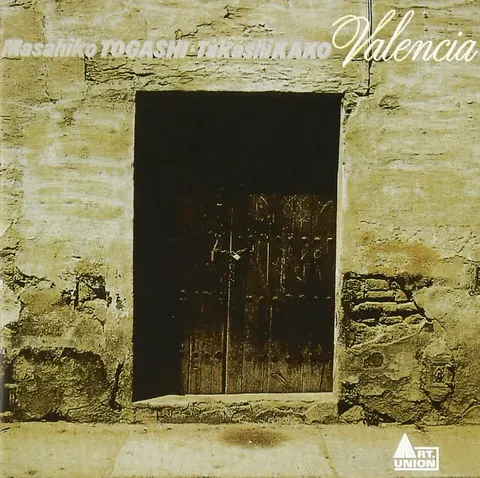
- Masahiko Satoh and Takashi Kako - the other two pianists on Twilight Monologues (1984), recorded at Yamaha Hall, Hiroshima.
- Nobuyoshi Ino - bassist on Miles Away (1999), Miles Blend (2001), Ub-X (2006) and Vega (2007), and on Kazumi Watanabe's Mobo Splash (1985), on which Hashimoto is credited on vocals.
- Atsuo Fujimoto - drummer and multi-instrumentalist, her partner in Colored Music from 1981 and in the Ub-X trio, and the drummer on both Miles albums.
- Kazumi Watanabe - bandleader of Mobo; she is credited on Mobo Club (1984), Mobo Splash and Mobo Live (both 1985), and he produced her Beauty (Domo, 1985).
- Kazutoki Umezu - saxophonist on Mobo Splash and Mobo Live, in the Sakata Orchestra on 4 O'Clock (1981), and leader of the Diva project (1988), on which she plays keyboards and voice.
- Akira Sakata - leader of the Sakata Orchestra, in which she is credited on 4 O'Clock (1981) and Berlin 28 (1982), and a guest alto saxophonist on Mobo Club (1984) and on "Kiken-Ga-Ippai" on Mobo Live (1985).
- Shuichi Ponta Murakami - drummer on Mobo Club, Mobo Splash and Mobo Live, and one of the drummers on Berlin 28 (1982).
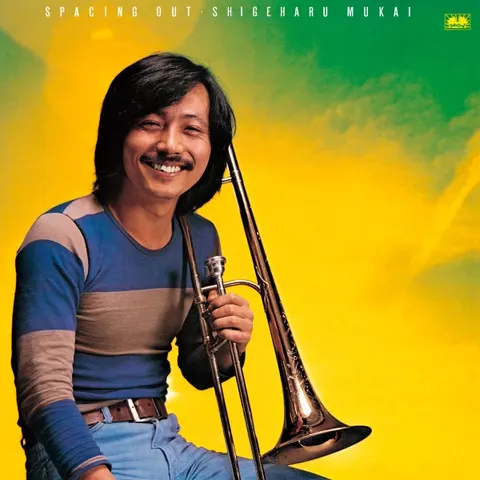
- Shigeharu Mukai - trombonist in the Sakata Orchestra on 4 O'Clock (1981) and Berlin 28 (1982), both of which also credit her.
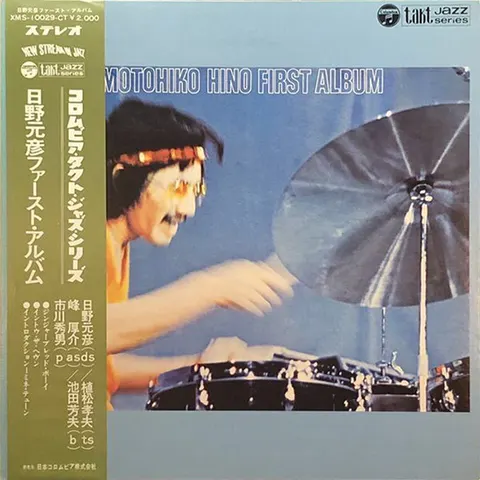
- Motohiko Hino - drummer on the Yoshio Ikeda Quintet's Sketch of My Life (1978), her earliest credit on Discogs.
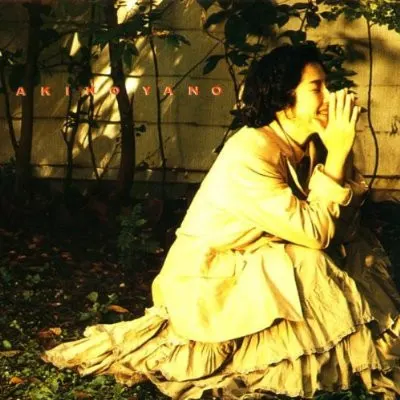
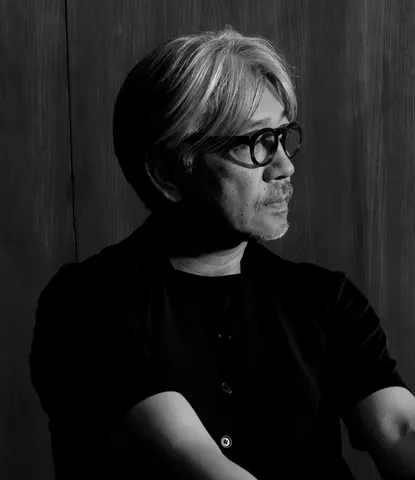
- Akiko Yano and Ryuichi Sakamoto - keyboardists credited alongside her on TV-YMO (1993), the collection of Yellow Magic Orchestra television appearances; she was in the support band on the 1980 Technopolis 2000-20 tour.
- Shinpei Ruike - trumpeter named in the label notes for view (2021), alongside Naruyoshi Kikuchi on alto saxophone.
- Naruyoshi Kikuchi - saxophonist, credited on baritone saxophone on D.M. (1989) and featuring her on a track on the 2012 Lupin the Third soundtrack; Japanese Wikipedia records a 2007 live collaboration with Ub-X.
- AQ Ishii - programmer and producer of Arc'd-X (2009) and a long-running studio collaborator, credited on Phantasmagoria (2000) and the RahXephon albums.
- Yoshiro Nakamura - guitarist and bossa nova singer, her duo partner on Duo (2016).
- Masaru Imada and Toshinori Kondo - named alongside her and Fumio Karashima on the Polydor compilation Best Selection = フュージョン全曲集 (1986).
- Yosuke Yamashita, Irene Schweizer, Han Bennink - named as collaborators on her English-language profile; the sessions are not documented on the releases checked.
- Kiyohiko Senba - percussionist and leader of the Haniwa All Stars; Hashimoto is credited on vocals on the group's first LP, Haniwa (CBS/Sony, 1983); both also appear on Sakata Orchestra's 4 O'Clock (1981) and Berlin 28 (1982).
- Kiyoto Fujiwara - bassist and leader of the group heard on Live at Sweet Basil NYC (recorded 21 February 1994; Absord Music Japan, 1999), on which she plays keyboards and sings; Discogs-confirmed.
- Mansaku Kimura - drummer she met at Waseda University in 1978, according to Sony Music Japan's biography of him; credited on Colored Music (1981), on Beauty (1985), on Atsuo Fujimoto's Beat Jazz (1986) and on the Colored Music archive release Individual Beauty (2018).
More Post-Bop Artists
See all 717 Post-Bop artists →More Japanese Jazz Artists
See all 262 Japanese artists →- Official site (najanaja label)
- Official profile (najanaja label)
- Apple Music artist page
- Spotify: Ub-X (2006)
- X: @ichikohashimoto
- Discogs: Ichiko Hashimoto
- Ichiko Hashimoto Database (fan site)
- Ichiko Hashimoto on JazzProfiles.com
- r/JapaneseJazz
- Wikipedia: Ichiko Hashimoto (musician)
- Wikipedia (Japanese): 橋本一子
- Wikidata: Q5986203
- Discogs: Ichiko Hashimoto, artist 259135
- Discogs: Miles Away, ONOFF TKCB-71775, 1999
- Discogs: Twilight Monologues, Lunatic 001, 1984
- najanaja label: Ichiko Hashimoto profile
- Ichiko Hashimoto Database: Miles Away
- Ichiko Hashimoto Database: Miles Blend
- JazzTokyo: Ichiko Hashimoto and Yoshiro Nakamura duo, Motion Blue Yokohama (2017)
- Jazz Shiryokan performer listing: 橋本一子
- Last.fm: 橋本一子
- Wikimedia Commons: Category:Ichiko Hashimoto