 JAZZPROFILES lives in the music 1,146 Jazz Artists fully Profiled!
 Daniel Zamir
Last updated September 6, 2026
Listen on Spotify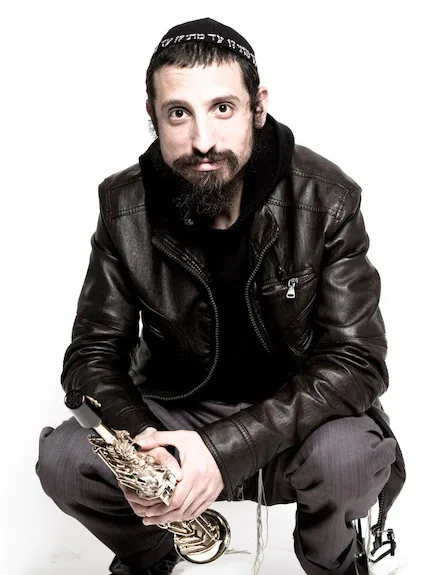
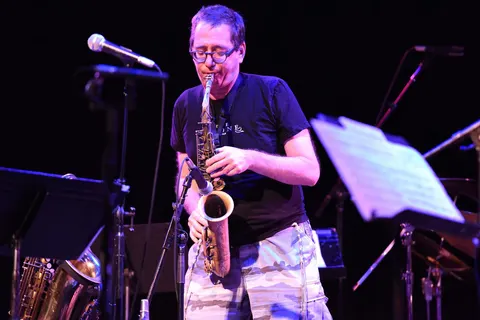
Daniel Zamir performing, photo via Wikimedia Commons, CC BY-SA 3.0 CC BY-SA 3.0 — Wikimedia Commons — https://upload.wikimedia.org/wikipedia/commons/e/ec/Daniel_zamir_prr_g.jpg

Daniel Zamir grew up in a secular family in Petah Tikva and picked up the saxophone at eleven. He trained at the Thelma Yellin High School of Arts, the same school that produced a striking number of Israel's best-known jazz exports, then moved to Manhattan to finish his studies at The New School, graduating in 2002. New York is also where his career actually started: composer-saxophonist John Zorn, the central figure of the city's downtown avant-garde scene and the owner of dozens of his own record labels and hundreds of his own releases, heard Zamir play and signed him to Zorn's own imprint, Tzadik Records.
The Tzadik years produced a run of records with his band Satlah — the studio albums Satlah (1999/2000) and Children of Israel (2002), plus the live Exodus (2001) — with Zorn himself sitting in as a sideman on some of the sessions. Zamir's sound at Tzadik already leaned on the label's signature "Radical Jewish Culture" territory: jazz built from klezmer, Hasidic melody, and Jewish liturgical material rather than the American songbook.
He kept building from there after returning to Israel. Amen (2006, The Eighth Note — with bassist Omer Avital) is frequently cited as the best-selling jazz record in Israeli history. I Believe followed on Tzadik in 2008, recorded with Zorn's own rhythm section — bassist Greg Cohen, drummer Joey Baron, and pianist Uri Caine, all longtime Zorn/Masada-circle players. Berry Sakharof, one of Israeli rock's most influential songwriters and guitarists, guests on Song For Comfort (2012); Song For Comfort also features Matisyahu and Yoni Rechter as guests, and splits its rhythm section between Mark Guiliana/Shai Maestro/Haggai Cohen Milo and Amir Bresler/Nitai Hershkovits/Gilad Abro — the same pairing that would define Redemption Songs three years later.
The turn that reshaped everything came around Redemption Songs (2015, Tzadik), and it wasn't just musical. While living in New York, Zamir grew close to Orthodox Judaism and eventually moved back to Israel because of it. Redemption Songs was recorded at Kicha Studios in Tel Aviv across two sessions — June 2011 and March 2015 — and splits its personnel: drummer Mark Guiliana, pianist Shai Maestro, and bassist Haggai Cohen Milo appear on some tracks, while drummer Amir Bresler, pianist Nitai Hershkovits, and bassist Gilad Abro appear on others. Both Maestro and Hershkovits are otherwise known as trio pianists for bassist Avishai Cohen — a small, real point of overlap between three separate Israeli jazz careers on one record. The album also set the direction Zamir has followed since: music built from Hebrew prayer and biblical text instead of jazz standards.
He has kept releasing steadily along that path — Forth and Back (2015, Jazzhaus, Germany), Alive (2015 — which already features Eviatar Banai as a guest on piano and vocals, a full decade before his NEW-launch appearance below), and further Hebrew-language records through the early 2020s — and by the mid-2020s had reached his sixteenth studio album, NEW, launched with a full-band concert at the Jerusalem Theatre featuring guest vocalist Eviatar Banai. A 2024 single, "תשע נשמות" ("Nine Souls"), got a remix release the following year. More than two decades after Zorn first signed him, Zamir is still recording inside the liturgical, Hebrew-rooted lane he found for himself in the mid-2010s.
Zamir's sound sits at the intersection of two scenes that don't usually meet: John Zorn's downtown New York avant-garde, where genre boundaries are treated as optional, and Hasidic and Jewish liturgical music, which he leaned into hard after his own religious shift in the 2010s. Reviewers and his own label describe the blend as drawing on klezmer, Eastern European Jewish melody, and Hasidic tradition as much as on jazz harmony and improvisation, with rhythmic elements pulled from India and West Africa as well. Primarily a soprano player today, though he came up on alto, his writing after Redemption Songs consistently favors Hebrew prayer and biblical text as source material over the American standards book most of his jazz peers still draw from.
- Amen (2006) — Reported by Israeli press as the best-selling jazz album in the country's history, and the record most often cited as his commercial breakthrough. Spotify artist page Listen · Buy
- I Believe (2008, Tzadik) — Recorded with John Zorn's own rhythm section; the clearest evidence of how directly Zorn shaped Zamir's early sound. Spotify - I Believe Listen · Buy
- Redemption Songs (2015, Tzadik) — The record where Zamir's religious turn became the album's subject, split across two sessions four years apart, with Shai Maestro and Nitai Hershkovits trading the piano chair. YouTube Music - Redemption Songs Listen
- NEW (mid-2020s) — His sixteenth studio album and the fullest current statement of the liturgical direction he's worked in for a decade, launched live at the Jerusalem Theatre with guest Eviatar Banai. Spotify - חדש (NEW) Listen
Daniel Zamir: Full Discography
As Leader / Co-Leader
| Album Title | Recording Date(s) | Release Date | Label | Catalog Number | Format(s) | Personnel | Role | Reissue History | Spotify | Buy | Notes |
|---|---|---|---|---|---|---|---|---|---|---|---|
| Satlah | Not specified in Discogs data | 2000 | Tzadik | TZ 7139 | CD, Album | Daniel Zamir (alto saxophone, toys, composer), Shanir Ezra Blumenkranz (bass, darbouka, tape, toys), Kevin Zubek (drums, percussion, toys); John Zorn (guest alto saxophone, tracks 2, 5, 11; executive producer) | Leader (billed to band "Satlah") | None found | Spotify - Satlah | Amazon | |
| Exodus | Live | 2001-03 | Tzadik | TZ 7149 | CD, Album | Daniel Zamir (alto & soprano saxophone, composer), Shanir Ezra Blumenkranz (bass), Kevin Zubek (drums); John Zorn (executive producer) | Leader (billed to band "Satlah") | None found | — | — | Live album |
| Children Of Israel | Not specified in Discogs data | 2002-10 | Tzadik | TZ 7169 | CD, Album | Daniel Zamir (soprano & alto saxophone, arranger), Shanir Ezra Blumenkranz (bass), Kevin Zubek (drums); guests Marty Ehrlich & Ned Rothenberg (alto sax), Doug Wieselman (baritone sax), Anat Cohen (tenor sax), Paul Shapiro (tenor sax), John Zorn (guest alto sax); produced/mixed by Bill Laswell | Leader (billed to band "Satlah") | None found | Spotify - Children Of Israel | Amazon | Notable cross-reference: Anat Cohen plays tenor sax here |
| Amen | Not specified in Discogs data | 2006 | The Eighth Note | 7 290011 118396 | CD, Album | Daniel Zamir (soprano saxophone), Omer Avital (bass), Daniel Freedman (drums), Omri Mor (piano) | Leader | None found | Spotify artist page | Amazon | Notable cross-reference: Omer Avital — this same session also appears in Avital's own discography as a sideman credit |
| I Believe | Not specified in Discogs data | 2008 | Tzadik | TZ 8125 | CD, Album | Daniel Zamir (soprano saxophone, arranger, composer), Greg Cohen (bass), Joey Baron (drums), Uri Caine (piano); produced by John Zorn | Leader | None found | Spotify - I Believe | Amazon | This is indeed "Zorn's own rhythm section" as described in the profile: Greg Cohen and Joey Baron are longtime Zorn/Masada-circle players, and Uri Caine is a major NYC pianist |
| One (Echad) | Not specified in Discogs data | 2009 | The Eighth Note | none listed | CD, Album | Leader | None found | Spotify - One | Amazon | ||
| Song For Comfort (נחמה ועידוד) | Not specified in Discogs data | 2012 | High Fidelity | none listed | CD, Album | Daniel Zamir (saxophone, vocals, composer, arranger, producer); rhythm section split across two pairings — Mark Guiliana (drums) / Haggai Cohen Milo ("Hagi Koen-Milo," double bass) / Shai Maestro (piano) and Amir Bresler (drums) / Gilad Abro (double bass) / Nitai Hershkovits ("Nitay Hershkovitz," piano) — plus Yonatan Albalak (guitar) and Adam Mader (violin); featured guests Yoni Rechter, Matisyahu, and Berry Sakharof (vocals, electric guitar) | Leader | None found | Spotify - Song for Comfort נחמה ועידוד | — | The same Guiliana/Maestro/Cohen-Milo vs. Bresler/Abro/Hershkovits split-rhythm-section pairing that defines Redemption Songs (2015) already appears here, three years earlier. Discogs' full credit list (two rhythm sections plus three featured guests) reflects a considerably larger ensemble than a simple octet |
| Redemption Songs | June 2011 & March 2015, Kicha Studios, Tel Aviv | 2015-11 | Tzadik | TZ 4013 (Spectrum Series #13) | CD, Album | Tracks 1 and 6–8: Mark Guiliana (drums), Shai Maestro (piano), Haggai Cohen Milo (bass). Tracks 2–5 and 9: Amir Bresler (drums), Nitai Hershkovits (piano), Gilad Abro (bass). Daniel Zamir (alto & soprano saxophone) throughout | Leader | None found | Not on Spotify; YouTube Music | — | |
| Forth And Back | Not specified in Discogs data | 2015 | Jazzhaus Records | JHR 116 | CD, Album | Daniel Zamir (saxophone, composer, arranger), Gilad Abro (bass), Daniel Dor (drums), Omri Mor (piano) | Leader | None found | Spotify - Forth and Back | — | |
| Alive (חי) | Not specified in Discogs data | 2015 | Koren Publishing | none listed | CD, Album, Live | Daniel Zamir (soprano saxophone, vocals), Gilad Abro (bass), Amir Bresler (drums), Tomer Bar (piano); guests Eviatar Banai (piano & vocals, tracks 7 & 9), Berry Sakharof (vocals, electric guitar, track 11), Yonatan Razel (vocals, piano) | Leader | None found | Spotify - Alive (Live) | — | Notable: Eviatar Banai guests here in 2015 — a full decade before he's credited as guest vocalist on NEW's Jerusalem Theatre launch |
| אליי (Elai) | Not specified in Discogs data | 2019 | Nana Disc | 6399 | CD, Album | Leader | None found | Spotify - אליי | — |
Singles
| Title | Year | Notes | Spotify |
|---|---|---|---|
| Nine Souls (תשע נשמות) | 2024 | Spotify | |
| Nine Souls (remix) | 2025 |
As Sideman / Guest / Compilation Appearance
Discogs' artist/releases endpoint shows Zamir with "Appearance" or "TrackAppearance" credits on: Tzadik's Voices In The Wilderness and Great Jewish Music: Sasha Argov compilations, a Miron Ch. Isaacson/Vered Kalfter release, Shuly Rand's נקודה טובה (Good Point), Noa's Genes & Jeans, Eviatar Banai's לילה כיום יאיר (Night As The Day Does Shine), J.Viewz's Rivers And Homes, and Matisyahu's Spark Seeker — plus several Hebrew-language releases and a film-soundtrack compilation (Le Sens De La Fête). Also present: John Zorn as a sideman credit on Zamir's own early Tzadik albums (see Leader table above — Zorn plays guest alto sax on Satlah, Exodus, and Children Of Israel), and a producer credit for Zamir on Tzadik's Secrets.
- John Zorn — signed Zamir to Tzadik Records after hearing him play in New York; appeared as a sideman on some of Zamir's early Satlah-era sessions.
- Mark Guiliana — drummer on part of Redemption Songs (2015).
- Shai Maestro — pianist on part of Redemption Songs (2015); already profiled separately on JazzProfiles.com, where this same session is listed among his sideman credits.
- Nitai Hershkovits — pianist on the remaining tracks of Redemption Songs (2015); also profiled separately on JazzProfiles.com.
- Berry Sakharof — guest on Song For Comfort (2012), an unusual crossover with one of Israeli rock's most influential songwriters.
- Haggai Cohen Milo, Amir Bresler, Gilad Abro — bassist and drummer/bassist pairing across the two Redemption Songs sessions.
- Eviatar Banai — guest (piano, vocals) on Alive (2015) and guest vocalist at the live launch of NEW, Zamir's sixteenth studio album — a decade-long recurring collaboration, not a one-off.
- Anat Cohen — guest tenor saxophonist on Children Of Israel (2002, Tzadik).
- Omer Avital — bassist on Amen (2006, The Eighth Note).