 JAZZPROFILES lives in the music 3,006 Jazz Artists fully Profiled!
Pierre Ferret
Last updated November 16, 2026
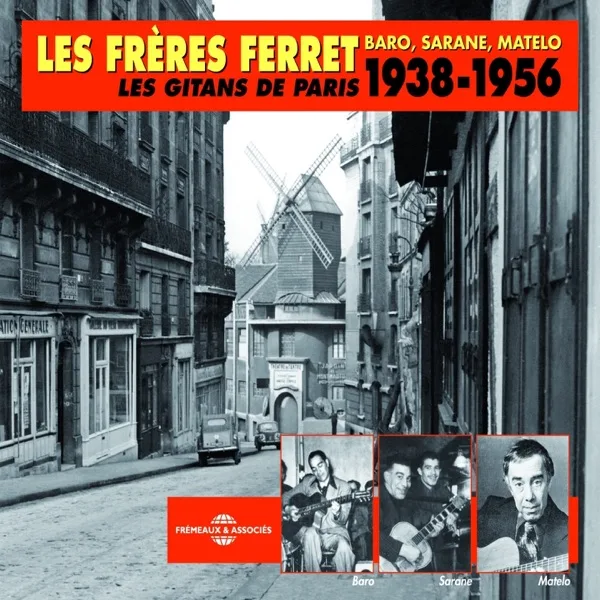
Cover of *Les Frères Ferret: Les Gitans de Paris 1938-1956* (Frémeaux & Associés, 2009), a three-CD set credited to Baro, Sarane and Matelo Ferret. The sleeve shows a Montmartre street with the windmill and three small labeled photographs of the brothers; the one marked "Baro" is of him. Standard copyright, all rights reserved, held by the rights holders of the release. This is not a Creative Commons or public-domain image; it is an album cover shown as an honestly disclosed editorial identification image. — Apple Music artwork for the album, https://music.apple.com/fr/album/953892402
Pierre Joseph Ferret, known as Baro and billed on most records as Pierre Ferret, was a French guitarist and composer of the manouche tradition, born in Rouen in 1908. He was the eldest of three guitar-playing brothers, with Sarane Ferret and Matelo Ferret, and a cousin of the guitarist René "Challain" Ferret. "Baro" is a Romani nickname that English Wikipedia glosses as "big one" or "king". Records bill him as Pierre Ferret, Baro Ferret and Pierre "Baro" Ferret, and some of his brother Matelo's records also carry the name Pierre, so the names are easy to confuse. He passed away in 1976.
The brothers worked their way into the Paris dance-hall scene in the early 1930s, and Baro was soon on record in the musette world. Discogs credits Pierre Ferret on guitar on a 1933 Odeon 78 by the accordionist Vétese Guérino's orchestra, "Ne sois pas jalouse" and "Vito", in a line-up that also has Django Reinhardt and Lucien Gallopain on guitars. English Wikipedia says that through Matelo he met Reinhardt, that the two were both friends and rivals, and that from 1931 the Ferret brothers and their cousin were Reinhardt's favored sidemen. He recorded about 80 sides with Reinhardt according to that article, and German Wikipedia dates his membership in the Quintette du Hot Club de France to 1935 to 1939. Discogs lists him on the group's 1935 sides, among them "China Boy" and "Limehouse Blues" with Stéphane Grappelli, and on later titles such as "Hungaria" and "My Melancholy Baby" (1939) and, as Django's Music, "Daphne" and "Limehouse Blues" (1940).
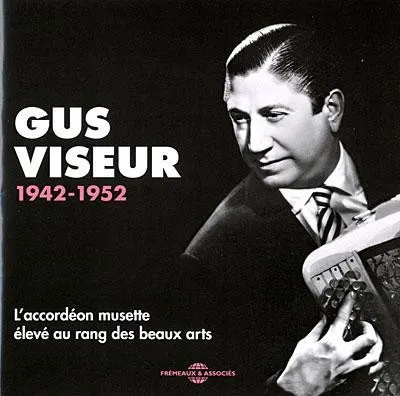
He was also a regular on other people's records. On September 28, 1938 he played lead guitar behind the accordionist Gus Viseur on "Wind and Strings (Andalousie)", a piece the two credited jointly, and the pair also share the writing credit on "Swing Valse", the waltz Viseur's orchestra recorded in Paris on August 9, 1940. As Le Trio Ferret, with Matelo and Challain on rhythm guitars, he led a Paris session on March 2, 1939 that produced "Ma Théo", "Gin Gin", "La Valse des Niglos" and "Ti-Pi-Tin". He is credited on rhythm guitar on Sarane Ferret's Paris quintet sessions of June 23, 1941 and January 27, 1942.
The war changed his career. English Wikipedia says that during the German occupation of Paris he stopped working as a full-time musician and ran bars, work he continued into the early 1970s. He still made records. On January 20, 1949 in Paris he recorded for Odeon as Pierre Ferret et son Ensemble, with Sarane and Jacques Montagne on rhythm guitars, a bassist and the accordionist Jo Privat: the 78 "Panique" and "La Folle", carrying the label note "Valse Be-Bop", came from that session, along with "Dinalie Mineure" and "Turbulente Zoë". English Wikipedia names "Panique", "La Folle", "Swing Valse" and "Le Départ de Zorro" among his best-known pieces, and the accordionist Marcel Azzola's ensemble recorded "Le Départ du Zorro" in 1954 with Ferret credited as its writer.
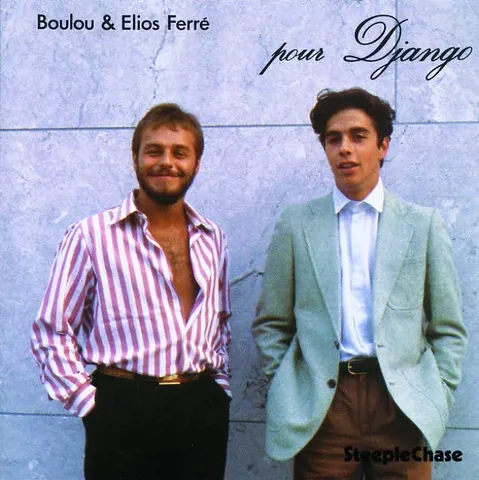
In 1966 a Vogue EP, Swing Valses d'hier et d'aujourd'hui, set four of his waltzes ("Swing Valse", "La Valse à Péguri", "Ma Zaza" and "L'inattendue") with the organist Jean-Claude Pelletier and the vibraphonist Géo Daly. His nephews Boulou and Elios Ferré, Matelo's sons, carried the family guitar tradition into the next generation as Boulou & Elios Ferré. In 2009 Frémeaux issued the three-CD set Les Frères Ferret: Les Gitans de Paris 1938-1956, which gathers recordings by Baro, Sarane and Matelo, including the 1949 Pierre Ferret session.
Ferret is remembered for his waltzes. He took the swing waltz of the Paris dance halls, played with a jazz sense of phrasing, and gave it modern chromatic harmony, which is why English Wikipedia and the label of his 1949 Odeon 78 speak of "valses bebop". English Wikipedia describes pieces such as "Panique", "La Folle" and "Le Départ de Zorro" as modernistic, surreal and dark, a mix of musette and modern jazz, and says they were years ahead of their time. German Wikipedia credits him with bringing three-beat and six-eight rhythmic structures into jazz, and adds that his guitar playing leaned on arpeggios. His career splits into two halves: a sideman's role in the circle around Reinhardt in the 1930s, and a short run of recordings under his own name from 1949, made while he was running bars. The Gypsy Jazz and Swing tags reflect that body of work; he is not tagged Bebop because the bebop touch is a feature of his waltz writing rather than of a bebop career.
- Les Frères Ferret: Les Gitans de Paris 1938-1956 (2009, Frémeaux & Associés FA 5247) - the three-CD set of the brothers' Paris records, with Baro's lead guitar on the 1938 to 1940 sides, the Trio Ferret session and his own 1949 session. Apple Music - Les Frères Ferret 1938-1956 Listen
- Pierre Ferret et son Ensemble, "Panique" / "La Folle" (Odeon 282.044, recorded January 20, 1949) - his own 78, labeled "Valse Be-Bop", with Jo Privat on accordion. Apple Music - La musique gitane de Paris: Les Frères Ferret, vol. 1 (includes "Panique") Listen
- Le Trio Ferret (recorded March 2, 1939) - Baro on lead guitar with Matelo and Challain Ferret on rhythm guitars: "Ma Théo", "Gin Gin", "La Valse des Niglos" and "Ti-Pi-Tin". Apple Music - La musique gitane de Paris, vol. 1 (includes "Gin Gin", "La valse des niglos" and "Ti Pi Tin") Listen
- Gus Viseur's Music, "It Had to Be You" / "Wind and Strings (Andalusia)" (Swing, 1938) - Baro on guitar and co-writer of "Wind and Strings"; recorded September 28, 1938.
- Gus Viseur et son orchestre, "Swing Valse" (recorded August 9, 1940) - the waltz written by Viseur and Ferret.
- Swing Valses d'hier et d'aujourd'hui (1966, Disques Vogue EPL 8442) - a four-track EP of his waltzes with Jean-Claude Pelletier on organ and Géo Daly on vibraphone.
- Guérino et son orchestre musette de la Boîte à Matelots, "Ne sois pas jalouse" / "Vito" (Odeon 250.420, 1933) - an early session with Django Reinhardt, Lucien Gallopain and Ferret on guitars.
Pierre Ferret: Full Discography
French manouche guitarist and composer Pierre "Baro" Ferret (born 1908 in Rouen, died 1976). Discogs files his releases under the artist entry Pierre Ferret (artist 365245), with separate entries for his named groups: Pierre Ferret Et Son Ensemble (1879322), Trio De Guitares Pierre Ferret (16082622) and Le Trio Ferret (1149940). Name variations on record include Baro, Baro Ferret, Baro Ferré, Pierre "Baro" Ferret, Pierre Baro Ferret and Pierre Ferré. His brother Matelo Ferret is also billed as Pierre Ferret or Pierre-Jean Ferret on some records, so those credits are kept apart here.
He recorded under his own name only a handful of times. The leader table is drawn from those entries and from the Odeon, Vogue and Frémeaux release records, with labels, catalog numbers, recording dates and personnel read from the release pages. Where a catalog number, year or musician could not be confirmed, the cell says so. Most of his recorded work is as a sideman, and Discogs lists nearly three hundred reissue and compilation appearances, mostly on Django Reinhardt collections, which are not itemized here.
As leader and co-leader
| Album | Year | Label and catalog | Personnel | Notes | Listen | Buy |
|---|---|---|---|---|---|---|
| Panique / La Folle (78 rpm single, billed Pierre Ferret Et Son Ensemble) | Not confirmed (recorded in Paris on January 20, 1949) | Odeon 282.044 | Pierre Ferret (lead guitar), Sarane Ferret (rhythm guitar), Jacques Montagne (rhythm guitar), Jeremy "Graind'son" (bass), Jo Privat (accordion; uncredited on the label), per the session credits in the Frémeaux set | Label note "Valse Be-Bop". Both pieces are Ferret compositions, "La Folle" written with Jo Privat. Two further titles from the same session, "Dinalie Mineure" and "Turbulente Zoë", appear in the Frémeaux set; "Dinalie Mineure" was issued in 1950 on Pacific under Jo Privat's name. | Apple Music ("Panique" only) | — |
| Swing Valses d'hier et d'aujourd'hui (EP) | 1966 | Disques Vogue EPL 8442 (also printed EPL. 8442) | Pierre Ferret; Jean-Claude Pelletier (organ, B1 and B2); Géo Daly (vibraphone). The instrument played by Ferret is not listed on the release page. | Four tracks: "Swing Valse", "La Valse à Péguri", "Ma Zaza" and "L'inattendue". | not found | — |
| Valse des Niglots / Ti-Pi-Tin (78 rpm single, billed Trio de Guitares Pierre Ferret) | Not confirmed | Columbia DF 2663 | Not listed on the release page. | Same two titles as the Le Trio Ferret session of March 2, 1939, but the release page gives no date or personnel, so it is not confirmed that the recordings are the same. | not found | — |
| Les Frères Ferret: Les Gitans de Paris 1938-1956 (3 CD, credited to Baro, Sarane and Matelo) | 2009 | Frémeaux & Associés FA 5247 | Pierre Ferret (lead and rhythm guitar), Sarane Ferret, Matelo Ferret, René "Challain" Ferret and the musicians of each session, including Gus Viseur, Jo Privat, Tony Murena, André Ekyan and Albert Ferreri | Compilation of the brothers' Paris recordings from 1938 to 1956 with session dates. Ferret is lead guitar on the Trio Ferret session of March 2, 1939, on the two Gus Viseur sessions of 1938 and 1940 and on his own session of 1949, and rhythm guitar on Sarane Ferret's sessions of June 23, 1941 and January 27, 1942. | Apple Music (digital edition) | — |
| Jazz & Guitare (compilation, credited to Django Reinhardt, Le Trio Ferret, Oscar Alemán and the Quintette du Hot Club de France) | 1996 | EMI Gold (catalog Not confirmed) | Le Trio Ferret tracks: Pierre Ferret with Matelo and René "Challain" Ferret (the Discogs entry for the trio is linked to his own) | Reissue compilation that includes Trio Ferret sides. | not found | — |
As sideman (selected credits)
| Year | Project (Leader) | Title | Label | Catalog | Role | Notes |
|---|---|---|---|---|---|---|
| 1933 | Guérino et son orchestre musette de la Boîte à Matelots | "Ne sois pas jalouse" / "Vito" (78) | Odeon | 250.420 | Guitar | With Django Reinhardt and Lucien Gallopain on guitars, Vétese Guérino on accordion. |
| 1935 to 1940 | Quintette du Hot Club de France, Stéphane Grappelli and Django Reinhardt | "China Boy" / "Limehouse Blues" (Polydor, 1935), "Hungaria" / "My Melancholy Baby" (1939), "Limehouse Blues" / "Daphne" (credited to Django's Music, 1940) and other 78s | Polydor, Swing and others | Not itemized | Guitar | Discogs lists him on the group's 1935 to 1940 sides. English Wikipedia counts about 80 sides with Reinhardt; the individual recording dates and which sides he plays on are not confirmed. |
| 1938 | Gus Viseur's Music (Gus Viseur) | "It Had to Be You" / "Wind and Strings (Andalusia)" (78) | Swing | Not confirmed | Lead guitar; co-writer of "Wind and Strings" | Recorded in Paris on September 28, 1938 according to the Frémeaux set. Written by Viseur and Ferret. |
| 1938 | Le Trio Ferret with Albert Ferreri | "Exactly Like You" and "Wind and Strings (Andalousie)" | Not confirmed | Not confirmed | Lead guitar | Recorded in Paris on October 20, 1938 with Albert Ferreri on tenor saxophone; included in the Frémeaux set. |
| 1939 | Le Trio Ferret | "Ma Théo", "Gin Gin", "La Valse des Niglos", "Ti-Pi-Tin" | Not confirmed | Not confirmed | Lead guitar | Recorded in Paris on March 2, 1939 with Matelo Ferret and René "Challain" Ferret on rhythm guitars. |
| 1940 | Gus Viseur et son orchestre | "Swing Valse" | Not confirmed | Not confirmed | Composer credit (with Viseur) | Recorded in Paris on August 9, 1940; Matelo Ferret is the lead guitarist on the track. |
| 1941 to 1942 | Sarane Ferret et le Swing Quintette de Paris | Eight titles, including "Swing 39", "Cocktail-Swing", "Deux Guitares", "Tiger Rag", "Royal Blue" and "Daphné" | Not confirmed | Not confirmed | Rhythm guitar | Recorded in Paris on June 23, 1941 and January 27, 1942; the 1942 session also has the violinist Georges Effrosse. |
| 1954 | Marcel Azzola et son ensemble | "Le Départ du Zorro" / "Règlement de compte" (78) | La Voix de son Maître | K-9223 | Composer credit for "Le Départ du Zorro" | Ferret is credited as the writer; "Règlement de compte" is credited to Jo Privat. The release page does not list him as a player. |
| 1979 and 1980 | Boulou & Elios Ferré | Pour Django and Gypsy Dreams | Not confirmed | Not confirmed | Not confirmed | Discogs lists his entry on both releases; the role was not checked. |
- Matelo Ferret - his younger brother and a fellow guitarist in the Ferret trio of March 2, 1939, and the other co-billed name on the three-CD Frémeaux set Les Gitans de Paris 1938-1956.
- Sarane Ferret - his brother, with whom he is co-billed as one of the Ferret brothers; Baro plays rhythm guitar on Sarane's Paris quintet sessions of June 1941 and January 1942 and Sarane is on the 1949 Pierre Ferret session.
- René "Challain" Ferret - cousin and rhythm guitarist in Le Trio Ferret in 1939.
- Django Reinhardt - guitarist and bandleader, with whom he recorded in the 1930s and in the 1933 Guérino session; English Wikipedia counts about 80 sides.
- Stéphane Grappelli - violinist in the Quintette du Hot Club de France sessions.
- Gus Viseur - accordionist, co-writer of "Wind and Strings (Andalousie)" and "Swing Valse", with Ferret on lead guitar in 1938.
- Jo Privat - accordionist on the 1949 Pierre Ferret session and co-writer of "La Folle" and "Dinalie Mineure".
- Vétese Guérino - accordionist and leader of the orchestra on which Ferret recorded in 1933.
- Jacques Montagne - rhythm guitarist on the 1949 session.
- Marcel Azzola - accordionist whose ensemble recorded Ferret's "Le Départ du Zorro" in 1954.
- Jean-Claude Pelletier and Géo Daly - organist and vibraphonist on the 1966 Vogue EP.
More Gypsy Jazz Artists
See all 67 Gypsy Jazz artists →More French Jazz Artists
- Apple Music artist page
- Discogs
- MusicBrainz
- Wikipedia (English)
- Wikidata
- AllMusic
- Bibliothèque nationale de France
- JazzProfiles.com
- Wikipedia (English): Baro Ferret (birth and death years, family, career, compositions; it cites Michael Dregni, Gypsy Jazz, Oxford University Press, 2008)
- Wikipedia (German): Baro Ferret (birthplace, Paris years, Hot Club membership years, compositions)
- Wikidata: Pierre Ferret (Q808539)
- Bibliothèque nationale de France, authority record (birthplace Rouen)
- MusicBrainz: Pierre "Baro" Ferret
- Discogs: Pierre Ferret (release credits, catalog numbers, session dates from the Frémeaux booklet data)
- Musette Guitars: Pierre "Baro" Ferret
- Gus Viseur on JazzProfiles.com
- Quintette du Hot Club de France on JazzProfiles.com