 JAZZPROFILES lives in the music 2,303 Jazz Artists fully Profiled!
Krzysztof Komeda
Last updated November 7, 2026
Listen on Spotify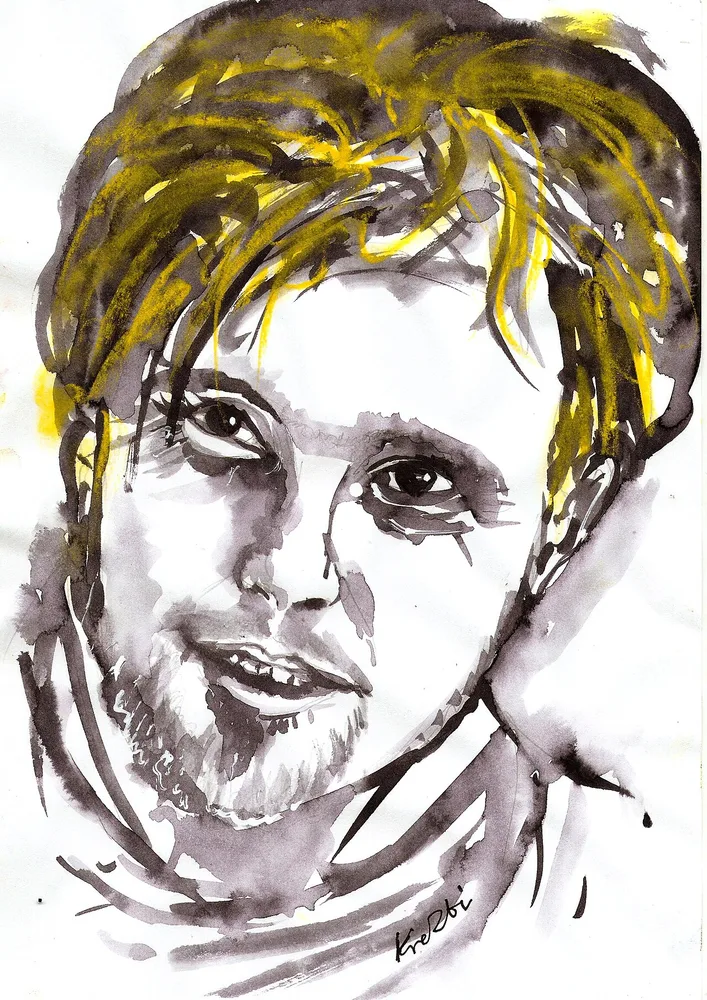
Krzysztof Komeda, an ink and watercolor portrait by the Polish painter Zbigniew Kresowaty (a painted portrait, not a photograph) Attribution (free to use for any purpose with credit to the artist; permission recorded through Wikimedia's volunteer permissions system, ticket 2011022010002506) — Wikimedia Commons — https://commons.wikimedia.org/wiki/File:Krzysztof_Komeda_by_Zbigniew_Kresowaty_2.jpg

Krzysztof Komeda was born Krzysztof Trzciński on April 27, 1931, in Poznań, the son of Mieczysław Trzciński and Zenobia (née Gębicka). He grew up in Częstochowa and Ostrów Wielkopolski, took piano lessons from early childhood, and at eight was accepted into the Poznań conservatory, a course of study the Second World War cut short. He kept working on theory and piano until 1950, when he finished secondary school in Ostrów, and then entered the Medical Academy in Poznań, where he took his medical degree in 1956 and chose otolaryngology as his specialty. Komeda was a stage name, a way of keeping his jazz playing apart from his daytime work at a medical clinic.
Jazz reached him through the swing bassist Witold Kujawski, whom he met in Ostrów and who took him to Kraków, where jam sessions in Kujawski's apartment drew the first generation of postwar Polish jazz players. He worked with the Melomani, the pioneering Kraków and Łódź group built around Jerzy Matuszkiewicz, Andrzej Trzaskowski and Kujawski, and with a Poznań group led by Jerzy Grzewiński that turned toward Dixieland. Modern jazz interested him more, and in 1956 he formed the Komeda Sextet with the saxophonist Jan "Ptaszyn" Wróblewski and the vibraphonist Jerzy Milian. The group made its name at the first Sopot Jazz Festival in August 1956 and was the first Polish band to play modern jazz, with a sound that combined the manner of the Modern Jazz Quartet, led by John Lewis, and the Gerry Mulligan Quartet. A silver medal at the International Youth Festival in Moscow followed in 1957.
That year also began his collaboration with the film director Roman Polański, for whose short Two Men and a Wardrobe (1958) he wrote his first film score. In 1958 he moved to Kraków, joined the Jazz Believers, and played the first Jazz Jamboree festival in Warsaw, an event he returned to every year until 1967. He led a trio, a quartet and a quintet whose lineups changed often; the saxophonist Michał Urbaniak was in the quintet from about 1962 to 1964, and the trumpeter Tomasz Stańko joined in 1963 and stayed until 1967. A first trip to Scandinavia in spring 1960 became an annual tour, with regular engagements at the Gyllene Cirkeln in Stockholm and the Jazzhus Montmartre in Copenhagen, and the Danish director Henning Carlsen commissioned scores for Hvad med os, The Cats and Hunger. His Ballet Etudes, first played at Jazz Jamboree in 1962 to a cool reception from Polish critics, opened doors abroad, and he recorded it in Copenhagen on May 3, 1963, for Metronome. In 1962 readers of the magazine Jazz named him jazzman of the year.
His score for Polański's first feature, Knife in the Water (1962), was played by a jazz group with the Swedish tenor saxophonist Bernt Rosengren, and its themes became the EP Crazy Girl. Three more Polański features followed: Cul-de-sac (1966), The Fearless Vampire Killers (1967) and Rosemary's Baby (1968). His own records of these years include Astigmatic, taped at the Warsaw Philharmonic on December 5 to 7, 1965, by a quintet with Stańko, the alto saxophonist Zbigniew Namysłowski, the German bassist Günter Lenz and the Swedish drummer Rune Carlsson, and issued by Muza in 1966. In 1967 he recorded a poetry-and-jazz album in Baden-Baden for a West German label and made his last sessions in Warsaw that autumn. For Jerzy Skolimowski's Le Départ (1967), a Philips EP of the score credits a group of musicians from the French and international scenes, among them Gato Barbieri, Don Cherry and Eddy Louiss. Film work was a large part of his output, more than sixty scores in all, but it grew out of the jazz group he led.
In January 1968 he went to the United States to score Rosemary's Baby and Buzz Kulik's The Riot. The lullaby that opens Rosemary's Baby, sung in the film by Mia Farrow, became his best-known melody. In December 1968, in Los Angeles, he fell down an escarpment while with the writer Marek Hłasko, an accident Polański later described in his memoirs as friendly roughhousing, and suffered a brain hematoma. Treatment in a Los Angeles hospital did not save him. His wife Zofia, whom he had married in 1958, brought him home to Poland in a coma in April 1969, and he passed away in Warsaw on April 23, 1969, aged 37. He is buried at Powązki Cemetery in Warsaw. Hłasko, who was tormented by guilt, died two months later.
Komeda is regarded as a founding figure of what is often called the Polish school of jazz. A street in Warsaw's Mokotów district has carried his name since 1991, the Komeda Jazz Festival has been held in Słupsk since 1995, the National Bank of Poland issued a commemorative coin in 2010, a statue was unveiled in Poznań the same year, and a crater on Mercury was named for him in 2012. Zofia Komeda compiled and produced many of his archival releases. Later musicians have recorded his music, among them Stańko's septet on Litania (ECM, 1997), with bassist Palle Danielsson, and Leszek Możdżer's solo album Komeda (ACT, 2011).
Komeda played jazz that drew on European traditions, with Slavic lyricism, Polish folk and classical colors, and a poet's sense of mood, and he is credited with opening a path away from the American model that dominated European jazz in the 1950s. His early sextet owed a debt to the Modern Jazz Quartet and the Gerry Mulligan Quartet, but Astigmatic moved far from that: its three long pieces combine modal playing, free-jazz-inspired improvisation, tone clusters, aleatoric passages and a dramatic, late-Romantic lyricism. The Penguin Guide to Jazz called it one of the finest jazz albums made in Europe, the critic Stuart Nicholson saw in it a shift toward a specific European aesthetic, and Manfred Eicher, founder of ECM Records, described it as a milestone; readers of the Polish magazine Jazz Forum once voted it the best album of all time. His film music was written in the same voice and often played by his own jazz groups, and pieces such as "Sleep Safe and Warm," the lullaby from Rosemary's Baby, were later recorded by other jazz musicians. Polish musicians including Urszula Dudziak, Michał Urbaniak and Tomasz Stańko have reinterpreted the music of Astigmatic, and the Komeda Jazz Festival and its composers' competition were started by the pianist and composer Leszek Kułakowski.
- Astigmatic (1966, Muza) - His acknowledged masterpiece, three long pieces by a quintet with Tomasz Stańko and Zbigniew Namysłowski, recorded in Warsaw in December 1965 and often named among the greatest European jazz albums.
- Crazy Girl (1962, Muza) - An EP of themes from Knife in the Water by the Komeda Trio with the Swedish tenor saxophonist Bernt Rosengren.
- Ballet Etudes (1963, Metronome) - Recorded in Copenhagen on May 3, 1963, by an international quintet with trumpeter Allan Botschinsky and saxophonist Jan "Ptaszyn" Wróblewski; the work that opened Scandinavia and Western Europe to him.
- Meine süsse europäische Heimat (1967, Columbia) - A poetry-and-jazz album recorded in Baden-Baden, with the actor Helmuth Lohner reading and Komeda's group of Stańko, Namysłowski, bassist Roman Dyląg and drummer Rune Carlsson.
- Live at Jazz Jamboree Festival (1993, Polonia) - A two-CD document of the quintet live in Warsaw, in 1963 with Michał Urbaniak and in 1965 with the Astigmatic repertoire.
- Rosemary's Baby (1968, Dot) - The score of Polański's film, with the Komeda lullaby sung by Mia Farrow, conducted by Richard Hazard.
- Last Recordings (1997, Polonia) - Sessions taped in Warsaw in October and November 1967 by a quintet with Stańko and Namysłowski, released after his death.
Krzysztof Komeda: Full Discography
Discogs artist ID 282438 ("Krzysztof Komeda," real name Krzysztof Trzciński, born April 27, 1931, in Poznań, died April 23, 1969, in Warsaw) lists about 520 entries, most of them compilations, film-score collections and archival reissues that appeared after his death. His group work is filed under separate Discogs entities, including Komeda Quintet (artist ID 362639), Trio Komedy (1830214), Sekstet Komedy (3381094), Krzysztof Komeda-Trzciński Quartet (3730372), Zespół Jerzego Miliana (4132621) and three Zespół/Grupa Krzysztofa Komedy entities (5500312 to 5500314); these were checked. Because most of his live and studio work was issued after 1969 and spread across many compilations, the leader table is a curated selection of 14 releases: his lifetime albums and EPs, the principal film-score records, and the main archival releases. The second table lists festival documents, film-score collections and other credits. Catalog numbers are those of the first or best-documented pressing on Discogs, and recording dates come from Discogs release notes.
As Leader / Co-Leader
| Album Title | Recording Date(s) | Release Date | Label | Catalog Number | Format(s) | Personnel | Role | Reissue History | Spotify | Buy | Notes |
|---|---|---|---|---|---|---|---|---|---|---|---|
| Crazy Girl (billed as Bernt Rosengren with Komeda Trio) | Not specified in Discogs data | 1962 | Polskie Nagrania Muza | N 0187 | Vinyl, 7", 45 RPM, EP, Mono | Krzysztof Komeda (piano), Bernt Rosengren (tenor saxophone), Roman Dyląg (bass), Leszek Dudziak (drums) | Leader (Komeda Trio, billed with Bernt Rosengren) | Later CD collections; see Discogs master 567136 | — | — | Four themes from the film Knife in the Water: "Typish Jazz," "Crazy Girl," "Cherry" and "Ballad for Bernt." The export issue came in a picture sleeve designed by Rosław Szaybo. |
| Ballet Etudes (full title: Ballet Etudes / The Music of Komeda, A Jazz Message from Poland Presented by an International Quintet) | May 3, 1963, Metronome Studio, Copenhagen | 1963 | Metronome | MLP 15132 | Vinyl, LP | Krzysztof Komeda (piano), Allan Botschinsky (trumpet), Jan "Ptaszyn" Wróblewski (tenor saxophone), Roman Dyląg (bass), Rune Carlsson (drums) | Leader | Reissued on CD in the 1990s; see Discogs master 804910 and master 962694 | — | — | Side A is the four-part Ballet Etudes; side B has "Crazy Girl" and "Alea." Liner notes by Jörgen Leth. |
| Cul-de-sac (Original Sound Track from the Compton Production) | Not specified in Discogs data | 1966 | Polydor | 580001 | Vinyl, 7", 45 RPM, EP | Krzysztof Komeda (composer, conductor); players not itemized | Composer and conductor | See Discogs master 676614; a later CD edition is on master 270102 | — | — | Six cues from Roman Polański's film, including "Pushing the Car" and "Dicky's Death." |
| Astigmatic (billed to the Komeda Quintet) | December 5-7, 1965, Warsaw Philharmonic | 1966 | Polskie Nagrania Muza | XL 0298 | Vinyl, LP, Album, Mono | Krzysztof Komeda (piano), Tomasz Stańko (trumpet), Zbigniew Namysłowski (alto saxophone), Günter Lenz (bass), Rune Carlsson (drums) | Leader | Reissued many times, including Supraphon (1971), PolJazz (1987), Power Bros (1994) and Polonia (1998); see Discogs master 205260 | — | — | Three long pieces, "Astigmatic," "Kattorna" and "Svantetic," all by Komeda. Cover photograph by Marek Karewicz. |
| Le Départ (billed with Christiane Legrand) | Not specified in Discogs data | 1967 | Philips | 437.376 BE | Vinyl, 7", 45 RPM, EP | Christiane Legrand (vocals); performers credited on the release, instruments not itemized: Don Cherry, Eddy Louiss, Gato Barbieri, J.-F. Jenny-Clark, Jacques Pelzer, Jacques Thollot, Luis Fuentes, Philip Catherine, René Urtreger | Composer | A full-length album of the score followed later, on Volcano (CPJ8-1032); see Discogs master 633789 | — | — | Five cues from Jerzy Skolimowski's film, including the title piece in vocal and instrumental versions. |
| Meine süsse europäische Heimat: Dichtung und Jazz aus Polen | 1967, Baden-Baden | 1967 | Columbia | SMC 74 342 | Vinyl, LP, Album | Krzysztof Komeda (piano), Tomasz Stańko (trumpet, flugelhorn), Zbigniew Namysłowski (alto saxophone), Roman Dyląg (bass), Rune Carlsson (drums), Helmuth Lohner (reader) | Leader | Reissued in later CD collections; see Discogs master 828307 | — | — | Poetry and jazz from Poland, issued with a lyric and information sheet; thirteen pieces. |
| Rosemary's Baby (Music from the Motion Picture Score) | Not specified in Discogs data | 1968 | Dot Records | DLP 25875 | Vinyl, LP, Album, Stereo | Krzysztof Komeda (composer, arranger), Richard Hazard (conductor), Mia Farrow (vocals on the lullaby) | Composer and arranger | Reissued, including a 2014 edition; see Discogs master 320200 and master 1254455 | — | — | Produced by Tom Mack; Discogs lists a label variation that credits "Christopher Komeda." |
| Muzyka Krzysztofa Komedy | Recordings from 1956 to 1967 | 1974 | Polskie Nagrania Muza | Z-SXL 0558 to Z-SXL 0561 | Vinyl, 4xLP, Compilation, Box Set, Club Edition | Komeda with the groups of each period | Leader (posthumous compilation) | Reissued in 1989 as four single LPs on Poljazz; see Discogs master 4114786 | — | — | Special boxed set for members of the Polish Jazz Society club, compiled by Zofia Komeda Trzcińska. |
| Polish Jazz Vol. 3 | Tracks 1 to 4: June 23, 1960; tracks 9 to 11: December 1965, Warsaw; other tracks not dated | 1989 | Polskie Nagrania Muza | PNCD 026 | CD, Compilation | Krzysztof Komeda (piano) with, by track, Bernt Rosengren (tenor saxophone), Tomasz Stańko (trumpet), Zbigniew Namysłowski (alto saxophone), Roman Dyląg, Günter Lenz and Adam Skorupka (bass), Rune Carlsson, Leszek Dudziak and Andrzej Zieliński (drums) | Leader (posthumous compilation) | See Discogs master 3028712 | — | — | Combines 1960 concert sides, the Knife in the Water themes and the three pieces of Astigmatic. |
| Live at Jazz Jamboree Festival | October 1963 and 1965, Warsaw | 1993 | Polonia Records | POLONIA CD 015-16 | CD, 2xCD, Compilation, Limited Edition | Disc one (1963): Krzysztof Komeda (piano), Tomasz Stańko (trumpet), Michał Urbaniak (saxophone), Maciej Suzin (bass), Czesław Bartkowski (drums). Disc two (1965): Komeda, Stańko, Janusz Kozłowski (bass), Rune Carlsson (drums) | Leader (posthumous release) | See Discogs master 943428 | — | — | Includes "Dwójka rzymska" and the Astigmatic pieces "Astigmatic" and "Kattorna" in concert. |
| Astigmatic Live | Jazz Jamboree 1965, Warsaw (tracks 1 and 2); Jazzhus Montmartre, Copenhagen, 1965 (track 3) | 1995 | Polonia Records | Polonia CD 061 | CD, Album | Krzysztof Komeda (piano), Tomasz Stańko (trumpet); tracks 1 and 2: Janusz Kozłowski (bass), Rune Carlsson (drums); track 3: Michał Urbaniak (saxophone), Bo Stief (bass), Simon Koppel (drums) | Leader (posthumous release) | See Discogs master 482461 | — | — | The three pieces of Astigmatic in live performances. |
| Last Recordings | October to November 1967, Warsaw | 1997 | Polonia Records | POLONIA CD 108 | CD, Compilation | Krzysztof Komeda (piano), Tomasz Stańko (trumpet), Zbigniew Namysłowski (alto saxophone), Roman Dyląg (bass), Rune Carlsson (drums) | Leader (posthumous release) | Single CD, no further editions listed here | — | — | Five pieces: "Don Kichot," "Ballad for Bernt," "Po katastrofie," "Czarownica" and "Nightime, Daytime Requiem." |
| Private Conversation (Komeda Gra Swoje Kompozycje) | Not specified in Discogs data | 1998 | Polonia Records | POLONIA CD 125 | CD, Album | Krzysztof Komeda (solo piano, voice) | Leader (posthumous release) | Single CD edition | — | — | Twenty-six tracks, 73 minutes, of Komeda playing his own compositions alone. |
| The RCA Session | International Poznań Fair, 1958 | 1998 | Polonia Records | POLONIA CD 169 | CD, Album | Players not itemized in Discogs data | Leader (posthumous release) | Single CD edition | — | — | Ten tracks of standards and swing pieces such as "Four Brothers," "St. Louis Blues" and "Rose Room" from 1958. |
Film Scores and Other Credits (selected)
| Year | Project (Leader) | Title | Label | Catalog | Role | Notes |
|---|---|---|---|---|---|---|
| 1956 | Sekstet Komedy / Andrzej Kurylewicz Jazz Group | Festiwal Jazzowy Sopot 1956 (Kronika Dźwiękowa) | Polskie Nagrania Muza | Not confirmed | Sextet leader and pianist | Document of the first Sopot Jazz Festival; Discogs files the Sextet as a separate entity, artist ID 3381094. |
| 1960 | Trio Komedy | Jazz Jamboree 1960 Nr 4 | Polskie Nagrania Muza | Not confirmed | Leader | Trio entity on Discogs, artist ID 1830214; see Discogs master 987298. |
| 1964 | Various | Jazz Jamboree '64 Vol. 2 | Polskie Nagrania Muza | XL 0240 | Festival appearance | Discogs bills the LP to Various Artists and Wikipedia lists it among Komeda's albums; it includes his composition "Sophia's Tune." |
| 1965 | Various, compiled by Joachim Ernst Berendt | Jazz Greetings from the East | Fontana | 885 416 TY | Festival appearance | Liner notes by Don Ellis; side A opens with "Roman II," the title of one of Komeda's compositions. |
| 1962 | Roman Polański (film) | Knife in the Water / Two Men and a Wardrobe / When Angels Fall (Original Motion Picture Soundtrack) | Power Bros Records | PB 00175 | Composer and conductor | CD collection issued in 2000; Knife in the Water tracks recorded in 1962 with Bernt Rosengren on saxophone. |
| 1998 | Film scores | Film Music: Rosemary's Baby / Vampire Killers | Polonia Records | POLONIA CD 160 | Composer | Drawn from Komeda's own tapes and discs. |
| 1994-1998 | Archival series | The Complete Recordings of Krzysztof Komeda | Polonia Records | Multi-volume series | Leader and composer | More than twenty volumes of concert, radio, studio and film recordings; a 19-disc box set followed in 1999 (see Discogs master 4300113). |
- Witold Kujawski - swing bassist who introduced him to jazz and to the Kraków jam sessions of the early 1950s.
- Jan "Ptaszyn" Wróblewski, Jerzy Milian - saxophonist and vibraphonist in the Komeda Sextet from 1956; Wróblewski is also on Ballet Etudes (1963).
- Tomasz Stańko - trumpeter in his quintet from 1963 to 1967 and a player on Astigmatic, the 1967 poetry-and-jazz album and the final Warsaw sessions.
- Zbigniew Namysłowski - alto saxophonist on Astigmatic, the 1967 poetry-and-jazz album and the final sessions.
- Michał Urbaniak - saxophonist in the quintet from about 1962 to 1964, heard on the 1963 Jazz Jamboree concert.
- Rune Carlsson, Roman Dyląg - the Swedish drummer and Polish bassist at the center of his rhythm sections; both are on Ballet Etudes, the 1967 album and the final sessions, and Carlsson also plays on Astigmatic.
- Günter Lenz - bassist on Astigmatic.
- Leszek Dudziak, Czesław Bartkowski - drummers, Dudziak on the Crazy Girl EP and Bartkowski in the 1963 quintet.
- Bernt Rosengren - Swedish tenor saxophonist on the Knife in the Water recordings.
- Allan Botschinsky - Danish trumpeter on Ballet Etudes.
- Roman Polański - director for whom he scored Two Men and a Wardrobe, Knife in the Water, Cul-de-sac, The Fearless Vampire Killers and Rosemary's Baby.
- Henning Carlsen, Jerzy Skolimowski - directors who commissioned scores in Denmark and for Le Départ; the Philips EP of that score credits Gato Barbieri, Don Cherry and Eddy Louiss among its players.
- Mia Farrow - sang the lullaby in Rosemary's Baby.
- Zofia Komeda - his wife from 1958, who brought him home from Los Angeles in 1969 and later compiled and produced his archival releases.
More Post-Bop Artists
See all 817 Post-Bop artists →- Wikipedia: Krzysztof Komeda
- Wikipedia: Astigmatic (album)
- Wikipedia: Litania, Music of Krzysztof Komeda
- Wikipedia: Marek Hłasko
- Wikipedia: Tomasz Stańko
- Wikipedia: Michał Urbaniak
- Wikipedia: Zbigniew Namysłowski
- Wikipedia (Polish): Krzysztof Komeda
- Culture.pl: Krzysztof Komeda, biography
- Discogs: Krzysztof Komeda (artist 282438)
- MusicBrainz: Krzysztof Komeda
- JazzProfiles.com: Leszek Możdżer
- JazzProfiles.com: Chris Jennings
- JazzProfiles.com: Gato Barbieri