 JAZZPROFILES lives in the music 2,303 Jazz Artists fully Profiled!
Terry Callier
Last updated November 1, 2026
Listen on Spotify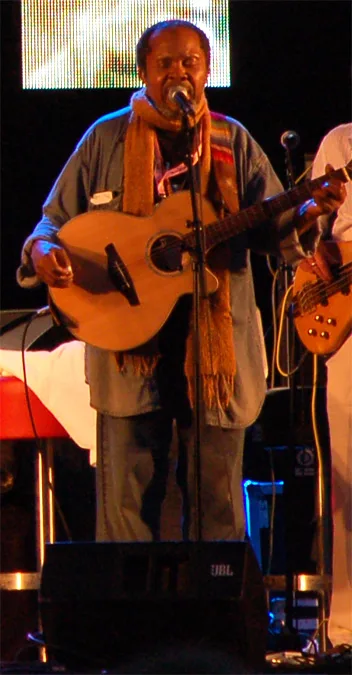
Terry Callier performing at Flow Festival, Helsinki, Finland, August 17, 2007 CC BY-SA 3.0 — Wikimedia Commons - https://commons.wikimedia.org/wiki/File:Terrycallier.jpg - photo by Leena Tarjamo, published under CC BY-SA 3.0

Terry Callier was born Terrence Orlando Callier on May 24, 1945, on the North Side of Chicago, and grew up in the Cabrini-Green housing area. He learned piano as a child and was singing in doo-wop groups by his teens, among neighborhood friends who included Curtis Mayfield, Major Lance and Jerry Butler. In 1962 he auditioned for Chess Records and recorded his first single, "Look at Me Now." He later said that his mother, unwilling to see him leave school for a Chess tour, made him stay home and finish his exams.
At college he took up the guitar and the Chicago folk-club and coffeehouse circuit, and the music of John Coltrane became a lasting influence. He recalled hearing the Coltrane quartet, with Elvin Jones on drums, at a small Chicago club shortly after A Love Supreme appeared, and finding its intensity both frightening and clarifying. For a short time he also worked as a duo with David Crosby in Chicago and New York. In 1964 he met Samuel Charters of Prestige Records, and the two made his first album in Chicago in the mid-1960s, The New Folk Sound of Terry Callier, built around his acoustic guitar and two bass players. Charters then left on a long trip with the master tapes, and the album was not issued until 1968. Callier said he learned of its release only when his brother spotted a copy in a Chicago shop. The psychedelic band H. P. Lovecraft recorded two of its songs, "Spin, Spin, Spin" and "It's About Time," on its 1968 album H. P. Lovecraft II.
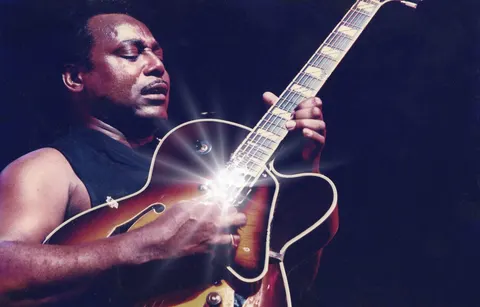
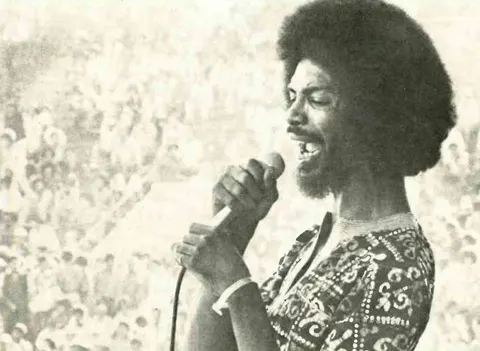
In 1970 he joined the Chicago Songwriters Workshop that Jerry Butler had started. With his partner Larry Wade he wrote for Chess and its Cadet subsidiary, including the Dells' "The Love We Had Stays on My Mind," and the result was a recording contract of his own at Cadet. Producer and arranger Charles Stepney oversaw the three albums that followed in little more than a year: Occasional Rain (May 1972), What Color Is Love (1972) and I Just Can't Help Myself (1973). Occasional Rain is a small-band record, with Stepney on harpsichord and organ, a rhythm section of bassist Sydney Simms and drummer Rob Crowder, and Minnie Riperton among the soprano voices. What Color Is Love added Stepney's string writing and a studio band that included guitarist Phil Upchurch and harmonica player Cy Touff, and it holds the nearly nine-minute "Dancing Girl." I Just Can't Help Myself divided its arrangements among Stepney, Richard Evans and Bob Schiff and included Duke Ellington's "Satin Doll" and a Coltrane tribute, "Can't Catch the Trane." The albums sold little at the time, but Billboard later said the trio inspired the term "jazz-folk." Callier toured with George Benson, Gil Scott-Heron and others in this period, until Chess and Cadet were sold in 1976 and he lost his contract.
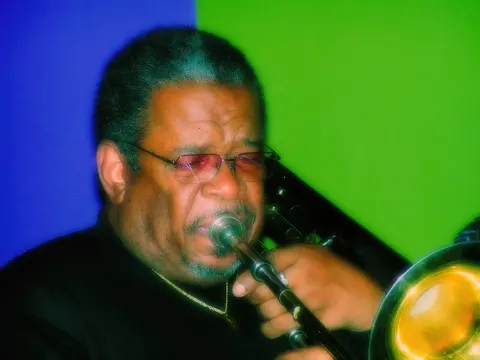
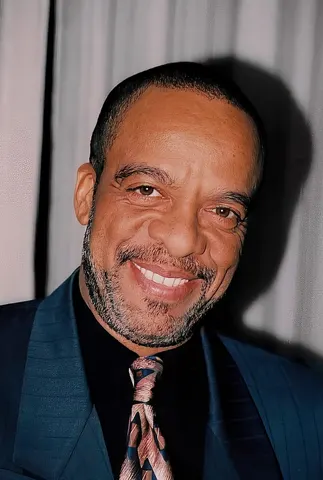
In 1977 Don Mizell signed him to the Jazz Fusion Division he ran at Elektra. Fire on Ice (1978) was produced and arranged by Richard Evans, with credits that include saxophonist Eddie Harris, guitarist Phil Upchurch, trumpeter Snooky Young and trombonists Jimmy Cleveland and Garnett Brown. Turn You to Love (1979) was produced by Sonny Burke and brought in guitarists David T. Walker and Wah Wah Watson and saxophonist Ernie Watts. It also included a version of Steely Dan's "Do It Again" and a trombone solo by Fred Wesley on "Sign of the Times." That song became the theme of New York radio host Frankie Crocker and was Callier's only US chart success, reaching No. 78 on the R&B chart in 1979. It led to an appearance at the Montreux Jazz Festival on July 20, 1979, where Mizell presented an Elektra Jazz Fusion Night alongside Grover Washington Jr., Dee Dee Bridgewater and Lee Ritenour. When Mizell left in 1980 to work with Stevie Wonder, Elektra dropped Callier.
He kept performing until 1983, when he won custody of his daughter and left music to study computer programming. He took a job at the University of Chicago and attended evening classes toward a sociology degree. Meanwhile British DJs had found his old records. Eddie Piller of Acid Jazz Records reissued a little-known Callier single, "I Don't Want to See Myself (Without You)," in 1990, and from 1991 Callier flew to Britain on his vacation time to play club dates. A live album recorded in Washington, TC in DC, appeared in 1996. In 1997 he sang on Beth Orton's Best Bit EP and with the group Urban Species.
TimePeace (1998), on Verve Forecast and Talkin' Loud, was his first major-label album in nearly twenty years. Its credits include Pharoah Sanders on tenor saxophone, harmonica player Howard Levy and drummers Paul Wertico and Morris Jennings, and it holds his version of Alex North's "Love Theme from Spartacus," which was remixed by Zero 7 and 4hero for a 12-inch single. The album won the United Nations' Time for Peace award. When the news of the award reached his employer, the University of Chicago let him go, and he returned to music full time. Lifetime (1999) followed, then Alive (2001), recorded in 2000 at London's Jazz Cafe, and Speak Your Peace (2002), produced by Jean-Paul Maunick of Incognito and Marc Mac, with Paul Weller on "Brother to Brother" and Peter Erskine on cymbal on the closing track. Lookin' Out (2004) included "Blues for Billie Holiday" and "Paris Blues." He sang on Massive Attack's "Live with Me" in 2006, recorded the live album Welcome Home at the Jazz Cafe in March 2008, opened for Massive Attack at London's Queen Elizabeth Hall in June 2008, and released Hidden Conversations, with tracks produced by Massive Attack, in May 2009. David Buttle of Mr Bongo, who first recorded him at the Jazz Cafe in Camden in the late 1990s, remembered audiences falling completely silent when he sang.
Callier passed away on October 27, 2012, in a Chicago hospital, after a long illness with throat cancer. He was 67. Mr Bongo, which released six of his albums between 2001 and 2009, confirmed the news. Archival releases have continued since: At the Earl of Old Town, live recordings from Chicago's Earl of Old Town club (Time Traveler Recordings, April 2026), and Live Peace, recorded in Leeds in 1998 and 2001 (BBE, September 2026).
Callier's records are folk and soul songs first, and he was plain about that himself: in a 2004 interview he said he admired Billie Holiday, Miles Davis and Hank Williams but was not someone who could live only for music. The jazz in his work is real, though, and it sits in the harmony, the long forms and the bands. His delivery was unhurried, and he built pieces around long, vamp-driven grooves and let them run: "Dancing Girl" lasts about nine minutes on What Color Is Love, and "Alley-Wind Song" about nine on I Just Can't Help Myself. He recorded his first album under John Coltrane's influence, put a Coltrane tribute and a Duke Ellington standard on his 1973 record, performed spoken "John Coltrane Story" interludes on Welcome Home, and recorded "Blues for Billie Holiday" and "Paris Blues" on Lookin' Out.
The side of him that reached listeners decades later was the Cadet trilogy with Charles Stepney's strings. British DJs and the acid jazz scene took those records up in the late 1980s and 1990s, which brought him back to performing. Urban Species built a 1994 track from his "You Goin' Miss Your Candyman," 4hero and Zero 7 remixed "Love Theme from Spartacus," and the Japanese producer Nujabes put him on "Ordinary Joe" for Modal Soul (2005). His albums after 1998 kept the same mix of acoustic guitar, folk and soul songwriting and jazz players, and Massive Attack, Beth Orton and Paul Weller all worked with him. The three tags on this page (Crossover Jazz, Soul Jazz and Acid Jazz) reflect that audience and band sound; folk and singer-songwriter are the plainer labels for what he wrote.
- The New Folk Sound of Terry Callier (1968, Prestige) - The debut, cut for Samuel Charters in Chicago and held back for years: acoustic guitar, two bass players and traditional songs, shaped by his Coltrane listening. Spotify - "900 Miles" Listen
- Occasional Rain (1972, Cadet) - The first of three albums with Charles Stepney, spare and small-band, with the original "Ordinary Joe." Spotify - "Ordinary Joe" Listen
- What Color Is Love (1972, Cadet) - Stepney's strings arrive, and "Dancing Girl" and "You Goin' Miss Your Candyman" became the songs DJs and sampling producers kept returning to. Spotify - "Dancing Girl" Listen
- I Just Can't Help Myself (1973, Cadet) - The most jazz-facing of the trilogy, with Duke Ellington's "Satin Doll" and his Coltrane tribute "Can't Catch the Trane."
- Turn You to Love (1979, Elektra) - The session-band record, with "Sign of the Times," his only US chart single, and a trombone solo by Fred Wesley.
- TimePeace (1998, Verve Forecast / Talkin' Loud) - The comeback, with Pharoah Sanders, Howard Levy and a Chicago rhythm section, and the United Nations Time for Peace award.
- Alive (2001, Mr Bongo) - Recorded in 2000 at London's Jazz Cafe, the live set that shows how his 1970s songs stretched on stage.
- Lookin' Out (2004, Mr Bongo) - The late album that holds his most direct jazz references, "Blues for Billie Holiday" and "Paris Blues." Spotify - "Paris Blues" Listen
Terry Callier: Full Discography
Discogs artist: Terry Callier (5355) · Born Terrence Orlando Callier, May 24, 1945, Chicago, Illinois · Passed away October 27, 2012
Terry Callier recorded eleven studio albums between 1968 and 2009, four of them for Cadet and Prestige in the folk-jazz and soul style that later made his reputation, two for Elektra, and five for Verve Forecast, Talkin' Loud, Blue Thumb and Mr Bongo after his British rediscovery. His own recordings are filed under a single Discogs entry. The tables below cover his studio albums, live albums, a short list of compilations and singles, and a selected set of guest appearances and songwriting credits, with catalog numbers and personnel where Discogs credits and release notes confirm them. Listen links point to individual tracks where available; the rest of the catalogue is on his Spotify artist page.
Studio Albums
| Album | Year | Label | Personnel & Notes | Listen | Buy |
|---|---|---|---|---|---|
| The New Folk Sound of Terry Callier | 1968 | Prestige (PR 7383) | Supervised by Samuel B. Charters. Callier (acoustic guitar, vocals) with John Tweedle and Terbour Attenborough (bass). Eight tracks, mostly traditional songs: "900 Miles," "Oh Dear, What Can the Matter Be," "Johnny Be Gay If You Can Be," "Cotton Eyed Joe," "Promenade in Green" and "I'm a Drifter," "It's About Time" and "Spin, Spin, Spin" | Spotify - "900 Miles" | — |
| Occasional Rain | 1972 | Cadet (CA 50007) | Produced by Charles Stepney (harpsichord, organ). Callier (guitar), Sydney Simms (bass), Rob Crowder (drums), Leonard Pirani (piano), Minnie Riperton and Kitty Haywood (soprano vocals), Shirley Wahls (contralto vocals), Earl Madison (cello on two tracks). Tracks include "Ordinary Joe," "Golden Circle #317," "Occasional Rain," "Blues for Marcus" and "Lean on Me," with short "Go Head On" segues between them | Spotify - "Ordinary Joe" | — |
| What Color Is Love | 1972 | Cadet (CA 50019) | Recorded at RCA Studios, Chicago. Produced, arranged and conducted by Charles Stepney (electric piano, piano). Phil Upchurch and Callier (guitars), Louis Satterfield (bass), Donald Simmons and Morris Jennings (drums), Alfred Nalls, Fred Walker and Bobby Christian (percussion), Don Myrick (alto saxophone, flute), Cy Touff (harmonica), Arthur Hoyle and John Howell (trumpets), a string section, and backing vocals by Kitty Haywood, Shirley Wahls and Vivian Harrell on two tracks. Tracks: "Dancing Girl," "What Color Is Love," "You Goin' Miss Your Candyman," "Just as Long as We're in Love," "Ho Tsing Mee (A Song of the Sun)," "I'd Rather Be with You" and "You Don't Care" | Spotify - "Dancing Girl" | — |
| I Just Can't Help Myself | 1973 | Cadet (CA 50041) | Produced by Stepney, Larry Wade and Callier. Arrangements by Stepney ("Brown-Eyed Lady," "Until Tomorrow," "Can't Catch the Trane"), Richard Evans ("Satin Doll," "Alley-Wind Song," "Bowlin' Green") and Bob Schiff (the title track and "Gotta Get Closer to You"). Callier (acoustic guitar), Phil Upchurch (guitar), Cleveland Eaton, Louis Satterfield and Richard Evans (bass), Donald Simmons and Morris Jennings (drums), Don Myrick (alto saxophone), Stepney (piano, electric piano), harp, French horns, trumpets (Arthur Hoyle, John Howell), strings and percussion. "Satin Doll" is the Duke Ellington standard; "Can't Catch the Trane" is Callier's own Coltrane tribute | — | — |
| Fire on Ice | 1978 | Elektra (6E-143) | Executive producer Don Mizell; produced, arranged and mixed by Richard Evans. Credited players include Eddie Harris, Charles Owens, Fred Jackson Jr. and Corinne Albright (saxophones), Snooky Young, Kenny Mason and Paul Serrano (trumpets), Jimmy Cleveland, Garnett Brown and George Bohanon (trombones), Phil Upchurch, Charles Fearing, Danny Leake, Ross Traut and Larry Wade (guitars), Scott Edwards (bass), James Gadson and Paul Humphrey (drums), Sonny Burke (keyboards), Michael Boddicker (synthesizer), strings and vocalists including Minnie Riperton. Tracks include "Be a Believer," "Holdin' On (To Your Love)," "Butterfly" and "African Violet" | — | — |
| Turn You to Love | 1979 | Elektra (6E-189) | Produced by Sonny Burke with Larry Wade as associate producer; executive producer Don Mizell. David T. Walker, Wah Wah Watson, Tommy Tedesco, Robert White, Larry Wade and Callier (guitars), Keni Burke (bass), James Gadson (drums), Earl Van Dyke and Sonny Burke (keyboards), Ernie Watts and William Green (saxophones), Fred Wesley (trombone, solo on "Sign of the Times"), Oscar Brashear and Steve Madaio (trumpets), Michael Boddicker (synthesizer), Gayle Levant (harp). Includes "Sign of the Times" (No. 78 US R&B, 1979), the Steely Dan song "Do It Again," and new versions of "Ordinary Joe" and "Occasional Rain" | — | — |
| TimePeace | 1998 | Verve Forecast (314 537 317-2) / Talkin' Loud (539 249-2) | Produced by Brian Bacchus. Callier (vocals, acoustic guitar), Pharoah Sanders (tenor saxophone), Howard Levy (harmonica), Gary Plumley (tenor saxophone), Larry Bowen (trumpet), Eric Hochberg and Dave Barnard (bass), Morris Jennings, Paul Wertico, Alfredo Alias, Hank Guaglianone and Dave Trigwell (drums), Mark Edwards and Michael Kocour (piano, organ), guitarists Jim Mullen, John Moulder, Dave Onderdonk, Ernie Denov and John McLean, Penn McGee and Joao Bosco de Oliveira (percussion). Includes "Lazarus Man," "Love Theme from Spartacus" (Alex North's theme) and "People Get Ready / Brotherly Love." Won the United Nations' Time for Peace award. No. 92 UK | — | — |
| Lifetime | 1999 | Blue Thumb (547 728-2) / Talkin' Loud (543 054-2) | Produced by Brian Bacchus. Callier (vocals, acoustic guitar), Eric Hochberg and Dave Barnard (bass), Morris Jennings, Paul Wertico and Dave Trigwell (drums), Jim Mullen, John Moulder, Dave Onderdonk and John McLean (guitars), Mark Edwards (piano, electric piano), Michael Kocour (organ), Gary Plumley and Richard Fudoli (saxophones), Penn McGee and Joao Bosco de Oliveira (percussion), and Beth Orton on "Love Can Do." Tracks include "When My Lady Danced," "Sunset Boulevard," "Holdin' On" and a new recording of "I Don't Want to See Myself (Without You)." No. 96 UK | — | — |
| Speak Your Peace | 2002 | Mr Bongo (MRBCD23) | Produced by Jean-Paul Maunick and Marc Mac. Features Paul Weller (vocals, guitar, Fender Rhodes) on "Brother to Brother," with Pino Palladino (bass) and Andy Gangadeen (drums); Hamish Stuart, Jim Mullen and Gary Plumley on other tracks; Andy Kremer (double bass) and Peter Erskine (cymbal) on "Got to Get It All Straightened Out." Includes covers of "Just My Imagination" and the Isley Brothers' "Caravan of Love." No. 156 UK | — | — |
| Lookin' Out | 2004 | Mr Bongo (MRBCD034) | Seventeen tracks, five of them short "Truth in Tears" interludes. Includes "Jazz, My Rhythm and Blues," "Blues for Billie Holiday," "And I Love Her," "Africa Now" and "Paris Blues." Personnel is not itemized | Spotify - "Paris Blues" | — |
| Hidden Conversations | 2009 | Mr Bongo (MRBCD066) | Released May 25, 2009. Callier (acoustic guitar, vocals), Eric Hochberg (bass), Dave Onderdonk (electric guitar), Penn McGee (percussion, vocals), Richard Fudoli (saxophones), with production by Christopher Grabowski, Mark Hardy and Massive Attack (three tracks: "Wings," "John Lee Hooker" and "Live with Me," co-written with Robert Del Naja and Neil Davidge) | — | — |
Live Albums
| Album | Year | Label | Personnel & Notes | Listen | Buy |
|---|---|---|---|---|---|
| TC in DC | 1996 | Premonition (PREM-739-2) | Recorded live in Washington, D.C., in 1982. Callier (guitar, vocals), Eric Hochberg (bass, producer), Penn McGee (percussion, vocals). Includes "Butterfly," "African Violet" and "What Color Is Love" | — | — |
| Live at Mother Blues, 1964 | 2000 | Premonition | Recorded at a Chicago club in 1964, before his first studio album | — | — |
| Alive | 2001 | Mr Bongo (MRBCD19) | Recorded in 2000 at the Jazz Cafe, London. Callier (guitar, vocals), Dave Barnard (bass, music director), Dave Trigwell (drums), Jim Mullen (guitar), Mark Edwards and Chris Kibble (keyboards), Gary Plumley (saxophone, flute), Joao Bosco de Oliveira (percussion), Veronica Cowper (backing vocals). Ten tracks including "Ordinary Joe," "Lazarus Man" and an eleven-minute "Dancing Girl" | — | — |
| Live in Berlin (DVD) | 2005 | Universal | Concert film | — | — |
| Welcome Home | 2008 | Mr Bongo (MRBCD062) | Recorded March 14, 2008, at the Jazz Cafe, London. Includes two spoken "John Coltrane Story" interludes, "And I Love Her" and a ten-minute "What About Me (What You Gonna Do About Me)" | — | — |
| At the Earl of Old Town | 2026 | Time Traveler Recordings (TT-004) | Archival live recordings from Chicago's Earl of Old Town club. Callier (vocals, guitar). Eleven tracks including "900 Miles," "Work Song" and "Gallows Pole." Record Store Day release, April 18, 2026 | — | — |
| Live Peace | 2026 | BBE (BBE644ALP) | Released September 18, 2026. Recorded live in Leeds in 1998 and 2001. Thirteen tracks including "Fix the Blame," "Lazarus Man" and "Love Theme from Spartacus." Limited to 2,000 copies | — | — |
Compilations and Archival Releases
| Album | Year | Label | Personnel & Notes | Listen | Buy |
|---|---|---|---|---|---|
| The Best of Terry Callier on Cadet | 1992 | Cadet | Selection from the three Stepney-era albums | — | — |
| First Light: Chicago 1969-71 | 1998 | Premonition (PREM-740-2) | Early recordings from 1969 to 1971, tracks 1 to 6 produced by George Edwards and Jeffrey Chouinard, with Sid Sims (bass), Roger Wanderscheiht (drums), Leonard Pirani (electric piano), Rich Reeds (tenor saxophone, flute) and Dave Cathenwood (vibraphone). Includes earlier recordings of "Ordinary Joe," "Occasional Rain" and "Lean On Me" | — | — |
| Total Recall | 2003 | Mr Bongo (MRBCD31) | Remix compilation including Zero 7, 4hero and Hopper remixes of his songs | — | — |
| Life Lessons (The Best of Terry Callier) | 2006 | Mr Bongo | Career-spanning compilation | — | — |
| About Time: The Terry Callier Story 1965-1982 | 2009 | BGP | Compilation of the Prestige, Cadet and Elektra years | — | — |
Selected Singles
| Single | Year | Label | Notes |
|---|---|---|---|
| "Ordinary Joe" / "Golden Circle of Your Love" | 1972 | Cadet | From Occasional Rain |
| "I Just Can't Help Myself (I Don't Want Nobody Else)" | 1973 | Cadet | Title track of the third Cadet album |
| "Butterfly" / "Street Fever" | 1978 | Elektra | From Fire on Ice |
| "Sign of the Times" / "Occasional Rain" | 1979 | Elektra | No. 78 on the US R&B chart |
| "I Don't Want to See Myself (Without You)" / "If I Could Make You (Change Your Mind)" | 1982 | Erect (ERD 1214) | Written by Callier and Larry Wade, produced by Eric Hochberg. Reissued in 1990 by Acid Jazz (JAZID 27T) and again in 2006 |
| "Love Theme from Spartacus" | 1998 | Talkin' Loud (TLX 32) | Twelve-inch with remixes by Zero 7, 4hero and others |
| "Brother to Brother" | 2002 | Mr Bongo | With Paul Weller |
| "Running Around" / "Monuments of Mars" | 2002 | Mr Bongo | From Speak Your Peace |
| "Live with Me" | 2006 | Virgin (VSCDX1912) | Massive Attack with Terry Callier |
Guest Appearances and Songwriting Credits (selected)
| Year | Project (Lead) | Title | Label | Role | Notes |
|---|---|---|---|---|---|
| 1968 | H. P. Lovecraft | H. P. Lovecraft II | Not listed | Songs covered | The band recorded two songs from his first album, "Spin, Spin, Spin" and "It's About Time" |
| 1971 | The Dells | "The Love We Had (Stays on My Mind)" | Cadet (CA 5683) | Songwriter | Written with Larry Wade; the Dells' hit that led to his own Cadet contract. The B-side, "Freedom Means," was co-written with Wade and Charles Stepney |
| 1997 | Beth Orton | Best Bit (EP) | Heavenly (HVN72CD) | Featured vocalist | Credited as featuring Callier |
| 1997 | Urban Species | Religion and Politics (EP) | Talkin' Loud (TLX 23) | Vocals | "Religion and Politics (Acoustic Version)" features Callier |
| 1998 | Urban Species | Blanket | Talkin' Loud (558 776-2) | Featured vocalist | "Changing of the Guard" and "Religion and Politics" |
| 1999 | Beth Orton | Central Reservation | Heavenly (HVNLP22CD) | Backing vocals | "Pass in Time" |
| 2001 | Koop | Waltz for Koop | Stimulus (STIMLP001) | Featured vocalist | "In a Heartbeat" |
| 2001 | Various artists | Red Hot + Indigo | Red Hot Organization | Vocals | "Satin Doll," in a Duke Ellington tribute album benefiting AIDS charities |
| 2005 | Nujabes | Modal Soul | Libyus Music (LMCD-009) | Featured vocalist, songwriter | "Ordinary Joe" |
| 2006 | Massive Attack | Collected | Virgin (V 3017) | Vocals, songwriter | "Live with Me" |
| 2018 | Tessa Souter | Picture in Black and White | Noa Records | Songwriter | She recorded his "Dancing Girl" |
A full list of the compilation and DJ-mix appearances of his songs, and of the many cover versions of "Ordinary Joe" and "What Color Is Love," is on Discogs.
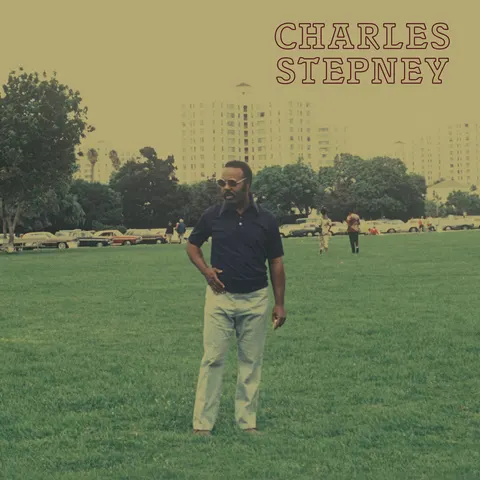
- Charles Stepney - producer of Occasional Rain, What Color Is Love and I Just Can't Help Myself (1972 and 1973), and arranger and conductor of the strings on the first two. He died in 1976.
- Richard Evans - arranger of three tracks on I Just Can't Help Myself, and producer and arranger of Fire on Ice (1978).
- Phil Upchurch - guitarist credited on What Color Is Love, I Just Can't Help Myself and Fire on Ice.
- Larry Wade - songwriting partner from the Chicago Songwriters Workshop, co-writer of many of the 1970s songs and a credited producer of I Just Can't Help Myself.
- Jerry Butler - childhood friend and founder of the Chicago Songwriters Workshop, where Callier and Wade worked from 1970.
- Minnie Riperton - soprano voice on Occasional Rain and a credited vocalist on Fire on Ice.
- Cleveland Eaton - credited on bass on I Just Can't Help Myself (1973).
- Fred Wesley - trombone solo on "Sign of the Times" (Turn You to Love, 1979).
- Eddie Harris, Snooky Young, Jimmy Cleveland and Garnett Brown - jazz players credited on Fire on Ice.
- Don Mizell - head of Elektra's Jazz Fusion Division, who signed Callier in 1977.
- George Benson and Gil Scott-Heron - Callier toured with both in the 1970s.
- Grover Washington Jr., Dee Dee Bridgewater and Lee Ritenour - fellow performers on the Elektra Jazz Fusion Night at Montreux in 1979.
- Pharoah Sanders - credited on tenor saxophone on TimePeace (1998).
- Howard Levy, Paul Wertico and Morris Jennings - harmonica and drums credits on TimePeace; Jennings also played drums on What Color Is Love and I Just Can't Help Myself.
- Peter Erskine - cymbal on "Got to Get It All Straightened Out," the closing track of Speak Your Peace (2002).
- Jean-Paul Maunick and Marc Mac - producers of Speak Your Peace.
- Eddie Piller - head of Acid Jazz Records, who reissued "I Don't Want to See Myself (Without You)" and brought Callier back to British stages.
- Beth Orton - sang with him on Best Bit (1997) and on "Love Can Do" from Lifetime (1999); he sang backing vocals on her Central Reservation (1999).
- Massive Attack - "Live with Me" (2006), a London concert in 2008 at which he opened for them, and production on Hidden Conversations (2009).
- Paul Weller - co-wrote and sang "Brother to Brother" on Speak Your Peace.
- Nujabes, Koop and Urban Species - featured his voice on "Ordinary Joe" (Modal Soul, 2005), "In a Heartbeat" (Waltz for Koop, 2001) and "Changing of the Guard" (Blanket, 1998).
- Tessa Souter - the vocalist recorded his "Dancing Girl" on Picture in Black and White (2018).
More Crossover Jazz Artists
See all 264 Crossover Jazz artists →More American Jazz Artists
See all 820 American artists →- Wikipedia: Terry Callier
- Wikipedia: The New Folk Sound of Terry Callier
- Wikipedia: Occasional Rain
- Wikipedia: What Color Is Love
- Wikipedia: I Just Can't Help Myself
- Wikipedia: Red Hot + Indigo
- AllMusic: Terry Callier
- Discogs: Terry Callier
- MusicBrainz: Terry Callier
- Wikidata: Terry Callier
- Wikidata: Terry Callier concert, Montreux Jazz Festival, July 20, 1979
- BBC News: Terry Callier, US soul jazz singer, dies at 67
- Billboard: Terry Callier, Jazz-Folk Troubadour, Dead at 67
- The Guardian: Will Hodgkinson, Interview with Terry Callier (2004)
- Wikimedia Commons: Terry Callier at Flow Festival, 2007