 JAZZPROFILES lives in the music 1,002 Jazz Artists fully Profiled!
 Betty Carter
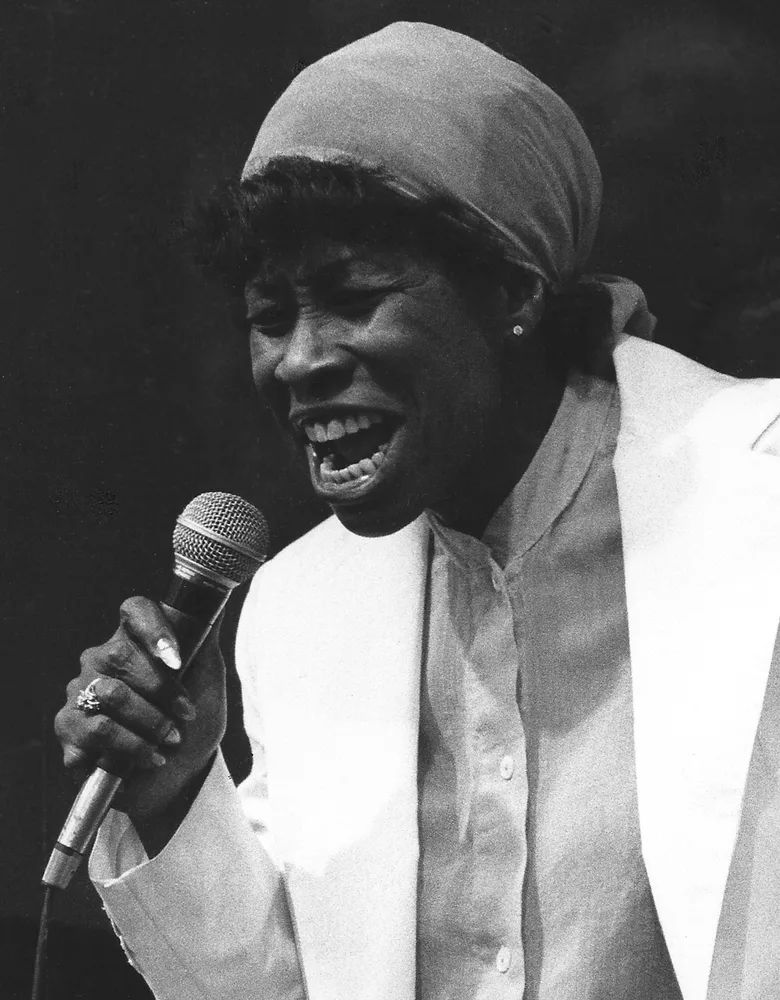
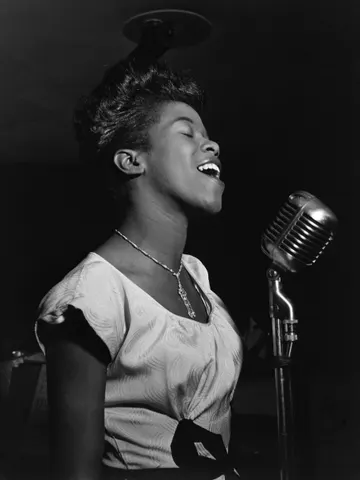
Betty Carter performing at the Pori Jazz Festival, Pori, Finland, July 1978 CC BY-SA 3.0 — Wikimedia Commons - https://commons.wikimedia.org/wiki/File:Betty_Carter_in_Pori_July_1978.jpg

Betty Carter was born Lillie Mae Jones on May 16, 1929, in Flint, Michigan (some sources, including Britannica, give 1930; Carter herself is known to have carried a forged birth certificate as a teenager to get into nightclubs underage, which likely accounts for the discrepancy). Her family moved to Detroit while she was young, where her father, James Jones, directed the choir at a local church. She studied piano at the Detroit Conservatory of Music starting around age fifteen and began singing at sixteen, sneaking out against her parents' wishes to compete in amateur nights at Detroit clubs. Detroit's postwar jazz scene brought her into direct contact with touring stars: Dizzy Gillespie, passing through frequently, is credited with encouraging her early scat singing, and by sixteen she had sat in with Charlie Parker's band, working alongside bassist Tommy Potter, drummer Max Roach, and trumpeter Miles Davis.
Lionel Hampton hired her for his touring orchestra in 1948, and it was Hampton's wife Gladys who coined the nickname "Betty Bebop," shortened to Betty Carter, a name Carter reportedly disliked for the rest of her life. Bandmates during her nearly three years with Hampton (1948-1951) included Charles Mingus and Wes Montgomery, along with trumpeter Benny Bailey and trombonist Al Grey. Carter's refusal to sing straight melody and her insistence on improvising within Hampton's swing charts led him to fire her seven times over that stretch, by her own later account, before she left the band for good in 1951. She spent the first half of the 1950s working New York clubs and the Apollo Theatre circuit, recording with King Pleasure and pianist Ray Bryant, which led to her first LP as a co-leader, Meet Betty Carter and Ray Bryant (1955, released 1956 on Epic).
Her profile rose sharply after Out There with Betty Carter (Peacock, 1958), a hard-bop session arranged in part by Gigi Gryce and Benny Golson with a band including Kenny Dorham, Wynton Kelly, Sam Jones, Melba Liston, and Sahib Shihab. Miles Davis recommended her to Ray Charles, and she toured as Charles's opening act and duet partner beginning in 1960, cutting Ray Charles and Betty Carter (ABC-Paramount, 1961) in Hollywood that June. The album's "Baby, It's Cold Outside" became an R&B chart hit and gave Carter her widest popular exposure to date. She continued to work through the early 1960s on The Modern Sound of Betty Carter (ABC-Paramount, 1960), 'Round Midnight (Atco, 1963), and Inside Betty Carter (United Artists, 1964), then married and had two sons, stepping back from constant touring while continuing to perform to preserve her own income.
Dissatisfied with a jazz record industry she felt had lost interest in vocalists doing anything but standards, Carter founded her own label, Bet-Car Records, in 1969, later saying, "I think I was probably the first independent label out there in '69." Bet-Car became her only outlet for new recordings for the next eighteen years. She rebuilt her career from the ground up through relentless touring, including a long run of college and university dates beginning at Vermont's Goddard College in 1972, an appearance on the first season of Saturday Night Live in 1976, sets at the Newport Jazz Festival in 1977 and 1978, and a 1977 guest lecture on jazz history alongside Dizzy Gillespie at Harvard. Finally, Betty Carter (Roulette, 1975), a live album actually recorded at Judson Hall in New York in December 1969 with pianist Norman Simmons, and Now It's My Turn (Roulette, 1976, with a young pianist named John Hicks) marked her return to visibility, and The Audience with Betty Carter (Bet-Car, recorded live December 1979 at San Francisco's Great American Music Hall, released 1980) is widely regarded as her finest album, a two-LP set with Hicks on piano, Curtis Lundy on bass, and Kenny Washington on drums.
Through the 1980s and 1990s, Carter's own bands became one of the most reliable proving grounds in jazz: pianists Benny Green, Stephen Scott, John Hicks, Mulgrew Miller, Cyrus Chestnut, Marc Cary and Xavier Davis, bassists Curtis Lundy, Christian McBride, Michael Bowie and Ira Coleman, and drummers Kenny Washington, Lewis Nash, Winard Harper, and Gregory Hutchinson all passed through her working trio before establishing their own careers. Look What I Got! (Verve, 1988), her first release after signing with Verve and her only widely available new studio record in years, won the Grammy Award for Best Jazz Vocal Performance, Female at the 31st Grammy Awards in 1989. She followed it with It's Not About the Melody (1992, rotating in three different working trios across its eleven tracks), Feed the Fire (1994, a live document from London's Royal Festival Hall with pianist Geri Allen, bassist Dave Holland and drummer Jack DeJohnette), and I'm Yours, You're Mine (1996). In 1993 she founded Jazz Ahead, a workshop for young jazz composer-performers, first hosted at 651 ARTS in Brooklyn; the program moved to the John F. Kennedy Center for the Performing Arts in Washington, D.C. in 1998, the same year Carter passed away, and the Kennedy Center has run it every year since under her name. President Bill Clinton awarded her the National Medal of Arts in 1997, which she called the most meaningful honor of her career. Betty Carter died of pancreatic cancer in New York City on September 26, 1998, at age 69.
Carter treated her voice as an improvising instrument rather than a melody carrier, radically reworking tempo, harmony, and phrasing on nearly every performance so that a given song rarely sounded the same way twice; critics and colleagues routinely described her as the most harmonically adventurous jazz singer of her generation, closer in spirit to a bebop horn player than to the more song-faithful readings favored by contemporaries like Sarah Vaughan and Ella Fitzgerald. That restlessness extended to how she built her bands: rather than hiring seasoned sidemen, she deliberately recruited unknown musicians in their teens and twenties, pushed them hard on the bandstand, and let them go once they were ready to lead their own groups, a practice she described by saying she learned as much from her young players' rawness as they learned from her. The result, cemented institutionally through Jazz Ahead, is a mentorship legacy nearly unmatched among jazz vocalists, with alumni spanning from Benny Green and John Hicks in the 1970s and 80s to Jason Moran, Cyrus Chestnut, and, in Jazz Ahead's continuing Kennedy Center years, dozens of subsequent young musicians including Or Bareket.
- Out There with Betty Carter (1958, Peacock) - A hard-bop breakthrough session arranged largely by Gigi Gryce and Benny Golson, with Wynton Kelly, Sam Jones, Kenny Dorham, and Melba Liston in the band.
- Ray Charles and Betty Carter (1961, ABC-Paramount) - A duet album with Ray Charles whose "Baby, It's Cold Outside" became an R&B chart hit and gave Carter her breakthrough popular exposure.
- The Audience with Betty Carter (rec. 1979, rel. 1980, Bet-Car) - A live two-LP set from San Francisco's Great American Music Hall with John Hicks, Curtis Lundy, and Kenny Washington, widely considered her definitive recording. Spotify - The Audience With Betty Carter (Live)
- Look What I Got! (1988, Verve/JCOA) - Her Grammy-winning studio album (Best Jazz Vocal Performance, Female, 1989), featuring young sidemen Benny Green, Stephen Scott, and Winard Harper. Apple Music - Look What I Got
- It's Not About the Melody (1992, Verve) - An unusual document of her rotating working trios, with pianists John Hicks, Mulgrew Miller, and Cyrus Chestnut each taking different tracks and Christian McBride on bass for a third of the album.
- Feed the Fire (1994, Verve) - Recorded live at London's Royal Festival Hall with pianist Geri Allen, bassist Dave Holland, and drummer Jack DeJohnette. Spotify - Feed The Fire Listen
- Droppin' Things (1990, Verve) - A live Bottom Line date featuring Freddie Hubbard as a guest trumpet soloist on four tracks alongside her working trio of Geri Allen, Marc Cary, Tarus Mateen, and Gregory Hutchinson.
Betty Carter: Full Discography
Identity confirmed via the live Discogs API: artist ID 10097 ("Betty Carter," realname Lillie Mae Jones, birth/death dates matching). Discogs credits her on 534 total releases across her leader catalog, several dozen reissues and compilations spanning six decades, and guest/duet appearances; the vast majority of those 534 are reissues, foreign pressings, and compilation repackagings of the same roughly twenty original studio and live albums below, not additional recording sessions. The table itemizes her full leader/co-leader album catalog, which is complete and not merely a representative selection, plus the significant sideman/guest credits documented on her own records.
As Leader / Co-Leader
| Album Title | Recording Date(s) | Release Date | Label | Catalog Number | Format(s) | Personnel | Role | Reissue History | Spotify | Buy | Notes |
|---|---|---|---|---|---|---|---|---|---|---|---|
| Meet Betty Carter and Ray Bryant | 1955 | 1956 | Epic | LN 3202 | Vinyl, LP, Album | Betty Carter (vocals), Ray Bryant (piano) | Co-leader | Reissued combined with Social Call on later compilations | — | — | Her recording debut as a leader; released originally as by "Betty Carter and Ray Bryant" |
| Out There with Betty Carter | Not specified in Discogs data | 1958 | Peacock (Peacock's Progressive Jazz) | PLP 90 | Vinyl, LP, Album, Mono | Betty Carter (vocals), Kenny Dorham & Ray Copeland (trumpet), Melba Liston (trombone, arranger), Jimmy Powell & Tommy Gryce (alto sax), Benny Golson (tenor sax, arranger), Jerome Richardson (tenor sax, flute, bassoon), Sahib Shihab (baritone sax), Wynton Kelly (piano), Sam Jones & Peck Morrison (bass), Specs Wright (drums); arranged by Gigi Gryce, Benny Golson, Melba Liston, Ray Copeland, Tommy Gryce | Leader | None found | — | — | Hard-bop breakthrough session; Gigi Gryce directed the date |
| The Modern Sound of Betty Carter | Not specified in Discogs data | 1960 | ABC-Paramount | ABC 363 | Vinyl, LP, Album, Mono | Betty Carter (vocals), orchestra arranged/conducted by Richard Wess | Leader | None found | — | — | Produced by Sid Feller |
| Ray Charles and Betty Carter | Recorded June 13-14, 1961, Hollywood, CA | 1961 | ABC-Paramount | ABC 385 | Vinyl, LP, Album, Mono | Betty Carter (vocals), Ray Charles (vocals, piano), orchestra arranged/conducted by Marty Paich, The Jack Halloran Singers (backing vocals) | Co-leader | Reissued 1994 combined with Dedicated to You | — | — | "Baby, It's Cold Outside" became an R&B chart hit |
| 'Round Midnight | Recorded August 10 & December 6, 1962, and January 15, 1963 | 1963 | Atco | 33-152 | Vinyl, LP, Album | Betty Carter (vocals), arranged/conducted by Claus Ogerman and Oliver Nelson | Leader | None found | Spotify - 'Round Midnight | — | |
| Inside Betty Carter | Not specified in Discogs data | 1964 | United Artists | UAS 6379 | Vinyl, LP, Album | Betty Carter (vocals) | Leader | None found | — | — | Produced by Alan Douglas |
| Finally, Betty Carter | Recorded live December 6, 1969, Judson Hall, New York City | 1975 | Roulette | ROU 1024 | Vinyl, LP, Album | Betty Carter (vocals), Norman Simmons (piano), Lisle Atkinson (bass), Al Harewood (drums) | Leader | None found | — | — | Recorded six years before its release; produced by Michael Cuscuna |
| Now It's My Turn | Recorded March 9-10 & June 21-22, 1976 | 1976 | Roulette | SR-5005 | Vinyl, LP, Album, Stereo | Betty Carter (vocals), John Hicks (piano), Walter Booker (bass), Eddie Moore (drums, uncredited on original pressing) | Leader | None found | — | — | |
| The Betty Carter Album (self-titled) | Not specified in Discogs data | 1976 | Bet-Car | Not confirmed | Vinyl, LP, Album | Betty Carter (vocals), personnel not fully documented on Discogs | Leader | None found | — | — | First album on her own Bet-Car label to see wide reissue; not to be confused with the 1970 Bet-Car debut, also self-titled |
| Betty Carter (Bet-Car debut) | Not specified in Discogs data | 1970 | Bet-Car | Not confirmed | Vinyl, LP, Album | Betty Carter (vocals) | Leader | None found | — | — | Her first release on her own newly founded Bet-Car label |
| The Audience with Betty Carter | Recorded live December 6-8, 1979, Great American Music Hall, San Francisco | 1980 | Bet-Car | MK 1003 | Vinyl, 2xLP, Gatefold | Betty Carter (vocals), John Hicks (piano), Curtis Lundy (bass), Kenny Washington (drums) | Leader | Later reissued on Verve CD | Spotify - The Audience With Betty Carter (Live) | — | Widely cited as her definitive album |
| Whatever Happened to Love? | Recorded March 27, 1982 | 1982 | Bet-Car | MK 1004 | Vinyl, LP, Album | Betty Carter (vocals), Khalid Moss (piano), Curtis Lundy (bass), Lewis Nash (drums); arranged by Homer Denison and Jerry Dodgion | Leader | None found | — | — | 1984 Grammy nominee, Best Jazz Vocal Performance, Female |
| The Carmen McRae - Betty Carter Duets | Recorded live at the Great American Music Hall, San Francisco | 1987 | Bet-Car | Not confirmed | Vinyl/CD | Betty Carter and Carmen McRae (vocals) | Co-leader | None found | — | — | 1989 Grammy nominee, Best Jazz Vocal Performance, Duo or Group |
| Look What I Got! | Not specified in Discogs data | 1988 | Verve (JCOA) | 835 661-1 | Vinyl, LP, Album | Betty Carter (vocals), Benny Green (piano, most tracks), Stephen Scott (piano, 3 tracks), Don Braden (tenor sax), Michael Bowie & Ira Coleman (bass), Winard Harper (drums, most tracks), Lewis Nash & Troy Davis (drums, remaining tracks) | Leader | None found | Apple Music - Look What I Got | — | Winner, Grammy Award for Best Jazz Vocal Performance, Female, 1989 (31st Annual Grammy Awards); her first release after signing with Verve |
| Droppin' Things | Recorded live May 25-26 & June 7, 1990, The Bottom Line & Mastersound, New York City | 1990 | Verve | 843 991-2 | CD, Album | Betty Carter (vocals, producer), Geri Allen (piano, most tracks), Marc Cary (piano, remaining tracks), Tarus Mateen (bass), Gregory Hutchinson (drums), Craig Handy (tenor sax, 4 tracks), Freddie Hubbard (trumpet, guest, 4 tracks) | Leader | None found | — | — | 1991 Grammy nominee, Best Jazz Vocal Performance, Female |
| It's Not About the Melody | Recorded at Clinton Recording Studios and Eastside Sound, NYC | 1992 | Verve | 314 513 870-2 | CD, Album | Betty Carter (vocals); three rotating trios: John Hicks (piano) / Craig Handy (tenor sax) / Jeff "Tain" Watts (drums) on 2 tracks and Walter Booker (bass) on 1; Mulgrew Miller (piano) / Christian McBride (bass) / Lewis Nash (drums) on 3 tracks; Cyrus Chestnut (piano) / Ari Roland (bass) / Clarence Penn (drums) on 4 tracks (3, 4, 10 and 11; Chestnut and Roland also play tracks 6 and 7, where Nash is the drummer) | Leader | None found | — | — | Notable for documenting three complete working trios across a single studio album |
| Feed the Fire | Recorded live October 30, 1993, Royal Festival Hall, London | 1994 | Verve | 523 600-2 | CD, Album | Betty Carter (vocals, executive producer), Geri Allen (piano), Dave Holland (bass), Jack DeJohnette (drums) | Leader | None found | Spotify - Feed The Fire | — | Allen and DeJohnette appeared courtesy of Somethin' Else/Toshiba-EMI |
| I'm Yours, You're Mine | Recorded January 24-25, 1996 | 1996 | Verve | 314 533 182-2 | CD, Album, Stereo | Betty Carter (vocals, producer), Xavier Davis (piano), Curtis Lundy & Matt Hughes (bass), Gregory Hutchinson (drums), Mark Shim (tenor sax), Andre Hayward (trombone) | Leader | None found | — | — | Her final studio album |
| Live in Montreal | Not specified in Discogs data | 2004 | Not confirmed | Not confirmed | CD | Betty Carter (vocals) and band, personnel not confirmed | Leader | Posthumous release | — | — | Recorded date not confirmed against a pressing |
Grammy Award History (independently verified against grammy.com and Wikipedia's "Best Jazz Vocal Performance, Female" category page, which agree exactly)
| Year (Ceremony) | Category | Album | Result |
|---|---|---|---|
| 1981 (23rd) | Best Jazz Vocal Performance, Female | The Audience with Betty Carter | Nominee |
| 1984 (26th) | Best Jazz Vocal Performance, Female | Whatever Happened to Love? | Nominee |
| 1989 (31st) | Best Jazz Vocal Performance, Female | Look What I Got! | Winner |
| 1989 (31st) | Best Jazz Vocal Performance, Duo or Group | The Carmen McRae-Betty Carter Duets | Nominee |
| 1991 (33rd) | Best Jazz Vocal Performance, Female | Droppin' Things | Nominee |
One win and four nominations total. Wikipedia's main Betty Carter article lists only two of these four nominations; the full count above comes from cross-checking grammy.com's artist page against Wikipedia's dedicated award-category page, which list identical results independently of each other.
As Sideman / Guest (on other artists' releases)
Betty Carter's own catalog above already documents her guest and duet credits (Ray Charles, Carmen McRae, Freddie Hubbard as a guest on her own record). No additional significant sideman appearances on other leaders' albums were found and confirmed; she recorded almost exclusively as a leader or co-leader across her career.
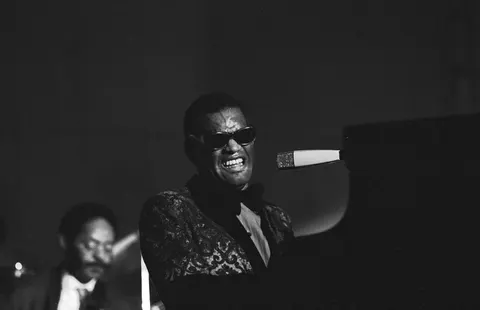
- Ray Charles - toured as his duet partner and opening act from 1960, recording the 1961 duet album Ray Charles and Betty Carter that gave her a hit with "Baby, It's Cold Outside."
- Lionel Hampton - employed Carter in his touring orchestra 1948-1951, the stretch that gave her the "Betty Carter" stage name; bandmates there included Charles Mingus and Wes Montgomery.
- John Hicks - her pianist on Now It's My Turn (1976), The Audience with Betty Carter (1979/80), and again on three tracks of It's Not About the Melody (1992).
- Curtis Lundy - bassist across The Audience with Betty Carter (1979/80), Whatever Happened to Love? (1982), and I'm Yours, You're Mine (1996).
- Christian McBride - bassist on a third of It's Not About the Melody (1992), one of many future bandleaders who passed through her working trio early in his career.
- Freddie Hubbard - guest trumpet soloist on four tracks of the live album Droppin' Things (1990).
- Lewis Nash and Gregory Hutchinson - among the drummers who held her working trio's drum chair, on Whatever Happened to Love? (1982) and It's Not About the Melody (1992) for Nash, and Droppin' Things (1990) and I'm Yours, You're Mine (1996) for Hutchinson.
- Geri Allen, Dave Holland, and Jack DeJohnette - her trio on the live album Feed the Fire (1994), recorded at London's Royal Festival Hall.
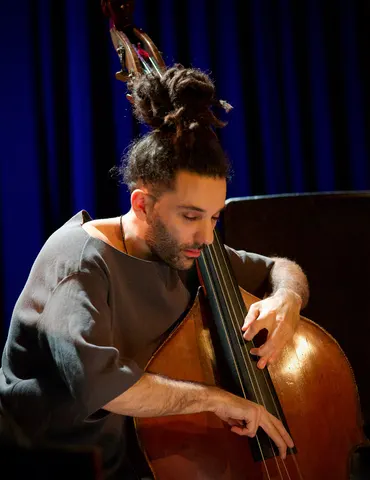
- Or Bareket - an alumnus of Betty Carter's Jazz Ahead residency at the Kennedy Center, the mentorship program Carter founded in 1993 and which the Kennedy Center has continued annually in her name since 1998.
- Wikipedia: Betty Carter
- Discogs: Betty Carter (artist 10097)
- Grammy.com: Betty Carter
- Wikipedia: Grammy Award for Best Jazz Vocal Performance, Female
- Kennedy Center: Betty Carter's Jazz Ahead
- Wikipedia: The Audience with Betty Carter
- Wikipedia: Look What I Got!
- Wikipedia: Feed the Fire (Betty Carter album)
- Or Bareket: Full Biography