 JAZZPROFILES lives in the music 2,555 Jazz Artists fully Profiled!
Bennie Maupin
Last updated November 10, 2026
Listen on Spotify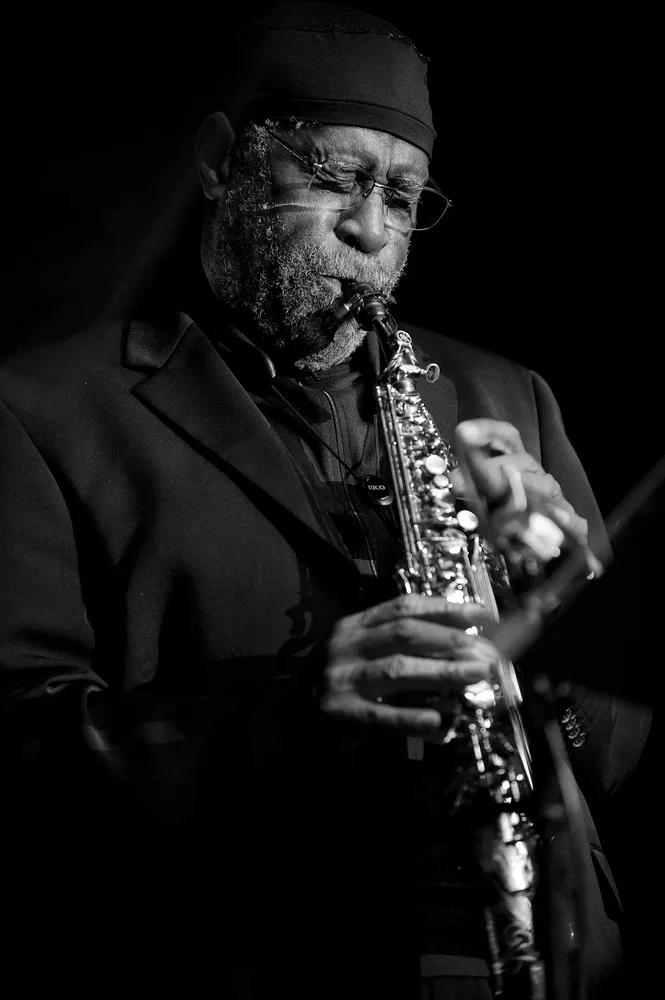
Bennie Maupin on soprano saxophone at the 30th Detroit International Jazz Festival, September 5, 2009, photographed by Marek Lazarski CC BY-SA 4.0 (https://creativecommons.org/licenses/by-sa/4.0/) — Wikimedia Commons: https://commons.wikimedia.org/wiki/File:Bennie_Maupin_DSC0280.jpg

Bennie Maupin was born on August 29, 1940, in Detroit, Michigan. He played piano by ear as a small child, took up clarinet, and moved to saxophone in his teens. He studied at the Detroit Institute of Musical Art, finishing in the spring of 1962, and took flute lessons with Larry Teal. He has named Yusef Lateef, who also came up in Detroit, as a model for working across several reeds and flutes, and he heard John Coltrane and Eric Dolphy when they came through the city; Dolphy gave him a flute lesson that he remembered as a formative moment.
In 1962 he went to New York with the Four Tops, left the group, and stayed. He took a hospital job that he held for about three years while he found his place on the scene, and it was in New York that he took up bass clarinet, the instrument most associated with him. His first notable recordings were with the alto saxophonist Marion Brown, on the Marion Brown Quartet (ESP-Disk, 1966) and Juba-Lee (Fontana, 1967). He also worked with Roy Haynes in the mid-1960s, joined Freddie Hubbard's band in 1967, recorded with McCoy Tyner on Tender Moments (Blue Note, 1968), and played with Horace Silver in 1968 and 1969 on Serenade to a Soul Sister and You Gotta Take a Little Love. From 1968 he was a regular in Lee Morgan's group, appearing on Caramba! (1968) and Live at the Lighthouse, recorded in 1970.
Through the drummer Jack DeJohnette he was brought into the Bitches Brew sessions led by Miles Davis in August 1969, where he played bass clarinet on five tracks of the double album. He returned for On the Corner (1972), played on further Davis sessions later collected in The Complete Jack Johnson Sessions (2003), and is also heard on Big Fun (1974). In 1970, when Davis asked him to join his touring band, he declined because he had already committed to Morgan.
That same year Herbie Hancock formed a sextet that took the name Mwandishi, with Maupin, trumpeter Eddie Henderson, trombonist Julian Priester, bassist Buster Williams and drummer Billy Hart. The band recorded Mwandishi (1971), Crossings (1972), which included two Maupin compositions, and Sextant (1973). When Hancock dissolved it and built a funk band, Maupin was the only member of the sextet he kept, and he is heard on Head Hunters (1973), where he plays the lead melody of "Chameleon" and bass clarinet on the closing "Vein Melter." He stayed with Hancock through Thrust (1974) and later records including Man-Child (1975), Secrets (1976), Sunlight (1978) and Mr. Hands (1980), and rejoined him for Dis Is da Drum (1994). He also appears on albums by the Headhunters themselves, from Survival of the Fittest (1975) to Return of the Headhunters (1998). In 1970 he became a practitioner of Buddhism.
His first record as a leader, The Jewel in the Lotus (ECM, 1974), was recorded in March 1974 at the Record Plant in New York with Hancock, Williams, Hart, Freddie Waits and Bill Summers. He settled in California in the 1970s. In 1977 and 1978 he made two albums for Mercury, Slow Traffic to the Right and Moonscapes, both produced by Patrick Gleeson. A session he had recorded in 1967 with the pianist Mike Nock, Cecil McBee and drummer Eddie Marshall, billed as Almanac, was issued in 1977. He studied composition and orchestration with Lyle "Spud" Murphy around 1978, and his output as a leader slowed in the 1980s and 1990s. Driving While Black (Intuition, 1998), a duo project with Gleeson, marked his return, followed by Penumbra (Cryptogramophone, 2006), a quartet date with bassist Darek Oleszkiewicz and drummer Michael Stephans, and Early Reflections (Cryptogramophone, 2008), recorded in Warsaw with a Polish quartet. In 2022 he and the percussionist Adam Rudolph released Symphonic Tone Poem for Brother Yusef (Strut), a tribute to Lateef. He has also taught at the California Institute of the Arts.
In January 2025 the Eaton Fire destroyed his home in Altadena, California, where he had lived for about 30 years, along with his instruments and his music. He escaped unhurt, and a fundraising campaign was set up to help him and his family recover.
Maupin is better known as a colorist and an ensemble player than as a showcase soloist: his bass clarinet and alto flute set the atmosphere on Bitches Brew and Head Hunters, and on The Jewel in the Lotus he writes for a rhythm section of piano, bass and three percussionists so that the players converse rather than trade solos. Critics have called that album a classic of 1970s spiritual jazz and compared its sound-world with Bitches Brew and early Weather Report, and AllMusic gave it five stars. His improvising has been described as harmonically advanced and "out," yet with a different sense of melodic direction from that of Eric Dolphy, whom he heard in Detroit and cites as a formative influence along with Yusef Lateef and John Coltrane. His later records include a piece for Dolphy on Penumbra and the five-movement Symphonic Tone Poem for Brother Yusef, which uses reeds, flutes, keyboards and percussion in a long-form duo with Adam Rudolph.
- Bitches Brew (1970, Columbia) - Miles Davis's double album, recorded in August 1969, with Maupin's bass clarinet on five tracks; his best-known sideman credit. Spotify - Bitches Brew
- Crossings (1972, Warner Bros.) - Herbie Hancock's second Mwandishi album, with two Maupin compositions; the sextet's first record, Mwandishi (1971), came a year earlier. Spotify - Crossings
- Head Hunters (1973, Columbia) - Herbie Hancock's funk breakthrough, and Maupin's lead melody on "Chameleon" is one of its signature sounds. Spotify - Head Hunters Listen
- The Jewel in the Lotus (1974, ECM) - His debut as a leader, recorded in March 1974 with Hancock, Buster Williams, Billy Hart, Freddie Waits and Bill Summers.
- Slow Traffic to the Right (1977, Mercury) - A leader date with strings and synthesizers, produced by Patrick Gleeson, with Patrice Rushen on keyboards and Eddie Henderson on trumpet and flugelhorn.
- Driving While Black (1998, Intuition) - A duo project with Gleeson that pairs Maupin's wind instruments with rhythm instruments played by Gleeson.
- Penumbra (2006, Cryptogramophone) - The Bennie Maupin Ensemble, a quartet date with Darek Oleszkiewicz, Michael Stephans and percussionist Munyungo Jackson, recorded mostly in June 2003.
- Symphonic Tone Poem for Brother Yusef (2022, Strut) - A five-movement duo with Adam Rudolph, dedicated to Yusef Lateef.
Bennie Maupin: Full Discography
Discogs artist ID 15448 (Benjamin Maupin, born August 29, 1940, in Detroit, Michigan) was read in full, and the related Discogs entries for his own groups were checked and reconciled: The Bennie Maupin Quartet (artist ID 1891302), The Bennie Maupin Ensemble (artist ID 2003112), The Maupin/Williams Project (artist ID 1963241) and the alias Mwile (artist ID 320112), under which several Herbie Hancock credits are filed. The leader table below lists every release found under his own name or his own group names. His sideman work runs to several hundred listings, most of them compilations and reissues of the same sessions, so the second table is a selection of the major credits, with each instrument or track restriction taken from the release's own credits where Discogs carries one. Where a year or detail could not be confirmed from a checked source the cell says so.
As Leader / Co-Leader
| Album Title | Recording Date(s) | Release Date | Label | Catalog Number | Format(s) | Personnel | Role | Reissue History | Spotify | Buy | Notes |
|---|---|---|---|---|---|---|---|---|---|---|---|
| The Jewel in the Lotus | March 1974, The Record Plant, New York City | 1974 | ECM | ECM 1043 ST | Vinyl, LP, Album | Bennie Maupin (reeds, voice, glockenspiel), Herbie Hancock (piano, electric piano), Buster Williams (bass), Billy Hart (drums), Freddie Waits (drums, marimba), Bill Summers (percussion) | Leader | Pressing history on Discogs master 168664 | — | — | His debut as a leader. All compositions by Maupin; produced by Manfred Eicher. Wikipedia also lists the trumpeter Charles Sullivan as a guest. |
| Almanac | 1967, Columbia University, New York City | June 1977 | Improvising Artists Inc. | IAI 37.38.51 | Vinyl, LP, Album, Stereo | Mike Nock (piano), Bennie Maupin (reeds), Cecil McBee (bass), Eddie Marshall (drums) | Co-leader (cooperative quartet billed as Almanac) | Pressing history on Discogs master 351081 | — | — | Recorded a decade before its release; Nock composed all but one piece, and Maupin wrote the other. |
| Slow Traffic to the Right | 1977, Different Fur, San Francisco | 1977 | Mercury | SRM-1-1148 | Vinyl, LP, Album | Bennie Maupin (bass clarinet, soprano and tenor saxophones, saxello, flutes, synthesizer, backing vocals), Eddie Henderson (trumpet, flugelhorn), Kraig Kilby (trombone), Patrice Rushen (piano, electric piano, clavinet), Blackbyrd McKnight (electric guitar), James Levi (drums), Patrick Gleeson (synthesizers, producer), Nathan Rubin (strings), Onaje Allan Gumbs (arranger, conductor) | Leader | Reissued on CD in 2011 paired with Moonscapes (Vocalion, CDSML 8485); Discogs master 1172427 | — | — | Six tracks; recorded and mixed in San Francisco. |
| Moonscapes | 1978, Conway Recorders, Los Angeles | 1978 | Mercury | SRM-1-3717 | Vinyl, LP, Album | Bennie Maupin (soprano and tenor saxophones, bass clarinet, flute, bass marimba, glockenspiel, synthesizers), Michael Sembello (guitars), Abraham Laboriel (bass), Harvey Mason (drums), Mingo Lewis (congas, percussion), Bobby Lyle (piano, electric piano, clavinet), Patrick Gleeson (producer, programming) | Leader | Reissued on CD in 2011 paired with Slow Traffic to the Right (Vocalion, CDSML 8485); Discogs master 1174546 | — | — | "Farewell to Rahsaan" is dedicated to Rahsaan Roland Kirk (1936 to 1977); cover collage by Betye Saar. |
| Driving While Black | Not specified in Discogs data | 1998 | Intuition | INT 3242 2 | CD, Album | Bennie Maupin (wind instruments), Patrick Gleeson (rhythm instruments) | Co-leader (billed with Patrick Gleeson) | Pressing history on Discogs master 2522773 | — | — | Eight originals credited to both men plus one cover; released as "Driving While Black..." |
| Live at Club Rhapsody Okinawa | November 25, 2000, Club Rhapsody, Camp S.D. Butler, Okinawa, Japan | 2002 | Simply Smokin' Records | TMWP00001 | CD, Album | Bennie Maupin (tenor and soprano saxophones, bass clarinet), John Williams (acoustic and electric bass), Makoto Kuriya (keyboards), Cecil Monroe (drums), Calvin Edwards (guitar, tracks 4 and 7) | Co-leader (The Maupin/Williams Project) | No reissue found | — | — | A live set by his co-led group with the bassist John Williams. |
| Penumbra | June 16 and 17, 2003, No Sound Studios, Pasadena, California; one track recorded later in Los Angeles (the printed date and the label's own date disagree) | May 9, 2006 | Cryptogramophone | CG129 | CD, Album | The Bennie Maupin Ensemble: Bennie Maupin (bass clarinet, tenor and soprano saxophones, alto flute, piano), Darek Oleszkiewicz (bass), Michael Stephans (drums), Munyungo Jackson (percussion) | Leader | Pressing history on Discogs master 875163 | — | — | Fourteen tracks, including "Walter Bishop Jr.", "Message to Prez" and "One for Eric Dolphy"; produced by Maupin with Jeff Gauthier. |
| Early Reflections | September 20 to 22 (year not stated), Sound and More Studios, Warsaw, Poland | 2008 | Cryptogramophone | CG137 | CD, Album, Digipak | The Bennie Maupin Quartet: Bennie Maupin (bass clarinet, tenor and soprano saxophones, alto flute), Michał Tokaj (piano), Michał Barański (bass), Łukasz Żyta (drums, percussion), Hania Chowaniec-Rybka (voice, tracks 4 and 13) | Leader | Pressing history on Discogs master 2358511 | — | — | Thirteen tracks, including one titled "The Jewel in the Lotus"; liner notes by Patrick Gleeson. |
| Symphonic Tone Poem for Brother Yusef | Not confirmed | June 17, 2022 | Strut | STRUT298CD | CD, Album, Digipak | Bennie Maupin (bass clarinet, soprano saxophone, alto and concert flutes, voice), Adam Rudolph (keyboards, drum machine, percussion, voice, producer) | Co-leader (billed with Adam Rudolph) | Pressing history on Discogs master 2726798 | — | — | Five movements, dedicated to the multi-instrumentalist Yusef Lateef. |
As Sideman (selected major credits)
| Year | Project (Leader) | Title | Label | Catalog | Role | Notes |
|---|---|---|---|---|---|---|
| 1966 | Marion Brown Quartet | Marion Brown Quartet | ESP-Disk' | ESP 1022 | Credited on one track, "Exhibition"; instrument not listed | His first album credit in the Discogs listing. |
| 1967 | Marion Brown Septet | Juba-Lee | Fontana | 881 012 ZY | Tenor saxophone | — |
| 1967 | The Jimmy Owens - Kenny Barron Quintet | You Had Better Listen | Atlantic | 1491 | Tenor saxophone, flute | — |
| 1968 | McCoy Tyner | Tender Moments | Blue Note | BST 84275 | Tenor saxophone | — |
| 1968 | Freddie Hubbard | High Blues Pressure | Atlantic | SC1501 | Tenor saxophone, flute | — |
| 1968 | Lee Morgan | Caramba! | Blue Note | BST 84289 | Tenor saxophone | — |
| 1968 | Horace Silver | Serenade to a Soul Sister | Blue Note | BLP 4277 | Tenor saxophone (tracks B1 to B3) | — |
| 1969 | Horace Silver | You Gotta Take a Little Love | Blue Note | BST 84309 | Tenor saxophone, flute | — |
| 1969 | Lonnie Smith | Turning Point | Blue Note | BST-84313 | Tenor saxophone | — |
| 1969 | Jack DeJohnette | The DeJohnette Complex | Milestone | MSP 9022 | Tenor saxophone (tracks A1 to A3, B2), flute (B3), wood flute (A4, B4) | Recorded 1968. |
| 1970 | Miles Davis | Bitches Brew | Columbia | GP 26 | Bass clarinet | Recorded in August 1969; his bass clarinet is on five tracks, per Wikipedia. |
| 1970 | Jack DeJohnette | Have You Heard? | Milestone (original US issue, per Wikipedia) | Not confirmed (a Japanese CBS/Sony pressing, SONP-50282-J, is the Discogs main release) | Credited on tracks A1, A2 and B1; instrument not listed | — |
| 1970 | Marion Brown | Afternoon of a Georgia Faun | ECM | ECM 1004 ST | Tenor saxophone, bass clarinet, wooden and alto flutes, percussion (credited together; not itemised by track) | His first ECM credit. |
| 1971 | Woody Shaw | Blackstone Legacy | Contemporary | S7627/8 | Tenor saxophone, bass clarinet, flute | Discogs dates the release 1971; Wikipedia gives 1970. |
| 1971 | Lee Morgan | Live at the Lighthouse | Blue Note | BST-89906 | Tenor saxophone, flute, bass clarinet | Recorded live at the Lighthouse in 1970. |
| 1971 | Herbie Hancock | Mwandishi | Warner Bros. | WS 1898 | Bass clarinet, alto flute | First album by the Mwandishi sextet. |
| 1972 | Herbie Hancock | Crossings | Warner Bros. | BS 2617 | Soprano saxophone, bass clarinet, piccolo, alto flute, percussion; composer of two tracks | — |
| 1972 | Miles Davis | On the Corner | Columbia | KC 31906 | Bass clarinet | — |
| 1972 | Chick Corea | Sundance | Groove Merchant | GM 2202 | Tenor saxophone | Recorded in 1969 in the sessions of Is (Solid State); the full sessions were collected as The Complete "Is" Sessions (Blue Note, 2002). |
| 1973 | Woody Shaw | Song of Songs | Contemporary | S7632 | Tenor saxophone (track A2) | — |
| 1973 | Herbie Hancock | Sextant | Columbia | KC 32212 | Soprano saxophone, bass clarinet, piccolo, afuche, "hum-a-zoo" (credited as Mwile) | Per Wikipedia's personnel list for the album; the release's Discogs credits do not itemise him. |
| 1973 | Herbie Hancock | Head Hunters | Columbia | KC 32731 | Soprano and tenor saxophones, saxello, bass clarinet, alto flute | Credited with the lead melody on "Chameleon" (track A1). |
| 1973 | Eddie Henderson | Realization | Capricorn | CP 0118 | Flute, alto flute, saxophones, bass clarinet (credited together) | Also credited on track B1, "Anua". |
| 1974 | Herbie Hancock | Thrust | Columbia | PC 32965 | Soprano and tenor saxophones, bass clarinet, alto flute | — |
| 1974 | Eddie Henderson | Inside Out | Capricorn | CP 0122 | Clarinet, bass clarinet, flutes, tenor saxophone; composer of two tracks | — |
| 1974 | Miles Davis | Big Fun | Columbia | PG 32866 | Credited on three tracks ("Great Expectations", "Ife", "Lonely Fire"); instrument not listed | — |
| 1975 | The Headhunters | Survival of the Fittest | Arista | 4038 | Saxello, bass clarinet, tenor saxophone, acoustic piano, vocals | — |
| 1975 | Eddie Henderson | Sunburst | Blue Note | BN-LA464-G | Tenor saxophone, saxello, bass clarinet | Also credited on track B4, "We End in a Dream". |
| 1975 | Andrew Hill | One for One | Blue Note | BN-LA459-H2 | Bass clarinet (tracks A1 to A3), tenor saxophone and flute (A1 to B3) | Recorded 1970; issued 1975. |
| 1975 | Herbie Hancock | Man-Child | Columbia | PC 33812 | Soprano and tenor saxophones, saxello, bass clarinet, bass and alto flutes | — |
| 1976 | Herbie Hancock | Secrets | Columbia | PC 34280 | Soprano and tenor saxophones, saxello, Lyricon, bass clarinet | Credited on track B4, "Sansho Shima", in the track list. |
| 1977 | Lenny White | Big City | Nemperor | NE 441 | Credited on track B3, "And We Meet Again"; instrument not listed | — |
| 1977 | The Headhunters | Straight from the Gate | Arista | AB 4146 | Bass clarinet, flute, soprano and tenor saxophones, vocals | — |
| 1978 | Eddie Henderson | Mahal | Capitol | SW-11846 | Tenor saxophone, saxello | Also credited on track B2, "Amoroso". |
| 1978 | Herbie Hancock | Sunlight | Columbia | JC 34907 | Credited on track B1, "Sunlight"; instrument not listed | — |
| 1979 | Herbie Hancock | Feets Don't Fail Me Now | Columbia | JC 35764 | Credited on track B3, "Knee Deep"; instrument not listed | — |
| 1980 | Herbie Hancock | Mr. Hands | Columbia | JC 36578 | Credited on track B2, "Shiftless Shuffle"; instrument not listed | — |
| 1994 | Herbie Hancock | Dis Is da Drum | Mercury | 528 185-2 | Credited on tracks 1, 6 and 8; instrument not listed | — |
| 1998 | The Headhunters | Return of the Headhunters | Verve Forecast | 314 539 028-2 | Alto, soprano and tenor saxophones, bass clarinet | — |
| 2000 | Mike Clark | Actual Proof | Platform | PGI/Platform 1121-2 | Soprano saxophone (track 3), tenor saxophone (4), bass clarinet (9), alto saxophone (11) | Year as given by Wikipedia; the Discogs master carries no year. |
| 2003 | Miles Davis | The Complete Jack Johnson Sessions | Columbia | C5K 86359 | Bass clarinet (tracks 1-1 to 1-4, 2-6, 2-7) | Box set of Davis's 1970 sessions; released October 13, 2003. |
| 2003 | The Detroit Experiment | The Detroit Experiment | Ropeadope | ROPE 93138-2 | Credited on tracks 3 and 8; instrument not listed | — |
| 2007 | Patrick Gleeson and Jim Lang | Jazz Criminal | Different Fur Studios | No catalog number | Credited on tracks 2, 3 and 5; instrument not listed | Billed as featuring Bennie Maupin and Wallace Roney. |
Full listings for every release, including compilations and reissues, are on Discogs.
- Herbie Hancock - his longest-running association: the Mwandishi sextet (1970 to 1973), Head Hunters and Thrust (1973 and 1974), later albums through the 1970s, and Dis Is da Drum (1994); Hancock also played piano on Maupin's The Jewel in the Lotus.
- Miles Davis - bass clarinet on the Bitches Brew sessions (August 1969), then On the Corner (1972), the sessions collected in The Complete Jack Johnson Sessions (2003) and Big Fun (1974); Maupin declined an offer to join the touring band in 1970.
- Lee Morgan - Maupin was in the trumpeter's group from 1968, including Caramba! and the 1970 live recordings made at the Lighthouse.
- Horace Silver - played in the pianist's quintet in 1968 and 1969, on two Blue Note albums.
- Jack DeJohnette - the drummer who brought him to Davis; Maupin is on The DeJohnette Complex (recorded 1968) and Have You Heard? (1970).
- Chick Corea - sideman on the pianist's trio-plus album Is (1969), recorded soon after he came to prominence in New York.
- Roy Haynes - drummer with whom Maupin worked in the mid-1960s.
- Freddie Hubbard, McCoy Tyner, Lonnie Smith, Woody Shaw, Andrew Hill - leaders of sessions he joined, including High Blues Pressure (Hubbard, 1968), Tender Moments (Tyner, 1968), Turning Point (Smith, 1969), Blackstone Legacy and Song of Songs (Shaw, 1970 and 1972) and One for One (Hill, recorded 1970).
- Eddie Henderson, Buster Williams, Billy Hart - fellow members of the Mwandishi sextet; Williams and Hart also played on Maupin's first record as a leader, and Henderson on Slow Traffic to the Right.
- Cecil McBee - bassist in Almanac, with pianist Mike Nock and drummer Eddie Marshall.
- Harvey Mason, Patrice Rushen - Harvey Mason played drums on Moonscapes (1978); Patrice Rushen played keyboards on Slow Traffic to the Right (1977).
- Lenny White - drummer on his sideman appearance on Big City (1977).
- Patrick Gleeson - synthesist and producer of both Mercury albums and co-leader of Driving While Black.
- Adam Rudolph - percussionist and co-leader of Symphonic Tone Poem for Brother Yusef.
- Marion Brown - alto saxophonist and bandleader on Maupin's earliest recordings.
- Kenny Barron, George Cables - pianists with whom he recorded: Barron on You Had Better Listen (the Jimmy Owens-Kenny Barron Quintet, 1967) and Cables on Shared Secrets (2001).
More Jazz Fusion Artists
See all 478 Jazz Fusion artists →More American Jazz Artists
See all 876 American artists →- Wikipedia: Bennie Maupin
- Wikipedia: The Jewel in the Lotus
- Wikipedia: Head Hunters
- Wikipedia: Bitches Brew
- Jazz.com encyclopedia: Bennie Maupin
- Sound Projections: Bennie Maupin
- WKAR Michigan Minute: Bennie Maupin, born in Detroit
- WDET: Sending love and music to musicians who lost their homes in the LA wildfires
- Discogs: Bennie Maupin (artist 15448)
- MusicBrainz: Bennie Maupin