 JAZZPROFILES lives in the music 2,059 Jazz Artists fully Profiled!
Kim Dae Hwan
Last updated October 27, 2026
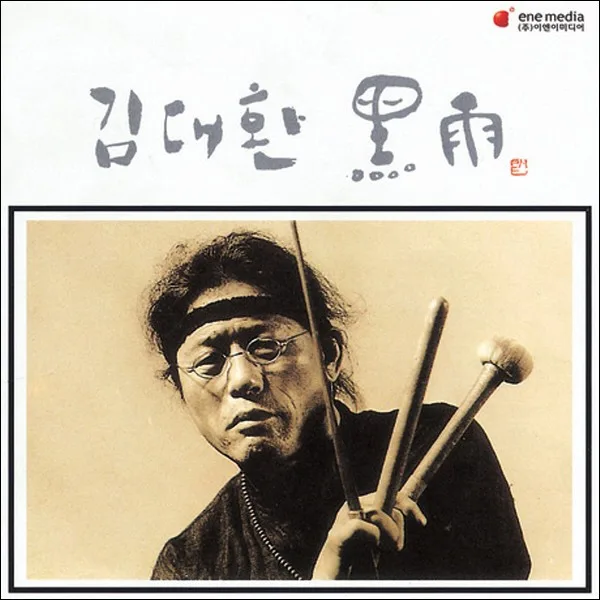
Kim Dae Hwan on the cover of *Black Rain* (Ene Media, 2003), his own album. The cover is a sepia studio photograph of the percussionist, in a headband and round glasses, holding drumsticks and a mallet, under his name and the title written in calligraphy. Standard copyright, all rights reserved, held by the rights holder named above. This is not a Creative Commons or public-domain image; it is an album cover shown as an honestly disclosed editorial identification image. — https://coverartarchive.org/release/aa94a784-fec6-48e9-8807-1b4eef6da6a2 (Cover Art Archive front image, 600 x 600 version, for the MusicBrainz release https://musicbrainz.org/release/aa94a784-fec6-48e9-8807-1b4eef6da6a2)
Kim Dae Hwan (김대환) was a South Korean percussionist, one of the founders of free music in Korea. He was born in 1933 in Incheon and played in military and American-base bands, in the first Korean rock groups of the 1960s and early 1970s, and from 1978 in the Kang Tae Hwan Trio, which Korean Wikipedia lists as the country's first free jazz group. In his later years he took the artist name Heugu (흑우, written 黑雨, "black rain"), played a drum set of his own design with six sticks, performed in Japan so often that Japan became his main audience, and became equally known as a micro-calligrapher who wrote the Heart Sutra on a single grain of rice. He passed away on March 1, 2004. His free-music records as leader or co-leader run from 1993 to 2025, and most of the recent ones are concerts recorded in Japan in the 1990s and released long after the fact.
Seoul Shinmun's 1998 profile and a chronology printed with it give the outline of his early life. He joined the brass band of Dongsan Middle School in Incheon in 1946 and began playing drums, and served in the Air Force band from 1953 to 1957. From 1961 he played on the American Eighth Army stage in Seoul, where, the paper says, he worked with the composers Lee Bong-jo (이봉조) and Gil Ok-yoon (길옥윤) and formed a jazz club with the guitarist Shin Joong-hyun, the figure usually called the father of Korean rock. Korean Wikipedia lists him as drummer of Shin's band Add 4 in 1964, then of the groups Club Date (1968), Questions (1970) and the Kim Trio (1971). A live recording of Shin Joong-hyun and Questions at the Seoul Civic Center in 1970, "Funky Broadway", with Kim on drums, appears on a 2011 digital EP of Shin's music. He took part in the Vietnam War from 1968 to 1972, and the patron who later ran a museum in his name recalled hearing him lead a band called Koreana on a troop-entertainment tour there. In 1972 the label Asia Record issued a rock LP billed to Kim Dae Hwan and the Kim Trio Band, eight of whose ten songs, Discogs notes, are taken from an album by the Japanese drummer Jimmy Takeuchi. In 1975 he became the first president of the Korea Group Sound Association, and his patron said that Shin Joong-hyun and the singer Cho Yong-pil regarded him as the elder brother of Korean group-sound music.
The turn to free music came in the late 1970s. According to Seoul Shinmun, after more than a decade of conventional drumming he realized that every beat could be gathered into a single beat and that one stroke could complete a piece of music, and that insight led him away from his surroundings. In 1978 he joined the alto saxophonist Kang Tae Hwan and the trumpeter Choi Sun Bae in the Kang Tae Hwan Trio. Sisa Journal's 2004 feature on him calls Kang his maternal cousin (외사촌) and says that, orphaned young, he grew up in Kang's household; Discogs and Korean Wikipedia's article on Kang also describe the two as cousins. Weekly Hankook's 2002 profile of Kang says the trio began at the experimental arts space Gonggan Sarang in Seoul and counts 76 performances between 1978 and 1986, when Kang proposed stopping because the group had run out of new ideas; it also says that in 1985 the trio became the first Korean jazz group invited to Japan. A Korea JoongAng Daily report of May 2004 credits Kang, Choi and Kim with starting Korea's avant-garde scene in the 1970s, at a time when, the paper wrote, such players worked construction jobs by day and played at night, and a state security agency refused Choi permission to perform. The three played together again in Tokyo in 1988, in the line-up billed as the Seoul Free Music Trio: it is the opening track of Kang's Korean Free Music (Yeh Eum, 1989), recorded on June 23, 1988 at FM Tokyo Hall, and a trio set from Shinjuku Pit Inn on July 5, 1988 is on Kim's own Like A Dew Also Like A Thunder (2004). The trio reunited in Seoul at Buam Art Hall on August 30, 2002, its first concert together in five years, according to Weekly Hankook.
From the mid-1980s his main audience was in Japan. His patron said he played more than 100 concerts a year there, and Seoul Shinmun's chronology notes that he began performing on Japanese stages in 1985. Seoul Shinmun also says he played in Tokyo with the American trumpeter Wadada Leo Smith and the pianist Yosuke Yamashita; the second of those is documented on record. The chronology lists a first record, Heugu (Black Rain), issued in Japan in 1991 with a launch concert at the Hakjeon Little Theatre in Seoul. Discogs gives its recording as May 25, 1991 at Sound Valley Studio in Tokyo, two long pieces and an encore with the haegeum player Kang Eun Il, and the album was reissued in Korea by Ene Media in 2003. On December 3, 1991 he recorded Black Roots at Yaeum Hall in Seoul with Yamashita, the saxophonist Kazutoki Umezu and Kang Eun Il, a program of "My One And Only Love", "Afro Blue", "Naima", "Arirang" and "My Favorite Things" that Nices released in 1993. The same year he played at a free-jazz festival billed as Black Beat, in Seoul and at Suntory Hall in Tokyo, and he played percussion in Butch Morris's Conduction #50, conducted at P3 Art and Environment in Tokyo on March 5, 1993 and issued in the 1995 New World Records box Testament: A Conduction Collection, alongside the bassist Motoharu Yoshizawa and the turntablist Otomo Yoshihide.
The promoter Takeo Suetomi of Hofu, Yamaguchi, recorded much of what followed. At Suetomi's Cafe Amores, Kim played a duo with Yoshizawa on September 8, 1993 and, on August 10, 1995, a trio with the tenor saxophonist Mototeru Takagi and Choi. In 1994 he played at Gallery MAI in a quartet with Choi, the saxophonist Junji Hirose and the drum master Shonosuke Okura. In Tokyo on June 12, 1995 he was the percussionist in the Choi Sun Bae Quartet with Hirose and Yoshizawa, and on November 26, 1999 he and Choi recorded a duo at the Aspirante room in Hofu. Of these the first to appear was Live "Okidoki" (Chap Chap Records, 1998), a Yoshizawa album whose second track is the Yoshizawa and Kim duo. The rest waited: Seishin-Seido (2022), Korean Fantasy (2023), Echoes Of Empty (2024) and Way Of The Breeze (2025) are all archival recordings from the 1990s. His other Japanese credits include the 2012 DVD Landscape On The Way To Sleep, with the butoh dancer Tomoe Shizune and Yoshizawa, and Like A Dew Also Like A Thunder, which gathers solo, duo and trio tracks recorded between 1988 and 2001 and brings in the pianist Yoriyuki Harada, the guitarist Kazumi Watanabe, Yamashita, Kang Tae Hwan and Choi.
Kim's other art was micro-calligraphy. The Seoul Shinmun chronology dates the start of his fine-writing work to 1968, the completion of the full text of the Heart Sutra on a grain of white rice to 1985, and Guinness World Records recognition to 1990; the paper counts the characters at 283, while one jazz blog says 346. He used the name Yeosu (如水) for calligraphy and Heugu for music. The paper describes a strict routine: he rose at four in the morning for the fine writing, drummed in the afternoon at a practice room in Insadong, and kept to eight hours of practice a day even on tour. He rode a custom Harley-Davidson, used its exhaust pipes as an instrument in performance, and the chronology lists the launch of a riders' group, the Asia Riders, in 1997. Korean Wikipedia lists him as a former professor in the percussion department at Chung-Ang University and records an honorary doctorate from Hansung University. His own book, Practice Was a Majestic Path of Seeking (연습은 장엄한 구도의 길이었다, Hyeonamsa), is named by Seoul Shinmun in 2005. A museum in his name, in the Insadong room that the shop owner Yoo Jae-man had provided him for practice and display from 1989, opened in 1994 according to the paper's chronology.
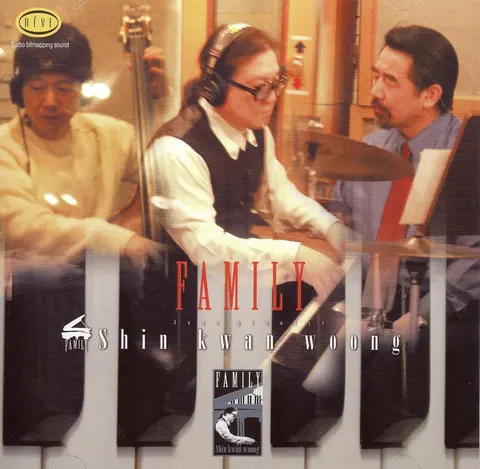
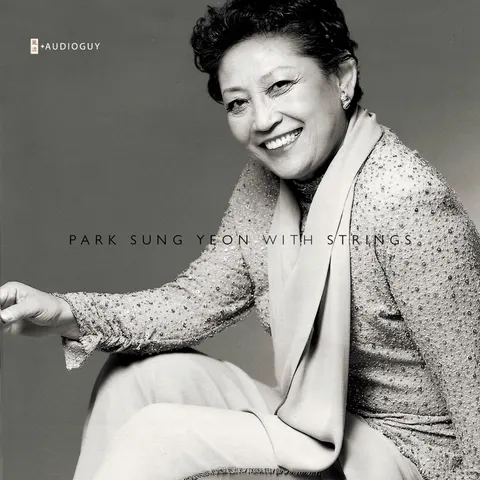
He passed away on March 1, 2004. Korean Wikipedia and Wikidata give the date; the Newsis news agency, writing on March 29, 2004 of a tribute concert planned for April 6 at the club Once in a Blue Moon in Cheongdam-dong, Seoul, called him a master of percussion who had died on the first of the month. Nine first-generation jazz players were announced for it: the drummer Choi Se-jin, the trombonist Hong Deok-pyo, the percussionist Jo Sang-guk, the clarinetist Lee Dong-gi, the saxophonist Kim Soo-yeol, Choi Sun Bae, the pianist Shin Kwan-woong and the vocalists Kim Jun and Park Sung-yeon, with the first half given to Shin's big band. Sources disagree on his age: Discogs and a bio quoted by a record shop say 70, and Korean Wikipedia, counting in the traditional way, says 72. Seoul Shinmun reported in July 2005 that his supporters had held a national percussion competition in his memory in March of that year, one year after his death, and planned to release some 1,000 live recordings on CD and to build a memorial hall with Japanese backers.
His music has kept returning. Jazz Tokyo's Takehiko Ono reported on the Kim Dae Hwan Memorial Japan-Korea Friendship Concert, held at Gallery MAI in Hofu on May 25, 2024, 20 years after his death. Choi Sun Bae came from Korea for it, and the line-up included the drum master Shonosuke Okura, the voice-and-guitar player Yuki Saga, the Korean percussionist Kaori Komura and the German reed player Alfred Harth; Suetomi organized the evening. Okura's Iyasaka, Dedicated To Kim Dae-Hwan (Chap Chap Records, 2026) includes recordings from that evening.
Seoul Shinmun described the drum set he built as a single large drum struck with six sticks, an idea that replaced his early arrangement of gong, cymbals, rototoms and a big drum played together. Korean Wikipedia puts it as six sticks held across ten fingers, and calls him a master of percussion for it. His own account of the music, relayed by the paper, was that all beats can be gathered into one. Discogs lists his equipment on Black Rain as rototoms, cymbals and traditional Korean percussion, and the Squid's Ear describes Korean Fantasy as a set in which he plays traditional Korean drums in a "one beat" style against Choi's trumpet. The haegeum player Kang Eun Il is his partner on Black Rain and Black Roots; a jazz blog that reviewed Black Rain in 2008 describes the haegeum weeping above a very quiet drum sound.
The Korea JoongAng Daily described Seoul's free music in 2004 as improvisation that opposes written scores and often carries a strong element of performance art, and Kim's career fits that description. He came to it from rock and group-sound drumming, and he treated cymbals, rototoms, large Korean drums and a motorcycle's exhaust pipe as sources of the same kind of sound. Free Music Moogu, an undated solo set whose tracks are listed as Earth Sound and Harley Pipe Sound, shows how far he went from conventional drumming. At the same time the Japanese recordings place him inside jazz: his partners were Yamashita, Umezu, Yoshizawa, Takagi, Hirose, Choi and Kang, and Black Roots is a program of "Afro Blue", "Naima" and "My Favorite Things". Discogs files his main releases under free jazz and free improvisation. His earlier rock records are a separate chapter, and are listed with the discography.
- Black Roots (1993, Nices SCP-001PSS) - recorded at Yaeum Hall in Seoul on December 3, 1991, with Yosuke Yamashita (piano), Kazutoki Umezu (saxophone) and Kang Eun Il (haegeum). YouTube - Black Roots, full album Listen
- Black Rain (recorded 1991, Korean edition Ene Media SCO-022CSS, 2003) - percussion and haegeum, in two long parts and an encore. YouTube - Black Rain, full album Listen
- Kim Dae Hwan and Choi Sun Bae, Korean Fantasy (2023, NoBusiness NBCD 161) - duo recorded at Aspirante in Hofu on November 26, 1999. Bandcamp · YouTube - Duo 4, 1999 Listen
- Motoharu Yoshizawa and Kim Dae Hwan, Way Of The Breeze (2025, NoBusiness NBCD 176) - duo recorded at Cafe Amores, Hofu, on September 8, 1993. Bandcamp · YouTube - Duo 1, 1993 Listen
- Mototeru Takagi, Kim Dae Hwan and Choi Sun Bae, Seishin-Seido (2022, NoBusiness NBCD 157) - trio recorded at Cafe Amores on August 10, 1995. Bandcamp · YouTube - Kim Dae Hwan and Mototeru Takagi, duo 1995 Listen
- Choi Sun Bae Quartet, Arirang Fantasy (2018, NoBusiness NBCD 108) - Kim on percussion with Choi, Junji Hirose and Motoharu Yoshizawa at Romanisches Cafe in Roppongi, June 12, 1995. YouTube - Arirang Fantasy, full album · Bandcamp Listen
- Kim Dae Hwan, Echoes Of Empty / Live At Gallery MAI, 1994 (2024, Chap Chap Records CPCD-027) - with Choi, Junji Hirose and Shonosuke Okura. YouTube - Gallery MAI, 1994 Listen
- Kim Dae Hwan, Like A Dew Also Like A Thunder (2004, Bigtory BIGD-001) - solo, duo and trio tracks with Yamashita, Watanabe, Harada and Kang Tae Hwan.
- Kang Tae Hwan, Korean Free Music (1989, Yeh Eum YPDL 8004) - the Seoul Free Music Trio of Kang, Kim and Choi, recorded in Tokyo in 1988. YouTube - Seoul Free Music Trio Listen
- Lawrence D. "Butch" Morris, Testament: A Conduction Collection (1995, New World Records 80478-2) - Kim is among the percussionists on Conduction #50, recorded in Tokyo on March 5, 1993. YouTube - Conduction #50, Part I Listen
Kim Dae Hwan (김대환) - Full Discography
South Korean drummer and percussionist (1933 to March 1, 2004), artist name Heugu (흑우, 黑雨). Discogs artist 851974.
Name variations on record: Kim Dae Hwan, Kim Dae-Hwan, Kim Dae Hwan 金大煥, 金大煥, 김대환.
His free-music releases are listed first. Most of the recent ones are concerts recorded in Japan in the 1990s and issued after his death. A rock LP of 1972 is listed separately below.
Leader and co-leader
| Album | Year | Label | Personnel | Notes | Listen | Buy |
|---|---|---|---|---|---|---|
| 黑莖 = Black Roots | 1993 | Nices, SCP-001PSS | Kim Dae Hwan (percussion), Yosuke Yamashita (piano), Kazutoki Umezu (saxophone), Kang Eun Il (haegeum) | CD. Recorded at Yaeum Hall, Seoul, on 3 December 1991. Five tracks: "My One And Only Love" (11:56), "Afro Blue" (12:20), "Naima" (12:11), "Arirang" (9:39) and "My Favorite Things" (10:48). Sound Space direction by Manabu Yuasa; cover art by Cho Sung-Mu. Discogs release 9413190. | Full album on YouTube | Amazon |
| Live "Okidoki" (Motoharu Yoshizawa featuring Barre Phillips and Kim Dae Hwan) | 1998 | Chap Chap Records, CPCD-003 (also LMCD-1560) | Motoharu Yoshizawa (homemade electric vertical five-string bass), Barre Phillips (double bass, "Duo I"), Kim Dae Hwan (percussion, "Duo II") | CD. Recorded at Cafe Amores, Hofu, on 5 April 1994 ("Duo I", 39:50) and 8 September 1993 ("Duo II", 28:54) by Takeo Suetomi; produced by Takayo Suetomi. Discogs release 1015260. | Excerpt from the 1993 concert on YouTube | Amazon |
| 黑雨 = Black Rain (Korean edition) | 2003 | Ene Media, SCO-022CSS | Kim Dae Hwan (rototoms, cymbals, traditional Korean percussion), Kang Eun Il (haegeum) | CD reissue. Recorded at Sound Valley Studio, Tokyo, on 25 May 1991. Three tracks: "Black Rain Part 1" (30:29), "Black Rain Part 2" (19:13) and the encore "Hanobaengnyeon" (2:39). Liner notes and direction by Manabu Yuasa. A 1998 newspaper chronology dates the first release, in Japan, to 1991. Discogs release 9413603. | Full album on YouTube | Amazon |
| Like A Dew Also Like A Thunder = 如露亦如雷 | 2004 | Bigtory, BIGD-001 | Kim Dae Hwan (drums, percussion, puk); Kang Tae Hwan (alto saxophone, tracks 5 and 6); Choi Sun Bae (trumpet, tracks 5 and 6); Yosuke Yamashita (piano, track 4); Kazumi Watanabe (guitar, track 4); Yoriyuki Harada (piano, track 2); Kang Eun Il (haegeum, track 3) | CD released in November 2004, after his death. Seven tracks: solo (7:49, recorded at FM Tokyo, September 1993), duo with Harada (16:35, 10 May 2001), duo with Kang Eun Il (8:31, Gangneung, 27 May 2000), trio with Yamashita and Watanabe (20:20, Shinjuku Quest Hall, 20 October 1999), trio with Kang and Choi (9:03 and 4:34, Shinjuku Pit Inn, 5 July 1988) and a second solo (3:21). Liner notes by Satoshi Iwabuchi and Teruto Soejima. Discogs release 6075433. | not found | Amazon |
| Landscape On The Way To Sleep = 眠りへの風景 (Tomoe Shizune, Yook Keun Byung, Kim Dae Hwan, Motoharu Yoshizawa) | 2012 | Office Tomoe, TMDV-TY-01 | Tomoe Shizune (butoh, composition), Kim Dae Hwan, Motoharu Yoshizawa | DVD-Video, released on 1 March 2012. Kim and Yoshizawa are the performers on the two "Trio" pieces; the other pieces include butoh with poetry reading by Yoko Ashikawa. Discogs release 14195591. | Trio improvisation video on YouTube | Amazon |
| Seishin-Seido 正心正道 (Mototeru Takagi, Kim Dae Hwan, Choi Sun Bae) | 2022 | NoBusiness Records, NBCD 157 (CD) | Mototeru Takagi (tenor saxophone), Kim Dae Hwan (drums), Choi Sun Bae (trumpet) | Recorded live at Cafe Amores, Hofu, on 10 August 1995 by Takeo Suetomi. Released on 14 September 2022, edition of 500. Six tracks: "Seishin - Seido", "Natural Sound", "Remember", "Life Cycle", "Ethyopia" and "Step by Step". Liner notes by Yoshiaki Kinno. Discogs release 24512036. | Bandcamp | Amazon |
| Korean Fantasy (Kim Dae Hwan, Choi Sun Bae) | 2023 | NoBusiness Records, NBCD 161 | Kim Dae Hwan (drums, cover calligraphy), Choi Sun Bae (trumpet, harmonica) | Recorded live at Aspirante, Hofu, on 26 November 1999 by Takeo Suetomi. Released on 22 September 2023, remastered by Arunas Zujus. Three pieces: "FM-1" (33:28), "FM-2" (12:49) and "FM-3" (7:44). Discogs release 28367776. | Bandcamp | Amazon |
| Echoes Of Empty / Live At Gallery MAI, 1994 | 2024 | Chap Chap Records, CPCD-027 | Kim Dae Hwan (percussion), Choi Sun Bae (trumpet, harmonica), Junji Hirose (saxophone), Shonosuke Okura (hand drum) | CD released on 17 May 2024. Five pieces: "Echoes Of Empty", "Pulse Of The Heart", "Gate Of The Heart", "Journey Of Impermanence" and "Winds Of Impermanence". Discogs release 36267331. | Gallery MAI, 1994, on YouTube | Amazon |
| Way Of The Breeze (Motoharu Yoshizawa, Kim Dae Hwan) | 2025 | NoBusiness Records, NBCD 176 | Motoharu Yoshizawa (homemade electric vertical five-string bass), Kim Dae Hwan (percussion) | Recorded at Cafe Amores, Hofu, on 8 September 1993 by Takeo Suetomi, the same concert as the "Duo II" of Live "Okidoki". Released on 2 May 2025. Three tracks: "Drifting Breeze" (17:36), "Flowing On" (19:43) and "Into the Infinite Greene" (28:47). Liner notes by Koji Kawai. Discogs release 33903276. | Bandcamp | Amazon |
| Free Music Moogu | undated | SKC, no catalog number | Kim Dae Hwan (buk, rototoms, cymbals, gong, Harley pipe) | Two-CD-R solo set, Korea. The first disc ("Earth Sound") has nine pieces for large buk, rototoms, cymbals and gong; the second ("Harley Pipe Sound") has four pieces that add a Harley-Davidson exhaust pipe. Discogs gives no year. Discogs release 16276410. | Large Buk, Harley Pipe, on YouTube | not found |
Earlier rock recording
| Album | Year | Label | Personnel | Notes | Listen | Buy |
|---|---|---|---|---|---|---|
| 드럼! 드럼! 드럼! 앰프키타 고고! 고고! 고고! 고고! (Kim Dae Hwan and the Kim Trio Band; back cover titled Amp-Guitar Go! Go!) | 1972 | Asia Record, ALS-0004 | Kim Dae Hwan and the Kim Trio Band; the members are not itemized on the release | LP released in March 1972; Discogs files it under rock (K-Rock). Ten songs, including "꿈을 꾸리", "마음대로 해라", "비" and "돌아오라". Discogs notes that eight of them are taken from an album by the Japanese drummer Jimmy Takeuchi. Discogs release 8005829. | not found | not found |
Sideman, guest and compilation appearances
Chronological. Where a credit is limited to certain tracks, they are named.
| Year | Release | Actual leader | Label | Kim's credit and details | Listen | Buy |
|---|---|---|---|---|---|---|
| 1989 | Korean Free Music (reissued 1998 as Korean Free Jazz) | Kang Tae Hwan | Yeh Eum Records, YPDL 8004 | Percussion on track A1, "Seoul Free Music Trio" (11:23), with Kang (alto saxophone) and Choi Sun Bae (trumpet), recorded on 23 June 1988 at FM Tokyo Hall. The other tracks are duos with Midori Takada and Evan Parker and a solo. Discogs master 218161. | Seoul Free Music Trio on YouTube | Amazon |
| 1995 | Kang Tae Hwan | Kang Tae Hwan | Chap Chap Records, CPCD-001 | Calligraphy for the cover; he does not play. Guests Ned Rothenberg and Otomo Yoshihide. Discogs master 873989. | not found | Amazon |
| 1995 | Testament: A Conduction Collection (10-CD box) | Lawrence D. "Butch" Morris | New World Records / CounterCurrents, 80478-2 | Percussion on Conduction #50 (CD 10), recorded at P3 Art and Environment, Tokyo, on 5 March 1993, in a large ensemble that includes Motoharu Yoshizawa (electric vertical bass) and Otomo Yoshihide (turntables). Discogs release 7164107. | Conduction #50, Part I, on YouTube | Amazon |
| 1999 | Freedom (Solo Trumpet Improvisations) | Choi Sun Bae | Chap Chap Records, CPCD-005 | Calligraphy for the cover; he does not play. Discogs release 6071482. | Solo performance filmed in 1998 on YouTube | Amazon |
| 2011 | From Where To Where: 1970-79 Digital EP | Shin Joong Hyun | Light In The Attic, LITA 069 | Drums on "Funky Broadway" (5:17), credited to Shin Joong Hyun and Questions and recorded live at the Seoul Civic Center in 1970, with Lee Tae Hyun (bass), Shin Joong Hyun (guitar, arrangement) and Kim Min Lang (keyboards). Digital EP; this is a rock anthology. Discogs master 3484333. | not found | not found |
| 2015 | The Sound Of Nature Live At Shinjuku Pit Inn (Choi Sun Bae Quartet) | Choi Sun Bae | Chap Chap Records | Calligraphy for the cover; he does not play. Recorded at Pit Inn, Shinjuku, on 13 June 1995. Discogs master 894871. | Full album on YouTube | Amazon |
| 2016 | 대중가요 LP 가이드북 AUDIO PHILE | Various | MRC Music Entertainment, MRCD1517 | Compilation of Korean popular songs; Discogs lists him on a track appearance, the song "마음대로 해라", which is also on his 1972 LP. Discogs release 30158570. | not found | not found |
| 2018 | Arirang Fantasy (Choi Sun Bae Quartet) | Choi Sun Bae | NoBusiness Records, NBCD 108 | Percussion, with Choi (trumpet), Junji Hirose (tenor and soprano saxophones) and Motoharu Yoshizawa (electric vertical five-string bass), recorded at Romanisches Cafe, Roppongi, on 12 June 1995. Discogs master 1433434. | Full album on YouTube | Amazon |
Sources
- Discogs: Kim Dae Hwan, artist 851974
- MusicBrainz: Kim Dae Hwan
- Discogs: Black Roots
- Discogs: Black Rain
- Discogs: Live "Okidoki"
- Discogs: Like A Dew Also Like A Thunder
- Discogs: Landscape On The Way To Sleep
- Discogs: Seishin-Seido
- Discogs: Korean Fantasy
- Discogs: Echoes Of Empty
- Discogs: Way Of The Breeze
- Discogs: Free Music Moogu
- Discogs: the 1972 Kim Trio Band LP
- NoBusiness Records: Korean Fantasy
- Squid's Ear: Way Of The Breeze
- Choi Sun Bae - trumpeter of the Kang Tae Hwan Trio from 1978 and Kim's partner on Korean Free Music, Arirang Fantasy, Seishin-Seido, Korean Fantasy, Echoes Of Empty and Like A Dew Also Like A Thunder. Kim wrote the calligraphy on Choi's Freedom (Solo Trumpet Improvisations) (1999) and The Sound Of Nature Live At Shinjuku Pit Inn (2015).
- Kang Tae Hwan - alto saxophonist and leader of the trio, on two Kim trio tracks of Like A Dew Also Like A Thunder and in the Seoul Free Music Trio of Korean Free Music; Kim also wrote the calligraphy for Kang's 1995 Chap Chap album.
- Motoharu Yoshizawa - bassist; duo partner on Live "Okidoki" (1998) and Way Of The Breeze (2025), with Kim in the quartet of Arirang Fantasy, on the DVD Landscape On The Way To Sleep (2012), and in Butch Morris's Conduction #50.
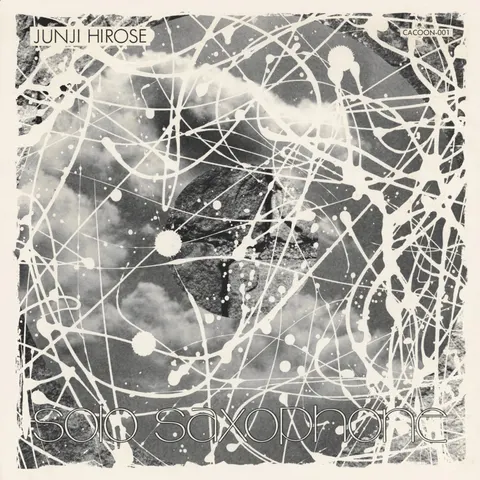
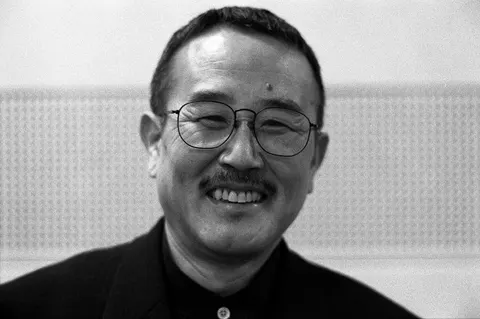
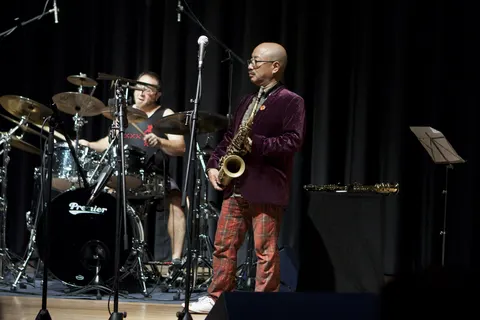
- Junji Hirose - saxophonist on Arirang Fantasy and Echoes Of Empty.
- Yosuke Yamashita - pianist on Black Roots and on the trio track of Like A Dew Also Like A Thunder recorded at Shinjuku Quest Hall on October 20, 1999.
- Kazutoki Umezu - saxophonist on Black Roots.
- Kazumi Watanabe - guitarist on the trio track of Like A Dew Also Like A Thunder with Yamashita.
- Yoriyuki Harada - pianist on the duo track of Like A Dew Also Like A Thunder recorded on May 10, 2001.
- Otomo Yoshihide - turntablist in Conduction #50 on Testament: A Conduction Collection.
- Kang Eun Il - haegeum player on Black Roots, Black Rain and a track of Like A Dew Also Like A Thunder.
- Mototeru Takagi - tenor saxophonist on Seishin-Seido.
- Barre Phillips - bassist who shares Live "Okidoki" with Yoshizawa, in a separate duo.
- Takeo Suetomi - promoter and producer at Chap Chap Records, who recorded the Hofu concerts.
- Shonosuke Okura - drum master (otsuzumi) on Echoes Of Empty and leader of the 2026 tribute Iyasaka.
- Tomoe Shizune - butoh dancer and composer, with Kim and Yoshizawa on the DVD Landscape On The Way To Sleep.
- Shin Joong-hyun - guitarist and bandleader, with Kim in Add 4 and in Shin Joong Hyun and Questions, whose 1970 live "Funky Broadway" appears on a 2011 anthology.
More Free Jazz Artists
See all 320 Free Jazz artists →More South Korean Jazz Artists
See all 197 South Korean artists →- Discogs: Kim Dae Hwan
- MusicBrainz: Kim Dae Hwan
- Wikidata: Kim Dae Hwan (Q12587157)
- Korean Wikipedia: Kim Dae Hwan
- NoBusiness Records: Korean Fantasy
- NoBusiness Records on Bandcamp: Way Of The Breeze
- Jazz Tokyo: Live after Live #416, the 2024 memorial concert in Hofu
- YouTube: Kim Dae Hwan, Black Roots, full album
- Kim Dae Hwan on JazzProfiles.com
- Discogs: Kim Dae Hwan, artist 851974
- MusicBrainz: Kim Dae Hwan
- Wikidata: Kim Dae Hwan
- Wikipedia (Korean): Kim Dae Hwan
- Wikipedia (Korean): Kang Tae Hwan
- Seoul Shinmun: profile of the percussionist Kim Dae Hwan, with chronology (August 18, 1998)
- Seoul Shinmun: the patron of the Kim Dae Hwan museum (July 29, 2005)
- Newsis via Naver: first-generation special concert for Kim Dae Hwan (March 29, 2004)
- Korea JoongAng Daily: "Music without rules" (May 13, 2004)
- Weekly Hankook: free music saxophonist Kang Tae Hwan (September 14, 2002)
- Sisa Journal: the late percussion master Kim Dae Hwan, music and passion (March 9, 2004), via the Internet Archive
- Jazz Tokyo: Live after Live #416 by Takehiko Ono (August 3, 2024)
- Squid's Ear: Seishin-Seido, with a biography of Kim Dae Hwan
- Squid's Ear: Way Of The Breeze
- Squid's Ear: Korean Fantasy
- Prog Not Frog: Kim Dae Hwan, Black Rain (2008)
- NoBusiness Records: Korean Fantasy
- Cover Art Archive: Black Rain, Ene Media (2003)
- Discogs: Black Roots, SCP-001PSS
- Discogs: Black Rain, SCO-022CSS
- Discogs: Like A Dew Also Like A Thunder, BIGD-001
- Discogs: Live "Okidoki", CPCD-003
- Discogs: Seishin-Seido, NBCD 157
- Discogs: Korean Fantasy, NBCD 161
- Discogs: Echoes Of Empty, CPCD-027
- Discogs: Way Of The Breeze, NBCD 176
- Discogs: Testament: A Conduction Collection, 80478-2