 JAZZPROFILES lives in the music 1,765 Jazz Artists fully Profiled!
Yoriyuki Harada
Last updated October 21, 2026
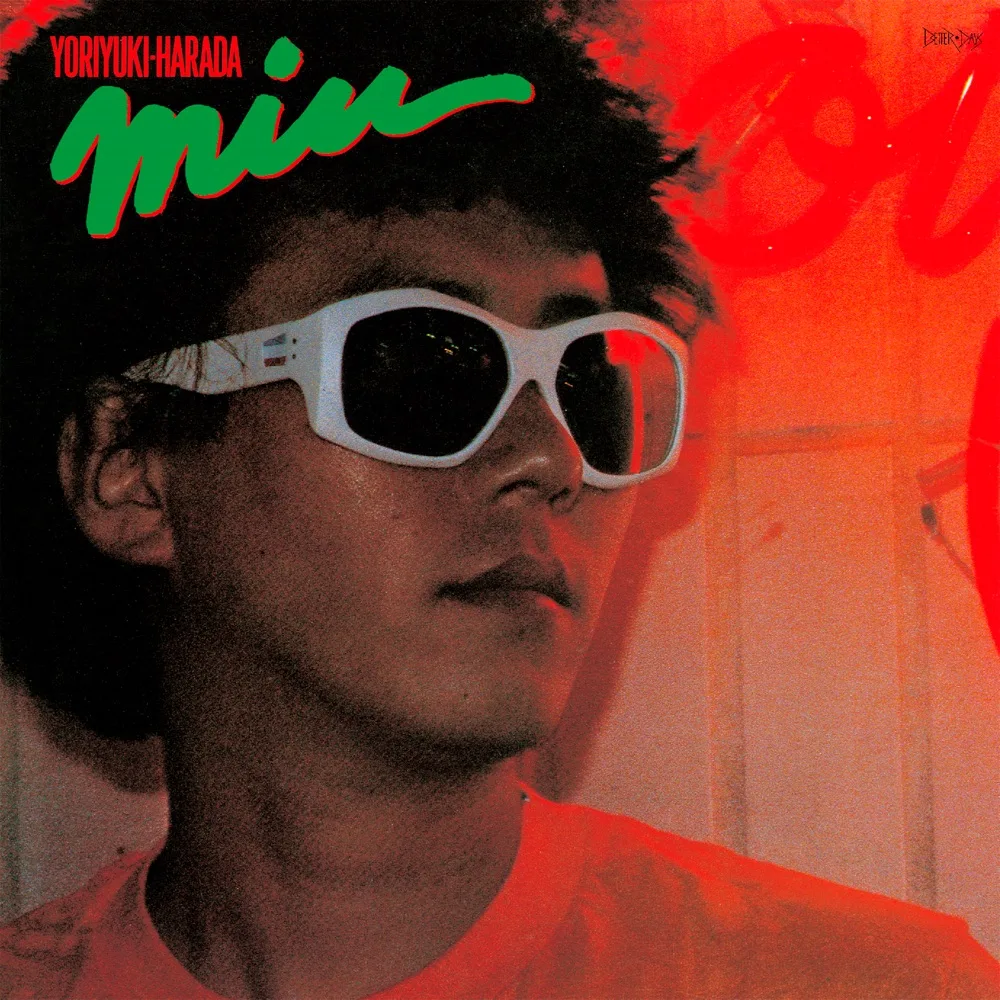
Yoriyuki Harada on the cover of Miu (Better Days, 1981). Album artwork, shown for identification; not Creative Commons. Standard copyright, all rights reserved, held by Nippon Columbia. This is not a Creative Commons or public-domain image; it is an album cover shown as an honestly disclosed editorial identification image. — https://music.apple.com/us/album/miu/1547563185
Yoriyuki Harada (原田依幸, Harada Yoriyuki in Japanese order) is a Tokyo free-jazz pianist who also plays bass clarinet, clarinet and percussion. He was born in 1948 in Shimane Prefecture, on the Sea of Japan coast of western Japan, and went to Tokyo as a student at the Kunitachi College of Music in the western suburbs. He trained there as a clarinettist; one jazz archive describes him as self-taught on the piano, which became his main instrument. He was already playing bass in professional jazz groups and organising campus concerts when he met the saxophonist and clarinettist Kazutoki Umezu in the college's clarinet department.
The two began improvising as a duo, Umezu on clarinet and bass clarinet and Harada on piano, working with graphic scores and prepared piano. They added a high-school drummer, Tetsuya Morimura, and called the trio Seikatsu Kōjyō Iinkai, "Lifestyle Improvement Committee", a half-joking borrowing of the committee language of the student radicals of the day. The band came apart around 1973. In 1974 Harada formed a trio of his own and played jazz coffeehouses across Japan.
Umezu went to New York in September 1974 and settled into the Lower East Side loft scene, then invited Harada over. Harada arrived in July 1975. On 20 July 1975 they played a concert at Sunrise Studios, a loft on Second Avenue with a grand piano, with the trumpeter Ahmed Abdullah, the bassist William Parker and the drummer Rashid Sinan. On 11 August 1975 the same five recorded at Studio We, mostly in single takes by Umezu's recollection. The album was issued by the band itself, credited to a "New York branch" of Seikatsu Kōjyō Iinkai (生活向上委員会ニューヨーク支部), with Harada on piano and bass clarinet and the side-long "Stravizauls" credited to him as composer. The Belgian label Aguirre reissued it in 2022.
Back in Japan in 1976 he played in more than one band. He is on a tape of the drummer Sabu Toyozumi's unit made at the Franco-Japanese Hall on 21 May 1976, with Umezu and the reed players Hiroaki Katayama and Masami Nakagawa, which was released only in 2021 as Cosmos Has Spirit / Phase One. He also played in Umezu's free-jazz band 集団疎開 (Shudan Sokai), whose one album, Sono Zenya, was taped live at the club Alone in Hachioji on 24 December 1976. From there the Seikatsu Kōjyō Iinkai name grew into a full orchestra that became known around Japan for its humorous stage appearances. Harada conducted and played piano on its major-label debut This Is Music Is This!? (Union Records, 1980), which moves between originals and "Take the A Train", and on Dance Dance Dance (Union Records, 1981), where he is credited with piano, electric piano, organ, Mini Moog, soprano saxophone, clarinet and voice. Two of his own pieces, "Wanaoki" and "Hentai Nanabyoshi", are on that second record, and both reappear on his own album recorded the following year.
On 18 October 1980 the Donaueschingen Musiktage in Germany recorded a concert by Masahiko Togashi, Masahiko Satoh and the shakuhachi player Hozan Yamamoto, issued as Three Masters (Next Wave). On the closing piece, Satoh's "Midare", Harada is the pianist, next to Umezu, the trombonist Shigeharu Mukai and the drummer Shota Koyama. The Umezu-Harada Duo's own Danke came out on the same label in 1981, with the German critic and producer Joachim Ernst Berendt, who is also credited on Three Masters, as producer.
His first album under his own name was Miu, recorded at Nippon Columbia's studios between 20 August and 6 October 1981 and released by Better Days. Harada plays piano, clarinet, bass clarinet, soprano saxophone and ocarina and leads a group that includes the vibraphonist Hiroshi Hatsuyama, the drummers Ryojiro Furusawa, Tony Koba and Toyozumi, the bassists Tetsu Yamauchi and Hideaki Mochizuki and the cellist Keiki Midorikawa. It includes a version of Sun Ra's "There'll Be Comeback" and is available on streaming services through Nippon Columbia. The same year he recorded Flame Up with Togashi and Umezu (King Records, taped in May 1981, released 1982), and he played bass clarinet in Akira Sakata's large band on 4 O'Clock, then in the Haniwa All Stars of Kiyohiko Senba (CBS/Sony, 1983) and on Sakata's Ellington programme DA-DA-DA (1985).
Two 1983 sessions were released much later: a night at Shinjuku Pit Inn on 28 March with a string ensemble billed as the Mondrian Areopagitica String Quartet, issued by Off Note in 2015 as 1983, and improvised sets with the flautist Jim Denley at the clubs Aketa and Goodman in Ogikubo on 31 July and 1 August, put out as the cassette Tokyo 1983. A 1985 recording made in Tokyo, on which only Harada is credited, was not released until 2000, as Kaibutsu. On 16 September 1988 he led his Unit at Shinjuku Pit Inn with the American drummer Andrew Cyrille as guest, a single 59-minute performance released by Aketa's Disk as Ehyang in 1989. Aketa no Mise, the Nishi-Ogikubo club that Shoji Aketagawa opened in 1974 and the home of that label, is where he still plays regularly.
Off Note took up his work in the middle of the 1990s. Harada Isu (原田椅子, 1996) is a two-disc set of his quartet, with the saxophonist Hideo Tokioka, the bassist Hideaki Mochizuki and the drummer Shota Koyama, taped at Shinjuku Pit Inn in November and December 1995, plus one 1983 track with Takeo Moriyama on drums. Sixth Murder (1997) is a duo with the bassist Isao Suzuki, recorded at Aketa no Mise on 31 December 1995; the two worked together again on Zun-Bararin (2010) and, with the cellist Tristan Honsinger, Dokoku (2010). He recorded Mu-Myo with Koichi Matsukaze at the Mitaka Arts Center on 12 March 2003, and a duo with Honsinger, Margin, in Ogikubo in October 2006.
Korea is the other half of his later career. Homura (Off Note, 2007) was recorded in Seoul in March 2007 with the trumpeter Choi Sun Bae and the saxophonist and clarinettist Alfred Harth, and comes with a DVD of the sessions. Two concerts he gave at Chang Soo Park's house in Seoul, on 14 August 2003 and 20 May 2005, were issued on streaming services as volumes 48 and 49 of The House Concert Live Collection in December 2025. In Russia he recorded with the saxophonist Sergey Letov in Moscow on 13 September 2012 and in Protvino on 14 September 2012, released as Live in 2021.
The late 2010s brought a run of records in the line of Cecil Taylor. Tokyo Banka (Off Note, 2018) is a duo with the tenor saxophonist Naohiro Kawashita, recorded at Sound & Bar Howl in Tokyo on 26 September 2017. Taylor passed away in April 2018, and in the same year Harada and the nohkan flautist Yukihiro Isso released two Tohyohyo Music albums both subtitled as tributes to him: Mono Gurui, a two-disc trio with the drummer Tatsuya Yoshida, and Yugen Jikko, with the sho player Ko Ishikawa and the percussionist Takinojo Mochizuki.
He is still working. A jazz-archive listing for 2025 and 2026 shows Harada leading a regular quartet at Aketa no Mise, with the bassist Hideaki Mochizuki, the drummer 石塚俊明 (Toshiaki Ishizuka) and a tenor saxophonist (Hideo Tokioka through early 2025, then 鈴木放屁), alongside a long run of duo evenings at Nutteru House in Kappabashi with partners including the guitarist 石渡明廣 (Akihiro Ishiwatari), the saxophonists Eiichi Hayashi, Masayo Koketsu and Ryuichi Yoshida, and the drummer Shoji Hano, listed for 8 March 2025. On 23 August 2026 he played Shinjuku Pit Inn in a trio billed as Seo, Harada and Toyozumi, and dates at Aketa no Mise and Nutteru House are listed into late October 2026.
Harada plays free jazz at the piano in the manner associated with Cecil Taylor: heavy rhythmic figures in the bass register, very fast runs across the keyboard and long, building improvisations. The Tobira Records and Aguirre notes on the 1975 New York record single out the speed and force of his playing at the Sunrise Studios concert, and the tribute titles of his 2018 albums name Taylor outright. A track on the 1976 Shudan Sokai album, "Sechi no Barado", is rendered by a Discogs contributor as "Ballad of Cecil".
He is not only a free-jazz pianist. The Seikatsu Kōjyō Iinkai years show an appetite for theatre and comedy, with a repertoire of originals and standards such as "Take the A Train", "A Night in Tunisia" and "St. Thomas", and Harada contributing synthesizer and organ as well as piano. Miu adds a Sun Ra tune and fusion textures, with electric bass and vibraphone. He is also credited with the calligraphy on Dokoku and the title lettering on Kaibutsu.
His partners across the years are mostly horn players and percussionists from Tokyo's improvising circle, plus visiting players from Europe, Korea and the United States, so the discography reads as a long list of duos: Umezu, Isao Suzuki, Honsinger, Matsukaze, Kawashita, Letov, Yoshida and Cyrille.
- Miu (1981, Better Days YF-7040-N) - His first album as leader, with Hiroshi Hatsuyama's vibraphone, Sabu Toyozumi, Ryojiro Furusawa and Tony Koba on drums, and the Sun Ra tune "There'll Be Comeback". Apple Music - Miu · YouTube - Meta · YouTube - Miu Listen
- Seikatsu Kōjyō Iinkai (1975, self-released Ski No. 1; Aguirre reissue 2022, with Kazutoki Umezu, Ahmed Abdullah, William Parker and Rashid Sinan) - The New York loft session recorded at Studio We on 11 August 1975. Tobira Records - Aguirre reissue
- Ehyang (1989, Aketa's Disk AD-35CD, Yoriyuki Harada Unit featuring Andrew Cyrille) - One 59-minute concert taped at Shinjuku Pit Inn on 16 September 1988, with guitar and bass by Akihiro Ishiwatari. Discogs - Ehyang
- Harada Isu (1996, Off Note ON-9, Yoriyuki Harada Unit) - Two discs of the quartet at Shinjuku Pit Inn, late 1995. YouTube - 1995.11.29 (Off Note) Listen
- Sixth Murder (1997, Off Note ON-20, with Isao Suzuki) - Piano and bass duo recorded at Aketa no Mise on 31 December 1995. YouTube - Part 1 (Off Note) Listen
- Margin (2007, Off Note ON-61, with Tristan Honsinger) - Cello and piano, recorded in Ogikubo in October 2006. YouTube - Everywhere (Off Note) Listen · Buy
- Zun-Bararin (2010, Off Note ON-64, with Isao Suzuki) - Nine pieces, recorded in August 2009. YouTube - Lightnin' (Off Note) Listen
- Tokyo Banka (2018, Off Note ON-69, with Naohiro Kawashita) - Piano and tenor saxophone, recorded at Sound & Bar Howl. YouTube - Tokyo Banka 01 (Off Note) Listen
- The House Concert Live Collection, Vol. 49 (recorded 20 May 2005, released 2025) - Two long piano improvisations, live in Seoul. Apple Music - Vol. 49 · YouTube - full album Listen
Yoriyuki Harada (原田依幸) - Full Discography
Japanese free-jazz pianist who also plays bass clarinet, clarinet, soprano saxophone, ocarina and percussion. Born 1948, Shimane. Discogs artist 1417955.
Name variations on record: Harada Yoriyuki, Y. Harada, Yori Harada, Yoriyuki "Leo" Harada, Yoriyuki Hareda, Ёриюки Харада, 原田依幸.
Group affiliations: Seikatsu Kōjyō Iinkai (生活向上委員会) and its Orchestra, 集団疎開 (Shudan Sokai), Umezu-Harada Duo, Yoriyuki Harada Unit (原田依幸ユニット), Sakata Orchestra.
Leader (own-name and unit releases)
| Album | Year | Label | Personnel | Notes | Listen | Buy |
|---|---|---|---|---|---|---|
| Miu = ミユー | 1981 | Better Days, YF-7040-N (LP) | Yoriyuki Harada (piano, ocarina, clarinet, bass clarinet, soprano saxophone), Hiroshi Hatsuyama (vibraphone, marimba, glockenspiel, xylophone, harmonica), Tetsu Yamauchi (electric bass), Hideaki Mochizuki (double bass), Keiki Midorikawa (cello), Ryojiro Furusawa, Tony Koba and Sabu Toyozumi (drums, percussion) | Six tracks: "Meta", "Hen Tai 7", "There'll Be Comeback" (Sun Ra), "Wana Oki", "Miu", "Y's March". Recorded at Nippon Columbia Studios 1, 3 and 4, 20 August to 6 October 1981. | Apple Music · YouTube: Meta | Amazon |
| Ehyang = イヒャン (Yoriyuki Harada Unit featuring Andrew Cyrille) | 1989 | Aketa's Disk, AD-35CD | Yoriyuki Harada (piano), Akihiro Ishiwatari (guitar, bass), Andrew Cyrille (drums) | One 59:17 track. Recorded live at Shinjuku Pit Inn, Tokyo, 16 September 1988. Liner notes and production by Shoji Aketagawa. | not found | Amazon |
| 原田椅子 (Harada Isu) (Yoriyuki Harada Unit) | 1996 | Off Note, ON-9 | Yoriyuki Harada (piano, soprano saxophone on track 1-3), Hideo Tokioka (saxophone), Hideaki Mochizuki (double bass), Shota Koyama (drums), Takeo Moriyama (drums on "An Intermission") | Two CDs in a box. Recorded at Shinjuku Pit Inn, November and December 1995; "An Intermission" is dated 16 February 1983. The title is read Harada Isu. | YouTube: 1995.11.29 | Amazon |
| Kaibutsu | 2000 | M's/Craft's, MCCD-001 | Yoriyuki Harada (piano, bass clarinet) | Two suites (24:43 and 28:55). Recorded in Tokyo in 1985. Harada is credited with the title lettering. | not found | Amazon |
| 1983 (with Mondrian Areopagitica String Quartet) | 2015 | Off Note, non-24 | Yoriyuki Harada (piano, clarinet), Keiki Midorikawa (cello), Hideaki Mochizuki, Koichi Yamazaki and Yasushi Yoneki (double bass) | Three tracks: "Sedotta E Abbandonata", "Theme For The Eulipions", "Kandinsky". Recorded at Shinjuku Pit Inn, 28 March 1983; mastered 2015. Mini-LP replica sleeve. | YouTube: track (Off Note) | Amazon |
| The House Concert Live Collection, Vol. 48: Yoriyuki Harada | 2025 | The House Concert (digital) | Yoriyuki Harada (piano) | Three tracks. Recorded live at Chang Soo Park's house, Yeonhui-dong, Seoul, 14 August 2003; released 4 December 2025. | Apple Music · YouTube: full album | not found |
| The House Concert Live Collection, Vol. 49: Yoriyuki Harada | 2025 | The House Concert (digital) | Yoriyuki Harada (piano) | Two tracks (21:02 and 20:49). Recorded live at Chang Soo Park's house, Yeonhui-dong, Seoul, 20 May 2005; released 5 December 2025. | Apple Music · YouTube: full album | not found |
Co-leader (duos, trios and group releases billed jointly)
| Album | Year | Label | Co-billed with | Notes | Listen | Buy |
|---|---|---|---|---|---|---|
| Seikatsu Kōjyō Iinkai (as 生活向上委員会ニューヨーク支部, the New York branch) | 1975 | Self-released, Ski No. 1; ALM Records, AL-10; reissued by Aguirre, 2022 | Kazutoki Umezu (alto saxophone), Ahmed Abdullah (trumpet), William Parker (bass), Rashid Sinan (drums); Harada on piano and bass clarinet | Three tracks: "Stravizauls" (21:54, Harada), "Kim" (23:05, Umezu), "Not So Long Don" (1:59, Umezu). Recorded at Studio We, New York, 11 August 1975. | Label shop page (Aguirre reissue) | Amazon |
| その前夜 - Live At 八王子 Alone (as 集団疎開) | 1977 | Des Chonboo Records, DCB-01 | Kazutoki Umezu (alto and baritone saxophone), Junji Mori (alto saxophone), Takashi Kikuchi (drums, percussion); Harada on piano and soprano saxophone | Four tracks. Recorded live at the club Alone, Hachioji, 24 December 1976. Silk-screened sleeve. | not found | not found |
| This Is Music Is This!? (as 生活向上委員会大管弦楽団, Seikatsu Kōjyō Iinkai Orchestra) | 1980 | Union Records, GU-2002 | Kazutoki Umezu, Masami Shinoda, Junji Mori, Hiroaki Katayama (reeds), Shinji Yasuda, Tetsuji Yoshida (trumpets), Haruki Sato, Hiroshi Itaya (trombones), Tsutomu Numagami, Takeharu Hayakawa (basses), Kenichi Kameyama, Takashi Kikuchi (drums); Harada on piano, congas, whistle and as conductor | Five tracks, including "Take The 'A' Train". Released 25 February 1980. Gatefold sleeve. | not found | Amazon |
| Danke = ダンケ (Umezu-Harada Duo) | 1981 | Next Wave, 25PJ-1007 | Kazutoki Umezu (alto saxophone, bass clarinet, vocals) | Six tracks, including "Bitte", "Danke" and "Kleine Nacht". Harada plays piano, bass clarinet and vocals. Produced by Joachim Ernst Berendt and Kiyoshi Koyama. | not found | Amazon |
| Dance Dance Dance = ダンス・ダンス・ダンス (as Seikatsu Kōjyō Iinkai Orchestra) | 1981 | Union Records, GU-2004 | The orchestra with Kazutoki Umezu, Hiroaki Katayama, Takeharu Hayakawa, Takashi Kikuchi, Kenichi Kameyama, Haruki Sato, Hiroshi Itaya and Shinji Yasuda | Nine tracks, including Harada's "Wanaoki" and "Hentai Nanabyoshi". Harada plays piano, electric piano, organ, Mini Moog, soprano saxophone, clarinet and voice. Recorded 1 to 15 September 1980; released 25 November 1981. | not found | not found |
| Tokyo 1983 | 1983 | Fringe Benefit Records, FBR51 | Jim Denley (flute) | Cassette. Side A recorded at Aketa, Nishi-Ogikubo, 1 August 1983, with Hideaki Mochizuki (bass); side B recorded at Goodman, Ogikubo, 31 July 1983, with Keiki Midorikawa (cello) and Yoshiaki Fujikawa (reeds). Billed as "Yoriyuki Hareda". | not found | not found |
| 六日のあやめ = Sixth Murder | 1997 | Off Note, ON-20 | Isao Suzuki (bass) | Two tracks (19:36 and 6:15). Recorded at Aketa no Mise, Tokyo, 31 December 1995; released 7 June 1997. | YouTube: Part 1 (Off Note) | Amazon |
| 無明 = Mu-Myo | 2003 | Ohrai Records, JMCK-1017 | Koichi Matsukaze (alto and tenor saxophone, flute) | Six tracks, including "Gassan No Mizu" and "Black Sesame". Recorded at Mitaka Arts Center, 12 March 2003; released October 2003. | not found | Amazon |
| Margin | 2007 | Off Note, ON-61 | Tristan Honsinger (cello) | CD with a DVD-Video. Four pieces: "Everywhere", "Nowhere", "Erehwyeve", "Erewhon". Recorded at Ogikubo Community Center, Tokyo, October 2006. | YouTube: Everywhere (Off Note) | Amazon |
| Homura | 2007 | Off Note, ON-62 | Choi Sun Bae (trumpet), Alfred Harth (tenor saxophone, clarinet) | CD with a DVD of three films. Recorded at Evans, Seoul, March 2007; mixed in Tokyo in September 2007. | not found | Amazon |
| Zun-Bararin [一刀両断] | 2010 | Off Note, ON-64 | Isao Suzuki (bass) | Nine tracks. Recorded at Studio Grand Bleu, Tokyo, August 2009. | YouTube: Lightnin' (Off Note) | Amazon |
| Dokoku | 2010 | Off Note, ON-65 | Isao Suzuki (bass), Tristan Honsinger (cello) | Three pieces: "Tokkan", "Dokoku", "Sekibaku". Recorded 23 November 2009; released 29 August 2010. Harada is also credited with calligraphy. | not found | Amazon |
| Mono Gurui (In Tribute To Cecil Taylor) | 2018 | Tohyohyo Music, tohyohyo 007 and 008 | Yukihiro Isso (nohkan, dengakubue, shinobue), Tatsuya Yoshida (drums) | Two CDs, nine untitled numbered parts. | not found | Amazon |
| 東京挽歌 (Tokyo Banka) | 2018 | Off Note, ON-69 | Naohiro Kawashita (tenor saxophone) | Two tracks (25:07 and 9:21). Recorded at Sound & Bar Howl, Tokyo, 26 September 2017; released 21 October 2018. | YouTube: Tokyo Banka 01 (Off Note) | Amazon |
| 幽玄実行 - セシル・テイラー追悼 = Yugen Jikko (In Tribute To Cecil Taylor) | 2018 | Tohyohyo Music, tohyohyo-006 | Yukihiro Isso (flute), Ko Ishikawa (sho), Takinojo Mochizuki (percussion) | Five tracks. Released 8 December 2018. | not found | Amazon |
| Live (Sergey Letov and Yoriyuki Harada) | 2021 | Vyrgorod, DWYR-253 | Sergey Letov (saxophone) | Limited edition CD, eight tracks. Tracks 1 to 5 recorded at the DOM Cultural Center, Moscow, 13 September 2012; tracks 6 to 8 at the Children's Music School, Protvino, 14 September 2012, during a jazz festival. | not found | not found |
Guest and sideman appearances
| Album | Year | Leader | Label | Role | Listen | Buy |
|---|---|---|---|---|---|---|
| Three Masters = スリー・マスターズ | 1980 | Masahiko Togashi (with Masahiko Satoh and Hozan Yamamoto) | Next Wave, 25PJ-1006 | Piano on "Midare" (track B3) with Kazutoki Umezu, Shigeharu Mukai, Katsuo Kuninaka and Shota Koyama, conducted by Masahiko Satoh. Recorded live at Donau Hall, Donaueschingen, 18 October 1980; released in 1980. | not found | Amazon |
| Flame Up = フレイム・アップ | 1982 | Masahiko Togashi with Kazutoki Umezu and Yoriyuki Harada | King Records, K28P-6205 | Piano and percussion. Four pieces. Recorded at King Studio No. 2, Tokyo, 26 to 28 May 1981. | YouTube: Flame Up (Topic) | Amazon |
| 4 O'Clock | 1981 | Sakata Orchestra (Akira Sakata) | Better Days, YF-7026-N | Bass clarinet on two tracks ("4 O'Clock" and "E? E!! E?"). Released August 1981. | not found | not found |
| ユク・エフ・メイ | 1981 | Shuichi Chino | Boogie Woogie, 27-3H-43 | Horns, alongside Kazutoki Umezu and Koichi Matsukaze. | not found | not found |
| Haniwa / はにわ | 1983 | Kiyohiko Senba and His Haniwa All Stars | CBS/Sony, 28AH-1557 | Bass clarinet. | not found | not found |
| DA-DA-DA (Plays Duke Ellington And A Few Surprises) | 1985 | Akira Sakata and his DA-DA-DA Orchestra | Vari Bari Records, BM32-2002 | Clarinet and bass clarinet. Recorded 13 to 15 February 1985; released 21 May 1985. | not found | not found |
| 1998, New | 1998 | Isao Suzuki Group | Platz / Aketa's Disk, PCLP-75 / AD-57CD | Piano on track 5, "1998 All Open" (21:09). Recorded live at Aketa no Mise, 6 June 1998. | not found | not found |
| 音の力 Live At アケタの店 | 1999 | Various | Off Note, ON-32 (VHS) | Piano improvisation on one segment of this multi-artist video. | not found | not found |
| Passionate Age = パッショネイト・エイジ | 2001 | Keizo Inoue | Ohrai Records, SICH-1010 | Piano on track 2, "Ronde". Recorded live at Shinjuku Pit Inn, 8 and 9 March 2001. | not found | not found |
| Like A Dew Also Like A Thunder = 如露亦如雷 | 2004 | Kim Dae Hwan | Bigtory, BIGD-001 | Piano on track 2, "Duo", recorded 10 May 2001. | not found | not found |
| Cosmos Has Spirit / Phase One | 2021 | Sabu Toyozumi Unit | Kaitai Records, Y/T-CD-002 | Piano and reeds. Three pieces, with Kazutoki Umezu, Hiroaki Katayama, Masami Nakagawa and Morio Yoshida. Recorded at the Franco-Japanese Hall, 21 May 1976; limited to 150 copies; released 25 December 2021. | not found | not found |
Compilations and other appearances
Chronological list of compilation and track-only appearances: the multi-artist concert video 回転禁止の青春シリーズ 天国注射の昼 ライブ・イン・日比谷野音 1983.8.21/9.17 (Toei Video, VHS, 1984) is listed under his Discogs name; the Discogs entry shows no credits.
Sources
- Kazutoki Umezu - his partner from the Kunitachi years: Seikatsu Kōjyō Iinkai (the 1975 record and the 1980 and 1981 orchestra albums), the Umezu-Harada Duo's Danke (1981), Flame Up (1982) and Three Masters (1980).
- Masahiko Togashi - leader of Flame Up (King Records, 1982), with Harada on piano and percussion, and one of the three masters of the Donaueschingen record Three Masters (1980).
- Isao Suzuki - bassist; Sixth Murder (1997), Zun-Bararin (2010) and Dokoku (2010), and a guest spot on Suzuki's 1998, New.
- Koichi Matsukaze - saxophonist and flautist; the duo album Mu-Myo (Ohrai Records, 2003).
- Akira Sakata - leader of the Sakata Orchestra (4 O'Clock, 1981) and the DA-DA-DA Orchestra (1985), where Harada plays clarinet and bass clarinet.
- Sabu Toyozumi - drummer on Miu (1981) and leader of the unit on Cosmos Has Spirit / Phase One (recorded 1976, released 2021).
- Hiroaki Katayama - reed player in the Seikatsu Kōjyō Iinkai Orchestra (1980, 1981) and on Cosmos Has Spirit.
- Masami Shinoda - alto saxophonist and flautist on the Seikatsu Kōjyō Iinkai Orchestra's This Is Music Is This!? (1980).
- Ryojiro Furusawa and Hiroshi Hatsuyama - drummer and vibraphonist on Miu.
- Shigeharu Mukai and Masahiko Satoh - trombonist and conductor on "Midare" from Three Masters (1980); Mukai is also on 4 O'Clock.
- Takeo Moriyama - drummer on "An Intermission", the 1983 track on Harada Isu.
- Kiyohiko Senba - leader of the Haniwa All Stars, with Harada on bass clarinet (CBS/Sony, 1983).
- William Parker - bassist on the 1975 New York Seikatsu Kōjyō Iinkai record.
- Andrew Cyrille - drummer, guest on Ehyang (recorded 16 September 1988).
- Tristan Honsinger - cellist; Margin (2007) and Dokoku (2010).
- Choi Sun Bae and Alfred Harth - trumpeter and reed player on Homura (2007).
- Naohiro Kawashita - tenor saxophonist; Tokyo Banka (2018).
- Sergey Letov - Russian saxophonist; the concerts of September 2012 issued as Live (2021).
- Yukihiro Isso and Tatsuya Yoshida - nohkan player and drummer on Mono Gurui (2018); Isso is also on Yugen Jikko with Ko Ishikawa and Takinojo Mochizuki.
- Shoji Hano - drummer; a Harada and Hano duo evening at Nutteru House is listed for 8 March 2025, and a video exists of a Harada, Hano and David Chiesa trio. No shared record credit appears in the discographies.
More Free Jazz Artists
See all 298 Free Jazz artists →More Japanese Jazz Artists
See all 262 Japanese artists →- Apple Music artist page
- Discogs: Yoriyuki Harada
- Off Note label: Harada Isu (ON-9)
- Jazz Archive (ジャズ資料館): 原田依幸 live listings
- Tobira Records: Seikatsu Kōjyō Iinkai LP (Aguirre)
- Yoriyuki Harada on JazzProfiles.com
- r/JapaneseJazz
- Wikipedia (German): Yoriyuki Harada
- Wikipedia (Dutch): Yoriyuki Harada
- Wikidata: Yoriyuki Harada, Q34129103
- Discogs: Yoriyuki Harada, artist 1417955
- Tobira Records: Seikatsu Kōjyō Iinkai, essay on the 1975 New York record
- Jazz Music Archives: Yoriyuki Harada
- Jazz Archive (ジャズ資料館): 原田依幸 live listings
- Off Note: ON-9, Harada Isu
- Apple Music: Miu