 JAZZPROFILES lives in the music 2,059 Jazz Artists fully Profiled!
Lee Bong-jo
Last updated October 25, 2026
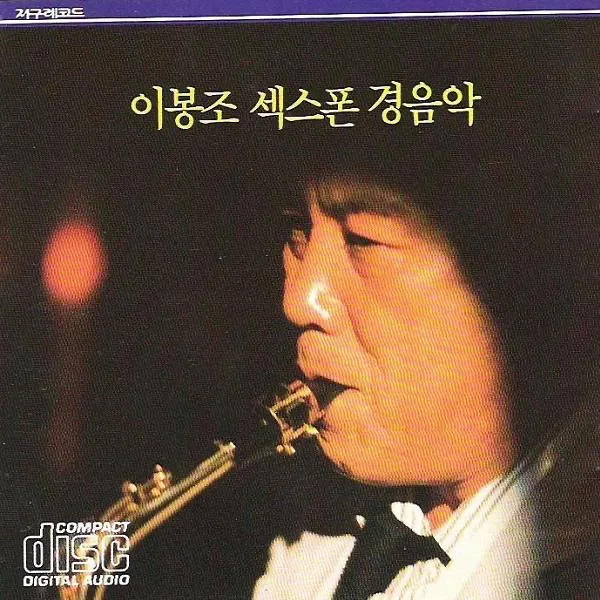
Cover of the Jigu Records CD edition of Lee Bong-jo's saxophone album (Apple Music title *Lee Bong Jo Saxophone Instrumental*, 이봉조 색소폰 경음악), the album recommended in this profile. It pictures a saxophonist on a release issued under his name; the release does not caption the picture or credit a photographer. Album artwork, shown for identification; it is not Creative Commons. Standard copyright, all rights reserved, held by Jigu Records or its successor. This is not a Creative Commons or public-domain image; it is an album cover shown as an honestly disclosed editorial identification image. — https://music.apple.com/us/album/lee-bong-jo-saxophone-instrumental-%EC%9D%B4%EB%B4%89%EC%A1%B0-%EC%83%89%EC%86%8C%ED%8F%B0-%EA%B2%BD%EC%9D%8C%EC%95%85/449792565 (Apple Music artwork, album 449792565)
Lee Bong-jo (이봉조) was a South Korean tenor saxophonist, composer, arranger and bandleader who passed away on August 31, 1987, of a heart attack. His public identity is mostly popular music. He wrote or arranged some of the best-known Korean songs of the 1960s and 1970s, among them 밤안개, 안개 and 무인도, led a television network's house orchestra for years and scored films. His jazz identity is real but narrower. He played jazz tenor on the US Eighth Army stages from the mid-1950s, studied with a first-generation tenor player and was nicknamed the Korean Stan Getz, but his own saxophone albums are mostly instrumental versions of Korean pop songs that Discogs files as light music, and only some carry a Jazz tag, always beside Pop or Folk. Both sides are set out below. Discogs and his own releases bill him Lee Bong Jo; Korean sources write Lee Bong-jo, and Japanese releases used 李鳳祚.
He was born in Namhae, South Gyeongsang Province, and grew up and went to school in Jinju. His birth date is given as May 1 in every source, but the year differs. Korean Wikipedia, the Digital Jinju Encyclopedia and a 2024 Gyeongnam news feature say 1931, and the news feature adds that he was registered as born in 1932; the Encyclopedia of Korean Culture, Japanese Wikipedia and Wikidata give 1932. This profile gives both years.
According to the Jinju and national encyclopedias, he became a pupil of the songwriter Lee Jae-ho (이재호) while still in middle school. He entered the architecture department of Hanyang University in 1952 and graduated in 1958, after a two-year leave of absence. He learned tenor saxophone as a pupil of Eom Tommy (엄토미), a first-generation Korean jazz player. Korean Wikipedia says that from 1954, still a student, he played jazz saxophone as a hobby at Eighth Army venues while working as a civil servant in the Seoul city government's civil engineering department, and that he left the civil service in 1961 to become a full-time musician. The two encyclopedias place the start of his band, the Lee Bong-jo Band, after his 1958 graduation and say it played in nightclubs on US military bases, where he was devoted to American jazz.
His breakthrough as a songwriter came in 1962 with 밤안개, sung by the singer Hyun Mi (현미). The Digital Jinju Encyclopedia calls it his composition, while the Encyclopedia of Korean Culture describes an adapted song for which he wrote the Korean lyrics, so the sources differ on his exact role. In 1964 his band won the grand prize at the MBC TV national light-music contest, and he won the Blue Dragon Film Awards music prize for the film 맨발의 청춘. At the end of 1964 he became the house bandleader when Dongyang TV opened, and Korean newspapers later call him the former TBC orchestra leader. The drummer Ryu Bok-sung told the Seoul Shinmun in 2005 that he joined Lee's band in 1961 and played in it for five years. In 1968 the trumpeter Kang Dae-gwan joined the TBC orchestra at its founding on Lee's recommendation, according to the Kyunghyang Shinmun's 2017 obituary of Kang. The Encyclopedia of Korean Culture lists him as KBS house bandleader in 1980. Korean Wikipedia and the 2024 feature name three film scores, 가정교사 (1963), 광야의 호랑이 (1965) and 안개 (1967), and Korean Wikipedia credits him with launching or promoting the singers Hyun Mi and 정훈희.
Songs of his went abroad too. The Encyclopedia of Korean Culture lists prizes for his songs at song festivals in Tokyo in 1970 (안개, sung by 정훈희), in Greece in 1971 and 1973, and in Chile in 1974, 1975 and 1979, and a Republic of Korea culture and arts award in 1971. Discogs confirms the Tokyo entry from the Japanese side: the 1970 Victor single 霧の街 and the festival LP credit him with the Korean lyrics of the song. In 1987 he was among the advisers preparing the performance programme of the Seoul Olympics' cultural events, and he died that August.
Discogs files eleven releases under his name in the main role, from 1969 to 1985, plus several undated LPs. Ten are albums billed to him as leader, the saxophone and light-music records described below, none of them listing a vocalist, and one is a vocal LP by Hyun Mi for which he is credited as composer and arranger. Their track lists are Korean popular songs and trot standards, many of them his own, with a handful of English-language pieces such as "Feelings" and "My Way" on one album. Four of the ten albums billed to him as leader carry a Jazz tag on Discogs, in each case beside Pop or Folk; the others are tagged Pop, Folk, or, for a 1978 disco album, Funk and Soul. Apple Music lists a 1966 Oasis Records collection that he shares with the trumpeter Kim In Bae, with saxophone versions of pop pieces such as "Love Potion No. 9", "Charade" and "Misty Night". No session as a sideman on a jazz record has been found. The saxophonist Lee Jung-sik (이정식) chose his song 꽃밭에서 for the 1999 album 화두: The Korean Jazz Standards Vol. 1, a jazz record on which Discogs credits Lee Bong Jo as composer.
After his death, Namhae County, where he was born, kept his name alive with an annual national song contest and a national saxophone contest named for him. A 2024 Gyeongnam news feature reports that he was buried in Cheonan, that Namhae artists proposed a Lee Bong-jo music museum in 2019 and that the singer Hyun Mi pledged to donate his saxophone and handwritten scores, and that the plan has stalled. The Encyclopedia of Korean Culture says he left many recordings and more than 300 songs.
What is not known is considerable. No interview in which he speaks about jazz was found, and no contemporary jazz-press review. Discogs does not say which of the two saxophonists plays on each track of the two 1977 Hit Records albums, which are billed to him jointly with 한인창 and 강승룡, and it dates several of his LPs not at all. Korean Wikipedia says that late in his career he also released saxophone albums of Christian music, but gives no titles and none were found.
He is a saxophonist of the American tenor tradition adapted to Korean popular song. Korean Wikipedia and two news features call him the Korean Stan Getz, and the Digital Jinju Encyclopedia says he threw himself into American jazz on the military circuit; a 2026 Namhae feature says he joined jazz and swing to a Korean sensibility. The records themselves show the second half of that sentence more than the first. The albums play melodies such as 돌아와요 부산항에, 무인도 and 보고싶은 얼굴 in a light-music style, and the arrangements and compositions are written for a broadcast orchestra and a pop audience.
He is best understood as a Korean popular-music bandleader with a jazz saxophonist's training and reputation, working between mainstream jazz tenor playing and Korean pop and trot song. The two subgenre tags on this profile are meant in that limited sense, and nothing in the sources found calls him a bebop or modern-jazz improviser.
- Lee Bong-jo, 이봉조 작,편곡 경음악집 (1977, SRB SR-0055) - twelve of his own songs and arrangements, among them "우리 엄마", "안개" and "무인도". Apple Music dates the same album 1973. Spotify - 이봉조 작편곡 경음악집 Listen
- Lee Bong-jo, SAXOPHONE SOUND (1985, Jigu JLS-1201962) - fourteen songs including "보고싶은 얼굴", "안개" and "무인도"; Discogs tags it Jazz and Pop. The CD edition is on Apple Music as Lee Bong Jo Saxophone Instrumental. Apple Music - Lee Bong Jo Saxophone Instrumental · YouTube - 20 tracks Listen
- Lee Bong-jo, "무인도" (1985, Jigu) - his signature song played on the saxophone. YouTube - 무인도 Desert Island Listen
- Lee Bong-jo and Kim In Bae, Oasis Instrumental Music Vol. 2 (Oasis, dated 1966) - saxophone and trumpet versions of pop pieces. Apple Music - Oasis Instrumental Music Vol. 2 Listen
- Lee Bong-jo, Stereo Light Music Special (1970, Taedo STLK-7111) - Discogs tags it Jazz, Rock and Folk. No stream was found. Discogs - Stereo Light Music Special
- His songs by other voices - a compilation of versions of his compositions by Hyun Mi and others. YouTube - 이봉조 작곡 모음 Listen
Lee Bong-jo (이봉조) - Full Discography
South Korean tenor saxophonist, composer, arranger and bandleader, born May 1, 1931 (family register: 1932), who passed away on August 31, 1987. Discogs files him as Lee Bong Jo (artist 5035236), with the name variations Bong Jo, リー・ボン・ジョー, 이봉조 and 李鳳祚. Most of his releases are Korean pop songs played as light music, and Discogs's genre tags show it: of the ten albums billed to him as leader, four carry a Jazz tag, always beside Pop or Folk. The Discogs artist 7649090, Lee Bong Joon, is a different person and is not included.
Name variations on record: Lee Bong Jo, Lee Bong-jo, Bong Jo, 이봉조, 李鳳祚, リー・ボン・ジョー.
Leader
Many of these LPs are undated or carry only a year on Discogs. Track titles are given in Hangul as printed.
| Album | Year | Label | Personnel | Notes | Listen | Buy |
|---|---|---|---|---|---|---|
| 추억의 물레방아 - 흘러간 멜로듸 (billed as 이봉조) | 1969 | Asia Record, ALS 158 | Lee Bong Jo; no other musicians are listed on the release record | LP, South Korea, released August 10, 1969. Twelve old popular and trot melodies, among them "타향살이", "황성옛터", "아리랑랑랑" and "목포의 눈물". Discogs files it under Pop. Discogs release 10514617. | not found | not found |
| Stereo Light Music Special | 1970 | Taedo, STLK-7111 | Lee Bong Jo; no other musicians are listed | LP, released October 15, 1970. Twelve Korean pop songs, among them "밤안개", "맨발의 청춘", "안개", "보고싶은 얼굴" and "종점". Discogs tags it Jazz, Rock and Folk, World & Country. Discogs release 17573911, master 2433997. | not found | not found |
| 이봉조 경음악집 제 1집 | 1977 | Sung Eum Limited, SEL-100 032 | Lee Bong Jo; no other musicians are listed | Stereo LP, released March 15, 1977. Fourteen tracks, among them "라스트 콘서트" (listed twice), "무인도", "안개", "나는 어떻하라구", "겨울나무" and "사랑의 스잔나". Discogs tags it Jazz and Pop, style Light Music. Discogs release 21468565. | not found | not found |
| 테너섹스폰으로 엮은 생음악 제1집 | 1977 | Hit (11), STL 0071 | Lee Bong Jo with 한인창, co-billed | Stereo LP, released May 1, 1977. Fourteen tracks of popular songs, among them "돌아와요 부산항에", "봄날은 간다" and "샌프란시스코". Discogs does not say who plays on which track. Pop, Folk, World & Country, style Light Music. Discogs release 36757684. | not found | not found |
| 앨트섹스폰으로 엮은 생음악 제2집 | 1977 | Hit (11), STL 0072 | Lee Bong Jo with Kang Seong Yong (강승룡), co-billed | Stereo LP, released March 30, 1977. Fourteen tracks of popular songs, among them "돌아와요 부산항에", "추억의 백마강", "신라의 달밤" and "남원의 애수". Discogs does not say who plays on which track. Pop, Folk, World & Country, style Light Music. Discogs release 37542435. | not found | not found |
| 이봉조 작,편곡 경음악집 ("Compositions and arrangements by Lee Bong-jo, light music") | 1977 | SRB records, SR-0055 | Lee Bong Jo; no other musicians are listed | Stereo LP, twelve tracks including "우리 엄마", "아내에게 바치는 노래", "안개", "무인도", "겨울 나무" and "어제". Discogs tags it Pop and Folk, World & Country, style Light Music. Apple Music and Spotify list an album of the same title and songs, dated 1973 on Apple Music. Discogs release 37809369. | Spotify | Amazon |
| DISCO 경음악 제4집 (billed as Sung-Jo Jung and Lee Bong Jo) | 1978 | Oasis Records, OL2109 | Lee Bong Jo with Jung Sung-jo (Sung-Jo Jung), co-billed; personnel not itemized | LP, released December 26, 1978. Sixteen disco instrumentals of Korean popular songs, among them "돌아와요 부산항에", "눈이 내리네" and "아버지". Discogs tags it Funk / Soul, styles Boogie, Disco and Funk. Discogs release 15908351. | not found | not found |
| SAXOPHONE SOUND | 1985 | Jigu Records, JLS-1201962 | Lee Bong Jo; no other musicians are listed | Stereo LP, released October 25, 1985. Fourteen tracks, among them "보고싶은 얼굴", "안개", "잊혀진 계절", "무인도", "떠날때는 말없이" and "돌아와요 부산항에". Discogs tags it Jazz and Pop. The CD edition on Apple Music, dated 1990 there, has nineteen tracks. Discogs release 29362558. | Apple Music · YouTube, 20 tracks · YouTube, "무인도" | Amazon |
| Saxophone 2 / 매혹의 색스폰 제2집 | undated | Daedo Records, DS-MAC-LP-807 | Lee Bong Jo; no other musicians are listed | Stereo LP, no year on Discogs. Thirteen tracks, among them English-language pieces "For the Good Times", "Green, Green Grass of Home", "Feelings" and "My Way". Discogs tags it Pop, style Light Music. Discogs release 33337226. | not found | not found |
| 색소폰 경음악 Vol.1 | undated | Jigu Records, JLS-1201233 | Lee Bong Jo; no other musicians are listed | LP, no year on Discogs. Fourteen tracks, among them "아직도 그대는 내 사랑", "제비", "무인도", "보고싶은 얼굴" and "밤안개". Discogs tags it Jazz and Pop, style Light Music. Discogs release 34647394. | not found | not found |
Vocal album with his songs and arrangements
| Album | Year | Label | Personnel | Notes | Listen | Buy |
|---|---|---|---|---|---|---|
| 보고싶은 얼굴 (billed as 현미 and Lee Bong Jo) | undated | Oasis Records, OL 12438 | Hyun Mi (현미, vocals); Lee Bong Jo (composer and arranger) | LP, no year on Discogs. Twelve tracks, among them "보고싶은 얼굴", "밤안개", "아빠안녕" and "님이 오신다고". Discogs tags it Jazz, Pop and Folk, World & Country. Discogs release 34735215. | not found | not found |
Other collections listed on Apple Music, not on his Discogs page
Apple Music dates these as shown; the dates may be those of digital reissues of the original LPs.
| Release | Apple Music date | Label | Notes | Listen | Buy |
|---|---|---|---|---|---|
| Oasis Instrumental Music Vol. 2: Saxophone By Lee Bong Jo / Trumpet By Kim In Bae | 1966 | Oasis Records | Twelve tracks, saxophone and trumpet versions of pop pieces; the saxophone items are "Love Potion No. 9", "Charade", "Bebo's Lover", "Washington Square", "Broken Promise", "Crying in the Chapel" and "Misty Night". | Apple Music | not found |
| Instrumental Music Collection | 1964 | Oasis Records | Ten instrumental tracks of Korean pop songs, among them "Youth with Barefoot" and "Misty Night" in Apple Music's English titles. | Apple Music | not found |
Composer, arranger, lyricist and track credits on other artists' releases
Chronological, from Discogs. His credit is as stated; no performing credit as a sideman on a jazz session was found.
| Year | Release | Leader | Label | Lee Bong Jo's credit and details | Listen | Buy |
|---|---|---|---|---|---|---|
| 1964 | 南仁樹 歌謠 傑作集 = 남인수 가요 걸작집 | 남인수 | L.K.L. Records, LKL-1003 | Composed and arranged. Discogs master 3478261, main release 25731625. | not found | not found |
| 1967 | 스테레오 앨범 第1集 | 윤복희 | Sin Seki, 가 12162 | Written and arranged. Discogs master 2513722, main release 22190509. | not found | not found |
| 1968 | 능금 / 나는 가리라 (이봉조 작곡집 9) | 강정화, 황신아, 최영희 | Sin Seki, 가 12205 | Composed. Discogs release 27220617. | not found | not found |
| 1969 | 최영희 애창곡집 | 최영희 | Sin Seki, 가 12254 | Composed and lyrics. Discogs release 27220575. | not found | not found |
| 1970 | 霧の街 = Foggy | 정훈희 | Victor, JET-2028 | Lyrics of the Korean-language side "안개". Discogs release 14375728. | not found | not found |
| 1970 | The 1st Tokyo International Popular Song Festival = 第一回東京国際歌謡音楽祭 | Various | Victor World Group, SWG-7223 | Lyrics of "Foggy" (track A7). Discogs master 2938243, main release 9533861. | not found | not found |
| 1971 | 사랑의 교실 / 들개 | Pearl Sisters, 정훈희 | Jigu Records, JLS120502 | Written-by credit. Discogs release 7927955. | not found | not found |
| 1971 | 사랑의 교실 / 별 | Pearl Sisters | Jigu Records, JLS 120471 | Composed. Discogs release 23279588. | not found | not found |
| 1971 | 스테레오 골든힛트앨범 | 조영남 / 최영희 | Sin Seki, 가 12351 | Composed and arranged. Discogs release 27220599. | not found | not found |
| 1973 | 名づけて愛 | 정훈희 | King Records, BS-1647 | Written-by and arranged, track B "孤独は重く". Discogs release 8746245. | not found | not found |
| 1974 | 나는 어떻하라구 | 윤항기 | Shin Segye Record, 가 12445 | Lyrics of "안개" (track A5). Discogs release 24473810. | not found | not found |
| 1974 | 무인도 | Kim Choo Ja (김추자) | Universal (6), KLS-100 | Composed; arrangements by Bock Ki Ho and Kim Yong Sun. Discogs master 2270647, main release 32675394. | not found | not found |
| 1974 | 둘이서 / 바보야 | 최원일, Park In Hee | Universal (6), KLS-107 | Composed. Discogs master 3573917, main release 15324851. | not found | not found |
| 1975 | The Old Favorite Song In Korea | Various | Sung Eum Limited | Arranged and conductor. Discogs release 24844949. | not found | not found |
| 1976 | Los Grandes Exitos Del Festival De Viña | Horacio Saavedra | Arena Producciones, ADLP-34 | Written-by, track B6 "Isleta Desierta". Discogs release 9446058. | not found | not found |
| 1977 | 최고 히트 가요 Go Go 생음악 | Various | Hit (11), HLM-16 | Composed. Discogs release 8837640. | not found | not found |
| 1979 | 깊은 정 | Lee Se Jin (이세진) | SRB records, SLK-1055 | Written-by, track B4 "별하나". Discogs release 10748629. | not found | not found |
| 1979 | 어쩌면 좋을까 / 박쥐우산 | 손기태 | Dai Han, STAR 1979626 | Composed. Discogs release 35821447. | not found | not found |
| 1980 | 컴백 리싸이틀 / 님은 먼곳에 / 무인도 | Kim Choo Ja (김추자) | SRB records, K-8017 | Composed, track B1 "무인도". Discogs release 19373149. | not found | not found |
| 1980 | 이은하의 새노래 | 이은하 | SRB records, SN-0005 | Arranged, track A2 "하루도 그대 못보면". Discogs release 20267131. | not found | not found |
| 1984 | 해군 군가집 '84 | Various | 해군본부 | Composed, track A2 "영원한 해병". Discogs release 18892723. | not found | not found |
| 1985 | 촛불같은 사랑 / 설마 | 이경미 | HKR, HC-200249 | Composed. Discogs release 31446485. | not found | not found |
| 1990 | 서울女子 | 김수희 | Hee Production, HRL-005 / Hyundai Records, SHHD-313 | Arranged, track B3 "철없는 아내". Discogs master 1570439, main release 8875761. | not found | not found |
| 1994 | 군가집 (1994년도) | Various | 국방부 | Composed, track B1 "부라보 해군". Discogs release 31311999. | not found | not found |
| 1995 | 청춘스타 (캬바레 종합편) | 진도현 | TGR, CMCD-1013 | Music for track 14 "철없는 아내". Discogs master 4385346, main release 15943208. | not found | not found |
| 1999 | 화두: The Korean Jazz Standards Vol.1 | Lee Jung Sik (이정식) | BMG Korea, BMGZD-0030 | Composer of track 11 "꽃밭에서". Discogs tags the album Jazz. Discogs release 38528976. | not found | not found |
| undated | Korean Music Series Vol. 3 | Various, tracks by the KBS Pops Orchestra | Jigu Records, JLS 120465 | Composed "팔도강산" (B2) and "안개" (B4). Discogs release 10563608. | not found | not found |
| undated | 안개 | Various | Sin Seki, 가 12182 | Tracks "안개 (경음악)" (A6) and "귀여운 꽃" (B6) are billed to Lee Bong Jo. Discogs release 8487087. | not found | not found |
| 2016 | Black Plastic Singing Flats V | Various | Little Axe Records, LAC-045 | Track B11 "Collage Shelf" is billed to Lee Bong Jo. Discogs master 1680302, main release 9607136. | not found | not found |
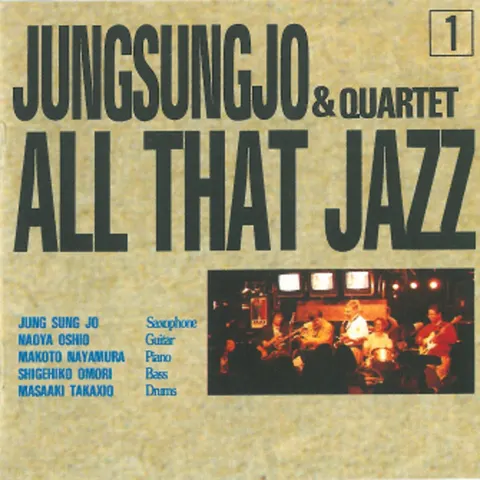
- Jung Sung-jo - tenor saxophonist and arranger, billed with Lee on DISCO 경음악 제4집 (Oasis Records, 1978). Both are credited on the same Discogs release.
- Hyun Mi (현미) - singer of 밤안개 and vocalist on 보고싶은 얼굴, a vocal LP for which Discogs credits Lee as composer and arranger.
- 정훈희 - singer of his song 안개 at the 1970 Tokyo festival and of several of his later songs.
- Kim Choo Ja (김추자) - singer of his song 무인도 on the 1974 LP 무인도 (Universal), with arrangements by Bock Ki Ho and Kim Yong Sun.
- Eom Tommy (엄토미) - first-generation tenor saxophonist with whom he studied.
- Lee Jae-ho (이재호) - songwriter to whom he was apprenticed as a middle-school pupil.
- Kang Dae-gwan - trumpeter who, per the Kyunghyang Shinmun's 2017 obituary, joined the TBC orchestra in 1968 at Lee's urging.
- Ryu Bok-sung (류복성) - drummer who told the Seoul Shinmun in 2005 that he played in Lee's band for five years from 1961.
- Kim In Bae - trumpeter billed with him on the 1966 Oasis collection on Apple Music.
- 한인창 and 강승룡 (Kang Seong Yong) - co-billed with him on the two 1977 Hit Records saxophone albums.
- Lee Jung-sik (이정식) - saxophonist whose 1999 album 화두: The Korean Jazz Standards Vol. 1 plays Lee's song 꽃밭에서.
More Mainstream Jazz Artists
See all 499 Mainstream Jazz artists →More South Korean Jazz Artists
See all 197 South Korean artists →- Discogs: Lee Bong Jo (artist 5035236)
- Wikidata: Lee Bong-jo (Q11522583)
- Korean Wikipedia: 이봉조
- Encyclopedia of Korean Culture: 이봉조
- Digital Jinju Encyclopedia: 이봉조
- Spotify: 이봉조 작편곡 경음악집
- Apple Music: Lee Bong Jo Saxophone Instrumental
- YouTube: 이봉조 색소폰 경음악 20 tracks
- Lee Bong-jo on JazzProfiles.com
- Encyclopedia of Korean Culture (Academy of Korean Studies): 이봉조
- Digital Jinju Encyclopedia: 이봉조 (written by Won Suk-kyung)
- Korean Wikipedia: 이봉조
- Japanese Wikipedia: 李鳳祚
- Wikidata: Lee Bong-jo (Q11522583)
- The Gyeongnam News, February 4, 2024: 색소폰의 대가 이봉조
- Arim News: 색소폰의 낭만을 노래한 작곡가 이봉조
- Kyunghyang Shinmun, July 23, 2017: obituary of Kang Dae-gwan
- Seoul Shinmun, August 31, 2005: 타악과 재즈의 달인 류복성
- Sports Hankook via Daum, January 7, 2011: 신관웅, 재즈인생 40여년
- Discogs: Lee Bong Jo, artist 5035236
- Discogs: 이봉조 경음악집 제 1집, Sung Eum Limited SEL-100 032
- Discogs: 이봉조 작,편곡 경음악집, SRB SR-0055
- Discogs: SAXOPHONE SOUND, Jigu JLS-1201962
- Discogs: DISCO 경음악 제4집, Oasis OL2109
- Discogs: 화두, The Korean Jazz Standards Vol.1
- Apple Music: Lee Bong Jo Saxophone Instrumental
- Apple Music: Oasis Instrumental Music Vol. 2