 JAZZPROFILES lives in the music 2,059 Jazz Artists fully Profiled!
Louis Prima
Last updated October 29, 2026
Listen on Spotify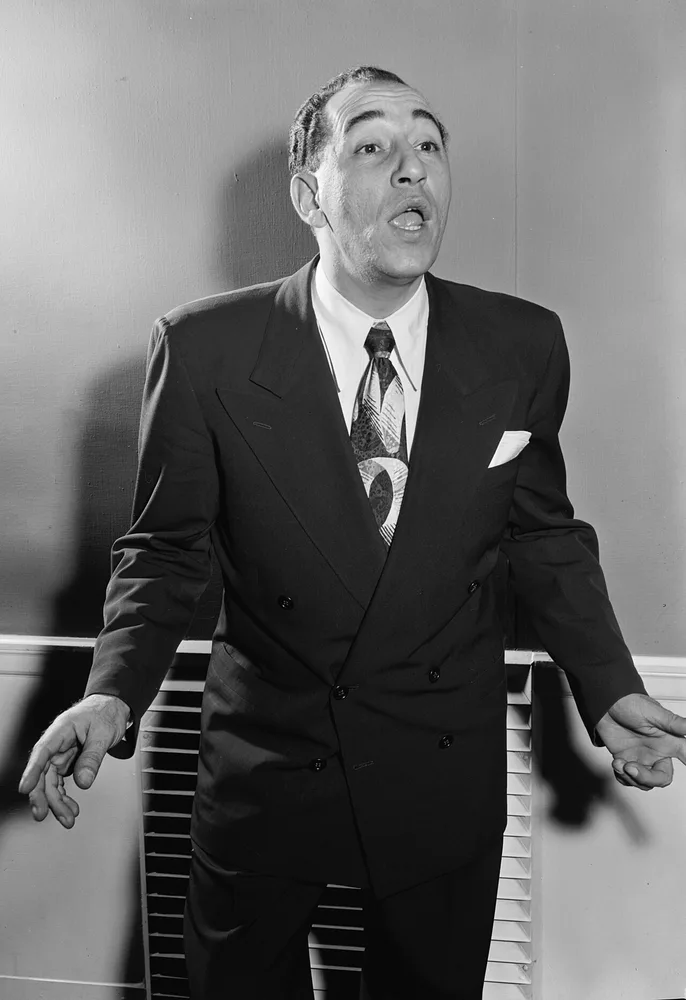
Louis Prima, c. June 1947 (photograph by William P. Gottlieb) Public domain (William P. Gottlieb's photographs in the Library of Congress collection entered the public domain in accordance with his wishes, on February 16, 2010) — Wikimedia Commons — https://commons.wikimedia.org/wiki/File:Louis_Prima_crop.jpg — William P. Gottlieb, Library of Congress Music Division

Louis Leo Prima was born in New Orleans on December 7, 1910, the second of four children in a Sicilian-American family. His father, Anthony, was the son of a Sicilian immigrant from Salaparuta, and his mother, Angelina Caravella, had come from the island of Ustica as a baby. The family lived at 1812 St. Peter Street. His mother made sure every child learned an instrument; Louis was given the violin, but he practiced obsessively on the worn cornet his older brother Leon played, and the music that pulled him in came from the clubs where Italian, Sicilian and African American New Orleanians mixed freely. He admired Louis Armstrong among the Black musicians he heard there. In 1924 he formed a band with childhood friends including the bassist Candy Candido, the clarinetist Irving Fazola and the drummer Johnny Viviano. After Warren Easton High School he decided, in the spring of 1928, to become a professional, and he spent the next several years in New Orleans pit bands, dance orchestras and his brother's Avalon Club.
The break came in 1934, when bandleader Guy Lombardo heard him at the Shim Sham club during Mardi Gras and encouraged him to go to New York. That September Prima began recording for Brunswick with Louis Prima and His New Orleans Gang, a small band with Pee Wee Russell on clarinet, Frank Pinero on piano, Jack Ryan on bass and Garrett McAdams on guitar. The records of 1935 mix Dixieland and swing; "The Lady in Red," cut in May 1935 with Russell, was a national jukebox hit. Prima played the opening night of the Famous Door on West 52nd Street, the club that became a gathering place for swing musicians. In 1936 Prima wrote and recorded "Sing, Sing, Sing (With a Swing)" for Brunswick. It became a standard of the swing era through other bands: Fletcher Henderson recorded a vocal version in August 1936, and on July 6, 1937 Benny Goodman's orchestra recorded it in Hollywood in an arrangement by Jimmy Mundy, with Gene Krupa on drums and Harry James among the trumpets. That recording ran 8 minutes and 43 seconds across two sides of a 12-inch record, Goodman's 1938 Carnegie Hall performance of it stretched to 12 minutes and 30 seconds, and the 1937 record entered the Grammy Hall of Fame in 1982.
Prima's own career in the late 1930s was less tidy. He moved to California, tried to convert the Gang into a big band, and found the new format unwelcome in New York and Los Angeles; a Chicago engagement at the Blackhawk in October 1936 went badly. He went back to a small group and returned to the Famous Door in 1937 with Frank Federico, Louis "Sherman" Masinter, Frank Pinero and the clarinetist Meyer Weinberg, then played a seven-week engagement at Billy Rose's Casa Manana in 1938. When the Famous Door reopened at 66 West 52nd Street in December 1937, Prima was the first to be given a residency, with Art Tatum playing between sets. Declared unfit for military service because of a knee injury, he kept working through the war years and recorded Italian-flavored novelties, among them "Angelina," named for his mother, "Please No Squeeza Da Banana," "Baciagaloop (Makes Love on the Stoop)" and "Felicia No Capicia." The summer of 1945 brought hits with "Bell-Bottom Trousers" and "My Dreams Are Getting Better All the Time." He also shared the writing credit on "A Sunday Kind of Love," published in 1946, and released his own recording of it in February 1947. As the big-band era wound down he recorded for RCA Victor and then Mercury, with titles such as "I Beeped When I Shoulda Bopped" in 1949, and in 1951 he signed with Columbia, where producer Mitch Miller's polished approach clashed with Prima's loose style.
In August 1948 a twenty-year-old singer from Norfolk, Virginia, Keely Smith, auditioned for his band at the Surf Club in Virginia Beach and was hired. They married in 1953. In 1954 Prima was offered an engagement in the lounge of the Sahara Hotel in Las Vegas, and he called New Orleans tenor saxophonist Sam Butera to put together a band. Butera and the musicians he brought drove west without a name for the group; asked on opening night, he answered "The Witnesses," and it stuck. The act, with Prima singing and playing trumpet, Smith standing deadpan beside him and Butera's band behind them, became one of the most popular in Las Vegas and led to a Capitol Records contract in 1955. The Wildest! was recorded in April 1956 and opened with a medley of "Just a Gigolo" and "I Ain't Got Nobody." Butera had adapted the pairing for the stage show from an earlier Prima recording; the medley became Prima's signature number, and the album also held "Jump, Jive an' Wail." The duo's "That Old Black Magic" reached No. 18 on the Billboard Hot 100 in 1958, and at the first Grammy Awards, held May 4, 1959, Smith and Prima won Best Performance by a Vocal Group or Chorus for it. They appeared in the film Hey Boy! Hey Girl! (1959), Prima recorded for Dot from 1959, and in January 1961 he was invited by Frank Sinatra to perform at President John F. Kennedy's inaugural gala. Prima and Smith divorced later that year.
Prima carried on without Smith. He brought in the singer Gia Maione, whom he married in 1963, formed his own record company in 1962, issued albums on a Prima Magnagroove label from 1963, and appeared in the film Twist All Night (also released as The Continental Twist). In 1967 he voiced the orangutan King Louie in Disney's The Jungle Book. Richard Sherman has said that he and his brother Robert wrote "I Wan'na Be Like You" with a Dixieland-flavored melody and the idea of making the king of the apes "the king of the swingers," and that they flew to Las Vegas to play the song for Prima. The original instrumental tracks by Prima, Butera and the band were replaced by a score by George Bruns, but Prima sang and scatted the part, trading lines with Phil Harris as Baloo, and he later recorded two Jungle Book albums with Harris for Disneyland Records. He suffered a heart attack in 1973. In 1975, after headaches and episodes of memory loss, he was diagnosed with a brain stem tumor; he had surgery, suffered a cerebral hemorrhage and fell into a coma from which he never recovered. He was moved back to New Orleans, passed away on August 24, 1978, and was buried in Metairie Cemetery in a crypt topped by a figure of the trumpeter-angel Gabriel. Prima received a star on the Hollywood Walk of Fame on July 25, 2010, in the year of his centenary, and Tony Bennett painted a portrait of him for the 2010 New Orleans Jazz & Heritage Festival poster. Two of his children, Lena Prima and Louis Prima Jr., became performers.
Prima's reputation divides into two parts that are best stated plainly. The part most people know is entertainment: Italian-dialect novelty songs in the 1940s, a Las Vegas lounge act built on comedy, a deadpan wife and a roaring tenor saxophone, rock-and-roll-era jump blues, twist records in the early 1960s and a Disney cartoon ape. He treated all of it as fun, and a good deal of it is exactly that. The part that earns him a place beside jazz musicians is the foundation underneath. He began on the trumpet in the Dixieland tradition of his hometown, recorded small-group Dixieland and swing with Pee Wee Russell in 1934 and 1935, wrote "Sing, Sing, Sing," which Goodman's band turned into one of the defining pieces of the swing era, and led bands rooted in New Orleans jazz, swing and jump blues for four decades. Another New Orleans trumpeter, Wingy Manone, is described in the reference literature as working in a similar mode: hot jazz trumpet leads with good-natured patter in a gravelly voice.
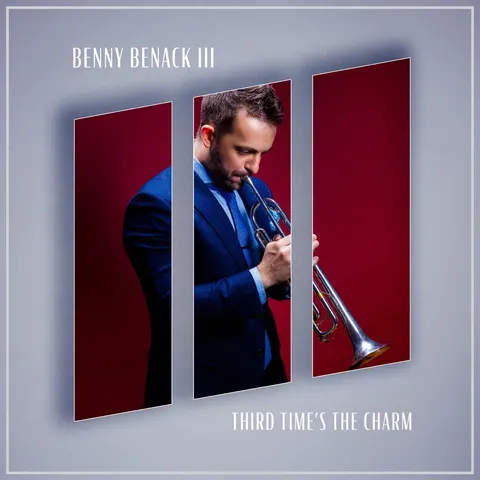
The 1950s Las Vegas sound owed as much to Sam Butera as to Prima. Butera, a tenor saxophonist who had played in the orchestras of Ray McKinley and Tommy Dorsey, built the rowdy small-band arrangements, including the "Just a Gigolo" and "I Ain't Got Nobody" medley, and led the Witnesses for more than twenty years. The result sits between New Orleans jazz, early rhythm and blues, and the beginnings of rock and roll, which is why the records appeal to jazz listeners and to rockabilly and swing-revival musicians alike. The Wildest! is entered in the book 1001 Albums You Must Hear Before You Die, where Will Fulford-Jones calls it irrepressible, and AllMusic has called it the gem of Prima's catalog. When Michael Cuscuna reissued it in 2002 he added four tracks recorded on September 13, 1956. Prima also stressed his Sicilian heritage at a time when ethnic performers were encouraged to downplay theirs, and that is part of his legacy as well. The later revivals of his songs show how far the repertoire traveled: Brian Setzer's orchestra won a 1999 Grammy for its version of "Jump, Jive an' Wail," and Big Bad Voodoo Daddy recorded a Prima tribute album in 2017. Butera is also cited as an inspiration for Harry Connick Jr.'s singing. Reviewers still reach for Prima when they describe the showmanship of a younger trumpeter-singer such as Benny Benack III.
- Sing, Sing, Sing (With a Swing) (1936, Brunswick) - Prima's own record, made with the New Orleans Gang, of the song he wrote; Goodman's orchestra, Fletcher Henderson and later others took it from there.
- The Wildest! (1956, Capitol) - The Las Vegas lounge act on record with Keely Smith, Sam Butera and the Witnesses, containing the "Just a Gigolo / I Ain't Got Nobody" medley and "Jump, Jive an' Wail." Spotify - The Wildest! (Expanded Edition) Listen
- The Call of the Wildest (1957, Capitol) - The follow-up with the same band. Spotify - The Call of the Wildest (Expanded Edition) Listen
- Las Vegas Prima Style (1958, Capitol) - A live recording from the Sahara Hotel, the closest thing on record to what the room sounded like. Spotify - Las Vegas Prima Style (Live at Sahara Hotel, 1958) Listen
- "That Old Black Magic" (1958, Capitol single) - The Prima and Keely Smith duet that won the first Grammy for Best Performance by a Vocal Group or Chorus and reached No. 18 on the Hot 100.
- Louis and Keely! (1959, Dot) - The duo's first album for Dot after leaving Capitol.
- The Jungle Book: Original Cast Soundtrack (1967, Disneyland) - Prima's voice and scat as King Louie, singing "I Wan'na Be Like You."
Louis Prima: Full Discography
Discogs artist: Louis Prima (36865) · Real name Louis Leo Prima · Born December 7, 1910, New Orleans, Louisiana
Prima led his own bands from the early 1930s and recorded under many billings: Louis Prima and His New Orleans Gang, Louis Prima and His Orchestra, Louis Prima and Keely Smith, and Louis Prima with Sam Butera and the Witnesses. He is a leader throughout and has no sideman section; the 1930s and 1940s output was released mainly as 78 rpm singles, and the long-playing albums begin in 1953. The tables below list the leader albums as documented on Wikipedia, with catalog numbers, and a selection of singles. Many titles have been reissued repeatedly, and the dozens of compilations are not itemized here; the full list is on Discogs.
Leader: Albums
| Album | Year | Label (Catalog) | Notes | Listen | Buy |
|---|---|---|---|---|---|
| Louis Prima Plays for the People | 1953 | Mercury (MG-25142) | — | — | |
| The Wildest! | 1956 | Capitol (T-755) | The Las Vegas lounge act on record. Louis Prima (vocals, trumpet), Keely Smith (vocals), Sam Butera (tenor saxophone), James Blount Jr. (trombone), Willie McCumber (piano), Jack Marshall (guitar), Amato Rodrigues (bass), Bobby Morris (drums). Opens with the "Just a Gigolo / I Ain't Got Nobody" medley and includes "Jump, Jive an' Wail." The 2002 expanded reissue, produced by Michael Cuscuna, adds four tracks recorded September 13, 1956; the Spotify link is to an expanded edition | Spotify | — |
| The Call of the Wildest | 1957 | Capitol (T-836) | Follow-up with Keely Smith and Sam Butera & the Witnesses; the Spotify link is to an expanded edition | Spotify | — |
| The Wildest Show at Tahoe | 1957 | Capitol (T-908) | Live | — | — |
| Las Vegas Prima Style | 1958 | Capitol (T-1010) | Live at the Sahara Hotel | Spotify | — |
| Strictly Prima! | 1958 | Capitol (T-1132) | — | — | |
| Breaking It Up! | 1958 | Columbia (CL-1206) | Collects Prima's 1951 to 1953 Columbia recordings, made under producer Mitch Miller, plus one previously unissued track; assembled after his Capitol albums became big sellers | — | — |
| Hey Boy!, Hey Girl! | 1959 | Capitol (T-1160) | Album from the film of the same name, with Keely Smith | — | — |
| Louis and Keely! | 1959 | Dot (DLP-3210 / DLP-25210) | Duet album with Keely Smith | — | — |
| His Greatest Hits | 1960 | Dot (DLP-3262 / DLP-25262) | — | — | |
| Together | 1960 | Dot (DLP-3263 / DLP-25263) | — | — | |
| Pretty Music, Prima Style: Volume One | 1960 | Dot (DLP-3264 / DLP-25264) | — | — | |
| On Stage | 1960 | Dot (DLP-3266 / DLP-25266) | — | — | |
| Wonderland by Night: Pretty Music, Prima Style Volume II | 1960 | Dot (DLP-3352 / DLP-25352) | — | — | |
| Blue Moon | 1961 | Dot (DLP-3385 / DLP-25385) | — | — | |
| Return of the Wildest | 1961 | Dot (DLP-3392 / DLP-25392) | — | — | |
| Doin' the Twist With Louis Prima | 1961 | Dot (DLP-3410 / DLP-25410) | — | — | |
| The Hits of Louis and Keely | 1961 | Capitol (T-1531 / ST-1531) | Duets with Keely Smith | — | — |
| The Wildest Comes Home! | 1962 | Capitol (T-1723 / ST-1723) | — | — | |
| Lake Tahoe Prima Style | 1962 | Capitol (T-1797 / ST-1797) | — | — | |
| Prima Show in the Casbar | 1963 | Prima Magnagroove (PM-3001 / PS-3001) | Live | — | — |
| The King of Clubs | 1964 | Prima Magnagroove (PM-3003 / PS-3003) | — | — | |
| Let's Fly With Mary Poppins | 1965 | Buena Vista (BV-3333 / STER-3333) | — | — | |
| That Darn Cat | 1965 | Buena Vista (BV-3334 / STER-3334) | — | — | |
| The Golden Hits of Louis Prima | 1966 | Hanna-Barbera (HLP-8502 / HST-9502) | — | — | |
| Louis Prima on Broadway | 1967 | United Artists (UAL-3596 / UAS-6596) | — | — | |
| The Jungle Book: Original Cast Soundtrack | 1967 | Disneyland (BV-4041 / STER-4041) | Prima as King Louie, singing "I Wan'na Be Like You"; Phil Harris as Baloo | — | — |
| The New Sounds of the Louis Prima Show | 1968 | De-Lite (DE-2001) | — | — | |
| More Jungle Book: Further Adventures of Baloo and Mowgli | 1969 | Disneyland (ST-3960 / STER-3960) | — | — | |
| Blast Off: The Live New Sound of Louis Prima | 1970 | Prima Magnagroove (ST-0030) | Live | — | — |
| The Prima Generation '72 | 1972 | Prima Magnagroove (ST-0072) | — | — | |
| Just a Gigolo | 1973 | Prima Magnagroove (ST-0073) | — | — | |
| Angelina | 1973 | Prima Magnagroove (ST-0074) | — | — | |
| Let's "Hear" It for Robin Hood | 1974 | Buena Vista (3339) | — | — | |
| The Wildest '75 | 1975 | Prima Magnagroove (ST-0076) | — | — |
Selected singles
| Year | Single | Label |
|---|---|---|
| 1933 | "Dinah" / "Chinatown, My Chinatown" | Bluebird |
| 1934 | "That's Where the South Begins" / "Jamaica Shout" | Brunswick |
| 1934 | "Long About Midnight" / "Stardust" | Brunswick |
| 1934 | "Sing It Way Down Low" / "Let's Have a Jubilee" | Brunswick |
| 1934 | "I Still Want You" / "Breakin' the Ice" | Brunswick |
| 1935 | "House Rent Party" / "Bright Eyes" | Brunswick |
| 1935 | "It's the Rhythm in Me" / "Worry Blues" | Brunswick |
| 1936 | "Sing, Sing, Sing (With a Swing)" / "It's Been So Long" | Brunswick |
| 1944 | "Angelina" | Hit |
| 1945 | "Hi Ho Trailus Bootwhip" / "I'll Walk Alone" | Mercury |
| 1947 | "Marguerita" | Majestic |
| 1949 | "I Beeped When I Shoulda Bopped" / "The Manuelo Tarantel" | Mercury |
| 1953 | "Luigi" / "Oh, Marie" | Styrene |
| 1956 | "Buona Sera" | Capitol |
| 1956 | "Jump, Jive an' Wail" | Capitol |
| 1958 | "That Old Black Magic" / "You Are My Love" (with Keely Smith) | Capitol |
Compositions
| Year | Song | Credit |
|---|---|---|
| 1936 | "Sing, Sing, Sing (With a Swing)" | Music and lyrics by Prima; first recorded by Prima with the New Orleans Gang. Benny Goodman's 1937 recording entered the Grammy Hall of Fame in 1982 |
| 1946 | "A Sunday Kind of Love" | Co-written with Barbara Belle, Anita Leonard and Stan Rhodes; Prima's own recording followed in February 1947 |
| 1956 | "Jump, Jive an' Wail" | First appeared on The Wildest!; Brian Setzer Orchestra's 1998 cover won the 1999 Grammy for Best Pop Performance by a Duo or Group with Vocals |
Awards and honors
| Year | Honor | Work | Result |
|---|---|---|---|
| 1959 | Grammy, Best Performance by a Vocal Group or Chorus (1st Annual Grammy Awards, May 4, 1959) | "That Old Black Magic" (with Keely Smith) | Winner |
| 2010 | Star on the Hollywood Walk of Fame (July 25, 2010) | Career | Honoree |
- Keely Smith - singer and wife (married 1953, divorced 1961); co-star of the Sahara act, of Hey Boy! Hey Girl! (1959) and of the Grammy-winning "That Old Black Magic."
- Sam Butera and the Witnesses - Butera, a New Orleans tenor saxophonist, assembled the band in 1954, arranged the act's material and led the group for more than twenty years; the lineup on The Wildest! was Butera, trombonist James Blount Jr., pianist Willie McCumber, guitarist Jack Marshall, bassist Amato Rodrigues and drummer Bobby Morris.
- Pee Wee Russell - clarinetist in the New Orleans Gang on the 1934 to 1935 Brunswick sessions, including "The Lady in Red."
- Irving Fazola and Candy Candido - New Orleans schoolmates in Prima's first band, formed in 1924.
- Frank Federico, Frank Pinero and Sherman Masinter - guitarist, pianist and bassist in the small Famous Door bands of the 1930s.
- Guy Lombardo - bandleader who heard Prima in New Orleans in 1934 and sent him to New York.
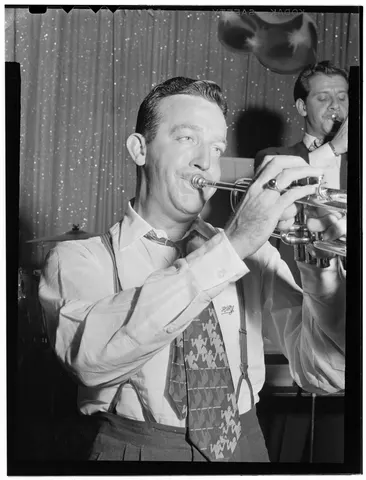
- Benny Goodman - orchestra leader whose 1937 recording made "Sing, Sing, Sing" famous; his drummer Gene Krupa and trumpeter Harry James played on it.
- Fletcher Henderson - recorded a vocal version of "Sing, Sing, Sing" in August 1936.
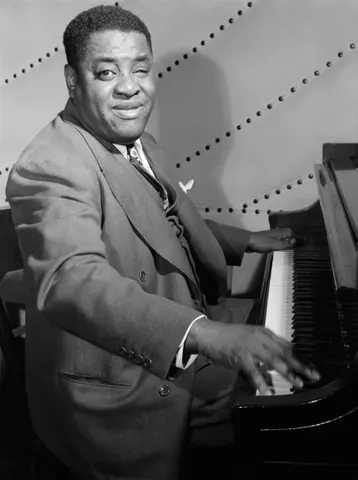
- Art Tatum - played between Prima's sets when the Famous Door reopened in December 1937.
- Frank Sinatra - invited Prima to perform at the 1961 Kennedy inaugural gala.
- Phil Harris, Richard Sherman and Robert Sherman - Baloo, and the songwriters of "I Wan'na Be Like You," for The Jungle Book (1967).
- Michael Cuscuna - producer of the 2002 expanded reissue of The Wildest!.
- Gia Maione - singer who replaced Smith in the act and married Prima in 1963.
- Tony Bennett - painted the portrait of Prima used on the 2010 New Orleans Jazz & Heritage Festival poster.
More Dixieland Artists
See all 44 Dixieland artists →More American Jazz Artists
See all 646 American artists →- Wikipedia: Louis Prima
- Wikipedia: Sing, Sing, Sing (With a Swing)
- Wikipedia: The Wildest!
- Wikipedia: Just a Gigolo
- Wikipedia: Jump, Jive an' Wail
- Wikipedia: A Sunday Kind of Love
- Wikipedia: I Wan'na Be Like You
- Wikipedia: Keely Smith
- Wikipedia: Sam Butera
- Wikipedia: Wingy Manone
- Wikipedia: Famous Door
- Wikipedia: 1st Annual Grammy Awards
- 64 Parishes: Louis Prima
- Explore Louisiana: Louis Prima
- Sony Music: Tony Bennett paints the 2010 New Orleans Jazz Festival poster
- Discogs: Louis Prima
- MusicBrainz: Louis Prima