 JAZZPROFILES lives in the music 2,303 Jazz Artists fully Profiled!
Jan Garbarek
Last updated November 8, 2026
Listen on Spotify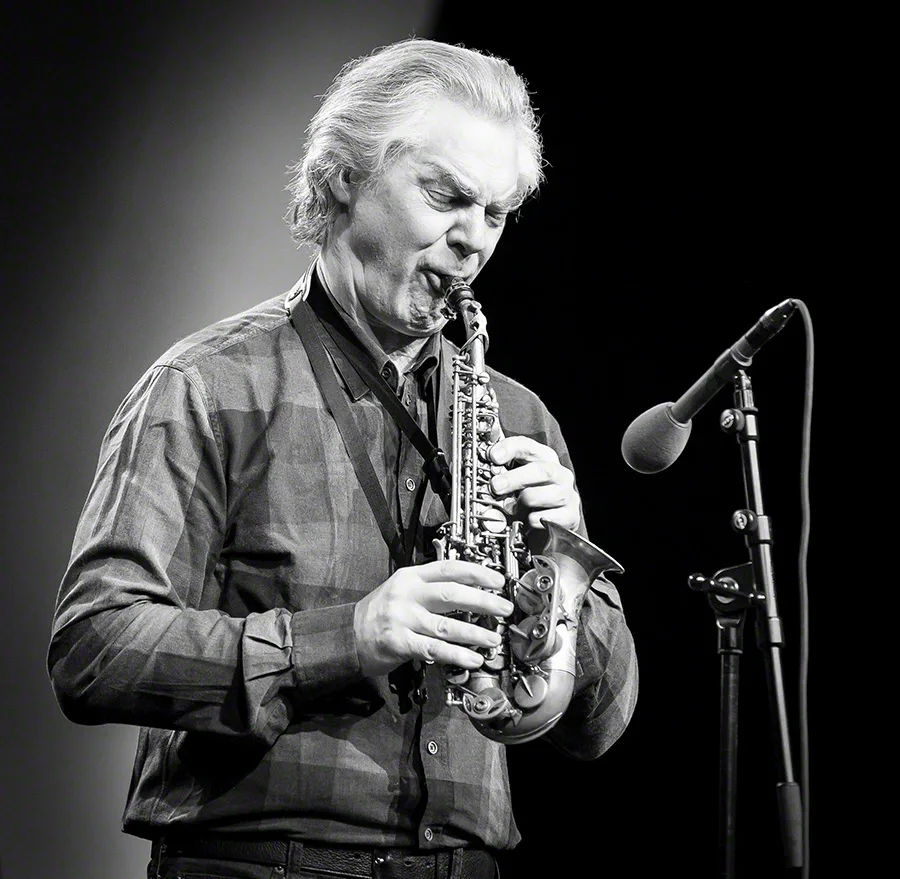
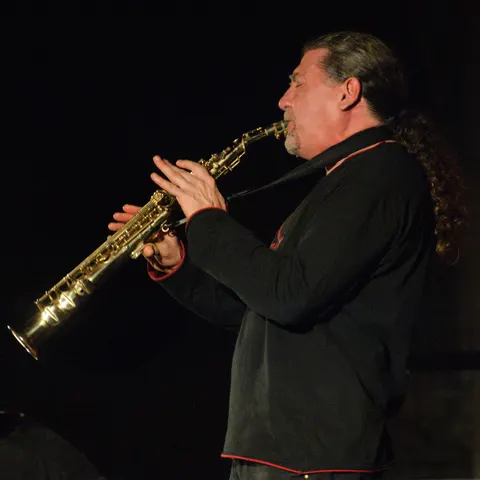
Jan Garbarek with the Jan Garbarek Group at the Oslo Opera House during the Oslo Jazz Festival, August 14, 2016, photographed by Tore Sætre CC BY-SA 4.0 — Wikimedia Commons — https://commons.wikimedia.org/wiki/File:Jan_Garbarek_Operaen_Oslo_Jazzfestival_(185843).jpg

Jan Garbarek was born on March 4, 1947, in Mysen, in Norway's Østfold county, the only child of Czesław Garbarek, a Polish former prisoner of war, and Kari Nordbø, a Norwegian. He grew up in Oslo and was stateless until about the age of seven, because Norway did not then grant citizenship automatically. At fourteen he heard John Coltrane on the radio, bought a saxophone instruction book before he owned an instrument, and learned the fingerings on paper. American players who passed through Scandinavia, among them Dexter Gordon and Ben Webster, shaped his ear, and in 1962 he won a competition for amateur jazz players and formed his own band. He played with Don Cherry in 1964, joined the singer Karin Krog's group (he is on her 1966 album Jazz Moments), and made his first record under his own name, Til Vigdis, in 1967. In 1968 he received the Buddyprisen, a Norwegian jazz award. He married the author Vigdis Garbarek at twenty-one, and he is the father of the musician and composer Anja Garbarek.
The decisive apprenticeship of the 1960s was four years with the American composer and theorist George Russell, who was then living in Scandinavia and building bands from young local players. Garbarek is on Russell's large-scale Electronic Sonata for Souls Loved by Nature, performed at the Henie Onstad Kunstsenter near Oslo in April 1969, and on the live Trip to Prillarguri, recorded in 1970. Russell also produced the album by Garbarek's own quartet with the guitarist Terje Rypdal, the bassist Arild Andersen and the drummer Jon Christensen, issued by Bob Thiele's Flying Dutchman label as The Esoteric Circle. In 1969 Manfred Eicher invited him to join the new ECM label. Afric Pepperbird, recorded in Oslo in September 1970 and released the following year, was his first record for ECM, and it began a relationship with the label that has lasted more than half a century. The quartet followed it with Sart (1971), with the pianist Bobo Stenson added, and Garbarek then recorded Triptykon (recorded November 1972, released 1973) as a trio with Andersen and the Finnish drummer Edward Vesala. After meeting Stenson again at the 1973 Jazz Jamboree in Warsaw, he made Witchi-Tai-To (recorded November 1973, released 1974) with Stenson, Palle Danielsson and Christensen, a quartet record that critics rank among the best ECM released in the 1970s.
The same bassist and drummer became the rhythm section of Keith Jarrett's European Quartet, which made its debut with Belonging (recorded April 1974) and ran until 1979 with Garbarek as the only horn. Its studio albums are Belonging (1974) and My Song (recorded 1977); live recordings from 1979 include Nude Ants (Village Vanguard, released 1980), Personal Mountains (Tokyo, released 1989) and Sleeper (Tokyo, released 2012). He also appears as soloist on Jarrett's Luminessence (1974) and Arbour Zena (1975), which pair saxophone with string orchestra. Under his own name he turned inward. Dis (recorded December 1976, released 1977), with the guitarist Ralph Towner, a Norwegian brass sextet and the sound of a wind harp, is often cited as the start of his spacious, ambient approach; Places (1978) was a quartet date with the guitarist Bill Connors, the pianist John Taylor and Jack DeJohnette, and Photo with Blue Sky, White Cloud, Wires, Windows and a Red Roof (1979) was the official debut of the Jan Garbarek Group, a working band whose personnel has changed over the decades. Alongside it he joined a trio with Charlie Haden and the Brazilian guitarist Egberto Gismonti that made Mágico (1980) and Folk Songs (1981).
Through the 1980s he worked with a run of American guitarists on his own albums, John Abercrombie on Eventyr (1981), Bill Frisell on Paths, Prints (1982) and Wayfarer (1983), and David Torn on It's OK to Listen to the Gray Voice (1985), and he appeared on records by the violinist L. Shankar and the tabla player Zakir Hussain, whose Making Music (recorded 1986) also features John McLaughlin and the flutist Hariprasad Chaurasia. All Those Born with Wings (1987) was a solo album on which he plays all the instruments. In the 1990s I Took Up the Runes (1990) reworked Norwegian and Sámi material, StAR (1991) was a trio with the bassist Miroslav Vitouš and Peter Erskine, Ragas and Sagas (1992) paired him with the Pakistani singer Ustad Fateh Ali Khan, and Madar (recorded 1992, released 1994) joined him with the oud player Anouar Brahem and the tabla player Ustad Shaukat Hussain. Twelve Moons (1993) and Visible World (1996) were studio sets with larger casts of guest players, and the double album Rites (1998) gathered his own band, with the Tbilisi Symphony Orchestra on one track.
His largest audience came from Officium, recorded in September 1993 at the monastery of Propstei St. Gerold in Austria and released in 1994 on ECM's New Series imprint. It sets Garbarek's soprano and tenor lines against the early-music vocal quartet the Hilliard Ensemble singing medieval and Renaissance sacred music, became one of the best-selling releases in ECM's history, and reached the pop charts in several European countries. Sequels followed with Mnemosyne (1999) and Officium Novum (2010), the latter built around Armenian music, and the collaboration ended with the ensemble's final concerts in 2014; a live recording from Bellinzona, Remember Me, My Dear, appeared in 2019. His other work since 2000 includes In Praise of Dreams (2004), nominated for a Grammy Award for Best Contemporary Jazz Album, Dresden (2009), his first live album with his own group, recorded in 2007, and an appearance with Pat Metheny and Gary Burton on Hommage à Eberhard Weber (2015). He is a Knight First Class of the Order of St. Olav (1999), received Norway's Gammleng Prize in 1982 and the Norwegian Arts Council's honorary award in 2004, was given the Willy Brandt Award in 2014, and is a foreign member of the Royal Swedish Academy of Music. He is still active as of November 2026: the Jan Garbarek Group, with the pianist Rainer Brüninghaus, the bassist Yuri Daniel and the percussionist Trilok Gurtu, opened the Trondheim Jazz Festival with a sold-out concert at Olavshallen on May 5, 2026.
Garbarek's sound is among the most recognizable in modern saxophone playing: a sharp-edged, vibrato-light tone on tenor and soprano, long sustained notes that often sound like cries, and a deliberate use of silence. John Coltrane was his first model, and he absorbed the freer players around Coltrane, above all Albert Ayler, as well as the folk-minded approach of Don Cherry, who encouraged him to bring Norwegian melodies into his playing. George Russell, who gave him his first major platform, is reported to have called him the most original voice in European jazz since Django Reinhardt. After about 1973 he dropped the harsh dissonance of his early free-jazz records and kept the tone, building a music of folk-derived themes, slow harmonic motion and reverberant studio space rather than thematic improvisation in the manner of Sonny Rollins. The critics Richard Cook and Brian Morton likened its effect to sculpture, and the approach has divided listeners: admirers hear a distinctive Nordic lyricism, while detractors file the more meandering albums under new-age music. His later work took in synthesizers, South Asian and Middle Eastern players (Zakir Hussain, Trilok Gurtu, Hariprasad Chaurasia, Ustad Fateh Ali Khan, Anouar Brahem) and medieval and Armenian choral music with the Hilliard Ensemble, which is why his catalog is shelved variously under jazz, world music and classical crossover. The saxophonist Javier Girotto has said that the sound he chases is Garbarek's.
- Afric Pepperbird (1971, ECM) - His first album for ECM, a free-leaning quartet date with Terje Rypdal, Arild Andersen and Jon Christensen recorded in Oslo in 1970 and produced by Manfred Eicher. Spotify - Afric Pepperbird Listen
- Witchi-Tai-To (1974, ECM) - The Jan Garbarek-Bobo Stenson Quartet with Palle Danielsson and Jon Christensen, playing pieces by Jim Pepper, Carla Bley, Don Cherry and Carlos Puebla; AllMusic's Brian Olewnick ranked it among the finest jazz albums ECM issued. Spotify - Witchi-Tai-To Listen
- Belonging (1974, ECM) - The first studio album of Keith Jarrett's European Quartet, with Garbarek, Danielsson and Christensen; the group became known as the Belonging quartet. Spotify - Belonging
- Dis (1977, ECM) - A set built around the guitarist Ralph Towner's twelve-string, with a wind harp and a brass sextet, that set the spacious, ambient direction of his later work. Spotify - Dis Listen
- I Took Up the Runes (1990, ECM) - A quintet-plus set built on Scandinavian folk songs, with Rainer Brüninghaus, Eberhard Weber, Naná Vasconcelos and Manu Katché, and the five-part "Molde Canticle." Spotify - I Took Up The Runes Listen
- Officium (1994, ECM New Series) - Garbarek's saxophone with the Hilliard Ensemble in medieval and Renaissance sacred music, recorded at St. Gerold monastery; one of ECM's biggest sellers. Spotify - Officium Listen
- Rites (1998, ECM) - A double album that summarizes his work to date, with Rainer Brüninghaus, Eberhard Weber, Marilyn Mazur and Bugge Wesseltoft. Spotify - Rites Listen
- In Praise of Dreams (2004, ECM) - Garbarek with the violist Kim Kashkashian and the drummer Manu Katché, nominated for a Grammy Award for Best Contemporary Jazz Album. Spotify - In Praise Of Dreams Listen
Jan Garbarek: Full Discography
Jan Garbarek is catalogued on Discogs under artist ID 209085 (born March 4, 1947, in Mysen, Norway), and his group billings sit under separate Discogs entries for the Jan Garbarek Group (artist ID 337598), the Jan Garbarek Quartet (371250) and the Jan Garbarek-Bobo Stenson Quartet (257305); all four were checked and reconciled with MusicBrainz and the sleeve notes. His own catalog runs to dozens of releases, so the leader table is a selection of 34 albums that he led or co-led, from the 1967 debut to 2019, with compilations and reissue packages left out. Catalog numbers are those of the first or best-documented pressing; recording dates come from sleeve notes and Wikipedia, and where a source gave no date the cell says so. The Spotify column links only albums confirmed on Spotify's own album pages; the other cells show a dash. The sideman table is a representative selection of his major credits, not an exhaustive list.
As Leader / Co-Leader
| Album Title | Recording Date(s) | Release Date | Label | Catalog Number | Format(s) | Personnel | Role | Reissue History | Spotify | Buy | Notes |
|---|---|---|---|---|---|---|---|---|---|---|---|
| Til Vigdis | Live, April 1 and September 24, 1967 (Asker and Oslo) | November 18, 1967 | Norsk Jazzforbund | NJF-LP-1 | LP, Album, Stereo | Jan Garbarek (tenor saxophone), Arild Andersen (bass), Per Løberg (bass), Jon Christensen (drums), Frank Phipps (valve trombone) | Leader (billed Jan Garbarek Trio and Quartet) | Later issues not itemized | — | — | His first album under his own name; Andersen and Løberg split the bass chair across the two live sessions. |
| The Esoteric Circle | 1969, Oslo | 1971 | Flying Dutchman | FD-10125 | LP, Album | Jan Garbarek (tenor saxophone), Terje Rypdal (guitar), Arild Andersen (bass), Jon Christensen (drums) | Leader (billed George Russell Presents the Esoteric Circle) | Reissued under Garbarek's name as Esoteric Circle on Freedom (CD FCD 41031, 1988) | Spotify - Esoteric Circle | — | Produced by George Russell; Garbarek's second album overall. |
| Afric Pepperbird | September 1970, Oslo | 1971 | ECM | ECM 1007 | LP, Album | Jan Garbarek (tenor and bass saxophones, clarinet, flute, percussion), Terje Rypdal (guitar, bugle), Arild Andersen (bass, thumb piano, xylophone), Jon Christensen (percussion) | Leader (billed Jan Garbarek Quartet) | Reissued in ECM's Luminessence Series on vinyl, 2024 | Spotify - Afric Pepperbird | — | His first release for ECM, produced by Manfred Eicher. |
| Sart | April 14 and 15, 1971, Arne Bendiksen Studio, Oslo | 1971 | ECM | ECM 1015 ST | LP, Album | Jan Garbarek (tenor and bass saxophones, flute), Bobo Stenson (piano, electric piano), Terje Rypdal (guitar), Arild Andersen (bass), Jon Christensen (percussion) | Leader | Included in the 2012 three-CD set Dansere (ECM 2146-48) | — | — | Adds Stenson to the Afric Pepperbird quartet. |
| Hav | September 28 and 29, 1970, Rosenborg Studio, Oslo | 1971 | Philips | 6507 002 | LP, Album | Jan Erik Vold (voice, words), Jan Garbarek (tenor saxophone), Bobo Stenson (keyboards), Terje Rypdal (guitar), Arild Andersen (bass), Jon Christensen (drums) | Co-leader (billed Jan Erik Vold and Jan Garbarek) | CD reissue on Norske albumklassikere (NACD022), 2021 | — | — | Poetry and jazz record built on texts by Vold. |
| Triptykon | November 8, 1972, Arne Bendiksen Studio, Oslo | 1973 | ECM | ECM 1029 ST | LP, Album, Stereo | Jan Garbarek (soprano, tenor and bass saxophones, flute), Arild Andersen (bass), Edward Vesala (percussion) | Leader | CD reissue: 847 321-2 (1992) | — | — | First recording on which he built on a Norwegian folk song. |
| Witchi-Tai-To | November 27 and 28, 1973, Arne Bendiksen Studio, Oslo | 1974 | ECM | ECM 1041 ST | LP, Album, Stereo | Jan Garbarek (tenor and soprano saxophones), Bobo Stenson (piano), Palle Danielsson (bass), Jon Christensen (drums) | Co-leader (billed Jan Garbarek-Bobo Stenson Quartet) | Included in the 2012 three-CD set Dansere (ECM 2146-48) | Spotify - Witchi-Tai-To | — | Pieces by Jim Pepper, Carla Bley, Don Cherry, Carlos Puebla and Danielsson. |
| Dansere | November 1975, Talent Studios, Oslo | 1976 | ECM | ECM 1075 | LP, Album, Stereo | Jan Garbarek (saxophones), Bobo Stenson (piano), Palle Danielsson (bass), Jon Christensen (drums) | Co-leader (billed Jan Garbarek-Bobo Stenson Quartet) | Included in the 2012 three-CD set Dansere (ECM 2146-48) | — | — | Second record by the Garbarek-Stenson quartet; the title is Norwegian for dancers. |
| Dis | December 1976, Talent Studios, Oslo | May 1977 | ECM | ECM 1093 | LP, Album, Stereo | Jan Garbarek (tenor and soprano saxophones, wood flute), Ralph Towner (twelve-string and classical guitar), Den Norske Messingsekstett (brass on one piece), wind harp recorded by Jan Erik Kongshaug | Leader | CD reissue: ECM 1093 (1986) | Spotify - Dis | — | A wind harp built by Sverre Larssen is heard on three tracks. |
| Places | December 1977, Talent Studio, Oslo | 1978 | ECM | ECM 1118 | LP, Album | Jan Garbarek (tenor, soprano and alto saxophones), Bill Connors (guitar), John Taylor (piano, organ), Jack DeJohnette (drums) | Leader | CD reissue: 829 195-2 (1986) | — | — | Quartet date with the guitarist Bill Connors and the British pianist John Taylor. |
| Photo with Blue Sky, White Cloud, Wires, Windows and a Red Roof | December 1978, Talent Studio, Oslo | May 25, 1979 | ECM | ECM 1135 | LP, Album, Stereo | Jan Garbarek (tenor and soprano saxophones), Bill Connors (electric and acoustic guitar), John Taylor (piano), Eberhard Weber (bass), Jon Christensen (drums) | Leader (billed Jan Garbarek Group) | Not itemized | Spotify - Photo with Blue Sky, White Cloud, Wires, Windows and a Red Roof | — | The first album credited to the Jan Garbarek Group. |
| Aftenland | December 1979, Engelbrektskyrkan, Stockholm | 1980 | ECM | ECM 1169 | LP, Album | Jan Garbarek (tenor and soprano saxophones, wood flute), Kjell Johnsen (pipe organ) | Co-leader (billed Jan Garbarek and Kjell Johnsen) | CD reissue: ECM 1169 (1989) | — | — | Saxophone and church organ, recorded in a Stockholm church. |
| Eventyr | December 1980, Talent Studio, Oslo | 1981 | ECM | ECM 1200 | LP, Album, Stereo | Jan Garbarek (soprano and tenor saxophones, flute), John Abercrombie (guitar, mandolin guitar), Naná Vasconcelos (berimbau, talking drum, percussion, voice) | Leader (trio with Abercrombie and Vasconcelos) | CD reissue: 829 384-2 | Spotify - Eventyr | — | The title is Norwegian for fairy tales. |
| Paths, Prints | December 1981, Talent Studio, Oslo | September 6, 1982 | ECM | ECM 1223 | LP, Album | Jan Garbarek (tenor and soprano saxophones, wood flutes, percussion), Bill Frisell (guitar), Eberhard Weber (bass), Jon Christensen (drums, percussion) | Leader | Not itemized | Spotify - Paths Prints | — | First of two albums with Bill Frisell. |
| Wayfarer | March 1983, Talent Studio, Oslo | September 1983 | ECM | ECM 1259 | LP, Album, Stereo | Jan Garbarek (tenor and soprano saxophones), Bill Frisell (guitar), Eberhard Weber (bass), Michael DiPasqua (drums, percussion) | Leader (billed Jan Garbarek Group) | Not itemized | — | — | Second Frisell album; DiPasqua joins the Group. |
| It's OK to Listen to the Gray Voice | December 1984, Rainbow Studio, Oslo | September 1985 | ECM | ECM 1294 | LP, Album | Jan Garbarek (tenor and soprano saxophones), David Torn (guitar, guitar synthesizer, DX7), Eberhard Weber (bass), Michael DiPasqua (drums, percussion) | Leader (billed Jan Garbarek Group) | Not itemized | Spotify - It's OK To Listen To The Gray Voice | — | Every title quotes a poem by Tomas Tranströmer. |
| All Those Born with Wings | August 1986 | 1987 | ECM | ECM 1324 | LP, Album | Jan Garbarek (saxophones, keyboards, guitar, percussion, voice and other instruments) | Leader | CD reissue: 831 394-2 | — | — | A solo, overdubbed album. |
| Legend of the Seven Dreams | July 1988, Rainbow Studio, Oslo | October 1988 | ECM | ECM 1381 | LP, Album | Jan Garbarek (soprano and tenor saxophones, flute), Rainer Brüninghaus (electronic keyboards), Eberhard Weber (bass), Naná Vasconcelos (percussion, voice) | Leader | Not itemized | — | — | Opens with an introduction based on a Sámi joik. |
| Rosensfole | 1988 and 1989, Bel Studio, Oslo | 1989 | ECM | ECM 1402 | CD, Album | Agnes Buen Garnås (vocals), Jan Garbarek (saxophones, arrangements) | Co-leader (billed Agnes Buen Garnås and Jan Garbarek) | First issued in Norway on Kirkelig Kulturverksted (FXCD 83) | — | — | Settings of medieval Norwegian songs. |
| I Took Up the Runes | August 1990 | 1990 | ECM | ECM 1419 | CD, Album | Jan Garbarek (tenor and soprano saxophones), Rainer Brüninghaus (piano), Eberhard Weber (bass), Naná Vasconcelos (percussion), Manu Katché (drums), Bugge Wesseltoft (synthesizer), Ingor Ánte Áilo Gaup (voice) | Leader | Original CD number 843 850-2 | Spotify - I Took Up The Runes | — | Includes the five-part Molde Canticle. |
| StAR | January 1991, Rainbow Studio, Oslo | October 1991 | ECM | ECM 1444 | CD, Album | Jan Garbarek (tenor and soprano saxophones), Miroslav Vitouš (bass), Peter Erskine (drums) | Co-leader (billed Jan Garbarek, Miroslav Vitouš, Peter Erskine) | Not itemized | Spotify - Star | — | Piano-less trio; Vitouš wrote most of the music. |
| Ragas and Sagas | May 1990, Rainbow Studio, Oslo | October 1992 | ECM | ECM 1442 | CD, Album | Jan Garbarek (soprano and tenor saxophones), Ustad Fateh Ali Khan (voice), Ustad Nazim Ali Khan (sarangi), Ustad Shaukat Hussain (tabla), Deepika Thathaal (voice), Manu Katché (drums) | Co-leader (billed Jan Garbarek and Ustad Fateh Ali Khan) | Original CD number 511 263-2 | — | — | Pakistani khyal singing with saxophone. |
| Madar | August 1992, Rainbow Studio, Oslo | January 1994 | ECM | ECM 1515 | CD, Album | Jan Garbarek (tenor and soprano saxophones), Anouar Brahem (oud), Ustad Shaukat Hussain (tabla) | Co-leader (billed Jan Garbarek, Anouar Brahem, Ustad Shaukat Hussain) | Original CD number 519 075-2 | Spotify - Madar | — | Brahem wrote most of the music. |
| Twelve Moons | September 1992 | April 1993 | ECM | ECM 1500 | CD, Album | Jan Garbarek (saxophones), Rainer Brüninghaus (keyboards), Eberhard Weber (bass), Manu Katché (drums), Marilyn Mazur (percussion), Agnes Buen Garnås and Mari Boine (vocals) | Leader (billed Jan Garbarek Group) | Original CD number 519 500-2 | Spotify - Twelve Moons | — | Two Norwegian singers join the Group. |
| Atmos | February 1992, Rainbow Studio, Oslo | 1993 | ECM | ECM 1475 | CD, Album | Jan Garbarek (tenor and soprano saxophones), Miroslav Vitouš (bass) | Co-leader (billed Miroslav Vitouš and Jan Garbarek) | Original CD number 513 373-2 | — | — | A duo album. |
| Officium | September 1993, Propstei St. Gerold, Austria | September 1994 | ECM New Series | ECM 1525 | CD, Album | Jan Garbarek (soprano and tenor saxophones), The Hilliard Ensemble: David James (countertenor), Rogers Covey-Crump (tenor), John Potter (tenor), Gordon Jones (baritone) | Co-leader (billed Jan Garbarek and The Hilliard Ensemble) | Original CD number 445 369-2 | Spotify - Officium | — | One of the best-selling releases in ECM's history. |
| Visible World | June 1995 | March 25, 1996 | ECM | ECM 1585 | CD, Album | Jan Garbarek (soprano and tenor saxophones, keyboards, percussion), Rainer Brüninghaus (piano, synthesizer), Eberhard Weber (bass), Manu Katché (drums), Marilyn Mazur (drums, percussion), Trilok Gurtu (tabla), Mari Boine (vocals) | Leader | Original CD number 529 086-2 | Spotify - Visible World | — | Includes music written for the film Trollsyn. |
| Rites | March 1998 | 1998 | ECM | ECM 1685/86 | 2xCD, Album | Jan Garbarek (soprano and tenor saxophones, synthesizers, sampler, percussion), Rainer Brüninghaus (piano, keyboards), Eberhard Weber (bass), Marilyn Mazur (drums, percussion), Bugge Wesseltoft (synthesizer, accordion), Tbilisi Symphony Orchestra and Sølvguttene Choir on single tracks | Leader | Not itemized | Spotify - Rites | — | A double album that also includes his own liner notes. |
| Mnemosyne | April 1998 | April 1999 | ECM New Series | ECM 1700/01 | 2xCD, Album | Jan Garbarek (soprano and tenor saxophones), The Hilliard Ensemble: David James (countertenor), Rogers Covey-Crump (tenor), John Potter (tenor), Gordon Jones (baritone) | Co-leader (billed Jan Garbarek and The Hilliard Ensemble) | Original CD number 465 122-2 | Spotify - Mnemosyne | — | Sequel to Officium, with a wider historical range including a Hölderlin poem setting. |
| In Praise of Dreams | 2003, Carlisle, Massachusetts; Paris; Oslo | September 2004 | ECM | ECM 1880 | CD, Album | Jan Garbarek (tenor and soprano saxophones, synthesizers, sampler, percussion), Kim Kashkashian (viola), Manu Katché (drums, loops) | Leader | Not itemized | Spotify - In Praise Of Dreams | — | Nominated for a Grammy Award for Best Contemporary Jazz Album. |
| Elixir | June 2005, Sun Studio, Copenhagen | January 25, 2008 | ECM | ECM 1962 | CD, Album | Jan Garbarek (tenor and soprano saxophones, flute), Marilyn Mazur (percussion) | Co-leader (billed Marilyn Mazur and Jan Garbarek) | Not itemized | — | — | A duo album with Mazur, a longtime member of the Group. |
| Dresden: In Concert | Live, October 20, 2007, Alter Schlachthof, Dresden | September 4, 2009 | ECM | ECM 2100/01 | 2xCD, Album | Jan Garbarek (soprano and tenor saxophones, willow flute), Rainer Brüninghaus (piano, keyboards), Yuri Daniel (bass), Manu Katché (drums) | Leader (billed Jan Garbarek Group) | Not itemized | Spotify - Dresden | — | His first live album with his own group. |
| Officium Novum | June 2009, Propstei St. Gerold, Austria | September 17, 2010 | ECM New Series | ECM New Series 2125 | CD, Album | Jan Garbarek (soprano and tenor saxophones), The Hilliard Ensemble: David James (countertenor), Rogers Covey-Crump (tenor), Steven Harrold (tenor), Gordon Jones (baritone) | Co-leader (billed Jan Garbarek and The Hilliard Ensemble) | Original CD number 476 3855 | Spotify - Officium Novum | — | Built around Armenian music, especially Komitas. |
| Remember Me, My Dear | Live, October 2014, Chiesa della Collegiata dei SS. Pietro e Stefano, Bellinzona, Switzerland | October 18, 2019 | ECM New Series | ECM New Series 2625 | CD, Album | Jan Garbarek (saxophones), The Hilliard Ensemble | Co-leader (billed Jan Garbarek and The Hilliard Ensemble) | Original CD number 481 7971 | Spotify - Remember Me, My Dear (Live in Bellinzona / 2014) | — | Document of the ensemble's final tour; his latest new release. |
As Sideman (selected major credits)
| Year | Project (Leader) | Title | Label | Catalog | Role | Notes |
|---|---|---|---|---|---|---|
| 1966 | Karin Krog | Jazz Moments | Sonet | SLPS 1404 | Saxophone | One of his earliest recordings, made while he was in Krog's group. |
| 1971 | George Russell | Electronic Sonata for Souls Loved by Nature | Flying Dutchman | FD-10124 | Saxophone | Large-scale piece first performed April 29, 1969, at the Henie Onstad Kunstsenter. |
| 1982 | George Russell | Trip to Prillarguri | Soul Note | SN 1029 | Tenor saxophone | Live recording from March 1970 in Södertälje, Sweden, with Stanton Davis, Terje Rypdal, Arild Andersen and Jon Christensen. |
| 1971 | Terje Rypdal | Terje Rypdal | ECM | ECM 1016 | Saxophone | Rypdal's ECM debut, with the same group as Sart. |
| 1974 | Art Lande | Red Lanta | ECM | ECM 1038 ST | Flute, soprano and bass saxophone | Duo album with the pianist Art Lande, recorded November 19 and 20, 1973. |
| 1974 | Keith Jarrett | Belonging | ECM | ECM 1050 ST | Tenor and soprano saxophone | Debut of the European Quartet. |
| 1975 | Keith Jarrett | Luminessence | ECM | ECM 1049 ST | Tenor and soprano saxophone | Soloist with the Südfunk-Sinfonieorchester, recorded April 29 and 30, 1974. |
| 1975 | Ralph Towner | Solstice | ECM | ECM 1060 ST | Tenor and soprano saxophone, flute | Quartet with Eberhard Weber and Jon Christensen, recorded December 1974. |
| 1976 | Keith Jarrett | Arbour Zena | ECM | ECM 1070 | Saxophone | Jarrett's album pairing a string orchestra with saxophone and piano. |
| 1978 | Keith Jarrett | My Song | ECM | ECM 1115 | Tenor and soprano saxophone | Second studio album of the European Quartet, recorded November 1977. |
| 1978 | Bill Connors | Of Mist and Melting | ECM | ECM 1120 | Saxophone | Connors's album with Gary Peacock and Jack DeJohnette. |
| 1978 | Egberto Gismonti | Sol do Meio Dia | ECM | ECM 1116 | Saxophone | Gismonti's ECM album that led to the trio with Charlie Haden. |
| 1978 | Kenny Wheeler | Deer Wan | ECM | ECM 1102 | Saxophone | Recorded July 1977 in Oslo. |
| 1980 | Charlie Haden | Mágico | ECM | ECM 1151 | Tenor and soprano saxophone | Trio with Egberto Gismonti, recorded June 1979. |
| 1980 | Keith Jarrett | Nude Ants | ECM | ECM 1171/72 | Tenor and soprano saxophone | Double LP recorded live at the Village Vanguard, New York, May 1979. |
| 1981 | Charlie Haden | Folk Songs | ECM | ECM 1170 | Tenor and soprano saxophone | Second trio album with Gismonti, recorded November 1979. |
| 1982 | Gary Peacock | Voice from the Past - Paradigm | ECM | ECM 1210 | Tenor and soprano saxophone | Recorded August 1981 in Oslo; also with Tomasz Stańko and Jack DeJohnette. |
| 1984 | L. Shankar | Vision | ECM | ECM 1261 | Tenor, soprano and bass saxophone, percussion | Shankar's ECM album, with Palle Mikkelborg. |
| 1984 | Eberhard Weber | Chorus | ECM | ECM 1288 | Saxophone | Weber with Garbarek and the percussionist Ralf Hübner. |
| 1987 | Zakir Hussain | Making Music | ECM | ECM 1349 | Tenor and soprano saxophone | With John McLaughlin and Hariprasad Chaurasia, recorded December 1986. |
| 1987 | Gary Peacock | Guamba | ECM | ECM 1352 | Saxophone | With Palle Mikkelborg and Peter Erskine. |
| 1989 | Keith Jarrett | Personal Mountains | ECM | ECM 1382 | Tenor and soprano saxophone | European Quartet live in Tokyo, April 1979; released ten years later. |
| 1991 | Trilok Gurtu | Living Magic | CMP | CMP CD 50 | Saxophone | Gurtu's album on the German CMP label. |
| 1997 | Giya Kancheli | Caris Mere | ECM New Series | ECM New Series 1568 | Soprano saxophone | Guest soloist on the piece Night Prayers. |
| 2003 | Miroslav Vitouš | Universal Syncopations | ECM | ECM 1863 | Saxophone | With Chick Corea, John McLaughlin and Jack DeJohnette. |
| 2005 | Manu Katché | Neighbourhood | ECM | ECM 1896 | Saxophone | With Tomasz Stańko and the Marcin Wasilewski trio. |
| 2007 | Eberhard Weber | Stages of a Long Journey | ECM | ECM 1920 | Saxophone | Weber's concert album, recorded March 2005 in Stuttgart with the Stuttgart Radio Symphony Orchestra, Gary Burton, Marilyn Mazur and Rainer Brüninghaus. |
| 2012 | Keith Jarrett | Sleeper | ECM | ECM 2290/91 | Tenor and soprano saxophone | European Quartet live in Tokyo, April 16, 1979; released 33 years later. |
| 2012 | Eberhard Weber | Résumé | ECM | ECM 2051 | Saxophone | Live performances from 1990 to 2007. |
| 2012 | Charlie Haden, Egberto Gismonti | Mágico: Carta de Amor | ECM | ECM 2280/81 | Tenor and soprano saxophone | Live recording by the trio from 1981. |
| 2015 | Eberhard Weber | Hommage à Eberhard Weber | ECM | ECM 2463 | Saxophone | Tribute concert with Pat Metheny, Gary Burton and the SWR Big Band. |
- George Russell - composer and theorist with whom he had a four-year association in the 1960s, on Electronic Sonata for Souls Loved by Nature and Trip to Prillarguri; Russell produced the Esoteric Circle album by Garbarek's quartet.
- Manfred Eicher - founder of ECM, who signed Garbarek in 1969 and produced Afric Pepperbird and most of his catalog since.
- Terje Rypdal, Arild Andersen, Jon Christensen - guitarist, bassist and drummer of his late-1960s and early-1970s quartet (Esoteric Circle, Afric Pepperbird, Sart).
- Bobo Stenson - pianist on Sart and co-leader of the Garbarek-Stenson Quartet on Witchi-Tai-To (1974) and Dansere (1976).
- Palle Danielsson - bassist with Christensen on Witchi-Tai-To, Dansere and the Jarrett quartet records.
- Keith Jarrett - pianist whose European Quartet he joined in 1974 (Belonging, My Song, Nude Ants, Personal Mountains, Sleeper) and whose Luminessence and Arbour Zena feature him as soloist.
- Ralph Towner - guitarist on Dis (1977) and on Towner's own Solstice (1975) and Sound and Shadows (1977).
- Charlie Haden and Egberto Gismonti - trio partners on Mágico (1980) and Folk Songs (1981), and on the live Mágico: Carta de Amor (2012).
- Gary Peacock - bassist on whose Voice from the Past - Paradigm (1982) and Guamba (1987) Garbarek plays.
- Kenny Wheeler - trumpeter on whose Deer Wan (recorded 1977) Garbarek plays.
- Jack DeJohnette - drummer on Places (1978), on Of Mist and Melting with Bill Connors and Peacock (1978), and on Vitouš's Universal Syncopations (2003).
- Bill Connors, John Abercrombie, Bill Frisell, David Torn - guitarists on his Group-era albums of 1978 to 1985.
- Eberhard Weber and Rainer Brüninghaus - bassist (from 1979) and pianist (from the late 1980s) of the Jan Garbarek Group, Brüninghaus still in the band today; Weber's Chorus (1984), Stages of a Long Journey (2007) and Résumé (2012) include Garbarek.
- Manu Katché, Yuri Daniel, Trilok Gurtu, Marilyn Mazur, Naná Vasconcelos, Michael Di Pasqua - drummers, a bassist and percussionists who played with the Group or on his albums, in the studio and on tour.
- The Hilliard Ensemble - British vocal quartet (on Officium: David James, Rogers Covey-Crump, John Potter and Gordon Jones) on Officium, Mnemosyne, Officium Novum and Remember Me, My Dear.
- Anouar Brahem, Ustad Shaukat Hussain, Ustad Fateh Ali Khan, Zakir Hussain, L. Shankar - Tunisian, Pakistani and Indian musicians with whom he recorded in the 1980s and 1990s.
- Miroslav Vitouš, Peter Erskine - bassist and drummer of the trio album StAR (1991); Vitouš also co-led Atmos (1993) with Garbarek.
- Eleni Karaindrou, Kim Kashkashian, Giya Kancheli - a composer, a violist and a composer with whom he made film, concert and orchestral recordings for ECM.
- Pat Metheny, Gary Burton - fellow guest soloists with Garbarek at the 2015 tribute Hommage à Eberhard Weber.
More Chamber Jazz Artists
See all 176 Chamber Jazz artists →- Wikipedia: Jan Garbarek
- Wikipedia: Afric Pepperbird
- Wikipedia: Witchi-Tai-To
- Wikipedia: Officium
- Wikipedia: Dis
- Wikipedia: Dresden
- Wikipedia: Belonging
- AllMusic: Jan Garbarek biography by Thom Jurek
- ECM Records: Jan Garbarek artist biography
- Store norske leksikon: Jan Garbarek
- Norwegian Wikipedia: Jan Garbarek
- ECM Reviews: Remember Me, My Dear (ECM New Series 2625)
- Trondheim Jazzfestival: Jan Garbarek Group feat. Trilok Gurtu, May 5, 2026
- Discogs: Jan Garbarek (artist 209085)
- MusicBrainz: Jan Garbarek