 JAZZPROFILES lives in the music 1,450 Jazz Artists fully Profiled!
 Margherita Fava
Last updated September 27, 2026
Listen on Spotify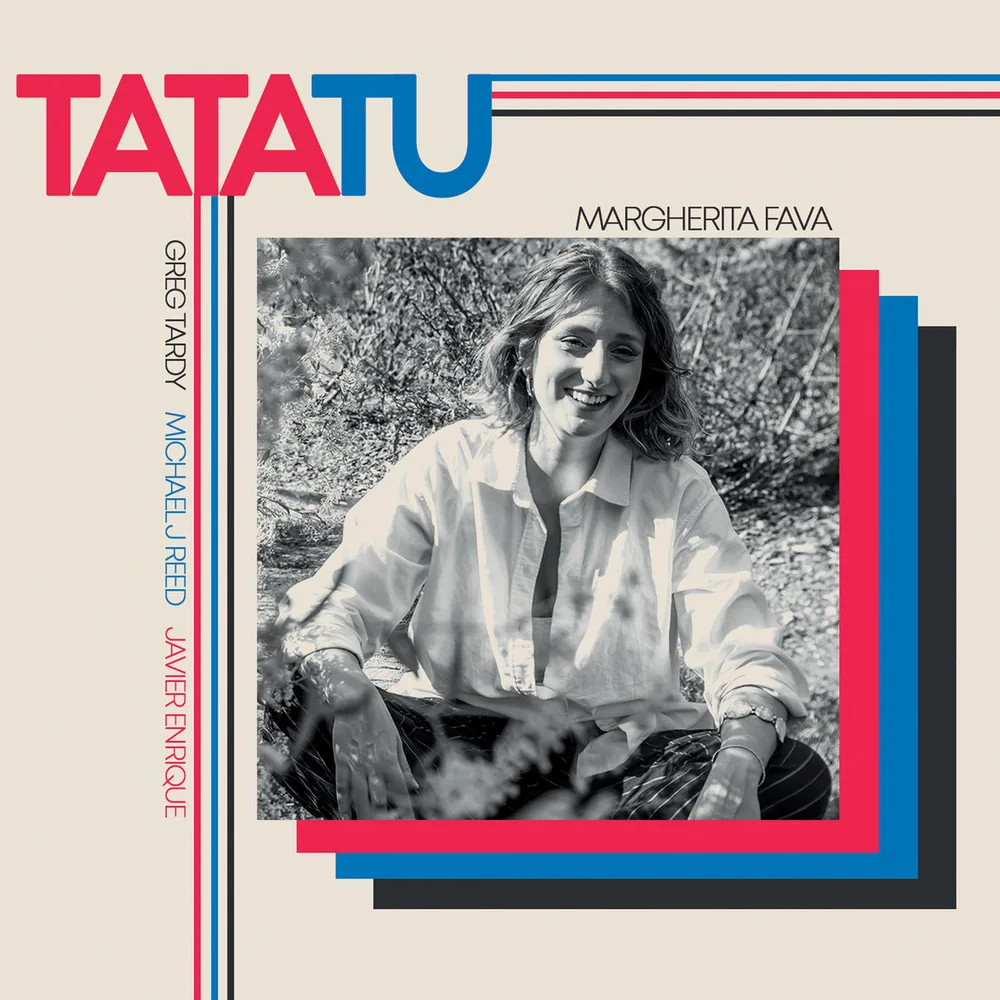
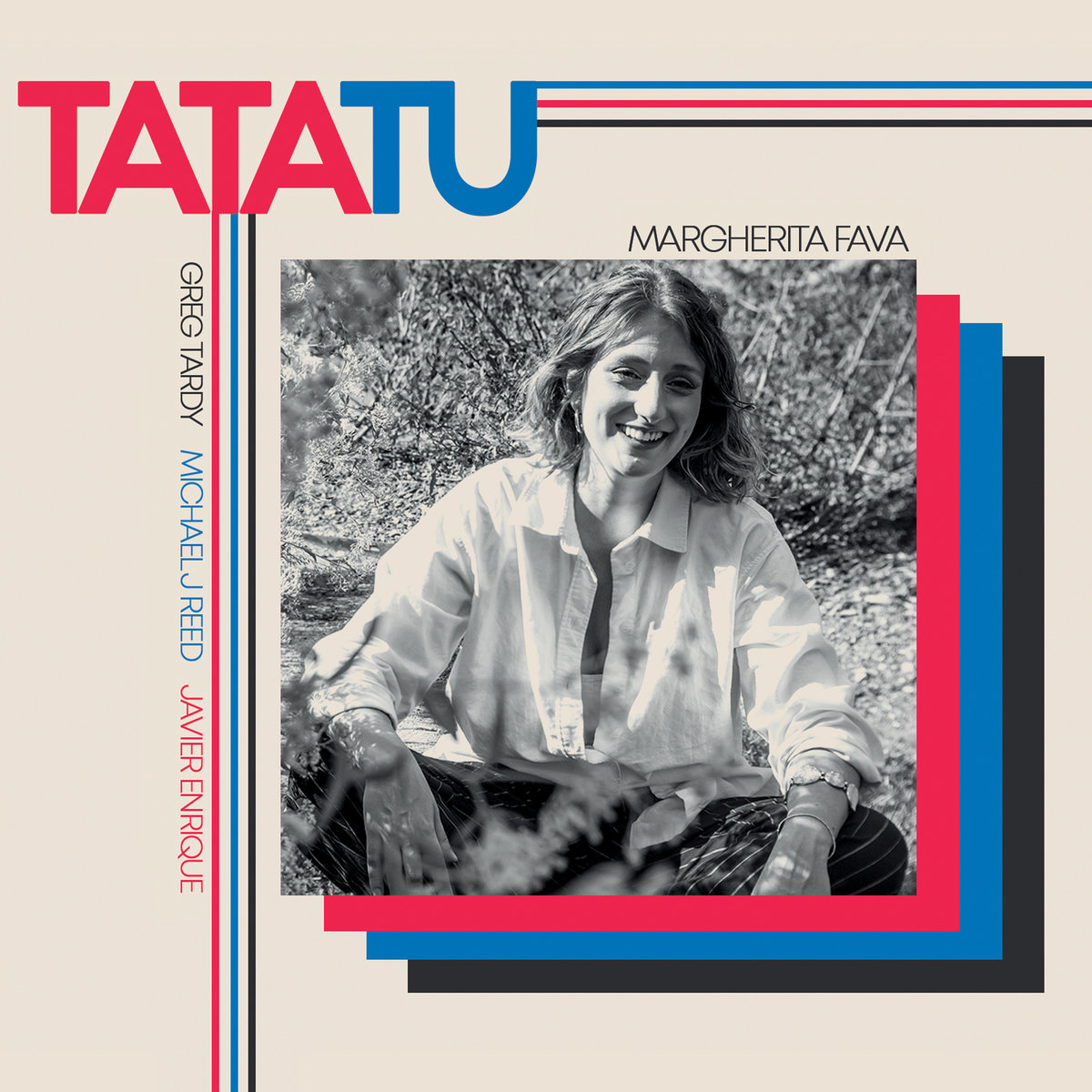
Margherita Fava, photographed for the cover of her 2023 debut album *Tatatu* (Caligola). Not Creative Commons - album cover photograph, rights held by Margherita Fava / Caligola Records. No CC-licensed or public-domain photograph of Margherita Fava was found on Wikimedia Commons, Wikipedia, her own site, or press coverage; the photographer credited on the release is Jacob Hale. This album cover is used as the disclosed non-CC fallback per this project's standing rule. The artist's own official website (margheritafava.com) currently redirects to an unrelated gambling/phishing page and was not used as a source for any file in this build - see notes.md. — Margherita Fava (Bandcamp) - https://f4.bcbits.com/img/a0177945338_10.jpg
Margherita Fava was born on October 16, 1995, in Follina, a village of fewer than 4,000 people in the Alpine foothills of the Treviso province, in Italy's Veneto region. Both of her parents are classical musicians specializing in baroque repertoire, her father a violinist and her mother a cellist and singer, and Fava grew up around their instruments without being pushed toward any of them. She started classical piano at 10 and picked up electric bass as a teenager. At 17 her parents enrolled her in a summer jazz workshop in Venice sponsored by the New School in New York, where the pianist Aaron Goldberg judged her audition and, after she played a classical piece rather than a jazz standard, assigned her to learn Miles Davis's trumpet solo on "So What" by ear. She has described that assignment as the moment she committed to jazz.
A scholarship brought her to Michigan State University in 2016, where she studied under bassist Rodney Whitaker, director of the school's jazz studies program, and pianist Xavier Davis, completing a bachelor's degree before moving on to a master's in jazz studies at the University of Tennessee, Knoxville. There she studied composition with saxophonist and clarinetist Gregory Tardy, who has said every composition she turned in for his class "sounded like something very mature that could be recorded." She completed the degree in May 2022.
Her debut album, Tatatu (Caligola, 2023), was self-produced and self-financed, with Whitaker producing. It is a quartet date with Tardy on tenor saxophone and clarinet, Javier Enrique on double bass and Michael J Reed on drums, pairing six original compositions with Thelonious Monk's "Rhythm-A-Ning" and the standard "All The Things You Are." Its title is a word Fava coined as a toddler, meaning roughly "let me do it by myself." The record earned four-star reviews from both DownBeat and All About Jazz, and Italy's Musica Jazz named her among the country's most promising young jazz talents of 2023 and ran a dedicated interview with her.
Fava is now based in Knoxville, Tennessee, where she works full time as a pianist, composer and educator. She teaches jazz piano at Lee University in Cleveland, Tennessee, has directed the Knoxville Jazz Workshop since 2024, performs and organizes with the nonprofit Knoxville Jazz Orchestra, coordinates the NXT GEN concert series showcasing her own compositions and arrangements with local musicians, and hosts the jazz program "On Keys" on the public radio station WUOT.
Her second album, Murrina (Caligola), followed in October 2025. Where Tatatu was a quartet record, Murrina moves Fava to the head of a piano trio with bassist Brandon Rose and drummer Jonathan Barber, joined on individual tracks by guest saxophonist Bob Reynolds and synthesizer players Taber Gable and Jeff Babko. Of its nine tracks, six are originals; the other three are Duke Ellington's "Satin Doll," an arrangement of a piano intermezzo by Johannes Brahms that she has described as a tribute to her classically trained parents, and "Alter Ego" by the Memphis pianist James Williams. The title track is dedicated to trumpeter Tom Harrell; a brief, unplanned studio fragment recorded by the engineer became "Murrina Reprise." Musica Jazz's Ivo Franchi reviewed the record favorably, singling out the ballad "Yarn" and the Cedar Walton-influenced "Foreshadow."
Fava plays in a modern, mainstream-leaning jazz piano style that Musica Jazz's review of Murrina described as "poised between exploration and tradition," built on a working balance of original writing and carefully chosen standards. Her own account of her formation runs through Miles Davis's mid-1960s quintet sound, absorbed note by note as a teenager, and she has cited pianist Cedar Walton specifically as the model behind "Foreshadow," one of her earliest compositions, which she has described as a study built on triads. The gap between Tatatu's quartet writing and Murrina's trio format shows in the arrangements: the debut leans on Tardy's saxophone and clarinet for color and contrast, while the trio record puts more weight directly on her own touch and comping, with the guest synthesizer and saxophone parts used sparingly rather than as a fifth voice throughout. Her choice of covers, ranging from Monk and Ellington to a classical Brahms intermezzo, reflects a musician trained equally in the jazz repertoire and in the baroque and classical tradition of her parents' household.
- Tatatu (2023, Caligola) - Her self-produced debut, a quartet with Gregory Tardy on tenor saxophone and clarinet, produced by Rodney Whitaker; four-star reviews from DownBeat and All About Jazz. Bandcamp - Tatatu Listen · Buy
- Murrina (2025, Caligola) - Her second album, leading a piano trio with guest turns from Bob Reynolds, Taber Gable and Jeff Babko; reviewed favorably by Musica Jazz. Spotify - Murrina Listen · Buy
Margherita Fava: Full Discography
Identity confirmed via live Discogs API call: a single artist entity, ID 12768668 ("Margherita Fava"), profile text "Pianist. Born 16 October 1995 in Follina, Italy; based in Knoxville, TN." No other Discogs entity under this name exists, and no name-collision risk was found in this catalog (a different, unrelated Italian jazz musician, Enzo Favata, is profiled elsewhere in this vault under folder 178; the surnames are distinct and the two artists are not connected). Her Discogs-logged catalog consists of two "Main"-role releases, both on the Caligola label.
Listen/Buy note: this vault has no dedicated Spotify API credentials, so links below were verified via web search against title, artist and label rather than assumed. Where no Spotify listing could be confirmed, the cell reads "not found" and the Bandcamp page is given instead.
Leader Albums
| Album | Year | Label | Personnel | Notes | Listen | Buy |
|---|---|---|---|---|---|---|
| Tatatu | 2023 | Caligola (cat. 2326) | Margherita Fava (piano), Gregory Tardy (tenor saxophone, clarinet), Javier Enrique (double bass), Michael J Reed (drums); produced by Rodney Whitaker; liner notes by Mark Stryker | Self-produced debut; six originals plus Thelonious Monk's "Rhythm-A-Ning" and "All The Things You Are"; four-star reviews from DownBeat and All About Jazz; named among Musica Jazz's best young talents of 2023 | not found on Spotify - Bandcamp | Bandcamp |
| Murrina | 2025 | Caligola (cat. 2374) | Margherita Fava (piano), Brandon Rose (bass), Jonathan Barber (drums); guests Bob Reynolds (tenor saxophone, track 2), Taber Gable (synthesizer, track 9), Jeff Babko (synthesizer, track 9) | Released October 3, 2025 per the artist's own Bandcamp page and independent press coverage (Caligola's own Bandcamp page and Discogs list later dates - see note below); piano trio format; six originals plus Duke Ellington's "Satin Doll," a Brahms piano intermezzo arrangement, and James Williams's "Alter Ego"; reviewed favorably by Musica Jazz (Ivo Franchi) | Spotify | Bandcamp |
Discogs credit-quality note
Discogs' extraartists listing for Murrina attributes the bass credit to an artist entity named "Brandon Ross' The Overflow" (Discogs ID 1366882). That entity is a mistag: its own Discogs artist page lists its members as Melvin Gibbs, Hahn Rowe, Don Byron, Dougie Bowne and guitarist Brandon Ross, an unrelated experimental group with no connection to Fava. Independent press (Musica Jazz's review of the album) names the actual bassist as "Brandon Rose," a different person with a similar-sounding surname. This profile and its discography table use "Brandon Rose" throughout and do not link to the Discogs entity or to guitarist Brandon Ross, to avoid a false identity match.
Release date discrepancy (Murrina)
Three independent sources disagree on the exact release date for Murrina: the artist's own Bandcamp page states October 3, 2025 (matching two independent reviews, Making a Scene and The Jazz Word); the Caligola Records label Bandcamp page states December 29, 2025; and the Discogs release entry lists the year as 2026. This profile uses October 3, 2025 as the release date, since it is corroborated by the artist's own page plus two independent reviews, against a single label-page/Discogs figure.
- Gregory Tardy - her composition teacher at the University of Tennessee, Knoxville, and the tenor saxophonist and clarinetist on Tatatu (2023), the sole recorded meeting between the two confirmed on Discogs.
- Rodney Whitaker - her teacher and mentor at Michigan State University, and producer of Tatatu (2023); no jazzprofiles.com profile found in any vault checked.
- Aaron Goldberg - judged her audition at a summer jazz workshop in Venice and set her the Miles Davis "So What" transcription that she credits with turning her toward jazz; a formative but non-recorded connection, named in prose only.
- Javier Enrique (double bass) and Michael J Reed (drums) - the rhythm section on Tatatu (2023); neither has a jazzprofiles.com profile in any vault checked.
- Brandon Rose (bass) and Jonathan Barber (drums) - her trio on Murrina (2025); neither has a jazzprofiles.com profile in any vault checked.
- Bob Reynolds (tenor saxophone), Taber Gable and Jeff Babko (synthesizers) - guest musicians on individual Murrina tracks; none has a jazzprofiles.com profile in any vault checked.
More Post-Bop Artists
See all 612 Post-Bop artists →More Italian Jazz Artists
See all 391 Italian artists →- Bandcamp
- Caligola Records on Bandcamp
- Discogs
- Spotify
- WUOT: Margherita Fava
- Margherita Fava on jazzprofiles.com
- r/ItalianJazz
- DownBeat: "Margherita Fava: From Italy, with Love"
- All About Jazz: Tatatu album review
- All About Jazz: Murrina album review
- Musica Jazz: Murrina review (English)
- Musica Jazz: Tatatu interview
- Voyage Knoxville Magazine: "Conversations with Margherita Fava"
- WUOT: Margherita Fava
- Discogs API, artist 12768668 ("Margherita Fava"), for identity confirmation and release-level credits.
- Margherita Fava on Bandcamp
- Caligola Records: Murrina on Bandcamp