 JAZZPROFILES lives in the music 2,059 Jazz Artists fully Profiled!
Mark Isham
Last updated October 29, 2026
Listen on Spotify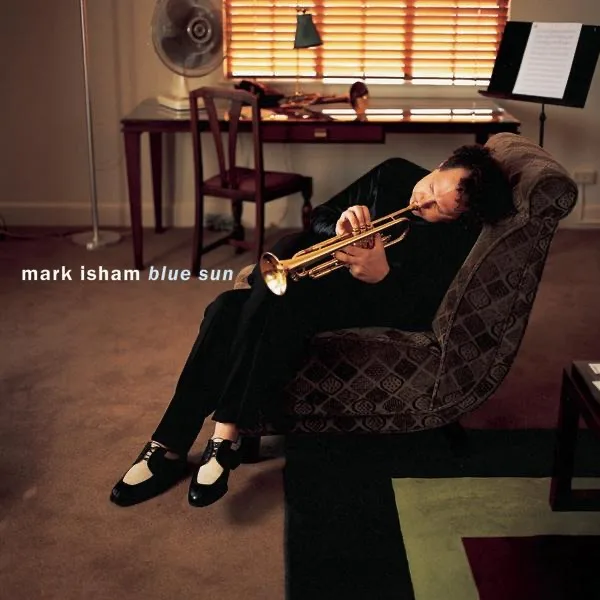
Mark Isham playing trumpet on the cover of his album *Blue Sun* (Columbia, 1995) Album cover art (not a CC-licensed artist photo), used as the only available image showing the artist. Copyright is held by the label and the photographer; no Creative Commons or public-domain photograph of Mark Isham was located. — Apple Music artwork for Blue Sun, 600 x 600 pixels, https://is1-ssl.mzstatic.com/image/thumb/Music/c1/ad/47/mzi.xoukhlse.jpg/600x600bb.jpg

Mark Ware Isham was born in New York City on September 7, 1951, the son of Patricia Hammond Isham, a violinist, and Howard Fuller Isham, a professor of humanities. He studied trumpet from early childhood, made his professional debut at twelve, and also studied piano and violin. When he was a teenager the family moved to the San Francisco Bay Area, where he played with the Oakland East Bay Symphony. His own biography says that by fifteen he was working jazz clubs while also playing with the Oakland and San Francisco symphonies.
The shape of his career should be stated plainly. Most of what he has released under his own name is electronic, ambient or new age music, and most of his working life since 1983 has gone into film and television scoring: Wikipedia counts more than 200 productions, and AllMusic calls film scoring his primary focus. The jazz side is a smaller part of the catalog but a documented one: two records for ECM with the pianist Art Lande, two quintet albums for Columbia in 1995 and 1999, and a 2009 standards album with the Australian singer Kate Ceberano.
In the 1970s he worked as a touring and session player. AllMusic lists the jazz leaders Pharoah Sanders and Charles Lloyd and the pop acts the Beach Boys and Van Morrison among his employers. His documented record credits from that period are narrower: synthesizer on Lloyd's Pathless Path (Unity, 1979) and on one track of Sanders's Journey to the One (Theresa, 1980). The central jazz work of the decade was Rubisa Patrol, the quartet Art Lande formed in 1976, which played around the Bay Area and toured Europe by van. Isham played trumpet, flugelhorn and soprano saxophone on Rubisa Patrol (ECM, recorded May 1976) with the bassist Bill Douglass and the drummer Glenn Cronkhite. The follow-up, Desert Marauders (recorded June 1977, released 1978), had Kurt Wortman on drums and includes Isham's composition "Livre (Near the Sky)." AllMusic hears a strong Miles Davis influence in his playing from this period.
From 1979 he was in Van Morrison's band. He played trumpet and flugelhorn on Into the Music (1979), where the horn arrangements are credited to him and Pee Wee Ellis, and he recommended Ellis to Morrison, who then stayed for the whole album. He appeared with Morrison at the Montreux Jazz Festival in 1980 and went on to Common One (1980), Beautiful Vision (1982) and the live album Live at the Grand Opera House Belfast (1984). In the same years he formed Group 87 with the guitarist Peter Maunu and the bassist Patrick O'Hearn, with the drummer Terry Bozzio also in the lineup. The band made two albums, Group 87 (Columbia, 1980) and A Career in Dada Processing (Capitol, 1984), and AllMusic describes its instrumental music as arriving years before new age became a category.
His solo career began in 1983 with Vapor Drawings, the first electronic record on the Windham Hill label. A demo he had circulated for ECM reached the director Carroll Ballard, who hired him for the Disney film Never Cry Wolf (1983), and the film work grew from there. At the same time he kept playing on other people's records, including David Sylvian's Brilliant Trees (1984), where he plays trumpet on one track, and Art Lande's duo album with him, We Begin (ECM, recorded January 1987). The late 1980s brought Castalia (Virgin, 1988) and Tibet (Windham Hill, 1989), both nominated for the Best New Age Performance Grammy, and then Mark Isham (Virgin, 1990), which won the Grammy for Best New Age Album at the 33rd Grammy Awards in 1991. He also composed the music for the Rabbit Ears children's storybook recordings, three of which brought Best Album for Children nominations. His scores include A River Runs Through It (1992, Robert Redford), which brought an Academy Award nomination for Best Original Score, Nell (1994, Golden Globe nomination), Quiz Show (1994, Redford), Blade (1998), Crash (2004, Paul Haggis), The Black Dahlia (2006, a best-score award from the International Film Music Critics Association) and the television series Once Upon a Time (2011 to 2018). He won a Primetime Emmy for the main title theme of EZ Streets, and in 2006 ASCAP gave him its Henry Mancini Award for lifetime achievement.
The jazz records returned in the mid-1990s. In 1992 he had premiered Five Stories for Trumpet and Orchestra with the St. Louis Symphony as soloist, and in 1995 Blue Sun (Columbia) introduced a working quintet of keyboardist David Goldblatt, saxophonist Steve Tavaglione, bassist Doug Lunn and drummer Kurt Wortman, playing mostly Isham originals. Miles Remembered: The Silent Way Project (Columbia, 1999) was recorded live at The Baked Potato in North Hollywood during 1996 with a twin-guitar electric band of Steve Cardenas and Peter Maunu, and plays music by Miles Davis and Joe Zawinul alongside two Isham pieces. Bittersweet (2009), an album of standards with Kate Ceberano, was recorded live without overdubs in three days at his home studio with the pianist Alan Pasqua, the bassist Tom Warrington and the drummer Peter Erskine, and was nominated for Best Jazz Album at the 2009 ARIA Awards. He has since played trumpet on records by Brian Wilson (No Pier Pressure, 2015), Stanley Clarke (The Message, 2018) and Joni Mitchell (Both Sides Now, 2000), is credited with Scott Steiner on the score of the Buddy Bolden film Bolden (2019, with music by Wynton Marsalis), and is credited on the 2021 release of the pianist Michael Wolff's Live at Vitello's, recorded in Los Angeles in August 2011. His most recent feature score listed in the sources is Soul on Fire (2025). A radio interview broadcast in February 2026 was recorded at his home studio in Hidden Hills, California.
Isham's trumpet playing carries the Miles Davis influence that AllMusic hears from his Rubisa Patrol years, and a reviewer of Blue Sun heard it in his Harmon-muted playing while finding his tone less fragile than Davis's. In a 1995 interview he described improvisation and composition as nearly the same act. He says he came to writing through electronics, starting on a Fender Rhodes before he owned a piano, and that for his quintet he works from lead sheets, bass lines and verbal descriptions of a section's mood rather than fully written parts. The electronic albums treat the trumpet as one color among synthesizers and processed instruments, and he describes film scoring as a matter of finding the turning points of a scene and writing the music from one to the next.
How the work is classified depends on which part you hear. Wikipedia lists his styles as crossover jazz, post-bop, ambient, progressive electronic, chamber jazz and new age, and AllMusic files him under stage and screen first. Only a minority of his output is jazz, and the film scores and Windham Hill records are not jazz at all. What connects the two worlds is the same instrumental voice and a working method based on improvisation, together with a circle of Bay Area and Los Angeles players (Douglass, Wortman, Lunn, Maunu, David Torn) who recur on records of both kinds.
- Rubisa Patrol (1976, ECM) - Art Lande's quartet with Isham on trumpet, flugelhorn and soprano saxophone, his first recording, and the one on which AllMusic hears a strong Miles Davis influence. Spotify - Rubisa Patrol Listen
- Vapor Drawings (1983, Windham Hill) - His solo debut and the label's first electronic release, with "On the Threshold of Liberty," which later turned up on Windham Hill samplers. Spotify - Vapor Drawings Listen
- We Begin (1987, ECM) - A duo record with Art Lande, recorded in January 1987, with Isham on trumpet, flugelhorn, piccolo trumpet, synthesizer and percussion. Spotify - We Begin Listen
- Mark Isham (1990, Virgin) - The Grammy winner for Best New Age Album, with David Torn, Terry Bozzio, Doug Lunn, the bassist John Patitucci on two tracks and a vocal by Tanita Tikaram on "I Never Will Know" and "Blue Moon."
- A River Runs Through It (1992, Milan) - The Robert Redford score that brought his Academy Award nomination for Best Original Score and a Grammy nomination.
- Blue Sun (1995, Columbia) - His first quintet album, seven originals plus Ellington's "In a Sentimental Mood" and "Lazy Afternoon." Spotify - Blue Sun Listen
- Miles Remembered: The Silent Way Project (1999, Columbia) - A live electric tribute with two guitars, including Steve Cardenas, drawing on Davis and Zawinul. Spotify - Miles Remembered Listen
- Bittersweet (2009, Earle-Tones) - Standards with Kate Ceberano and a rhythm section led by Peter Erskine. Spotify - Bittersweet
Mark Isham: Full Discography
Discogs artist: Mark Isham (74213) · Born September 7, 1951, New York City
Most of Isham's output is film and television scoring, electronic and new age music. This list covers his own albums, the jazz records and a selected set of sideman credits, with a short table of selected scores; the full list of scores and appearances is on Discogs.
Leader and Co-Leader: Albums
| Album | Year | Label | Personnel & Notes | Listen | Buy |
|---|---|---|---|---|---|
| Vapor Drawings | 1983 | Windham Hill (WH-1027) | His solo debut and the first electronic release on Windham Hill. All instruments by Isham except additional electronic percussion and snare drum by Peter Van Hooke. Includes "On the Threshold of Liberty," named for a Magritte painting | Spotify | — |
| Film Music | 1985 | Windham Hill (WD-1041) | Extended suites from the scores for Mrs. Soffel, The Times of Harvey Milk and Never Cry Wolf. Lyle Mays (piano) and Peter Maunu (violin) appear on the Mrs. Soffel piece; Isham plays trumpet only on the Harvey Milk piece | — | — |
| We Begin (with Art Lande) | 1987 | ECM (ECM 1338) | Duo with the pianist Art Lande, recorded January 1987. Isham on trumpet, flugelhorn, piccolo trumpet, synthesizer and percussion | Spotify | — |
| Castalia | 1988 | Virgin | David Torn (guitar), Terry Bozzio (drums), Mick Karn (bass), Peter Maunu (guitar), Paul McCandless (reeds), Patrick O'Hearn (bass), Bill Douglass, Kurt Wortman and Gayle Moran (vocals). Nominated for the Grammy for Best New Age Performance | — | — |
| Tibet | 1989 | Windham Hill (WD-1080) | Isham on trumpet, flugelhorn, electronics, producer and composer; Peter Maunu and David Torn (guitars), Doug Lunn (bass), Bill Douglass (flute), Kurt Wortman (percussion), brass and French horns. Five untitled parts. Nominated for the Grammy for Best New Age Performance | Spotify | — |
| Mark Isham | 1990 | Virgin | Winner of the Grammy for Best New Age Album. Torn (guitar), Bozzio and Peter Van Hooke (drums), Doug Lunn (bass), John Patitucci (acoustic bass, two tracks), John Novello (organ), Alex Acuna (percussion), Tanita Tikaram (vocals on "I Never Will Know" and "Blue Moon") | — | — |
| Songs My Children Taught Me | 1991 | Windham Hill (WD-1101) | Music from the first four Rabbit Ears storybook recordings. Charlie Haden plays double bass on the Thumbelina section, with Peter Maunu (guitar), Paul McCandless (reeds) and Kurt Wortman (percussion) | — | — |
| Blue Sun | 1995 | Columbia (481304 2 / CK 67227) | Quintet record: Isham (trumpet, cornet, flugelhorn, electronics), David Goldblatt (piano, electric piano), Steve Tavaglione (tenor saxophone), Doug Lunn (electric bass), Kurt Wortman (drums); loops by David Torn, Peter Maunu and Lisbeth Scott. Seven Isham originals, Ellington's "In a Sentimental Mood" and "Lazy Afternoon" | Spotify | — |
| Miles Remembered: The Silent Way Project | 1999 | Columbia (CK 69901) | Recorded live at The Baked Potato, North Hollywood, between January and October 1996. Isham (trumpet), Steve Cardenas and Peter Maunu (guitars), Doug Lunn (bass), Michael Barsimanto (drums). Music by Miles Davis and Joe Zawinul plus Isham's "Internet" and "Azael" | Spotify | — |
| Bittersweet (with Kate Ceberano) | 2009 | Earle-Tones (ETR 8702); ABC Jazz in Australia | Standards, recorded live without overdubs in three days at Isham's studio. Kate Ceberano (vocals), Isham (trumpet, flugelhorn), Alan Pasqua (piano), Tom Warrington (bass), Peter Erskine (drums). Nominated for Best Jazz Album at the 2009 ARIA Awards | Spotify | — |
Group 87
| Album | Year | Label | Notes | Listen | Buy |
|---|---|---|---|---|---|
| Group 87 | 1980 | Columbia | Isham, Peter Maunu, Patrick O'Hearn and Terry Bozzio | — | — |
| A Career in Dada Processing | 1984 | Capitol | Second and final album; O'Hearn had left the band | — | — |
Children's Recordings (Rabbit Ears)
Isham composed and performed the music for a series of narrated storybook recordings: The Steadfast Tin Soldier (1987, narrated by Jeremy Irons, Windham Hill WD-0702), The Emperor and the Nightingale (1988, Glenn Close), Thumbelina (1989, Kelly McGillis), The Emperor's New Clothes (1990, John Gielgud), The Boy Who Drew Cats (1992, William Hurt) and The Firebird (1994, Susan Sarandon). Three of them were nominated for the Grammy for Best Album for Children.
Sideman and Guest Appearances (selected)
| Year | Project (Leader) | Title | Label | Catalog | Role | Notes |
|---|---|---|---|---|---|---|
| 1976 | Art Lande and Rubisa Patrol | Rubisa Patrol | ECM | ECM 1081 | Trumpet, flugelhorn, soprano saxophone | Co-billed quartet with Bill Douglass and Glenn Cronkhite; recorded May 1976. Spotify |
| 1978 | Art Lande and Rubisa Patrol | Desert Marauders | ECM | Not confirmed | Trumpet, flugelhorn | Recorded June 1977 with Douglass and Kurt Wortman; Isham wrote "Livre (Near the Sky)" |
| 1979 | Van Morrison | Into the Music | Warner Bros. | HS 3390 | Trumpet, horn arrangements | Horn arrangements shared with Pee Wee Ellis |
| 1979 | Charles Lloyd | Pathless Path | Unity | UR 708 | Synthesizer | |
| 1980 | Van Morrison | Common One | Warner Bros. | BSK 3462 | Trumpet, flugelhorn | Also backing vocals on one track |
| 1980 | Pharoah Sanders | Journey to the One | Theresa | TR 108/109 | Synthesizer | Credited on one track of the double album |
| 1982 | Van Morrison | Beautiful Vision | Mercury | 6302 122 (UK) | Trumpet, synthesizer | Credited on tracks A1 to A5, B2 and B4 of the UK pressing |
| 1984 | Van Morrison | Live at the Grand Opera House Belfast | Mercury | MERL 36 (UK) | Trumpet, synthesizer | |
| 1984 | David Sylvian | Brilliant Trees | Virgin | V2290 | Trumpet | One track |
| 1987 | David Sylvian | Secrets of the Beehive | Virgin | Not confirmed | Not confirmed | Listed as a credit; role not confirmed |
| 1987 | David Torn | Cloud About Mercury | ECM | Not confirmed | Trumpet | |
| 1990 | Andy Summers | Charming Snakes | Private Music | Not confirmed | Not confirmed | Listed as a credit; role not confirmed |
| 1990 | Ray Russell (featuring Gil Evans and Mark Isham) | Childscape | Not confirmed | Not confirmed | Featured player | Billed as a featured artist |
| 2000 | Joni Mitchell | Both Sides Now | Reprise | Not confirmed | Trumpet | |
| 2009 | Morrissey | Years of Refusal | Not confirmed | Not confirmed | Trumpet | |
| 2015 | Brian Wilson | No Pier Pressure | Not confirmed | Not confirmed | Trumpet | |
| 2018 | Stanley Clarke | The Message | Not confirmed | Not confirmed | Trumpet | |
| 2021 | Michael Wolff | Live at Vitello's | Not confirmed | Not confirmed | Billed player | Recorded in Los Angeles on August 30 and 31, 2011, with Mike Clark and John B. Williams |
Further session credits are listed for Suzanne Vega (1985), XTC's Oranges & Lemons (1989), Robbie Robertson's Storyville (1991), Bruce Springsteen's Human Touch (1992), Toots Thielemans's The Brasil Project (1992), Willie Nelson's Across the Borderline (1993), the Rolling Stones' Voodoo Lounge (1994) and Kyle Eastwood's From There to Here (1998). The track and instrument for each are not confirmed.
Selected Scores
| Year | Title | Director | Notes |
|---|---|---|---|
| 1983 | Never Cry Wolf | Carroll Ballard | First film score |
| 1984 | Mrs. Soffel | Gillian Armstrong | |
| 1985 | Trouble in Mind | Alan Rudolph | Score album on Antilles, 1986 |
| 1986 | The Hitcher | Robert Harmon | |
| 1988 | The Moderns | Alan Rudolph | Virgin score album; Los Angeles Film Critics Association award for best music |
| 1990 | Reversal of Fortune | Barbet Schroeder | |
| 1991 | Point Break | Kathryn Bigelow | |
| 1992 | A River Runs Through It | Robert Redford | Academy Award nomination, Best Original Score; Grammy nomination |
| 1993 | Short Cuts | Robert Altman | |
| 1994 | Quiz Show | Robert Redford | |
| 1994 | Nell | Michael Apted | Golden Globe nomination, Best Original Score |
| 1997 | Afterglow | Alan Rudolph | Jazz-based score; the score album bills Charles Lloyd as a featured player |
| 1998 | Blade | Stephen Norrington | |
| 2000 | Men of Honor | George Tillman Jr. | Grammy nomination for the score album |
| 2003 | The Cooler | Wayne Kramer | |
| 2004 | Crash | Paul Haggis | AFI award for original score |
| 2006 | The Black Dahlia | Brian De Palma | International Film Music Critics Association award for best score for a drama film |
| 2006 | Bobby | Emilio Estevez | |
| 2011 | Warrior | Gavin O'Connor | |
| 2011 to 2018 | Once Upon a Time (television) | Score for the series; Intrada released score albums | |
| 2013 | 42 | Brian Helgeland | |
| 2019 | Bolden | Dan Pritzker | Score credited to Isham and Scott Steiner, with music by Wynton Marsalis |
| 2020 | Little Fires Everywhere (television) | Primetime Emmy nomination, music composition for a limited series | |
| 2021 | Judas and the Black Messiah | Shaka King | Score album credited to Isham and Craig Harris |
| 2022 | Mark Isham: Music for Film | New recordings of film suites with the Brussels Philharmonic conducted by Dirk Brossé (Silva Screen) | |
| 2025 | Soul on Fire | Sean McNamara |
Compilations
A Windham Hill Retrospective (Windham Hill, 1998) and Pure (Windham Hill / Legacy, 2006; Spotify).
Awards
| Award | Work | Result |
|---|---|---|
| Grammy, Best New Age Album | Mark Isham (1990) | Winner (33rd Grammy Awards, 1991) |
| Grammy, Best New Age Performance | Castalia (1988) and Tibet (1989) | Nominated |
| Grammy, Best Album for Children | The Emperor and the Nightingale (1988), Thumbelina (1989), The Emperor's New Clothes (1990) | Nominated |
| Grammy, Best Instrumental Composition Written for a Motion Picture or for Television | A River Runs Through It (1992) | Nominated |
| Grammy, Best Score Soundtrack Album | Men of Honor (2000) | Nominated |
| Academy Award, Best Original Score | A River Runs Through It (1992) | Nominated |
| Golden Globe, Best Original Score | Nell (1994) | Nominated |
| Primetime Emmy, Outstanding Main Title Theme Music | EZ Streets (1996 to 1997) | Winner |
| Primetime Emmy, Outstanding Main Title Theme Music | Chicago Hope (1994), Nothing Sacred (1997) | Nominated |
| Primetime Emmy, Outstanding Music Composition for a Limited Series | Little Fires Everywhere (2020) | Nominated |
| International Film Music Critics Association, Best Score for a Drama Film | The Black Dahlia (2006) | Winner |
| ASCAP Film and Television Music Awards, Henry Mancini Award | Lifetime achievement (2006) | Recipient |
- Art Lande - the pianist whose Rubisa Patrol gave Isham his first jazz records, Rubisa Patrol (1976) and Desert Marauders (1978), and with whom he made the duo album We Begin (1987). Bassist Bill Douglass and drummers Glenn Cronkhite and Kurt Wortman completed the quartet.
- Kurt Wortman, Doug Lunn, David Goldblatt and Steve Tavaglione - the quintet on Blue Sun (1995). Wortman and Lunn recur across his records from the 1980s onward.
- Steve Cardenas, Peter Maunu, Doug Lunn and Michael Barsimanto - the electric band on Miles Remembered (1999), recorded live in 1996.
- Peter Maunu, Patrick O'Hearn and Terry Bozzio - Group 87 bandmates; Maunu and Bozzio appear on his later solo records, including Castalia (1988).
- Van Morrison and Pee Wee Ellis - Morrison's band, 1979 to 1984; Ellis co-arranged the horns on Into the Music at Isham's recommendation.
- David Sylvian and David Torn - Isham plays trumpet on Sylvian's Brilliant Trees (1984) and appears on Secrets of the Beehive (1987), and Torn is the guitarist on Castalia and Mark Isham and on Torn's own Cloud About Mercury (ECM, 1987).
- Pharoah Sanders and Charles Lloyd - jazz leaders with whom he worked in the 1970s; he plays synthesizer on Sanders's Journey to the One (1980) and on Lloyd's Pathless Path (1979), and Lloyd is billed as a featured player on the score album for Afterglow (1997).
- Charlie Haden - double bass on the Thumbelina section of Songs My Children Taught Me (1991).
- Gil Evans - Childscape (1990) is billed to the guitarist Ray Russell featuring Gil Evans and Isham.
- Kate Ceberano and Alan Pasqua, Tom Warrington and Peter Erskine - the Bittersweet (2009) band.
- Joni Mitchell, Brian Wilson, Stanley Clarke and Morrissey - later records on which he plays trumpet.
- Carroll Ballard, Alan Rudolph and Robert Redford - the directors who defined his film career: Ballard's Never Cry Wolf (1983) and Fly Away Home (1996), Rudolph's films from Trouble in Mind (1985) onward, and four features with Redford.
- Chick Corea, Herbie Hancock and Bobby McFerrin - named in Isham's own biography as jazz collaborators; specific recordings are not itemized there.
More Crossover Jazz Artists
See all 188 Crossover Jazz artists →More American Jazz Artists
See all 646 American artists →- Wikipedia: Mark Isham
- Wikipedia: Rubisa Patrol
- Wikipedia: Desert Marauders
- Wikipedia: Into the Music
- Wikipedia: Vapor Drawings
- Wikipedia: Castalia (album)
- Wikipedia: Mark Isham (album)
- Wikipedia: We Begin
- Wikipedia: Bittersweet (Mark Isham and Kate Ceberano album)
- Wikipedia: Bolden
- Wikipedia: Patrick O'Hearn
- AllMusic: Mark Isham biography by Matt Collar
- Official site: biography
- Official site: awards
- All About Jazz: Mark Isham, Blue Sun (Rediscovery, John Kelman)
- John Braheny Archive: Mark Isham interview, 1995
- Soho Radio: Composers on Film with Gemma Dempsey feat. Mark Isham, February 2026
- Discogs: Mark Isham
- MusicBrainz: Mark Isham