 JAZZPROFILES lives in the music 3,006 Jazz Artists fully Profiled!
Jean-Charles Richard
Last updated November 16, 2026
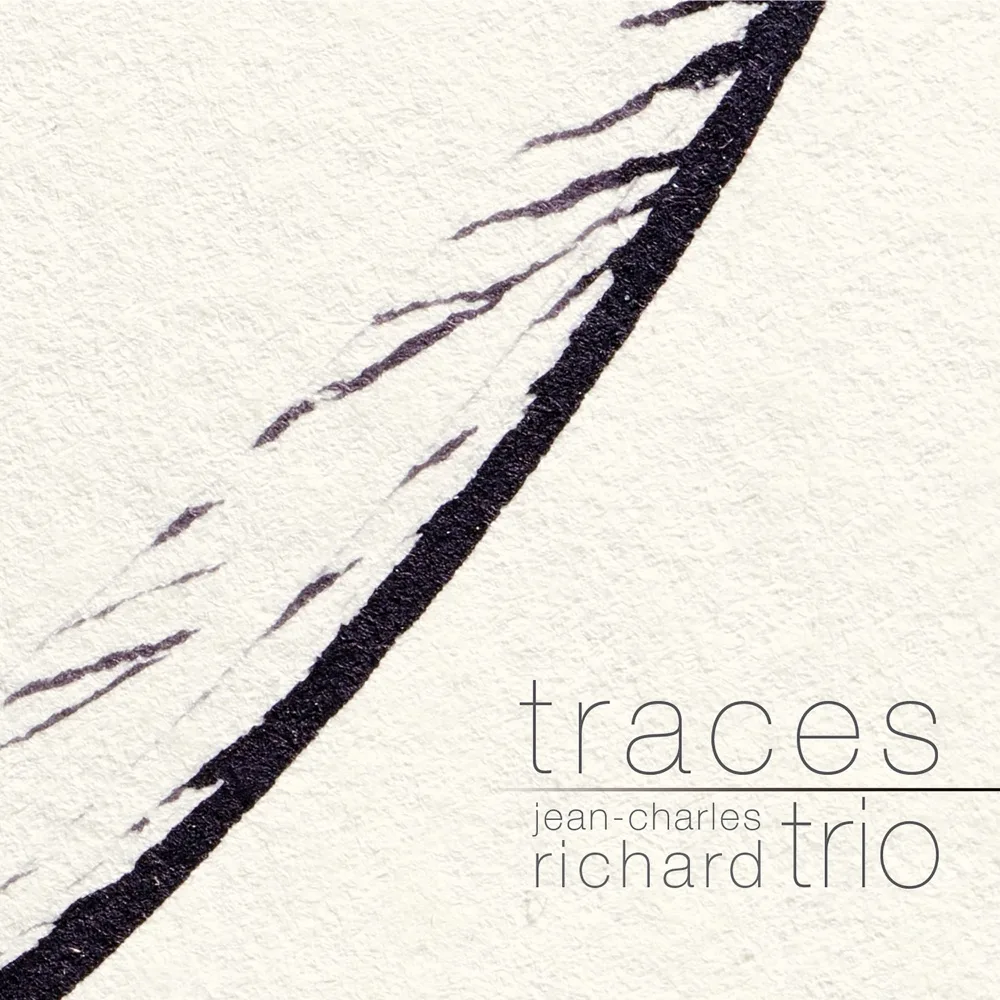
Cover of Traces by the Jean-Charles Richard Trio (Abalone Productions, 2012). The cover is a graphic image and does not show the artist. Standard copyright, all rights reserved, held by Abalone Productions and the rights holders of the cover. This is not a Creative Commons or public-domain image; it is an album cover shown as an honestly disclosed editorial identification image. — Apple Music, Traces (feat. Peter Herbert and Wolfgang Reisinger) - https://music.apple.com/fr/album/1119282658
Jean-Charles Richard was born in Bourg-en-Bresse on July 17, 1974. He started on the saxophone in the wind band (harmonie) of Mézériat, then studied at the conservatoires of Bourg, Mâcon and Dijon and at the Conservatoire national supérieur de musique et de danse de Paris. French Wikipedia dates a first prize in classical saxophone to 1992. His publisher biographies describe a dual course at the Paris conservatoire that ended with a first prize in classical saxophone and a higher diploma in jazz, and add the teaching certificate in both classical saxophone and jazz and a state diploma in musical analysis.
His early work was as broad as his training. From 1995 to 2000 he played in Les DéSAXés, a humorous saxophone group staged by the humorist François Rollin that toured widely and played the Olympia, the Printemps de Bourges and the Paléo Festival in Nyon, and French Wikipedia credits him on its record Tetrasaxyl Effervescent (1999). From 2001 to 2005 he took part in Cirque Lili, a show made with the juggler Jérôme Thomas's company that was performed more than 200 times in France and elsewhere in Europe. In the same years he played in classical orchestras, including the Orchestre de Paris, and in the big bands of George Russell, Antoine Hervé, Pom and Jean-Loup Longnon, and he worked with contemporary composers including Karlheinz Stockhausen and Thierry Escaich.
His own records began with the pianist Christopher Culpo: Portrait in Black and White (Googly Records, recorded in July 2001) and Love & Bananas Are Here (Cristal Records, 2005), the second with the bassist Peter Herbert. Faces (Herrade, 2006) is his first record under his own name and a solo saxophone project, recorded in Pennsylvania in February 2005 and dedicated to Steve Lacy, with Dave Liebman as artistic adviser and liner-note writer. His publisher biography records top ratings for it from Télérama and Jazzman. Traces (Abalone Productions, 2012), a trio record with Herbert and the drummer Wolfgang Reisinger, was recorded in February 2011; French Wikipedia and German Wikipedia, both citing Le Progrès, record a prize from the Académie Charles-Cros in 2012, and his Vandoren biography ties it to Traces.
From 2006 he also conducted orchestras that sit between jazz and classical repertoire: Gil Evans's Sketches of Spain with David Liebman as guest soloist, Claus Ogerman's Cityscape, Jean-Marie Machado's Impressions and Martial Solal's Newdecaband with the Orchestre de l'Opéra de Lyon, according to his biographies. Solal wrote a saxophone concerto for him in 2014, and Richard gave its premiere on August 24, 2019 at the Musique de chambre à Giverny festival in Vernon, with a string orchestra under the conductor Florian Bonetto, according to Jazz Magazine, which calls him Solal's son-in-law. As a sideman he is a regular in the orchestra Danzas of Jean-Marie Machado (Fiesta Nocturna, 2010; Pictures for Orchestra, 2019; Majakka, 2021, and as conductor on Sinfonia, 2025). He also appears on Claudia Solal's Room Service (2010), Arnault Cuisinier's Fervent (2010), Christophe Marguet's Pulsion (2012), Antoine Hervé's PMT QuarKtet (2012), Leïla Olivesi's Astral (2022) and Yves Rousseau's Shabda (2025).
His recent leader records are L'Étoffe des rêves (La Buissonne, released in June 2022), a quartet with the pianist Marc Copland, Claudia Solal and the cellist Vincent Ségal recorded in January 2022, and L[eg]acy (Subsequence / L'Heure du Loup, recorded on September 8 and 9, 2023 and released in 2024), a duo with the guitarist Éric Löhrer that pays tribute to Steve Lacy. He teaches at the Conservatoire à rayonnement régional de Paris, where he leads the jazz and improvised music cycle, and at the Pôle supérieur Paris-Boulogne-Billancourt, according to a 2022 article on L'Étoffe des rêves.
Richard plays the soprano and the baritone saxophone, which he describes as the two extremes of the family; Discogs also credits him on flute (on Fervent and Majakka) and on the bansuri (on Traces). He names Steve Lacy as an inspiration for a full, overtone-rich sound, and Lacy runs through his catalogue, from the dedication of Faces to the title and programme of L[eg]acy. Discogs files Faces and Traces under avant-garde and contemporary jazz. In a Selmer interview he puts weight on sound concept and articulation rather than notes alone, and argues that a player's sound comes from the music he grew up with. His writing draws on literature and on twentieth-century French composition: reviewers and his label link L'Étoffe des rêves to Debussy, Messiaen, Mussorgsky, Shakespeare's Ophelia and a poem by Rimbaud, in a quiet, chamber-scale suite for saxophone, piano, voice and cello. Télérama's Michel Contat singled out his sound and technique on solo baritone and soprano. The balance of his career leans to jazz and improvised music: a jazz diploma, a jazz teaching post, a Charles-Cros prize for a jazz trio record and a discography made almost entirely with jazz musicians, alongside classical orchestral work.
- Faces (2006, Herrade) - his first record as leader, a solo saxophone project recorded in 2005 and dedicated to Steve Lacy, with Dave Liebman credited for compositions on three tracks and as artistic adviser.
- Traces (2012, Abalone Productions) - the trio with the bassist Peter Herbert and the drummer Wolfgang Reisinger, Richard is credited as writer or co-writer of nine of its ten pieces; the record his biography ties to the Charles-Cros prize. Apple Music - Traces Listen
- L'Étoffe des rêves (2022, La Buissonne) - the quartet with Marc Copland, Claudia Solal and Vincent Ségal, a suite built on literary and classical references. Apple Music - L'Étoffe des rêves Listen
- L[eg]acy (2024, Subsequence / L'Heure du Loup) - a guitar and saxophone duo with Éric Löhrer, recorded in September 2023, in homage to Steve Lacy.
- Love & Bananas Are Here (2005, Cristal Records) - the trio with Christopher Culpo and Peter Herbert, recorded in July 2004 with Richard on soprano saxophone.
- Majakka (2021, La Buissonne) - Jean-Marie Machado's album, with Richard on baritone and soprano saxophones and flute. Apple Music - Majakka Listen
- Shabda (2025, Alla Luna) - Yves Rousseau's sextet album, with Géraldine Laurent, Jean-Marc Larché, Clément Janinet and Christophe Marguet. Apple Music - Shabda Listen
Jean-Charles Richard: Full Discography
French saxophonist, born in Bourg-en-Bresse in 1974, playing soprano and baritone saxophone. On Discogs he is artist 4862446, listed as Jean-Charles Richard (2) to separate him from a French classical keyboardist of the same name, whose releases (Valois and other classical labels) are not his and are left out here. His trio record Traces is filed under a separate entry, Jean-Charles Richard Trio (artist 5142523). The first table lists records billed to him alone, to him as co-leader or to a named group of which he is a full member; the second is a selection of documented credits as a sideman or conductor, not a complete list. The full list is on Discogs.
The rows below were checked against Discogs release records, including the catalogue number and the credit naming him. Years are those of the release record. Where a label, catalogue number or personnel detail is not on a record, the cell says so.
Billed, co-led and group albums
| Album | Year | Label, catalogue | Personnel | Notes | Listen | Buy |
|---|---|---|---|---|---|---|
| Portrait in Black and White (Christopher Culpo, Jean-Charles Richard) | 2001 | Googly Records, EXO 001 | Christopher Culpo (piano), Jean-Charles Richard (saxophone) | Duo record in a digipak, recorded in July 2001; eleven tracks, including the title piece in three versions and "All the Things You Are". French Wikipedia dates it 2002 and names the label Exhaustive. | not found | — |
| Love & Bananas Are Here (Christopher Culpo, Peter Herbert, Jean-Charles Richard) | 2005 | Cristal Records, no catalogue number | Christopher Culpo (piano), Peter Herbert (double bass), Jean-Charles Richard (soprano saxophone) | Recorded in July 2004 at the Maison de la Musique in Nanterre and released in June 2005; eleven pieces. | not found | — |
| Faces (Jean-Charles Richard) | 2006 | Herrade, H 001 | Jean-Charles Richard (soprano and baritone saxophones, composer) | Solo saxophone record dedicated to Steve Lacy, recorded and mixed by Kent Heckman at Red Rock Studio, Saylorsburg, on February 21 to 23, 2005 and mastered in Paris in April 2005; fourteen pieces, most of them his own. David Liebman is credited as artistic adviser and liner-note writer and as composer of tracks 4 to 6; Jean-François Baëz and Alain Margoni are credited as writers of one track each. | not found | — |
| Fervent (Arnault Cuisinier, Guillaume de Chassy, Jean-Charles Richard, Fabrice Moreau) | 2010 | Laborie Records, LJ09 | Arnault Cuisinier (double bass), Guillaume de Chassy (piano), Jean-Charles Richard (soprano and baritone saxophones, flute), Fabrice Moreau (drums) | Quartet record billed to four names; twelve tracks. | Apple Music | — |
| PMT QuarKtet (Antoine Hervé, Véronique Wilmart, Jean-Charles Richard, Philippe Garcia) | 2012 | RV Productions, RVC 123 | Antoine Hervé (piano, Fender Rhodes, synthesizers, composer), Véronique Wilmart (electronics, composer), Jean-Charles Richard (soprano and baritone saxophones), Philippe Garcia (drums) | Recorded at Studio de Meudon in September 2012; thirteen tracks. | not found | — |
| Traces (Jean-Charles Richard Trio) | 2012 | Abalone Productions, AB011 | Jean-Charles Richard (baritone and soprano saxophones, bansuri, composer), Peter Herbert (double bass), Wolfgang Reisinger (drums) | Recorded in February 2011; ten tracks, nine of them written or co-written by Richard. French Wikipedia and German Wikipedia record an Académie Charles-Cros prize in 2012, which his Vandoren biography ties to this record. | Apple Music | — |
| L'Étoffe des rêves (Jean-Charles Richard, Marc Copland, Claudia Solal, Vincent Ségal) | 2022 | La Buissonne, RJAL397042 | Jean-Charles Richard (soprano and baritone saxophones), Marc Copland (piano), Claudia Solal (vocals), Vincent Ségal (cello) | Recorded and mixed in January 2022 at Studios La Buissonne and released in June 2022; eleven pieces, one dedicated to John Taylor. | Apple Music | — |
| L[eg]acy (Éric Löhrer, Jean-Charles Richard) | 2024 | Subsequence / L'Heure du Loup, SBS240901 | Jean-Charles Richard (soprano and baritone saxophones, co-producer), Éric Löhrer (electric guitar, producer) | Duo record in homage to Steve Lacy, recorded on September 8 and 9, 2023; eleven pieces; Discogs gives the release date as December 6, 2024. | not found | — |
| Shabda (Yves Rousseau, Géraldine Laurent, Jean-Marc Larché, Jean-Charles Richard, Clément Janinet, Christophe Marguet) | 2025 | Alla Luna, AL300725 | Yves Rousseau (double bass, composer), Géraldine Laurent (alto saxophone), Jean-Marc Larché (soprano saxophone), Jean-Charles Richard (soprano and baritone saxophones), Clément Janinet (violin, electric mandolin), Christophe Marguet (drums) | Recorded at the Théâtre de Coutances in September 2024 and mixed in Paris in October 2024; thirteen tracks, released March 7, 2025. | Apple Music | — |
Selected sideman, orchestra and conducting credits
| Year | Project (leader) | Title | Label, catalogue | Role | Notes |
|---|---|---|---|---|---|
| 2005 | Jean-François Baëz Trio | Nikita | Charlie Art Production, FP 501 | Sopranino and baritone saxophones | Trio record with Baëz on accordion and Pascal Berne on double bass. |
| 2007 | David Patrois Trio + 2 | Il Sogno di Diego | Cristal Records, CRCD0704 | Saxophone | Released February 22, 2007, with the vibraphonist David Patrois, the guitarist Pierre Durand, the trombonist Sébastien Llado and the drummer Luc Isenmann. |
| 2008 | Éric Löhrer Quartet | Sélène Song | Subsequence, catalogue Not confirmed | Saxophone | Listed on Discogs as an appearance and in French Wikipedia's sideman list; label and catalogue number were not checked on the release record. |
| 2010 | Claudia Solal Spoonbox | Room Service | Le Chant du Monde, 2741799 | Saxophone | With Claudia Solal (vocals), Benjamin Moussay (keyboards) and Joe Quitzke (drums), and Régis Huby as a violin guest. |
| 2010 | Jean-Marie Machado, Danzas | Fiesta Nocturna | Bee Jazz, BEE 045 | Saxophone | The first record of the orchestra Danzas, with Machado (piano), Didier Ithursarry (accordion), Henning Sieverts (double bass), François Merville and Nicolas Larmignat (drums), Jocelyn Mienniel (flute), Georgi Kornazov (trombone), Claus Stötter (trumpet) and François Thuillier (tuba). |
| 2012 | Christophe Marguet, Quintet Résistance Poétique | Pulsion | Abalone Productions, AB010 | Soprano and baritone saxophones | With Bruno Angelini (piano), Mauro Gargano (double bass) and Sébastien Texier (alto saxophone, clarinets), issued with a video; Régis Huby is credited as artistic adviser. |
| 2015 | Didier Ithursarry Quartet | Kantuz | LagunArte, LP03 | Saxophone | Released October 9, 2015, with Ithursarry (accordion), Mátyás Szandai (double bass) and Joe Quitzke (drums). |
| 2019 | Jean-Marie Machado, Orchestre Danzas | Pictures for Orchestra | La Buissonne, RJAL 397033 | Soprano and baritone saxophones | Released March 8, 2019. |
| 2021 | Jean-Marie Machado | Majakka | La Buissonne, RJAL397039 | Baritone and soprano saxophones, flute | Released February 5, 2021, with the cellist Vincent Ségal and the percussionist Keyvan Chemirani. |
| 2022 | Leïla Olivesi | Astral | ACEL, AFL7844 | Baritone and sopranino saxophones | Released November 18, 2022, an octet record with Baptiste Herbin (alto saxophone, flute), Adrien Sanchez (tenor saxophone), Quentin Ghomari (trumpet), Manu Codjia (guitar), Yoni Zelnik (double bass) and Donald Kontomanou (drums), with Géraldine Laurent as a guest. |
| 2025 | Jean-Marie Machado, Orchestre Danzas | Sinfonia | La Buissonne, RJAL397050 | Conductor | Released January 25, 2025; on this record Discogs credits the soprano and baritone saxophone parts to Renan Richard, and Jean-Charles Richard as conductor. |
Further Discogs appearances not itemized here include Bonzom's L'Homme qui pleut (2002), Brunt'Off's French Cricket (2002), Simone Tassimot's Chansons (2003), Marc Buronfosse's Face the Music (2010), Arnault Cuisinier's Anima (2015), Marc Buronfosse's ÆGN (2016), Bernard Struber's La Symphonie déjouée (2017), Michael Alizon's Expanding Universe Quintet (2020) and Leïla Olivesi's African Rhapsody (2025).
- Christopher Culpo - pianist and co-leader of Portrait in Black and White (2001) and Love & Bananas Are Here (2005).
- Peter Herbert and Wolfgang Reisinger - bassist and drummer of the trio on Traces (2012); Herbert is also on Love & Bananas Are Here.
- Dave Liebman - credited on Faces (2006) as artistic adviser, liner-note writer and composer of three pieces; named among his regular collaborators in his biographies.
- Martial Solal - wrote his saxophone concerto for Richard in 2014; Richard conducted his Newdecaband programme and gave the concerto's premiere on August 24, 2019.
- Jean-Marie Machado - pianist and leader of the orchestra Danzas, with Richard on saxophones and flute from Fiesta Nocturna (2010) to Majakka (2021), and as conductor on Sinfonia (2025).
- Marc Copland, Claudia Solal and Vincent Ségal - pianist, singer and cellist of L'Étoffe des rêves (2022); Solal had already recorded with him on Room Service (2010).
- Éric Löhrer - guitarist, with whom Richard recorded L[eg]acy (2024) and whose quartet he joined on Sélène Song (2008).
- Antoine Hervé - pianist and big-band leader; Richard played in his big band and on PMT QuarKtet (2012).
- Christophe Marguet - drummer, with Richard added to his quintet on Pulsion (2012).
- Yves Rousseau - double bassist and leader of Shabda (2025), a sextet that also includes Marguet.
- Leïla Olivesi - pianist and composer; Richard plays baritone and sopranino saxophones on Astral (2022).
- Guillaume de Chassy and Fabrice Moreau - pianist and drummer in the quartet billed on Arnault Cuisinier's Fervent (2010).
More Avant-Garde Jazz Artists
More French Jazz Artists
- Jean-Charles Richard on Discogs
- Jean-Charles Richard on MusicBrainz
- Jean-Charles Richard on French Wikipedia
- Jean-Charles Richard on German Wikipedia
- Jean-Charles Richard official website
- L'Étoffe des rêves on Bandcamp (La Buissonne)
- Jean-Charles Richard on JazzProfiles.com
- Wikipedia (French): Jean-Charles Richard
- Wikipedia (German): Jean-Charles Richard
- Selmer Paris: Jean-Charles Richard
- Selmer Paris: The sound and me, Jean-Charles Richard
- Vandoren: Jean-Charles Richard
- Jazz Magazine: Vernon, carte blanche to Martial Solal as composer (Xavier Prévost, August 25, 2019)
- Les Allumés du Jazz: L'Étoffe des rêves
- ECM Reviews: Jean-Charles Richard and Marc Copland, L'Étoffe des rêves
- Discogs: Jean-Charles Richard (2), artist 4862446
- Discogs: Traces, Abalone Productions AB011
- Discogs: Faces, Herrade H 001
- Discogs: L'Étoffe des rêves, La Buissonne RJAL397042
- Discogs: L[eg]acy, Subsequence SBS240901
- MusicBrainz: Jean-Charles Richard
- Wikidata: Jean-Charles Richard