 JAZZPROFILES lives in the music 1,002 Jazz Artists fully Profiled!
 Craig Handy
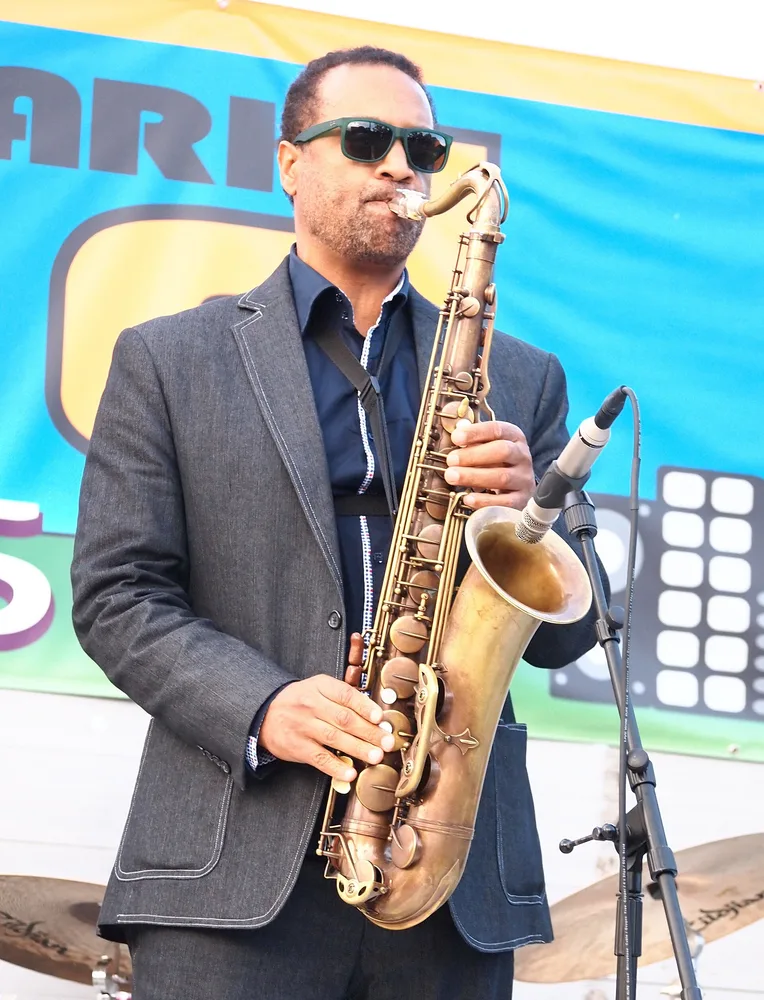
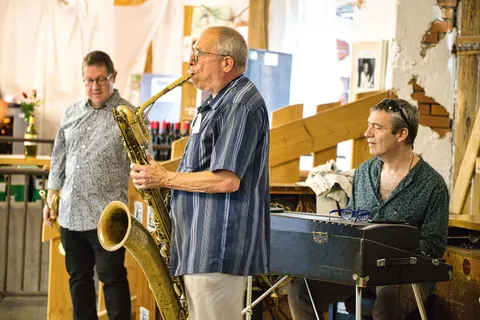
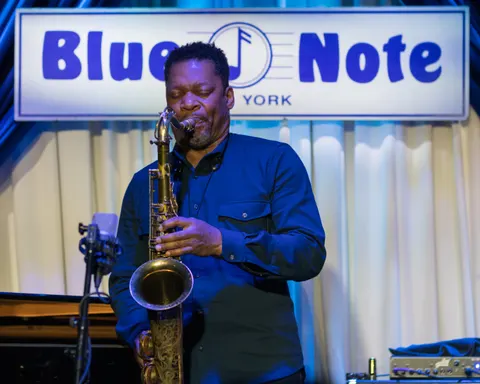
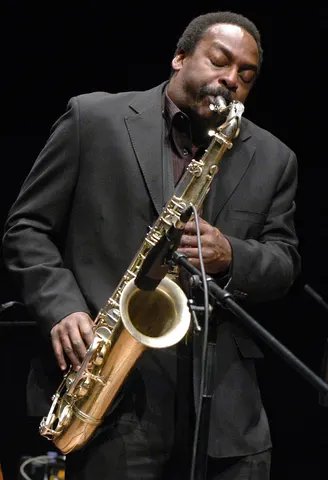
Craig Handy playing tenor saxophone with Craig Handy & 2nd Line Smith at the Washington Park Live arts and music festival in Washington Park, Hudson County, New Jersey, on September 21, 2013 CC BY-SA 2.0 (Creative Commons Attribution-ShareAlike 2.0 Generic), photograph released under that licence on Flickr and confirmed by Commons' Flickr review — Wikimedia Commons (photograph by May S. Young): https://commons.wikimedia.org/wiki/File:Craig_Handy_2013.jpg

Craig Mitchell Handy was born in Oakland, California on September 25, 1962, into a household where jazz was already playing. He tried guitar, trombone and piano before the saxophone caught him, and what caught him was a broadcast: Dexter Gordon playing "Body And Soul" on the radio when Handy was eleven, a sound he has described ever since in physical terms, as something that went into his chest rather than his ears. He heard live music early too, at Keystone Korner in San Francisco, where he saw Jimmy Smith play with Kenny Clarke and Eddie Harris. He then went through the Berkeley High School jazz programme, which in roughly his decade also turned out David Murray, Peter Apfelbaum, Benny Green and Joshua Redman. A Charlie Parker Scholarship took him to North Texas State University in Denton, where he majored in psychology and played in the school's One O'Clock Lab Band. His first recordings come from those years and from the professional band next door: he is on the lab band's Lab 84 and on two Dallas Jazz Orchestra records, one of them cut at Montreux in 1985.
He moved to New York in 1986, at twenty-three, and the first group he worked in steadily was Roy Haynes's quartet, which he has since called starting at the top. Mingus Dynasty followed, and it turned out to be the association that shaped the next thirty years. For two and a half years the front line was Handy, George Adams and Jack Walrath, with Roland Hanna at the piano, Jimmy Knepper on trombone, Dannie Richmond on drums and the flutist James Newton beside him; Handy credits Adams above anyone else with teaching him what the tradition actually transmits, on the bandstand rather than off a record. The band's Mingus' Sounds Of Love, made in Milan for Soul Note in 1987, is the first document of him in it. Around that he worked with Abdullah Ibrahim, whose thematic writing he studied like architecture, and with Betty Carter, who told him he had the tone to play a ballad and not only the technique to burn one. He spent 1989 in Art Blakey's Jazz Messengers. He also played in Haitian and salsa bands during these years, deliberately, because he had decided in New York that his own rhythmic conception was too smooth next to players like Murray and Adams.
One New York night at the Bottom Line during a Mingus Dynasty set, Bill Cosby came up and introduced himself. Handy assumed nothing would come of it. What came of it was the tenor saxophone on the opening theme of The Cosby Show for its sixth and seventh seasons, 1989 to 1991, and later the job of scoring, producing and performing the music for the 1994-95 season of The Cosby Mysteries. It made his sound familiar to an audience that had never heard his name, which he has always found a slightly funny result, since he considers the playing there well short of what he could do.
His first album as a leader, Split Second Timing, came out on Arabesque in 1992 and was recorded in June 1991 with Ray Drummond, Ralph Peterson, Edward Simon and Robin Eubanks as a guest. The title is Blakey's, lifted from the announcement he made from the drums every night about music travelling from the creator to the artist to the audience with split-second timing. Introducing Three For All + One followed in 1993, mostly a tenor trio with Charles Fambrough and Peterson, with David Kikoski added on four of the twelve pieces. By then he was also in the Mingus Big Band from its founding, holding the lead reed chair on Monday nights at the Time Cafe while George Adams held the blues chair, and he is on its first two records, Nostalgia In Times Square (1993) and Gunslinging Birds (1995), the pair that carried the band into the polls.
The mid-1990s made him one of the most heavily recorded saxophonists of his generation without ever quite making him a headliner. He was on three all-star dates in three years: Acoustic Masters II with Bobby Hutcherson, Mulgrew Miller, Ron Carter and Lenny White, Primal Blue with Kenny Burrell and Cedar Walton, and Tenor Conclave, a two-tenor Hank Mobley tribute shared with Ravi Coltrane. He co-founded Chartbusters!, a co-operative with Dr. Lonnie Smith that made Volume 1 for NYC Records in January 1995 with John Scofield on three of its tracks, and Mating Call for Prestige the following year with Donald Harrison, Randy Brecker and Idris Muhammad. In 1996 he appeared on screen in Robert Altman's Kansas City, playing the part of Coleman Hawkins in the film's on-camera band and on both of its Verve soundtrack albums. That same year Herbie Hancock hired him to replace Michael Brecker in the quartet touring The New Standard, alongside Gene Jackson and, in turn, Dave Holland and Kenny Davis. He stayed three and a half years, his longest absence from the Mingus bands, and never made a studio record with Hancock; the only circulating document of that group is an unofficial issue of a 1998 Barbican broadcast.
Two more leader albums came at the turn of the century, both for the small British label Sirocco and both cut at Systems Two in Brooklyn: Reflections In Change (1999), a quartet with Geri Allen, Rodney Whitaker and Ali Jackson plus two pieces scored for a small ensemble by Charles Mingus's own arranger Sy Johnson, and Flow (2000), with Xavier Davis in the piano chair and five Handy originals. After that his name largely disappeared from record spines for thirteen years while the work went on without pause. He became a fixture in trumpeter David Weiss's circle, on Freddie Hubbard's New Colors and the trumpeter's last studio album On The Real Side, on two New Jazz Composers Octet records, and from 2010 in The Cookers, where he took over the alto and flute chair from James Spaulding alongside Billy Harper, Eddie Henderson, George Cables, Cecil McBee and Billy Hart. He served on and off as musical director of the Mingus Big Band, Dynasty and Orchestra for the better part of two decades, was moved by Sue Mingus from tenor to lead alto in the mid-2000s, and handed the direction of the band to the bassist Boris Kozlov around 2009. In December 2002 the John Scofield Band recorded Up All Night in Massachusetts, and the following January four horn players overdubbed a section at The Hit Factory in New York to Scofield's own arrangements: Handy on tenor, flute and bass clarinet, Gary Smulyan on baritone, Jim Pugh on trombone and Earl Gardner on trumpet, playing on six of the album's eleven tracks over a rhythm section of Scofield, Avi Bortnick, Andy Hess and Adam Deitch. The horns were never in the room with the band.
He returned as a bandleader in 2013 with Craig Handy & 2nd Line Smith on the revived OKeh label, a band built out of his own neighbourhood in Weehawken, New Jersey around organist Kyle Koehler, guitarist Matt Chertkoff and sousaphonist Clark Gayton, with Herlin Riley, Ali Jackson and Jason Marsalis rotating on drums and cameos from Dee Dee Bridgewater and Wynton Marsalis. The idea behind it is a genuine musical argument rather than a marketing one: Handy noticed that the drum patterns on the hits he wanted to play, "High Heel Sneakers" among them, were modified second-line rhythms, so he put the Jimmy Smith organ book over a New Orleans street beat and let the two halves explain each other. Since then he has been the reed voice in Conrad Herwig's Latin Side band, taking the chair Mario Rivera held, on Herwig's Herbie Hancock, Horace Silver and Mingus programmes; a regular with the pianist Bill O'Connell's Afro-Caribbean groups; and a member of Ralph Peterson's Messenger Legacy, the Blakey alumni band, on its 2020 album. He has toured with the Jazz at Lincoln Center Orchestra, plays leader nights and sideman weeks at Smalls in Greenwich Village, and in 2025 released First Encounter with the German organ band BAM, whose line-up of organ, guitar, sousaphone and drums is 2nd Line Smith's exactly.
Handy is a big-toned tenor player with a bebop player's appetite for speed and a balladeer's instincts underneath, and the two sides have been noticed separately for thirty years. His own account starts with Dexter Gordon's sound and directness, and All About Jazz has heard the Coltrane and Wayne Shorter line in his vocabulary along with touches of Frank Wess, George Adams, Gene Ammons and Ben Webster. What he adds to that inheritance is rhythmic rather than harmonic. He decided early in New York that his time was too smooth beside players like David Murray and George Adams, and went looking for the fix in Cuban and Haitian bands, seeking out Irakere's Orlando "Maraca" Valle when the band came through town and touring with him in 2006 and 2008; that study is audible in the Latin work he has done since with Conrad Herwig and Eddie Palmieri, and it is why the second-line project sounds like an idea rather than a costume. Ballads, by his own description, are where he lives, the easy part rather than the hard part, and Betty Carter told him as much when he was in her band. He is also unusually complete as a doubler for a player of his generation: tenor, alto and soprano saxophone, flute, clarinet, bass clarinet and, on two records, baritone, with Charles Tolliver's big band using five of them on one album. The flute is its own story. He plays it on five of the eight pieces of Kirk Lightsey's Lightsey To Gladden, cut in 1990 when he was twenty-seven, then got disgusted with his own playing and put the instrument down for ten years before picking it up again around thirty-seven. Critics have consistently described the same balance in him: an improviser who takes the risks a solo demands, builds toward genuine climaxes, and pulls back before the line loses its shape. Reviewing his work with Dee Dee Bridgewater in 2010, the New York Times described a telepathic connection between them and a willingness to push the timbral edges of flute and saxophone the way she pushes her voice. Handy's own summary of the profession is drier: it is, he says, "a great way to almost make a living."
- Split Second Timing (1992, Arabesque Jazz) - His debut at twenty-nine, five of nine tunes his own, with Robin Eubanks guesting on trombone and a piano-less trio track that anticipated a whole fashion. Spotify - Split Second Timing Listen
- Introducing Three For All + One (1993, Arabesque Jazz) - The tenor-trio record, with Charles Fambrough and Ralph Peterson, and a pianist added on only four of twelve pieces. Spotify - Introducing Three For All + One Listen
- Reflections In Change (1999, Sirocco Music) - A quartet with Geri Allen, Rodney Whitaker and Ali Jackson, plus two pieces scored by Sy Johnson. The most fully realised of his straight-ahead leader dates. Spotify - Reflections In Change Listen
- Flow (2000, Sirocco Jazz) - Five originals and an unusually inventive reading of "Just One Of Those Things", with Xavier Davis on piano. Spotify - Flow Listen
- Craig Handy & 2nd Line Smith (2013, OKeh) - The Jimmy Smith organ book played over New Orleans second-line rhythms, with sousaphone in the bass chair and guest turns from Dee Dee Bridgewater and Wynton Marsalis. Spotify - Craig Handy & 2nd Line Smith Listen
- Nostalgia In Times Square (Mingus Big Band, 1993, Dreyfus Jazz) - The repertory band's first record, from its Monday nights at the Time Cafe, with Handy featured on "Open Letter To Duke" and "Weird Nightmare". Spotify - Nostalgia in Times Square
- Droppin' Things (Betty Carter, 1990, Verve) - His first major sideman date, playing obbligato behind a singer who treated him as an equal voice, with Freddie Hubbard and Geri Allen. Spotify - Droppin Things
- Warriors (The Cookers, 2011, Jazz Legacy Productions) - Alto and flute in an all-star band of leaders, beside Billy Harper, Eddie Henderson, George Cables, Cecil McBee and Billy Hart. Spotify - Warriors
Craig Handy: Full Discography
Craig Handy has led five albums under his own name since 1992 and shares the billing on six more, across Arabesque, Atlantic, Hip Bop, Prestige, Sirocco, OKeh and the German label Rhythm 'n' Flow. Against that he has played on something over 130 records for other leaders since 1984. The first table below is comprehensive: it lists every release on which he is billed as leader, co-leader or a named principal, including the co-operative all-star bands Chartbusters! and Grand Central, in which he was one of four or five co-equal members rather than a hired soloist. The second table is a selection rather than a census. The rule applied is one row per project per significant album: every band he held a standing chair in is represented by its principal recordings, every leader he recorded with more than once appears at least once, and one-off dates are included where the leader or the record is notable. Compilations, samplers, promotional discs, label anthologies and unofficial pressings are omitted from both tables unless the performance appears nowhere else.
Identity was confirmed against the live Discogs API: artist ID 303416, whose own profile line reads "American post-bop tenor saxophonist, clarinetist and flutist. Born on 1962-09-25 in Oakland, California." Every row here was read from an individual release record rather than from the artist-level listing, which serves no track data at all and mislabels much of what it holds: of 147 entries under his name only ten carry the "Main" tag, and two of those ten are other people's records. Roughly half the entries are master identifiers rather than release identifiers, and each was resolved through its main release before its credit was read. Where a detail could not be confirmed it is marked as such rather than guessed. The Buy column is a placeholder throughout.
As Leader / Co-Leader
| Album Title | Recording Date(s) | Release Date | Label | Catalog Number | Format(s) | Personnel | Role | Reissue History | Spotify | Buy | Notes |
|---|---|---|---|---|---|---|---|---|---|---|---|
| Split Second Timing | June 18 and 19, 1991, Clinton Recording Studios, New York | 1992 | Arabesque Jazz | AJ0101 | CD, Album | Craig Handy (alto and tenor saxophone), Robin Eubanks (trombone, billed as guest), Edward Simon (piano, congas on one track), Ray Drummond (bass), Ralph Peterson (drums) | Leader, producer, composer of five of the nine pieces | None found | Spotify - Split Second Timing | — | His debut at twenty-nine, titled after Art Blakey's nightly stage announcement. Liner notes by the poet Quincy Troupe, engineered by Jim Anderson. The ballad "You're Blase" is dedicated to Dexter Gordon. |
| Introducing Three For All + One | April 12 and 13, 1993 | 1993 | Arabesque Jazz | AJ0109 | CD | Craig Handy (tenor saxophone), Charles Fambrough (bass), Ralph Peterson (drums), David Kikoski (piano on four tracks) | Leader, producer | None found | Spotify - Introducing Three For All + One | — | A tenor trio record with a pianist added on four of the twelve pieces, hence the title. Discogs files it under the shortened title Introducing Three For All. Peterson's "E Racer X" is dedicated to George Adams. |
| Acoustic Masters II (Bobby Hutcherson, Craig Handy, Lenny White, Jerry Gonzalez) | March 1993, Sound On Sound Studios, New York | 1994 | Atlantic | 7567-82591-2 | CD, Album | Bobby Hutcherson (vibraphone), Craig Handy (tenor and soprano saxophone, flute), Jerry Gonzalez (trumpet, flugelhorn), Mulgrew Miller (piano), Ron Carter (bass), Lenny White (drums, producer) | Co-leader, one of four names on the cover | None found | — | — | Second in a short series of all-star dates White produced for Atlantic. Handy contributes two originals, "Wayne's World" and "Concrete Blues". |
| Primal Blue (Kenny Burrell, Ron Carter, Tim Hagans, Craig Handy, Cedar Walton, Lenny White) | April 1995 | 1995 | Hip Bop Essence | HIBD 8006 | CD, Album | Kenny Burrell (guitar, six of seven tracks), Tim Hagans (trumpet, three tracks), Craig Handy (tenor and soprano saxophone, six of seven tracks), Cedar Walton (piano), Ron Carter (bass), Lenny White (drums, producer) | Co-leader, one of six names on the cover | None found | Spotify - Primal Blue | — | Issued on streaming services under the band name Essence All-Stars. Liner notes by Todd Barkan. |
| Tenor Conclave (Grand Central featuring Ravi Coltrane and Craig Handy) | March 8 and 9, 1995, Clinton Studio, New York | 1995 | Alfa Jazz | ALCB-3083 | CD, Album | Craig Handy (tenor saxophone), Ravi Coltrane (tenor and soprano saxophone), Billy Childs (piano), Dwayne Burno (bass), Cindy Blackman (drums) | Co-leader of a two-tenor co-operative | Issued in the United States on Evidence | — | — | A tribute to Hank Mobley; Handy's own contribution is "Hanksville". Grand Central's two earlier Alfa albums, Sax Storm (1993) and Tenor Titans, credit Antoine Roney and Ravi Coltrane on the tenor chairs and do not include Handy, despite his listing as a member of the group. |
| Chartbusters! Volume 1 | January 3 and 4, 1995, Power Station, New York | 1995 | NYC Records | NYC 6017 2 | CD, Album | Craig Handy (tenor saxophone), Dr. Lonnie Smith (Hammond B3 organ), Lenny White (drums), John Scofield (guitar, three tracks), David Fiuczynski (guitar, three tracks), Hiram Bullock (guitar, one track), Papo Vazquez (trombone, two tracks) | Co-leader, founding member of the collective | None found | — | — | A Blue Note homage by a co-operative band, with a rotating guitar chair. This is the earliest documented recording Handy and Scofield made together, eight years before Up All Night. Produced by Todd Barkan and Milan Simich for Mike Mainieri's label. |
| Mating Call (Chartbusters!) | Not confirmed | 1996 | Prestige | PRCD-11002-2 | CD, Album | Craig Handy (tenor and soprano saxophone), Donald Harrison (alto saxophone), Dr. Lonnie Smith (organ), David Fiuczynski (guitar), Randy Brecker (trumpet), Idris Muhammad (drums) | Co-leader, co-producer | None found | Spotify - Mating Call | — | The band's second album, on Prestige repertoire rather than Blue Note, and with a substantially different line-up from Volume 1. Handy's "Juggsville" is a tribute to Gene Ammons. |
| Reflections In Change | June 6, 7, 8 and 25, 1999, Systems Two Studios, Brooklyn | 1999 | Sirocco Music | SJL 1005 | CD, Album | Craig Handy (saxophones, bass clarinet), Geri Allen (piano), Rodney Whitaker (bass), Ali Jackson (drums); on two tracks an ensemble arranged by Sy Johnson with Steve Slagle (flute), Mike Simm (clarinet), Michael Rabinowitz (bassoon), Chris Komer (French horn), Robin Eubanks (trombone) and Peck Allmond (trumpet); Dave Stryker (guitar) and Tara Cruise (vocals) on two others | Leader | None found | Spotify - Reflections In Change | — | Handy and Jackson wrote four pieces each, alongside Charles Mingus's "Eclipse". Sy Johnson had arranged for Mingus himself and for the Mingus Big Band. |
| Flow | March 2000, Systems Two Studios, Brooklyn | 2000 | Sirocco Jazz Limited | SJL1010 | CD, Album | Craig Handy (tenor and soprano saxophone, synthesizer on one track), Xavier Davis (piano), Rodney Whitaker (bass), Ali Jackson (drums) | Leader, co-producer | None found | Spotify - Flow | — | Five of the eight pieces are his, with one by Jackson, one by Herbie Hancock and Stevie Wonder, and "Just One Of Those Things". David Weiss co-produced. The disc's own annotation dates the session to March 2020, twenty years after the record came out. |
| Craig Handy & 2nd Line Smith | Not confirmed | October 2013 | OKeh | 88883721832 | CD, Album | Craig Handy (tenor and alto saxophone), Kyle Koehler (Hammond B3 organ), Matt Chertkoff (guitar), Clark Gayton (sousaphone), with Herlin Riley, Ali Jackson and Jason Marsalis sharing the drum chair; Dee Dee Bridgewater sings "On The Sunny Side Of The Street", and Wynton Marsalis (trumpet) and Clarence Spady (vocal) appear on "Mojo Workin'" | Leader | None found | Spotify - Craig Handy & 2nd Line Smith | — | Ten pieces from the Jimmy Smith book and its blues surroundings, played over New Orleans second-line rhythms. The US pressing and the promotional disc carry no credit block at all; the personnel above is from the European pressing. |
| First Encounter (BAM Meets Craig Handy) | October 25 and 26, 2024 | 2025 | Rhythm 'n' Flow Records | RNF 8003 | CD, Album; LP, Album | Craig Handy (tenor saxophone), Matthias Bublath (electric organ), Maxi Nachtmann (electric guitar), Freddy Andrej (sousaphone), Guido May (drums, percussion) | Co-leader, co-producer | None found | Spotify - First Encounter | — | A meeting with the German organ-and-sousaphone band BAM, whose instrumentation is 2nd Line Smith's exactly: organ, guitar, sousaphone, drums. Produced jointly by the band and Handy. |
As Sideman (selected major credits)
| Year | Project (Leader) | Title | Label | Catalog | Role | Notes |
|---|---|---|---|---|---|---|
| 1984 | One O'Clock Lab Band (North Texas State University) | Lab 84 | NTSU Lab Jazz | LA8401-NS | Tenor saxophone | His earliest documented recording, made while he was a student in Denton, Texas. |
| 1984 | Dallas Jazz Orchestra | Fat Mamma's Revenge | Not on label | DJO 198 | Tenor saxophone | |
| 1985 | Dallas Jazz Orchestra | Live At Montreux | Not on label | DJO 0785A | Tenor saxophone | The Texas big band at the Swiss festival, before his move to New York. |
| 1988 | Mingus Dynasty | Mingus' Sounds Of Love | Soul Note | 121 142-1 | Tenor saxophone | Recorded in Milan. The Mingus repertory band's early line-up, with James Newton on flute, Roland Hanna on piano and Jimmy Knepper on trombone. |
| 1988 | Abdullah Ibrahim | Mindif | Enja | R2 79601 | Tenor saxophone, flute | Music for Claire Denis's film Chocolat. |
| 1990 | Betty Carter | Droppin' Things | Verve | 843 991-2 | Tenor saxophone (four tracks) | With Freddie Hubbard and Geri Allen. The first of two Verve albums with Betty Carter. |
| 1990 | The Bob Belden Ensemble | Treasure Island | Sunnyside | SSC 1041D | Tenor and soprano saxophone | Belden's first record as a leader and arranger. |
| 1990 | Abdullah Ibrahim | Good News From Africa | Network Medien | 110632 | Tenor saxophone, flute | |
| 1991 | Mingus Dynasty | The Next Generation | Columbia | CK 47405 | Tenor saxophone, flute | Three tenors on the date: Handy, George Adams and Alex Foster. |
| 1991 | Stephen Scott | Something To Consider | Verve | 849 557-2 | Tenor saxophone | |
| 1991 | Sumi Tonooka | Taking Time | Candid | CCD79502 | Tenor and soprano saxophone | |
| 1992 | Roy Haynes Group | When It's Haynes It Roars! | Dreyfus Jazz | FDM 36556-2 | Tenor and soprano saxophone | His first record with Roy Haynes, whose quartet was the first band he worked with steadily in New York. |
| 1992 | Betty Carter | It's Not About The Melody | Verve | 314 513 870-2 | Tenor saxophone (two tracks) | |
| 1992 | Cecil Brooks III | Hangin' With Smooth | Muse | MCD 5428 | Tenor saxophone | |
| 1992 | Carola Grey | Noisy Mama | Jazzline | JL 11130 2 | Tenor saxophone | |
| 1993 | Mingus Big Band | Nostalgia In Times Square | Dreyfus Jazz | FDM 36559-2 | Tenor saxophone, flute | The big band's first record, from its Monday-night residency at the Time Cafe. He is featured on "Open Letter To Duke", "Ecclusiastics" and "Weird Nightmare". |
| 1993 | Ray Drummond | Excursion | Arabesque Jazz | AJ0106 | Saxophone, flute | A two-tenor date shared with Joe Lovano. |
| 1993 | Antonio Hart | For Cannonball & Woody | Novus | 01241 63162-2 | Tenor saxophone | |
| 1993 | Giovanni Hidalgo | Worldwide | Sony Discos | CD 81056 | Tenor saxophone | |
| 1994 | Roy Haynes | Homecoming | Evidence | ECD 22092-2 | Tenor saxophone | |
| 1994 | Ralph Peterson Quintet | Art | Blue Note | CDP 7243 8 27645 2 6 | Tenor saxophone (one track) | |
| 1994 | Michel Camilo | One More Once | Columbia | CK 66204 | Saxophone | The pianist's big-band record. |
| 1994 | Peter Delano | Bite Of The Apple | Verve | 314 521 869-2 | Tenor saxophone (two tracks) | |
| 1994 | Cecil Brooks III | Neck Peckin' Jammie | Muse | MCD 5504 | Tenor and soprano saxophone | |
| 1995 | Mingus Big Band | Gunslinging Birds | Dreyfus Jazz | FDM 36575-2 | Tenor saxophone | The record that put the band into the critics polls. |
| 1995 | Steve Coleman And Five Elements | Def Trance Beat (Modalities Of Rhythm) | BMG Victor | BVCJ-626 | Tenor saxophone (one track) | |
| 1995 | Denise Jannah | I Was Born In Love With You | Blue Note | CDP 7243 8 33390 2 0 | Woodwinds (three tracks) | |
| 1996 | Joe Henderson | Big Band | Verve | 314 533 451-2 | Tenor saxophone (three tracks) | Joe Henderson's own compositions scored for orchestra. |
| 1996 | Various, for Robert Altman's Kansas City | Kansas City (original motion picture soundtrack) | Verve | 529 554-2 | Tenor saxophone (four tracks) | The on-screen band of the film, in which Handy also plays the part of Coleman Hawkins. |
| 1996 | Charles Fambrough | City Tribes | Evidence | ECD 22149-2 | Tenor and soprano saxophone, bass clarinet, vocals | |
| 1996 | Jack Walrath & Hard Corps | Journey, Man! | Evidence | ECD 22150-2 | Tenor and soprano saxophone | Recorded November 28 and 29, 1995 at Eastside Sound, New York. Walrath wrote, arranged and produced all nine pieces; Discogs nonetheless files the record under Handy's own name as a leader date, which it is not. |
| 1996 | Charles Sullivan | Kamau | Arabesque Jazz | AJ0121 | Tenor and soprano saxophone | |
| 1997 | Kansas City Band | KC After Dark | Verve | 314 537 322-2 | Saxophone | More music from the Altman film. |
| 1997 | Bill Cosby | Hello, Friend: To Ennis With Love | Verve | 539 171-2 | Tenor saxophone | |
| 1997 | The Essence All Stars | Jackie's Blues Bag: A Tribute To Jackie McLean | Hip Bop Essence | HIBD 8015 | Tenor saxophone (one track) | |
| 1998 | New York Connexion | Along Came Jones | Sirocco Jazz | SJL 1003 | Tenor and soprano saxophone | |
| 1998 | The Bob Belden Ensemble | La Cigale | Sunnyside | SSC 1079D | Tenor and soprano saxophone | |
| 1998 | Various | Haunted Melodies: Songs Of Rahsaan Roland Kirk | Metropolitan | MR 1114 | Tenor saxophone, including a solo feature | |
| 1999 | Ray Drummond | 1.2.3.4 | Arabesque Jazz | AJ0141 | Tenor and soprano saxophone | A quartet date with Stephen Scott and Billy Hart. |
| 1999 | Barbara Dennerlein | Outhipped | Verve | 547 503-2 | Tenor and baritone saxophone | One of only two records on which he is credited on baritone. |
| 1999 | Steve Coleman And Five Elements | The Sonic Language Of Myth | RCA Victor | 74321-64123-2 | Tenor saxophone (one track) | |
| 1999 | Melissa Walker | Moment Of Truth | Enja | ENJ-9365 2 | Tenor saxophone | |
| 2000 | Michele Rosewoman And Quintessence | Guardians Of The Light | Enja | ENJ-9378 2 | Tenor saxophone | |
| 2001 | Freddie Hubbard featuring The New Jazz Composers Octet | New Colors | Hip Bop | HIBD 8026 | Tenor and soprano saxophone | David Weiss produced and arranged. Handy's first record with the octet. |
| 2001 | David Weiss | Breathing Room | Fresh Sound New Talent | FSNT 118 | Alto saxophone (four tracks) | Weiss and Handy had run a Wayne Shorter repertory band together as students in Texas. |
| 2001 | New York Connexion | Crossing The Bridge | Sirocco Jazz | SJL1013 | Tenor saxophone | |
| 2002 | The New Jazz Composers Octet | Walkin' The Line | Fresh Sound New Talent | FSNT 155 | Alto saxophone (three tracks) | Includes his own "Abdullah's Demeanor", written for Abdullah Ibrahim. |
| 2002 | Mingus Big Band and Mingus Orchestra | Tonight At Noon: Three Or Four Shades Of Love | Dreyfus | FDM 366332 | Tenor saxophone (six tracks) | |
| 2003 | The John Scofield Band | Up All Night | Verve | 440 065 596-2 (US); 065 596-2 (Europe) | Tenor saxophone, flute and bass clarinet on tracks 1, 4, 6, 7, 8 and 11 | The band recorded at Long View Farm Studios, West Brookfield, Massachusetts in December 2002; the four-piece horn section of Handy, Gary Smulyan (baritone saxophone), Jim Pugh (trombone) and Earl Gardner (trumpet) overdubbed at The Hit Factory, New York in January 2003, to arrangements by John Scofield. Avi Bortnick plays rhythm guitar, samples and loops and shares the production credit. |
| 2003 | The Carla Bley Big Band | Looking For America | WATT / ECM | WATT/31 | Tenor saxophone | |
| 2004 | David Weiss | The Mirror | Fresh Sound New Talent | FSNT 205 | Tenor saxophone (two tracks) | |
| 2005 | Mingus Big Band, Orchestra and Dynasty | I Am Three | Sue Mingus Music / Sunnyside | SCC 3029 | Alto saxophone (eight tracks), flute | By this point Sue Mingus had moved him from the tenor chair to lead alto. |
| 2005 | Peter Apfelbaum & The New York Hieroglyphics | It Is Written | ACT | ACT 9437-2 | Alto saxophone | A reunion with a fellow graduate of the Berkeley High School jazz programme. |
| 2006 | Mingus Big Band | Live In Tokyo | Sunnyside | SSC 3042 | Alto saxophone, flute | |
| 2006 | Charles Tolliver Big Band | With Love | Blue Note | 0946 3 69315 2 4 | Alto and soprano saxophone, clarinet, flute | The widest instrumental range he is credited with on any single release. |
| 2006 | Brian Lynch and Spheres Of Influence | Spheres Of Influence Suite | EWE | EWCD 2008 | Tenor and soprano saxophone | |
| 2007 | Roy Haynes | The Island | Explore | EXP0023 | Tenor and soprano saxophone | |
| 2008 | Kirk Lightsey | Lightsey To Gladden | Criss Cross Jazz | Criss 1306 CD | Tenor saxophone, flute | Recorded in 1990 and shelved for eighteen years. He plays flute on five of the eight pieces, more than on any other record, and gave up the instrument for a decade shortly after the session. |
| 2008 | The John Hicks Legacy Band | Mind Wine: The Music Of John Hicks | Savant | SCD 2096 | Tenor saxophone (five tracks), soprano saxophone (one) | |
| 2008 | Freddie Hubbard & The New Jazz Composers Octet | On The Real Side | Four Quarters Entertainment | Tenor saxophone (two tracks), flute (one) | Hubbard's last studio album. | |
| 2009 | Mickey Bass New York Powerhouse Ensemble | Live At The Jazz Corner Of The World | Early Bird | EBCD-106 | Tenor saxophone (four tracks) | |
| 2010 | The Cookers | Cast The First Stone | Plus Loin Music | PL4536 | Alto saxophone (five tracks) | His first record with the all-star band, in the chair vacated by James Spaulding. |
| 2010 | Conrad Herwig with Eddie Palmieri and Randy Brecker | The Latin Side Of Herbie Hancock | Half Note | HN 4544 | Saxophones, flute, bass clarinet | The first of four Herwig "Latin Side" records he plays on, in the reed chair Mario Rivera had held. |
| 2011 | The Cookers | Warriors | Jazz Legacy Productions | JLP 1001009 | Alto saxophone, flute | |
| 2011 | Avery Sharpe | Running Man | JKNM | AS898910 | Tenor and soprano saxophone | |
| 2012 | The Cookers | Believe | Motema | MTM-92 | Alto saxophone | |
| 2012 | Joe Chambers Moving Pictures Orchestra | Live At Dizzy's Club Coca-Cola | Savant | SCD 2120 | Tenor and soprano saxophone, flute | |
| 2013 | Ralph Peterson's Unity Project | Alive At Firehouse 12, Volume 1 | Onyx Music | Tenor saxophone | ||
| 2015 | Ku-umba Frank Lacy and Mingus Big Band | Mingus Sings | Sunnyside | SSC 1407 | Tenor saxophone | |
| 2015 | Nilson Matta | East Side Rio Drive | Krian Music Group | 302062428-2 | Tenor saxophone, flute, bass clarinet (seven tracks) | |
| 2016 | George Cables | The George Cables Songbook | HighNote | HCD 7293 | Saxophone, flute (four tracks) | A Cookers bandmate's own record. |
| 2018 | Eddie Palmieri | Mi Luz Mayor | Ropeadope / Uprising | UPR-102 | Tenor saxophone | |
| 2019 | Bill O'Connell And The Afro Caribbean Ensemble | Wind Off The Hudson | Savant | SCD 2179 | Alto saxophone (seven tracks), soprano saxophone (one) | The first of four albums with the pianist, by then a regular employer. |
| 2020 | Ralph Peterson & The Messenger Legacy | Onward & Upward | Onyx Music | 0011 | Alto saxophone (two tracks), tenor saxophone (three) | Blakey alumni playing the Jazz Messengers book, recorded shortly before Peterson's death. |
| 2020 | Conrad Herwig | The Latin Side Of Horace Silver | Savant | SCD-2187 | Alto saxophone (six tracks), flute (two) | |
| 2022 | Conrad Herwig | The Latin Side Of Mingus | Savant | SCD 2205 | Tenor saxophone (six tracks), bass clarinet, flute | |
| 2022 | Bill O'Connell | A Change Is Gonna Come | Savant | SCD 2197 | Tenor and soprano saxophone (five tracks) | |
| 2023 | Bill O'Connell | Live In Montauk | Savant | SCD2208 | Credited only as "musician", with no instrument specified | |
| 2024 | The Headhunters | The Stunt Man | Ropeadope | RAD 747 | Tenor saxophone (one track) | |
| 2024 | Brian Lynch | 7x7by7 | Hollistic MusicWorks | HMW 23 | Tenor saxophone | |
| 2025 | Mike Clark | Itai Doshin | Wide Hive | WH-0390 | Saxophone | The drummer whose quartet he has played in repeatedly at Smalls. |
| 2025 | Towner Galaher Organ Group | Brothers | Rhythm Royale | Tenor saxophone | His most recent recorded appearance as a sideman. |
Credits that are not what the listing calls them
Four entries filed under his name need qualifying, and are recorded here rather than in the tables:
- Herbie Hancock Quartet, Live At Barbican 1998 (After-Hours Products, 2023) credits Handy on tenor and soprano saxophone. It is an unofficial release of a broadcast rather than a label record, and it is the only circulating document of the three and a half years he spent touring in Hancock's quartet, a band that never made a studio album with him.
- Robin Eubanks and Mental Images, Get 2 It (2001) credits him with handclaps on one track, not with a saxophone.
- Bill O'Connell, Live In Montauk (Savant, 2023) credits him as "musician" with no instrument named. Two pressings of the same record carry the same unhelpful line.
- Misha (Michaela Steinhauer), Yesterdays (2010) is tagged as one of his own leader dates. It is the German singer's album, and he plays tenor saxophone on four of its tracks as a guest.
- The Mingus repertory bands - he joined Mingus Dynasty within a year or two of arriving in New York, was in the Mingus Big Band from its founding, and served on and off as musical director of the Dynasty, the Big Band and the Mingus Orchestra for the better part of twenty years, recording with them from Mingus' Sounds Of Love (1987) to Mingus Sings (2015).
- George Adams - the senior tenor in the Mingus Dynasty front line for two and a half years and, in Handy's telling, the single largest influence on his understanding of the music; the two are on The Next Generation (1991) together.
- Roy Haynes - the first bandleader he worked with steadily in New York, from 1986; they recorded When It's Haynes It Roars! (1992), Homecoming (1994) and The Island (2007).
- Betty Carter - the singer who told him he had a gift for ballads; he is on Droppin' Things (1990) and It's Not About The Melody (1992).
- Abdullah Ibrahim - an early employer whose thematic writing he studied closely; he plays tenor and flute on Mindif (1988) and Good News From Africa (1990), and later wrote "Abdullah's Demeanor" for him.
- Herbie Hancock - hired him in 1996 to replace Michael Brecker in the quartet touring The New Standard; three and a half years on the road that produced no studio record.
- David Weiss - trumpeter, arranger and producer, a friend since North Texas State, where the two ran a Wayne Shorter repertory band; Weiss brought Handy into the New Jazz Composers Octet, the two late Freddie Hubbard albums, his own quintet records and The Cookers.
- The Cookers - the co-operative band of leaders he joined in 2010 on alto and flute, with Billy Harper, Eddie Henderson, George Cables, Cecil McBee, Billy Hart and Weiss, across Cast The First Stone, Warriors and Believe.
- Lenny White - drummer and producer of three of the all-star dates Handy is co-billed on, Acoustic Masters II (1994), Primal Blue (1995) and Chartbusters! Volume 1 (1995).
- Dr. Lonnie Smith - organist and co-founder with him of Chartbusters!, the band that made Volume 1 and Mating Call, and Handy's first real exposure to organ jazz, which he later built a whole band on.
- Ralph Peterson - drummer on both Arabesque leader albums and on the Blue Note date Art (1994), and the leader of the Messenger Legacy band Handy recorded with in 2020, shortly before Peterson's death.
- Conrad Herwig - trombonist; Handy took over the reed chair in his Latin Side All Stars after Mario Rivera's death in 2007 and is on the Herbie Hancock, Horace Silver and Mingus programmes.
- John Scofield - guitarist; they first recorded together on Chartbusters! Volume 1 in January 1995, and Handy was the tenor, flute and bass clarinet voice in the horn section Scofield arranged for Up All Night (2003).
- Bill O'Connell - pianist and bandleader; four albums with his Afro-Caribbean groups between 2018 and 2023.
- Kyle Koehler, Matt Chertkoff and Clark Gayton - the organ, guitar and sousaphone core of 2nd Line Smith, a working band drawn from his own corner of New Jersey rather than assembled for a session.
- Peter Apfelbaum - a fellow Berkeley High School alumnus; Handy plays alto in his New York Hieroglyphics on It Is Written (2005).
- Gary Smulyan, Jim Pugh and Earl Gardner - the rest of the four-piece horn section on Up All Night, overdubbed together at The Hit Factory in January 2003.
- Spotify artist page
- Discogs
- SmallsLive: Craig Handy performance archive
- Charles Mingus estate: Craig Handy
- Arabesque Records: Craig Handy
- Wikipedia: Craig Handy
- Discogs: Craig Handy (artist 303416)
- Charles Mingus estate: Craig Handy biography
- Arabesque Records: Craig Handy biography and interview quotes
- All About Jazz: Craig Handy, The Busiest Man In Jazz, by Robert Dugan, March 22, 2010
- JazzTimes: Overdue Ovation, Craig Handy, by Michael J. West, July 7, 2014
- PopMatters: On the Upswing, Craig Handy and Second Line Smith, by Will Layman, May 7, 2014
- Wide Hive Records: Craig Handy artist page
- SmallsLive: Craig Handy performance archive
- Wikipedia: Split Second Timing
- Wikipedia: Introducing Three for All + One
- Wikimedia Commons: Craig Handy 2013, photograph by May S. Young