 JAZZPROFILES lives in the music 2,303 Jazz Artists fully Profiled!
Larry Williams
Last updated November 7, 2026
Listen on Spotify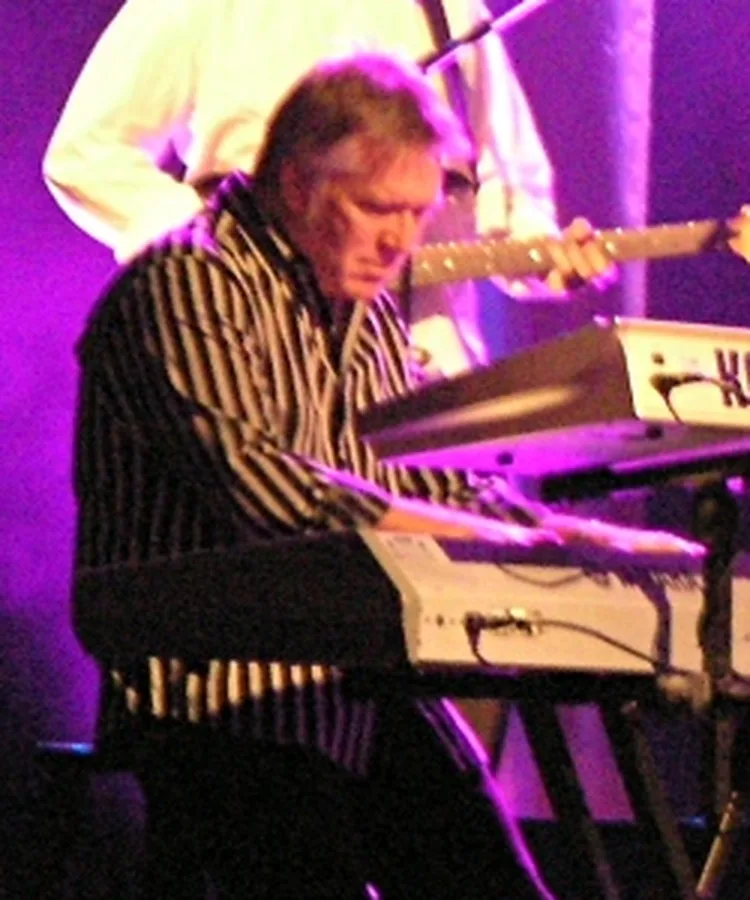
Larry Williams at the keyboards with Al Jarreau's band, Wrocław, Poland, June 25, 2006 (cropped from a larger concert photograph) CC BY-SA 2.5 — Wikimedia Commons - https://commons.wikimedia.org/wiki/File:Al_Jarreau_Poland_Wroclaw_June_25_2006_Photo_Cezary_M._Kruk.jpg - Cezary M. Kruk

Lawrence Lowell Williams was born in Kansas City, Kansas, and grew up in Overland Park, Kansas. He started on clarinet at eight, following his father, a saxophonist. He studied at New Mexico State University and in 1969 moved to the Indiana University School of Music, where he played with visiting orchestras led by Glen Campbell, Henry Mancini and Johnny Mathis. His own website describes the Indiana years as a music scholarship covering classical and jazz study. No birth year is publicly documented.
The decisive meeting at Indiana was with the trumpeter Jerry Hey and the saxophonist and flutist Kim Hutchcroft. Williams has said the three hit it off in 1969 over a shared taste for R&B, jazz, funk and improvising, and that they modeled their horn-section writing on Tower of Power, Edgar Winter's White Trash, James Brown, Chicago and Blood, Sweat & Tears. They left for Hawaii with other Indiana players and formed Seawind, the jazz-fusion band with which Williams first recorded. Seawind began as a club and dance group with no original material, then moved to originals, with Pauline Wilson singing and her husband Bob Wilson on drums and writing. The horn trio, billed as the Seawind Horns, drew the attention of the drummer-producer Harvey Mason, who urged the band to relocate to Los Angeles, where it took a regular engagement at The Baked Potato.
Seawind's first album, Seawind (CTI, 1976), shows how much of the band Williams was. Discogs credits him with acoustic piano, Fender Rhodes, several ARP and Oberheim synthesizers, clavinet, alto and tenor saxophones, alto flute and vocals, plus a tenor solo on "You Gotta Be Willin' To Lose (Part II)" and the horn arrangement of "The Devil Is a Liar." That song earned the band a 1978 Grammy nomination for Best Arrangement Accompanying Vocalist(s). Window of a Child (CTI, 1977) reached No. 122 on the Billboard 200 and No. 55 on the R&B chart, with Williams on keyboards and woodwinds and arranging the strings. Light the Light (Horizon, 1979) peaked at No. 143, and Seawind (A&M, 1980) at No. 83 and No. 20 on the R&B chart, with "What Cha Doin'" reaching No. 18 on the R&B singles chart. The group disbanded in 1982, which Williams has attributed to the end of the Wilsons' marriage; he has said the band kept going for a few years without a singer, but it was not the same.
Quincy Jones had noticed the band in Los Angeles, and Williams, Hey and Hutchcroft became studio players for Jones and the artists he produced, among them George Benson, the Brothers Johnson and Michael Jackson. Williams has said his first Jackson session was for the soundtrack to The Wiz, which Jones arranged; he then played on Off the Wall (1979), where Discogs credits him with alto and tenor saxophones and flute on nine tracks and the alto saxophone solo on "Girlfriend," and on Thriller (1982), Bad (1987) and HIStory (1995). On Thriller he is credited with tenor saxophone, flute and keyboards, and on Bad he plays keyboards and takes the saxophone-synthesizer solo on "Speed Demon," after what he has described as many months of drum programming, keyboard and horn work on that record. For Quincy Jones himself he is credited on The Dude (1981), where Discogs lists saxophone and flute on the title track, and on Back on the Block (1989) and Q's Jook Joint (1995). His website counts more than 30 projects with Jones, whom it names as his mentor.
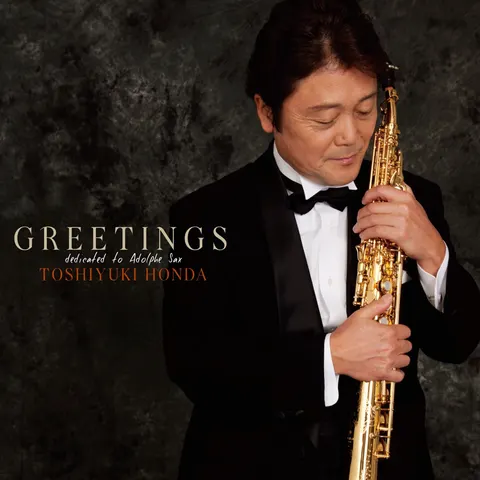
The same Los Angeles session circle carried him through the jazz-fusion and crossover records of the late 1970s and 1980s. He appears on Earl Klugh's Finger Paintings (1977), Harvey Mason's Earthmover (1976) and Funk in a Mason Jar (1977), Lee Ritenour's Feel the Night (1979) and Rit/2 (1982), George Duke's Follow the Rainbow (1979), A Brazilian Love Affair (1980) and Dream On (1982), Alphonse Mouzon's By All Means (1981), Herbie Hancock's Lite Me Up (1982) and Spyro Gyra's Incognito (1982). The Seawind players also served as the backing band on the Japanese saxophonist Toshiyuki Honda's debut, Burnin' Waves (1978), with Williams on keyboards.
Much of his catalog sits outside jazz, and it is large. Among the pop, rock and R&B records he is credited on are Barbra Streisand's Songbird (1978), Dolly Parton's Heartbreaker (1978), Elton John's 21 at 33 (1980), Joni Mitchell's Wild Things Run Fast (1982) and a long list of Rufus and Chaka Khan, Pat Benatar, Simply Red, Rick Astley and Sheena Easton albums. He is also reported to have played the saxophone solo on Sheila E.'s "The Glamorous Life" (1984). His website puts the total at over 2,000 records, films and commercials. The jazz thread in all of it is Al Jarreau.
Williams first appears on Jarreau's All Fly Home (1978) as an additional keyboard and synthesizer player, and he toured and recorded with him for more than three decades, often handling his arrangements. He is credited with synthesizer on This Time (1980) and Breakin' Away (1981), keyboards and woodwinds on Tomorrow Today (1999), and keyboards on four tracks and flute on one of All I Got (2002). On Accentuate the Positive (GRP, 2004), produced by Tommy LiPuma, he played keyboards and wrote the arrangements for eight of the eleven tracks, among them "The Nearness of You," "My Foolish Heart," "Waltz for Debby" and "Groovin' High," and the album received a Best Jazz Vocal Album nomination at the 2005 Grammy Awards. Jarreau said in a 2004 JazzTimes interview that Williams knew him so well that arranging the record was the natural choice. On Givin' It Up (Concord, 2006), the duet album with George Benson, Williams is credited with keyboards and arrangements on several tracks, including "Breezin'" and "Summer Breeze," and with a co-producer credit on "Every Time You Go Away." Jarreau passed away on February 12, 2017, and Williams has since appeared in Jarreau tribute concerts, according to his website.
His only record under his own billing is The Beautiful Struggle (Sony Music Japan, 2001), credited to Larry Williams & Friends. Williams plays piano, synthesizer, tenor saxophone and alto flute, arranged and produced it, and engineered it at his own Willyworld Studio. He has said Sony paid him and gave him full artistic freedom, and that he is not driven to be a leader, preferring a small part in a great production to leading an average one. Seawind regrouped for a Los Angeles concert in 2005 and released the new album Reunion in 2009. His website's activity list runs into 2025 and includes a saxophone solo with Samara Joy at Quincy Jones's 90th birthday celebration in 2023, saxophone on the 67th Grammy Awards telecast in 2025, and the score for a feature film, Love After, begun in 2024.
Williams is a session musician and arranger first, and most of what he has recorded is pop, R&B and rock, made for artists far outside jazz. The jazz identity comes from where he started and who he kept working with: a fusion band that recorded for CTI, a place in the Quincy Jones circle that produced the Lee Ritenour, George Duke, Earl Klugh and Harvey Mason dates of the late 1970s, and three decades beside Al Jarreau. Asked to name a favorite style, he picks progressive jazz as the most demanding, while saying he likes almost any style done at a high level.
What he brings is range under a single pair of hands. Discogs lists him on keyboards, synthesizers, piano, tenor and alto saxophone, flute, alto flute and piccolo, with arranging credits for horns and strings. The horn-section sound he helped build with Jerry Hey and Kim Hutchcroft, tight and bright and shaped by the Tower of Power and Chicago model, ran through the Quincy Jones productions of the period. Jarreau's own explanation in 2004 for handing him the arrangements, that Williams knew his history, his tastes and his stage self, describes the long partnership better than any chart position.
- Window of a Child (1977, CTI) - Seawind's second album, which reached No. 122 on the Billboard 200 and No. 55 on the R&B chart, with Williams on keyboards and woodwinds and arranging the strings.
- Light the Light (1979, Horizon) - Seawind's third album, with Williams on Oberheim, Prophet 5 and Minimoog keyboards, tenor saxophone, flute and piccolo. Spotify - Light the Light Listen
- Off the Wall (1979, Epic) - The first Quincy Jones and Michael Jackson album, with Williams on alto and tenor saxophones and flute across nine tracks and the Seawind Horns credited alongside him. Spotify - Off the Wall Listen
- Thriller (1982, Epic) - Williams plays tenor saxophone, flute and keyboards on the album widely cited as the best-selling of all time. Spotify - Thriller Listen
- Give Me the Night (1980, Qwest/Warner Bros.) - George Benson's Quincy Jones-produced crossover hit, with Williams credited on saxophone and flute on six tracks, including the title song. Spotify - Give Me the Night Listen
- Accentuate the Positive (2004, GRP) - Al Jarreau's standards album, with Williams's keyboards and arrangements on eight tracks, nominated for the 2005 Best Jazz Vocal Album Grammy. Spotify - Accentuate the Positive Listen
- Givin' It Up (2006, Concord) - Benson and Jarreau together, with Williams as keyboardist, arranger and co-producer on selected tracks.
- The Beautiful Struggle (2001, Sony Music Japan) - His only album under his own name, credited to Larry Williams & Friends.
- Reunion (2009, Village) - Seawind's return album, recorded after the band regrouped in 2005. Spotify - Reunion Listen
Larry Williams: Full Discography
Discogs artist: Larry Williams (229176) · Real name Lawrence Lowell Williams · Also credited as part of Seawind (194498), the Seawind Horns (656205) and Larry Williams & Friends (9041104)
Larry Williams is a session keyboardist, saxophonist, flutist and arranger who has made one album under his own billing. His website counts more than 2,000 records, films and commercials, and Discogs lists several hundred credited releases, so the tables below are a selection: the leader album, the Seawind albums, and the sideman credits that could be checked against release-level credits. Credits on a record are given with the instruments a release actually lists, and where only a name and a title could be confirmed the credit is listed without an instrument.
Leader: Larry Williams & Friends
| Album | Year | Label | Personnel & Notes | Charts | Listen | Buy |
|---|---|---|---|---|---|---|
| The Beautiful Struggle | 2001 | Sony Music Japan (SSCL 1) | Released December 5, 2001, on CD. Williams plays piano, synthesizer, tenor saxophone and alto flute, and arranged, produced and engineered the record at his own Willyworld Studio, and wrote the liner notes. Credited to Larry Williams & Friends; out of print | — | — |
Seawind (founding member, keyboards, saxophones, flute)
| Album | Year | Label | Personnel & Notes | Charts | Listen | Buy |
|---|---|---|---|---|---|---|
| Seawind | 1976 | CTI (CTI 5002) | The debut. Williams: acoustic piano, Fender Rhodes, ARP and Oberheim synthesizers, clavinet, alto and tenor saxophones, alto flute and vocals; tenor solo on "You Gotta Be Willin' To Lose (Part II)"; horn arrangement of "The Devil Is a Liar," the track behind the band's 1978 Grammy nomination for Best Arrangement Accompanying Vocalist(s) | Did not chart | — | — |
| Window of a Child | 1977 | CTI (CTI 7-5007) | Williams: keyboards and woodwinds, and string arrangements. | No. 122 Billboard 200, No. 55 R&B | — | — |
| Light the Light | 1979 | Horizon (SP-734) | Williams: Oberheim, Prophet 5 and Minimoog keyboards, tenor saxophone, flute and piccolo | No. 143 Billboard 200 | Spotify | — |
| Seawind | 1980 | A&M (SP-4824) | Williams: keyboards. Contains "What Cha Doin'" | No. 83 Billboard 200, No. 20 R&B; "What Cha Doin'" No. 18 R&B singles | — | — |
| Remember | 1995 | Noteworthy (NWR9503) | Five previously unreleased tracks from 1981 sessions; Williams: keyboards, saxophone, flute | — | — | |
| Reunion | 2009 | Village (VRCL12003) | The band's first new studio album since 1980, after the 2005 reunion concert. Williams: piano, keyboards, saxophone, flute | Did not chart | Spotify | — |
Sideman and session credits (selected)
Roles are as listed on the release. A track number after an instrument means the credit applies to those tracks only.
| Year | Project (Leader) | Title | Label | Catalog | Role | Notes |
|---|---|---|---|---|---|---|
| 1978 | Al Jarreau | All Fly Home | Warner Bros. | BSK 3229 | Additional keyboards, additional synthesizer | His first Jarreau album credit |
| 1979 | Michael Jackson | Off the Wall | Epic | FE 35745 | Alto and tenor saxophones and flute on nine tracks, with the alto saxophone solo on "Girlfriend"; the Seawind Horns are credited as horns on the same tracks | Produced by Quincy Jones; Spotify |
| 1980 | George Benson | Give Me the Night | Qwest / Warner Bros. | HS 3453 | Saxophone and flute on six tracks, including the title track | Released August 1980; produced by Quincy Jones; Spotify |
| 1980 | Al Jarreau | This Time | Warner Bros. | BSK 3434 | Synthesizer on "Love Is Real" and "Your Sweet Love"; Fender Rhodes and synthesizer on "Spain (I Can Recall)" | |
| 1981 | Quincy Jones | The Dude | A&M | not itemized | Saxophone and flute on the title track | |
| 1981 | Al Jarreau | Breakin' Away | Warner Bros. | BSK 3576 | Synthesizer on side A, track 4 | Released June 30, 1981; Spotify |
| 1982 | Michael Jackson | Thriller | Epic | QE 38112 | Tenor saxophone, flute, keyboards | Produced by Quincy Jones; Spotify |
| 1987 | Michael Jackson | Bad | Epic | OE 40600 | Keyboards; saxophone-synthesizer solo on "Speed Demon" | Produced by Quincy Jones |
| 1999 | Al Jarreau | Tomorrow Today | GRP | 547 884-2 | Keyboards, woodwinds | |
| 2002 | Al Jarreau | All I Got | GRP | 314 589 777-2 | Keyboards on tracks 3, 8, 9 and 10; flute on track 9 | |
| 2004 | Al Jarreau | Accentuate the Positive | GRP | not itemized | Keyboards and arrangements on tracks 2 and 4 through 10 | Produced by Tommy LiPuma; nominated for the 2005 Grammy for Best Jazz Vocal Album; Spotify |
| 2006 | George Benson and Al Jarreau | Givin' It Up | Concord | CCD-2316-2 | Keyboards and arrangement on "Breezin'" and "Summer Breeze"; piano, arrangement and co-producer on "Every Time You Go Away" |
Further credits listed on Wikipedia, instruments not itemized
- 1976 to 1982, jazz-fusion and crossover leaders: Harvey Mason, Earthmover (1976) and Funk in a Mason Jar (1977); Earl Klugh, Finger Paintings (1977); Patrice Rushen, Patrice (1978); George Duke, Follow the Rainbow (1979), A Brazilian Love Affair (1980) and Dream On (1982); Lee Ritenour, Feel the Night (1979) and Rit/2 (1982); Stix Hooper, The World Within (1979); Eddie Henderson, Runnin' to Your Love (1979); Dee Dee Bridgewater, Bad for Me (1979); John Klemmer, Magnificent Madness (1980); The Blackbyrds, Better Days (1980); Michael Franks, One Bad Habit (1980); Alphonse Mouzon, By All Means (1981) and Distant Lover (1982); the Yellowjackets, Yellowjackets (1981); Jeff Lorber Fusion, Galaxian (1981); Herbie Hancock, Lite Me Up (1982); Spyro Gyra, Incognito (1982).
- 1983 to 2001, later jazz and crossover dates: Larry Carlton, Discovery (1987), Fingerprints (2000) and Deep into It (2001), and Lee Ritenour and Larry Carlton, Larry & Lee (1995); Patrice Rushen, Watch Out! (1987); Mezzoforte, Playing for Time (1989), Better Love (1991) and Fortissimos (1991); Quincy Jones, Back on the Block (1989) and Q's Jook Joint (1995); Patti Austin, Patti Austin (1984), Carry On (1991) and On the Way to Love (2001); George Duke, Illusions (1995) and This Is Jazz (1998); Fourplay, Snowbound (1999).
- Pop, rock and R&B: Barbra Streisand, Songbird (1978); Dolly Parton, Heartbreaker (1978); Rufus and Chaka Khan, Street Player (1978) and Masterjam (1979); the Brothers Johnson, Blam! (1978) and Light Up the Night (1980); Minnie Riperton, Minnie (1979); Earth, Wind & Fire, Faces (1980); Elton John, 21 at 33 (1980); Pat Benatar, Precious Time (1981); Joni Mitchell, Wild Things Run Fast (1982); Sheila E., In the Glamorous Life (1984); Simply Red, Rick Astley, Sheena Easton, Roberta Flack, Steve Vai and Christina Aguilera records between the 1980s and 2005.
Credits not covered here
Seawind's catalog is the only group work listed. Williams's website names more than 30 projects with Quincy Jones and several hundred further sessions; the full list is on Discogs.
- Al Jarreau - keyboardist, woodwind player and arranger on his records and tours from All Fly Home (1978) through Accentuate the Positive (2004) and Givin' It Up (2006).
- Quincy Jones - the producer who turned the Seawind Horns into studio regulars; more than 30 projects together by his website's count.
- Michael Jackson - played on Off the Wall, Thriller, Bad and HIStory as keyboardist, saxophonist and horn arranger.
- Jerry Hey and Kim Hutchcroft - Indiana University classmates and fellow members of Seawind and the Seawind Horns.
- Pauline Wilson and Bob Wilson - Seawind's lead singer and its drummer and principal writer.
- Harvey Mason - the drummer-producer who urged Seawind to move to Los Angeles; Williams is on his Earthmover (1976) and Funk in a Mason Jar (1977).
- George Benson - saxophone and flute on six tracks of Give Me the Night (1980), then keyboards and arrangements on Givin' It Up (2006) with Jarreau.
- Lee Ritenour, George Duke, Earl Klugh, Alphonse Mouzon, Herbie Hancock, Spyro Gyra - leaders on records where he is credited, from 1977 to 1982.
- Patti Austin - credited on her Patti Austin (1984), Carry On (1991) and On the Way to Love (2001).
- Toshiyuki Honda - Seawind served as his backing band on Burnin' Waves (1978).
- Tommy LiPuma - produced Accentuate the Positive (2004).
- Peter Erskine and Christian McBride - rhythm-section players on Accentuate the Positive.
- Samara Joy - shared the stage with him at Quincy Jones's 90th birthday celebration in 2023.
- Outside jazz: Barbra Streisand, Dolly Parton, Elton John, Joni Mitchell, Rufus and Chaka Khan, Pat Benatar, Simply Red, Rick Astley, Sheena Easton, Christina Aguilera and Paul McCartney (on "Ebony and Ivory," by his own account).
More Jazz Fusion Artists
See all 429 Jazz Fusion artists →More American Jazz Artists
See all 820 American artists →- Wikipedia: Larry Williams (jazz musician)
- Wikipedia: Seawind (band)
- Wikipedia: Accentuate the Positive (Al Jarreau album)
- Larry Williams official website
- Yuzu Melodies: Larry Williams, from Seawind to Michael Jackson (interview, January 11, 2015)
- JazzTimes: Al Jarreau, Accentuate the Swing (interview, September 2004)
- Discogs: Larry Williams
- Discogs: Seawind
- MusicBrainz: Larry Williams
- Wikidata: Larry Williams