JAZZPROFILES lives in the music 2,303 Jazz Artists fully Profiled!
Larry Harlow
Last updated November 3, 2026
Listen on Spotify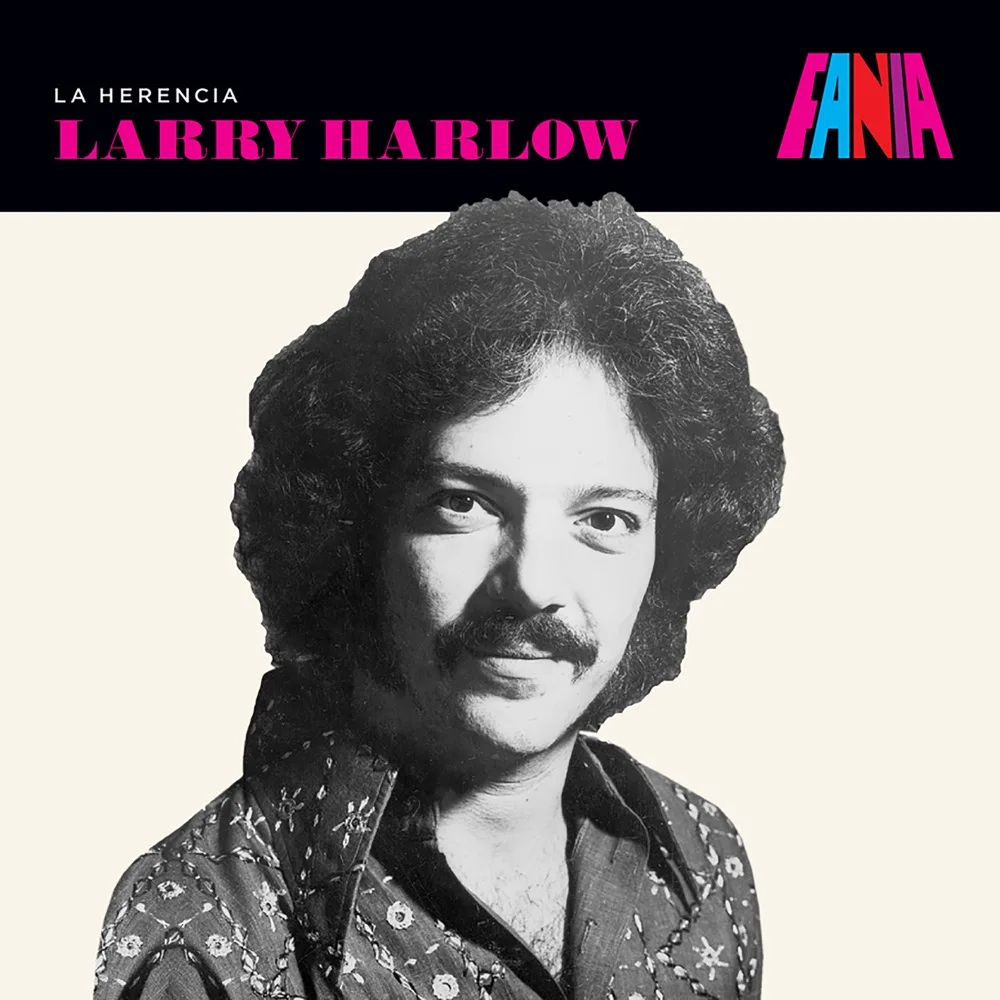
Larry Harlow on the cover of his compilation La Herencia (Fania, 2007) Album cover art (not a CC-licensed artist photo), used as the only available image showing the artist — Apple Music / iTunes album artwork for La Herencia, Craft Recordings (Fania) - https://music.apple.com/us/album/la-herencia/1464286641
Lawrence Ira Kahn was born in the Brownsville section of Brooklyn on March 20, 1939. His father, Nathan "Buddy" Kahn, led the mambo band at the Latin Quarter nightclub in Manhattan under the name Buddy Harlowe, and his mother, Rose Sherman Kahn, was an opera singer. He and his brother Andre, born in 1945, both studied classical piano as children and both were admitted to the New York High School of Music & Art. Larry loved the playing of Art Tatum and worked with jazz bands in Harlem as a teenager, but the music that changed his direction came from record shops and bodegas along 116th Street, which he walked every day on his way to the subway: Tito Puente, Machito and Tito Rodríguez. He began copying the Latin pianists he heard on Spanish-language radio, among them Noro Morales, Joe Loco and René Touzet.
He graduated in 1957 and went to Cuba, where he stayed about two years studying Afro-Cuban music, both the folkloric Yoruba tradition and the popular dance styles. The Cuban Revolution forced him off the island in 1959, before he could finish his degree. Back in New York he took a music degree at Brooklyn College (1963), later earned a master's degree in philosophy at the New School, and worked in both jazz and Latin bands, often combining the two. He took his stage surname from his father's and was nicknamed El Judío Maravilloso, the Marvelous Jew, a nod to the title given to the Cuban tres master Arsenio Rodríguez, El Ciego Maravilloso, whom he idolized. In 1975 he became a santero in the Afro-Cuban religion Santería.
By 1964 he led his own big band, Orquesta Harlow, which put trumpets and trombones side by side in the front line. Eddie Palmieri had made the two-trombones-and-flute front line the sound of his own group, and Harlow widened the horn section further. The band signed with the young Fania label, and its debut album, Heavy Smokin' (Fania LP 331), began a catalog that grew to more than twenty-five Orquesta Harlow albums. With the teenage singer Ismael Miranda, who joined for El Exigente (1967), the band made Abran Paso! (1971), Oportunidad (1972) and other records that became dance-floor staples, and Harlow's 1970 album Electric Harlow brought the clavinet and the Fender Rhodes into salsa.
Harlow was also the pianist and musical director of the Fania All-Stars, the label's showcase band, formed in 1968 and drawing on bandleaders and singers such as Ray Barretto, Johnny Pacheco, Willie Colón, Rubén Blades, Héctor Lavoe, Cheo Feliciano, Celia Cruz, Tito Puente and Eddie Palmieri. A summer 1971 concert by the group at the Cheetah nightclub in Manhattan was filmed by Leon Gast as Our Latin Thing (Nuestra Cosa), released in 1972, which Harlow produced and appeared in; in the film Orquesta Harlow plays "Abran Paso" for a street crowd in East Harlem. He became one of Fania's most prolific producers as well, credited with about 260 releases for the label, among them his brother Andy Harlow's four albums for Vaya between 1972 and 1976, the first of which, Sorpresa la Flauta, went gold.
His most ambitious projects came in the 1970s. Hommy: A Latin Opera (Fania, 1973), a salsa answer to the Who's rock opera Tommy about a deaf and blind boy with a gift for Afro-Cuban percussion, was performed at Carnegie Hall with a cast that included Celia Cruz, Cheo Feliciano, Adalberto Santiago and Pete "El Conde" Rodríguez. Cruz's performance of "Gracia Divina" on the record is widely credited with reviving her career, and Lincoln Center mounted a revival of the work in 2014. Salsa (1974) and La Raza Latina: A Salsa Suite (1977), the second written with Rubén Blades, traced the history of Afro-Latin music across an album each, and La Raza Latina earned a Grammy nomination.
When salsa fell out of fashion in the early 1980s Harlow left Fania, kept touring and recorded less often, making among other records Señor Salsa (1984) and The Miami Sessions (1988, with his brother Andy). In 1994 he joined Barretto, the vocalist Adalberto Santiago and the cuatro player Yomo Toro in forming the Latin Legends Band, which worked around the world and made Larry Harlow's Latin Legends Band 1998; he also composed the music for the bilingual stage piece Sofrito! with the storyteller David Gonzalez (recorded in 2000). The jazz-facing side of his later work is Larry Harlow's Latin Jazz Encounter: Live at Birdland (Latin Cool, 2003). In 2005 he played a piano solo on "L'Via L'Viaquez" on the Mars Volta's album Frances the Mute and sat in with the band live. He campaigned for the creation of the Latin Grammy Awards, was inducted into the International Latin Music Hall of Fame in 2000, received that organization's Beny Moré Memorial Award in 2002, and was given the Latin Recording Academy's Trustees Award in November 2008.
In his last years he worked with the younger keyboardist Marlow Rosado, whom he mentored, and their album Harlow & Marlow, Volume One: Passing the Torch (2016) was his final recording. He kept leading the Fania Latin Legends until shortly before he fell ill. Larry Harlow passed away in the Bronx on August 20, 2021, at the age of 82, of heart failure during a hospital stay for a kidney condition. He was survived by his wife, Maria del Carmen Harlow Kahn, his brother Andy, his son Myles, his daughter Haiby and three grandchildren.
Harlow was a salsa bandleader first, and this profile includes him for the jazz in his playing and his ideas rather than because the records are jazz records. English Wikipedia describes his piano approach to tropical dance music as "jazzified," and NPR called his jazz piano talent, mixed with Afro-Caribbean tradition, his musical calling card. The foundation was classical training, a youthful passion for Art Tatum and jazz-band work in Harlem, laid over a study of Cuban piano from Noro Morales and René Touzet to the tres-driven son of Arsenio Rodríguez, whose music he honored on Tribute to Arsenio Rodríguez (1971). What he added was arrangement and instrumentation: trumpets and trombones together, the Fender Rhodes and clavinet on Electric Harlow, the Yoruba bata drums that he is credited with bringing into salsa, and his own work on flute, oboe, English horn, vibraphone, bass and violin alongside the piano. R&B and funk entered his music as readily as jazz did.
His large-scale works follow the jazz tradition of the extended suite, Hommy as a stage work and La Raza Latina as a concept album, and his late band Latin Jazz Encounter made the jazz connection explicit. Salsa is not a jazz subgenre, so his header uses the nearest tags, Latin Jazz and Afro-Cuban Jazz.
- Heavy Smokin' (1965, Fania) - The first Orquesta Harlow album, with a two-trumpet, two-trombone front line. Apple Music - Heavy Smokin' (remastered) Listen
- El Exigente (1967, Fania) - The first of many records with the teenage singer Ismael Miranda, who wrote the title song with Harlow. Apple Music - El Exigente Listen
- Electric Harlow (1970, Fania) - Clavinet and Fender Rhodes arrive in salsa. Apple Music - Electric Harlow Listen
- Tribute to Arsenio Rodríguez (1971, Fania) - Harlow's homage to the Cuban tres master he idolized. Apple Music - Tribute to Arsenio Rodríguez Listen
- Hommy: A Latin Opera (1973, Fania) - The salsa opera that featured Celia Cruz, Cheo Feliciano and Adalberto Santiago and revived Cruz's career. Apple Music - Hommy: A Latin Opera Listen
- Salsa (1974, Fania) - One of the strongest salsa albums of the 1970s and the start of his Afro-Latin history cycle. Apple Music - Salsa Listen
- La Raza Latina: A Salsa Suite (1977, Fania) - A suite on the history of Afro-Latin music written with Rubén Blades and nominated for a Grammy. Apple Music - La Raza Latina: A Salsa Suite Listen
- Harlow & Marlow, Volume One: Passing the Torch (2016, Biviria) - His final recording, made with Marlow Rosado. Apple Music - Harlow & Marlow, Volume One Listen
Larry Harlow: Full Discography
Discogs artist: Larry Harlow (320853), with his big band under Orchestra Harlow (288875) · Real name Lawrence Ira Kahn · Born March 20, 1939, Brooklyn, New York
Larry Harlow led dozens of albums and produced about 260 releases for Fania Records, so this list is selective: his leader albums, the main compilations, and the sideman and producer credits that matter most. Catalog numbers are as listed for the Fania LP releases, and the full list is on Discogs.
Leader: Orquesta Harlow and Larry Harlow
| Album | Year | Label | Notes | Listen | Buy |
|---|---|---|---|---|---|
| Heavy Smokin' | 1965 | Fania (LP 331) | Orquesta Harlow's debut. Harlow (piano, leader) arranged it with Mark Weinstein; Alfredo "Chocolate" Armenteros and Ralph Castrella (trumpets), Julian Priester and Weinstein (trombones), Felo Brito (vocals); Johnny Pacheco was musical director and Jerry Masucci recording director. | Apple Music | — |
| Gettin' Off (Bajándote) | 1967 | Fania (LP 334) | Apple Music | — | |
| El Exigente (The Demanding One) | 1967 | Fania (LP 342) | With Ismael Miranda on vocals; the first album of their partnership. | Apple Music | — |
| Orchestra Harlow Presenta a Ismael Miranda | 1968 | Fania (LP 360) | With Ismael Miranda. Contains "La Contraria." | Apple Music | — |
| Me and My Monkey | 1969 | Fania (LP 374) | With Ismael Miranda. | Apple Music | — |
| Electric Harlow | 1970 | Fania (LP 385) | With Ismael Miranda. Brings the clavinet and Fender Rhodes into salsa. | Apple Music | — |
| Abran Paso! | 1971 | Fania (LP 396) | With Ismael Miranda; credited on release to Miranda with Orchestra Harlow. | Apple Music | — |
| Tribute to Arsenio Rodríguez | 1971 | Fania (LP 404) | With Ismael Miranda. A homage to the Cuban tres master. | Apple Music | — |
| Oportunidad | 1972 | Fania (LP 419) | With Ismael Miranda; credited on release to Miranda with Orchestra Harlow. | Apple Music | — |
| Hommy: A Latin Opera | 1973 | Fania (SLP 425) | The salsa opera performed at Carnegie Hall, featuring Celia Cruz, whose "Gracia Divina" is on the record. | Apple Music | — |
| Salsa | 1974 | Fania (LP 460) | Recorded November 26 and 27, 1973 at Good Vibrations Sound Studios, New York. Harlow (piano, producer), Junior González (vocals), Johnny Pacheco (flute), Harry Viggiano (guitar, tres), Charlie Miller (trumpet, flugelhorn, flute). | Apple Music | — |
| Live in Quad | 1974 | Fania (LP 472) | Live album. | Apple Music | — |
| El Judío Maravilloso (The Marvelous Jew) | 1975 | Fania (LP 490) | Named for his nickname; features Junior González. | Apple Music | — |
| Con Mi Viejo Amigo (With My Old Friend) | 1976 | Fania (LP 494) | With Ismael Miranda. | Apple Music | — |
| El Jardinero del Amor | 1976 | Fania (LP 499) | With Junior González. | Apple Music | — |
| La Raza Latina: A Salsa Suite | 1977 | Fania (LP 516) | With Rubén Blades. A suite on the history of Afro-Latin music, nominated for a Grammy. | Apple Music | — |
| Presents 'Latin Fever' | 1978 | Fania (LP 527) | Apple Music | — | |
| El Albino Divino | 1978 | Fania (LP 533) | With Néstor Sánchez. | Apple Music | — |
| Rumbambola | 1979 | Fania (LP 543) | Apple Music | — | |
| La Responsabilidad | 1979 | Fania (LP 551) | With Fausto Rey. | Apple Music | — |
| El Dulce Aroma del ~Exito | 1980 | Fania (LP 566) | Apple Music | — | |
| Our Latin Feeling (Nuestro Sentimiento Latino) | 1980 | Fania (LP 586) | With Junior González. | Apple Music | — |
| Así Soy Yo | 1981 | Coco (CLP-160) | Apple Music | — | |
| Yo Soy Latino | 1983 | Fania (LP 607) | Apple Music | — | |
| Señor Salsa | 1984 | Tropical Budda (TBLP-007) | Apple Music | — | |
| The Miami Sessions | 1988 | Songo (SR-1001) | Credited to Andy and Larry Harlow, billed as the Salsa Brothers. | Apple Music | — |
| My Time Is Now (Mi Tiempo Llegó) | 1990 | Cache (AM-002) | A single-length release. | — | — |
| Larry Harlow's Latin Legends Band 1998 | 1998 | Masucci Music (CDZ 82449) | The Latin Legends Band, formed in 1994. | — | — |
| Romance en Salsa | 1999 | Caiman / K-Tel (13853-2908-2) | Apple Music | — | |
| ¡Sofrito! | 2000 | Laughing Horse (LHR-1009) | With David Gonzalez and the Latin Legends Band, featuring Yomo Toro and Adalberto Santiago; a bilingual stage piece. | Apple Music | — |
| Larry Harlow's Latin Jazz Encounter: Live at Birdland | 2003 | Latin Cool (LCP-1001) | Live set by his jazz-leaning band, recorded at Birdland in New York. | — | — |
| Larry Harlow's Latin Legends of Fania: 40th Anniversary Live Concert | 2006 | Eye Music Network (ID3771EO) | — | — | |
| Harlow & Marlow, Volume One: Passing the Torch | 2016 | Biviria (1068) | With Marlow Rosado; his final recording. | Apple Music | — |
Compilations
| Album | Year | Label | Notes | Listen | Buy |
|---|---|---|---|---|---|
| Harlow's Harem | 1971 | Fania (LP 408) | Compilation. | Apple Music | — |
| The Best of Orchestra Harlow & Ismael Miranda | 1976 | Fania (LP 496) | Compilation. | — | — |
| The Best | 2004 | Fania (CD 787) | Compilation. | — | — |
| La Herencia | 2007 | Fania / Emusica / UMG (773 130 270) | Compilation. | Apple Music | — |
| Selecciones Fania | 2011 | Fania (278 654 230) | Compilation. | — | — |
| A Man and His Music: El Judío Maravilloso | 2026 | Craft Recordings (Fania) | Posthumous compilation of 24 tracks, issued in August 2026. | Apple Music | — |
As Sideman, Producer and Guest (selected)
| Year | Project (Leader) | Title | Label | Role | Notes |
|---|---|---|---|---|---|
| 1968 | Fania All-Stars | Live at the Red Garter, Vol. 1 and Vol. 2 | Fania | Pianist and music director | The first Fania All-Stars recordings. |
| 1972 | Fania All-Stars | Live at the Cheetah, Vol. 1 and Vol. 2 | Fania | Producer credit; Harlow also appears with the group | The concert filmed for Our Latin Thing. |
| 1972 | Fania All-Stars | Our Latin Thing (Nuestra Cosa) (soundtrack) | Fania | Producer credit; appears in the film | Orquesta Harlow performs "Abran Paso" in the film. |
| 1972 | Frankie Dante and Orquesta Flamboyan | Frankie Dante & Orquesta Flamboyan con Larry Harlow | Cotique (CS-1071) | Featured bandleader | |
| 1972 to 1976 | Andy Harlow | Sorpresa la Flauta, La Música Brava, El Campesino, Latin Fever | Vaya (VS-14, VS-24, VS-39, VS-59) | Producer | The first album went gold. |
| 1974 | Fania All-Stars | Latin-Soul-Rock | Fania | Producer credit | |
| 1975 | Fania All-Stars | Live at Yankee Stadium, Vol. 1 and Vol. 2 | Fania | Producer credit | |
| 1976 | Fania All-Stars | Tribute to Tito Rodríguez | Fania | Producer credit | |
| 1976 | Fania All-Stars | Salsa (soundtrack) | Island | Appears on the soundtrack of the film | |
| 1970 | Ambergris | Ambergris | Paramount (PAS-5014) | Group member | Listed among his groups on Discogs and in his Wikipedia discography. |
| 2005 | The Mars Volta | Frances the Mute | Universal | Guest pianist | Piano solo on "L'Via L'Viaquez." |
- Ismael Miranda - lead vocalist on Orquesta Harlow's records from El Exigente (1967) through the mid-1970s, including Abran Paso!, Tribute to Arsenio Rodríguez, Oportunidad and Con Mi Viejo Amigo.
- Celia Cruz - the star of Hommy (1973), whose "Gracia Divina" revived her career.
- Rubén Blades - co-creator and lead vocalist of La Raza Latina: A Salsa Suite (1977).
- Junior González - vocalist on El Jardinero del Amor (1976) and Our Latin Feeling (1980).
- Cheo Feliciano, Adalberto Santiago and Pete "El Conde" Rodríguez - singers in the cast of Hommy.
- Johnny Pacheco - Fania co-founder and fellow All-Stars leader; in the mid-1960s the manager José Curbelo, who also handled Pacheco and Tito Puente, packaged Harlow's band on bills with both.
- Fania All-Stars - Harlow was the pianist and music director of the label's showcase band; the group also featured Ray Barretto, Willie Colón, Eddie Palmieri, Tito Puente and others.
- Julian Priester, Mark Weinstein, Alfredo "Chocolate" Armenteros and Ralph Castrella - the trombone and trumpet front line on Heavy Smokin'; Weinstein also co-arranged the album.
- Andy Harlow - his brother, a flutist and woodwind player whose Vaya albums he produced.
- Adalberto Santiago, Yomo Toro and Ray Barretto - named by Wikipedia as his partners in founding the Latin Legends Band in 1994.
- David Gonzalez - collaborator on Sofrito!, the multimedia piece that Harlow scored.
- Marlow Rosado - protégé and co-leader of his final album.
- The Mars Volta - the rock band whose 2005 album Frances the Mute has a Harlow piano solo.
- Leon Gast - director of Our Latin Thing (1972), the Fania All-Stars film that Harlow produced.