JAZZPROFILES lives in the music 2,555 Jazz Artists fully Profiled!
James Booker
Last updated November 9, 2026
Listen on Spotify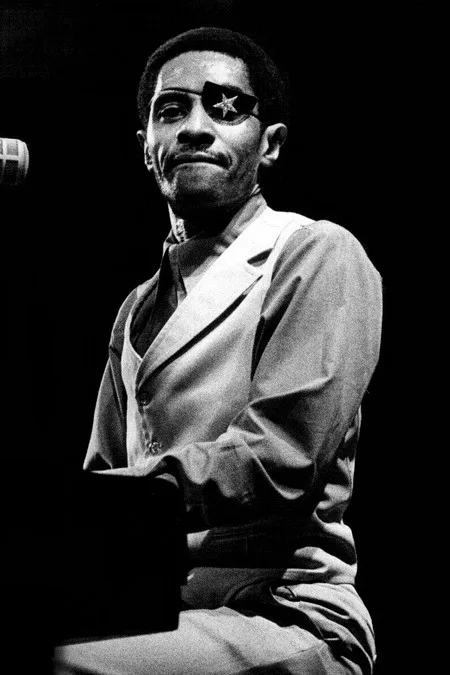
James Booker at the Montreux Jazz Festival, Montreux, Switzerland, July 9, 1978 CC BY-SA 3.0 — Wikimedia Commons: https://commons.wikimedia.org/wiki/File:James_Booker.jpg, photograph by Lionel Decoster (own work)

James Carroll Booker III was born in New Orleans on December 17, 1939, the son of Ora Cheatham Booker and the Rev. James Harald Booker, a Baptist pastor. His father and grandfather were both ministers and both played piano. Known as J.C. in childhood, he was trained as a classical pianist from the age of six and played organ in his father's churches. By eleven he was playing blues and gospel organ every Sunday on the New Orleans radio station WMRY, and by twelve he had learned all of Bach's Inventions and Sinfonias. By his own account he was struck by an ambulance at nine and broke his leg in eight places; he later traced his addiction to the morphine he was given, and the injury left him with a permanent limp. At school he befriended Art Neville, Charles Neville and Allen Toussaint. From 1953 he attended Xavier University Preparatory School, where the band director was Ellis Marsalis Jr., who noticed how advanced his Bach playing was. He graduated in 1957.
He made his first record at fourteen: "Doin' the Hambone" and "Thinkin' 'Bout My Baby," cut for Imperial in 1954 under the name Little Booker and produced by Dave Bartholomew. The single did not sell, but Bartholomew then used him as a ghost pianist behind Fats Domino, a pairing that returned in the late 1960s. Through the late 1950s and early 1960s he worked in New Orleans rhythm and blues and blues bands. He toured with Huey "Piano" Smith and covered for Smith on the road, played with Shirley and Lee and with Joe Tex, and recorded piano in Houston with the bluesman Larry Davis between 1958 and 1960, in Chicago with Junior Parker in January 1960, and in New Orleans with Bartholomew's studio band, Earl King and Smiley Lewis. He played organ on a Lloyd Price session in 1963. In 1958 he played for the visiting concert pianist Arthur Rubinstein, who was reported to have said he could never play that fast.
His one national hit was an organ instrumental. "Gonzo," issued on Peacock in 1960 and backed with "Cool Turkey," reached No. 43 on the Billboard pop chart and No. 3 on the R&B chart in the week of December 5, 1960. It was the best known of a run of Peacock organ singles that also included "Smacksie," "Tubby" and "Cross My Heart." That fall he enrolled in the music department at Southern University but did not stay beyond the first semester.
The mid-1960s brought a string of losses. He lost his sister in September 1966 and his mother in June 1967, and within weeks of his mother's death he was arrested outside the Dew Drop Inn for heroin possession. He served a one-year sentence at Angola prison, where he lost his left eye in an assault. His run-ins with the law brought him into contact with the district attorney Harry Connick Sr., and the arrangement that followed had Booker giving piano lessons to the DA's young son, Harry Connick Jr.. After his release in 1968 he went back to session work, recording with Fats Domino in New Orleans and, in July 1968, cutting tracks in New York with Freddie King that came out in 1969 and 1970. He is credited on keyboards on King's Freddie King Is a Blues Master (1969) and on piano on a 1969 Columbia collection of Aretha Franklin recordings, Today I Sing the Blues.
He came back to prominence in the 1970s. In 1973 he recorded an album at Paramount Studios in Hollywood with members of Dr. John's band; the master tapes went missing from the studio library, a copy of the mixes surfaced in 1992, and the music was finally issued in 1995 as The Lost Paramount Tapes. In 1974 he played organ in Dr. John's Bonnaroo Revue touring band, and through the middle of the decade he appeared as a sideman on records by Ringo Starr, John Mayall, the Doobie Brothers, LaBelle, Maria Muldaur and Geoff Muldaur. His set at the 1975 New Orleans Jazz and Heritage Festival won him a contract with Island Records, and Junco Partner (1976), produced by Joe Boyd, was the result. In January 1976 he briefly joined the Jerry Garcia Band for two shows in Palo Alto, California.
Europe gave him the respect he felt he lacked at home. His Hamburg concerts of October 29 and 30, 1976 were recorded and released as The Piano Prince from New Orleans. He was recorded in Manchester in October 1977, and at the Boogie-Woogie and Ragtime Piano Contest in Zürich on November 27, 1977; the Zürich set, issued in the United States as New Orleans Piano Wizard: Live!, won the Grand Prix du Disque. He played the Nice and Montreux jazz festivals in 1978, recorded a session for the BBC, and made a Leipzig recording, Let's Make a Better World!, that became the last record produced in East Germany.
Back in New Orleans he was the house pianist at the Maple Leaf Bar in the Carrollton neighborhood from 1978 to 1982. John Parsons recorded him there on cassette, more than sixty hours between 1977 and 1982, and the best of it was issued on Rounder in 1993 as Spiders on the Keys and Resurrection of the Bayou Maharajah. His last studio album, Classified, was recorded October 18 to 20, 1982, at Ultrasonic Studios in New Orleans with the bassist James Singleton, the drummer Johnny Vidacovich and the tenor saxophonist Alvin "Red" Tyler. By then his health had badly declined. The filmmaker Jim Gabour recorded his final concert at the end of October 1983. James Booker passed away on November 8, 1983, at the age of 43, in a wheelchair in the emergency room of Charity Hospital in New Orleans, waiting to be seen. The coroner's certificate gave the cause as renal failure related to chronic heroin and alcohol use.
His reputation has grown steadily since. Harry Connick Jr. and Henry Butler have recorded pieces that pay tribute to him, a tribute album of his songs by various pianists, Patchwork, appeared in 2003, and Joshua Paxton's transcriptions of his solos have been published by Hal Leonard. Lily Keber's documentary Bayou Maharajah: The Tragic Genius of James Booker premiered at South by Southwest on March 14, 2013, and Rounder issued an expanded edition of Classified that year.
Booker is a New Orleans rhythm and blues pianist first, and that is where his records and his one chart hit sit, so this is a crossover profile. English Wikipedia opens by calling him a New Orleans rhythm and blues keyboardist and singer, and AllMusic's style tags for him are New Orleans blues, boogie-woogie, piano blues and New Orleans R&B. The jazz side is real and documented all the same. AllMusic lists jazz among his genres and says his left hand fused the jazz and rhythm and blues idioms of New Orleans with a good deal of gospel; he played the Nice and Montreux jazz festivals in 1978; and his repertoire ran from "Tico-Tico," "On the Sunny Side of the Street," "Come Rain or Come Shine" and "Angel Eyes" to the Beatles' "Eleanor Rigby," Roger Miller's "King of the Road," and Chopin and Rachmaninoff. He memorized solos by Erroll Garner and Liberace, took elements of his keyboard style from Tuts Washington and Edward Frank, and listened closely to Professor Longhair and Ray Charles.
The sound that tied this together was a rolling backbeat figure in the left hand, close to Fats Domino's feel and often called the Booker groove, over which he stretched a tune into a medley of itself, slipping in classical quotations, phrases from other songs and long improvised runs. Allen Toussaint praised the complexity under the groove, and the transcriber Joshua Paxton has described the effect as Ray Charles with Chopin's technique. His singing was plaintive and exposed, as comfortable with a gospel hymn as with a standard. He was openly gay and performed in capes and costumes. Much of his best-loved work is live, from the Hamburg and Zürich concerts to the Maple Leaf Bar tapes.
- "Gonzo" / "Cool Turkey" (1960, Peacock) - The organ instrumental that reached No. 3 on the R&B chart and No. 43 on the pop chart, his only national hit. Spotify - "Gonzo" Listen
- Junco Partner (1976, Island) - His studio album for Joe Boyd, with "Black Minute Waltz," "On the Sunny Side of the Street" and the title song. Spotify - "Junco Partner" Listen
- The Piano Prince from New Orleans (1977, AVES) - Recorded live in Hamburg on October 29 and 30, 1976, the first of the European concert records.
- New Orleans Piano Wizard: Live! (1981, Rounder) - The Zürich ragtime and boogie-woogie contest set from November 1977, first issued in Switzerland as Live!, and the album that won the Grand Prix du Disque.
- Classified (1982, Rounder) - His last studio album, recorded over three days in October 1982 with Singleton, Vidacovich and Tyler. Spotify - "One for the Highway" Listen
- Spiders on the Keys (1993, Rounder) - Maple Leaf Bar cassette recordings from 1977 to 1982, with sleeve notes by Harry Connick Jr.. Spotify - "Gonzo's Blue Dream" Listen
- Resurrection of the Bayou Maharajah (1993, Rounder) - A second set from the same Maple Leaf tapes, with "Junco Partner" and "St. James Infirmary."
- The Lost Paramount Tapes (1995, DJM) - The 1973 Hollywood session with Dr. John's rhythm section, shelved for two decades.
James Booker: Full Discography
Discogs lists him as artist 323165 ("James Booker," real name James Carroll Booker III, born December 17, 1939, in New Orleans, passed away November 8, 1983, in the same city). He is not to be confused with the other Discogs entries named James Booker (numbered forms such as James Booker (2) and (3)), with the bassist Walter Booker, or with Booker T. Jones. His 1950s singles issued as Little Booker sit under an alias entry, and his own entry runs to roughly 360 credits. This is a curated list: a handful of singles and albums were issued in his lifetime, while the live, archive and compilation releases since 1984 are many, so the tables below give the main leader releases and a selection of his documented session work.
As Leader / Co-Leader
| Album Title | Recording Date(s) | Release Date | Label | Catalog Number | Format(s) | Personnel | Role | Reissue History | Spotify | Buy | Notes |
|---|---|---|---|---|---|---|---|---|---|---|---|
| Doin' the Hambone / Thinkin' 'Bout My Baby | Not confirmed | 1954 | Imperial | 5293 | Shellac, 10-inch (also issued as a 7-inch single) | James Booker (piano, vocals); Earl Palmer (drums), Frank Fields (bass), Herb Hardesty and Clarence Hall (tenor saxophone), Joe Harris (alto saxophone), all listed as uncredited on the label | Leader (billed as Little Booker) | Not itemized | — | — | His first record, made at fourteen and produced by Dave Bartholomew. |
| You're Near Me / Heavenly Angel | Not confirmed | 1956 | Chess | 1637 | 7-inch single | Not itemized | Co-billed (as Arthur and Booker) | Not itemized | — | — | Booker holds the writing credit; Discogs lists the billing as Art Neville and James Booker. Booker later recalled making "Heavenly Angel" for Leonard Chess. |
| Open the Door / Teen Age Rock | Not confirmed | 1958 | Ace | 547 | Single | Not itemized | Leader (billed as Little Booker) | Not itemized | — | — | Issued under the Little Booker name. |
| Gonzo / Cool Turkey | Not confirmed | 1960 | Peacock | 5-1697 | Vinyl, 7-inch, 45 rpm, single | James Booker (organ) | Leader | Reissued on the UK EP Gonzo (1964) and collected on Gonzo: More Than All the 45's (1996) | Spotify - "Gonzo" | — | His only national hit: No. 43 on the Billboard pop chart and No. 3 on the R&B chart in the week of December 5, 1960. The Spotify track is the version on the 1996 compilation. |
| Tubby (Parts 1 and 2) | Not confirmed | September 1961 | Peacock | 1908 | Vinyl, 7-inch, 45 rpm | James Booker (organ) | Leader | Reissued on the UK EP Gonzo (1964) | — | — | A two-part instrumental, Part 1 on the A side and Part 2 on the B side. |
| Smacksie / Kinda Happy | Not confirmed | 1961 | Peacock | 5-1900 | Vinyl, 7-inch, 45 rpm, single | James Booker (organ) | Leader | Not itemized | — | — | Another of his Peacock organ instrumentals. |
| Cross My Heart / Big Nick | Not confirmed | 1963 | Peacock | 1923 | Vinyl, 7-inch, 45 rpm | James Booker (organ) | Leader | Not itemized | — | — | The last of the Peacock singles listed here. |
| Gonzo (EP) | Recordings first published in 1960 | September 1964 | Vocalion (UK) | VE-P 170154 | Vinyl, 7-inch, 45 rpm, EP, mono | James Booker (organ) | Leader | Not itemized | — | — | British EP with "Gonzo," "Cool Turkey" and both parts of "Tubby." |
| The Lost Paramount Tapes | 1973, Paramount Recording Studios, Hollywood | 1995 | DJM | DJM-CD 10010 | CD, album | James Booker; John Boudreaux (drums), Alvin Robinson (guitar), David L. Johnson (electric bass), Richard Washington (percussion), David Lastie (saxophone), Jessie Hill (tambourine) | Leader | Not itemized | — | — | Eleven tracks including "Goodnight Irene," "Junco Partner" and "Tico Tico," produced by Daniel Moore and David L. Johnson. The master tapes went missing from the studio library and a copy of the mixes was found in 1992. |
| Junco Partner | Not confirmed | 1976 | Island | Help 26 (UK) | Vinyl, LP, album | James Booker; produced by Joe Boyd and John Wood, with Wood as engineer | Leader | Reissued on CD by Hannibal (HNCD-1359) in 1993 | Spotify - "Junco Partner" | — | Ten tracks including "Black Minute Waltz," "Goodnight Irene," "On the Sunny Side of the Street," "Make a Better World," "Junco Partner," "Pop's Dilemma" and "I'll Be Seeing You." |
| The Piano Prince from New Orleans | October 29 and 30, 1976, live in Hamburg | 1977 | AVES | 69.031 | Vinyl, LP, album | James Booker | Leader | Reissued on LP by Black Sun in 2019 | — | — | Produced by Mike Schmidt-Joos. Includes "Life," "United Our Thing Will Stand," "Classified" and "Stormy Monday." Discogs dates the first pressing to 1977; MusicBrainz and Wikipedia give 1976. |
| Live! | November 27, 1977, Boogie-Woogie and Ragtime Piano Contest, Schützenhaus Albisgüetli, Zürich | 1978 | Gold Records | 11 035 (Switzerland) | Vinyl, LP, album, stereo | James Booker; produced by Bernard Henrion | Leader | Issued in the United States by Rounder as New Orleans Piano Wizard: Live! (next row) | — | — | Nine tracks including "On the Sunny Side of the Street," "Come Rain or Come Shine," "Something Stupid" and "Come In My House." |
| New Orleans Piano Wizard: Live! | November 27, 1977, Zürich | 1981 | Rounder | 2027 | Vinyl, LP (cassette C-2027 in 1992; later CD) | James Booker | Leader | Reissue of the Swiss Live! concert recording | — | — | Wikipedia reports that this album won the Grand Prix du Disque. |
| Blues & Ragtime from New Orleans | Not confirmed | 1980 | AVES | INT 146.530 | Vinyl, LP, album | James Booker | Leader | Not itemized | — | — | German release. |
| Classified | October 18 to 20, 1982, Ultrasonic Studios, New Orleans | 1983 | Rounder | 2036 | Vinyl, LP, album | James Booker (piano, vocals), James Singleton (bass), Johnny Vidacovich (drums), Alvin "Red" Tyler (tenor saxophone); produced by Scott Billington and John Parsons | Leader | CD edition (Rounder CD 2036) in 1992; expanded edition in 2013 (next row) | — | — | His last studio album. Includes "All Around the World," "One for the Highway," "King of the Road," a Professor Longhair medley of "Bald Head" and "Tipitina," "Lawdy Miss Clawdy," "Angel Eyes" and "Hound Dog." Discogs dates the US LP to 1983; Wikipedia and MusicBrainz give 1982. |
| Classified: Remixed and Expanded | October 18 to 20, 1982, Ultrasonic Studios, New Orleans | 2013 (October 15) | Rounder | 11661-9175-2 | CD, expanded edition | As on Classified | Leader | Expanded edition of the 1982 album | Spotify - "One for the Highway" | — | Wikipedia describes it as a double-CD deluxe edition. |
| King of the New Orleans Keyboard, Volumes 1 and 2 | Live, Hamburg, around 1977 | 1984 (Vol. 1), 1985 (Vol. 2) | JSP | JSP 1083 (Vol. 1); Vol. 2 not confirmed | Vinyl, LP | James Booker | Leader | Selections reissued as New Orleans Keyboard King (Orbis, 1996) and on a JSP CD in 2005 | — | — | Concert recordings. The recording place and date come from the notes on the 1996 reissue. |
| Mr. Mystery | Not confirmed | 1984 | Sundown | Not confirmed | Vinyl, LP, compilation | James Booker | Leader | Not itemized | — | — | Compilation. |
| Let's Make a Better World! | Leipzig, 1977 to 1978 (exact dates not confirmed) | 1991 | Amiga | Not confirmed | Vinyl, LP, album | James Booker | Leader | Not itemized | — | — | Wikipedia reports it as the last record produced in East Germany. |
| Resurrection of the Bayou Maharajah | Maple Leaf Bar, New Orleans, 1977 to 1982 | 1993 (July 22) | Rounder | CD 2118 | CD, album | James Booker (piano, vocals); produced by John Parsons and Scott Billington | Leader | Not itemized | — | — | Eleven tracks, including a long "Junco Partner," "St. James Infirmary" and a medley with "Lawdy Miss Clawdy"; liner notes by Earl King. |
| Spiders on the Keys | Maple Leaf Bar, New Orleans, 1977 to 1982 | 1993 | Rounder | CD 2119 | CD, album | James Booker (piano); produced by John Parsons and Scott Billington | Leader | Not itemized | Spotify - "Gonzo's Blue Dream" | — | Thirteen tracks culled from more than sixty hours of cassette recordings; sleeve notes by Harry Connick Jr.. |
| New Orleans Keyboard King | Live, Hamburg, around 1977 | 1996 | Orbis | BLU NC 079 | CD, compilation | James Booker (piano, vocals) | Leader | Licensed from JSP | — | — | Issue 79 of the UK edition of The Blues Collection; fourteen tracks. |
| Gonzo: More Than All the 45's | Not confirmed | 1996 | Night Train International | Not confirmed | CD, compilation | James Booker | Leader | An LP edition titled More Than All the Funky 45's followed in 2000 | — | — | A collection of his single sides. |
| Live at Montreux: The James Booker Session | Montreux Jazz Festival, 1978 (exact date not confirmed) | 1997 | Montreux Sounds | Not confirmed | CD, album | James Booker | Leader | Not itemized | — | — | From his 1978 festival appearance. |
| United, Our Thing Will Stand: Live at Tipitina's 1976 | 1976, Tipitina's, New Orleans | 1999 | Night Train International | NTI CD 2005 | 2 CD, compilation | James Booker | Leader | Not itemized | — | — | Wikipedia dates it to 2000. |
| A Taste of Honey: Live in New Orleans 1977 | 1977, New Orleans | 2000 | Night Train International | NTI CD 2006 | 2 CD, compilation | James Booker | Leader | Not itemized | — | — | Wikipedia dates it to 2006. |
| Manchester '77 | October 1977, Lake Side Hotel, Belle Vue, Manchester | 2008 | Document | DOCD-32-20-13 | CD, album | James Booker; the Norman Beaker Band supports on two songs | Leader | Not itemized | — | — | Wikipedia dates it to 2007. |
| Gonzo: Live 1976 | 1976 (exact dates not confirmed) | 2014 (December 2) | RockBeat | ROC-CD-3277 | 2 CD, compilation | James Booker | Leader | Not itemized | — | — | Concert recordings. |
| At Onkel Pö's Carnegie Hall Hamburg 1976, Vol. 1 | 1976, Hamburg | 2019 (March 1) | Jazzline | N 78061 | Not confirmed | James Booker | Leader | Not itemized | — | — | Live club recording. |
| True: Live at Tipitina's, April 25, 1978 | April 25, 1978, Tipitina's, New Orleans | 2021 | Tipitina's Record Club | Not confirmed | Vinyl, LP, album | James Booker | Leader | Not itemized | — | — | Club release. |
| The Ivory Emperor (1954-1962 Sides) | 1954 to 1962 | 2021 | Soul Jam | 806188 | CD, compilation, remastered | James Booker | Leader | Not itemized | — | — | Early rhythm and blues sides. |
| Behind the Iron Curtain Plus... | Not confirmed | 2023 (March 24) | RWA (Richard Weize Archives) | RWA11002 | 5 CD, compilation, limited | James Booker | Leader | Not itemized | — | — | Five-disc archive set. |
He also played on a very large number of New Orleans rhythm and blues and blues sessions between the mid-1950s and the mid-1960s, for artists including Fats Domino, Huey "Piano" Smith, Shirley and Lee, Joe Tex, Larry Davis, Junior Parker, Smiley Lewis, Earl King and Lloyd Price; those are not itemized here.
As Sideman (selected major credits)
These are credits confirmed on the individual releases, listed by release year.
| Year | Project (Leader) | Title | Label | Catalog | Role | Notes |
|---|---|---|---|---|---|---|
| 1968 | Fats Domino | Fats Is Back | Reprise | RS 6304 | Credited performer (instrument not listed) | Booker also holds the writing credit for "So Swell When You're Well," which is on the album. |
| 1969 | Freddie King | Freddie King Is a Blues Master | Cotillion | SD 9004 | Keyboards | Produced by King Curtis. Booker recorded with King in New York in July 1968. |
| 1969 | Aretha Franklin | Today I Sing the Blues | Columbia | CS 9956 | Piano | A Columbia collection; the credit is listed for the album without track detail. |
| 1971 | Huey "Piano" Smith | Huey "Piano" Smith's Rock & Roll Revival! | Ace | 2021 | Piano, organ | Credit as listed; track detail not given. |
| 1972 | King Curtis | Everybody's Talkin' | Atco | SD 33-385 | Piano | One track, "If I Were a Carpenter." |
| 1973 | Ringo Starr | Ringo | Apple (UK) | PCTC 252 | Piano | One track, "Have You Seen My Baby." |
| 1974 | The Doobie Brothers | What Were Once Vices Are Now Habits | Warner Bros. | W 2750 | Piano | One track, "Down in the Track." |
| 1974 | Maria Muldaur | Waitress in a Donut Shop | Reprise | MS 2194 | Tack piano | One track, "Brickyard Blues." |
| 1975 | Geoff Muldaur | Is Having a Wonderful Time | Reprise | MS 2220 | Organ, piano | Organ on "99 1/2" and piano on "High Blood Pressure." |
| 1975 | LaBelle | Phoenix | Epic | PE 33579 | Organ | Recorded at Sea-Saint Studios in New Orleans; track detail not given. |
| 1975 | The James Cotton Band | High Energy | Buddah | BDS 5650 | Piano | Track detail not given. |
| 1976 | John Mayall | Notice to Appear | ABC (Canada) | 9022-926 | Organ | Three tracks: "Mess of Love," "That Love" and "Hale to the Man Who Lives Alone." |
| 1976 | Maria Muldaur | Sweet Harmony | Reprise (UK) | K 54059 | Piano | One track, "Lying Song." |
| 1977 | Linda Lewis | Woman Overboard | Arista (UK) | SPARTY 1003 | Organ | Four tracks: "You Came," "Shining," "No.1 Heartbreaker" and "Dreamer of Dreams." |
| 1978 | Lee Dorsey | Night People | ABC | AA-1048 | Organ | Recorded at Sea-Saint Studios in New Orleans; track detail not given. |
| 1982 | Earl King | Trick Bag | Imperial (France) | 2 C 068-83299 | Piano | A compilation of King's Imperial recordings; Booker recorded with King for Imperial in 1960 and 1961. |
| 1983 | Dave Bartholomew | Jump Children | Imperial (France) | 1546601 | Piano | A compilation; Booker plays on two tracks, "Yeah Yeah" and "People Are Talkin'." |
The full list of credits is on Discogs.
- Ellis Marsalis Jr. - his band director at Xavier University Preparatory School in the mid-1950s.
- Dave Bartholomew - produced his 1954 debut, used him as a ghost pianist for Fats Domino, and recorded him in his studio band in 1960 and 1962.
- Fats Domino - the main model for the Booker groove; Booker ghosted piano parts for him after 1954 and again in the late 1960s, and is a credited performer on Fats Is Back (1968), which includes his song "So Swell When You're Well."
- Harry Connick Jr. - Booker's piano pupil as a boy and his most visible heir; he wrote the sleeve notes for Spiders on the Keys and has called Booker the greatest.
- Huey "Piano" Smith, Shirley and Lee, Joe Tex, Smiley Lewis, Earl King, Lloyd Price, Larry Davis and Junior Parker - the rhythm and blues and blues artists he accompanied between the mid-1950s and the mid-1960s.
- Freddie King and King Curtis - Booker recorded with King in New York in July 1968 and is credited on keyboards on Freddie King Is a Blues Master (1969), which King Curtis produced. He is also credited on piano on one track of Curtis's Everybody's Talkin' (1972).
- Aretha Franklin - credited on piano on the 1969 Columbia collection Today I Sing the Blues.
- Dr. John and his band - John Boudreaux, Jessie Hill, Alvin Robinson, David Lastie and David L. Johnson played on the 1973 Paramount sessions, and Booker played organ in Dr. John's Bonnaroo Revue in 1974.
- Ringo Starr, the Doobie Brothers, LaBelle, Maria Muldaur, Geoff Muldaur, John Mayall, the James Cotton Band and Linda Lewis - 1970s rock and pop records on which he is credited on piano or organ.
- Joe Boyd - produced Junco Partner and had earlier recorded Booker on Geoff Muldaur sessions.
- Scott Billington and John Parsons - the producers behind the Rounder releases, including Classified and the Maple Leaf Bar recordings.
- Professor Longhair - the New Orleans pianist whose "Bald Head" and "Tipitina" Booker recorded as a medley on Classified.
- Allen Toussaint and Art Neville - boyhood schoolmates, and later admirers.