 JAZZPROFILES lives in the music 1,002 Jazz Artists fully Profiled!
 Toninho Horta
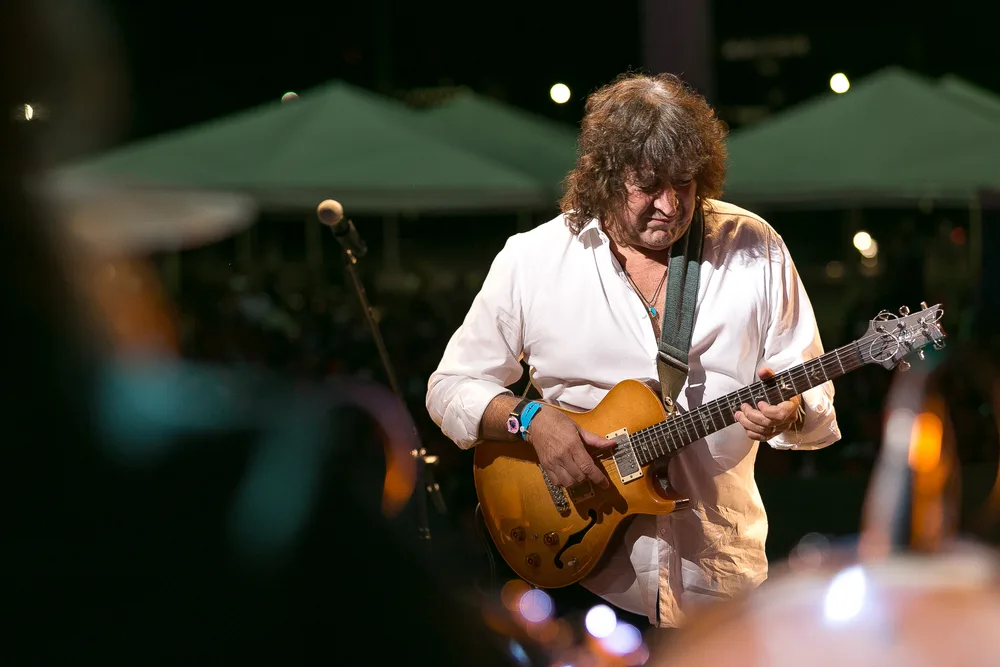
Toninho Horta playing an amber archtop electric guitar on an outdoor night stage, December 10, 2014. He is alone in frame, in an open white shirt, head down over the fretboard, with a vocal mic and lit patio canopies behind him. Neither the file page nor the EXIF names a venue, so none is claimed here. CC BY-SA 4.0 (own work, {{self|cc-by-sa-4.0}}, by Commons user and photographer Diego Baravelli) — Wikimedia Commons - https://commons.wikimedia.org/wiki/File:Toninho_Horta_by_Diego_Baravelli.jpg

Antonio Mauricio Horta de Melo was born in Belo Horizonte on December 2, 1948, into a family that had music in it three generations deep. His grandfather, Maestro Joao Horta, wrote sacred and popular music in Minas Gerais. His mother Geralda played the bandolim, the Brazilian mandolin, and gave him his first lessons. His father played violin. His older brother Paulo worked as a professional contrabassist and brought home the American jazz records of the 1950s and 1960s that shaped what Toninho would later do with a chord. His first documented appearance in the recording industry is not as a player at all: the 1964 Polydor LP O Melhor da Noite, by the vibraphonist Aecio Flavio and his group, carries a song on its fourth track called "Flor Que Cheira a Saudade," credited to Toninho Horta and Gilda Horta, his sister. He was fifteen. His brother Paulo is the contrabassist on the same record.
He surfaced publicly as a composer at the II Festival Internacional da Cancao in Rio in 1967, and he met Milton Nascimento when he was fourteen, the friendship that organized the next fifty years of his working life. His first credit on a Nascimento record is precise and small: on Nascimento's self-titled 1969 Odeon album (MOFB 3592) he appears on exactly one track, "Aqui, Oh!", where he sings and is the composer and plays nothing. He moved to Rio de Janeiro in 1970, joined Elis Regina's band, and fell in with A Tribo, the short-lived group he shared with Joyce, Nelson Angelo, Novelli and Nana Vasconcelos, which cut the Odeon single Tapinha in 1970 and contributed to the Odeon various-artists LP Posicoes.
What made his name was Clube da Esquina, the 1972 Odeon double album credited to Milton Nascimento and Lo Borges. Horta has no album-level credit on it at all. He has sixteen track-level credits, spread across all four sides, on five different instruments: electric guitar, acoustic guitar, bass, percussion and backing vocals. On side one he plays the electric guitar solo on "O Trem Azul." That scattered, utility-player shape is exactly what a Clube da Esquina session was, and it is why his role in the record is so often described vaguely. Over the decade that followed he did the same job on a run of Nascimento albums, and on each of them the credit that matters is one he wrote himself: on Minas (EMI, 1975) he plays acoustic guitar and piano, sings, arranges, and is the composer of "Beijo Partido"; on Geraes (EMI, 1976) he plays electric piano and organ, orchestrates, and wrote "Viver de Amor"; on Clube da Esquina 2 (EMI, 1978) he plays acoustic guitar, electric guitar and piano, sings, orchestrates and conducts, and wrote "Dona Olimpia (Your Moon)."
One session in that stretch changed what happened to him afterward. In January 1977 A&M issued Milton (SP-4611), recorded at Shangri-La Studios in Malibu and The Village Recorder in Los Angeles, with a band of Milton Nascimento, Toninho Horta on twelve-string and electric guitar, Wayne Shorter on soprano and tenor saxophone, Herbie Hancock on piano, Raul de Souza on trombone, Hugo Fattoruso on piano and organ, Novelli on bass and Robertinho Silva on drums. The Wayne Shorter and Herbie Hancock associations that turn up in every biography of Horta come from that one album, and the sources that mention them rarely say so. American work followed on the same footing: guitar across most of Airto Moreira's Promises of the Sun (Arista, 1976), a single track on Flora Purim's Nothing Will Be As It Was... Tomorrow (Warner Bros., 1977), and three tracks on The Manhattan Transfer's Brasil (Atlantic, 1987).
His own leader catalog started late and then went abroad. Terra dos Passaros, recorded piecemeal between July 1976 and September 1979 and issued by EMI in 1980, and the self-titled Toninho Horta on EMI-Odeon the same year, are the two Brazilian records his reputation at home rests on. The second of them carries a line in Portuguese on the sleeve reading that Pat Metheny appears courtesy of ECM Records; Metheny plays guitar on two of its tracks. That connection carried Horta into the American jazz industry. Verve Forecast, PolyGram's jazz imprint, released Diamond Land in 1988 with liner notes by Metheny, Moonstone in 1989 with Metheny playing on it alongside Randy Brecker, Eliane Elias, Mark Egan, Danny Gottlieb and Nana Vasconcelos, and Once I Loved in 1992, a trio record with Gary Peacock on acoustic bass and Billy Higgins on drums, produced by Eliane Elias. He moved to New York around the end of the 1980s and stayed for most of the decade, cutting Durango Kid (1993) and Durango Kid 2 (1995) for the American independent Big World and Foot on the Road (1994) for PolyGram.
The later work went back to Brazil and to Japan. From Ton to Tom, his Antonio Carlos Jobim tribute, was recorded in Belo Horizonte and Rio in 1996 and 1998 and at Avatar Studios in New York in April, June and July 1998, with Gary Peacock, Bob Mintzer, David Kikoski and Gal Costa among the players; it first appeared in Spain in 1999, in Brazil and Japan in 2000, and was reissued by Resonance in the United States in 2008 retitled To Jobim With Love. He founded his own Minas Records, made duo and partnership records with the Italian guitarists Antonio Onorato and Stefano Silvestri, with the flautist Nicola Stilo, with Joyce, with Alaide Costa and with the Polish singer Dorota Miskiewicz, and in 2019 released the double album Belo Horizonte with his Orquestra Fantasma, one disc of older songs and one of new ones, marking fifty years of work. It won the 2020 Latin Grammy for Melhor Album de Musica Popular Brasileira (Best MPB Album), beating finalists including Caetano Veloso, Ney Matogrosso, Zeca Baleiro and Elza Soares.
Horta's subject is the chord, not the line. He told interviewers he found most of his harmonic vocabulary by himself, moving voicings around on the fingerboard rather than working from theory, and the result is a set of extended and altered shapes that belong to post-bop harmony rather than to the standard bossa nova grammar, laid over Minas Gerais melody and a guitar tone that is soft and unhurried even at speed. He came up hearing Jobim, Baden Powell and Joao Gilberto at home and Stan Getz, Chet Baker, Ella Fitzgerald and the Beatles with his friends, and he has said he picked up the electric guitar at fifteen after hearing Wes Montgomery, Barney Kessel and Tal Farlow. Pat Metheny, who wrote the liner notes for Diamond Land and played on two of Horta's albums, has called him one of the world's great composers on nylon-string guitar and, in the line most often quoted, "the Herbie Hancock of bossa nova guitarists." His songs travel further than his records do: Claudio Roditi cut one of them on Bons Amigos in 2011, Duduka Da Fonseca's trio devoted a whole 2011 Zoho album, Plays Toninho Horta, to his compositions, and "Beijo Partido," "Aquelas Coisas Todas" and "Diana" have become standards among Brazilian and American players alike. Rolling Stone Brasil placed him among the thirty greatest Brazilian guitar icons in 2012, and Legacy/Columbia included him in the 2005 anthology Progressions: 100 Years of Jazz Guitar.
- Clube da Esquina (1972, Odeon) - not his record, but the one that made him: credited to Milton Nascimento and Lo Borges, with Horta playing electric guitar, acoustic guitar, bass, percussion and backing vocals across sixteen track-level credits on a double LP, including the electric guitar solo on "O Trem Azul."
- Terra dos Passaros (1980, EMI) - his first album under his own name, assembled from sessions running July 1976 to September 1979 and produced by Horta with Ronaldo Bastos. Spotify - Terra dos Passaros Listen
- Toninho Horta (1980, EMI-Odeon) - the record that reached American musicians, with Pat Metheny guesting on two tracks courtesy of ECM, alongside Wagner Tiso, Lo Borges and Raul de Souza. Spotify - Toninho Horta Listen
- Diamond Land (1988, Verve Forecast) - his American debut, produced and arranged by Horta with liner notes by Pat Metheny and Wayne Shorter among the guests. Not found on Spotify.
- Moonstone (1989, Verve Forecast) - the fullest cross-section of his New York circle: Pat Metheny on guitar, Eliane Elias on piano, Randy Brecker on flugelhorn, Mark Egan and Steve Rodby on bass, Danny Gottlieb on drums, Nana Vasconcelos and Robertinho Silva on percussion. Spotify - Moonstone Listen
- Once I Loved (1992, Verve) - a stripped guitar trio with Gary Peacock and Billy Higgins, produced by Eliane Elias, and the clearest recorded statement of his harmonic approach. Not found on Spotify.
- From Ton to Tom (1999, DiscMedi Blau; reissued 2008 as To Jobim With Love, Resonance) - his Antonio Carlos Jobim tribute, cut in Brazil and at Avatar Studios in New York with Gary Peacock, Bob Mintzer, David Kikoski and Gal Costa. Spotify - From Ton to Tom: Tribute to Tom Jobim / Spotify - To Jobim with Love Listen
- Belo Horizonte (2019, Think! Records / Minas Records) - the fiftieth-anniversary double album with his Orquestra Fantasma, winner of the 2020 Latin Grammy for Best MPB Album. Spotify - Belo Horizonte Listen
Toninho Horta: Full Discography
Identity confirmed via the live Discogs API: artist 83766 ("Toninho Horta," realname Antonio Mauricio Horta de Melo, born December 2, 1948 in Belo Horizonte, MG). That record holds 623 releases: 35 filed as Main (leader or co-leader), 486 as sideman Appearances, 76 as track-level Appearances, 14 as Unofficial Releases, 8 as Producer, 2 as Co-producer and 2 as Mixed By. The leader table below is complete for the leader and co-leader catalog as Discogs holds it; the sideman table is explicitly a representative set, not an inventory, because 486 sideman credits across fifty-five years of Brazilian recording cannot be itemized usefully here.
Three cautions that shaped this file. First, credits were read off individual release pages, never from the artist index, because Horta is a heavily covered composer and his index carries composer-only entries filed as appearances; two of them are identified below. Second, group entities were queried separately, which surfaced one release (Tapinha) invisible from the personal index and disproved a fourth-group membership Discogs asserts. Third, several of Horta's most important albums carry no musician credit block on any Discogs pressing, so personnel for those rows comes from the Slipcue Brazilian Music Guide and is marked as such rather than left blank or invented. Where a detail could not be confirmed it says so.
The Buy column is always a plain hyphen: no affiliate programme is set up for this site yet, and no Amazon links are invented.
As Leader / Co-Leader
| Album Title | Recording Date(s) | Release Date | Label | Catalog Number | Format(s) | Personnel | Role | Reissue History | Spotify | Buy | Notes |
|---|---|---|---|---|---|---|---|---|---|---|---|
| Tapinha | Not confirmed | 1970 | Odeon | 7B-447 | Vinyl, 7-inch single | Credit block near-empty: Joyce (featuring, uncredited), Nelson Angelo (written-by); the pressing does not name the players | Member of A Tribo (with Joyce, Nelson Angelo, Novelli, Nana Vasconcelos, Nene) | None found | Not found on Spotify | - | Filed on Discogs under the group entity Tribo (artist 1717321) and invisible from Horta's personal artist index. Portuguese Wikipedia independently confirms his membership in A Tribo. The group also has tracks on the Odeon various-artists LP Posicoes |
| Beto Guedes, Danilo Caymmi, Novelli, Toninho Horta | Not confirmed | 1973 | Odeon | SMOFB 3777 | Vinyl, LP, Album | Four co-billed leaders: Beto Guedes, Danilo Caymmi, Novelli, Toninho Horta. Production credits only on the pressing; no instrument breakdown | Co-leader (one of four) | None found | Not found on Spotify | - | The pressing carries a "Toninho (7)" as recording technician, a different person from Horta despite Horta's Discogs name variations including the bare "Toninho." Credits for Danilo Caymmi (B5) appear only on the centre label |
| Terra dos Passaros | Recorded between July 1976 and September 1979 (stated on the sleeve in Portuguese) | 1980 | EMI | 31C 064 422855 | Vinyl, LP, Album | Produced by Toninho Horta and Ronaldo Bastos; Horta also mixed and shot photographs for it. The 1980 pressing carries no musician credit block, only production, engineering and artwork | Leader | 1984 (Not On Label, TP 4/001); 1995 CD, Warner Music Brasil M450998558-2, remastered by Alberto Ranellucci; 2008 CD, Universal Music / Dubas / Minas Records 60251764215, remastered by Luiz Tornaghi with new liner notes by Horta; 2021 Japan, Universal UICY-79602 | Spotify - Terra dos Passaros | - | His first album under his own name. English Wikipedia calls it his US release of 1990 on Capitol; that is the other 1980 album (see next row) and the label was World Pacific, not Capitol |
| Toninho Horta | Not confirmed | 1980 | EMI (EMI-Odeon Brasil) | 31C 064 422 881 | Vinyl, LP, Album | Pat Metheny (guitar, tracks 5 and 10); Horta arranged and conducted, wrote the music for nine of ten tracks, and co-produced. Wagner Tiso arranged and conducted track B3. Slipcue additionally names Lo Borges, Roberto Ribeiro, Jose Roberto Bertrami, Paulo Braga, Raul de Souza, Nivaldo Ornelas and Wagner Tiso as players; the pressing itself carries no instrument block for them. Lyrics by Fernando Brant, Ronaldo Bastos, Murilo Antunes and Horta | Leader | 1989 EMI LP repress; 1990 US CD, World Pacific Records CDP 7 93865 2 and cassette B4 93865; 1990 Brazil EMI 364 793865 2; 2002, 2008 and 2010 Brazilian EMI remasters; 2003 and 2014 Japanese EMI reissues (TOCP-67175, UICY-76406) | Spotify - Toninho Horta | - | The sleeve carries a note in Portuguese reading "Pat Metheny gentilmente cedido por ECM Records." The Metheny credit is track-scoped to 5 and 10, printed that way on the 1990 World Pacific CD; it is not an album-wide guest slot |
| Diamond Land | Not confirmed | 1988 | Verve Forecast (PolyGram) | 835 183-1 (LP), 835 183-2 (CD), 835 183-4 (cassette) | Vinyl LP; CD; Cassette | No Discogs pressing carries a musician credit block. The pressing names only Toninho Horta (producer, arranger), Pat Metheny (liner notes) and two mastering engineers. Slipcue names Wayne Shorter, Nivaldo Ornelas, Robertinho Silva, Joyce (vocals), Paula Morelenbaum and Jaques Morelenbaum (cello) | Leader | 1988 Brazil, Netherlands, Germany and US pressings; 1992 Japan (POCJ-2085); 2008 Japan remaster (PROA-186); 2021 Japan limited reissue (UCCU-8070) | Not found on Spotify | - | His American debut. Discogs is silent on personnel here, which is a gap in the source, not evidence the album had no band. Slipcue's list is the best available and is marked as unconfirmed against the object |
| Moonstone | Not confirmed | 1989 (Apple's track-level metadata gives September 19, 1989) | Verve Forecast (PolyGram) | 839 734-1 (LP), 839 734-2 (CD), 839 734-4 (cassette) | Vinyl LP; CD; Cassette | Toninho Horta (guitar, vocals, co-producer), Pat Metheny (guitar), Eliane Elias (piano), Randy Brecker (flugelhorn), Billy Drewes (alto and soprano saxophone), Mark Egan / Steve Rodby / Luizao Maia (bass), Danny Gottlieb / Paulinho Braga (drums), Nana Vasconcelos / Robertinho Silva / Armando Marcal / Steve Thornton (percussion), Onaje Allan Gumbs / Russell Ferrante / Willa Bassen (keyboards), Rudi Berger (violin), Boca Livre (choir); produced by Ricardo Silveira, who also arranged | Leader | 1989 US, UK, German pressings; 1990 Brazilian LP and CD; 1998 Spanish reissues; 2008 Japan remaster (PROA-187); 2021 Japan limited reissue (UCCU-8071) | Spotify - Moonstone | - | The personnel block appears only on the 2008 Japanese remaster, not on any Western pressing. The title track is billed on streaming services as featuring Pat Metheny |
| Concerto Planeta Terra | Project dated 1989 by Portuguese Wikipedia | 1990 | IBM Brasil | 803.778/779 | 2 x Vinyl, LP, Album | Co-billed to Nivaldo Ornelas, Nelson Ayres, Marcio Montarroyos and Toninho Horta | Co-leader (one of four) | None found | Not found on Spotify | - | A corporate-sponsored project with the Orquestra Sinfonica Jovem de Campinas. Year conflict: Slipcue and Portuguese Wikipedia date it 1989, the pressing 1990. Treated as recorded 1989, issued 1990 |
| Once I Loved | Not confirmed | 1992 | Verve Records (PolyGram) | 513 561-2 (Germany), 314 513 561-4 (US cassette), 513561 (1993 US CD) | CD; Cassette | Toninho Horta (acoustic guitar, electric guitar, lead vocals), Gary Peacock (acoustic bass), Billy Higgins (drums); produced by Eliane Elias | Leader | 2008 Japan remaster (PROA-188); 2021 Japan limited reissue (UCCU-8080) | Not found on Spotify | - | Discogs's master record dates this 1993 and is wrong. The earliest pressings, German CD 513 561-2 and US cassette 314 513 561-4, are both 1992, which is also the year both Wikipedias give. Note the credit block gives Eliane Elias as producer only, with no playing credit |
| Durango Kid | Not confirmed | 1993 | Big World Music | BW2012 | CD, Album | Empty credit block on the pressing | Leader | None found | Not found on Spotify | - | |
| Foot on the Road | Not confirmed | 1994 | PolyGram / Verve Forecast | 523 844-2 | CD, Album | Empty credit block on the pressing | Leader | Brazilian reissue pressing carries all three Verve-group imprints | Not found on Spotify | - | |
| Durango Kid 2 | Not confirmed | 1995 | Big World Music | BW2014 | CD, Album | Toninho Horta (guitar, vocals); produced and mixed by Neil Weiss; engineered by Tom Swift | Leader | None found | Not found on Spotify | - | Discogs files the pressing as Brazilian; the label is American |
| Sem Voce | Not confirmed | November 25, 1995 | Omagatoki | SC-3147 | CD, Album, Stereo | Joyce and Toninho Horta, co-billed | Co-leader (with Joyce) | 2007 / 2008 Brazilian reissue on Biscoito Fino | Not found on Spotify | - | A programme of Antonio Carlos Jobim songs. Portuguese Wikipedia names the label as Shinsei-Do; the pressing says Omagatoki |
| From Belo to Seoul | Not confirmed | 1997 | Truspace Records | TJ2010 | CD, Album | Jack Lee with Toninho Horta, co-billed. Empty credit block | Co-leader (with Jack Lee) | 2001 Brazilian issue on Minas Records | Not found on Spotify | - | |
| Serenade | Recorded live in Seoul, Korea, July 4, 5 and 6, 1995, except "Arirang," recorded June 9, 1997 at Truspace Studio, NYC | 1997 | Truspace Records | TSJD 9705 | CD, Album, Stereo | Toninho Horta (acoustic guitar, voice); produced by Jack Lee and Toninho Horta | Leader | Aqui-Oh! Records issue in Brazil | Not found on Spotify | - | The recording and release dates are printed on the object, two years apart, and are the clearest example in this catalog of the recording-year-for-release-year trap |
| No Circo Voador | Not confirmed | 1997 | Dubas Musica / WEA | 063019987-2 | CD, Album | Flavio Venturini and Toninho Horta, co-billed | Co-leader (with Flavio Venturini) | None found | Not found on Spotify | - | Live at the Circo Voador, Rio de Janeiro |
| Duets | Not confirmed | 1999 | Via Veneto Jazz | VVJ018 | CD | Toninho Horta and Nicola Stilo (flute), co-billed | Co-leader (with Nicola Stilo) | 2005 US issue on Adventure Music | Not found on Spotify | - | Portuguese Wikipedia gives the label as Millesuoni-RCA; the pressing says Via Veneto Jazz. Apple's catalog misspells Stilo as "Nicolo Stilo" |
| From Ton to Tom | Basic tracks Brazil, May 1996 (Polifonia Studio, Belo Horizonte) and May 1998 (Studio Joa, Rio); recorded and mixed at Avatar Studios, New York, April, June and July 1998 | 1999 (Spain); 2000 (Brazil and Japan); Japanese CD dated August 25, 2000 | DiscMedi Blau (Spain); Minas Records (Brazil); Videoarts Music (Japan) | DM 436-02; MR-001/00; VACM-1127 | CD, Album | Toninho Horta (acoustic and electric guitar, lead vocals, arranger, conductor, producer), Gary Peacock (acoustic bass), Bob Mintzer (tenor saxophone), David Kikoski (piano), Gal Costa (lead vocals, tracks 3, 8, 11), Paulinho Braga and Esdra Ferreira (drums), Manolo Badrena and Dede Sampaio (percussion), William Galison (harmonica), John Clark (French horn), Charles Pillow (oboe), Glenn Drewes (trumpet, flugelhorn), Keith O'Quinn (trombone), Andre Dequech (keyboards), plus a string orchestra including Mark Feldman and a backing-vocal choir made up largely of Horta family members | Leader | 2008 US reissue on Resonance Records (HCD-2004) retitled To Jobim With Love; an unofficial Russian pressing of the same reissue also exists | Spotify - From Ton to Tom: Tribute to Tom Jobim and Spotify - To Jobim with Love | - | The largest credit block in his catalog, 98 entries. Portuguese Wikipedia dates it 1998, which is the New York recording year, not a release year |
| Qualquer Cancao Chico Buarque | Not confirmed | 1999 | Warner Music Brasil | M996144-2 | CD, Album | Carlos Fernando and Toninho Horta, co-billed. Empty credit block | Co-leader (with Carlos Fernando) | 2004 Dubas Musica issue, retitled Qualquer Cancao: a Musica de Chico Buarque, dated September 20, 2004 by Apple | Spotify - Qualquer Cancao | - | A Chico Buarque songbook. Slipcue and Portuguese Wikipedia both date it 1994; the pressing says 1999 |
| Quadros Modernos | Not confirmed | 2001 | Minas Records | MR 002/01 | CD, Album | Toninho Horta, Juarez Moreira and Chiquito Braga, co-billed | Co-leader (one of three) | None found | Not found on Spotify | - | Chiquito Braga is the childhood friend who, with Horta's brother Paulo, first pushed him toward the guitar |
| Com o Pe no Forro | Not confirmed | 2004 | Minas Records | MR006/04 | CD, Album, Stereo | Toninho Horta (guitar, acoustic guitar, voice, arranger), Dominguinhos / Waldonys / Luizinho Calixto / Adelson Viana (accordion), Manasses (12-string acoustic guitar), Lena Horta (flute), Marcio Resende (tenor saxophone, flute), Claudio Faria (keyboards), Edson Sancho and Yuri Popoff (contrabass), Luizinho Duarte (drums, zabumba, pandeiro), Gilson Monteiro (zabumba), Nenem and Hoto Jr. (percussion) | Leader | None found | Not found on Spotify | - | A forro record, and the furthest his leader catalog moves from jazz |
| Solo Ao Vivo | Not confirmed | 2007 | Minas Records | MR007/07 | 2 x CD, Album, Stereo | Solo Toninho Horta | Leader | None found | Spotify - Solo (Ao Vivo) | - | Solo guitar and voice, live |
| Cape Horn | Not confirmed | 2007 | Porto das Canoas | PCN 003 | CD | Toninho Horta and Arismar do Espirito Santo, co-billed | Co-leader (with Arismar do Espirito Santo) | None found | Not found on Spotify | - | |
| In Vienna | Not confirmed | 2007 | PAO Records | PAO10400 | CD, Album | Empty credit block | Leader | None found | Not found on Spotify | - | Portuguese Wikipedia titles it Toninho in Vienna |
| Tonight | Not confirmed | 2008 | Adventure Music | AM1044 2 | CD, Album | Tom Lellis and Toninho Horta, co-billed | Co-leader (with Tom Lellis) | None found | Not found on Spotify | - | Apple dates the release July 15, 2008 |
| Harmonia e Vozes | Not confirmed | 2010 | Minas Records | MR010/10 | CD, Album, Stereo | 39-entry credit block on the pressing | Leader | None found | Not found on Spotify | - | |
| Minas-Tokyo | Not confirmed | December 12, 2012 | Dear Heart Inc. | DBCW-3000 | CD, Album, Stereo | Toninho Horta (guitar, vocals, producer, composer of eleven of twelve tracks), Nobie (vocals on tracks 4, 8, 12; Japanese lyrics on 4 and 8); produced by Shigeki Miyata and Horta | Leader | Brazilian issue on Minas Records | Not found on Spotify | - | Portuguese Wikipedia dates a Japanese Minas/Tokio to 2010 and the Brazilian issue to 2012; the pressing in hand is dated December 12, 2012 |
| No Horizonte de Napoli | Not confirmed | 2015 | Minas Records | MR 013/15 | CD | Stefano Silvestri and Toninho Horta, co-billed | Co-leader (with Stefano Silvestri) | None found | Not found on Spotify | - | Portuguese Wikipedia dates it 2014 and spells it No Horizonte di Napoli |
| From Napoli to Belo Horizonte | Not confirmed | 2015 (Apple gives November 11, 2013 for the digital issue) | Sud Music / Minas Records | SUD 008 | CD, Album | Toninho Horta and Antonio Onorato, co-billed | Co-leader (with Antonio Onorato) | None found | Spotify - From Napoli to Belo Horizonte | - | Date conflict, unresolved: Portuguese Wikipedia and Apple say 2013, the Discogs pressing says 2015. Both are recorded here rather than one being chosen |
| Alegria e Guardada em Cofres, Catedrais | Not confirmed | 2015 | Not On Label | ROCHA2015 | CD, Album | Alaide Costa and Toninho Horta, co-billed | Co-leader (with Alaide Costa) | None found | Not found on Spotify | - | Self-released |
| Em Casa Com Luiz Eca | Not confirmed | 2017 | Biscoito Fino | BF474-2 | CD, Album | Ten co-billed leaders: Dori Caymmi, Edu Lobo, Mauro Senise, Toninho Horta, Ze Renato, Ricardo Costa, Jurim Moreira, Itamar Assiere, Igor Eca, Fred Eca. Empty credit block | Co-leader (one of ten) | None found | Not found on Spotify | - | A tribute to the Tamba Trio pianist Luiz Eca |
| Belo Horizonte | Not confirmed | 2019 (Japanese CD dated September 25, 2019) | Think! Records (Japan); Minas Records (Brazil) | THCD560; AA0001000 | CD, Album, Stereo; CD, Limited Edition | Toninho Horta with Orquestra Fantasma. The pressing's note names Lena Horta, Yuri Popoff, Andre Dequech and Esdra "Nenem" Ferreira; there is no full credit block | Leader | Simultaneous Japanese and Brazilian pressings | Spotify - Belo Horizonte | - | Winner, 2020 Latin Grammy for Melhor Album de Musica Popular Brasileira (Best MPB Album). A double album marking fifty years of career: one disc, Belo, of established songs, one, Horizonte, of new ones |
| Toninho Horta no Estudio Showlivre (Ao Vivo) | Recorded live in the Showlivre studio | April 19, 2019 (Apple) | Showlivre | Not confirmed | Digital | Not confirmed | Leader | None found | Spotify - no Estudio Showlivre (Ao Vivo) | - | Not present in the Discogs artist index at all, found via the Apple and Spotify catalogs. A digital-only live session |
| Shinkansen | Not confirmed | October 28, 2020 | Sony Records International | SICP 6349 | CD, Album, Promo | The group Shinkansen: Toninho Horta, Marcos Suzano, Liminha, Jaques Morelenbaum | Member of Shinkansen | None found | Not found on Spotify | - | Filed on Discogs under the group entity Shinkansen (3), artist 9480145, and also visible on Horta's personal index. Portuguese Wikipedia lists this as "Japa (Shinkansen Group)" on Minas Records in 2010, a decade earlier than the pressing |
| Viva Eu: As Cancoes Brasileiras de Novelli | Not confirmed | 2020 (Apple gives May 25, 2020) | Encore Music | BD 1736 | CD, Album | Barbara Casini and Toninho Horta, co-billed | Co-leader (with Barbara Casini) | None found | Not found on Spotify | - | A programme of Novelli's songs, and a reunion with the bassist from A Tribo and the 1973 quartet album |
| Bons Amigos | Not confirmed | September 8, 2023 | Not On Label (self-released) | 5054197756405 | CD, Album | Toninho Horta and Dorota Miskiewicz, co-billed | Co-leader (with Dorota Miskiewicz) | 2025 LP issue | Not found on Spotify | - | Do not confuse with Claudio Roditi's Bons Amigos (Resonance, 2011), a different album twelve years earlier on which Horta appears only as a composer. Preceded by the single "Nuce, gwizdze sobie (Canto Canto)," August 29, 2023 |
| Cordas Mineiras | Not confirmed | Not confirmed | Blues Time Records | Not confirmed | CD, Album | Billed "Dudu Lima, Participacao Especial Toninho Horta" | Guest billing on a Dudu Lima release | None found | Not found on Spotify | - | Undated in the Discogs index; included for completeness because Discogs files it as Main |
Not included, and why. Portuguese Wikipedia lists a Live in Moscow (B&W Records, England, 1994) as a Horta leader album. It is not one. The object is Live in Moscow MOCKBA MCMXCII, 3 CD Collection (B&W Music BW039, 1994), a various-artists festival set on which the Toninho Horta Sextet has eight consecutive tracks on disc one plus three more on disc three, one of them billed to the William Galison and Toninho Horta Quintet. Discogs correctly files it as a track appearance. Portuguese Wikipedia also lists O Som Instrumental de Minas (Minas Records, 2001), Cuerdas del Sur (Minas Records, 2018) and Rudi Berger featuring Toninho Horta (Gramola, 2020); none appears in the Discogs artist index, and only the last is corroborated elsewhere, by Apple (Rudi Berger (feat. Toninho Horta), Gramola Records, February 12, 2021, copyright 2020).
As Sideman and Guest (selected major credits)
| Year | Project (Leader) | Title | Label | Catalog | Role | Notes |
|---|---|---|---|---|---|---|
| 1964 | Aecio Flavio e Seu Conjunto | O Melhor da Noite | Polydor | LPNG-4.087 | Composer only, track A4 | His earliest documented credit of any kind, at fifteen. "Flor Que Cheira a Saudade," co-written with his sister Gilda Horta. His brother Paulo Horta plays contrabass on the record. He does not play on it |
| 1969 | Milton Nascimento | Milton Nascimento | Odeon | MOFB 3592 | Vocals and composer, track B5 only | The track is "Aqui, Oh!" He sings and wrote it and plays nothing. Milton Nascimento's Odeon debut |
| 1972 | Lo Borges | Lo Borges | Odeon | Not confirmed | The "disco do tenis," the other pillar of the Clube da Esquina records | |
| 1972 | Milton Nascimento & Lo Borges | Clube da Esquina | Odeon | MOAB 6005/6 | Sixteen track-level credits, no album-level credit: electric guitar (A1, D5), acoustic guitar (A6), bass (A5, B1, D3, D4), percussion (A2, A4, C4, D1, D2), backing vocals (B2, B4), and backing vocals plus the electric guitar solo on A3 | Released March 1972. A3 is "O Trem Azul." The single most important record he appears on |
| 1972 | Arthur Verocai | Arthur Verocai | Continental | Not confirmed | ||
| 1973 | Gal Costa | India | Philips | Not confirmed | Portuguese-language sources say he was guitarist for the album and the tour | |
| 1974 | Milton Nascimento & Som Imaginario | Milagre dos Peixes (Gravado Ao Vivo) | EMI | XEMCB 7006 A/B | Guitar (album-level) | Recorded live with orchestra, conducted by Paulo Moura, orchestrated by Moura, Radames Gnattali and Wagner Tiso. This is a Nascimento credit, not Som Imaginario membership; see the note below the table |
| 1975 | Milton Nascimento | Minas | EMI | EMCB-7011 | Track-level, A3 only: acoustic guitar, piano, vocals, arranger, composer | A3 is "Beijo Partido," his best-known composition |
| 1975 | Joao Bosco | Caca a Raposa | RCA | Not confirmed | First of five Joao Bosco credits, 1975 to 2012 | |
| 1976 | Airto Moreira | Promises of the Sun | Arista | ARL 33029 | Track-level: electric guitar on A2, A3, A4, B1 and B4; twelve-string and electric guitar on B2 and B3 | Seven of the album's eight tracks, the heaviest sideman load in his catalog |
| 1976 | Milton Nascimento | Geraes | EMI | XEMCB 7020 | Track-level: electric guitar (A1), percussion (A2), guitar effects (A4), electric piano and organ plus orchestration plus composer credit (B3), backing vocals (B4), choir (B5) | B3 is "Viver de Amor" |
| 1977 | Milton Nascimento | Milton | A&M | SP-4611 | Twelve-string and electric guitar (album-level) | Released January 1977, recorded at Shangri-La Studios, Malibu, and The Village Recorder, Los Angeles, produced by Rob Fraboni. Band: Nascimento, Horta, Wayne Shorter (soprano and tenor saxophone), Herbie Hancock (piano), Raul de Souza (trombone), Hugo Fattoruso (piano, organ), Novelli (bass), Robertinho Silva (drums), Laudir de Oliveira (percussion). The whole documented basis for the Shorter and Hancock associations |
| 1977 | Flora Purim | Nothing Will Be As It Was... Tomorrow | Warner Bros. | BS 2985 | Electric guitar, track B2 only | Recorded and mixed at Paramount Recording Studios. Far thinner than the reference sources imply |
| 1978 | Milton Nascimento | Clube da Esquina 2 | EMI | 31C 164 422831/2 | Twelve track-level credits, no album-level credit, including C4 where he plays acoustic guitar, electric guitar and piano, sings, orchestrates and conducts, and is the composer | C4 is "Dona Olimpia (Your Moon)" |
| 1979 | Sergio Mendes | Horizonte Aberto | Elektra | Not confirmed | First of three Sergio Mendes credits, 1979 to 2014 | |
| 1980 | Milton Nascimento | Sentinela | Ariola | Not confirmed | ||
| 1985 | Maria Bethania | A Beira e o Mar | Philips | Appearance, and Mixed By | One of five Maria Bethania credits, 1983 to 1990 | |
| 1987 | The Manhattan Transfer | Brasil | Atlantic | 81803-1 | Guitar, tracks A4, B2 and B4 | Track-scoped, three tracks |
| 1989 | Flora Purim & Airto | The Sun Is Out | Crossover | Not confirmed | ||
| 1993 | The Monday Night Orchestra | Playing the Music of Gil Evans Live at Sweet Basil | Apollon / Sweet Basil | APCZ 8002 | Guest, acoustic guitar | Released September 21, 1993; recorded live at Sweet Basil, New York, March 19 and 20, 1993. Gil Evans had passed away on March 20, 1988. This is a posthumous tribute band, not a Gil Evans session, and it is the only basis for the "worked with Gil Evans" claim in Portuguese Wikipedia. A second volume followed in 1994 |
| 1994 | Various (Toninho Horta Sextet) | Live in Moscow MOCKBA MCMXCII 3 CD Collection | B&W Music | BW039 | Eight tracks on disc 1, three on disc 3 | Frequently miscatalogued as a Horta leader album. It is a various-artists festival set |
| 1997 | Lisa Ono | Essencia | Toshiba-EMI | Appearance and Co-producer | One of two Lisa Ono records he worked on; he produced Boas Festas 2 in 2004 | |
| 2009 | George Benson | Songs and Stories | Concord / Monster | 0888072303645 | Acoustic guitar, tracks 1 and 12; associate producer, tracks 1 and 12 | Brazilian material recorded at Mega Studios, Sao Paulo |
| 2011 | Yotam Silberstein | Brasil | Jazz Legacy Productions | 1101016 | Guest, acoustic guitar, tracks 6 and 11 | Tracks 6 and 11 are "Nocturno" and "Samba Da Minha Terra." Fellow track-scoped guests: Roy Hargrove (flugelhorn, tracks 3, 5, 6, 9), Paquito D'Rivera (clarinet, tracks 4, 8), Claudio Roditi (flugelhorn, track 8), Sharel Cassity (alto flute, clarinet, tracks 3, 5, 6, 8, 9). Core band: Silberstein (guitar, bandolim, arranger), David Feldman (piano), John Lee (acoustic bass guitar, and also producer, engineer and liner notes), Vanderlei Pereira (drums, percussion) |
| 2011 | Rufus Reid & Out Front | Hues of a Different Blue | Motema Music | MTM 58 | Guitar, tracks 3, 4 and 11; composer of track 4 | Recorded at Bennett Studios, Englewood, New Jersey, September 26 and 27, 2010; released April 12, 2011. Track 4 is "Francisca." Also featuring Bobby Watson and Freddie Hendrix. Absent from both Wikipedia articles |
| 2012 | Manuel Rocheman | Cafe & Alegria | Naive | Featured guest | ||
| 2017 | Hermeto Pascoal & Grupo Vice Versa | Viajando com o Som (The Lost '76 Vice-Versa Studio Session) | Far Out | Appearance | A 1976 session issued forty-one years later | |
| 2025 | Ricardo Bacelar, Flora Purim, Airto Moreira | Aqui, Oh! | Jasmin Music | Appearance | Named for the song Horta wrote and sang on Milton Nascimento's 1969 debut | |
| 2026 | Toninho Horta | From Ton To Tom (feat. Ron Carter & Nanny Assis) | Mandacaru Records | Billed leader, with Ron Carter and Nanny Assis | Single, released August 20, 2026, filed by Apple under Jazz. Not yet on Discogs; the billing here is Apple's and has not been checked against a physical object |
Composer-only credits that are filed as appearances, and are not playing credits
Two entries in Horta's Discogs artist index would read as sessions and are not. Both were opened individually.
| Year | Project (Leader) | Title | Label | Catalog | What the pressing actually says |
|---|---|---|---|---|---|
| 2011 | Claudio Roditi | Bons Amigos | Resonance Records | HCD 2010 | No album-level Horta credit. One track-level credit: "Written-By" on track 5. Recorded April 18 to 20, 2011. Horta does not play on this record |
| 2011 | Duduka Da Fonseca Trio | Plays Toninho Horta | Zoho | ZM 201115 | The entire credit block is one line: "Toninho Horta [Written-By]." A trio album of Horta compositions on which Horta does not appear |
Group entities: what was checked and what it changed
Horta's Discogs record lists three group memberships and all three were queried as separate artist records, because group billings are the most repeated trap in a Discogs index.
- Tribo (1717321) is real and holds Tapinha (Odeon 7B-447, 1970), which does not appear on his personal index. It is in the leader table above.
- Shinkansen (3) (9480145) is real and its single album is visible from both directions. It is in the leader table above.
- Som Imaginario (300160) lists Horta as a member and no pressing supports it. The band's 1970 debut (Odeon MOFB 3658) names its six players and Horta is not among them; the 1971 album and the 1997 compilation Portfolio carry no musician credits at all; and Matanca do Porco (Odeon SMOFB-3782, 1973) carries thirteen credits, none of them Horta, but one of them a "Toninho (7)" as recording technician, a different person. No Som Imaginario album is in this discography. The two Nascimento-plus-Som-Imaginario titles that are genuinely his (Milagre dos Peixes (Gravado Ao Vivo), 1974; Norwegian Wood, 1975) are filed above as Nascimento sideman work, which is what they are.
- Milton Nascimento - the central relationship of his career, from meeting him at fourteen through Clube da Esquina (1972), Milagre dos Peixes (Gravado Ao Vivo) (1974), Minas (1975), Geraes (1976), Milton (1977), Clube da Esquina 2 (1978) and Sentinela (1980).
- Pat Metheny - guest guitarist on two tracks of Toninho Horta (1980) and on Moonstone (1989), liner-note author for Diamond Land (1988), and Horta's most persistent public advocate in the United States.
- Wayne Shorter and Herbie Hancock - fellow sidemen with Horta on Milton Nascimento's Milton (A&M SP-4611, January 1977), recorded in Malibu and Los Angeles. This one album is the whole documented basis of both associations.
- Gary Peacock - bassist on Once I Loved (1992) and again on From Ton to Tom (recorded 1996 to 1998).
- Billy Higgins - drummer on Once I Loved (1992).
- Eliane Elias - producer of Once I Loved (1992) and pianist on Moonstone (1989).
- Airto Moreira and Flora Purim - Horta played electric and twelve-string guitar on seven of the eight tracks of Airto's Promises of the Sun (Arista, 1976), one track of Purim's Nothing Will Be As It Was... Tomorrow (Warner Bros., 1977), and their joint The Sun Is Out (1989).
- Joyce - bandmate in A Tribo around 1970, singer on Diamond Land, and his co-leader on the Jobim programme Sem Voce (1995).
- George Benson - acoustic guitar and associate producer on tracks 1 and 12 of Benson's Songs and Stories (Concord / Monster, 2009), with the Brazilian material cut at Mega Studios in Sao Paulo.
- Randy Brecker, Mark Egan, Danny Gottlieb and Steve Rodby - the American half of the Moonstone band.
- Rufus Reid - Horta plays guitar on three tracks of Reid's Hues of a Different Blue (Motema, 2011), recorded at Bennett Studios, Englewood, New Jersey, on September 26 and 27, 2010, and wrote one of them, "Francisca."
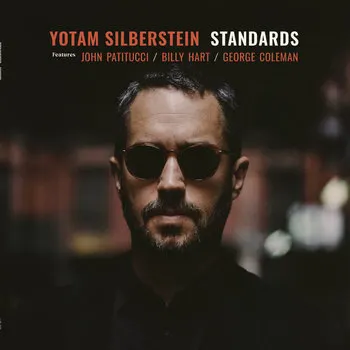
- Yotam Silberstein - guest acoustic guitarist on tracks 6 and 11 of Silberstein's Brasil (Jazz Legacy Productions, 2011).
- Roy Hargrove and Paquito D'Rivera - fellow track-scoped guests on that same Silberstein album. Hargrove's tracks and Horta's overlap on exactly one, "Nocturno"; D'Rivera's do not overlap with Horta's at all.
- Ron Carter - billed alongside Horta and Nanny Assis on the single "From Ton To Tom," issued by Mandacaru Records on August 20, 2026.

- Wikipedia: Toninho Horta (English)
- Wikipedia: Toninho Horta (Portuguese) (in Portuguese; the fuller of the two articles, and the source for the family detail and the A Tribo period)
- Discogs: Toninho Horta, artist 83766, plus individual release pages read one at a time for every credit asserted above
- Discogs: Yotam Silberstein, Brasil, release 10089222
- WOMEX: Toninho Horta, Minas Gerais Music profile
- Slipcue Brazilian Music Guide: Toninho Horta discography (the source for the Diamond Land and 1980 self-titled personnel, which no Discogs pressing carries)
- Estado de Minas / uai.com.br: Toninho Horta e Orquestra Fantasma vencem o Grammy Latino 2020 (in Portuguese; the source for the exact Latin Grammy category)
- EBC Radios: Belo Horizonte, ganhador do Grammy Latino de 2020 (in Portuguese)
- Apple iTunes Search API, used for release dates and for the 2026 Mandacaru single
- Scott Yanow, The Great Jazz Guitarists: The Ultimate Guide (Backbeat, 2013), cited via English Wikipedia