 JAZZPROFILES lives in the music 2,555 Jazz Artists fully Profiled!
Terje Rypdal
Last updated November 10, 2026
Listen on Spotify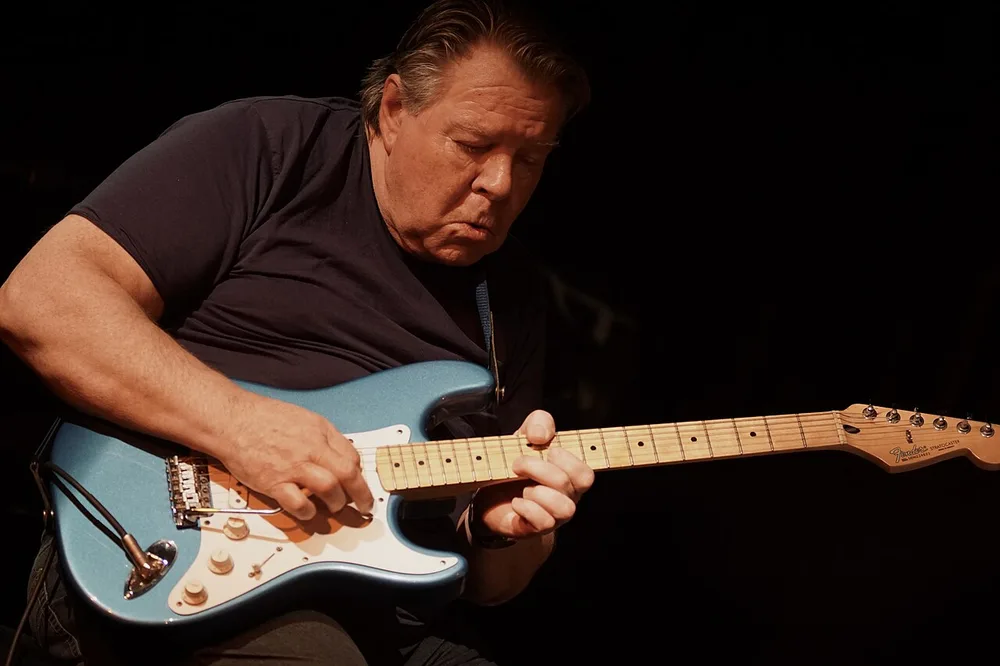
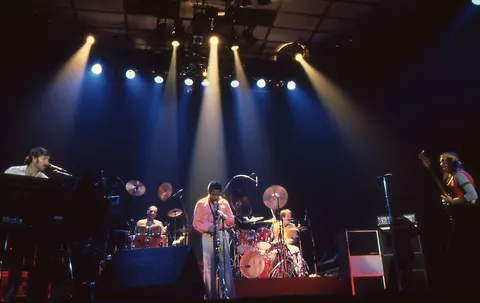
Terje Rypdal performing with his trio at Paradox, Tilburg, the Netherlands, January 23, 2015, photographed by Dirk Neven CC BY 2.0 — Wikimedia Commons — https://commons.wikimedia.org/wiki/File:Terje_Rypdal_Trio,_23_januari_2015_Paradox_Tilburg_-_Terje_Rypdal_(51293108882).jpg

Terje Rypdal was born on August 23, 1947, in Oslo, the son of a military-band conductor and clarinetist. He began on piano at five, added trumpet at eight, and at about thirteen turned to the guitar, which he taught himself. From 1962 to 1967 he played in the Vanguards, a Norwegian instrumental rock band modeled on the Shadows and the Ventures, where he was a Hank Marvin-influenced rock guitarist. Hearing Jimi Hendrix changed his direction, and in late 1967 he started the psychedelic band Dream, which made one album for Polydor, Get Dreamy, and where he met Jan Garbarek and Jon Christensen. Under his own name he made Bleak House for Polydor in Norway in 1968, a first mix of rock, classical writing and jazz, and in 1968 he turned toward jazz in earnest, joining Garbarek's group and later the sextet and orchestra of the composer George Russell.
His first international notice came at the 1969 Free Jazz Meeting in Baden-Baden, where he played in a large band conducted by trumpeter Lester Bowie and led a group of his own; both are heard on the MPS album Gittin' to Know Y'All. He studied musicology at the University of Oslo and attended the Oslo conservatory from 1970 to 1972, working with the composers Finn Mortensen and Russell, and while studying he led the orchestra for the Norwegian production of the musical Hair. He was the guitarist on Garbarek's ECM debut Afric Pepperbird (recorded September 1970) and on Sart (April 1971), and he made his own ECM debut, Terje Rypdal, on August 12 and 13, 1971, with Garbarek, pianist Bobo Stenson, bassist Arild Andersen, Jon Christensen, oboist Ekkehard Fintl and his then wife, the singer Inger Lise Rypdal. Manfred Eicher, the label's founder, produced it and most of what followed. His own albums for ECM in the next five years were What Comes After (recorded August 1973), Whenever I Seem to Be Far Away (1974, one side for a rhythm section and one for the Stuttgart radio orchestra), and the double album Odyssey (recorded August 1975), made with a touring quintet of trombonist Torbjørn Sunde, organist Brynjulf Blix, bassist Sveinung Hovensjø and drummer Svein Christiansen. Odyssey won the German record critics' prize, and the band toured widely, including in the United States. After the Rain (1976) was a quieter, largely solo studio record.
From 1977 he worked closely with the Danish trumpeter Palle Mikkelborg, who joined him on Waves (recorded September 1977) and on the trio album Descendre (recorded March 1979, with Jon Christensen). Between them came Terje Rypdal / Miroslav Vitous / Jack DeJohnette, recorded in June 1978, and a second trio set by the same three, To Be Continued (January 1981). After a long break for composing he returned with Eos (recorded May 1983) in duet with the cellist David Darling and then formed the trio he called the Chasers with bassist Bjørn Kjellemyr and drummer Audun Kleive: Chaser (1985), Blue (1987) and The Singles Collection (1989, with keyboardist Allan Dangerfield added). Two pieces from that period, "Mystery Man" and "Last Nite," were used in Michael Mann's film Heat (1995).
Alongside the jazz records he built a parallel career as a composer for orchestra, choir and chamber ensemble. His Symphony No. 1 was commissioned by Norwegian Television in 1975, and German Wikipedia counts six symphonies and two operas among his works. Undisonus / Ineo (released 1990), for violin and orchestra and for choir and chamber orchestra, was named work of the year by the Society of Norwegian Composers, and Q.E.D. (1993, with the Borealis Ensemble under Christian Eggen) followed. He then moved between the two worlds on ECM: the jazz-rooted If Mountains Could Sing (1995) and Skywards (1997, with Mikkelborg, violinist Terje Tønnesen, David Darling and two drummers, Jon Christensen and Paolo Vinaccia), then Double Concerto / 5th Symphony (2000) and Lux Aeterna (recorded July 19, 2000, a five-movement work for soprano, chamber ensemble, organ, trumpet and guitar). Along the way he recorded with John Surman and Karin Krog on Nordic Quartet (1995), with Ketil Bjørnstad and Darling on The Sea (1995) and The Sea II (1998), and with Markus Stockhausen on Karta (2000), and he made three duo albums with the Norwegian rock guitarist Ronni Le Tekrø starting in 1994.
Vossabrygg, recorded live at the Vossajazz festival on April 12, 2003 and released in 2006, brought a sextet with Mikkelborg, keyboardists Bugge Wesseltoft and Ståle Storløkken and his son Marius Rypdal on electronics. Crime Scene (recorded May 2009, released April 16, 2010) set a film-noir suite for his quartet and the Bergen Big Band, and Melodic Warrior (2013) paired two large works: the nine-movement title piece for electric guitar, the Hilliard Ensemble and the Bruckner Orchester Linz under Dennis Russell Davies, and And the Sky Was Coloured with Waterfalls and Angels with the Wrocław Symphony Orchestra. After seven years of composing and guesting on other people's records he returned to the studio for Conspiracy (ECM 2658, September 2020), his first studio recording in two decades, with Storløkken, drummer Pål Thowsen and bassist Endre Hareide Hallre. In October 2024 the Norwegian label Rune Grammofon issued Catching Fire, a double album of a 2017 concert with the trio Elephant9.
He received the Spellemannprisen's special award in 1981, the Norwegian Jazz Forum's Buddy Prize in 1985, the jazz-category Gammleng Prize in 1990, the Spellemannprisen in the open class in 1995 for If Mountains Could Sing, and the Spellemannprisen honorary award in 2005. In 2012 he was inducted into the Rockheim Hall of Fame. He was married to the singer Inger Lise Andersen (Inger Lise Rypdal) from 1969 to 1985, and they had two children, including the electronic musician Marius; his son Jakob Rypdal, from his second marriage, is also a guitarist. As of 2013 he lived in Tresfjord, the village on the Norwegian west coast where his father's family came from.
Rypdal built a sound on the Fender Stratocaster: long sustained single notes shaped with a volume pedal and delay, and a distorted, rock-derived tone that he brought into European jazz. AllMusic's biography calls him the "tone poet of the Fender Stratocaster," and his gear as listed on Norwegian Wikipedia centers on a Stratocaster, Vox and Marshall amplifiers and a few effects pedals. His influences are unusually mixed: Hank Marvin's instrumental rock from his Vanguards years, Jimi Hendrix, the contemporary composer György Ligeti, and the large-form writing of George Russell, who taught him. The critic Michael Tucker described the result as rock and jazz phrasing joined to a rubato, color-driven approach to dynamics that often sounds closer to the classical world. His records divide into several strands: the electric fusion of Odyssey and the Chasers trilogy, the brooding trio and quartet music with Mikkelborg and Jon Christensen, the string-and-choir works for ECM, and the later ensemble pieces such as Vossabrygg, which AllMusic says drew on the band of Miles Davis's Bitches Brew and on early Weather Report. He sits at the overlap of jazz, art rock and contemporary classical music rather than inside any one of them, and the jazz community has treated him as one of its own: he won the Norwegian Jazz Forum's Buddy Prize in 1985 and the jazz Gammleng Prize in 1990, and English Wikipedia describes him as an important member of the Norwegian jazz community. Norwegian Wikipedia counts him among the best-known Norwegian jazz musicians abroad, alongside Jan Garbarek.
- Terje Rypdal (1971, ECM) - His ECM debut, recorded August 12 and 13, 1971, with Jan Garbarek, Bobo Stenson, Arild Andersen and Jon Christensen, setting free playing against rock energy and contemporary writing. Spotify - Terje Rypdal Listen
- Odyssey (1975, ECM) - A double album by his touring quintet and the record most often cited as the peak of his jazz-rock period; it won the German record critics' prize.
- Waves (1978, ECM) - The first album with Palle Mikkelborg, a quartet with Sveinung Hovensjø and Jon Christensen. Spotify - Waves Listen
- Terje Rypdal / Miroslav Vitous / Jack DeJohnette (1979, ECM) - A guitar trio recorded in June 1978 with the Czech bassist Miroslav Vitous and Jack DeJohnette, followed by To Be Continued in 1981. Spotify - Terje Rypdal / Miroslav Vitous / Jack DeJohnette Listen
- Chaser (1985, ECM) - The first record by his trio with bassist Bjørn Kjellemyr and drummer Audun Kleive, the start of a trilogy completed by Blue and The Singles Collection. Spotify - Chaser Listen
- Undisonus / Ineo (1990, ECM) - Two orchestral and choral works recorded in 1986 and 1987, named work of the year by the Society of Norwegian Composers. Spotify - Undisonus / Ineo Listen
- If Mountains Could Sing (1995, ECM) - A trio with Kjellemyr and Kleive joined by a string trio under Christian Eggen; it won the Spellemannprisen in the open class. Spotify - If Mountains Could Sing Listen
- Conspiracy (2020, ECM) - His first studio album in two decades, a groove-driven quartet with Ståle Storløkken on Hammond organ, Pål Thowsen and Endre Hareide Hallre.
Terje Rypdal: Full Discography
Terje Rypdal's leader catalogue is large and spread over several labels, so the table below is a curated selection of 29 releases rather than an exhaustive list: his own ECM albums, the main co-led and co-billed titles, his orchestral works and the later live records. Discogs artist ID 268962 holds about 280 entries, and the smaller entries tied to his bands (The Chasers, The Terje Rypdal Group, Terje Rypdal Odyssey, Terje Rypdal Trio, Terje Rypdals Orchestra, Dream and The Vanguards) were checked and hold mostly track appearances on compilations. Catalog numbers and formats are those of the earliest pressings listed on MusicBrainz and Wikipedia; recording dates come from Wikipedia, and where sources disagree on a year or number the Notes column says so. A cell reading Not confirmed means no source checked gave the detail.
As Leader / Co-Leader
| Album Title | Recording Date(s) | Release Date | Label | Catalog Number | Format(s) | Personnel | Role | Reissue History | Spotify | Buy | Notes |
|---|---|---|---|---|---|---|---|---|---|---|---|
| Bleak House | Not confirmed | 1968 | Polydor (Norway) | 184 189 | LP | Terje Rypdal (guitar); Jan Garbarek and Jon Christensen among the players per German Wikipedia; full lineup not confirmed | Leader | Reissued on LP by Karussell (1974) and later on CD and vinyl; the pressing history is on Discogs master 79692 | Spotify - Bleak House | — | His first album under his own name, made before his ECM years. |
| Terje Rypdal | August 12-13, 1971 | 1971 | ECM | ECM 1016 ST | LP | Terje Rypdal (guitar, flute), Jan Garbarek (tenor saxophone, flute, clarinet), Ekkehard Fintl (oboe, English horn), Bobo Stenson (electric piano), Arild Andersen (double bass, bass guitar), Jon Christensen (percussion), Inger Lise Rypdal (vocals) | Leader | Later CD and digital editions; Discogs master 79704 | Spotify - Terje Rypdal | — | His ECM debut; produced by Manfred Eicher. |
| What Comes After | August 7-8, 1973 | 1974 | ECM | ECM 1031 ST | LP | Terje Rypdal (guitar, flute), Erik Niord Larsen (oboe, English horn), Barre Phillips (bass, piccolo bass), Sveinung Hovensjø (electric bass), Jon Christensen (percussion, organ) | Leader | Later CD and digital editions; Discogs master 302758 | Spotify - What Comes After | — | Wikipedia's discography list gives 1973; Discogs, MusicBrainz and the first pressing's catalog entry point to 1974. |
| Whenever I Seem to Be Far Away | 1974 | 1974 | ECM | ECM 1045 ST | LP | Side one (Oslo): Terje Rypdal (guitar), Odd Ulleberg (French horn), Pete Knutsen (mellotron, electric piano), Sveinung Hovensjø (electric bass), Jon Christensen (percussion). Side two (Ludwigsburg): Rypdal with the Südfunk Symphony Orchestra, conducted by Mladen Gutesha | Leader | Also issued digitally by ECM | Spotify - Whenever I Seem To Be Far Away | — | One side for a small group, one for orchestra. |
| Odyssey | August 1975 | 1975 | ECM | ECM 1067/68 ST | 2xLP | Terje Rypdal (guitar, mellotron, soprano saxophone), Torbjørn Sunde (trombone), Brynjulf Blix (organ), Sveinung Hovensjø (electric bass), Svein Christiansen (drums) | Leader | Reissued on CD by ECM (1988 and 1994); expanded as the 3-CD Odyssey: In Studio & In Concert (2012) | — | — | Won the German record critics' prize (German Wikipedia). |
| After the Rain | August 1976 | 1976 | ECM | ECM 1083 | LP | Terje Rypdal (guitars, synthesizer, piano, electric piano, soprano saxophone, flute, bells), Inger Lise Rypdal (vocals) | Leader | Also issued digitally by ECM | Spotify - After The Rain | — | A largely solo studio album. |
| Waves | September 1977 | 1978 | ECM | ECM 1110 | LP | Terje Rypdal (electric guitar, synthesizer), Palle Mikkelborg (trumpet, tack piano), Sveinung Hovensjø (electric bass), Jon Christensen (drums, percussion) | Leader | Also issued digitally by ECM | Spotify - Waves | — | Wikipedia's discography list gives 1977; the album article, Discogs and MusicBrainz give 1978. |
| Terje Rypdal / Miroslav Vitous / Jack DeJohnette | June 1978 | 1979 | ECM | ECM 1125 | LP | Terje Rypdal (guitar, guitar synthesizer, organ), Miroslav Vitous (double bass, electric piano), Jack DeJohnette (drums) | Co-leader (trio billing) | Also issued digitally by ECM | Spotify - Terje Rypdal / Miroslav Vitous / Jack DeJohnette | — | The album's English Wikipedia article gives 1978; Discogs and the discography list give 1979. |
| Descendre | March 1979 | 1980 | ECM | ECM 1144 | LP | Terje Rypdal (electric guitar, keyboards, flute), Palle Mikkelborg (trumpet, flugelhorn, keyboards), Jon Christensen (drums, percussion) | Leader | Also issued digitally by ECM | Spotify - Descendre | — | Trio with Mikkelborg and Christensen. |
| To Be Continued | January 1981 | 1981 | ECM | ECM 1192 | LP | Terje Rypdal (electric guitars, flute), Miroslav Vitous (acoustic bass, electric bass, piano), Jack DeJohnette (drums, voice) | Co-leader (trio billing) | Also issued digitally by ECM | Spotify - To Be Continued | — | Second album by the Rypdal, Vitous and DeJohnette trio. |
| Eos | May 1983 | January 30, 1984 | ECM | ECM 1263 | LP | Terje Rypdal (electric guitar, keyboards), David Darling (cello, 8-string electric cello) | Co-leader (duo with David Darling) | Reissued on CD by ECM (815 333-2) | Spotify - Eos | — | A duet record; the first of several with Darling. |
| Chaser | May 1985 | 1985 | ECM | ECM 1303 | LP | Terje Rypdal (electric guitar, keyboards on one track), Bjørn Kjellemyr (acoustic and electric bass), Audun Kleive (drums, percussion) | Leader (with The Chasers) | Reissued on CD by ECM (827 256-2) | Spotify - Chaser | — | Wikipedia gives December 1985; MusicBrainz lists a September 1985 CD. First of the Chasers trilogy. |
| Blue | November 1986 | 1987 | ECM | ECM 1346 | LP | Terje Rypdal (electric guitar, keyboards), Bjørn Kjellemyr (acoustic and electric bass), Audun Kleive (drums, percussion) | Leader (billed Terje Rypdal & The Chasers) | A remastered CD edition is listed for October 2025 | Spotify - Blue | — | Filed on Discogs under the Chasers entry (artist 274921). "Mystery Man" was used in the film Heat (1995). |
| The Singles Collection | August 1988 | 1989 | ECM | ECM 1383 | LP, CD, cassette | Terje Rypdal (electric guitar), Allan Dangerfield (keyboards, synclavier), Bjørn Kjellemyr (acoustic and electric bass), Audun Kleive (drums) | Leader | Reissued on CD by ECM (837 749-2) | Spotify - The Singles Collection | — | Short pieces conceived as singles. "Last Nite" was used in the film Heat (1995). |
| Undisonus / Ineo | September 1986 (Undisonus); November 1987 (Ineo) | 1990 | ECM | ECM 1389 | CD | Undisonus: Terje Tønnesen (violin), Royal Philharmonic Orchestra, Christian Eggen (conductor). Ineo: Grex Vocalis, The Rainbow Orchestra, Christian Eggen (conductor) | Composer | Released on CD (837 755-2) | Spotify - Undisonus / Ineo | — | Orchestral and choral works; Rypdal does not play on the record. Named work of the year by the Society of Norwegian Composers. |
| Q.E.D. | August and December 1991 | 1993 | ECM | ECM 1474 | CD | Terje Rypdal (electric guitar), Christian Eggen (conductor), Borealis Ensemble | Composer and soloist | Reissued digitally in 2007 | Spotify - Q.E.D. | — | Guitar concerto-style work with the Borealis Ensemble. |
| Rypdal & Tekrø | Not confirmed | 1994 | RCA (BMG Norway) | 74321 242962 | CD | Terje Rypdal and Ronni Le Tekrø (guitars); full lineup not confirmed | Co-leader (duo with Ronni Le Tekrø) | Japanese edition on Victor (VICP-60146), 1997 | — | — | Wikipedia's discography list gives 1997; Discogs and MusicBrainz show a 1994 Norwegian release. |
| If Mountains Could Sing | January and June 1994 | 1995 | ECM | ECM 1554 | CD | Terje Rypdal (electric guitars), Bjørn Kjellemyr (bass), Audun Kleive (drums), with Terje Tønnesen (violin), Lars Anders Tomter (viola), Øystein Birkeland (cello) and Christian Eggen (conductor) | Leader | Also issued digitally by ECM | Spotify - If Mountains Could Sing | — | Won the Spellemannprisen in the open class for 1995. |
| Skywards | February 1996 | 1997 | ECM | ECM 1608 | CD | Terje Rypdal (electric guitar), Palle Mikkelborg (trumpet), Terje Tønnesen (violin), David Darling (cello), Christian Eggen (piano, keyboards), Paolo Vinaccia (drums, percussion), Jon Christensen (drums) | Leader | Also issued digitally by ECM | Spotify - Skywards | — | Sextet date between composed and improvised music. |
| Rypdal & Tekrø II | Not confirmed | 1997 (Japan); 1998 (Norway) | Grappa | GRCD 4146 | CD | Terje Rypdal and Ronni Le Tekrø (guitars); full lineup not confirmed | Co-leader (duo with Ronni Le Tekrø) | Japanese edition on Victor (VICP-60147) | — | — | Release year differs by market. |
| Double Concerto / 5th Symphony | Not confirmed | February 14, 2000 | ECM | ECM 1567 | CD | Orchestral works composed by Rypdal; performers not confirmed | Composer | Also issued digitally by ECM | Spotify - Double Concerto / 5th Symphony | — | Norwegian Wikipedia gives 1998; MusicBrainz and English Wikipedia give 2000. |
| Lux Aeterna | July 19, 2000 | November 4, 2002 | ECM | ECM 1818 | CD | Terje Rypdal (electric guitar), Palle Mikkelborg (trumpet), Iver Kleive (church organ), Åshild Stubø Gundersen (soprano), Bergen Chamber Ensemble, Kjell Seim (conductor) | Composer and soloist | Also issued digitally by ECM | Spotify - Lux Aeterna | — | Live recording of a five-movement work. |
| The Radiosong | Not confirmed | 2002 | Beatheaven Records | BH 006 | CD | Terje Rypdal and Ronni Le Tekrø (guitars); full lineup not confirmed | Co-leader (duo with Ronni Le Tekrø) | — | — | — | Third album with Le Tekrø. |
| Vossabrygg | April 12, 2003 | February 3, 2006 | ECM | ECM 1984 | CD | Terje Rypdal (electric guitar), Palle Mikkelborg (trumpet, synthesizer), Bugge Wesseltoft (electric piano, synthesizer), Ståle Storløkken (Hammond organ, electric piano, synthesizer), Marius Rypdal (electronics, samples, turntables), Bjørn Kjellemyr (electric and acoustic bass), Jon Christensen (drums), Paolo Vinaccia (percussion) | Leader | Also issued digitally by ECM | Spotify - Vossabrygg, Op.84 | — | Live at the Vossajazz festival; commissioned work. |
| Crime Scene | May 2009 | April 16, 2010 | ECM | ECM 2041 | CD | Terje Rypdal (electric guitar), Palle Mikkelborg (trumpet), Ståle Storløkken (Hammond B-3 organ), Paolo Vinaccia (drums, sampling), with the Bergen Big Band directed by Olav Dale | Leader | — | — | — | Wikipedia's discography list gives ECM 2014; the album article and MusicBrainz give ECM 2041. |
| Odyssey: In Studio & In Concert | 1975 and 1976 (per German Wikipedia) | June 25, 2012 | ECM | ECM 2136-38 | 3xCD | Terje Rypdal's Odyssey band; track-level personnel not confirmed | Leader | Expanded edition of the 1975 album | — | — | Includes the studio album plus live material. |
| Melodic Warrior | December 2003 and November 2009 (per German Wikipedia) | June 14, 2013 | ECM | ECM 2006 | CD | Terje Rypdal (electric guitar), The Hilliard Ensemble and Bruckner Orchester Linz (Dennis Russell Davies, conductor); Wrocław Symphony Orchestra (Sebastian Perlowski, conductor) | Composer and soloist | Also issued digitally by ECM | Spotify - Melodic Warrior (Live At Brucknerhaus Linz / 2003 & Jazztopad Festival Wrocław / 2009) | — | Two large works for guitar and orchestra. |
| Conspiracy | Not confirmed | September 11, 2020 | ECM | ECM 2658 | CD | Terje Rypdal (electric guitar), Ståle Storløkken (Hammond B-3 organ), Pål Thowsen (drums), Endre Hareide Hallre (bass guitar) | Leader | — | — | — | His first studio album in two decades. |
| Catching Fire | Live, 2017 | October 25, 2024 | Rune Grammofon | RCD2236 | CD | Terje Rypdal (guitar) with Elephant9; the trio's lineup is not itemized here | Co-leader (billed Elephant9 with Terje Rypdal) | — | — | — | Double album of a live concert. |
As Sideman and Co-Billed Collaborator (selected major credits)
A representative set of the records Rypdal joined as a guitarist, chosen from his work with Jan Garbarek, George Russell, Ketil Bjørnstad, Barre Phillips and others; the full list is on Discogs.
| Year | Project (Leader) | Title | Label | Catalog | Role | Notes |
|---|---|---|---|---|---|---|
| 1969 | Lester Bowie / Baden-Baden Free Jazz Orchestra (various artists) | Gittin' to Know Y'All | MPS | Not confirmed | Guitar in the orchestra; also leader of one track credited to the Terje Rypdal Group | Recorded December 12-14, 1969 at the Baden-Baden Free Jazz Meeting; released 1970. |
| 1969 | Jan Garbarek (billed The Esoteric Circle) | Esoteric Circle | Flying Dutchman (1971); reissued on Freedom (FCD 41031) | FCD 41031 (Freedom) | Guitar | Quartet with Arild Andersen and Jon Christensen; recorded October 1969. |
| 1970 | Jan Garbarek | Afric Pepperbird | ECM | ECM 1007 ST | Guitar, bugle | Recorded September 22-23, 1970; Garbarek's first ECM release. |
| 1970 | George Russell | Trip to Prillarguri | Soul Note | Not confirmed | Electric guitar | Live recording from March 1970, released 1982. |
| 1971 | Jan Garbarek | Sart | ECM | ECM 1015 ST | Guitar | Recorded April 14-15, 1971; the quintet includes Rypdal, Bobo Stenson, Arild Andersen and Jon Christensen. |
| 1971 | George Russell | Electronic Sonata for Souls Loved by Nature | Flying Dutchman (1971); later Soul Note | Not confirmed | Electric guitar | Rypdal is listed on both the original and the 1980 versions on Wikipedia. |
| 1971 | George Russell | The Essence of George Russell | Sonet | Not confirmed | Electric guitar (tracks 1-3) | Recorded 1966-67 per Wikipedia for the album as a whole. |
| 1971 | George Russell | Listen to the Silence | Concept Records (1973) | Not confirmed | Electric guitar | Live recording from June 26, 1971. |
| 1971 | Krzysztof Penderecki / Don Cherry / The New Eternal Rhythm Orchestra | Actions | Wergo; Philips | Wergo SM 1010 | Member of the orchestra (instrument not confirmed) | Recorded live at Donaueschingen; Don Cherry is credited as a leader. |
| 1971 | Various (incl. Jean-Luc Ponty) | New Violin Summit | MPS | MPS 3321285-8 | Credited participant | Wikipedia lists Rypdal among the players. |
| 1973 | John Surman | Morning Glory | Island | ILPS 9237 | Guitar (guest) | Recorded 1972; this is the UK Island edition. The lineup also includes John Taylor, John Marshall, Chris Laurence and Malcolm Griffiths. |
| 1976 | Michael Mantler | The Hapless Child | Watt | Watt/4 | Guest (instrument not itemized) | Text by Edward Gorey. |
| 1977 | Pål Thowsen, Jon Christensen, Terje Rypdal, Arild Andersen | No Time for Time | Zarepta | SKA 1437 | Guitar; co-billed | Recorded 1976; released 1977. |
| 1977 | Edward Vesala | Satu | ECM | ECM 1088 ST | Guitar (all tracks but one) | Recorded October 1976. |
| 1978 | Barre Phillips | Three Day Moon | ECM | ECM 1123 | Guitar, guitar synthesizer | Recorded March 1978; the English Wikipedia album article lists the catalog number as ECM 1124 ST, while MusicBrainz and the Rypdal discography list give 1123. |
| 1993 | Ketil Bjørnstad | Water Stories | ECM | ECM 1503 | Guitar | Quartet record led by Bjørnstad, with Bjørn Kjellemyr and Jon Christensen (Per Hillestad on drums for part two). |
| 1995 | Ketil Bjørnstad / David Darling / Terje Rypdal / Jon Christensen | The Sea | ECM | ECM 1545 | Guitar; co-billed | Followed by The Sea II (ECM 1633, 1998). |
| 1995 | John Surman / Karin Krog / Terje Rypdal / Vigleik Storaas | Nordic Quartet | ECM | ECM 1553 | Guitar; co-billed | Recorded August 1994. |
| 1997 | Tomasz Stańko | Litania: Music of Krzysztof Komeda | ECM | ECM 1636 | Guitar (credited in the Rypdal discography on Wikipedia) | Released 1997. |
| 2000 | Markus Stockhausen / Arild Andersen / Patrice Héral / Terje Rypdal | Karta | ECM | ECM 1704 | Guitar; co-billed | Released 2000. |
| 2001 | Rypdal / Vitous / Gurtu | Trio, Live in Concert | Not confirmed | Not confirmed | Guitar; co-billed | Trio with Miroslav Vitous and Trilok Gurtu; a DVD of a Stuttgart concert (Trio: Live in Stuttgart) followed in 2005. |
| 2008 | Ketil Bjørnstad / Terje Rypdal | Life in Leipzig | ECM | ECM 2052 | Guitar; co-billed duo | Live duo recording, released February 15, 2008. |
| 2010 | Paolo Vinaccia featuring Terje Rypdal, Ståle Storløkken and Palle Mikkelborg | Very Much Alive | Jazzland Recordings | 0602527444925 | Guitar (guest) | Six-CD live set. |
- Jan Garbarek - saxophonist and bandmate from the Dream and Garbarek-quartet years; Rypdal is the guitarist on his albums Afric Pepperbird (1970), Sart (1971) and Esoteric Circle (recorded 1969), and Garbarek plays on Rypdal's 1971 ECM debut.
- Jon Christensen - drummer on Rypdal's first ECM album, What Comes After, Whenever I Seem to Be Far Away, Waves, Descendre, Skywards and Vossabrygg, and a fellow member on No Time for Time (1977).
- Jack DeJohnette - drummer in the 1978 to 1981 trio with Miroslav Vitous, on Terje Rypdal / Miroslav Vitous / Jack DeJohnette and To Be Continued.
- Palle Mikkelborg - Danish trumpeter and Rypdal's closest long-term partner from 1977; on Waves, Descendre, Skywards, Lux Aeterna, Vossabrygg, Crime Scene and the 2000 album Song...Tread Lightly.
- Miroslav Vitous - bassist in the trio of 1978 to 1981 and in a later trio with Rypdal and the percussionist Trilok Gurtu, documented on Trio, Live in Concert (2001).
- Bjørn Kjellemyr and Audun Kleive - the rhythm section of the Chasers trio on Chaser, Blue and The Singles Collection; Kleive also made the duo album Bitt (1997) with Rypdal.
- John Surman - saxophonist, with Rypdal in the Baden-Baden orchestra of 1969, a collaborator on his Morning Glory (1973), and a partner on Nordic Quartet (1995, with Karin Krog and pianist Vigleik Storaas).
- George Russell - composer and teacher; Rypdal played in his sextet and orchestra and on Electronic Sonata for Souls Loved by Nature, Trip to Prillarguri, Listen to the Silence and The Essence of George Russell.
- Lester Bowie - trumpeter who conducted the Baden-Baden Free Jazz Orchestra in which Rypdal played in 1969.
- Ketil Bjørnstad and David Darling - pianist and cellist; Rypdal joined Bjørnstad on Water Stories (1993) and both of them on The Sea (1995) and The Sea II (1998), and recorded Life in Leipzig (2008) as a duo with Bjørnstad. Darling is also his duo partner on Eos (1984).
- Ståle Storløkken - keyboardist of Elephant9 and Supersilent; in Rypdal's groups from Skywards through Vossabrygg, Crime Scene and Conspiracy, and on Catching Fire (2024).
- Paolo Vinaccia - drummer on Skywards and Crime Scene, and the leader of the six-disc Very Much Alive (2010) with Rypdal, Mikkelborg and Storløkken.
- Manfred Eicher - ECM founder and producer of Rypdal's ECM albums from 1971 on.
- Don Cherry - Rypdal's colleague in the New Eternal Rhythm Orchestra on Actions (1971, recorded live at Donaueschingen with Krzysztof Penderecki); Jean-Luc Ponty was another participant in the 1971 MPS record New Violin Summit.
- Barre Phillips, Edward Vesala, Michael Mantler, Tomasz Stańko, Markus Stockhausen - leaders of sessions Rypdal joined, among them Three Day Moon (1978), Satu (1977), The Hapless Child (1976), Litania (1997) and Karta (2000).
- Ronni Le Tekrø - Norwegian rock guitarist and duo partner on Rypdal & Tekrø (1994), Rypdal & Tekrø II (1997) and The Radiosong (2002).
- Marius Rypdal - his son, an electronic musician who plays electronics and samples on Vossabrygg.
More Jazz Fusion Artists
See all 478 Jazz Fusion artists →More Norwegian Jazz Artists
See all 4 Norwegian artists →- Wikipedia: Terje Rypdal
- Wikipedia: Terje Rypdal discography
- Wikipedia: Terje Rypdal (album)
- Wikipedia: Gittin' to Know Y'All
- Wikipedia: Crime Scene (Terje Rypdal album)
- Norwegian Wikipedia: Terje Rypdal
- German Wikipedia: Terje Rypdal
- AllMusic: Terje Rypdal biography
- Discogs: Terje Rypdal (artist 268962)
- MusicBrainz: Terje Rypdal
- JazzProfiles.com: Jan Garbarek
- JazzProfiles.com: Jon Christensen