 JAZZPROFILES lives in the music 1,765 Jazz Artists fully Profiled!
Mitsuaki Kanno
Last updated October 21, 2026
Listen on Spotify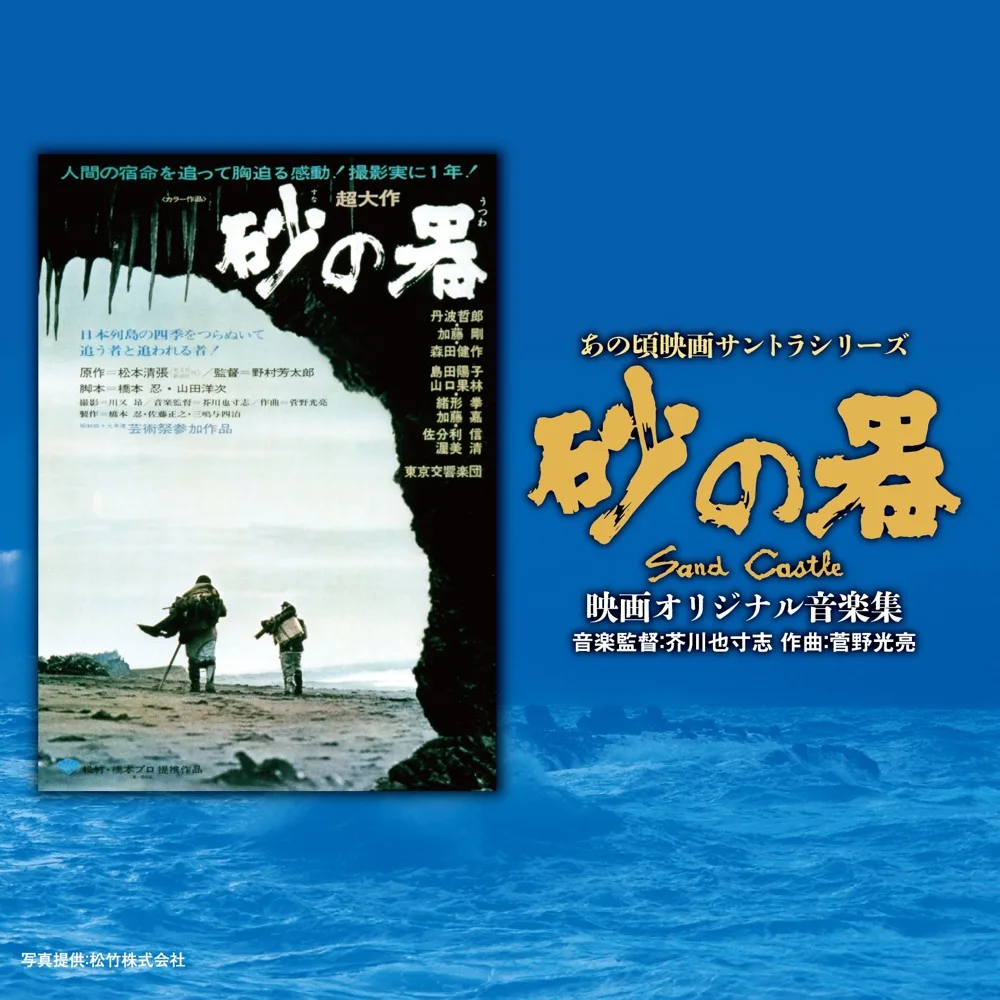
Cover of *砂の器 映画オリジナル音楽集* (*Suna no Utsuwa / Castle of Sand: Original Film Music*), Shochiku Records, SOST-3014, released 26 March 2014 for the 40th anniversary of the film. It is one of the albums recommended in this profile; it is not a photograph of Mitsuaki Kanno. Standard copyright, all rights reserved, held by Shochiku Records / Shochiku Co., Ltd. This is not a Creative Commons or public-domain image; it is an album cover shown as an honestly disclosed editorial identification image. — Apple Music catalogue artwork for the album, https://music.apple.com/jp/album/%E7%A0%82%E3%81%AE%E5%99%A8-%E6%98%A0%E7%94%BB%E3%82%AA%E3%83%AA%E3%82%B8%E3%83%8A%E3%83%AB%E9%9F%B3%E6%A5%BD%E9%9B%86-%E3%82%AA%E3%83%AA%E3%82%B8%E3%83%8A%E3%83%AB-%E3%82%B5%E3%82%A6%E3%83%B3%E3%83%89%E3%83%88%E3%83%A9%E3%83%83%E3%82%AF/1793744267
Mitsuaki Kanno (菅野光亮, Kanno Mitsuaki in Japanese order) is best known for one piece of film music: "Shukumei" (Destiny), the suite for piano and orchestra that he wrote and played for Yoshitaro Nomura's 1974 film Castle of Sand (Suna no Utsuwa). That is not jazz fame, and a profile on a jazz site should say so plainly. Kanno was also a working jazz pianist for the whole of his short career. He led or co-led five jazz records between 1973 and 1981, played on and arranged for other people's sessions, and was mourned in the jazz press and by the jazz players who recorded a memorial concert for him after he passed away in 1983, at 44.
He was born on 10 July 1939 in Sendai, in Miyagi Prefecture. He studied at the high school attached to the Kunitachi College of Music and then in the composition department of the Tokyo University of the Arts under Yoshio Hasegawa. In 1966, still a student, his String Quartet No. 3, Op. 24 took third place in the chamber-music division of the 35th Japan Music Competition.
After graduating he worked chiefly as a jazz pianist. His first steady touring job was with the Royal Knights (ロイヤルナイツ), a Japanese male vocal quartet. He went with them on their first Soviet tour, from December 1966 to January 1967, and on the long run of Eastern European and Soviet dates from late May to September 1968 as the pianist of the Kanno Mitsuaki Quintet, a tour that was extended with extra concerts and brought the group home later than planned. Two Soviet Melodiya discs of the quartet, from 1967 and 1968, credit an instrumental ensemble under his direction.
His own first record as a leader was recorded on 8 December 1970 and released in 1973 by RCA. Shisendo no Aki is credited to Mitsuaki Kanno and Group (菅野光亮九重奏団, a nonet) and holds four long pieces, all composed and arranged by him: "Busho", "Kumo no Ito", "Jakko" and the title track. The band is a flute and shinobue player (Yasutoshi Inamori), saxophones (Osamu Oyama on soprano and tenor, Hiroyuki Yamakawa on tenor), a trumpeter and flugelhorn player (Tomoya Haneo), guitar (Yasushi Mitsui), cello and bass (Masanobu Asakura), bass (Shizuo Hashimoto) and drums and percussion (Junichi Mitobe). In 2018 the London label Jazzman chose "Kumo no Ito" for Spiritual Jazz 8: Japan, Part One, a compilation of modal, esoteric and progressive Japanese jazz from 1961 to 1983. In 1973 Kanno also wrote a piece for traditional instruments, "Wa" (倭), for the shakuhachi player Hozan Yamamoto's album Kankyu (RCA Red Seal, 1973); the setting is shakuhachi, 17-string koto and percussion, with Tadao Sawai on koto.
Castle of Sand came out on 19 October 1974 from Shochiku, with Yasushi Akutagawa as music director. In the film's story the suite "Shukumei" is the work of the pianist-composer at its centre. Kanno wrote it and played it himself, with the Tokyo Symphony Orchestra conducted by Hiroshi Kumagai, and Polydor released the suite as an LP the same year. It earned the music prize at the 29th Mainichi Film Concours (credited jointly to Akutagawa and Kanno) and, according to Japanese Wikipedia, the Soviet Composers' Union prize at the Moscow Film Festival. The pianist Keisuke Toyama, who performed the suite with the Japan Philharmonic Orchestra in 2014, has said he was told that Kanno wrote it with Rachmaninoff strongly in mind. Shochiku Records marked the film's 40th anniversary the same year with a full CD of its music, including five piano sketches of "Shukumei" and unedited original takes.
The score made him a film and television composer. He scored Kumokiri Nizaemon (1978), Toei's Makai Tensho (Samurai Reincarnation, 1981), Kiryuin Hanako no Shogai (1982) and Shochiku's Amagi-goe (1983), along with Fuji TV's Daikuko (大空港, 1978 to 1980) and a long run of mystery dramas for TV Asahi. The Makai Tensho soundtrack, reissued on CD in 2020, is billed to him and Hozan Yamamoto. His concert music continued alongside: a viola sonata (1977), String Quartet No. 6 (1978), three movements for cello and piano (1979), A Promise of the Sea for viola and cello (1980) and a violin sonata (1982).
The jazz side of the late 1970s is where his own playing is best documented. He played piano on the singer Takako Ueno's RCA album Good Morning Heartache (1977) and arranged the strings for the singer Yoshiko Kimura's Los Angeles session Memories (RCA, 1978), billed Yoshiko Kimura with the saxophonist Gary Foster, with Clare Fischer on piano, Jim Hughart on bass, John Perett on drums and Dave Koonse on guitar. On 8 June 1978 he recorded When the World Was Young for RCA at Media Studio No. 1 in Tokyo, with the bassist Isoo Fukui and the drummer Michio Noguchi (野口迪生). It is his one record in an unadorned piano-trio format: Jobim's "No More Blues" played as a samba, standards such as "Sweet and Lovely", "I Wish You Love" and "In the Wee Small Hours of the Morning", and two Kanno originals, including "Teardrops of the Angel".
On 6 and 7 February 1979, at the Iruma City Auditorium, the same trio recorded A Beautiful Friendship with Gary Foster on alto and soprano saxophone, issued by Insights as Gary Foster with the Mitsuaki Kanno Trio; the bassist this time was Koji Toyama. In 1979 he also wrote the liner notes for the pianist Shigeaki Hoshi's I Remember "Frankie". His last two jazz albums came in 1981. A Song of Don Quixote (Warner, SM-12005) has music and arrangements by Kanno in eleven movements and is billed with Toshio Mori & Blue Coats and Tatsuya Koguma. A La Fin d'Hiver (冬の終わりに, Atlantic, M-12007A) is a trio record with the bassist Nobuyuki Aoshima and the drummer Akira Matsuo, with the alto saxophonist Hideyuki Kikuchi guesting on four tracks. It pairs standards by Jerry Bock, Gilbert Bécaud, Isham Jones and Django Reinhardt with three Kanno originals and tunes by Kikuchi and the guest pianist Hajime Ohno.
Mitsuaki Kanno passed away on 15 August 1983. The October 1983 issue of the magazine Swing Journal reported his death in its Jazz Express column, and Japanese Wikipedia, citing that report, gives the cause as a ruptured esophageal varix. On 26 and 27 June 1984 a group of jazz players recorded a memorial concert, released by Ing Record as 翳 菅野光亮追悼コンサート Live at Alexander, with a set of standards on side A and Kanno's own pieces on side B. Its title is the name of one of his compositions. A two-LP set of his contemporary-music works, 海との約束 (A Promise of the Sea), was issued the same year. In 2019 NHK-FM devoted an episode of its Classical Labyrinth series to him for the 80th anniversary of his birth.
Kanno is a borderline case for a jazz catalogue, and the honest accounting is this. On Discogs his five jazz records as leader or co-leader sit against a pile of film and television scores, a handful of concert-music works and a single classical LP, and the public memory of him is the Castle of Sand piano theme. Against that, Japanese Wikipedia says he worked chiefly as a jazz pianist after graduating, his death was reported by Swing Journal, the people who recorded his memorial concert were jazz musicians, and a 2018 compilation of Japanese modal and progressive jazz chose his 1973 nonet recording. Both halves are set out above, and the jazz half is small but real.
As a pianist he played in a swinging, melodic mainstream style. A review of When the World Was Young on the Japanese shop site Kimama Music praises a strong touch and melodic lines, built up from single notes, octaves and block chords in a way it compares to Teddy Wilson, and calls the album his only piano-trio record, one prized by DJs and record collectors. The 1979 Foster date and the 1981 trio album are in the same mainstream vein: standards, a few ballads and a few originals, with a horn guesting.
Shisendo no Aki is the record that points somewhere else. Discogs tags it Modal, Avant-garde Jazz and Contemporary Jazz, and the Jazzman compilation files it under spiritual jazz. It is an arranged nonet piece with flute and shinobue, where the jazz writing carries a Japanese-instrument colour, and the same instinct shows in "Wa" for Hozan Yamamoto. His classical training under Hasegawa runs through all of it, from the string quartets to the Rachmaninoff-minded Shukumei.
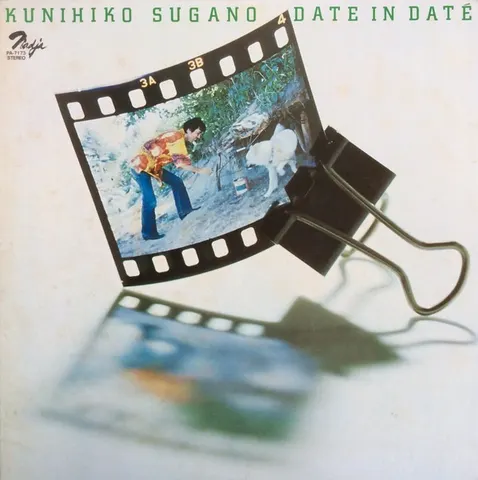
Not to be confused with the pianist Kunihiko Sugano, whose surname is written with the same characters (菅野) but read Sugano, or with the film and game composers Yoko Kanno and Yugo Kanno.
- Shisendo no Aki (1973, RCA JRS-7262, as Mitsuaki Kanno and Group) - The nonet album recorded on 8 December 1970, four pieces all written and arranged by Kanno. YouTube - full album · YouTube - Kumo no Ito · Discogs - Shisendo no Aki Listen
- When the World Was Young (1978, RCA RVL-8505, Mitsuaki Kanno Trio, with Isoo Fukui and Michio Noguchi) - His piano-trio record, taped on 8 June 1978. YouTube - full album · Discogs - When the World Was Young Listen
- A Beautiful Friendship (1979, Insights RDC-12, Gary Foster with the Mitsuaki Kanno Trio) - Recorded on 6 and 7 February 1979 at the Iruma City Auditorium; Foster on alto and soprano. YouTube - full album · Discogs - A Beautiful Friendship Listen
- A La Fin d'Hiver (冬の終わりに) (1981, Atlantic M-12007A, Mitsuaki Kanno Trio) - A trio date with Hideyuki Kikuchi guesting on alto saxophone. Discogs - A La Fin d'Hiver
- Suna no Utsuwa (Castle of Sand): Original Film Music (2014, Shochiku Records SOST-3014, with Yasushi Akutagawa as music director) - The full film score with the "Shukumei" sketches and original takes. Apple Music - 砂の器 映画オリジナル音楽集 · Spotify - 「宿命」映画版1 · YouTube - 「宿命」映画版2 (Shochiku Records) Listen
- Shukumei: Suite for Piano and Orchestra (1974, Polydor MR 1517, with the Tokyo Symphony Orchestra) - The original LP of the suite, with Kanno on piano and Hiroshi Kumagai conducting. Discogs - 宿命
Mitsuaki Kanno (菅野光亮) - Full Discography
Japanese jazz pianist and composer. Born 10 July 1939, Sendai; passed away 15 August 1983. Discogs artist 3205363, MusicBrainz 80ecebd1-b089-447d-bc50-5479fce02a48.
Name variations on record: Kanno, M. Kanno, M.Kanno, М. Канно, 菅野光亮.
Group affiliations on Discogs: Mitsuaki Kanno Trio (菅野光亮トリオ), 菅野光亮九重奏団 (the nonet of Shisendo no Aki), Noie Harmony Orchestra (ノイエ・ハーモニー・オーケストラ).
Kanno's catalogue is two catalogues. The jazz records come first below, followed by his film, television and concert-music releases, then his sideman, arranger and composer credits, and last the posthumous and compilation appearances.
Leader and co-leader jazz releases
| Album | Year | Label | Personnel | Notes | Listen | Buy |
|---|---|---|---|---|---|---|
| Shisendo no Aki (詩仙堂の秋), as Mitsuaki Kanno and Group (菅野光亮九重奏団) | 1973 | RCA, JRS-7262 | Mitsuaki Kanno (piano, composer, arranger), Yasutoshi Inamori (flute, shinobue), Osamu Oyama (soprano and tenor saxophone), Hiroyuki Yamakawa (tenor saxophone), Tomoya Haneo (trumpet, flugelhorn), Yasushi Mitsui (guitar), Masanobu Asakura (cello, bass), Shizuo Hashimoto (bass), Junichi Mitobe (drums, percussion) | Gatefold LP. Recorded 8 December 1970, released 1973. Four tracks: "Busho" (武将), "Kumo no Ito" (くもの糸), "Jakko" (寂光), "Shisendo no Aki". Discogs styles: Avant-garde Jazz, Contemporary Jazz, Modal. "Kumo no Ito" was reissued on Spiritual Jazz 8 (Jazzman, 2018). | YouTube - full album · YouTube - Kumo no Ito | Amazon |
| When the World Was Young (ホエン・ザ・ワールド・ワズ・ヤング), as Mitsuaki Kanno Trio (菅野光亮トリオ) | 1978 | RCA, RVL-8505 | Mitsuaki Kanno (piano), Isoo Fukui (bass), Michio Noguchi (野口迪生, drums) | LP, stereo. Recorded 8 June 1978 at Media Studio No. 1, Tokyo. Directed by Hiroshi Isaka. Eight tracks: "No More Blues", "When the World Was Young", "Sweet and Lovely", "Pastrale", "You Are My Heart's Delight", "Teardrops of the Angel", "I Wish You Love", "In the Wee Small Hours of the Morning". Two Kanno originals. | YouTube - full album | Amazon |
| A Beautiful Friendship, as Gary Foster with M. Kanno Trio | 1979 | Insights, RDC-12 | Gary Foster (alto and soprano saxophone), Mitsuaki Kanno (piano), Koji Toyama (bass), Michio Noguchi (野口迪生, drums) | LP. Recorded 6 and 7 February 1979 at Iruma City Auditorium. Six tracks: "A Beautiful Friendship", "Elusive Dream", "In Your Own Sweet Way", "Teef", "I'm Getting Sentimental Over You", "It's You or No One". Billed to Foster and the Kanno Trio; listed under both on Discogs. | YouTube - full album | Amazon |
| A Song of Don Quixote (ドン・キホーテの詩), billed with Toshio Mori & Blue Coats and Tatsuya Koguma | 1981 | Warner Bros. Records, SM-12005 | Music and arrangements by Mitsuaki Kanno; players not itemised on Discogs | LP with obi and insert. Eleven pieces, from "Yearning for Journey" (旅への憧れ) to "Paean to Don Quixote" (ドン・キホーテ賛歌). | not found | Amazon |
| A La Fin d'Hiver (冬の終わりに), as Mitsuaki Kanno Trio | 1981 | Atlantic (Japan), M-12007A | Mitsuaki Kanno (piano, supervisor), Nobuyuki Aoshima (bass), Akira Matsuo (drums), Hideyuki Kikuchi (saxophone, guest on A1, A4, B1, B3), Hajime Ohno (piano, guest) | LP, stereo. Produced by Shintaro So; liner notes by Yozo Iwanami; recorded at Ohota Kumin Center. Nine tracks including three Kanno originals ("Tabi e no Akogare", "A La Fin d'Hiver", "La Part d'Ombre") and Reinhardt's "Nuages". | not found | Amazon |
Film, television and concert-music releases
| Album | Year | Label | Personnel | Notes | Listen | Buy |
|---|---|---|---|---|---|---|
| 砂の器(サウンド・トラックより)宿命 (Shukumei, suite for piano and orchestra), with Yasushi Akutagawa | 1974 | Polydor, MR 1517 | Mitsuaki Kanno (composer, piano), The Tokyo Symphony Orchestra, Hiroshi Kumagai (conductor), Yasushi Akutagawa (music director) | LP, two side-long parts (23:30 and 17:11). Soundtrack of Yoshitaro Nomura's Castle of Sand (Shochiku, 19 October 1974). | Apple Music - 宿命 Part I and II (1995 CD reissue) | Amazon |
| 砂の器 | 1974 | Polydor, MR 7004 | Mitsuaki Kanno (composer, arranger), The Tokyo Symphony Orchestra, Hiroshi Kumagai (conductor), Yasushi Akutagawa (music director), Yoichi Sugawara (vocals), 江角英明 (narrator) | LP. The other Castle of Sand soundtrack album, with a narrated prologue and synopsis and two songs. | not found | Amazon |
| 白い地平線 / 宙ぶらりん, with the Noie Harmony Orchestra and Mayumi Ogawa | 1975 | Polydor | Kanno and the Noie Harmony Orchestra (ノイエ・ハーモニー・オーケストラ), Mayumi Ogawa (vocals) | 7-inch single, promo. Television-drama theme (Shiroi Chiheisen, TBS, 1975). | not found | not found |
| 雲霧仁左衛門 サウンドトラック | 1978 | RCA | Mitsuaki Kanno | 7-inch EP. Soundtrack of the Shochiku and Haiyuza film Kumokiri Nizaemon. | not found | not found |
| 真夜中の招待状 | 1981 | Philips, 20PP-38 | Mitsuaki Kanno (composer, synthesizer, piano), Candy Asada (vocals) | Promo LP with obi, the original soundtrack. Discogs genres: Electronic, Funk/Soul, Classical, Stage & Screen. | not found | not found |
| あの頃映画サントラシリーズ 砂の器 映画オリジナル音楽集 (Suna no Utsuwa: Original Film Music), with Yasushi Akutagawa | 2014 | Shochiku Records, SOST-3014 | Mitsuaki Kanno (composer, piano), The Tokyo Symphony Orchestra, Yasushi Akutagawa (music director) | CD, 25 tracks. Released 26 March 2014 for the film's 40th anniversary; includes five piano sketches of "Shukumei" and unedited original takes as bonus tracks. | Apple Music · Spotify · YouTube - 「宿命」映画版2 | Amazon |
| 魔界転生 = Makai Tenshoh (オリジナル・サウンドトラック盤), with Hozan Yamamoto | 2020 | Cinema-Kan, CINK113 | Hozan Yamamoto and Mitsuaki Kanno (billed together) | CD reissue of the 1981 Toei film soundtrack, 10 tracks plus 6 alternate-mix bonus tracks and a 20-page booklet. | not found | Amazon |
| 天城越え | undated | Victor | Mitsuaki Kanno, Noie Harmony Orchestra (credited) | LP. Score of the 1983 Shochiku film Amagi-goe; no year given on Discogs. | not found | not found |
| "愛の天使" マザー・テレサ, with the Noie Harmony Orchestra | undated | Teichiku Records | Mitsuaki Kanno and the Noie Harmony Orchestra | LP of his score for 愛の天使 マザー・テレサ. No year given on Discogs. | not found | not found |
| 海との約束 (菅野光亮現代音楽作品集) (A Promise of the Sea: Contemporary Works) | 1984 | Not on label, LM-1490~91 | String Quartet No. 6 (Hiroyuki Yamaguchi, Takashi Nagamine violins; Junji Suganuma viola; Hiroshi Kigoshi cello); Three Movements for Violoncello and Piano (Kigoshi, Yuriko Kikuchi); "A Promise of the Sea" for viola and cello (Suganuma, Kigoshi); Violin Sonata (Yamaguchi, Kikuchi) | 2-LP gatefold. Recorded 5 October 1983 (side C) and 29 June and 6 July 1984 (sides A, B, D). Discogs genre: Classical, Modern. | not found | not found |
Sideman, arranger and composer credits
| Album | Year | Label | Kanno's role | Notes | Listen | Buy |
|---|---|---|---|---|---|---|
| У нас есть завтра, Royal Knights | 1967 | Melodiya, Д 00019329-30 | Leader of the accompanying instrumental ensemble; composer of "Shadow" (Тень) | 7-inch, Soviet release of the Japanese vocal quartet he toured with. | not found | not found |
| Японский квартет «Ройял Найтс», Royal Knights | 1968 | Melodiya, 33ГД-0001187/88 | Leader of the accompanying instrumental ensemble on side B | Flexi-disc, 7-inch. | not found | not found |
| 緩急 Kankyu: 山本邦山、尺八の世界, Hozan Yamamoto | 1973 | RCA Red Seal, JRZ-2528 | Composer of B2, "Wa" (尺八、十七絃、打楽器のための三章「倭」) | LP. Played by Yamamoto (shakuhachi), Tadao Sawai (koto) and Hidehiko Sato (percussion). | not found | not found |
| Good Morning Heartache, Takako Ueno | 1977 | RCA, RVL-5512 | Piano | Vocal jazz LP: "God Bless the Child", "My Foolish Heart", "I Can't Get Started" and seven more standards. | not found | not found |
| Memories, Yoshiko Kimura with Gary Foster | 1978 | RCA, RVL-8026 | Arranger of the strings | LP with Gary Foster (reeds, flute), Clare Fischer (piano, keyboards), Dave Koonse (guitar), Jim Hughart (bass) and John Perett (drums); producer Hiroshi Isaka. | not found | not found |
| I Remember "Frankie", Shigeaki Hoshi Quartet | 1979 | Aeolian / Toshiba, AL-7901 / HL-8012 | Liner notes | Live LP recorded 25 December 1977 at Frankie, Tanaoka, with Yukio Shintaku (alto saxophone). | not found | not found |
| Silky Voice Jazz Concert, 竹内晴美トリオ | 1983 | Takeuchi Recording Laboratory, TR-35011 | Credited on the artist line; role not itemised | Private press LP whose track list includes 砂の器〜翳 and 冬に終わりに. | not found | not found |
| Super Clarinet Ensemble: Daydream Believer | 1981 | Far East | Credited on Discogs; role not itemised | not found | not found | |
| 唄いつづけて, Ben Kudo (くどうべん) | 1981 | - | Credited on Discogs; role not itemised | not found | not found | |
| 真夜中の招待状~偽りの夢, Candy Asada | 1981 | - | Credited on Discogs; the song also appears on his own 真夜中の招待状 LP | not found | not found | |
| 季節のない森, Keiko Goto (後藤啓子) | 1983 | - | Credited on Discogs; role not itemised | not found | not found |
Other Discogs credits, in chronological order with Kanno's role not itemised in the data: 伊藤愛子 だめな女 (1970); Pauline Ogawa カラマーゾフの兄弟 7-inch (RCA, 1970); 高岡美智子 ふたり (Teichiku, 1975); 葦原邦子 葦原邦子宝塚を歌う (Crown, 1976); Black Baby and the Noie Harmony Orchestra 大空港のテーマ 7-inch (Canyon, 1977); 古賀力 独身主義者のバラード (Polydor, 1978); The Screen Sound Orchestra 最新映画情報 (Columbia, 1978); Nakamichi ZX Metalloy Tape promo cassette (1981); Yasuko Hayakawa Trio Moon Walker (Full House, 2004); 山本邦山 阿吽十文字・舞・野仏のつぶやき (CBS/Sony, undated).
Posthumous releases and compilations
| Album | Year | Label | Personnel | Notes | Listen | Buy |
|---|---|---|---|---|---|---|
| 翳 菅野光亮追悼コンサート Live At Alexander, various artists | 1984 | Ing Record, LM-1489 | Side A: Toshihiko Ogawa (piano), Nobuyuki Aoshima (bass), Masahiko Ozu (drums), Sadanori Nakamure (guitar). Side B: 大野三平 (piano), Hideyuki Kikuchi (alto saxophone), Koji Toyama (bass), Tetsujiro Obara (drums), Yasushi Mitsui (guitar). Vocals: Takako Ueno and 鈴木博. MC Teruo Isono. | LP recorded 26 and 27 June 1984. Side A: standards ("There Is No Greater Love", "But Beautiful", "Blue Bossa", "Moonlight in Vermont"). Side B: Kanno originals "冬の終わりに", "旅へのあこがれ", "Last Chance" and "翳", plus "A Beautiful Friendship", "I Dream in My Dreams" and "The Days of Wine and Roses". | not found | Amazon |
| Spiritual Jazz 8: Japan, Part One (Esoteric, Modal and Progressive Jazz from Japan 1961-1983), various artists | 2018 | Jazzman, JMANLP 096 | "Kumo no Ito" by Mitsuaki Kanno and Group (from Shisendo no Aki) | Compilation LP; Kanno's track opens side A. Compiled by Gerald Short and Yusuke Ogawa. | not found | Amazon |
| 組曲 宿命, Tomomi Nishimoto, Keisuke Toyama, Japan Philharmonic Orchestra | 2014 | Billboard | Kanno credited as composer | CD of the suite "Shukumei" in a new performance with Keisuke Toyama on piano. | not found | not found |
| 河童のあやまり証文 / For Sons, Harumi Takeuchi (竹内晴美) | 2021 | - | Composer credit on a track | Track appearance only. | not found | not found |
Other compilations carrying a Kanno track: 日本の映画音楽 1962 - 1977 (Victor, 5-LP box) and RCA 日本のジャズ 1500 (RCA promo LP), both undated on Discogs.
Sources
- Isoo Fukui - bassist on When the World Was Young (RCA, 1978).
- Michio Noguchi - drummer on When the World Was Young (1978) and A Beautiful Friendship (1979).
- Gary Foster - American alto and soprano saxophonist; co-billed on A Beautiful Friendship (Insights, 1979), and the featured horn on Yoshiko Kimura's Memories (RCA, 1978), for which Kanno arranged the strings.
- Hozan Yamamoto - shakuhachi player; Kanno composed "Wa" for his album Kankyu (RCA Red Seal, 1973), and the Makai Tensho soundtrack is billed to the two of them.
- Koji Toyama - bassist on A Beautiful Friendship (1979) and at the 1984 memorial concert.
- Nobuyuki Aoshima and Akira Matsuo - bassist and drummer on A La Fin d'Hiver (Atlantic, 1981); Aoshima was also the bassist on side A of the 1984 memorial concert.
- Hideyuki Kikuchi - alto saxophonist, guest on four tracks of A La Fin d'Hiver (1981) and on side B of the memorial concert.
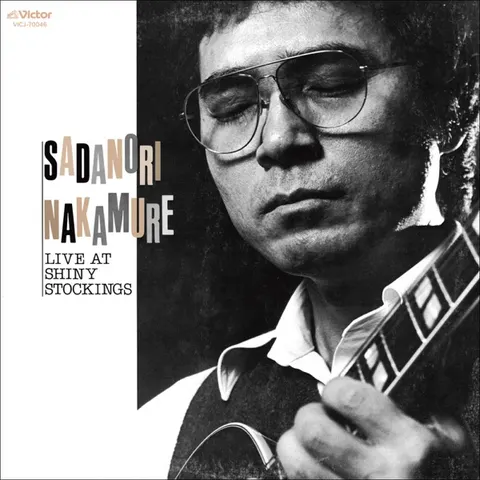
- Masahiko Ozu and Sadanori Nakamure - drummer and guitarist on side A of the memorial concert 翳 菅野光亮追悼コンサート Live at Alexander (Ing Record, 1984).
- Tetsujiro Obara - drummer on side B of the memorial concert, alongside Hideyuki Kikuchi, Koji Toyama and the guitarist Yasushi Mitsui.
- Takako Ueno and Yoshiko Kimura - the singers on Good Morning Heartache (1977) and Memories (1978), two sessions on which Kanno played or arranged. Ueno is also credited with vocals on the 1984 memorial concert.
- Yasushi Akutagawa - the composer and conductor who was music director of Castle of Sand and shares the Mainichi Film Concours music prize with him.
- The Royal Knights - the vocal quartet he accompanied on its Soviet and Eastern European tours of 1966 to 1968.
- The Shisendo no Aki nonet - Yasutoshi Inamori, Osamu Oyama, Hiroyuki Yamakawa, Tomoya Haneo, Yasushi Mitsui, Masanobu Asakura, Shizuo Hashimoto and Junichi Mitobe, as credited on the 1973 album.
More Mainstream Jazz Artists
See all 412 Mainstream Jazz artists →More Japanese Jazz Artists
See all 262 Japanese artists →- Spotify artist page
- Apple Music artist page
- Discogs: Mitsuaki Kanno
- MusicBrainz: 菅野光亮
- Wikipedia (Japanese): 菅野光亮
- Mitsuaki Kanno on JazzProfiles.com
- r/JapaneseJazz
- Wikipedia (Japanese): 菅野光亮, citing the 20th Century Japanese Biographical Dictionary (Nichigai Associates, 2004), Asahi Shimbun evening editions of 19 November and 21 December 1966, Mainichi Shimbun (Tokyo evening edition) of 30 April 1968, Ongaku Junpo of 21 April and 11 August 1968, and Swing Journal, October 1983, p. 97 ("Jazz Express: Pianist Mitsuaki Kanno dies")
- Wikipedia (German): Mitsuaki Kanno
- Discogs: Mitsuaki Kanno, artist 3205363, with the release pages for Shisendo no Aki, When the World Was Young, A Beautiful Friendship, A La Fin d'Hiver, A Song of Don Quixote, Memories, Good Morning Heartache, Kankyu, the 1984 memorial concert and the Castle of Sand releases
- MusicBrainz: 菅野光亮
- Wikipedia (Japanese): 毎日映画コンクール, 29th music prize
- Kimama Music: Mitsuaki Kanno Trio, When the World Was Young
- Tower Records Japan: Keisuke Toyama on Shukumei
- Serai: Castle of Sand
- NHK-FM Classical Labyrinth episode list, 27 July 2019
- Jazzman Records: Spiritual Jazz 8, Japan Part One, on Discogs