 JAZZPROFILES lives in the music 2,303 Jazz Artists fully Profiled!
Ronny Jordan
Last updated November 3, 2026
Listen on Spotify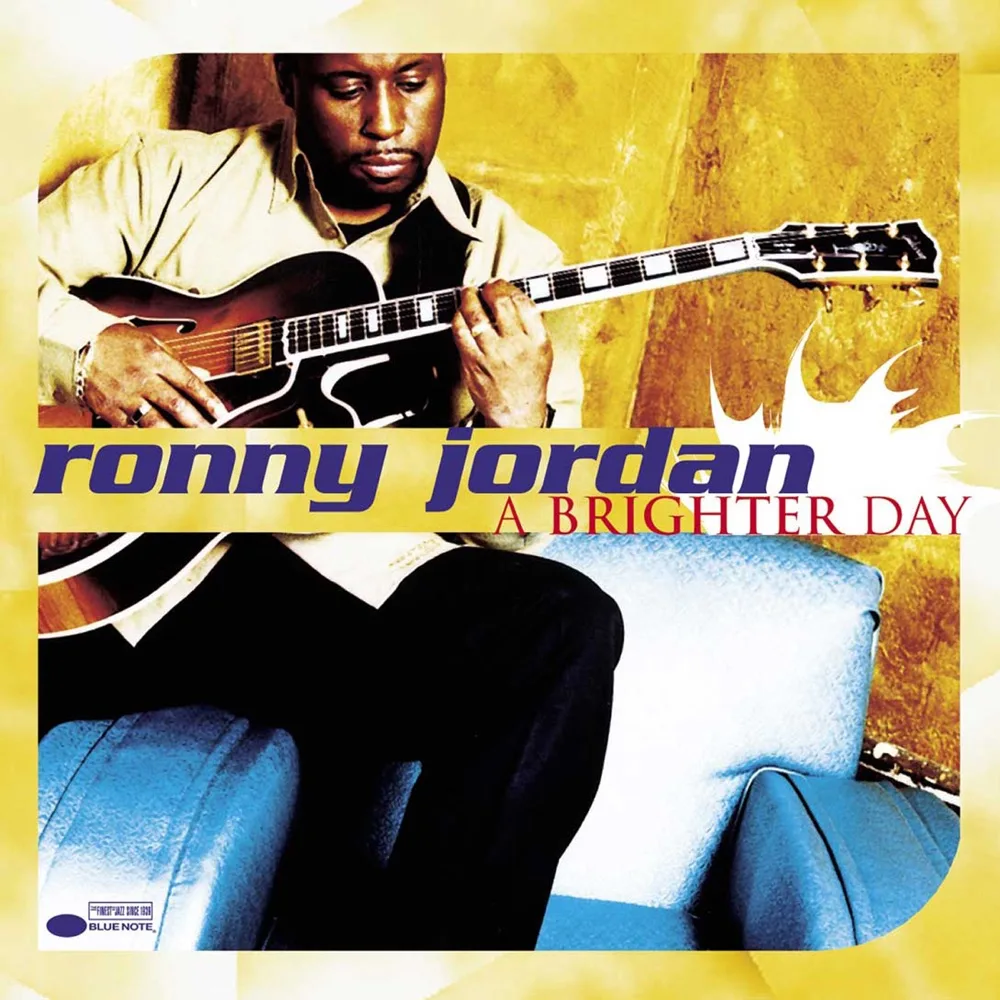
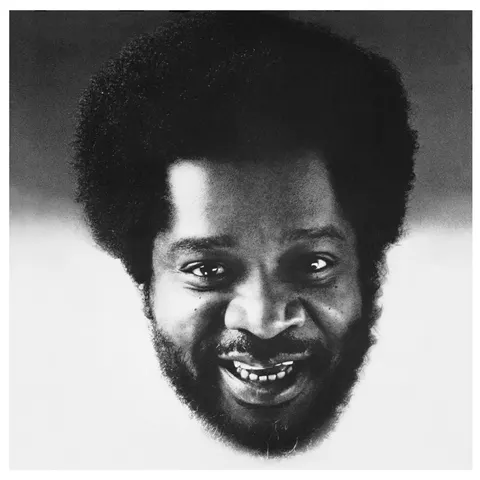
Ronny Jordan on the cover of his album A Brighter Day (Blue Note, 2000) Album cover art (not a CC-licensed artist photo), used as the only available image showing the artist — Apple Music / iTunes album artwork for A Brighter Day, Blue Note Records - https://music.apple.com/us/album/a-brighter-day/725789804
Ronny Jordan was born Robert Laurence Albert Simpson in London on November 29, 1962, the second of seven children of Jamaican parents. His father, Laurence, was a church deacon, and his mother, Anzel, a dressmaker who also served as a pastor. He grew up in Harlesden, in north London, taught himself the ukulele at four and the guitar at eight, and played for his father's congregation. By thirteen he was leading his own band. He took a business degree and worked a string of non-musical jobs while he kept listening: to the jazz guitar tradition of Charlie Christian, Django Reinhardt, Wes Montgomery and Grant Green, but also to Jimi Hendrix, Eric Clapton, Chuck Berry, T-Bone Walker, Parliament and Funkadelic, Tower of Power and the first hip-hop records.
That mixture went into a home-made single, "After Hours," which record companies turned down at first. The climate changed as London DJs, Gilles Peterson and Paul Murphy among them, began pushing hard-bop era jazz at dancefloors and the acid jazz scene took shape. In 1992 Jordan's hip-hop and funk-flavored treatment of the Miles Davis theme "So What" became a club hit, reaching No. 32 in the United Kingdom and No. 38 in France. Island Records signed him, and his debut album, The Antidote, appeared on 4th & Broadway/Island in 1992. AllMusic rated it four and a half stars. A third single from it, "After Hours (The Antidote)," became his first record on the American R&B chart, at No. 51.
In 1993 he joined the Guru project that made his name abroad. Jazzmatazz, Vol. 1, released on May 18, 1993 on Chrysalis, paired the rapper Guru with live jazz players, and Jordan played guitar on the album and co-produced and played on "No Time to Play," a single with the singer Dee C. Lee that reached No. 25 in the United Kingdom. His own second album, The Quiet Revolution (4th & Broadway/Island, 1993), reached No. 48 in Australia and produced the singles "Under Your Spell," "Tinsel Town" and "Come With Me," each of which charted in the UK between 1993 and 1994. It also contained "The Jackal," a track that gained a second life when the actress Allison Janney, playing C. J. Cregg in the 2000 West Wing episode "Six Meetings Before Lunch," lip-synched to it; she repeated the bit on Arsenio Hall's television show in September 2013. He appeared on Stolen Moments: Red Hot + Cool (1994), a benefit compilation for the Red Hot Organization, and in August 1994 issued Bad Brothers, a six-track mini-album of remixes made in Tokyo with the producer DJ Krush. Light to Dark (4th & Broadway/Island, 1996) followed.
Jordan moved to New York, and Blue Note signed him in 1999. The first album of that deal, A Brighter Day (2000), reached the top 10 of Billboard's jazz albums chart and earned a nomination for Best Contemporary Jazz Album at the 43rd Annual Grammy Awards, the award going to Béla Fleck and the Flecktones for Outbound. A remix of the title track featuring the rapper Mos Def reached No. 20 on Billboard's rap songs chart. The same year Jordan won the Best Jazz Act award at the MOBO Awards in London, and in 2001 Gibson Guitar named him its best jazz guitarist. Off the Record (Blue Note, 2001) was his second Blue Note album.
He moved to the N-Coded label for At Last (2003) and After 8 (2004, released November 2). At Ronnie Scott's in London in 2004 his playing recalled Montgomery's warm chording and octave slides and peaked on Grant Green's gospel-blues tune "Sunday Mornin'," the kind of material he had known since childhood. The Rough & The Smooth followed in 2010, the year he played London's Jazz Café with George Benson joining him as a guest. In 2013 he issued a digital project, Straight-Up Street, built mostly from guitar synthesizer with some turntable and programmed drums. A fan-funded plan to turn it into a CD release and tour stalled.
Ronny Jordan passed away on January 13, 2014, at the age of 51. According to a statement from his family, his body was found at home several days after he returned from a tour of South Africa; an autopsy was inconclusive but showed no foul play or injury. His siblings Rickey and Denise announced his death on a Facebook tribute page on January 14, 2014. He was survived by his siblings Rickey, Denise, Faye, Gaynor, Darren and Clive.
Jordan called his music "urban jazz," a blend of jazz, hip-hop and R&B, and the formula held from The Antidote on: punchy funk and hip-hop rhythm sections underneath a clean, lightly struck guitar sound whose warm chord work and smooth octave runs came from Wes Montgomery and whose gospel-blues side showed in tunes such as Grant Green's "Sunday Mornin'." That contrast between hard drums and a soft touch was the center of his best records. The Guardian's obituarist John Fordham placed him among populist crossover figures such as George Benson, Donald Byrd, Roy Ayers and George Duke, and noted that his work could irritate jazz purists while still sounding like nobody else. The remix album Bad Brothers drew the sharpest criticism, with some hearing it as formulaic smooth jazz, while his live shows were widely admired and the Blue Note albums moved toward a broader mix of American, Latin and Asian music. He was self-taught, drew as much on church playing as on jazz records, and held to the belief that jazz could return to pop status. His records sit closer to acid jazz, smooth jazz and R&B-flavored crossover than to straight-ahead playing, and the hip-hop and R&B side of his work was central to his audience.
- The Antidote (1992, 4th & Broadway/Island) - The debut, built around his acid jazz take on "So What" and the hit "After Hours," with IG Culture rapping on two tracks. Spotify - The Antidote Listen
- The Quiet Revolution (1993, 4th & Broadway/Island) - The follow-up that carried "The Jackal," "Tinseltown" and "Season for Change" and gave him a run of charting singles in 1993 and 1994. Spotify - The Quiet Revolution Listen
- Bad Brothers (1994, Island) - A six-track Japanese mini-album of remixes made in Tokyo with DJ Krush, the most club-facing record in his catalog. Spotify - Bad Brothers Listen
- Light to Dark (1996, 4th & Broadway/Island) - The third studio album, with "The Law," "I See You" and "Downtime." Spotify - Light to Dark Listen
- A Brighter Day (2000, Blue Note) - His Blue Note debut and a Grammy nominee for Best Contemporary Jazz Album, closing with an edit of the title track featuring Mos Def and DJ Spinna. Spotify - A Brighter Day Listen
- Off the Record (2001, Blue Note) - The second Blue Note album, with "Keep Your Head Up" and "Floor & More." Spotify - Off the Record Listen
- At Last (2003, N-Coded) - The first record of his later period, with the title track and "Nite and Day." Spotify - At Last Listen
- Jazzmatazz, Vol. 1 (Guru, 1993, Chrysalis) - The landmark jazz and hip-hop record on which his guitar and the single "No Time to Play" reached a wide audience.
Ronny Jordan: Full Discography
Discogs artist: Ronny Jordan (7449) · Real name Robert Laurence Albert Simpson · Born November 29, 1962, London, England · Died January 13, 2014
Leader: Albums
Catalog numbers are those of the pressing named in the Label column. His own album credits are guitar, keyboards, synthesizer and programming throughout, with the producer role on the later records.
| Album | Year | Label | Personnel & Notes | Charts | Listen | Buy |
|---|---|---|---|---|---|---|
| The Antidote | 1992 | 4th & Broadway / Island (Island 262 783) | His debut. Ronny Jordan (guitar, keyboards, synthesizer, vocals, programming; also producer and arranger), Phillip Bent (flute), Joe Bashorun (piano), Adrian York (organ), Hugo Delmirani (organ, vibraphone), Arnie Somogyi (bass), Longsy D (drum programming, co-producer), Isabel Roberts (vocals), IG Culture (rap on "Get to Grips" and "See the New"). Recorded at PLJ Studios, London. Contains "So What!," "After Hours (The Antidote)" and "Summer Smile." AllMusic: four and a half stars | "So What!" No. 32 UK, No. 38 France; "After Hours" No. 51 US R&B | Spotify | — |
| The Quiet Revolution | 1993 | 4th & Broadway / Island (Island ILPSD 8009) | Executive producers Ronny Jordan and Trevor Wyatt. Contains "The Jackal," "Season for Change," "In Full Swing," "Under Your Spell," "Tinsel Town" and "Come With Me" | No. 48 Australia | Spotify | — |
| Bad Brothers | 1994 | Island (PHCR-3705, Japan) | Six-track mini-album, released August 5, 1994 and billed with DJ Krush. Remixes of "The Jackal," "So What!," "Season for Change," "Bad Brother" and other tracks, all remixed at Show-On Studio, Tokyo; DJ Krush remixed and wrote the liner notes | Spotify | — | |
| Light to Dark | 1996 | 4th & Broadway / Island (162-531 060-2) | Contains "Into the Light," "Homage," "It's You," "The Law," "I See You," "Downtime" and the title track | Spotify | — | |
| A Brighter Day | 2000 | Blue Note (7243 5 20208 2 9) | His Blue Note debut, fourteen tracks including "Aftermath," "Mystic Voyage," "London Lowdown," "Mambo Inn," "Rio," "New Delhi" and an edit of the title track with Mos Def and DJ Spinna. Nominated for Best Contemporary Jazz Album at the 43rd Annual Grammy Awards | Top 10 Billboard jazz albums | Spotify | — |
| Off the Record | 2001 | Blue Note (7243 5 30267 2 1) | Ten tracks including "Keep Your Head Up," "Floor & More," "On the Record," "(The Theme From) Underworld" and "Toe Jam" | Spotify | — | |
| At Last | 2003 | N-Coded Music (NC-4240-2) | Ten tracks including the title track, "Nite and Day," "Heaven," "You Might Need Somebody," "Tease" and "(In) the Limelight" | Spotify | — | |
| After 8 | 2004 | N-Coded Music (NC-4252-2) | Released November 2, 2004. Produced and arranged by Jordan. Ten tracks including "After 8," "7th Heaven," "Goin' Uptown," "Caught Up," "I Remember You" and "Bahia Magic" | — | — | |
| The Rough & The Smooth | 2010 | Private 'N Public Music | Eight tracks including "Rough & Ready," "In Full Swing," "Blues Grinder," "Medium Well" and "Remember When" | Spotify | — | |
| Straight-Up Street | 2013 | Digital release | Built mainly from guitar synthesizer with some turntable and drum programming. A fan-funded plan to expand it to a CD and a tour stalled | — | — |
Compilations
| Album | Year | Label | Notes | Listen | Buy |
|---|---|---|---|---|---|
| The Collection | 2002 | Spectrum Music (544 685-2) | Eighteen-track compilation drawn from the Island years, including "So What," "Under Your Spell," "Tinsel Town," "Come With Me," "The Law" and "Light to Dark" | — | — |
Singles
Chart positions are those listed for the UK, France, the US Hot R&B/Hip-Hop Songs chart and the US Hot Rap Songs chart; a blank means the single did not chart in that country.
| Year | Title | UK | France | US R&B | US Rap | Album |
|---|---|---|---|---|---|---|
| 1992 | "So What!" b/w "Cool and Funky" | 32 | 38 | The Antidote | ||
| 1992 | "Get to Grips" b/w "Flat Out" | The Antidote | ||||
| 1992 | "After Hours (The Antidote)" b/w "Nite Spice" | 51 | The Antidote | |||
| 1993 | "Under Your Spell" b/w "In Full Swing" | 72 | The Quiet Revolution | |||
| 1994 | "Tinsel Town" b/w "My Favourite Things" | 64 | The Quiet Revolution | |||
| 1994 | "Come With Me" | 63 | The Quiet Revolution | |||
| 1996 | "The Law" (EP) | Light to Dark | ||||
| 1996 | "It's You" (US promotional single) | Light to Dark | ||||
| 2000 | "A Brighter Day" (US only) | 20 | A Brighter Day | |||
| 2001 | "London Lowdown" (US promotional single) | A Brighter Day |
Guest and Sideman Appearances (selected)
Credits below were checked release by release. Where the credit names specific tracks, the tracks are listed; where it does not, the credit is given as a general guitar credit. Discogs also lists a handful of producer and mixing credits on compilations; those are not playing credits and are left out.
| Album | Year | Leader | His credit | Listen | Buy |
|---|---|---|---|---|---|
| Jazzmatazz, Vol. 1 | 1993 | Guru | Guitar; co-producer and guitar on "No Time to Play" (Chrysalis F1-21998). Released May 18, 1993 | — | — |
| "No Time to Play" (single) | 1993 | Guru featuring Dee C. Lee | Co-producer and guitar, tracks 1 to 3 (Cooltempo cdcool 282). No. 25 on the UK singles chart | — | — |
| Stolen Moments: Red Hot + Cool | 1994 | Various artists | His own track "Time Is Moving On," guitar (GRP GRD-9794), on the benefit album for the Red Hot Organization | — | — |
| Jazzmatazz, Vol. 2: The New Reality | 1995 | Guru | Guitar and music on "Skit B (A Lot on My Mind) / Revelation," with a co-producer credit on the same side (Chrysalis F1 34290) | — | — |
| Acquainted with the Night | 2001 | Pieces of a Dream | Guitar on one track (Heads Up HUCD 3059) | — | — |
| Here to There | 2002 | DJ Spinna | Guitar on "Surely" and "Music in Me (Come Alive)" (Rapster / BBE RR0012 LCD) | — | — |
| Out of the Blue | 2002 | Maysa | Guitar solo on "Friendly Pressure" (N-Coded NC-4233-2) | — | — |
| Three Days of Rain | 2006 | Bob Belden | Guitar (Sunnyside SSC 1153) | — | — |
- Guru - the rapper and producer who brought him onto Jazzmatazz, Vol. 1 (1993) and Jazzmatazz, Vol. 2: The New Reality (1995). Jordan is credited on guitar on both, and as a co-producer of "No Time to Play."
- Dee C. Lee - the vocalist on "No Time to Play" (1993), the UK hit with Guru that carried Jordan's guitar.
- IG Culture - the rapper who appears on "Get to Grips" and "See the New" from The Antidote.
- DJ Krush - the Japanese producer who remixed his tracks and wrote the liner notes for Bad Brothers (1994).
- Mos Def and DJ Spinna - credited on the remixed edit of "A Brighter Day" (2000), which reached the US rap chart.
- Phillip Bent, Joe Bashorun, Adrian York, Hugo Delmirani, Arnie Somogyi and Longsy D - the flute, piano, organ, vibraphone, bass and drum programming personnel on The Antidote, recorded at PLJ Studios by Patrick Longmore.
- George Benson - the guitarist who joined him on stage at London's Jazz Café in 2010.
- Pieces of a Dream - Jordan is credited on guitar on one track of the group's Acquainted with the Night (Heads Up, 2001).
- Maysa - he plays a guitar solo on "Friendly Pressure" from her album Out of the Blue (N-Coded, 2002).
- DJ Spinna - guitar on two tracks of Here to There (Rapster/BBE, 2002).
- Bob Belden - Jordan is credited on guitar on Three Days of Rain (Sunnyside, 2006).
More Acid Jazz Artists
See all 24 Acid Jazz artists →More British Jazz Artists
See all 32 British artists →- Wikipedia: Ronny Jordan
- Wikipedia: The Antidote (Ronny Jordan album)
- Wikipedia: Jazzmatazz, Vol. 1
- Wikipedia: MOBO Awards
- The Guardian: Ronny Jordan obituary, January 22, 2014
- All About Jazz: Ronny Jordan, Jazz Guitarist, Dead at 51
- Grammy.com: Ronny Jordan
- Discogs: Ronny Jordan
- MusicBrainz: Ronny Jordan