 JAZZPROFILES lives in the music 1,002 Jazz Artists fully Profiled!
 Andrew Hill
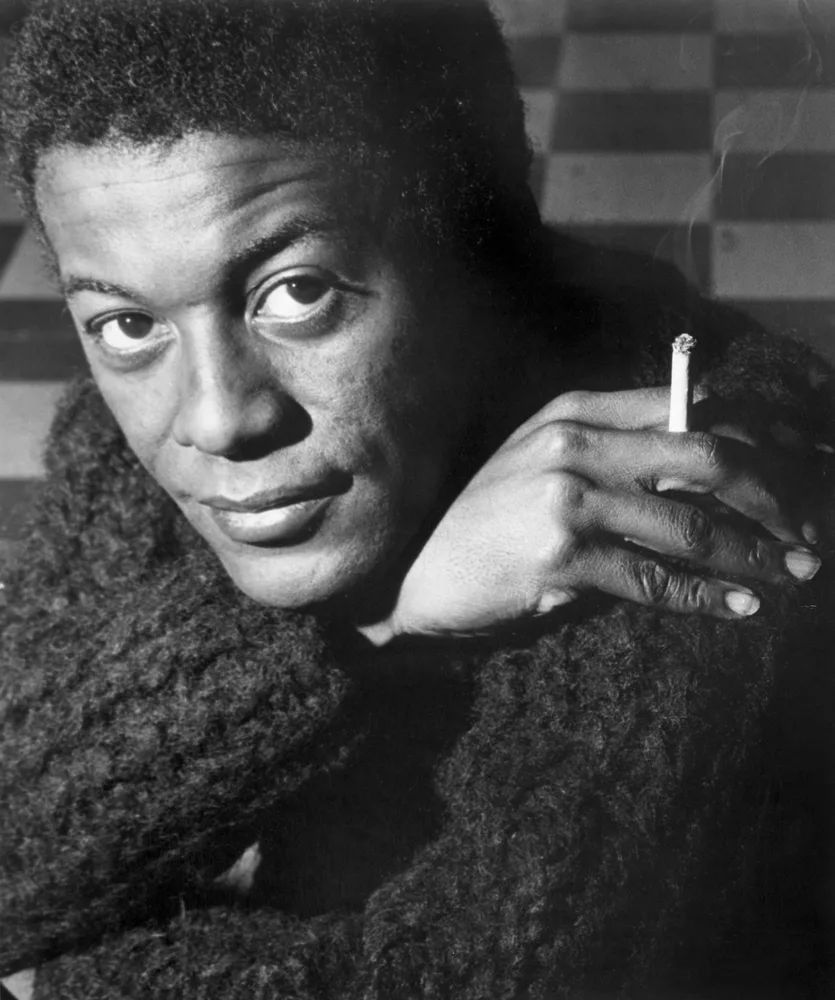
Andrew Hill, studio portrait published in *DownBeat* magazine, vol. 32, no. 1 (January 14, 1965), p. 30. Public domain (US work published without a copyright notice; photographer uncredited/unknown in the original publication) — Wikimedia Commons - https://commons.wikimedia.org/wiki/File:Andrew_Hill_c._1965.jpg (citing DownBeat, https://www.worldradiohistory.com/Archive-All-Music/DownBeat/60s/65/Downbeat-1965-01-14.pdf)

Andrew Hill was born June 30, 1931, in Chicago, Illinois, to William and Hattie Hill. His birth details were murky for decades: during his lifetime his year of birth was commonly given as 1937, and in the early 1960s he told people he had been born in Port-au-Prince, Haiti, apparently to seem more exotic to prospective employers and audiences. The Chicago birth date and birthplace were confirmed by his family in the announcement of his death and are now the figures used by Discogs, AllMusic, and the National Endowment for the Arts. He had a brother, Robert, a singer and classical violinist. As a boy Hill sang, played accordion, and tap-danced in local talent shows at Chicago's Regal Theatre between 1943 and 1947, and sold copies of the Chicago Defender, which sponsored some of those shows. He took up piano around age thirteen, encouraged by pianist Earl Hines, and attended the University of Chicago's Laboratory (Experimental) School. Composer Bill Russo introduced the teenaged Hill to classical composer Paul Hindemith, with whom he studied informally from 1950 to 1952. In 1950 he learned his first blues changes from saxophonist Pat Patrick, and as a teenager he gigged with touring musicians passing through the Midwest, including Charlie Parker and Miles Davis.
Hill played his first professional job in 1953 with saxophonist Paul Williams's band, doubling on baritone saxophone and piano, and first recorded as a sideman in 1954. In 1955 or 1956 (sources disagree on the exact year) he recorded a trio session with bassist Malachi Favors and drummer James Slaughter, released in 1960 as So in Love with the Sound of Andrew Hill on the Warwick label. After touring as an accompanist for Dinah Washington, Hill settled in New York City in 1961, working with vocalists Johnny Hartman and Al Hibbler. He then moved briefly to Los Angeles, playing in Roland Kirk's quartet and at the Lighthouse Café in Hermosa Beach, where he met organist Laverne Gillette, whom he married in 1963 after both had relocated to New York.
Back in New York, Hill's reputation was made by a run of Blue Note albums as leader, cut in barely two years: Black Fire (recorded November 1963, his label debut, with Joe Henderson, Richard Davis, and Roy Haynes), Smoke Stack (December 1963), Judgment! (January 1964, with Bobby Hutcherson and Elvin Jones), and Point of Departure (March 1964), a sextet session with Eric Dolphy, Joe Henderson, Kenny Dorham, Richard Davis, and Tony Williams that is widely regarded as his masterpiece and one of Blue Note's most ambitious dates of the era. He continued with Andrew!!! (June 1964) and Compulsion!!!!! (October 1965), both featuring tenor saxophonist John Gilmore, and recorded further sessions that Blue Note shelved for years or decades: a March 1966 date issued in part under Sam Rivers's name as Involution and not released complete as Change until 2007; Grass Roots (1968), with trumpeter Lee Morgan and Woody Shaw among the horns; Dance with Death (recorded 1968, unissued until 1980); Lift Every Voice (1969-70, with a wordless vocal chorus added to the small group); and the large-ensemble Passing Ships (recorded November 1969 with Dizzy Reece, Woody Shaw, Julian Priester, Joe Farrell, Howard Johnson, Robert Northern, Ron Carter, and Lenny White), which sat in the Blue Note vaults until Michael Cuscuna produced its release in 2003. Hill rarely worked as a sideman after the 1960s, preferring to lead his own dates, which limited his broader public exposure even as musicians and critics recognized his significance.
Through the 1970s Hill supported himself partly by teaching in California public schools and prisons while continuing to record prolifically for smaller labels: SteepleChase (Invitation, 1974; Divine Revelation, 1975), Freedom (Spiral, 1974-75, with Lee Konitz and Barry Altschul), the Japanese label East Wind (Blue Black, Hommage, and Nefertiti, all 1975-76), and Artists House (the solo From California with Love, 1978). He later held a tenure-track faculty position at Portland State University from 1989 to 1996, where he established the school's Summer Jazz Intensive program and also gave workshops and residencies at Wesleyan University, the University of Michigan, the University of Toronto, Harvard, and Bennington College. He returned briefly to Blue Note for Eternal Spirit (1989) and But Not Farewell (1990), both featuring alto saxophonist Greg Osby. Laverne Hill died in 1989 after a long illness; Hill married dancer and educator Joanne Robinson Hill in Portland in 1992, and the couple moved to New York City in 1995 and then to Jersey City, New Jersey, in 2000.
Hill's final decade brought a wave of renewed attention. In 1998 he formed a new Point of Departure Sextet, with Marty Ehrlich, Greg Tardy, Ron Horton, Scott Colley, and Billy Drummond, for the Knitting Factory's Texaco Jazz Festival, and in 2000 Palmetto Records released Dusk, a song cycle inspired by Jean Toomer's 1923 book Cane that was named album of the year by both DownBeat and JazzTimes. In 2003 Hill received the Jazzpar Prize, the Danish jazz award that came with a commissioned work for an assembled European ensemble, documented on the live album The Day the World Stood Still. Blue Note brought him back to the label a final time for Time Lines (recorded 2005, released February 2006), reuniting him with trumpeter Charles Tolliver; the album won DownBeat's Critics Poll for Jazz Album of the Year. According to critic and friend Howard Mandel, Hill was named the Jazz Journalists Association's Composer of the Year four times, most recently in 2006, and was among the first recipients of a Doris Duke Foundation award for jazz composers. On April 3, 2007, music publisher Boosey & Hawkes announced it had added Hill to its roster of composers. His final public performance came March 29, 2007, at Trinity Church in New York City. Andrew Hill passed away at his Jersey City home on April 20, 2007, at age 75, following a long battle with lung cancer. In May 2007 he became the first person to receive a posthumous honorary doctorate from Berklee College of Music; later that year DownBeat inducted him into its Jazz Hall of Fame via the Critics Poll, and in 2008 he was named an NEA Jazz Master, an honor his widow accepted on his behalf.
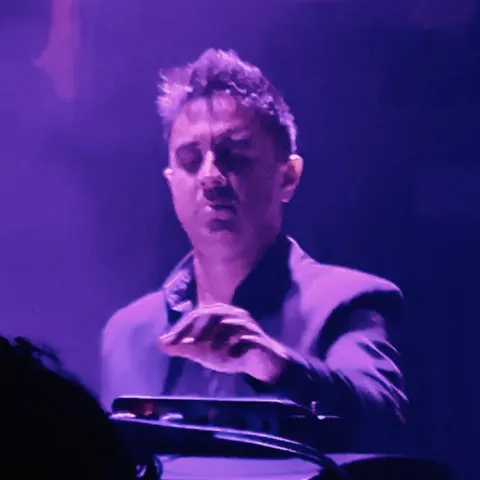
Hill's principal influences were pianists Thelonious Monk, Bud Powell, and Art Tatum; he described Monk's music as driven by "the personality of music," found Powell's vocabulary so total a model that copying it risked becoming a dead end, and called Tatum "the epitome of all modern piano playing." Where contemporaries like Cecil Taylor and Ornette Coleman were jettisoning bebop's harmonic and rhythmic scaffolding outright during the 1960s avant-garde upheaval, Hill worked from inside that scaffolding, extending rather than discarding it. His compositions were labyrinthine and rhythmically knotted without ever feeling aleatoric or arbitrary, and his own playing paired a flowing, elastic sense of time with a near-total avoidance of cliché. Because he rarely worked as a sideman after the 1960s and led an unusually independent, hard-to-categorize body of work, critic John Fordham noted that Hill's stature "remained largely inside knowledge in the jazz world for most of his career," even as musicians who came after him, including pianist Vijay Iyer, publicly credited him as a direct influence and mentor. Hill and Iyer became close in Hill's last years, and after Hill's death Iyer organized and led "Eternal Spirit: Vijay Iyer & Friends Celebrate the Music of Andrew Hill," a tribute concert at Harlem Stage in which his own program notes called Hill a "friend, mentor, and supporter."
- Point of Departure (1965, Blue Note) - Recorded March 1964 with Eric Dolphy, Joe Henderson, Kenny Dorham, Richard Davis, and Tony Williams; widely considered Hill's masterpiece and one of the most ambitious sessions of Blue Note's 1960s run. Spotify - Point Of Departure Listen
- Black Fire (1964, Blue Note) - Hill's label debut, recorded November 1963 with Joe Henderson, Richard Davis, and Roy Haynes. Spotify - Black Fire
- Judgment! (1964, Blue Note) - A quartet date with vibraphonist Bobby Hutcherson, Richard Davis, and Elvin Jones.
- Smoke Stack (1966, Blue Note) - An unusual two-bass trio with no horns at all, recorded December 1963, one of the sparest and most rhythmically exposed of his Blue Note dates. Spotify - Smoke Stack Listen
- Passing Ships (2003, Blue Note) - A large-ensemble session for one reed, two trumpets, and low brass, recorded November 1969 and shelved for over three decades before producer Michael Cuscuna released it.
- Dusk (2000, Palmetto) - A sextet song cycle inspired by Jean Toomer's Cane, named jazz album of the year by both DownBeat and JazzTimes for 2001. Spotify - Dusk Listen
- Time Lines (2006, Blue Note) - Hill's final studio album, reuniting him with trumpeter Charles Tolliver; won DownBeat's 2006 Critics Poll for Jazz Album of the Year. Spotify - Time Lines Listen
- Dialogue (1965, Blue Note) - As a sideman: Bobby Hutcherson's landmark album, on which Hill's compositions account for three of the five pieces.
Andrew Hill: Full Discography
Identity confirmed via the live Discogs API, artist ID 61584 ("Andrew Hill," American jazz pianist and composer, born June 30, 1931 in Chicago, died April 20, 2007 in Jersey City, matching Wikipedia, AllMusic, and NEA biographical records). Discogs also splits several of Hill's own leader albums across separate artist entities registered under his named groups, none of which are cross-listed from the main artist page's release list: Shades sits under "Andrew Hill Trio And Quartet," Divine Revelation under "Andrew Hill Quartet," Invitation and Strange Serenade under "Andrew Hill Trio," and The Day the World Stood Still under "Andrew Hill Jazzpar Octet+1." All four were reconciled against the main artist ID and are included below. A handful of other Discogs entities using the exact name "Andrew Hill" (with disambiguating numbers 2, 3, 4, 6, and 9 in Discogs's own naming) were checked and are different people entirely, unconnected to this artist.
The table below covers Hill's confirmed leader/co-leader catalog in full and a representative set of his most significant sideman dates; it does not itemize every one of the roughly 387 releases (studio sessions, reissues, and compilations) credited to him on Discogs.
As Leader / Co-Leader
| Album Title | Recording Date(s) | Release Date | Label | Catalog Number | Format(s) | Personnel | Role | Reissue History | Spotify | Buy | Notes |
|---|---|---|---|---|---|---|---|---|---|---|---|
| So in Love with the Sound of Andrew Hill | Recording date disputed: Discogs states 1956 (Chicago); AllMusic states 1955; a Wikipedia-sourced discography states 1959 | 1960 | Warwick Records | W 2002 | Vinyl, LP, Album, Mono | Andrew Hill (piano), Malachi Favors (bass), James Slaughter (drums) | Leader | None found | — | — | Hill's recorded debut as a leader; Favors later became the longtime bassist of the Art Ensemble of Chicago |
| Black Fire | Recorded November 9, 1963, Van Gelder Studio, Englewood Cliffs, NJ | 1964 | Blue Note | BLP 4151 / BST 84151 | Vinyl, LP, Album, Mono/Stereo | Andrew Hill (piano), Joe Henderson (tenor sax), Richard Davis (bass), Roy Haynes (drums) | Leader | Reissued on CD with bonus material | — | — | Hill's Blue Note label debut |
| Smoke Stack | Recorded December 13, 1963, Van Gelder Studio | 1966 | Blue Note | BLP 4160 | Vinyl, LP, Album, Mono | Andrew Hill (piano), Richard Davis and Eddie Khan (bass), Roy Haynes (drums) | Leader | Reissued on CD | — | — | Unusual two-bass, no-horns trio format |
| Judgment! | Recorded January 8, 1964, Van Gelder Studio | 1964 | Blue Note | BST 84159 | Vinyl, LP, Album, Stereo | Andrew Hill (piano), Bobby Hutcherson (vibraphone), Richard Davis (bass), Elvin Jones (drums) | Leader | Reissued on CD; 2013 Blue Note Classic Vinyl Series reissue | — | — | Elvin Jones appears by courtesy of Impulse Records |
| Point of Departure | Recorded March 21, 1964, Van Gelder Studio | April 1965 | Blue Note | BLP 4167 | Vinyl, LP, Album, Mono | Andrew Hill (piano), Eric Dolphy (alto sax, flute, bass clarinet), Joe Henderson (tenor sax), Kenny Dorham (trumpet), Richard Davis (bass), Tony Williams (drums) | Leader | Reissued on CD (Rudy Van Gelder Edition, 1999, adds alternate takes) | Spotify - Point Of Departure | — | Widely regarded as Hill's masterpiece; Eric Dolphy appears by courtesy of FM Records |
| Andrew!!! | Recorded June 25, 1964, Van Gelder Studio | 1968 | Blue Note | BST 84203 | Vinyl, LP, Album, Stereo | Andrew Hill (piano), John Gilmore (tenor sax), Bobby Hutcherson (vibraphone), Richard Davis (bass), Joe Chambers (drums) | Leader | None found | — | — | Held for release four years |
| Pax | Recorded February 10, 1965, Van Gelder Studio | 2006 | Blue Note | 0946 3 58296 2 4 | CD, Album, Reissue, Remastered | Andrew Hill (piano), Joe Henderson (tenor sax), Freddie Hubbard (cornet), Richard Davis (bass), Joe Chambers (drums) | Leader | Five of seven tracks first issued in 1975 on One for One; two more first issued 1995 on the Mosaic box; the complete session was not gathered under its own title until this 2006 reissue | — | — | |
| Compulsion!!!!! | Recorded October 8, 1965, Van Gelder Studio | 1967 | Blue Note | BLP 4217 | Vinyl, LP, Album, Mono | Andrew Hill (piano), John Gilmore (tenor sax, bass clarinet), Freddie Hubbard (trumpet, flugelhorn), Richard Davis and Cecil McBee (bass), Joe Chambers (drums), Nadi Qamar (African drums, thumb piano), Renaud Simmons (conga) | Leader | Reissued on CD | — | — | |
| Change | Recorded March 7, 1966, Van Gelder Studio | 2007 | Blue Note | 0946 3 85190 2 7 | CD, Album, Reissue, Limited Edition | Andrew Hill (piano), Sam Rivers (tenor sax), Walter Booker (bass), J.C. Moses (drums) | Leader | Tracks 1-6 first issued in 1976 under Sam Rivers's name as Involution; tracks 7-8 first issued 1995 on the Mosaic box; not compiled as a Hill-credited album until 2007 | — | — | |
| Grass Roots | Recorded April and August 5, 1968, Van Gelder Studio | 1968 | Blue Note | BST 84303 | Vinyl, LP, Album, Stereo | Andrew Hill (piano); some tracks with Frank Mitchell (tenor sax), Woody Shaw (trumpet), Reggie Workman (bass), Idris Muhammad (drums); some tracks add Jimmy Ponder (guitar); some tracks with Booker Ervin (tenor sax), Lee Morgan (trumpet), Ron Carter (bass), Freddie Waits (drums) | Leader | None found | — | — | Personnel varies by track across two sessions |
| Dance with Death | Recorded October 11, 1968, Van Gelder Studio | 1980 | Blue Note | LT-1030 | Vinyl, LP, Album, Stereo | Andrew Hill (piano), Joe Farrell (soprano/tenor sax), Charles Tolliver (trumpet), Victor Sproles (bass), Billy Higgins (drums) | Leader | None found | — | — | Unissued for twelve years; part of Blue Note's "LT" archival series |
| One for One | Recorded August 1, 1969 and January 16 & 23, 1970, Van Gelder Studio | 1975 | Blue Note | BN-LA459-H2 | Vinyl, 2xLP, Album | Andrew Hill (piano) with, across sides, Pat Patrick (alto/baritone sax, flute), Ron Carter and Richard Davis (bass), Ben Riley, Freddie Waits, and Joe Chambers (drums), Bennie Maupin (bass clarinet), a string quartet directed by Kermit Moore | Leader | Some tracks later reissued separately on Pax (2006) | — | — | Compiled from previously unissued sessions |
| Lift Every Voice | Recorded May 16, 1969 (a Wikipedia-sourced discography also lists a March 1970 session date) | 1970 | Blue Note | BST 84330 | Vinyl, LP, Album | Andrew Hill (piano), Carlos Garnett (tenor sax), Woody Shaw (trumpet), Richard Davis (bass), Freddie Waits (drums), plus a seven-voice wordless vocal chorus | Leader | None found | Spotify - Lift Every Voice (Bonus Track Version) | — | Richard Davis appears by courtesy of Muse Records |
| Passing Ships | Recorded November 7 and 14, 1969, Van Gelder Studio | 2003 | Blue Note | 7243 5 90417 2 8 | CD, Album, Limited Edition | Andrew Hill (piano), Dizzy Reece and Woody Shaw (trumpet), Julian Priester (trombone), Joe Farrell (soprano/tenor sax, alto flute, bass clarinet, English horn), Howard Johnson (bass clarinet, tuba), Robert Northern (French horn), Ron Carter (bass), Lenny White (drums) | Leader | Reissued as a 2LP Blue Note Tone Poet vinyl edition, 2021 | — | — | Unissued for over three decades; produced for release by Michael Cuscuna |
| Invitation | Recorded October 17, 1974, Minot Studio | 1975 | SteepleChase | SCS 1026 | Vinyl, LP, Album | Andrew Hill (piano), Chris White (bass), Art Lewis (drums) | Leader | None found | — | — | Filed on Discogs under the "Andrew Hill Trio" artist entity |
| Spiral | Recorded December 20, 1974 and January 20, 1975, C.I. Recording Studios, NYC | 1975 | Freedom Records | FLP 40156 | Vinyl, LP, Album | Andrew Hill (piano/composer); some tracks with Robin Kenyatta (alto sax), Stafford James (bass), Barry Altschul (drums); some tracks with Lee Konitz (soprano/alto/tenor sax), Ted Curson (trumpet), Cecil McBee (bass), Art Lewis (drums) | Leader | None found | — | — | Two different quartets/quintets across the album |
| Blue Black | Recorded February 26, 1975, C.I. Recording Studios, NYC | 1977 | East Wind (Japan) | EW-8029 | Vinyl, LP | Andrew Hill (piano), Jimmy Vass (flute, soprano/alto sax), Chris White (bass), Leroy Williams (drums) | Leader | None found | — | — | Japan-only release; includes Japanese liner notes |
| Divine Revelation | Recorded July 10, 1975, C.I. Recording | 1976 | SteepleChase | SCS-1044 | Vinyl, LP | Andrew Hill (piano), Chris White (bass, electric bass), Jimmy Vass (soprano/alto sax, flute), Leroy Williams (drums) | Leader | None found | — | — | Filed on Discogs under the "Andrew Hill Quartet" artist entity; LP labels misprint the title as "Devine Revelation" |
| Hommage | Recorded May 19-20 and July 31, 1975, Vanguard Studio, NYC | 1975 | East Wind (Japan) | EW-8017 | Vinyl, LP | Andrew Hill (solo piano) | Leader | None found | — | — | Presented by AI Music Co., Tokyo |
| Live at Montreux | Recorded live July 20, 1975, Montreux Jazz Festival | 1976 | Freedom / Arista | AL 1023 | Vinyl, LP | Andrew Hill (solo piano) | Leader | None found | — | — | |
| Nefertiti | Recorded January 25, 1976, Vanguard Studios, NYC | 1976 | East Wind (Japan) | EW-8032 | Vinyl, LP | Andrew Hill (piano), Richard Davis (bass), Roger Blank (drums) | Leader | None found | — | — | |
| From California with Love | Recorded October 12, 1978, Berkeley, CA | 1979 | Artists House | AH9 | Vinyl, LP | Andrew Hill (solo piano) | Leader | None found | — | — | |
| Faces of Hope | Recorded June 13-14, 1980, Barigozzi Studios, Milan | 1980 | Soul Note | SN 1010 | Vinyl, LP | Andrew Hill (solo piano) | Leader | None found | — | — | Recorded the same two days as Strange Serenade |
| Strange Serenade | Recorded June 13-14, 1980, Barigozzi Studios, Milan | 1980 | Soul Note | SN 1013 | Vinyl, LP | Andrew Hill (piano, composer), Alan Silva (bass), Freddie Waits (percussion); one composition co-written with Laverne Hill | Leader | None found | — | — | Recorded the same two days as Faces of Hope |
| Shades | Recorded July 3-4, 1986, Barigozzi Studio, Milan | 1987 | Soul Note | SN 1113 | Vinyl, LP | Andrew Hill (piano, composer), Rufus Reid (double bass), Ben Riley (drums); some tracks add Clifford Jordan (tenor sax) | Leader | None found | — | — | Filed on Discogs under the "Andrew Hill Trio And Quartet" artist entity |
| Verona Rag | Recorded July 5, 1986, Jingle Machine Studios, Milan | 1987 | Soul Note | 121 110-2 | CD, Album | Andrew Hill (solo piano) | Leader | None found | — | — | |
| Eternal Spirit | Recorded January 30-31, 1989, Van Gelder Studio | 1989 | Blue Note | CDP 7 92051 2 | CD, Album | Andrew Hill (piano, composer), Greg Osby (alto sax), Bobby Hutcherson (vibraphone), Rufus Reid (bass), Ben Riley (drums) | Leader | None found | — | — | Hill's first new Blue Note session in nearly two decades |
| But Not Farewell | Recorded July 12-13 and September 16, 1990, Clinton Recording Studio, NYC | 1991 | Blue Note | CDP 7 94971 2 | CD, Album | Andrew Hill (piano, composer); most tracks with Greg Osby (alto/soprano sax), Robin Eubanks (trombone), Lonnie Plaxico (bass), Cecil Brooks III (drums); some tracks solo or duo with Osby | Leader | None found | Spotify - But Not Farewell | — | |
| Dreams Come True | Recorded March 25-26, 1993, Astoria, NY | 2008 | Joyous Shout! | JS 10010 | CD, Album | Andrew Hill (piano), Chico Hamilton (drums, tambourine) | Duo (co-led) | Released fifteen years after recording | — | — | |
| Dusk | Sextet tracks recorded September 15, 1999; solo piano recorded October 27, 1999, at Sear Sound, NYC | May 2000 | Palmetto Records | PM 2057 | CD, Album | Andrew Hill (piano, composer), Marty Ehrlich (alto sax, bass clarinet), Greg Tardy (tenor sax, bass clarinet), Ron Horton (trumpet), Scott Colley (bass), Billy Drummond (drums) | Leader | None found | Spotify - Dusk | — | Named jazz album of the year for 2001 by DownBeat and JazzTimes |
| A Beautiful Day | Recorded live at Birdland, NYC, January 24-26, 2002 | 2002 | Palmetto Records | PM 2085 | CD, Album | Andrew Hill (piano) leading a big band including Marty Ehrlich, John C. Savage, Aaron Stewart, Greg Tardy, J.D. Parran (reeds), Ron Horton, Dave Ballou, Laurie Frink, Bruce Staelens (trumpets), Charley Gordon, Joe Fiedler, Mike Fahn (trombones), Scott Colley (bass), Nasheet Waits (drums) | Leader | Expanded, re-sequenced reissue with a previously unissued alternate take, A Beautiful Day, Revisited (2024) | — | — | |
| The Day the World Stood Still | Recorded live in Sweden and Denmark, April 23-27, 2003, on Hill's Jazzpar Prize tour | 2004 | StuntX | STXCD 20412 | CD, Digipak | Andrew Hill (piano, leader, composer); European ensemble: Thomas Agergaard (tenor sax, flute), Peter Fuglsang (alto sax, clarinets), Liudas Mockunas (soprano/baritone sax, clarinets), Staffan Svensson (trumpet), Klaus Löhrer (tuba, bass trombone), Scott Colley (double bass), Nasheet Waits (drums), Lenora Zenzalai Helm (vocals) | Leader | None found | — | — | Filed on Discogs under the "Andrew Hill Jazzpar Octet+1" artist entity; commissioned as part of the 2003 Jazzpar Prize |
| Time Lines | Recorded June 23 & 30 and July 18, 2005, Bennett Studios, Englewood, NJ | February 21, 2006 | Blue Note | 0946-3-351 170 2 8 | CD, Album | Andrew Hill (piano, composer); most tracks with Greg Tardy (tenor sax, clarinet, bass clarinet), Charles Tolliver (trumpet), John Hebert (bass), Eric McPherson (drums) | Leader | None found | Spotify - Time Lines | — | Hill's final studio album; won DownBeat's 2006 Critics Poll for Jazz Album of the Year |
Notable compilations, not individually tabulated: One for One (1975, above) already gathers early-1970s unissued material; beyond it, The Complete Blue Note Andrew Hill Sessions (1963-66) (Mosaic, 1995, 7CD/10LP box), Mosaic Select 16: Andrew Hill (Mosaic, 2005, 3CD), and Mosaic Select 23: Andrew Hill Solo (Mosaic, 2007, 3CD) collect further alternate takes and unissued sessions from the same era. A 1998 solo concert release, Les Trinitaires, is credited to a French label with a release year that in the cited discography predates its own recording date; that date conflict could not be resolved and the release is noted here rather than given its own row.
As Sideman (selected major credits)
| Year | Project (Leader) | Title | Label | Catalog | Role | Notes |
|---|---|---|---|---|---|---|
| 1962 (rel. 1963) | Walt Dickerson | To My Queen | New Jazz | Piano | ||
| 1962 | Roland Kirk | Domino | Mercury | Piano | ||
| 1963 | Jimmy Woods | Conflict | Contemporary | Piano | ||
| 1963 (rel. 1964) | Hank Mobley | No Room for Squares | Blue Note | Piano | ||
| 1963 (rel. 1964) | Joe Henderson | Our Thing | Blue Note | Piano | ||
| 1965 | Bobby Hutcherson | Dialogue | Blue Note | Piano, composer | Hill's compositions make up three of the album's five pieces | |
| 1993 (rel. 1994) | Reggie Workman | Summit Conference | Postcards | Piano | ||
| 1999 (rel. 2000) | Greg Osby | The Invisible Hand | Blue Note | Piano |
Hill rarely worked as a sideman after the 1960s, by his own preference for leading his own dates. The credits listed above are his most significant outside appearances; they do not list every one of his roughly 387 Discogs-credited releases.
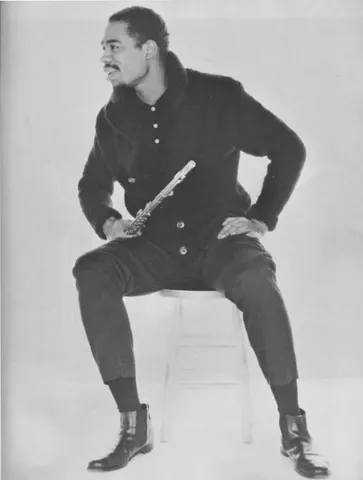
- Eric Dolphy - alto saxophone, flute, and bass clarinet on the sextet session Point of Departure (1964), Hill's most celebrated Blue Note date.
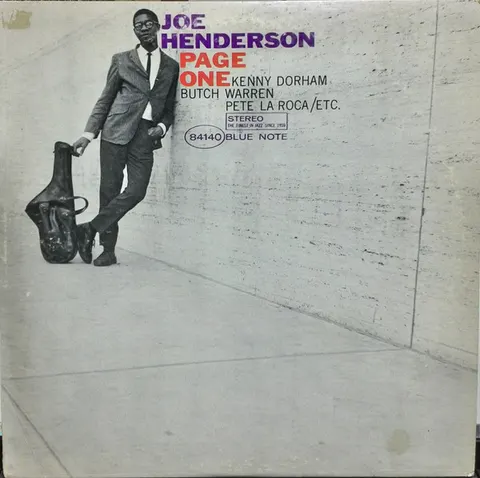
- Joe Henderson - tenor saxophonist on Hill's first three Blue Note leader dates: Black Fire, Smoke Stack, and Point of Departure (1963-64).
- Richard Davis - bassist on nearly all of Hill's classic 1963-69 Blue Note sessions, from Black Fire through Lift Every Voice and Passing Ships.
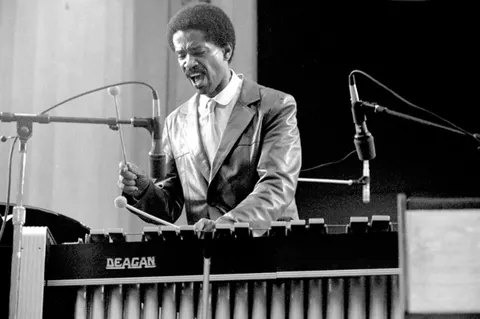
- Bobby Hutcherson - vibraphonist on Judgment! (1964) and Andrew!!! (1964), and later reunited with Hill on Eternal Spirit (1989); Hill's compositions also made up most of Hutcherson's own Dialogue (1965).
- Elvin Jones and Tony Williams - drummers on Judgment! and Point of Departure respectively, part of the era's front rank of post-bop drummers.
- Freddie Hubbard - trumpet on Compulsion!!!!! (1965).
- Greg Osby - alto saxophonist on Hill's return-to-Blue Note albums Eternal Spirit (1989) and But Not Farewell (1990).
- Charles Tolliver - trumpeter on the previously unissued 1968 session eventually released as Dance with Death, and again more than three decades later on Hill's final studio album, Time Lines (2006).
- Marty Ehrlich, Greg Tardy, Ron Horton, Scott Colley, and Billy Drummond - the sextet Hill assembled in 1998 as a new Point of Departure group, documented on Dusk (2000) and A Beautiful Day (2002).
- Vijay Iyer - younger pianist who called Hill a "friend, mentor, and supporter" and led the 2024 tribute concert "Eternal Spirit: Vijay Iyer & Friends Celebrate the Music of Andrew Hill" at Harlem Stage in New York.
- Wikipedia: Andrew Hill (pianist)
- Discogs: Andrew Hill (artist 61584)
- AllMusic: Andrew Hill biography
- National Endowment for the Arts: Andrew Hill, NEA Jazz Master 2008
- All About Jazz: Andrew Hill: 1931-2007 (obituary by Howard Mandel)
- All About Jazz: Vijay Iyer and Friends Pay Tribute to Andrew Hill
- The Guardian: Andrew Hill obituary by John Fordham
- The New York Times: Andrew Hill, 75, Jazz Artist Known for His Daring Style, Dies