 JAZZPROFILES lives in the music 1,002 Jazz Artists fully Profiled!
 Walter Blanding
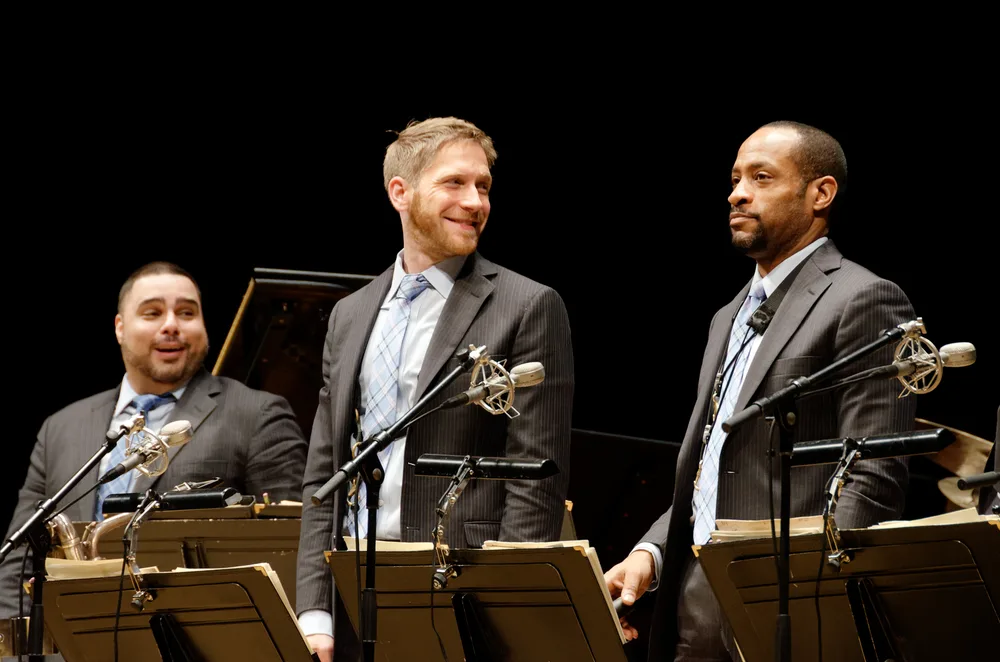
Walter Blanding (right) on saxophone with the Jazz at Lincoln Center Orchestra, alongside baritone saxophonist Paul Nedzela, at the Auditorium Maurice Ravel, Lyon, France, February 6, 2016. Not a solo portrait: two members of the orchestra's reed section are in frame. CC BY-SA 4.0 (Creative Commons Attribution-Share Alike 4.0 International). Attribution required. Author and uploader: Yelkrokoyade (own work). — Wikimedia Commons: https://commons.wikimedia.org/wiki/File:Paul_Nedzela,_Walter_Blanding_with_Jazz_at_Lincoln_Center_Orchestra_-_Auditorium_Maurice_Ravel_Lyon_2016.jpg

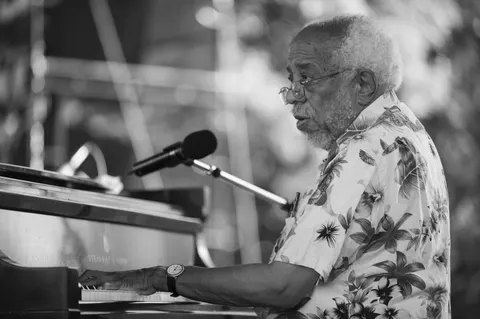
Walter Blanding Jr. was born August 14, 1971, in Cleveland, Ohio, into a family already inside the music. His grandmother was music director of the family's Baptist church and taught at the Cleveland Institute of Music, where both his parents studied before turning professional. He started on saxophone at six. In 1981 the family moved to New York City, where his father, a bassist, and his mother, a pianist and singer, played in the house band at the Village Gate; by his mid-teens Blanding was on the stand with them, billed as the Blanding Family Trio. He went to Fiorello H. LaGuardia High School of Music and Art and Performing Arts, spent seven years studying with Barry Harris, and continued at the New School for Social Research, where his teachers included Jaki Byard, Jimmy Cobb, Billy Harper, Reggie Workman, and Joe Chambers.
His first record came at nineteen. The Tough Young Tenors, a five-saxophone collective he formed with James Carter, Herb Harris, Tim Warfield, and Todd Williams, cut Alone Together at BMG Studios on January 8, 9, and 10, 1991, and Billboard named it one of the year's best jazz albums. Work with Wynton Marsalis's Lincoln Center circle began almost immediately: Blanding plays on They Came to Swing, assembled from concerts recorded between October 1992 and April 1994, and on soprano saxophone across Blood on the Fields, the slavery oratorio recorded January 22 to 25, 1995, in the Grand Hall of the Masonic Grand Lodge and released in 1997, the year Marsalis won the Pulitzer Prize for Music for it, the first jazz work to take the award. Away from Lincoln Center he was working with Cab Calloway, the Count Basie Orchestra, Illinois Jacquet's big band, and trumpeter Roy Hargrove.
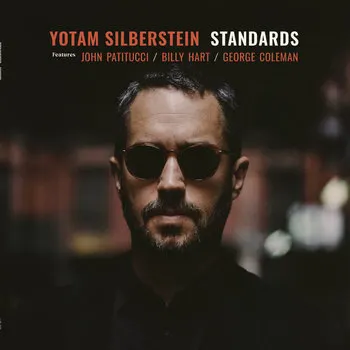
Then he left. In 1995 Blanding moved to Israel and stayed four years, an interval with no obvious parallel in the careers of his American contemporaries. He toured the country with his own quartet, brought over visiting Americans including drummer Louis Hayes and pianist Eric Reed, ran a concert series with backing from the Tel Aviv Museum of Art, taught at Israeli high schools, opened his own private school in Tel Aviv, and took Israeli citizenship. Among the schools he taught at was the Thelma Yellin High School of the Arts in Givatayim, the standard route for Israeli teenagers serious about music, where his students included the guitarist Yotam Silberstein and where the pianist Amit Golan was building the jazz curriculum over the same years. Newsweek International called him a "Jazz Ambassador to Israel." He also turned up on screen: the 2001 Israeli film Caravan 841, directed by Zion Rubin, casts him as a saxophone player who befriends a young Ethiopian immigrant, and the picture took Best Script at that year's Jerusalem Film Festival.
Blanding came back to New York and in 1998 accepted the Jazz at Lincoln Center Orchestra chair he had turned down more than once. He held it for roughly twenty-five years, and the recorded trail runs the length of the band's discography: Big Train (1999), on which he plays alto, soprano, tenor, and clarinet; Marsalis Plays Monk (1999); the orchestra's readings of John Coltrane's A Love Supreme (2004) and Don't Be Afraid... The Music of Charles Mingus (Charles Mingus, 2005); Vitoria Suite with Paco de Lucía (2010); The Abyssinian Mass, recorded over three nights in October 2013; Live in Cuba, from three more at Havana's Mella Theatre in October 2010; Una Noche con Rubén Blades (2018); and The Democracy! Suite (2020), where he is one of seven players in the pandemic-era septet. What the prose biographies leave out is that he also writes for the band: Discogs credit blocks list him as arranger of "Very Early" on Handful of Keys (2017) and of Wayne Shorter's "Lost" on the orchestra's Wayne Shorter programme, recorded in May 2015. He was on Ted Nash's Presidential Suite: Eight Variations on Freedom, taped September 14, 2014, which won Best Large Jazz Ensemble Album at the 59th Grammy Awards, and he takes the tenor solo on its Kennedy movement.
His own leader catalog is small and deliberate. The Olive Tree, recorded December 6, 1999, and issued by Criss Cross Jazz in April 2000, put him in front of a quintet of Lincoln Center colleagues: Ryan Kisor on trumpet, Farid Barron on piano, Rodney Whitaker on bass, and Rodney Green on drums. A second album, Fantasy in Blue, eleven original compositions rooted in the blues and closing with a fresh reading of "The Olive Tree," appeared as a self-released CD in 2018 and did not reach streaming services until a digital issue in 2026. Alongside those he kept a busy sideman schedule outside the orchestra, most of it with people he had come up alongside: five SteepleChase and Nagel Heyer dates for trombonist Wycliffe Gordon, Vincent Gardner, and Marcus Printup between 2000 and 2011; Odean Pope's Odean's List (2009); and two tracks apiece on records well outside jazz, Natalie Merchant's Leave Your Sleep (2010) and Paul Simon's In the Blue Light (2018).
Teaching has run parallel to the playing for his whole career. He has given master classes on six of the seven continents, served as Jazz at Lincoln Center Shanghai's jazz ambassador from 2018 to 2020, and worked with the student band at the Shanghai Community International School. In the autumn of 2023 he joined Michigan State University as assistant professor of jazz saxophone, in a department run by Rodney Whitaker, the bassist on The Olive Tree.
Blanding is a big-toned, unhurried tenor player whose vocabulary comes straight out of the Barry Harris bebop pedagogy he absorbed over seven years as a teenager, filtered through two decades of playing Ellington, Basie, and Monk charts nightly in the most repertory-minded band in jazz. The doubling is the practical measure of him: the Big Train credit block alone lists alto, soprano, tenor, and clarinet, and the Lincoln Center book has him moving between tenor, soprano, and clarinet inside a single program. Reviewing The Olive Tree in November 2000, All About Jazz placed the 28-year-old alongside Criss Cross's other tenor signings, Walt Weiskopf, Tim Warfield, Seamus Blake, and Ralph Lalama, and read the record as delivering on the promise of the 1991 Tough Young Tenors session. What has separated him from that peer group is everything outside the horn: four years remaking a national scene in Israel, two more doing something similar in Shanghai, and a teaching career that started before the Lincoln Center chair did and outlasted it.
- The Olive Tree (rec. 1999, rel. 2000, Criss Cross Jazz) - His debut as a leader, cut in a single December 1999 session with a quintet of Lincoln Center colleagues, and still the record his own name is attached to first. Spotify - The Olive Tree Listen
- Alone Together (1991, Antilles) - The Tough Young Tenors collective he co-founded at nineteen, recorded over three days in January 1991 and named among Billboard's best jazz albums of the year. Spotify - Alone Together Listen
- Fantasy in Blue (2018, self-released) - Eleven Blanding originals built on the blues, self-issued on CD and unavailable digitally until 2026. Apple Music - Fantasy In Blue Listen
- Blood on the Fields (rec. 1995, rel. 1997, Columbia) - As a sideman: Wynton Marsalis's slavery oratorio, on which Blanding plays soprano saxophone, and the first jazz composition awarded the Pulitzer Prize for Music. Spotify - Blood On The Fields
- Presidential Suite: Eight Variations on Freedom (rec. 2014, rel. 2016, Motéma) - Ted Nash's settings of eight political speeches, winner of Best Large Jazz Ensemble Album at the 59th Grammy Awards, with Blanding soloing on tenor over the Kennedy movement. Spotify - Presidential Suite
- Live in Cuba (rec. 2010, rel. 2015, Blue Engine) - The orchestra's only Cuban concerts, three nights at Havana's Mella Theatre, with Blanding taking named solos on four numbers across the set. Spotify - Live in Cuba Listen
- The Democracy! Suite (rec. 2020, rel. 2021, Blue Engine) - Marsalis's eight-movement response to 2020, written for a septet rather than the full orchestra, which puts Blanding's reeds in the front line throughout. Spotify - The Democracy! Suite Listen
- A Love Supreme (2004, Palmetto) - The Lincoln Center orchestra's big-band arrangement of Coltrane's suite, one of the more argued-over projects Blanding played on. Spotify - A Love Supreme Listen
Walter Blanding: Full Discography
Identity confirmed via the live Discogs API, artist ID 414111 ("Walter Blanding," profile text "American saxophonist, born 14 August 1971 in Cleveland, Ohio, USA"), and cross-checked against MusicBrainz artist afd24d53-6792-4c0c-83b5-be3d7590db37, which gives the same birth date and birth city. Note the disambiguation trap: Discogs also carries a "Walter Blanding (2)" (artist 10369879) whose profile reads only "Bassist," almost certainly his father. Nothing from that entity is included here.
Blanding is a sideman-dominated musician with a small leader catalog. Discogs holds 59 credits under his personal ID, of which 55 are "Appearance," 1 "TrackAppearance" and 3 unofficial pressings, and exactly one release is billed to him. The single Discogs leader date is filed under the group entity "Walter Blanding Quintet" (artist 7948375) and therefore shows on his own index as an "Appearance," not as a leader credit. His second leader album, Fantasy in Blue, has no Discogs entry at all and is documented here from MusicBrainz and the Apple iTunes Search API.
Every credit below was read off the individual release record, checking both the release-level extraartists block and each track's own extraartists, because three of these releases carry no release-level Blanding credit whatsoever and would false-negative on a release-only check. The sideman table is a curated selection of the significant credits, not an exhaustive itemisation of all 59. The Buy column is uniformly a hyphen: no affiliate program is set up for this site.
As Leader
| Album Title | Recording Date(s) | Release Date | Label | Catalog Number | Format(s) | Personnel | Role | Reissue History | Spotify | Buy | Notes |
|---|---|---|---|---|---|---|---|---|---|---|---|
| The Olive Tree | Recorded December 6, 1999 | April 18, 2000 | Criss Cross Jazz | CRISS 1186 CD | CD, Album | Walter Blanding (tenor saxophone), Ryan Kisor (trumpet), Farid Barron (piano), Rodney Whitaker (bass), Rodney Green (drums); produced by Gerry Teekens | Leader (billed "Walter Blanding Quintet") | None found | Spotify - The Olive Tree | - | Nine tracks, pressed in Germany. The pressing's own note reads "Recorded December 6, 1999," and Apple's phonogram line reads "℗ 1999 Criss Cross Jazz," which is where Wikipedia's "1999" release year comes from. Discogs and Apple agree the release date was April 18, 2000. |
| Fantasy in Blue | Not documented | 2018 (CD); digital issue July 24, 2026 | Self-released (no label documented) | Not assigned; barcode 076625932750 | CD; digital | Not documented on any available source | Leader | The 2026 digital issue is the only reissue found | Not linked: Blanding's Fantasy in Blue is on Spotify per his artist page but its album ID could not be isolated, and the album ID a search returns for that title belongs to a different record entirely. Apple Music - Fantasy In Blue | - | Eleven Blanding originals: Hope / IIntrospection / Spellbinder / Servant of the People / Panter Blues / Greasy / Jasmine Flower / Yenanja / The Appalacian / Blueprint / The Olive Tree. Absent from Discogs; documented from MusicBrainz release c6d5a7e4-5fb8-4184-8ce7-022fdc87b333 and the Apple iTunes Search API, whose copyright line reads "℗ 2026 Walter Blanding." Personnel is not stated anywhere and is deliberately left blank rather than guessed. |
As Co-Leader (collective)
| Album Title | Recording Date(s) | Release Date | Label | Catalog Number | Format(s) | Personnel | Role | Reissue History | Spotify | Buy | Notes |
|---|---|---|---|---|---|---|---|---|---|---|---|
| Alone Together (The Tough Young Tenors) | Recorded January 8, 9 and 10, 1991, BMG Studios | 1991 | Antilles | 422-848 767-2 | CD, Album | Walter Blanding, James Carter, Herb Harris, Tim Warfield, Todd Williams (tenor saxophones), with rhythm section | Member of a five-tenor collective, not a leader credit | None found | Spotify - Alone Together | - | Blanding's recording debut, at nineteen. Filed on Discogs under the group entity The Tough Young Tenors (artist 4007568), which holds this single release. Named among Billboard's best jazz albums of 1991 per the SmallsLive and AllAboutJazz biographies. |
As Sideman (selected major credits)
| Year | Project (Leader) | Title | Label | Catalog | Role | Notes |
|---|---|---|---|---|---|---|
| 1992 | The Harper Brothers | You Can Hide Inside the Music | Verve | 314-511-820-2 | Tenor saxophone | Release-level credit. |
| 1994 | Jazz at Lincoln Center (Wynton Marsalis) | They Came to Swing | Columbia | 477284 2 | Tenor saxophone | Pressing states it was assembled from concerts recorded between October 1992 and April 1994, which places Blanding with the orchestra four years before he formally joined it. |
| 1995 | Marcus Printup | Song for the Beautiful Woman | Blue Note | CDP 7243 8 30790 2 5 | Tenor saxophone | Release-level credit. |
| 1997 | Wynton Marsalis and The Lincoln Center Jazz Orchestra | Blood on the Fields | Columbia | CXK 57694 | Soprano saxophone | Recorded in the Grand Hall of the Masonic Grand Lodge, January 22 to 25, 1995. Marsalis won the 1997 Pulitzer Prize for Music as the composer; the prize is not a performer credit. |
| 1999 | Wynton Marsalis and The Lincoln Center Jazz Orchestra | Big Train | Columbia / Sony Classical | CK 69860 | Alto, soprano and tenor saxophone, clarinet | The widest instrument credit anywhere in his catalog. |
| 1999 | The Lincoln Center Jazz Orchestra with Wynton Marsalis | Live in Swing City, Swingin' with Duke | Columbia | CK 69898 | Tenor saxophone | Duke Ellington repertory. |
| 1999 | Wynton Marsalis | Marsalis Plays Monk (Standard Time Vol. 4) | Columbia / Sony Classical | CK 67503 | Tenor saxophone | Thelonious Monk repertory. |
| 2000 | Wycliffe Gordon | The Search | Nagel Heyer | 2007 | Tenor saxophone | |
| 2001 | Eric Reed | Happiness | Nagel Heyer | nagel heyer 2010 | Clarinet | The only release in the catalog where Blanding is credited on clarinet alone. |
| 2002 | Marcus Printup | The New Boogaloo | Nagel Heyer | Nagel Heyer 2019 | Tenor saxophone | |
| 2002 | Wynton Marsalis, Lincoln Center Jazz Orchestra, Los Angeles Philharmonic, Esa-Pekka Salonen | All Rise | Sony Classical | S2K 89817 | Tenor saxophone, soloist | No release-level credit for Blanding. The credit is on track 1-2 only, "Movement 2: A Hundred and a Hundred, a Hundred and Twelve." Recorded at Todd A-O Scoring Stage, Los Angeles, September 14 to 15, 2001. |
| 2003 | Eric Reed & The Quintet | E-bop | Savant | SCD 2051 | Tenor saxophone | |
| 2004 | The Lincoln Center Jazz Orchestra with Wynton Marsalis | A Love Supreme | Palmetto | PM 2106 | Saxophone | The orchestra's big-band setting of the John Coltrane suite. |
| 2005 | Vincent Gardner Quintet | Elbow Room | SteepleChase | SCCD 31580 | Tenor and soprano saxophone | Released October 3, 2005. |
| 2005 | The Lincoln Center Jazz Orchestra with Wynton Marsalis | Don't Be Afraid... The Music of Charles Mingus | Palmetto | PM 2114 | Tenor saxophone | Charles Mingus repertory. |
| 2007 | Vincent Gardner | The Good Book, Chapter One: The Book of Foster, The Book of Silver | SteepleChase | SCCD 31616 | Tenor and soprano saxophone; arranged by | Released April 10, 2007. One of only three documented Blanding arranging credits. |
| 2007 | Wynton Marsalis | From the Plantation to the Penitentiary | Blue Note | 0946 3 73675 2 0 | Tenor and soprano saxophone | |
| 2007 | Wycliffe Gordon | BloozBluzeBlues | Blues Back Records | BB003 | Saxophone | |
| 2008 | Willie Nelson and Wynton Marsalis | Two Men with the Blues | Blue Note | 50999 5 04454 1 7 | Saxophone | |
| 2009 | Odean Pope | Odean's List | In+Out Records | IOR 77102-2 | Tenor saxophone | Two-tenor date alongside James Carter, his Tough Young Tenors colleague from eighteen years earlier. |
| 2009 | Wynton Marsalis | He and She | Blue Note | 50999 5 10331 2 5 | Tenor and soprano saxophone | |
| 2010 | Jazz at Lincoln Center Orchestra, composed by Ted Nash | Portrait in Seven Shades | Jazz at Lincoln Center, Inc. | JALC 001 | Clarinet, soprano saxophone, tenor saxophone | Grammy-nominated, not a winner. See the notes file: this album is widely and wrongly reported as the Grammy winner that Presidential Suite actually was. |
| 2010 | Natalie Merchant | Leave Your Sleep | Nonesuch | 522304-2 | Saxophone | No release-level credit for Blanding. Tracks 1.4 "Bleezer's Ice-Cream" and 2.4 "The Janitor's Boy" only, out of 28 tracks. Released April 12, 2010. |
| 2010 | Jazz at Lincoln Center Orchestra with Wynton Marsalis, featuring Paco de Lucía | Vitoria Suite | EmArcy | 060257404905 | Tenor and soprano saxophone, clarinet | |
| 2011 | Vincent Gardner | The Good Book, Chapter Two: The Book of Now | SteepleChase | SCCD 31719 | Tenor and soprano saxophone | Released August 12, 2011. |
| 2016 | Ted Nash Big Band | Presidential Suite: Eight Variations on Freedom | Motéma | MTM-CD-203 | Tenor and soprano saxophone, clarinet; soloist (tenor) on "Ask Not (Kennedy)" | Recorded at Varis Leichtman Studio, Jazz at Lincoln Center, September 14, 2014. Won Best Large Jazz Ensemble Album at the 59th Grammy Awards, February 2017. |
| 2016 | Jazz at Lincoln Center Orchestra with Wynton Marsalis, featuring Damien Sneed and Chorale Le Chateau | The Abyssinian Mass | Blue Engine | BE 0005 | Tenor and soprano saxophone | Recorded live October 24 to 26, 2013, Frederick P. Rose Hall. |
| 2016 | Jazz at Lincoln Center Orchestra with Wynton Marsalis | Live in Cuba | Blue Engine | BE0001-1 | Tenor and soprano saxophone, clarinet; named solos on four numbers | Recorded across three nights at the Mella Theatre, Havana, October 2010. Issued on CD in 2015; the BE0001-1 vinyl pressing dates from October 28, 2016. Blanding solos on "Baa Baa Black Sheep," "Light Blue," "Doin' (Y)our Thing" (soprano) and "Things to Come." |
| 2017 | Jazz at Lincoln Center Orchestra with Wynton Marsalis, featuring Jon Batiste | The Music of John Lewis | Blue Engine | BE0008 | Tenor saxophone | |
| 2017 | Jazz at Lincoln Center Orchestra with Wynton Marsalis | Handful of Keys | Blue Engine | BE0010 | Tenor saxophone; featured, arranged by, soloist on "Very Early" | Recorded live August 24 and September 22 to 23, 2016, Frederick P. Rose Hall. Released September 15, 2017. |
| 2018 | Rubén Blades with the Jazz at Lincoln Center Orchestra and Wynton Marsalis | Una Noche con Rubén Blades | Blue Engine | BE0013 | Tenor saxophone | |
| 2018 | Paul Simon | In the Blue Light | Legacy | 19075841442 | Saxophone | No release-level credit for Blanding. Tracks 5 "Pigs, Sheep and Wolves" and 7 "The Teacher" only, out of 10. Released September 7, 2018. |
| 2019 | Wynton Marsalis | Bolden (Music from the Original Soundtrack) | Blue Engine | BE0015 | Clarinet, tenor saxophone | Released April 13, 2019. |
| 2020 | Jazz at Lincoln Center Orchestra Septet with Wynton Marsalis | The Democracy! Suite | Blue Engine | BE0037 | Tenor and soprano saxophone, clarinet | A septet rather than the full orchestra. Discogs dates the release September 20, 2020; the album is generally circulated as a 2021 release. |
| 2020 | Jazz at Lincoln Center Orchestra with Wynton Marsalis | The Music of Wayne Shorter | Blue Engine | BE0023-1 | Tenor and soprano saxophone, clarinet; arranged by "Lost"; soloist on "Teru" | Recorded live May 14 to 16, 2015, five years before release. Wayne Shorter repertory. |
| 2023 | Wynton Marsalis | Wynton Marsalis Plays Louis Armstrong's Hot Fives and Hot Sevens | Blue Engine | BE0041 | Tenor and soprano saxophone | Released August 4, 2023. |
| 2024 | Anthony Stanco | Stanco's Time | OA2 Records | OA2 22230 | Tenor saxophone | A Michigan State circle date, contemporaneous with his move to the faculty. |
| 2024 | Randy Napoleon and Gregg Hill | The Door Is Open: The Music of Gregg Hill | OA2 Records | OA2 22224 | Tenor saxophone | Another Michigan State circle date; Napoleon and Rodney Whitaker are both MSU faculty. |
Credits recorded but deliberately not asserted
- Randy Napoleon, Waking Dream (OA2 Records, 2025). Listed on Blanding's AllAboutJazz recordings widget with a streamable track attributed to him, but absent from his Discogs index, so no credit block could be read. Very likely real; left out of the table until it can be verified against a pressing.
- Cab Calloway, the Count Basie Orchestra, Illinois Jacquet's big band, Roy Hargrove, Marcus Roberts, Branford Marsalis, Aretha Franklin, Chick Corea, Diana Ross, Tony Bennett. All appear in his press biographies as artists he has performed with. None of them appears anywhere in his 59-release Discogs index. These are treated as live and touring work in the profile, never as recordings, and no session is invented for them here.
- Wynton Marsalis - his bandleader from the mid-1990s onward: the Jazz at Lincoln Center Orchestra from 1998 for roughly twenty-five years, the Marsalis quintet, and both Willie Nelson collaborations.
- Ryan Kisor, Farid Barron, Rodney Whitaker, Rodney Green - the quintet on The Olive Tree, recorded December 6, 1999. All four were Lincoln Center colleagues, and Whitaker is now his department head at Michigan State.
- Wycliffe Gordon - trombonist and fellow Lincoln Center player; Blanding is on The Search (Nagel Heyer, 2000) and BloozBluzeBlues (Blues Back, 2007).
- Vincent Gardner - three SteepleChase dates between 2005 and 2011, on the second of which, The Good Book, Chapter One, Blanding is credited as an arranger as well as a player.
- Ali Jackson - the orchestra's drummer from 2005 to 2017, and so his bandmate on Portrait in Seven Shades, The Abyssinian Mass, The Music of John Lewis, Handful of Keys, Una Noche con Rubén Blades, The Music of Wayne Shorter, and Presidential Suite.
- Ted Nash - Lincoln Center reed colleague and the composer of both Portrait in Seven Shades and the Grammy-winning Presidential Suite.
- James Carter, Herb Harris, Tim Warfield, Todd Williams - the other four saxophonists in the Tough Young Tenors, 1991.
- Eric Reed and Louis Hayes - Americans he brought to Israel to perform during his four years there. He later recorded two albums with Reed, Happiness (2001) and E-bop (2003).
- Paul Simon and Natalie Merchant - outside jazz entirely: saxophone on two tracks each of In the Blue Light (2018) and Leave Your Sleep (2010).
- Wikipedia: Walter Blanding
- Discogs: Walter Blanding (artist 414111)
- MusicBrainz: Walter Blanding
- AllAboutJazz: Walter Blanding, biography and C. Andrew Hovan's November 1, 2000 review of The Olive Tree
- SmallsLive: Walter Blanding artist page
- DANSR: Walter Blanding artist page
- Michigan State University College of Music: Walter Blanding joins MSU Jazz faculty
- Jazz at Lincoln Center press release: Blue Engine Records announces 180gram vinyl release of Live in Cuba
- Wikipedia: Caravan 841
- JazzTimes: The Israeli Jazz Wave, Promised Land to Promised Land
- Apple iTunes Search API, for the release dates and phonogram lines on The Olive Tree and Fantasy in Blue