 JAZZPROFILES lives in the music 1,002 Jazz Artists fully Profiled!
 Jay Anderson
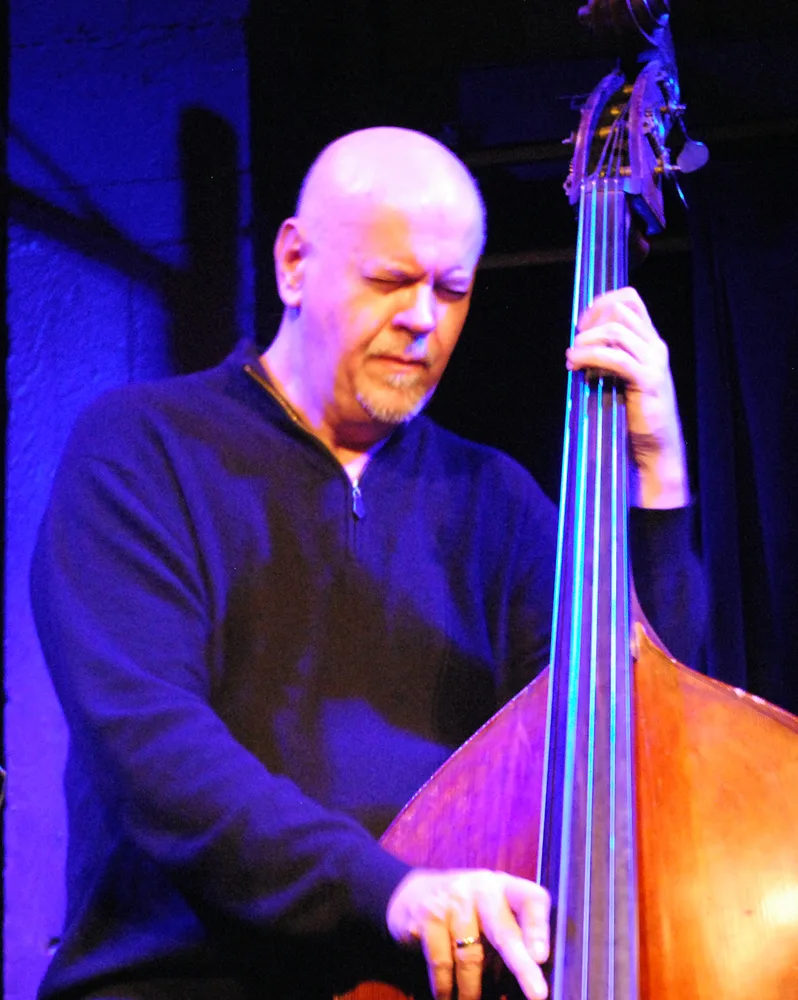
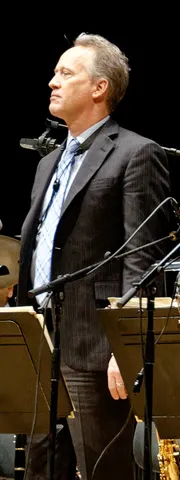
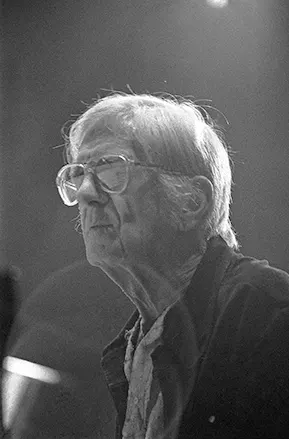
Jay Anderson playing double bass in Innsbruck on January 20, 2011, in the co-operative quartet BANN with Adam Nussbaum, Oz Noy and Seamus Blake. Photograph by the Wikimedia Commons contributor Svíčková, released as own work. Licensed CC BY-SA 3.0. CC BY-SA 3.0 (Creative Commons Attribution-ShareAlike 3.0 Unported), dual-licensed with the GNU Free Documentation License — Wikimedia Commons - https://commons.wikimedia.org/wiki/File:Jay_Anderson.JPG

Jay Anderson was born on October 24, 1955 in the Inland Empire east of Los Angeles and took up the acoustic bass at twelve. He collected school and college prizes in both jazz and classical playing, and his first issued recording is a student one: the 1976 album by the California State University Long Beach Studio Day Band and Jazz Vocal Ensemble, on which he is credited with acoustic bass and Fender electric bass. Two years later he was on a Los Angeles fusion bandstand with the group Fejj, whose Alive at the Pilgrimage was taped at the Pilgrimage Theater on June 11, 1978 with Steve Bartek on guitar and Ralph Humphrey on drums. When the band recorded again at the Keystone Korner in San Francisco the following year the bass chair had passed to John Patitucci, because Anderson had gone on the road. One week after taking his performance degree from California State University, Long Beach in 1978 he was asked to join the Woody Herman Orchestra, and he spent a year in the Thundering Herd before Carmen McRae called him. He worked for the singer for the next two years.
He moved to New York in 1982 and joined the quintet co-led by the trumpeter Red Rodney and the multi-instrumentalist Ira Sullivan, which turned out to be the association that made his name. Spirit Within (Elektra Musician, 1982) and Sprint (1983) were followed by a decade in Rodney's bands: One for Bird, recorded live at the Slukefter in Tivoli, Copenhagen on July 11 and 12, 1988 with Dick Oatts, Garry Dial and John Riley; Red Snapper and No Turn on Red in 1989; and Then and Now in 1992. He was in Michael Brecker's working band in the same period, playing acoustic bass on two tracks of Now You See It... (Now You Don't) (GRP, 1990) and touring the group heard on Live at Fabrik, Hamburg 1987. By the end of the decade he had also become the bassist Bob Belden used for his large-ensemble projects, playing acoustic bass on seven of the ten pieces on Straight to My Heart: The Bob Belden Ensemble Performs the Music of Sting (Blue Note, 1991) and going on to Puccini's Turandot and La Cigale.
The 1990s made him one of the busiest bassists in New York and gave him a leader catalogue. Digital Music Products issued Next Exit in 1992, an electric-tinged sextet with Randy Brecker, Billy Drewes, Wayne Krantz, David Witham and Jeff Hirshfield, and Local Color in 1994, which Anderson produced himself and which set Toots Thielemans's harmonica and Arto Tuncboyaciyan's percussion against readings of Jimi Hendrix's "Third Stone from the Sun" and Marvin Gaye's "What's Going On." The same label made him the house bassist for Warren Bernhardt's trio and for Bob Mintzer's big band, and for Lynne Arriale's The Eyes Have It (1994). He joined the Maria Schneider Orchestra for Evanescence (Enja, 1994) and stayed in the bass chair for thirty years. In Denmark, Nils Winther's SteepleChase label began calling him for date after date: Paul Bley's quartet and trio records from If We May (1994) to Notes on Ornette (1998), Lee Konitz's Dearly Beloved and Out of Nowhere (both 1997), George Cables's trio, Rich Perry's long series of quartet albums, Vic Juris's guitar dates, and the label's jam-session volumes. He also spent 1992 to 2006 in Joe Sample's band, and picked up the non-jazz session work a New York first call accumulates: Frank Zappa's Thing-Fish, Tom Waits's Frank's Wild Years, Chaka Khan's ClassiKhan and Céline Dion's Falling into You.
In 2000 he finished converting a barn at his home in New Paltz, in the Hudson Valley, into Mountain Rest Studio, and a second career as a producer and engineer opened alongside the playing. He recorded, mixed and mastered records for Vic Juris (A Second Look, Blue Horizon, Omega Is the Alpha), for the singer Jay Clayton, for Joe Locke's quartet on the Italian label Jazz Eyes, and for Karl Berger and Kirk Knuffke's Heart Is a Melody in 2022. The engineering and the bass playing are usually the same job: on most of these he is credited both as a player and as the person who recorded the session.
The Jazz Eyes connection produced the one record he is formally a co-leader of. BANN, a co-operative quartet whose name is the four members' initials, put Seamus Blake on tenor saxophone, Anderson on bass, Oz Noy on guitar and Adam Nussbaum on drums, and released As You Like on Jazz Eyes on October 25, 2010. Anderson recorded, mixed and mastered it as well as playing on it, and two of the nine pieces are his own compositions, "Will Call" and "At Sundown," both carried over from his DMP albums. The band toured Europe behind the record, and the concert photograph at the head of this profile was taken at one of those dates, in Innsbruck in January 2011.
Alongside all of it he became the bassist on a run of Grammy-winning large-ensemble records. Maria Schneider's Concert in the Garden (2004) won Best Large Jazz Ensemble Album, Sky Blue (2007) carried the winning instrumental composition "Cerulean Skies," and The Thompson Fields (2015) and Data Lords (2020) both took the large-ensemble award; Winter Morning Walks (2013), on which he plays the nine Ted Kooser settings with Dawn Upshaw and the Australian Chamber Orchestra, won three classical Grammys. He also played on David Bowie's "Sue (Or in a Season of Crime)," the Schneider-arranged 2014 single that won Best Arrangement, Instruments and Vocals, and he has been in Ryan Truesdell's Gil Evans Project since its first album, Centennial, in 2012.
His own recording resumed after a twenty-five-year gap. Deepscape, cut at Mountain Rest in May and June 2018 and issued by SteepleChase in 2019, is a spacious sextet record with Billy Drewes, Kirk Knuffke, Matt Wilson, Frank Kimbrough on harmonium and Rogerio Boccato on percussion, built around Ornette Coleman's "Shades of Jazz," a movement of Morton Feldman's Rothko Chapel, Jim Pepper's "Witchi-Tai-To" and "Tennessee Waltz." Three duo and trio projects followed: Living a Dream We're Not In with the pianist Garry Dial (SteepleChase, 2021), Empathy with the pianist Mark Soskin (SteepleChase, 2023), and In the Briar Patch (Nonotes, September 1, 2023), a co-led trio with the saxophonist Marc Mommaas and the guitarist Kenny Wessel which Anderson also recorded. He has been on the faculty of the Manhattan School of Music since 1999 and is its Professor of Jazz Bass Studies; among the bassists who have studied with him there are Linda Oh and Hamish Smith. He has held an NEA composition grant and two Meet the Composer grants. He remains in the Schneider orchestra's bass chair, playing on three pieces of American Crow (ArtistShare, 2026), and turns up on new records at the rate he has kept for forty years, most recently Steve Wilson's Enduring Sonance (Smoke Sessions, 2026).
Anderson is a big-toned, centre-of-the-beat bassist whose reputation rests on something harder to demonstrate than virtuosity: he makes other people's bands sound settled. Leonard Feather called him "a flawless section bassist and a fleet full toned soloist," and Ted Panken's line about him, which he has kept on his own website for a quarter of a century, is that he "is bedrock, unfailingly solid and dependable" while still being "part of the ensemble" rather than under it. What that leaves out is the melodic cast of his solos, which is what the critics who have written about him at length keep returning to. He tends to build a chorus as a tune rather than as a run of eighth notes, and John S. Wilson's judgement in the New York Times, that "Mr. Anderson has a melodic sense that effectively shapes his solos," is the same observation Will Friedwald later made in the Wall Street Journal about Frank Kimbrough using "Single Petal of a Rose" as a bass feature. The range of the work is the other thing that defines him. The player who anchored Red Rodney's bebop quintet is also the bassist Maria Schneider has used for thirty years of through-composed large-ensemble writing, the one Paul Bley wanted for four SteepleChase records built largely on Ornette Coleman's tunes, and the one who turns up on a Céline Dion album. As a writer he is sparing: four tunes, "At Sundown," "Will Call," "Days On End" and "Time Like the Present," account for most of what he has published, and he has recycled them across three decades, which is why "Will Call" opens Next Exit in 1992 and reappears on BANN's As You Like eighteen years later. His leader records are correspondingly interpretive rather than compositional, and Deepscape in particular reads as a curator's programme: Ornette Coleman, Morton Feldman, Jim Pepper, a Miles Davis and Gil Evans piece, and a country waltz, arranged for a band with no chordal instrument except a harmonium.
- Next Exit (1992, DMP) - His debut as a leader, a sextet with Randy Brecker, Billy Drewes, Wayne Krantz, David Witham and Jeff Hirshfield, and the first recording of "Will Call." Spotify - Next Exit Listen
- Local Color (1994, DMP) - The second DMP album, which he produced, with Toots Thielemans on harmonica and Tim Hagans on trumpet, and covers of Hendrix and Marvin Gaye alongside his own "At Sundown." Spotify - Local Color Listen
- As You Like (2010, Jazz Eyes) - BANN, the co-operative quartet named for the initials of Seamus Blake, Anderson, Oz Noy and Adam Nussbaum, on standards, Monk, Crosby, Stills and Nash and two Anderson originals. He recorded, mixed and mastered it as well as playing it. Spotify - As You Like
- Deepscape (2019, SteepleChase) - His first leader album in twenty-five years, cut at his own studio with Billy Drewes, Kirk Knuffke, Matt Wilson, Frank Kimbrough and Rogerio Boccato. Spotify - Deepscape Listen
- Triple Play (2017, SteepleChase) - A fully collective piano trio with Harold Danko and Jeff Hirshfield in which every piece is credited to the three of them jointly. Spotify - Triple Play Listen
- In the Briar Patch (2023, Nonotes Records) - A pianoless, drummerless trio with Marc Mommaas and Kenny Wessel, recorded by Anderson, and the project he has been most vocal about in recent years. Spotify - In the Briar Patch Listen
- Concert in the Garden (2004, ArtistShare) - Maria Schneider's Grammy winner for Best Large Jazz Ensemble Album, and the most decorated of the seven Schneider records he has played on.
- Straight to My Heart: The Bob Belden Ensemble Performs the Music of Sting (1991, Blue Note) - Anderson on acoustic bass on seven of the ten arrangements, in the large-ensemble setting he has worked in ever since. Spotify - Straight To My Heart Listen
- Spirit Within (1982, Elektra Musician) - The first record by the Red Rodney and Ira Sullivan quintet he joined on arriving in New York, and the start of a decade with Rodney.
- Standards (And Other Songs) (1992, Atlantic Jazz) - Mike Stern's acoustic-rhythm-section date, with Anderson, Al Foster and Bob Berg. Spotify - Standards (And Other Songs)
Jay Anderson: Full Discography
Jay Anderson has led or co-led nine albums since 1992, and the first table below covers them in full. Everything else is a matter of selection. His own biography claims more than 500 recordings; the live Discogs API returns 398 entries against his main artist page (artist ID 355827), of which 335 are tagged as appearances, and Discogs additionally files him as a member of sixty-one separate band entities whose release lists carry several hundred titles that never appear under his own page. The second table is therefore a representative selection of the significant original sideman dates, weighted towards the leaders he worked with repeatedly, and the third table lists the production and engineering credits that are not performances at all.
Verified against the live Discogs API, with every entry of type master resolved through its main release and the returned title checked against the title requested before any label, catalogue number or personnel was written down. Dates and links were cross-checked against Spotify, and the leader titles against the artist's own site, which is the only source that carries In the Briar Patch.
Four mechanical notes for anyone extending these tables.
First, the Discogs Main tag is not a leader catalogue here. Thirty-two entries carry it, and most are records led by somebody else on which Anderson happens to be named in the cover billing, a habit of the SteepleChase and DMP sleeves: Notes on Ornette is tagged Main and is a Paul Bley album, One for Bird is a Red Rodney album, Bluesology is a George Cables album, and seven of the SteepleChase jam-session volumes are collective blowing dates. The billing on each release was read before it was placed in a table.
Second, the band-entity split runs deeper here than on most artists. Sixty-one group entities are attached to his artist record, and reconciling them recovers real credits that the main-ID pull misses, including the Dave Stryker Quintet's Strike Zone, three Steve Slagle Quartet albums, four Rich Perry Quartet albums, the Frank Kimbrough Trio's Quickening and the Ken Schaphorst Big Band's first two records. But the same reconciliation injects false positives, because a Discogs group entity's release list is the band's whole history, not the member's tenure in it. The Woody Herman entities carry 78-rpm sides from 1936 and the Paul Bley Trio entity carries the 1965 Gary Peacock and Barry Altschul records, none of which Anderson can be on. Group membership is a lead, not a credit.
Third, two releases filed under his artist ID belong to other people with the same name, and both were excluded here: the heavy-metal cassette Sinister Realities by Cellphone (Hard And Heavy Records HHR-016, Canada, 2018), which credits him as producer, and Steady by Lee Paradise (Telephone Explosion, Canada, 2023), a downtempo electronic record which credits him with percussion on two sides. A third, Cowpoke Detox b/w Blue Ramen #1 by Suite Crude Revue (2023), credits him with saxophone, an instrument he does not play. Three further entries appear at master level only, tagged as appearances, with no supporting credit on any pressing checked: Fergie's The Dutchess, Jamalski's Roughneck Reality and Crywank's Just Popping In To Say Hi.
Fourth, Maria Schneider's ArtistShare catalogue is not on Spotify, by her own long-standing choice, so the Spotify cells for those records are empty rather than unresearched.
As Leader / Co-Leader
| Album Title | Recording Date(s) | Release Date | Label | Catalog Number | Format(s) | Personnel | Role | Reissue History | Spotify | Buy | Notes |
|---|---|---|---|---|---|---|---|---|---|---|---|
| Next Exit | Not listed on Discogs | 1992 | DMP | 490 | CD, Album | Jay Anderson (bass), Randy Brecker (trumpet, flugelhorn), Billy Drewes (saxophone), Wayne Krantz (guitar), David Witham (synthesizer), Jeff Hirshfield (drums) | Leader | (none listed) | Spotify - Next Exit | — | Ten pieces, opening with "Inside Line" and including "Will Call" and "Days On End," two of the four tunes he has published as lead sheets. A 20-bit digital recording, in the audiophile house style DMP built its catalogue on. |
| Local Color | Not listed on Discogs | 1994 | DMP | CD-507 | CD, Album | Jay Anderson (acoustic bass, producer), Billy Drewes (alto and soprano saxophone), Tim Hagans (trumpet, flugelhorn), Toots Thielemans (harmonica), David Witham (keyboards, kalimba), Arto Tuncboyaciyan (percussion, voice), Jeff Hirshfield (drums); produced and recorded by Tom Jung with Anderson | Leader | (none listed) | Spotify - Local Color | — | Nine pieces, including his own "At Sundown," Jimi Hendrix's "Third Stone from the Sun" and Marvin Gaye's "What's Going On." His first production credit on his own record. |
| Between Earth & Mars | November 1998 | 2000 | SteepleChase | SCCD 31478 | CD, Album | Andy LaVerne (piano), Dave Samuels (vibraphone), Jay Anderson (bass); produced by Nils Winther, recorded by Josiah Gluck | Co-leader (three-way billing) | (none listed) | Spotify - Between Earth & Mars | — | A drummerless trio, billed on the sleeve to all three players. Discogs tags it Main for Anderson, which is consistent with the billing rather than with a single leader. |
| As You Like | Not listed on Discogs. The band's own account puts the session in May 2009; that date is not corroborated by the release data | October 25, 2010 | Jazz Eyes | Jazz Eyes 010 | CD, Album, 4-panel digipak; also LP (Jazz Eyes 011, 180g, limited to 500) | Seamus Blake (saxophone), Oz Noy (guitar), Jay Anderson (double bass; also recording, mixing and mastering), Adam Nussbaum (drums); produced by BANN, executive producer Paul Siculiana | Co-leader (band) | LP pressing, Italy, 2010 | Spotify - As You Like | — | BANN, named for the four members' initials, and the Discogs band entity (2363172) lists exactly those four as members. Nine tracks on the CD; the LP drops Joe Henderson's "Isotope" and runs eight. Anderson wrote two of the nine, "Will Call" and "At Sundown," both revivals from his DMP albums. The LP's credit block carries only the executive producer and Anderson's engineering credit, so a personnel check against that pressing alone finds him as the engineer and nobody as a player. |
| Triple Play | December 2016 | November 10, 2017 | SteepleChase | SCCD 31839 | CD, Album | Harold Danko (piano), Jay Anderson (bass), Jeff Hirshfield (drums); produced, mixed and mastered by Nils Winther, recorded by Chris Sulit, liner notes by Danko | Co-leader (collective trio) | (none listed) | Spotify - Triple Play | — | The release notes state that all the songs were co-written by Danko, Anderson and Hirshfield, and all three carry a Written-By credit, which makes this the most literally collective record in his catalogue. |
| Deepscape | Mountain Rest Studio, New Paltz, New York, May and June 2018 | 2019 | SteepleChase | SCCD 31870 | CD, Album | Jay Anderson (acoustic bass; singing bowls on 3), Billy Drewes (alto and soprano saxophone throughout; bass clarinet on 2 to 4, 6, 8 to 10), Kirk Knuffke (cornet on 2, 4, 6 to 8, 10), Matt Wilson (drums on 2, 3, 4, 6 to 10), Frank Kimbrough (harmonium on 3, 9, 11), Rogerio Boccato (percussion on 3, 6, 7, 9) | Leader | (none listed) | Spotify - Deepscape | — | Eleven pieces, cut at his own studio, and almost entirely other people's music: Ornette Coleman's "Shades of Jazz," the fifth movement of Morton Feldman's Rothko Chapel, the Miles Davis and Gil Evans "Time of the Barracudas," Jim Pepper's "Witchi-Tai-To," "Sweet and Lovely" and "Tennessee Waltz." Every credit on the release carries an explicit track list, so the instrumentation shifts piece by piece and the numbers above are real data rather than an inference. |
| Living a Dream We're Not In | Not listed on Discogs | October 15, 2021 | SteepleChase | SCCD 31924 | CD, Album | Garry Dial (piano, all compositions, recording, liner notes), Jay Anderson (bass, recording, mixing, liner notes); produced by Nils Winther | Co-leader (duo) | (none listed) | Spotify - Living a Dream We're Not In | — | Nine pieces, all Dial's, and the two of them recorded it themselves. Anderson also mixed it. The partnership goes back to Red Rodney's rhythm section in the 1980s. |
| Empathy | October 2022 | April 15, 2023 | SteepleChase | SCCD 31943 | CD, Album | Mark Soskin (piano), Jay Anderson (bass); produced, mixed and mastered by Nils Winther, recorded by Chris Sulit, liner notes by Neil Tesser | Co-leader (duo) | (none listed) | Spotify - Empathy | — | Not to be confused with a second, unrelated Empathy released five weeks later, on which Anderson is a sideman: Tim Lin's quartet album for LInsanity Music, recorded at Oktaven Studios on December 19, 2022. Discogs carries both under his artist page. |
| In the Briar Patch | Not listed on Discogs | September 1, 2023 | Nonotes Records | (not listed) | Digital album; CD via the guitarist's Bandcamp | Kenny Wessel (guitar, compositions), Marc Mommaas (tenor saxophone, compositions), Jay Anderson (bass, recording) | Co-leader (trio) | (none listed) | Spotify - In the Briar Patch | — | Ten pieces, all by Wessel or Mommaas. Absent from Discogs entirely; the personnel and the recording credit come from Anderson's own site, which says he played bass and recorded it. |
As Sideman (selected major credits)
| Year | Project (Leader) | Title | Label | Catalog | Role | Notes |
|---|---|---|---|---|---|---|
| 1976 | California State University Long Beach Studio Day Band | Cal State Long Beach - Jazz Ensembles - 1976 | California State University, Long Beach | CSULB-101 | Acoustic bass, Fender electric bass | His earliest issued recording, made as a student. |
| 1978 | Fejj Alive | Alive at the Pilgrimage | Jet Danger Records | J53002 | Bass | Recorded live at the Pilgrimage Theater, Los Angeles, June 11, 1978, in a fusion band with Steve Bartek on guitar and Ralph Humphrey on drums. Anderson is one of two bassists, alongside Leon Gaer. When the band recorded again at the Keystone Korner in September 1979, John Patitucci had the chair. |
| 1981 | Carmen McRae | Recorded Live at Bubba's | Who's Who in Jazz | WWLP 21020 | Bass | From the two years he spent in the singer's group. |
| 1982 | Red Rodney and Ira Sullivan | Spirit Within | Elektra Musician | E1-60020 | Bass | The first record of the association he moved to New York for. |
| 1983 | Red Rodney and Ira Sullivan Quintet | Sprint | Elektra Musician | 60261-1 | Bass | |
| 1984 | Frank Zappa | Thing-Fish | EMI | 24 0294 3 | Double bass | A three-LP rock musical. No credit on the release carries a track restriction. |
| 1986 | Toshiko Akiyoshi Jazz Orchestra | Wishing Peace | Ken Music | 660·56·001 | Bass | The orchestra co-led with Lew Tabackin, with Frank Wess featured. |
| 1987 | Brian Lynch Sextet | Peer Pressure | Criss Cross Jazz | Criss 1029 | Bass | The trumpeter's debut as a leader. |
| 1988 | Red Rodney Quintet | One for Bird | SteepleChase | SCS-1238 | Bass | Recorded live at the Slukefter, Tivoli, Copenhagen, July 11 and 12, 1988, with Dick Oatts, Garry Dial and John Riley. All five players are on the sleeve billing, which is why Discogs tags it as a leader credit for Anderson; the record is Rodney's. |
| 1988 | Bennie Wallace with Yosuke Yamashita | Brilliant Corners | Denon | CJ 2430 | Bass | |
| 1989 | Red Rodney Quintet | Red Snapper | SteepleChase | SCS 1252 | Bass | |
| 1989 | Red Rodney Quintet | No Turn on Red | Denon | CY-73149 | Bass | |
| 1989 | Walt Weiskopf | Exact Science | Iris Records | ICD-1002 | Bass | The saxophonist's first album, a quartet with his brother Joel Weiskopf on piano and Jeff Hirshfield on drums. |
| 1990 | Walt Weiskopf | Mindwalking | Iris Records | ICD-1003 | Bass | The same quartet a year later. |
| 1990 | Garry Dial and Dick Oatts | Dial and Oatts | DMP | CD-465 | Acoustic bass | |
| 1990 | Michael Brecker | Now You See It... (Now You Don't) | GRP | GRD 9622 | Bass and acoustic bass, tracks 5 and 8 | An explicit restriction on a release where other credits carry track data, so it is real: Anderson plays two of the album's pieces and Victor Bailey the rest. He was in the touring band, which is a separate matter from this record. |
| 1991 | Bob Belden Ensemble | Straight to My Heart: The Bob Belden Ensemble Performs the Music of Sting | Blue Note | CDP 7 95137 2 | Acoustic bass, tracks 3 to 6 and 8 to 10 | Seven of the ten arrangements. The pressing the Discogs master points at, a promo LP catalogued STING 1, carries no personnel at all; the credit is on the CD and on six other pressings, so a check against the master's own main release returns a false negative. |
| 1991 | Joey Calderazzo | In the Door | Blue Note | CDP 7 95138 2 | Bass | The pianist's debut, produced by Michael Brecker, with Branford Marsalis and Jerry Bergonzi sharing the saxophone chair and Adam Nussbaum and Peter Erskine splitting the drums. |
| 1991 | Terumasa Hino | Live in Warsaw | Century | (not listed) | Bass | See also Off the Road (Sweet Basil, 1997). |
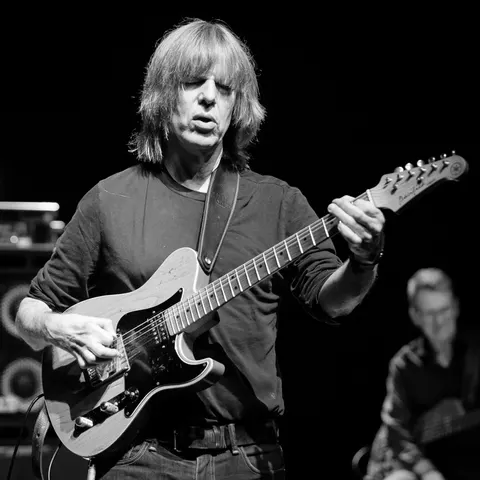
| 1992 | Mike Stern | Standards (And Other Songs) | Atlantic Jazz | 7 82419-2 | Acoustic bass | With Bob Berg and Al Foster. |
| 1992 | Vic Juris | For the Music | Jazzpoint Records | CD jp 1034 | Bass | The first of fourteen albums with the guitarist. |
| 1992 | Red Rodney | Then and Now | Chesky Records | JD 79 | Bass | The last of the Rodney records. |
| 1993 | Dave Stryker Quintet | Passage | SteepleChase | SCCD 31330 | Bass | |
| 1994 | Maria Schneider Orchestra | Evanescence | Enja Records | ENJ-8048 2 | Bass | The orchestra's first album, and the start of a thirty-year tenure. |
| 1994 | George Cables Trio | I Mean You | SteepleChase | SCCD 31334 | Bass | |
| 1994 | Bob Mintzer Big Band | Only in New York | DMP | CD-501 | Bass | |
| 1994 | Lynne Arriale Trio | The Eyes Have It | DMP | CD-502 | Bass | The pianist's first album. |
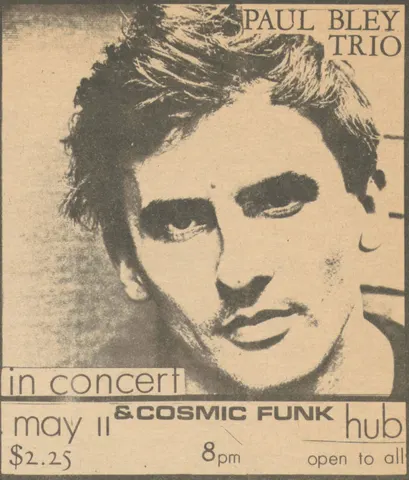
| 1994 | Paul Bley Trio | If We May | SteepleChase | SCCD 31344 | Bass | With Jeff Hirshfield. The first of four Bley records. |
| 1995 | Dave Panichi | Blues for McCoy | Spirit Song | 36251 | Bass | An all-star date co-billed to six players, with David Liebman, Rich Perry, Mulgrew Miller and Victor Lewis. Liebman's soprano is restricted to tracks 1 and 5; Anderson's bass is not restricted. |
| 1995 | Rich Perry | Beautiful Love | SteepleChase | SCCD 31360 | Bass | The first of more than a dozen Perry albums, running to Dream in 2025. |
| 1996 | George Cables Trio | Skylark | SteepleChase | SCCD 31381 | Bass | With Albert "Tootie" Heath. |
| 1996 | Vic Juris | Pastels | SteepleChase | SCCD 31384 | Bass | |
| 1996 | Joe Sample | Old Places Old Faces | Warner Bros. Records | 9 46182-2 | Bass, all tracks | The credit carries the explicit value "All" on a release where other players are restricted, which settles it. |
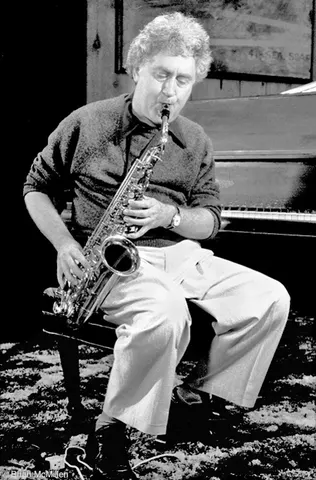
| 1997 | Lee Konitz and Paul Bley | Out of Nowhere | SteepleChase | SCCD 31427 | Bass | |
| 1997 | The Lee Konitz Quartet | Dearly Beloved | SteepleChase | SCCD 31406 | Bass | |
| 1998 | Lee Konitz and Rich Perry | RichLee! | SteepleChase | SCCD 31440 | Bass | |
| 1998 | Paul Bley | Notes on Ornette | SteepleChase | SCCD 31437 | Bass | Recorded in New York in September 1997, with Jeff Hirshfield; the studio is not named on the release. The cover reads Paul Bley and the spine reads Paul Bley Trio, which is why Discogs tags this one as a leader credit for Anderson. |
| 1998 | George Cables Trio | Bluesology | SteepleChase | SCCD 31434 | Bass | With Billy Drummond. Billed on Discogs to the George Cables Trio entity plus Anderson and Drummond by name. |
| 1999 | The Cutting Edge | The Cutting Edge | Double-Time Records | DTRCD-141 | Bass | A collective with Andy LaVerne, Walt Weiskopf, Tim Hagans and Conrad Herwig. |
| 1999 | Greg Gisbert | The Court Jester | Criss Cross Jazz | Criss 1161 CD | Bass | With Conrad Herwig and Gregory Hutchinson. |
| 2001 | Warren Bernhardt | So Real | DMP | CD-532 | Bass | Recorded live to Direct Stream Digital on April 9 and 10, 2001, with Peter Erskine. Sleeve billing reads "Warren Bernhardt With Jay Anderson & Peter Erskine." |
| 2002 | Warren Bernhardt | Amelia's Song | dmp | CD-535 | Bass | Recorded at Ambient Recording, Stamford, Connecticut, again with Erskine. |
| 2002 | SteepleChase Jam Session (collective) | SteepleChase Jam Session Volume 5 | SteepleChase | SCCD 31536 | Bass | Recorded April 1997, with Scott Wendholt, Dave Ballou, Greg Gisbert, Andy LaVerne and Billy Drummond. Anderson is the house bassist on at least six of these volumes, recorded 1997 to 2000 and released across a decade. |
| 2003 | SteepleChase Jam Session (collective) | SteepleChase Jam Session Volume 7 | SteepleChase | SCCD 31546 | Bass | Recorded September 1997, with Louis Smith, Mark Turner and Billy Mitchell. |
| 2003 | SteepleChase Jam Session (collective) | SteepleChase Jam Session Volume 8 | SteepleChase | SCCD 31547 | Bass | With Ryan Kisor, Jimmy Greene and Jim Pugh. |
| 2004 | Maria Schneider Orchestra | Concert in the Garden | ArtistShare | 0001 | Bass | Grammy, Best Large Jazz Ensemble Album. Not on Spotify. |
| 2004 | Mark Isaacs | Keeping the Standards | Vorticity Music | VM011309-1 | Bass | Recorded live at The Basement, Sydney, on November 4, 2002, with Adam Nussbaum. Sleeve billing reads "Mark Isaacs With Jay Anderson & Adam Nussbaum." |
| 2004 | Chaka Khan with the London Symphony Orchestra | ClassiKhan | AGU / Earthsong / Sanctuary Urban | 06076-87524-2 | Acoustic bass | |
| 2005 | SteepleChase Jam Session (collective) | Jam Session, Vol. 16 | SteepleChase | SCCD 31582 | Bass | Recorded November 1999. A three-bass session with Ron McClure and Steve LaSpina, George Colligan on piano and Darren Beckett on drums. |
| 2006 | Bob Mintzer Big Band | Old School New Lessons | MCG Jazz | (not listed) | Bass | With Kurt Elling and the Yellowjackets. |
| 2007 | Maria Schneider Orchestra | Sky Blue | ArtistShare | AS0065 | Bass | Carries "Cerulean Skies," which won the Grammy for Best Instrumental Composition. Not on Spotify. |
| 2008 | The Stryker / Slagle Band | The Scene | ZOHO | (not listed) | Bass | |
| 2010 | Vic Juris | Omega Is the Alpha | SteepleChase | SCCD 31696 | Bass, recording engineer | One of several Juris albums he both played on and recorded. |
| 2011 | Michael Franks | Time Together | Shanachie | 5189 | Bass, tracks 5 and 9 | An explicit restriction: seven bassists are credited across the album, each on named tracks. |
| 2012 | Ryan Truesdell | Centennial: Newly Discovered Works of Gil Evans | ArtistShare | AS 0114 | Bass | The Gil Evans Project's first album; a track from it won the 2012 Grammy for Best Instrumental Arrangement. |
| 2012 | Frank Kimbrough Trio | Live at Kitano | Palmetto Records | PM 2161 | Bass | With Matt Wilson. |
| 2013 | Dawn Upshaw, Maria Schneider, Australian Chamber Orchestra | Winter Morning Walks | ArtistShare | AS0121 | Bass, tracks 1 to 9 | The nine Ted Kooser settings, which is the whole of the Schneider cycle; the rest of the disc is the Carlos Drummond de Andrade songs with orchestra. Three Grammys, including Best Contemporary Classical Composition. Not on Spotify. |
| 2014 | Frank Kimbrough | Quartet | Palmetto Records | 2173 | Double bass | With Steve Wilson and Matt Wilson. |
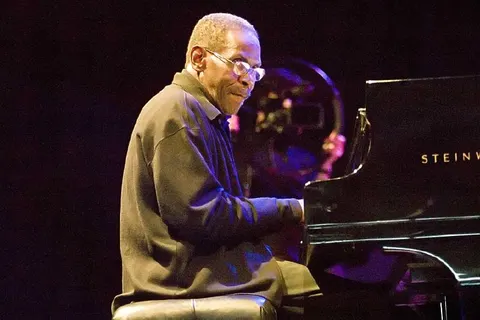
| 2014 | Stanley Cowell Trio | Are You Real? | SteepleChase | SCCD 31790 | Bass | The first of three Cowell trio records. |
| 2014 | David Bowie | Sue (Or in a Season of Crime) | Parlophone | 10RDB2014 | Bass, sides A and B2 | Arranged by Maria Schneider and played by her orchestra; it won the 2016 Grammy for Best Arrangement, Instruments and Vocals. The B1 side is a Bowie band track he is not on. |
| 2015 | Maria Schneider Orchestra | The Thompson Fields | ArtistShare | AS0137 | Bass | Grammy, Best Large Jazz Ensemble Album. Not on Spotify. |
| 2015 | Ryan Truesdell / Gil Evans Project | Live at Jazz Standard: Lines of Color | ArtistShare | ASBN 0133 | Bass | |
| 2016 | Ken Schaphorst Big Band | How to Say Goodbye | JCA Recordings | JCA1602 | Bass | |
| 2016 | Frank Kimbrough | Solstice | Pirouet | PIT3097 | Bass | With Jeff Hirshfield. |
| 2017 | Mark Soskin | Hearts and Minds | SteepleChase | SCCD 31834 | Bass | Recorded December 2016 with Anthony Pinciotti; billed on the sleeve to all three. |
| 2017 | Kirk Knuffke | Cherryco | SteepleChase | SCCD 31832 | Bass | A Don Cherry programme. |
| 2018 | Stephen Riley | Hold 'Em Joe | SteepleChase | SCCD 31850 | Bass | Recorded April 2017 with Adam Nussbaum; the first of four Riley records with this rhythm section. |
| 2018 | Owen Broder | Heritage: The American Roots Project | ArtistShare | AS0158 | Bass | With Frank Kimbrough, Matt Wilson and Nick Finzer. |
| 2018 | Mike Richmond | Tones for Joan's Bones | SteepleChase | SCCD 31851 | Bass | The first of four albums with the cellist and bassist. |
| 2019 | Ronnie Cuber and Gary Smulyan | Tough Baritones | SteepleChase | SCCD 31903 | Bass | A two-baritone front line with Gary Versace on piano. |
| 2019 | Erik Charlston Jazz Brasil | Essentially Hermeto | Sunnyside | SSC 1288 | Bass | A Hermeto Pascoal programme; the companion volume Hermeto: Voice and Wind followed. |
| 2020 | Gary Versace | All for Now | SteepleChase | SCCD 31889 | Bass | Recorded April 2019 with Obed Calvaire; liner notes by Andy LaVerne. |
| 2020 | Maria Schneider Orchestra | Data Lords | ArtistShare | AS0176 | Bass | Grammy, Best Large Jazz Ensemble Album. Not on Spotify. |
| 2021 | Nick Finzer | Out of Focus | Outside In Music | OiM 2139 | Bass, tracks 2 and 7 | An explicit restriction on a release where the personnel changes piece by piece. |
| 2022 | Gary Versace | Time Frame | SteepleChase | SCCD 31933 | Bass | Recorded December 2021. A piano trio with Rudy Royston on drums, not a duo. |
| 2022 | Marc Mommaas | The Impressionist | Sunnyside | SSC 1669 | Double bass | A year before the trio record the two of them made with Kenny Wessel. |
| 2023 | Ted Nash and Kristen Lee Sergeant | Holidays | Sunnyside | SSC 1731 | Bass | |
| 2024 | Ryan Truesdell | Synthesis | ArtistShare | AS0228 | Bass, 2:5 | The track field encodes a disc and track position, not a range: the fifth piece of the second disc. |
| 2024 | Dave Pietro | The Talisman | SteepleChase | SCCD 31955 | Bass | |
| 2024 | Garry Dial and Rich DeRosa | Keep Swingin': The Music of Charlie Banacos | Outside In Music | (not listed) | Acoustic bass | |
| 2025 | Kirk Knuffke | Super Blonde | SteepleChase | G1964 | Bass | |
| 2026 | Maria Schneider Orchestra | American Crow | ArtistShare | AS0245 | Bass, tracks 1, 2 and 4 | An explicit restriction on a release where other players are also restricted. Not on Spotify. |
| 2026 | Steve Wilson | Enduring Sonance | Smoke Sessions Records | SSR-2601 | Bass | Recorded May 1, 2026, with Renee Rosnes arranging and playing piano, Joe Locke on vibraphone and Kendrick Scott on drums. |
Non-Performing Credits (production, engineering, mixing, mastering)
Anderson finished converting a barn at his home in New Paltz, New York, into Mountain Rest Studio in 2000, and has recorded, mixed, mastered and produced other people's albums there ever since. Discogs files most of these under the same coarse tag it uses for playing credits, so they are separated out here. On several of them he is both the bassist and the engineer; those rows say so.
| Year | Project (Leader) | Title | Label | Catalog | Role | Notes |
|---|---|---|---|---|---|---|
| 2002 | Mike Fahn | Close Your Eyes and Listen | Sparky 1 Productions | SPI 957-2 | Producer; engineer on track 5; also plays acoustic bass | |
| 2004 | Vic Juris | Blue Horizon | ZOHO | ZM 200409 | Recording producer and engineer; also plays bass | |
| 2005 | Vic Juris | A Second Look | Mel Bay Records | MB09782CD | Recorded, mixed and mastered by Anderson; also plays bass | |
| 2007 | Joe Locke Quartet | Sticks and Strings | Jazz Eyes | Jazz Eyes 003 | Engineer, mixing, mastering; also plays bass | The Italian label that would release BANN's As You Like three years later. |
| 2008 | Jay Clayton | The Peace of Wild Things (Singing and Saving the Poets) | Sunnyside | SSC 1198 | Producer and engineer only. He does not play on it | |
| 2008 | Bill Moring & Way Out East | Spaces in Time | Owl Studios | Owl-00122 | Producer only. He does not play on it | The leader is himself a bassist. |
| 2010 | Jay Clayton | In and Out of Love | Sunnyside | SSC 1260 | Recorded, mixed and mastered by Anderson; also plays bass | |
| 2010 | BANN | As You Like | Jazz Eyes | Jazz Eyes 010 | Recorded, mixed and mastered by Anderson, who is also the bassist and a co-leader | Listed here as well as in the leader table because the engineering credit is the only one of his that survives on the LP pressing. |
| 2015 | Terre Roche | Imprint | Earth Rock Wreckerds | 0002 | Producer, engineer, mastering; also plays bass and percussion | The former Roches singer's solo album. Wikipedia lists this as "Imprint Earth" on "Rock Wreckerds"; the release itself is Imprint on Earth Rock Wreckerds. |
| 2022 | Karl Berger and Kirk Knuffke | Heart Is a Melody | Stunt Records | STUCD 22092 | Recorded, mixed and mastered by Anderson; also plays bass |
Two further categories have been left out of these tables. The first is the long tail of samplers, audiophile demonstration discs and label anthologies, including the DMP and Chesky compilations that recycle tracks from records already listed above, and the German hi-fi test disc Factory Town on Advantage Music, which Discogs tags as a leader credit for him and which is a demonstration record rather than an album. The second is the unofficial catalogue, fourteen entries in all, mostly broadcast tapes of the Woody Herman and Michael Brecker bands.
One verification note, since it bears on how the SteepleChase catalogue reads. Anderson's name appears in the artist billing of dozens of SteepleChase releases that are not his records, because the label's sleeve convention is to bill every player. Discogs mirrors that billing, and its coarse role field then reports thirty-two of his releases as leader credits when nine of them are. The billing on each release was checked before the row was placed, and the tables above follow the music rather than the tag.
- Red Rodney and Ira Sullivan - the quintet he joined on moving to New York in 1982, and the association that established him: Spirit Within (1982), Sprint (1983), One for Bird (1988), Red Snapper and No Turn on Red (1989) and Then and Now (1992).
- Maria Schneider - her orchestra's bassist since Evanescence in 1994, through Coming About, Allegresse, Concert in the Garden, Sky Blue, The Thompson Fields, Data Lords and American Crow, plus the Dawn Upshaw song cycle Winter Morning Walks.
- Vic Juris - the guitarist he recorded with more than any other leader, fourteen albums between For the Music (1992) and Let's Cool One (2020), and whose Sunday trio at the 55 Bar he held down for years with Anthony Pinciotti. He engineered several of the records as well as playing on them.
- Rich Perry - a SteepleChase partnership running from Beautiful Love (1995) to Dream (2025), well past a dozen albums, including all three At the Kitano volumes.
- Paul Bley - the trio and quartet dates If We May (1994), Speechless (1995), Reality Check (1996) and Notes on Ornette (1998), plus Out of Nowhere with Lee Konitz.
- Adam Nussbaum - his rhythm-section partner in BANN, in the NYC Trio with the Czech guitarist Libor Smoldas, on Mark Isaacs's Keeping the Standards and in Stephen Riley's SteepleChase quartets.
- Seamus Blake and Oz Noy - the other half of BANN, 2009 to 2010.
- Warren Bernhardt - five DMP albums between Heat of the Moment (1989) and Amelia's Song (2002), the last two of them trios co-billed to Anderson and Peter Erskine.
- Michael Brecker - a member of his touring band in the late 1980s, and on two tracks of Now You See It... (Now You Don't) (1990).
- Frank Kimbrough - the pianist's Live at Kitano (2012), Quartet (2014) and Solstice (2016), and a bandmate in the Schneider orchestra for two decades.
- Joe Sample - in his band from 1992 to 2006, on Old Places Old Faces, Sample This, The Song Lives On and The Pecan Tree.
- Mark Soskin - the trio Hearts and Minds (2017) with Anthony Pinciotti, the duo Empathy (2023), and Soskin's own quartet dates from 17 (2001) onward.
- Harold Danko - Unriched (2012), Lost in the Breeze (2016), Spring Garden (2021) and the collectively written Triple Play (2017).
- Dave Stryker and Steve Slagle - a decade of SteepleChase and Zoho quartets and quintets under each name, and the co-led Stryker/Slagle Band.
- George Cables - the pianist's SteepleChase trio through I Mean You (1994), Skylark (1996), Dark Side, Light Side (1997), Bluesology (1998) and One for My Baby (2000).
- Lynne Arriale - the trio's bassist on The Eyes Have It (1994), Live at Montreux (2000), Inspiration (2002), Arise, Come Together and Live.
- Garry Dial - a partnership going back to Red Rodney's rhythm section in the 1980s, and the duo album Living a Dream We're Not In (2021).
- Jay Clayton - the singer whose The Peace of Wild Things (2008) he produced and engineered without playing on, and whose In and Out of Love (2010) he produced, engineered and played on.
- Kenny Wessel and Marc Mommaas - the trio of In the Briar Patch (2023).
- Ryan Truesdell - a member of the Gil Evans Project from Centennial (2012) through Lines of Color (2015) and Synthesis (2024).
- Bob Mintzer - the big band's bassist on Only in New York (1994), Big Band Trane (1996), Latin from Manhattan (1998), Gently (2002), Old School New Lessons (2006) and Swing Out (2008), and on the quartet records Quality Time and In the Moment.
- Wikipedia: Jay Anderson - used for the birth date and birth place, the Woody Herman and Carmen McRae dates and the outline sideman discography; it cites Gary W. Kennedy's entry in the second edition of The New Grove Dictionary of Jazz
- Manhattan School of Music: Jay Anderson - the institution's own faculty page, used for the teaching post, the year he joined the faculty and the career chronology
- jayandersonbass.com - the artist's own site, used for the Mountain Rest Studio history, the discography, the leader and co-leader billings and the collected press quotations
- Discogs: Jay Anderson - used for identity verification (artist ID 355827) and for every release-level date, label, catalog number, personnel and track restriction, via the live Discogs API
- AllMusic: Jay Anderson - used for the leader discography and the credit list; its birthplace field reads "Ontario, Canada" and is not followed here
- All About Jazz: Jay Anderson - the musician page, which carries the artist-supplied biography and the review archive
- Wikimedia Commons: File:Jay Anderson.JPG - the portrait, and the source of the date and venue of the BANN concert it was taken at
- Spotify catalogue, used to confirm release dates, track listings and every album link in this profile