 JAZZPROFILES lives in the music 1,765 Jazz Artists fully Profiled!
Hiroshi Ozone
Last updated October 21, 2026
Listen on Spotify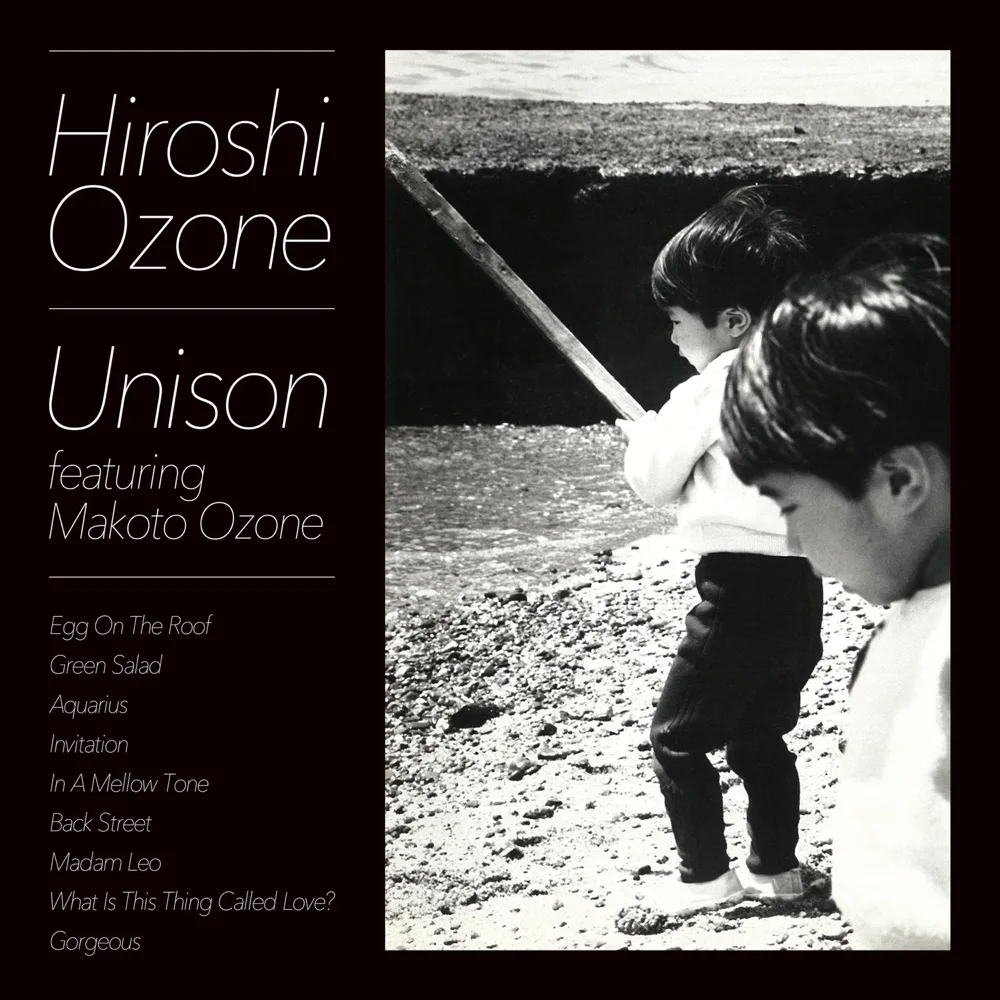
Cover of *Unison* (Universal Classics & Jazz, 2023), the only album released under Hiroshi Ozone's name. Standard copyright, all rights reserved, held by Universal Music LLC and the rights holders of the release. This is not a Creative Commons or public-domain image; it is an album cover shown as an honestly disclosed editorial identification image. — https://music.apple.com/jp/album/unison-feat-makoto-ozone/1660163940 (Apple Music artwork, 1000 x 1000 version)
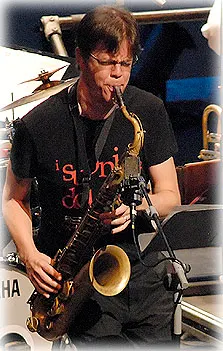
Hiroshi Ozone (小曽根啓) is a saxophonist from Kobe who spent nearly four decades teaching and playing around the Kansai region before his first album, Unison, came out in January 2023. He is the younger brother of the pianist Makoto Ozone and the second son of the Kobe jazz pianist and Hammond organist Minoru Ozone (1934-2018), who is described on the family's music school page as a central figure in Kobe jazz. The character 啓 is read Hiroshi, as the school and the Kobe press give it; a few listings romanise the same name as Kei Ozone.
He was born in Kobe in 1964, according to his label biography and the teacher profile on the Ozone Music School site. Kobe Shimbun gave his age as 58 in January 2023, which fits. He started on saxophone in the brass band at Ikuei High School, and in 1982 went to Boston to study at Berklee College of Music, where his teacher was Jimmy Mosher. Like his brother, who had enrolled there two years earlier, he made the trip. He graduated in 1985 and came back to Kobe, and the school's own history page dates the opening of a saxophone class under his name to that same year. The school itself was founded in November 1965. In a 2023 interview he said his father started it, his mother took it over, and his son now runs it, with Hiroshi as a lecturer. The history page also records that the school was hit by the January 1995 Great Hanshin earthquake and reopened that April, and that it moved to Kobe's old foreign settlement in 2011. By the school's account the saxophone, flute and clarinet class has sent several students abroad, and Kobe Shimbun reported that he had taught more than 100 students.
Outside the classroom, his label biography lists a short run of dates beside his brother. In 1993 and 1994 he took part in the Osaka and Fukuoka Blue Note tour of the Newport Jazz Orchestra, the band Makoto led at the time. In 2012 and 2013 he is listed as playing with Makoto's trio and quartet alongside Branford Marsalis, Christian McBride and Jeff "Tain" Watts. In 2013 he played the Kobe Jazz Festival with the clarinetist Eiji Kitamura and others, and the same biography says he has appeared there every year since. These are statements from the biography; no recording from any of them is documented.
Why the first album took so long is something he has spoken about plainly. He told Kobe Shimbun he had lacked the ability, and that at Berklee he watched the saxophonist Donny McCaslin (rendered Danny McCaslin in the article) play and felt the distance between them. He chose practice over the spotlight, with a line from his brother in the back of his mind: everyone gets one or two real chances in life, and the only question is whether you are ready when it comes. In July 2021, in the hospital room where their mother, Michiko, was dying, he blurted out a promise that he and his brother would make a CD. The album's title comes from the funeral. When the coffin was closed, he and Makoto each said "thank you" at the same moment, in unison.
The album was recorded on 30 and 31 May 2022 in Tokyo. Makoto produced it, played piano and Hammond B3 organ, and arranged one track. The rhythm section was the bassist Kengo Nakamura and the drummer Shinnosuke Takahashi, the pair from Makoto's big band No Name Horses. Hiroshi played soprano and alto saxophone, arranged the material, wrote the liner notes and is credited as executive producer. Neeraj Khajanchi recorded, mixed and mastered it. Nine tracks run just over an hour: five originals by Hiroshi ("Egg On The Roof," "Green Salad," "Aquarius," "Back Street," "Madam Leo"), three standards ("Invitation," "In A Mellow Tone," "What Is This Thing Called Love?"), and Mitchel Forman's "Gorgeous," which closes the record as a duo with his brother. He has said Makoto taught him that tune when he was in his twenties. The opening track grew out of a childhood summer prank in which the brothers threw eggs onto a neighbour's tiled roof to fry them in the heat.
He explained a few of the choices in a 2023 interview. He had planned to play mostly alto, but on the first recording day the alto was not speaking well, so he switched to soprano for most of the album, and only "Madam Leo" and "Back Street" are on alto. That is also why "What Is This Thing Called Love?" was played in a higher key. "In A Mellow Tone" was not planned: after the first day, over drinks, he and Nakamura decided to try it, and it was recorded in a single take. The band had rehearsed just twice, once a little before and once the day before the sessions, and the record was close to one take per tune. The interviewer noted that Makoto had praised all five originals as well made, and had urged the audience to buy the album from the stage at a No Name Horses concert in 2023.
Universal Classics & Jazz released Unison in Japan on 25 January 2023 as UCCJ-2219, billed to Hiroshi Ozone with Makoto Ozone featured. Kobe Shimbun reported that the NHK radio programme Radio Shinya Bin would carry a live performance by the brothers on 21 January, and that NHK's Hyogo broadcast of Jazz Live KOBE would air one on 27 January; release concerts were planned for April in Kobe and Tokyo. On 15 October 2023 he was scheduled to lead a quartet at Kobe Asahi Hall, in the reopened old foreign settlement, with the pianist 堀智彦, the bassist 時安吉宏 and the drummer 引田裕路, who he said regularly back him. On 21 September 2024, he and Makoto played a duo concert billed as "Unison" OZONE Brothers Live at Seishin-Chuo Hall in Kobe. That is the most recent dated appearance on record.
Several things are simply not published. His exact birth date is not given anywhere. Unison is the only release under his name, and Discogs credits him on no other record, as leader or sideman. He told the interviewer that what he wants next is relaxed local gigs in Kobe, something like a beer garden with no announcements, rather than big stages.
Hiroshi Ozone traces his music to the Carpenters, and says he wants to write songs that move a listener every time they are played. He uses the word "listenable" for the aim: melody first, the kind of jazz a listener who does not know the idiom can still enjoy. He says his father and Makoto share that outlook. His father, as he remembers it, wanted newcomers to leave glad they had come, not thinking the playing was probably skilled but impossible to follow.
He has described a change of mind. When young he thought fast passages and many notes were what made jazz impressive. Then Makoto told him that a rest counts as a note, and he began to leave space. Kobe Shimbun described the originals on Unison as melodic and approachable, and the label's own description speaks of a plain, airy sound and interplay among the four players. The tune "Aquarius" is a lyrical ballad that Makoto singled out for praise.
His approach to teaching is the same discipline seen from the other side. He says students should be able to play any tune in every key and know all the chords, the way arithmetic comes before mathematics, because improvisation is play with notes and play needs a foundation.
- Unison (2023, Universal Classics & Jazz UCCJ-2219) - The only album under his name, with Makoto Ozone, Kengo Nakamura and Shinnosuke Takahashi. Spotify - Unison · Apple Music - Unison Listen
- "Egg On The Roof" - The opening original, built on the brothers' roof-top childhood prank. YouTube - Egg On The Roof Listen
- "Aquarius" - The ballad Makoto singled out. YouTube - Aquarius Listen
- "In A Mellow Tone" - The Ellington standard, recorded in one take after the first day. YouTube - In A Mellow Tone Listen
- "Gorgeous" - The brothers' duo closer. YouTube - Gorgeous Listen
Hiroshi Ozone (小曽根啓) - Full Discography
Japanese saxophonist (soprano and alto) and teacher from Kobe. Born 1964, Kobe; exact date not published. Discogs artist 12443269.
Name variations on record: Hiroshi Ozone (Discogs, Spotify's romanised listings, Apple Music's English album title), 小曽根啓 (Spotify, Apple Music and Japanese press), Kei Ozone (credit spelling on some retailer and archive listings). He is the younger brother of Makoto Ozone, who has his own Discogs entry (1203348); the two are different people and their credits are kept apart here.
Group affiliations: none listed on Discogs.
Leader
| Album | Year | Label | Personnel | Notes | Listen | Buy |
|---|---|---|---|---|---|---|
| Unison (billed on the Apple Music edition as Unison (feat. Makoto Ozone)) | 2023 | Universal Classics & Jazz, UCCJ-2219 | Hiroshi Ozone (soprano and alto saxophone), Makoto Ozone (piano, Hammond B3 organ), Kengo Nakamura (double bass), Shinnosuke Takahashi (drums) | Recorded 30 and 31 May 2022 at Sony Music Studios, Tokyo; mixed and mastered at NK Sound Tokyo by Neeraj Khajanchi, who also recorded it. Released 25 January 2023 as a stereo CD in Japan (barcode 4988031545935); a Japan promo copy of the same CD carries a "sample" sticker (Discogs release 27658953). Nine tracks, about one hour. Produced by Makoto Ozone; arranged by Hiroshi Ozone, with Makoto Ozone arranging track 8; liner notes and executive producer credit to Hiroshi Ozone; A&R Yoshihisa Saito; art direction and design Yusuke Yoshinaga, design Makiko Maruyama; recording-session photography Rikimaru Hotta; piano technician Hiroshi Toyama; assistant engineers Kenjiro Naka and Shizuo Harada. The opening track "Egg On The Roof" was issued digitally ahead of the album, with a release date of 11 January 2023 on its YouTube Topic upload. Discogs release 25879258, master 3166026. | Spotify · Apple Music | HMV · Amazon |
Unison track list
Composer credits are as given on Discogs; durations are the Discogs figures.
- "Egg On The Roof" (Hiroshi Ozone), 7:09 - YouTube
- "Green Salad" (Hiroshi Ozone), 7:35 - YouTube
- "Aquarius" (Hiroshi Ozone), 5:57 - YouTube
- "Invitation" (Bronislaw Kaper, Paul Francis Webster), 6:51 - YouTube
- "In A Mellow Tone" (Duke Ellington, Milt Gabler), 4:30 - YouTube
- "Back Street" (Hiroshi Ozone), 8:21 - YouTube
- "Madam Leo" (Hiroshi Ozone), 6:20 - YouTube
- "What Is This Thing Called Love?" (Cole Porter), 6:58 - YouTube
- "Gorgeous" (Mitchel Forman), 7:33 - YouTube
Five of the nine tracks are his own compositions (1, 2, 3, 6 and 7). Listings disagree on tracks 7 and 8: the International Archives for the Jazz Organ and Apple Music place "What Is This Thing Called Love?" seventh and "Madam Leo" eighth, while Discogs and HighResAudio have them the other way round. The order and durations above follow Discogs. In an interview he said that all but two tracks, "Madam Leo" and "Back Street", were played on soprano saxophone, with alto used on those two.
Co-Leader
No releases are credited to him as co-leader on Discogs.
Guest, sideman and compilation appearances
No sideman, guest, compilation or producer credits are listed for Discogs artist 12443269. His biography mentions live work with his brother's groups (the Newport Jazz Orchestra Blue Note tour of Osaka and Fukuoka in 1993 and 1994, and Makoto Ozone's trio and quartet in 2012 and 2013 alongside Branford Marsalis, Christian McBride and Jeff "Tain" Watts), but no recordings from those engagements are documented.
Broadcasts and live documentation
- 21 January 2023: NHK Radio 1, Radio Shinya Bin, live performance with Makoto Ozone and others (announced by Kobe Shimbun).
- 27 January 2023, 19:30 to 19:57: NHK General TV (Hyogo), Jazz Live KOBE, recorded with Makoto Ozone at NHK's Kobe station (announced by Kobe Shimbun).
- 15 October 2023: quartet concert at Kobe Asahi Hall with 堀智彦 (piano), 時安吉宏 (bass) and 引田裕路 (drums).
- 21 September 2024: Unison OZONE Brothers Live, duo concert with Makoto Ozone, Seishin-Chuo Hall, Kobe.
- Makoto Ozone - his older brother; producer of Unison, piano and Hammond B3 organ on it, arranger of "What Is This Thing Called Love?" and his partner in the closing duo "Gorgeous." The two played together again on 21 September 2024 at Seishin-Chuo Hall, Kobe.
- Kengo Nakamura - double bass on Unison; a member of Makoto Ozone's big band No Name Horses.
- Shinnosuke Takahashi - drums on Unison; also from No Name Horses.
- Neeraj Khajanchi - recorded, mixed and mastered Unison; the mixing and mastering were done at NK Sound Tokyo.
- Yoshihisa Saito - A&R on Unison.
- Minoru Ozone - his father (1934-2018), a Kobe jazz pianist and Hammond organist, founder of the Ozone Music School where Hiroshi teaches.
- 堀智彦, 時安吉宏 and 引田裕路 - the pianist, bassist and drummer he named as his regular Kansai quartet for the 15 October 2023 Kobe Asahi Hall concert.
- Newport Jazz Orchestra (1993 and 1994) - the Osaka and Fukuoka Blue Note tour led by Makoto, per his label biography.
- Branford Marsalis, Christian McBride and Jeff "Tain" Watts - the players alongside whom his label biography lists him in Makoto Ozone's trio and quartet in 2012 and 2013.
- Eiji Kitamura - the clarinetist with whom he played the 2013 Kobe Jazz Festival, per his label biography.
More Mainstream Jazz Artists
See all 412 Mainstream Jazz artists →More Japanese Jazz Artists
See all 262 Japanese artists →- Spotify artist page
- Apple Music artist page
- YouTube - Hiroshi Ozone - Topic
- Discogs: Hiroshi Ozone
- Hiroshi Ozone on JazzProfiles.com
- r/JapaneseJazz
- Kobe Shimbun NEXT, 20 January 2023: Kobe saxophonist Hiroshi Ozone's first album, with his brother Makoto
- SPICE, 8 August 2023: interview with Hiroshi Ozone
- HighResAudio: Unison, Hiroshi Ozone (label description and biography)
- PR TIMES, 20 June 2024: Makoto and Hiroshi Ozone, "Unison" OZONE Brothers Live
- Yamaha Pianist Lounge: OZONE Brothers Live, 21 September 2024
- Ozone Music School, saxophone class page (archived 2024)
- Ozone Music School, history and teachers (archived 2024)
- Wikipedia (Japanese): 小曽根実
- Wikipedia (Japanese): 小曽根貞松, family section
- Discogs: Hiroshi Ozone, artist 12443269
- Discogs: Unison, Universal Classics & Jazz UCCJ-2219, 2023
- International Archives for the Jazz Organ: Unison listing
- Apple Music: Unison (feat. Makoto Ozone)