 JAZZPROFILES lives in the music 1,002 Jazz Artists fully Profiled!
 Gary Burton
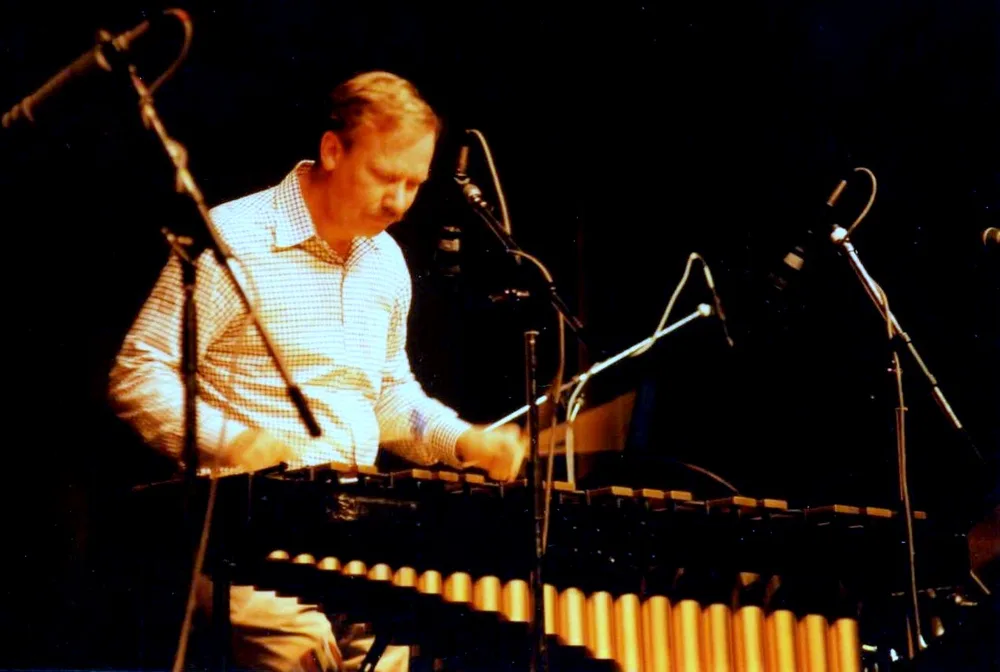
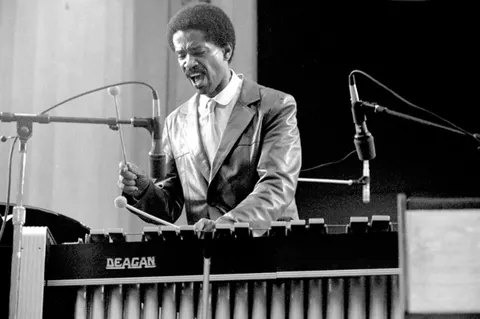
Gary Burton performing at the Münster Jazz Festival, West Germany, 1987 Public Domain (self-published, PD-self) — Wikimedia Commons, https://commons.wikimedia.org/wiki/File:GaryBurton.jpg

Gary Burton was born January 23, 1943, in Anderson, Indiana, and was almost entirely self-taught on vibraphone, developing his technique without a teacher to correct him into the conventional two-mallet grip. That circumstance led him, while still a teenager, toward the four-mallet independent-hand technique that came to be known as the "Burton grip," an approach to chording that let him voice full harmony and a moving bass line while still improvising a melodic line on top, effectively sounding like two or three players on one instrument. He made his recording debut at seventeen backing Nashville guitarist Hank Garland on the 1961 Columbia album Jazz Winds From a New Direction, cut during a period working Nashville sessions alongside Garland, Floyd Cramer, and Chet Atkins, and began recording as a leader for RCA Victor the same year, releasing his debut, New Vibe Man in Town, in 1962.
He toured with George Shearing's quintet in 1963, then spent 1964 to 1966 in Stan Getz's pianoless quartet, appearing on Getz albums including Getz/Gilberto #2 (Verve, 1966). In 1967 Burton formed his own quartet with guitarist Larry Coryell, bassist Steve Swallow, and drummer Roy Haynes (soon succeeded by Bob Moses), and the group's RCA albums Duster and Lofty Fake Anagram (both 1967) fused jazz improvisation with rock rhythm and instrumentation years ahead of the wider "fusion" movement, followed by A Genuine Tong Funeral (1968), a suite of Carla Bley compositions arranged and conducted by Bley herself with Larry Coryell, Steve Lacy, and Gato Barbieri. DownBeat named Burton its Jazzman of the Year in 1968, the youngest musician to receive the honor to that point.
The 1970s brought both his most personal record and his most enduring partnership. Alone at Last (Atlantic, 1971), a solo vibraphone recital, won Burton his first Grammy Award, for Best Jazz Performance, in 1973. In 1972 he recorded Crystal Silence for the newly founded ECM label with pianist Chick Corea, opening a duo partnership the two would revisit on record and in concert for the next four decades. Through the rest of the decade Burton led a changing quintet documented on Ring (1974, with bassist Eberhard Weber and guitarists Mick Goodrick and Pat Metheny), recorded duo albums with guitarist Ralph Towner (Matchbook, 1975) and with Swallow (Hotel Hello, 1975), paid tribute to Bley's writing on Dreams So Real (1976), and led the quartet date Passengers (1977, again with Weber and Metheny). He joined the faculty of Berklee College of Music, where he had briefly studied in 1960, in 1971, teaching vibraphone and improvisation. His second Grammy came in 1980, for the Corea duo album Duet (1979).
Burton and Corea's In Concert, Zürich, October 28, 1979 won the 1982 Grammy for Best Jazz Instrumental Album, and the pair's Lyric Suite for Sextet (1983), scored for jazz duo plus string quartet, was Grammy-nominated the following year. Burton became dean of curriculum at Berklee in 1985. Whiz Kids (1986) introduced two of his most notable student discoveries, pianist Makoto Ozone and saxophonist Tommy Smith, both still in their teens or early twenties when they joined his working quintet. Burton signed to GRP for the remainder of the 1980s, releasing Times Like These (1988) with guests including Michael Brecker and John Scofield.
In 1996 Burton was named Berklee's first executive vice president, a post he held until retiring from the college's administration in 2004. His recording career continued in parallel: Departure (1997) and Like Minds (1998, released 1999), a summit quintet album with Corea, Metheny, Roy Haynes, and Dave Holland, won the 2000 Grammy for Best Jazz Instrumental Album; a track from the Corea duo album Native Sense (1997) won Burton the 1999 Grammy for Best Jazz Performance. He turned to tango on Libertango: The Music of Astor Piazzolla (2000) and For Hamp, Red, Bags, and Cal (2001), a tribute to the vibraphonists who preceded him (Lionel Hampton, Red Norvo, Milt "Bags" Jackson, and Cal Tjader), and explored classical repertoire with Ozone on the Grammy-nominated Virtuosi (2002). Burton published his autobiography, Learning to Listen, in 2013; it was later named Jazz Book of the Year by the Jazz Journalists Association.
Burton's final touring band, billed as the New Gary Burton Quartet with guitarist Julian Lage, bassist Scott Colley, and drummer Antonio Sanchez, recorded Common Ground (2011) and Guided Tour (2013, Grammy-nominated). The New Crystal Silence (2008), an orchestral expansion of the Corea duo repertoire, won the 2009 Grammy for Best Jazz Instrumental Album, and the duo's final studio album together, Hot House (2012), won Burton his seventh and last Grammy, for Best Jazz Performance, in 2013. He came out publicly as gay in a January 1994 interview with Terry Gross on NPR's Fresh Air, becoming one of the few prominent openly gay musicians in jazz history. In 2016 he was named an NEA Jazz Master. Burton retired from performing in March 2017, at age 74, following a farewell tour with Ozone, after health issues cost him the perfect pitch and physical precision his playing had depended on.
Burton and Bobby Hutcherson are generally credited as the two vibraphonists who redefined the instrument's vocabulary in the 1960s, and Burton's contribution was largely mechanical as much as harmonic: his independent four-mallet grip let him comp chords, walk a bass line, and improvise melody simultaneously, a capability no prior vibraphonist had developed to the same degree, best heard on his unaccompanied 1971 version of "No More Blues." That technical foundation supported an unusually wide stylistic range across his career, from the amplified, rock-inflected fusion of his late-1960s quartet with Larry Coryell, to the spare, chamber-like intimacy of his ECM duo recordings with Chick Corea and Ralph Towner, to classical crossover repertoire with Makoto Ozone and tango with the music of Astor Piazzolla. As a bandleader he built a long record of showcasing young talent before they were otherwise known, giving early prominent exposure to Pat Metheny, Makoto Ozone, Tommy Smith, and Julian Lage, and his three decades on the Berklee faculty, rising to dean of curriculum and the college's first executive vice president, made him one of jazz education's most influential administrators as well as performers.
- Duster (1967, RCA Victor) - The debut album of Burton's fusion-pioneering quartet with Larry Coryell, Steve Swallow, and Roy Haynes, among the earliest records to fuse jazz improvisation with rock instrumentation. Spotify - Duster Listen
- A Genuine Tong Funeral (1968, RCA Victor) - A dark, through-composed suite written, arranged, and conducted by Carla Bley for Burton's quartet plus a larger ensemble including Steve Lacy and Gato Barbieri. Spotify - A Genuine Tong Funeral Listen
- Alone at Last (1971, Atlantic) - A solo vibraphone recital that won Burton his first Grammy Award, for Best Jazz Performance, in 1973.
- Crystal Silence (1973, ECM) - The first recorded meeting with Chick Corea, opening a duo partnership that spanned four decades and multiple Grammy wins.
- Ring (1974, ECM) - A quintet date with Eberhard Weber and Pat Metheny, representative of Burton's mid-1970s ECM quintet sound.
- Duet (1979, ECM) - Second studio meeting with Chick Corea, winner of the 1980 Grammy for Best Jazz Instrumental Album.
- Like Minds (1998, Concord Jazz) - A summit session with Chick Corea, Pat Metheny, Roy Haynes, and Dave Holland, winner of the 2000 Grammy for Best Jazz Instrumental Album. Listen
- Hot House (2012, Concord Jazz) - The final Corea/Burton studio duo album, winner of Burton's seventh and last Grammy, Best Jazz Performance, in 2013. Spotify - Hot House Listen
Gary Burton: Full Discography
Identity confirmed via the live Discogs API - artist ID 256558 ("Gary Burton," born January 23, 1943, Anderson, Indiana, matching every biographical detail found elsewhere). Discogs credits this ID with 849 release entries (100 in a "Main" role, 26 Producer-only, 375 sideman "Appearance" credits, 272 track-level "TrackAppearance" credits, plus reissues and unofficial pressings), and Burton's working bands across his career were also filed under seven separate named Discogs entities cross-referenced from his main artist page: the Gary Burton Quartet, Gary Burton Quintet, Gary Burton Trio, Gary Burton Group, Gary Burton & Friends, the New Gary Burton Quartet, and Gary Burton / Chick Corea. All were checked and folded into the table below where they represent genuine leader or co-leader dates. Burton's 55-year recording career (1961-2017) produced far too large a catalog to itemize exhaustively; the table below curates his most significant leader and co-leader releases plus a small, representative set of major sideman credits, verified where possible against the Discogs release record (not just the coarser artist-releases listing) to confirm actual performing personnel rather than production or design credits.
As Leader / Co-Leader
| Album Title | Recording Date(s) | Release Date | Label | Catalog Number | Format(s) | Personnel | Role | Reissue History | Spotify | Buy | Notes |
|---|---|---|---|---|---|---|---|---|---|---|---|
| New Vibe Man in Town | Not specified in Discogs data | 1962 | RCA Victor | LSP-2420 | Vinyl, LP, Album, Stereo | Gary Burton (vibraphone), Gene Cherico (bass), Joe Morello (drums) | Leader | None found | — | — | Burton's recorded debut as a leader, age 18-19 |
| Who Is Gary Burton? | Not specified in Discogs data | 1963 | RCA Victor | LPM-2665 | Vinyl, LP, Album, Mono | Gary Burton (vibraphone), Clark Terry (trumpet), Bob Brookmeyer (valve trombone), Phil Woods (alto sax), Tommy Flanagan (piano), John Neves (bass), Joe Morello / Chris Swansen (drums) | Leader | Reissued 2013 (Essential Jazz Classics) and 2024 (BGO Records, with New Vibe Man in Town and In Concert) | — | — | All-star sideman lineup arranged largely by Michael Gibbs |
| Something's Coming! | Not specified in Discogs data | 1964 | RCA Victor | LPM-2880 | Vinyl, LP, Album, Mono | Gary Burton (vibraphone), Jim Hall (guitar), Chuck Israels (bass), Larry Bunker (drums) | Leader | None found | — | — | |
| The Time Machine | Not specified in Discogs data | 1966 | RCA Victor | LSP 3642 | Vinyl, LP, Album, Stereo | Gary Burton (vibraphone, piano, marimba), Steve Swallow (bass), Larry Bunker (drums, percussion) | Leader | None found | — | — | |
| Duster | Recorded April 1967, RCA Victor Studio B, New York City | 1967 | RCA Victor | LSP-3835 | Vinyl, LP, Album, Stereo | Gary Burton (vibraphone), Larry Coryell (guitar), Steve Swallow (bass), Roy Haynes (drums) | Leader (Gary Burton Quartet) | Reissued 2024 with Country Roads & Other Places (BGO Records) | Spotify - Duster | — | Widely cited as one of the earliest jazz-rock fusion recordings |
| Lofty Fake Anagram | Not specified in Discogs data | 1967 | RCA Victor | LSP-3901 | Vinyl, LP, Album, Stereo | Gary Burton (vibraphone), Larry Coryell (guitar), Steve Swallow (bass), Bob Moses (drums) | Leader (Gary Burton Quartet) | Reissued as 2xCD with A Genuine Tong Funeral (BGO Records) | — | — | |
| In Concert | Not specified in Discogs data | 1968 | RCA Victor | LSP-3985 | Vinyl, LP, Album, Stereo | Gary Burton (vibraphone), Larry Coryell (guitar), Steve Swallow (bass), Bob Moses (drums) | Leader (Gary Burton Quartet) | Reissued 2024 with New Vibe Man in Town and Who Is Gary Burton? (BGO Records) | — | — | Grammy nominee, Best Jazz Instrumental Album, 1969 |
| A Genuine Tong Funeral | Recorded July 1967 | 1968 | RCA Victor | LSP-3988 | Vinyl, LP, Album, Stereo | Gary Burton (vibraphone), Larry Coryell (guitar), Steve Swallow (bass), Bob Moses (drums), Carla Bley (piano, organ, composer, conductor), Steve Lacy (soprano sax), Gato Barbieri (tenor sax), Jimmy Knepper (trombone), Michael Mantler (trumpet), Howard Johnson (tuba, baritone sax) | Leader (billed "The Gary Burton Quartet With Orchestra") | Reissued as 2xCD with Lofty Fake Anagram (BGO Records) | Spotify - A Genuine Tong Funeral | — | Carla Bley's suite, subtitled by its composer a "Dark Opera Without Words" |
| Country Roads & Other Places | Not specified in Discogs data | 1969 | RCA Victor | LSP 4098 | Vinyl, LP, Album, Stereo | Gary Burton (vibraphone, piano), Jerry Hahn (guitar), Steve Swallow (bass, electric bass), Roy Haynes (drums) | Leader | Reissued 2024 with Duster (BGO Records) | — | — | |
| Alone at Last | Recorded 1971, including three unaccompanied performances at the Montreux Jazz Festival | 1971 | Atlantic | SD 1598 | Vinyl, LP, Album, Stereo | Gary Burton (vibraphone, piano, electric piano, organ) | Leader (solo) | None found | — | — | Won the 1973 Grammy for Best Jazz Performance; some sources list the release year as 1972 |
| Crystal Silence | Recorded November 6, 1972, Arne Bendiksen Studio, Oslo | 1973 | ECM Records | ECM 1024 ST | Vinyl, LP, Album | Gary Burton (vibraphone), Chick Corea (piano) | Co-leader (with Chick Corea) | Reissued on the 2009 box set Crystal Silence: The ECM Recordings 1972-79 | — | — | Duo debut with Chick Corea, the first ECM release for either musician as a duo |
| Ring | Recorded July 23-24, 1974 | 1974 | ECM Records | ECM 1051 ST | Vinyl, LP, Album, Stereo | Gary Burton (vibraphone), Eberhard Weber (bass), Steve Swallow (bass), Mick Goodrick / Pat Metheny (guitar), Bob Moses (percussion) | Leader (billed "The Gary Burton Quintet With Eberhard Weber") | None found | — | — | |
| Matchbook | Not specified in Discogs data | 1975 | ECM Records | ECM 1056 ST | Vinyl, LP, Album | Gary Burton (vibraphone), Ralph Towner (twelve-string and classical guitar) | Leader (duo with Ralph Towner) | None found | — | — | |
| Hotel Hello | Not specified in Discogs data | 1975 | ECM Records | ECM 1055 ST | Vinyl, LP, Album, Stereo | Gary Burton (vibraphone, organ, marimba), Steve Swallow (bass, piano) | Leader (duo with Steve Swallow) | None found | — | — | |
| Dreams So Real: Music of Carla Bley | Not specified in Discogs data | 1976 | ECM Records | ECM 1072 | Vinyl, LP, Album | Gary Burton (vibraphone), Mick Goodrick / Pat Metheny (guitar), Steve Swallow (bass), Bob Moses (drums) | Leader (Gary Burton Quintet) | None found | — | — | Entire program of Carla Bley compositions |
| Passengers | Not specified in Discogs data | 1977 | ECM Records | ECM 1092 | Vinyl, LP, Album | Gary Burton (vibraphone), Pat Metheny (electric guitar), Eberhard Weber (bass), Steve Swallow (bass guitar), Danny Gottlieb (drums) | Leader (Gary Burton Quartet) | None found | — | — | |
| Duet | Recorded October 1978 | 1979 | ECM Records | ECM 1140 | Vinyl, LP, Album | Gary Burton (vibraphone), Chick Corea (piano) | Co-leader (with Chick Corea) | Reissued on Crystal Silence: The ECM Recordings 1972-79 (2009) | — | — | Won the 1980 Grammy for Best Jazz Instrumental Album |
| In Concert, Zürich, October 28, 1979 | Recorded live, October 28, 1979 | 1980 | ECM Records | ECM 1182/83 | Vinyl, LP, Album, Stereo | Gary Burton (vibraphone), Chick Corea (piano) | Co-leader (with Chick Corea) | Reissued on Crystal Silence: The ECM Recordings 1972-79 (2009) | — | — | Won the 1982 Grammy for Best Jazz Instrumental Album |
| Picture This | Not specified in Discogs data | 1982 | ECM Records | ECM 1226 | Vinyl, LP, Album | Gary Burton (vibraphone), Jim Odgren (alto sax), Steve Swallow (bass guitar), Mike Hyman (drums) | Leader | None found | — | — | |
| Lyric Suite for Sextet | Not specified in Discogs data | 1983 | ECM Records | ECM 1260 | Vinyl, LP, Album | Gary Burton (vibraphone), Chick Corea (piano, composer), Fred Sherry (cello), Ik-Hwan Bae (violin), Carol Shive (violin), Karen Dreyfus (viola) | Co-leader (with Chick Corea, plus string trio) | None found | — | — | Grammy nominee, Chamber Music Performance, 1985 |
| Whiz Kids | Not specified in Discogs data | 1987 | ECM Records | ECM 1329 | CD, Album | Gary Burton (vibraphone, marimba), Makoto Ozone (piano), Tommy Smith (saxophone), Steve Swallow (bass), Marty Richards (drums) | Leader (Gary Burton Quintet) | None found | — | — | Introduced teenage/early-20s discoveries Makoto Ozone and Tommy Smith |
| Times Like These | Not specified in Discogs data | 1988 | GRP | GRD-9569 | CD, Album | Gary Burton (vibraphone), John Scofield (guitar), Marc Johnson (bass), Peter Erskine (drums), Michael Brecker (tenor sax, guest) | Leader | None found | — | — | |
| Six Pack | Not specified in Discogs data | 1992 | GRP | GRD-9685 | CD, Album | Not fully resolved via Discogs credit data; period sources describe an all-star GRP session including B.B. King, Kevin Eubanks, Jack DeJohnette, and Paul Shaffer | Leader (billed "Gary Burton & Friends") | None found | — | — | Personnel could not be fully confirmed from available Discogs data |
| Departure | Not specified in Discogs data | 1997 | Concord Jazz | CCD-4749-2 | CD, Album | Gary Burton (vibraphone, arranger), John Scofield (guitar), Fred Hersch (piano), John Patitucci (bass), Peter Erskine (drums) | Leader | None found | — | — | |
| Native Sense: The New Duets | Not specified in Discogs data | 1997 | Stretch Records | SCD-9014-2 | CD, Album | Gary Burton (vibraphone, marimba), Chick Corea (piano) | Co-leader (with Chick Corea) | None found | — | — | The track "Rhumbata" won the 1999 Grammy for Best Jazz Performance |
| Like Minds | Not specified in Discogs data | 1998 | Concord Jazz | CCD-4803-2 | CD, Album | Gary Burton (vibraphone), Chick Corea (piano), Pat Metheny (guitar), Roy Haynes (drums), Dave Holland (bass) | Co-leader (joint billing, all five musicians) | None found | Spotify - Like Minds | — | Won the 2000 Grammy for Best Jazz Instrumental Album |
| Libertango: The Music of Astor Piazzolla | Not specified in Discogs data | 2000 | Concord Jazz | CCD-4887-2 | CD, Album | Gary Burton (vibraphone), Pablo Ziegler / Nicolás Ledesma (piano), Marcelo Nisinman (bandoneon), Fernando Suárez Paz (violin), Héctor Console (bass), Horacio Malvicino (guitar) | Leader | None found | Spotify - Libertango | — | Tribute to the music of Astor Piazzolla |
| For Hamp, Red, Bags, and Cal | Not specified in Discogs data | 2001 | Concord Jazz | CCD-4941-2 | CD, Album, Stereo | Gary Burton (vibraphone, marimba, xylophone), Danilo Perez / Makoto Ozone / Mulgrew Miller (piano), Christian McBride / John Patitucci (bass), Lewis Nash / Horacio Hernandez (drums), Russell Malone (guitar) | Leader | None found | — | — | A tribute to vibraphonists Lionel Hampton, Red Norvo, Milt "Bags" Jackson, and Cal Tjader |
| Virtuosi | Not specified in Discogs data | 2002 | Concord Jazz | CCD-2105-2 | CD, Album | Gary Burton (vibraphone, arranger), Makoto Ozone (piano, arranger) | Co-leader (duo with Makoto Ozone) | None found | — | — | Classical-crossover repertoire (Ravel, Barber, Rachmaninoff, and others); Grammy nominee, Classical Crossover, 2003 |
| Generations | Not specified in Discogs data | 2004 | Concord Jazz | CCD-2217-2 | CD, Album | Gary Burton (vibraphone), Makoto Ozone (piano), Julian Lage (guitar), James Genus (bass), Clarence Penn (drums) | Leader | None found | — | — | |
| Next Generation | Not specified in Discogs data | 2005 | Concord Jazz | CCD-2277-2 | CD, Album | Gary Burton (vibraphone), Vadim Neselovskyi (piano), Julian Lage (guitar), Luques Curtis (bass), James Williams (drums) | Leader | None found | — | — | |
| The New Crystal Silence | Not specified in Discogs data | 2008 | Concord Records | CCD2-30630 | CD, Album | Gary Burton (vibraphone), Chick Corea (piano), with the Sydney Symphony Orchestra (disc two) conducted by Jonathan Stockhammer | Co-leader (with Chick Corea) | None found | — | — | Won the 2009 Grammy for Best Jazz Instrumental Album |
| Quartet Live | Not specified in Discogs data | 2009 | Concord Jazz | CJA-31303-02 | CD, Album | Gary Burton (vibraphone), Pat Metheny (guitar), Steve Swallow (electric bass), Antonio Sanchez (drums) | Leader (quartet, joint billing on Grammy ballot) | None found | — | — | Grammy nominee, Best Jazz Instrumental Album, 2010 |
| Common Ground | Not specified in Discogs data | 2011 | Mack Avenue | MAC1061 | CD, Album | Gary Burton (vibraphone), Julian Lage (guitar), Scott Colley (bass), Antonio Sanchez (drums) | Leader (New Gary Burton Quartet) | None found | — | — | |
| Hot House | Not specified in Discogs data | 2012 | Concord Jazz | CJA-33363-02 | CD, Album | Gary Burton (vibraphone), Chick Corea (piano), with the Harlem Quartet (string quartet) on several tracks | Co-leader (with Chick Corea) | None found | Spotify - Hot House | — | The duo's final studio album together; won the 2013 Grammy for Best Jazz Performance |
| Guided Tour | Not specified in Discogs data | 2013 | Mack Avenue | MAC1074 | CD, Album | Gary Burton (vibraphone), Julian Lage (guitar), Scott Colley (bass), Antonio Sanchez (drums) | Leader (New Gary Burton Quartet) | None found | — | — | Grammy nominee, Best Jazz Instrumental Album, 2014; Burton's final studio album as a leader before his 2017 retirement |
As Sideman (selected major credits)
| Year | Project (Leader) | Title | Label | Catalog | Role | Notes |
|---|---|---|---|---|---|---|
| 1961 | Hank Garland | Jazz Winds From a New Direction | Columbia (CL 1572) | Vibraphone | Burton's recorded debut, age 17-18, alongside drummer Joe Morello | |
| 1963 | George Shearing Quintet | (touring member) | Vibraphone | Toured with Shearing's quintet in 1963, per AllMusic; specific studio credits not itemized here | ||
| 1964-1966 | Stan Getz Quartet | (touring/recording member) | Vibraphone | Member of Getz's pianoless quartet | ||
| 1966 | Stan Getz | Getz/Gilberto #2 | Verve Records (V/8623) | Vibraphone | Live document of the Getz/Gilberto bossa nova partnership, recorded 1964, released 1966 |
Burton's Discogs sideman log (375 "Appearance" credits and 272 track-level "TrackAppearance" credits, spanning 1960 to the present including posthumous and compilation appearances) also includes further work with Quincy Jones, Joe Morello, Astor Piazzolla, Richard Galliano, and dozens of studio and festival compilation appearances, not itemized exhaustively here.
- Chick Corea - duo and quartet partner from 1972's Crystal Silence through 2012's Hot House, spanning five Grammy-winning albums together and a concert partnership that lasted four decades.
- Pat Metheny - guitarist in Burton's touring quintet in the mid-to-late 1970s (Ring, Passengers), reunited on 1998's Like Minds and 2009's Quartet Live, and on 2008's The New Crystal Silence.
- Makoto Ozone - discovered as a Berklee student in the early 1980s, joined Burton's quintet on Whiz Kids (1986), and became a frequent duo and classical-crossover partner on Virtuosi (2002) and other later recordings; profiled separately on JazzProfiles.com.
- Antonio Sanchez - drummer in Burton's final touring lineups, including Quartet Live (2009) and the New Gary Burton Quartet's Common Ground (2011) and Guided Tour (2013).
- Julian Lage - guitarist Burton hired as a teenager for the New Gary Burton Quartet, recording Common Ground (2011) and Guided Tour (2013).
- Larry Coryell and Steve Swallow - founding members of Burton's original 1967 quartet, the group behind Duster, Lofty Fake Anagram, and A Genuine Tong Funeral; Swallow remained a recurring collaborator into the 2000s.
- Stan Getz - employed Burton in his pianoless quartet from 1964 to 1966.
- Richard Galliano - French accordionist with whom Burton toured and recorded as a working group, documented on Discogs under the Richard Galliano Quartet billing.