JAZZPROFILES lives in the music 2,555 Jazz Artists fully Profiled!
Marco Cimino
Last updated November 10, 2026
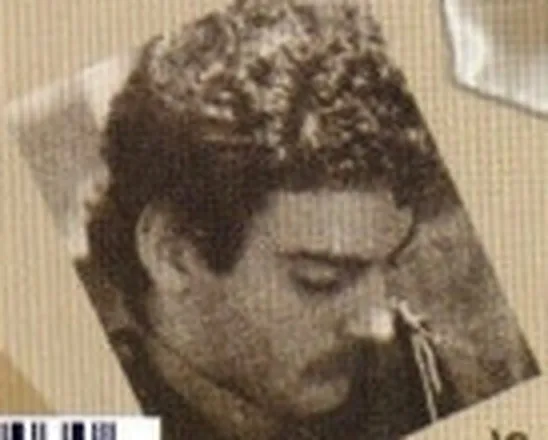
Marco Cimino, from the printed sleeve of the CD *Esagono 2* (Electromantic Music, 2007), where he is pictured and named in a set of three band portraits on the back cover; cropped from the sleeve image. Album cover art (not a CC-licensed artist photo), used as the only available image showing the artist. Copyright is held by the label and the original photographer. No Creative Commons or public-domain photograph of him was located on Wikimedia Commons (searches under his full name, the band name Esagono, and Arti e Mestieri returned nothing showing him) or on Openverse (the only results for his name show namesakes, a futsal player and wedding photographs). — Discogs release image for Esagono, 2 (Electromantic Music / Turin Jazz Rock School, TJRS &F003), back cover, https://www.discogs.com/release/6171463. Saved locally as portrait.jpg.
Marco Cimino is a Turin keyboardist, cellist and flutist who has worked in the city's jazz-rock and progressive scene since the mid-1970s: as a founding member and principal composer of the band Esagono, as the keyboardist on Arti & Mestieri's 1979 album Quinto Stato, and later as the leader of the fusion group Freelance. His birth date and birthplace are not given in the sources checked. Alongside the band work he has been a record producer, engineer and library-music writer, so his catalogue is a crossover one, with a jazz-rock and fusion core inside a much wider body of studio credits.
Italian Wikipedia places him in two Turin progressive-rock groups, Zauber and Errata Corrige, before Esagono. Errata Corrige's Siegfried, il drago e altre storie (1976) lists four members sharing piano, synthesizers, organ, cello, flute, drums, bass and guitars, Cimino among them, and he is the composer of every track, a co-producer and the keyboardist, cellist and flutist on the group's later Mappamondo (Mellow Records, 1992). Discogs files both as progressive rock rather than jazz.
Esagono was formed in Turin in 1975 by Cimino, the bassist Marco Gallesi, who came from Arti & Mestieri, and the drummer Giorgio Diaferia, who came from a group called Combo Jazz. Their only album of the decade, Vicolo, was issued on the Mu label (catalog UM 101); Italian Wikipedia and Progarchives date it 1976, while Discogs dates its copy of the LP 1978. It is an entirely instrumental record, and Italian Wikipedia says it recalls Weather Report and the Italian jazz-rock group Perigeo. Cimino played piano, synthesizer, cello, flute and voice, produced the record, and is credited on the sleeve as composer of "Serpente piumato," "Diatomea" and "Maya" and co-composer, with Gallesi, of "Araba Fenice." Aldo Rindone shared the keyboard chair, and the Arti & Mestieri players Gigi Venegoni (guitar), Arturo Vitale (saxophones, vibraphone) and Giovanni Vigliar (violin) appeared as guests, with Claudio Montafia, Gianni Cinti and Marco Astarita also credited as guests. The sleeve credits Venegoni and Arturo Romano as the sound engineers.
In 1979 he was the keyboardist on Arti & Mestieri's Quinto Stato (Cramps Records, 5205 505), where Discogs credits him with electric piano, clavinet and the Arp Odyssey, Arp 2600 and Moog synthesizers, as producer, as composer of at least two pieces and with bass on one. It was the band's third album, usually filed under Italian progressive rock but tagged as jazz-rock on this record by Discogs, and it also featured the trumpeter Flavio Boltro. That same year he produced the electronic album Mirage by Francesco Cabiati, also on Mu. He returned for Arti & Mestieri's 1990s reunion, and Discogs credits his keyboards on Murales (Electromantic Music, 2000), a synthesizer part on Articollezione (2001), and keyboards on Furio Chirico's Furiosamente (Electromantic Music, 2001) beside Gallesi, Venegoni and Beppe Crovella. He also co-wrote and played keyboards on Venegoni & Co.'s Nocturne (Dynamo Sound Records, 1989), which Discogs tags as fusion and smooth jazz.
According to Italian Wikipedia, Esagono moved toward more jazz-oriented music in the early 1980s, adding Boltro on trumpet, Claudio Bonadè on saxophone, Enrico Cresci on guitar and voice, and Massimo Artiglia on piano, and after an intense period of live work the group broke up, whereupon Cimino founded Freelance. In the same decade Discogs credits him as producer or co-producer on a run of Italian dance and Italo disco records from 1983 to 1987, among them releases by Toon Toon Cha!, Colors and Avantgarde. In later years he is credited with writing and producing for the Turin library label Primrose Music, including the orchestral Pop Opera (2001) with Venegoni and the conductor Mauro Bouvet, the dance album 2 Night (2007) with the singer Arthur Miles, and the compilation Sofatime (2003). He has mixing credits on several Felmay world-music albums of Indian and Javanese music from 2008 to 2010, and is credited as engineer on the double album Work in Regress (2013) by the 720° Quintet with the Art Ensemble of Chicago drummer Famoudou Don Moye, which Discogs files under free jazz.
Esagono came back in 2002 with a CD reissue of Vicolo on Electromantic Music. Esagono 2 (Electromantic Music, 2007) paired two new studio tracks with a live set recorded on February 25, 1977, and Cimino is credited on electric piano, synthesizer and as producer. Apocalypso followed in 2008 and Wine Notes in 2013. Italian Wikipedia records a series of concerts in Tokyo in 2010 and a 2013 newspaper piece on the band's popularity in Japan, and Solid Records issued remastered Japanese CD editions of Vicolo, Wine Notes, Dylanology and Apocalypso in 2022. Dylanology, a set of Bob Dylan songs with three vocalists, is dated 2018 by a biography of Diaferia on Jazzitalia, and Discogs credits Cimino on piano and Boltro on trumpet. Italian Wikipedia lists the band's current lineup as Cimino on keyboards, flute and voice, Iacopo Albini on saxophone, Enrico Degani on guitar, Michele Anelli on double bass and Diaferia on drums.
Freelance, the project he founded after Esagono's first breakup, made Mazurkazen (Electromantic Music, ARTS 9008, 2003), which Discogs tags as fusion and contemporary jazz. Cimino produced it and played keyboards, sampler and voice, with the saxophonists Diego Borotti and Dave Liebman and Boltro on trumpet and flugelhorn among the credited players, and Crovella as executive producer. A second Freelance album, Organized Crime, appeared on Zen Factory Records in 2024. It is a set of songs by Sting and the Police, with Cimino on keyboards and the trumpeters Boltro and Fabrizio Bosso among the credited players.
Cimino is a keyboardist and composer first, with the cello and flute as secondary voices, and his jazz-side work is concentrated in electric, band-oriented fusion: the instrumental jazz-rock of Vicolo, the Arp and Moog keyboards on Quinto Stato, and the horn-led fusion of the Freelance and later Esagono records. Italian Wikipedia likens the first Esagono album to Weather Report and Perigeo, and it describes the early 1980s lineup as a turn toward a more jazz-minded sound. Discogs tags Vicolo, Esagono 2 and Apocalypso as jazz-rock or fusion and Mazurkazen as fusion and contemporary jazz.
This is a crossover profile and the jazz side is only part of the record. His Errata Corrige albums are progressive rock, Arti & Mestieri is usually classed as progressive rock with jazz-rock elements, and much of his credited studio work from the 1980s onward is Italo disco production, library music, dance records and mixing for world-music labels. What links the jazz-side projects is a Turin circle of players who recur across them: Gallesi, Diaferia, Venegoni, Vitale and Crovella, with the trumpeter Flavio Boltro as the best-known jazz musician among his later collaborators.
- Vicolo (Esagono, 1976, Mu) - The band's instrumental debut, produced by Cimino, who plays piano, synthesizer, cello and flute and wrote three of its seven pieces. Discogs dates its copy of the LP 1978.
- Quinto Stato (Arti & Mestieri, 1979, Cramps Records) - His one album with the group in its original run, on Arp and Moog synthesizers and electric piano, with Flavio Boltro on trumpet.
- Mazurkazen (Freelance, 2003, Electromantic Music) - His own fusion project, with Dave Liebman and Boltro among the credited players and Cimino as producer and keyboardist.
- Esagono 2 (Esagono, 2007, Electromantic Music) - Two new studio tracks and a live set from February 25, 1977, produced by Cimino.
- Apocalypso (Esagono, 2008, Electromantic Music) - The band's comeback album, eleven tracks, listed by Discogs as fusion and jazz-rock.
- Wine Notes (Esagono, 2013, Electromantic Music) - The follow-up, ten tracks mostly named after Barolo vineyard sites, with Cimino on piano, Ivan Bert on trumpet, Jacopo Albini on saxophone and Umberto Fantini on violin.
- Organized Crime (Freelance, 2024, Zen Factory Records) - A set of Police and Sting songs with Boltro and Fabrizio Bosso among the trumpeters.
Marco Cimino: Full Discography
Discogs artist: Marco Cimino (260041) · Turin keyboardist, cellist and flutist
His own bands are Esagono, which he co-founded in Turin in 1975, and Freelance, which he founded after Esagono's first breakup. Those two tables come first. The sideman table that follows lists his playing credits with other groups, and the last table lists records on which he is credited as producer, engineer or mixer rather than as a player. The Esagono and Freelance rows were checked against the individual releases; years and catalog numbers come from the pressing named, and where Italian Wikipedia gives a different year the difference is stated. Rows marked "Not confirmed" could not be checked.
Esagono (co-founder, keyboards, cello, flute, voice)
| Album | Year | Label | Personnel & Notes | Listen | Buy |
|---|---|---|---|---|---|
| Vicolo | 1976 | Mu (UM 101) | Italian Wikipedia and Progarchives give 1976; Discogs dates its copy of the LP 1978. Seven instrumental pieces. Cimino (piano, synthesizer, cello, flute, voice; producer), Marco Gallesi (bass), Giorgio Diaferia (drums, percussion), Aldo Rindone (piano, synthesizer); guests Claudio Montafia (clavinet, piano, flute, guitar), Gigi Venegoni (guitar), Marco Astarita (percussion), Gianni Cinti (sopranino saxophone), Arturo Vitale (tenor and soprano saxophones, vibraphone) and Giovanni Vigliar (violin). Cimino composed "Serpente piumato," "Diatomea" and "Maya" and co-composed "Araba Fenice" with Gallesi. CD reissues: Electromantic Music (ARTS 9011, 2002) and Solid Records (CDSOL-3026, 2022, remastered, Japan) | — | — |
| Esagono 2 (listed on Discogs as 2) | 2007 | Electromantic Music / Turin Jazz Rock School (TJRS &F003) | Two new studio tracks, "Anaconda" and "Araba Fenice," followed by five tracks recorded live on February 25, 1977. Cimino (electric piano, synthesizer; producer), Gallesi (bass), Diaferia (drums), Montafia (flute, guitar), Astarita (percussion), Rindone (piano, studio tracks), Mike Abate (guitar, studio tracks), Gianni Cinti (soprano saxophone, oboe, studio tracks), Vitale (saxophone, live tracks); Beppe Crovella mastered it | — | — |
| Apocalypso | 2008 | Electromantic Music (Italian Wikipedia); Discogs shows a Japanese edition on Turin Jazz Rock School (ER&F-0018) | Eleven tracks, listed by Discogs as fusion and jazz-rock, including "Napalm," "Metti una sera a cena" and "Seven Steps Among the Clouds." Personnel not itemised on the pressing checked. A remastered Japanese edition followed on Solid Records in 2022 | — | — |
| Wine Notes | 2013 | Electromantic Music (Italian Wikipedia) | Ten tracks, most named after Barolo vineyard sites, including "Cannubi," "Brunate" and "Bussia." The 2022 Solid Records edition (CDSOL-3029, remastered, Japan, with a bonus track) credits Cimino (piano), Michele Anelli (double bass), Diaferia (drums), Enrico Degani and Max Carletti (guitars), Jacopo Albini (saxophone), Ivan Bert (trumpet) and Umberto Fantini (violin) | — | — |
| Dylanology | 2018 (Jazzitalia); 2022 edition on Discogs | Solid Records (CDSOL-3030, remastered, Japan) | Ten Bob Dylan songs plus bonus tracks, including "Just Like a Woman," "Mr. Tambourine Man" and "All Along the Watchtower." Cimino (piano), Flavio Boltro (trumpet), Diaferia (drums), Max Carletti (guitar), Davide Liberti (double bass); vocals by Vaida Kalkauskaite, Laura Evangelista and Annmarie. The original release label is Not confirmed | — | — |
Freelance (founder, keyboards, voice, sampler, producer)
| Album | Year | Label | Personnel & Notes | Listen | Buy |
|---|---|---|---|---|---|
| Mazurkazen | 2003 | Electromantic Music (ARTS 9008) | Twelve tracks, listed by Discogs as fusion and contemporary jazz, including "Gospel Ten," "Mr. Kafka" and "Corn Circles." Cimino (producer, keyboards, voice, sampler, programming), Diego Borotti (alto, tenor and soprano saxophones), Dave Liebman (saxophone), Danilo Pala (saxophone), Flavio Boltro (trumpet, flugelhorn), Ludovico Vagnone (guitars), Roberto Celio (bass, keyboards), Gianpaolo Petrini (drums), Alex Acuna (percussion, voice); Beppe Crovella executive producer. How many tracks Liebman plays on is Not confirmed. A 2022 reissue is also listed on Discogs | — | — |
| Organized Crime | 2024 | Zen Factory Records (001) | Songs by Sting and the Police, including "Message in a Bottle" and "Walking on the Moon." Cimino (keyboards), Gianpaolo Petrini (drums), Simone Bellavia (bass), Max Carletti (guitar, guitar synthesizer), Fiver String Quartet (strings), Roby Coli (vocals); trumpets by Boltro, Fabrizio Bosso and Stefano Cocon, saxophones by Gabbo Cappello and Gianluigi Corvaglia, flute by Bartolomeo Audisio, blues harp by Tom Newton | — | — |
Other records issued under his name or projects
| Title | Year | Label | Notes | Listen | Buy |
|---|---|---|---|---|---|
| Similia Similubus Curentur (Homéopathy) | 1998 | High Tide (CD-TIDE 9165-2) | Electronic and new age, not a jazz record. Cimino is credited with the music, piano and keyboards on every track, with vocals by five singers | — | — |
| Pop Opera (Luigi Venegoni, Marco Cimino, Mauro Bouvet) | 2001 | Primrose Music (PRCD 128) | Orchestral crossover pieces ("Infinito," "Domani," "Follia," "Avverso destino") with the Orchestra Filarmonica di Torino conducted by Bouvet; Cimino composes and plays piano and keyboards, Venegoni guitar | — | — |
| Release 1.0 (Doctor Jazz's Universal Remedy) | 2004 | Kriztal Entertainment (KRI-CD-3024) | Downtempo and future-jazz project that Discogs lists among his groups; Cimino is credited as a writer. The extent of his part is Not confirmed | — | — |
| 2 Night - House Dance & Pop World Beat (Marco Cimino, Arthur Miles) | 2007 | Primrose Music | Dance and pop record with the singer Arthur Miles. Catalog number Not confirmed | — | — |
As Sideman (selected credits)
| Year | Project (Leader) | Title | Label | Catalog | Role | Notes |
|---|---|---|---|---|---|---|
| 1976 | Errata Corrige | Siegfried, il drago e altre storie | EC | G7 01 | Member; keyboards, cello, flute and other instruments (credit shared by four members) | Progressive rock. Reissued by Black Widow Records in 2015 |
| 1979 | Arti & Mestieri | Quinto Stato | Cramps Records | 5205 505 | Keyboards (electric piano, clavinet, Arp Odyssey, Arp 2600, Moog), bass on one piece; producer and composer | Discogs: jazz-rock, progressive rock. With Furio Chirico, Gallesi, Venegoni, Vitale, Boltro |
| 1989 | Venegoni & Co. | Nocturne | Dynamo Sound Records | DYN 8801 | Keyboards, programming, co-writer | Discogs: fusion, smooth jazz. Ten tracks with Venegoni on MIDI guitar |
| 1992 | Errata Corrige | Mappamondo | Mellow Records | MMP 117 | Composer of all tracks; keyboards, cello, flute, Jew's harp, vocals; co-producer | Progressive rock |
| 2000 | Arti & Mestieri | Murales | Electromantic Music | ART 401 | Keyboards | Italian Wikipedia dates the album 2000; Discogs dates its copy 2001. With Chirico, Gallesi, Venegoni, Crovella and the violinist Corrado Trabuio |
| 2001 | Arti & Mestieri | Articollezione | Electromantic Music | ART 403 | Synthesizer on track 6 | Compilation of unreleased pieces from the group's first period |
| 2001 | Furio Chirico | Furiosamente | Electromantic Music | ARTS 9004 | Keyboards | Discogs: jazz, Latin. With Gallesi, Venegoni, Crovella, Diego Borotti |
| 2003 | Arti & Mestieri | Live / 1974-2000 | Electromantic Music | ART 4078 | Synthesizer on disc one | Live compilation |
Production, engineering and mixing credits
These are non-playing credits as given on Discogs, and the individual releases were not checked one by one.
| Year | Project (Leader) | Title | Label | Role |
|---|---|---|---|---|
| 1979 | Francesco Cabiati | Mirage | Mu (UM 108) | Producer, special effects |
| 1983 | Reeds | "Sempre tu" / "Maratona" | Made In Italy Record | Producer |
| 1984 | Toon Toon Cha! | "Mari del sud" | Clamore Music | Producer |
| 1985 | Colors | "Never Mind" and "Lonely Night" | Not confirmed | Producer |
| 1985 | Avantgarde | "You Never Danced With Me" | Not confirmed | Producer |
| 1985 | Alyne | "Over the Sky" | FDT | Producer |
| 1986 | Colors | Missing Destinies | Not confirmed | Producer |
| 1987 | Avantgarde | Day by Day | Not confirmed | Co-producer |
| 2003 | Various | Sofatime | Primrose Music | Producer |
| 2006 | Abnoba | Vai facile | Felmay / Dunya Records | Producer |
| 2008 | Sangeeta Bandyopadhyay | Puja | Felmay | Mixing |
| 2008 | Suppangah Rahayu and Garasi Seni Benawa | Cokekan: Javanese Chamber Music | Felmay | Mixing |
| 2010 | Ustad Shujaat Husain Khan | Jaana Meri Jaana | Felmay / Mystica Music | Mixing |
| 2013 | 720° Quintet featuring Famoudou Don Moye | Work in Regress | Charlie Bird Records | Engineer |
- Marco Gallesi - bassist and Esagono co-founder, his bandmate on Vicolo, Esagono 2 and Apocalypso, and on Arti & Mestieri's Quinto Stato, Murales and Articollezione and Furio Chirico's Furiosamente.
- Giorgio Diaferia - drummer and Esagono co-founder per Italian Wikipedia, on Vicolo and in the band's current lineup.
- Aldo Rindone, Claudio Montafia, Gianni Cinti, Marco Astarita - keyboardist and guest instrumentalists on Vicolo.
- Gigi Venegoni, Arturo Vitale and Giovanni Vigliar - Arti & Mestieri guitarist, saxophonist and violinist who guested on Vicolo; Venegoni is also the other principal on Nocturne (1989) and a co-composer with Cimino on Pop Opera (2001).
- Furio Chirico and Beppe Crovella - Arti & Mestieri drummer and keyboardist, with Cimino on Murales and Furiosamente; Crovella mastered Esagono 2 and was executive producer of Mazurkazen.
- Flavio Boltro - trumpeter on Quinto Stato (1979), in Esagono's early 1980s lineup per Italian Wikipedia, and on Mazurkazen (2003), Dylanology and Organized Crime (2024).
- Dave Liebman - credited on saxophone on Freelance's Mazurkazen (2003); the track-level extent of his part was not confirmed.
- Fabrizio Bosso - one of the trumpeters credited on Freelance's Organized Crime (2024).
- Diego Borotti - saxophonist on Mazurkazen and on Chirico's Furiosamente.
- Michele Anelli, Iacopo Albini, Enrico Degani, Max Carletti - bassist, saxophonist and guitarists in the current Esagono lineup and on its later records; Anelli also plays on the 720° Quintet album Cimino engineered.
- Famoudou Don Moye - the Art Ensemble of Chicago drummer on Work in Regress (2013), for which Cimino is credited as engineer.
- Arthur Miles and Mauro Bouvet - his partners on the Primrose Music albums 2 Night (2007) and Pop Opera (2001).