 JAZZPROFILES lives in the music 2,303 Jazz Artists fully Profiled!
Ronnie Foster
Last updated November 7, 2026
Listen on Spotify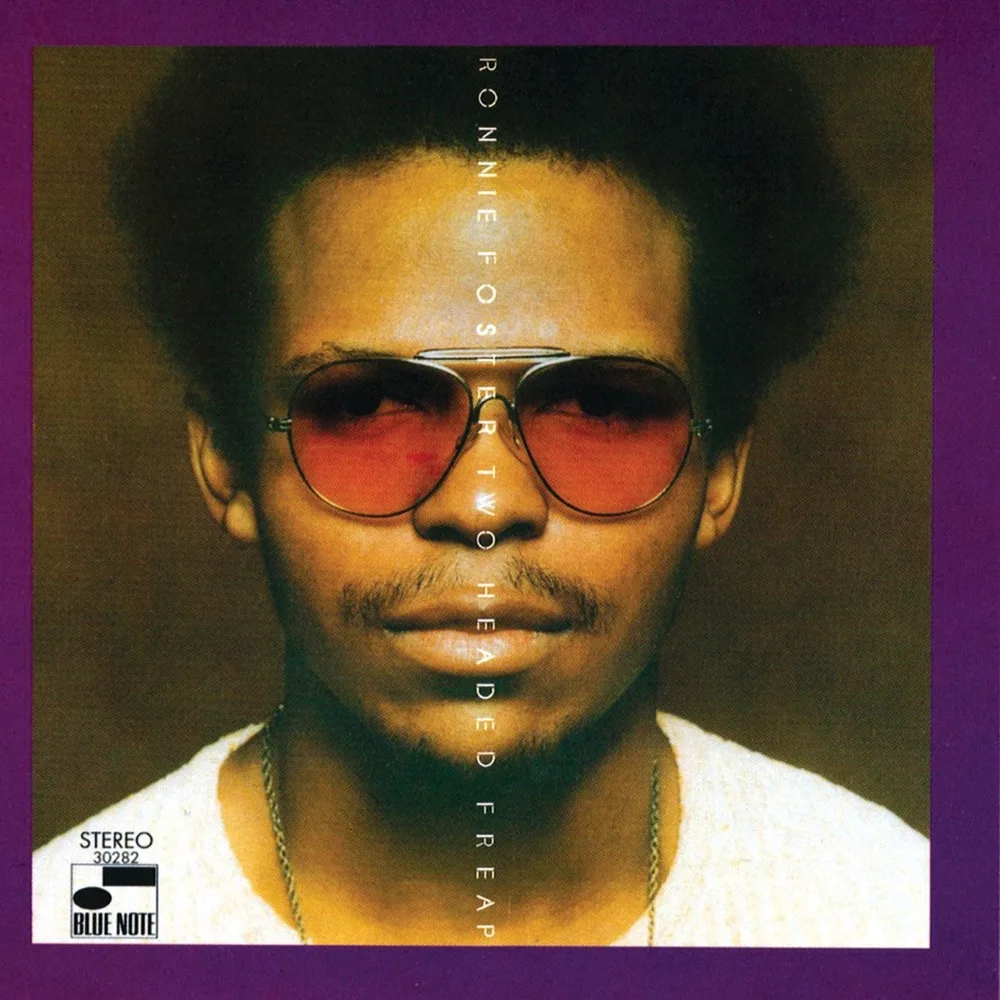
Ronnie Foster on the front cover of his debut album *Two Headed Freap* (Blue Note, 1972); cover photograph credited to Al Vandenberg, art direction by Norman Seeff Album cover art (not a CC-licensed artist photo), copyright Blue Note Records, used as the only available image showing the artist — Album cover artwork, Blue Note BST-84382 (1972), 1200 px version as distributed on Apple Music: https://music.apple.com/us/album/1442976037
Ronnie Foster was born on May 12, 1950, in Buffalo, New York, to Roslyn M. Foster. He was drawn to music at four and played his first paid job at fifteen, in a strip club. He started on piano, taught in the classical manner, and switched to organ after sitting in at a jam session that had one. He listened to Jimmy Smith, moved on to more adventurous organists such as Larry Young, took advice from the Buffalo organist Joe Madison, and practiced in a studio where a room with an organ rented for 60 cents an hour. He later recalled hearing Smith's Blue Note records on headphones at the Buffalo Public Library.
Foster worked Buffalo and New York clubs and built a following playing with musicians including Stanley Turrentine, Grant Green and George Benson. By the early 1970s he led a group called Energy II. His first recording as a sideman was Green's live album Alive!, taped on August 15, 1970, at the Cliche Lounge in Newark, New Jersey, where he plays organ on five of the tracks. Francis Wolff, the Blue Note co-founder who produced the date, took notice of him; Wolff died a few months later, and the label's Dr. George Butler signed Foster.
His debut as a leader, Two Headed Freap, was recorded at Rudy Van Gelder's studio in Englewood Cliffs, New Jersey, on January 20 and 21, 1972, with arrangements by Wade Marcus and a band that included guitarist Gene Bertoncini, bassist George Duvivier, harpist Gene Bianco, and Arthur Jenkins on congas. It mixed his own tunes, among them "Mystic Brew," with soul covers such as Al Green's "Let's Stay Together" and Gamble and Huff's "Drowning in the Sea of Love." Sweet Revival followed from sessions on December 14 and 15, 1972, produced and arranged by Horace Ott with Bernard Purdie on drums and a repertoire of soul hits including "Back Stabbers," "Me and Mrs. Jones," and "Superwoman." Blue Note recorded him with a trio of guitarist Gregory Miller and drummer Marvin Chappell at the Montreux Jazz Festival on July 5, 1973, for the live album in its Cookin' with Blue Note at Montreux series. For On the Avenue (1974, recorded at Electric Lady Studios in New York) he added clavinet, Moog synthesizer and vocals to the organ, with horn arrangements by Pee Wee Ellis and a production credit for Benson. Cheshire Cat, recorded at A&R Studios in March 1975 and also produced by Benson, who plays guitar on one track, was his last Blue Note album of the decade.
Foster then moved to Columbia, where Jerry Peters produced Love Satellite (1978) and Delight (1979). Delight brought in Benson, Stevie Wonder, the singer Phyllis Hyman, drummer Leon "Ndugu" Chancler and Robert "Pops" Popwell; its "We As Love" is the tune Benson recorded on his live Weekend in L.A. The Racer (1986), issued in Japan on Electric Bird and in the United States on ProJazz in 1987, was his last album under his own name for 36 years, as he concentrated on session and production work.
Benson was the center of that session work. Foster plays on his CTI album Good King Bad (recorded 1975), on Breezin' (1976), where he plays electric piano and Minimoog and wrote the tune "Lady," and on In Flight (1977), Weekend in L.A. (1978) and Livin' Inside Your Love (1979). He played organ on "Summer Soft" on Wonder's Songs in the Key of Life (1976), and he recorded with Roberta Flack, Smith (Unfinished Business, 1978), Lalo Schifrin, the Jacksons (Triumph, 1980) and Earl Klugh, whose Crazy for You (1981) brought Foster, Klugh and the arranger Clare Fischer a Grammy nomination for best arrangement on an instrumental recording. He was one of the keyboardists in Creed Taylor's Fuse One studio group, playing on its 1980 self-titled album and on Silk (1981). In 1987 he played keyboards on Turrentine's Wonderland, a set of Stevie Wonder songs for Blue Note, for which Discogs also credits him as producer and arranger, and he co-produced and wrote the opening track of Grover Washington Jr.'s Time Out of Mind (1989).
Production grew into a second career. Discogs credits him as producer on a long run of albums for the Brazilian singer Djavan beginning with Luz (1982), on records by Guilherme Arantes and João Bosco, and on several releases by the Puerto Rican pop singer Chayanne. He also produced Nestor Torres's Dance of the Phoenix (1991), most of the tracks on Will Downing and Gerald Albright's Pleasures of the Night (1998), which topped Billboard's contemporary jazz albums chart, and Roger Smith's Both Sides (1999), which reached number 24 among contemporary jazz albums.
Meanwhile his Blue Note records were found by a new generation. A Tribe Called Quest built "Electric Relaxation," from Midnight Marauders, on "Mystic Brew," and J. Cole later reworked the same track in "Forbidden Fruit" and, reversed, pitched and slowed, in "Neighbors." "Mystic Brew" has also been covered by the Vijay Iyer Trio and BadBadNotGood. Foster returned to Blue Note with Reboot, released on July 15, 2022, his first new album in 36 years, executive produced by label president Don Was and recorded over two days at Capitol Studios in Los Angeles. It features his son Chris Foster on drums, guitarist Michael O'Neill, and percussionists Luis Conte and Lenny Castro, includes a version of Stevie Wonder's "Isn't She Lovely," and is dedicated to the late Buffalo organist Lonnie Smith. His daughter Kaylie designed the cover. He toured Europe with the Reboot trio in the autumn of 2024.
Foster plays groove-based soul-jazz and jazz-funk organ, closer to the R&B and funk of his generation than to bebop, and his own albums lean on pop and soul repertoire, clavinet and Moog textures and tight, arranged horn parts. Blue Note presents him as the next in the label's line of Hammond B3 organists after Jimmy Smith, Larry Young and Lonnie Smith; at the time of Reboot he was playing a custom Hammond XK-5. His early models were Smith and Young, and in the studio he moved easily between organ, electric piano and synthesizers, which made him a regular keyboardist for George Benson, Earl Klugh and a run of pop-jazz sessions. Critics of the 1970s albums were divided: AllMusic called Two Headed Freap glitzy, cinematic funk that jazz purists might find monotonous and commercial, rated On the Avenue the most accomplished record of his career, and praised Cheshire Cat for balancing the soul and jazz sides of the equation. The same records became source material for acid jazz and hip-hop producers, and "Mystic Brew," through its sampling, became the track he is best known for.
- Two Headed Freap (1972, Blue Note) - His debut as a leader, recorded at Van Gelder Studio; it holds "Mystic Brew," the track A Tribe Called Quest and J. Cole later sampled.
- Sweet Revival (1973, Blue Note) - Horace Ott-produced soul-jazz covers with Bernard Purdie on drums.
- Live at Montreux (1974, Blue Note) - A trio set with Gregory Miller and Marvin Chappell, recorded July 5, 1973, from the label's Cookin' with Blue Note at Montreux series.
- On the Avenue (1974, Blue Note) - Organ, clavinet, Moog and vocals, produced by George Benson with horn arrangements by Pee Wee Ellis; AllMusic's pick as his most accomplished album.
- Cheshire Cat (1975, Blue Note) - His last Blue Note album of the 1970s, with Joe Beck, Mtume, Dennis Davis and a Benson guest spot.
- Reboot (2022, Blue Note) - His return to Blue Note after 36 years, with his son Chris Foster on drums and guitarist Michael O'Neill.
- Alive! (1970, Blue Note, with Grant Green) - His first recorded sideman date, a funk-heavy live set from the Cliche Lounge in Newark.
- Breezin' (1976, Warner Bros., with Benson) - Electric piano and Minimoog on the best-selling jazz album; Foster also wrote "Lady."
Ronnie Foster: Full Discography
Discogs artist ID 29957 (Ronnie Foster, born May 12, 1950, in Buffalo, New York) lists about 540 entries: his leader albums, several hundred session and production credits, and compilation or track appearances. No separate Discogs entries for a named group of his own turned up; the groups listed on his Discogs page are Fuse One and The Chocolate Jam Co., both studio collectives he played in rather than bands he led. His leader catalog is short, so the first table lists every album he has released under his own name: five Blue Note albums from 1972 to 1975, two for Columbia, one released in Japan and the United States in the mid-1980s, and his 2022 return to Blue Note. Catalog numbers are those of the original US pressing unless noted; recording dates come from Discogs release notes and Wikipedia, and where the two differ the Notes column says so. The sideman and producer tables are selections of credits confirmed on the release pages themselves, not a complete list: his session work on Discogs runs to hundreds of entries, much of it Brazilian and Latin pop production in the 1980s and 1990s.
As Leader / Co-Leader
| Album Title | Recording Date(s) | Release Date | Label | Catalog Number | Format(s) | Personnel | Role | Reissue History | Spotify | Buy | Notes |
|---|---|---|---|---|---|---|---|---|---|---|---|
| Two Headed Freap | January 20-21, 1972, Van Gelder Studio, Englewood Cliffs, New Jersey | 1972 | Blue Note | BST-84382 | Vinyl, LP, Album, Stereo | Ronnie Foster (organ), Gene Bianco (harp), George Devens (vibraphone, percussion), Gene Bertoncini (guitar), George Duvivier (bass), Gordon Edwards (electric bass), Jimmy Johnson (drums), Arthur Jenkins (congas), Wade Marcus (arranger) | Leader | Reissued on CD and vinyl in 1995 in the Blue Note Rare Groove Series (CDP 7243 8 32082 2 7), as a Japanese CD in 2014 (UCCQ-5055) and 2024 (UCCQ-9661), and on vinyl in 2022; see Discogs master 204404 | — | — | Debut as a leader; produced by George Butler. Contains "Mystic Brew," later sampled by A Tribe Called Quest and J. Cole. |
| Sweet Revival | December 14-15, 1972, Generation Sound Studio, New York | 1973 | Blue Note | BN-LA098-F | Vinyl, LP, Album | Ronnie Foster (organ), Garnett Brown (trombone), Seldon Powell (tenor saxophone), Ernie Hayes (electric piano), David Spinozza and John Tropea (electric guitar), Wilbur Bascomb (electric bass), Bernard Purdie (drums), Horace Ott (producer, arranger, conductor) | Leader | Reissued on CD and streaming; see Discogs master 228200 | — | — | Mostly soul and pop covers, including "Back Stabbers," "Me and Mrs. Jones," "Alone Again (Naturally)" and "Superwoman." |
| Live at Montreux | July 5, 1973, Montreux Jazz Festival, Switzerland | 1974 | Blue Note | BN-LA250-G | Vinyl, LP, Album, Stereo | Ronnie Foster (organ), Gregory Miller (guitar), Marvin Chappell (drums) | Leader | Reissued on CD and streaming under the series title Cookin' with Blue Note at Montreux; see Discogs master 901219 | — | — | Live trio set with four long tracks: "East of Ginger Trees," "Chunky," "Boogie Juice" and "Sameness." Titled Live at Montreux on the back cover; issued in the Cookin' with Blue Note at Montreux series. |
| On the Avenue | April 30 and May 1, 1974, Electric Lady Studios, New York | 1974 | Blue Note | BN-LA261-G | Vinyl, LP, Album | Ronnie Foster (organ, clavinet, Moog synthesizer, vocals), John Gatchell and Dean Robert Pratt (trumpet, flugelhorn), Gerald Chamberlain (trombone), Joel Kaye (baritone saxophone), Phil Upchurch (guitar, electric bass), Marvin Chappell (drums), Ray Armando (percussion), Pee Wee Ellis (horn arrangements) | Leader | Reissued as Japanese CDs in 2013 (TOCJ-50541) and 2018 (UCCQ-3019); see Discogs master 204401 | — | — | Produced by George Benson. Discogs gives the recording dates as May 1-2, 1974; Wikipedia gives April 30 and May 1. |
| Cheshire Cat | March 21-27, 1975, A&R Studios, New York | 1975 | Blue Note | BN-LA425-G | Vinyl, LP, Album, Stereo | Ronnie Foster (organ, keyboards, vocals), Joe Beck (guitar), George Benson (guitar on one track, backing vocals), William Allen and Gary King (bass), Dennis Davis (drums), James Mtume (congas, percussion) | Leader | Reissued on CD and streaming; see Discogs master 443080 | — | — | Produced by Benson. Includes Foster's "Funky Motion" and a version of Stevie Wonder's "Tuesday Heartbreak." |
| Love Satellite | Not specified in Discogs data | 1978 | Columbia | JC 35373 | Vinyl, LP, Album, Stereo | Ronnie Foster (arranger, composer); musicians not itemized in the credits | Leader | Reissued as an expanded digital edition; see Discogs master 174655 | — | — | Produced by Jerry Peters; recorded in Hollywood. Includes "Midnight Plane" and "Why Don't You Look Inside," both also issued as singles. |
| Delight | Not specified in Discogs data | 1979 | Columbia | JC 36019 | Vinyl, LP, Album | Ronnie Foster (keyboards, arranger), with George Benson, Stevie Wonder, Phyllis Hyman, Leon "Ndugu" Chancler, Robert "Pops" Popwell, Nathan East and Dennis Davis among the credited guests and rhythm section | Leader | Reissued as an expanded digital edition; see Discogs master 204403 | — | — | Produced by Jerry Peters. Includes "We As Love," which Benson recorded on Weekend in L.A. |
| The Racer | 1985 | 1986 (Japan); 1987 (United States) | Electric Bird (Japan); ProJazz (United States) | K28P 6441 (Japan LP); CDJ 634 (US CD) | Vinyl, LP, Album, Stereo; CD | Ronnie Foster (producer, arranger), with Paulinho Da Costa, Leon "Ndugu" Chancler, Michael O'Neill, Harvey Mason, Jonathan Moffett and Phil Upchurch on individual tracks | Leader | Reissued in Japan on CD in 2014 (KICJ 2403); see Discogs master 476253 | — | — | Jazz-fusion and Brazilian-flavored studio album; his last record under his own name until Reboot. Wikipedia lists it as a 1986 Pro Jazz release; Discogs dates the US ProJazz issues to 1987. |
| Reboot | 2022, Capitol Studios, Los Angeles | July 15, 2022 | Blue Note | B003521001 | Vinyl, LP, Album, Stereo; CD; digital | Ronnie Foster (organ, producer, arranger), Chris Foster (drums), Jimmy Branly (drums), Michael O'Neill (guitar), Jerry Lopez (flamenco guitar), Luis Conte and Lenny Castro (percussion) | Leader | Current Blue Note release; see Discogs master 2718599 | — | — | First new album in 36 years; executive producer Don Was; includes a version of Stevie Wonder's "Isn't She Lovely." Dedicated to Lonnie Smith. |
As Sideman (selected major credits)
| Year | Project (Leader) | Title | Label | Catalog | Role | Notes |
|---|---|---|---|---|---|---|
| 1970 | Grant Green | Alive! | Blue Note | BST 84360 | Organ | Recorded August 15, 1970, at the Cliche Lounge, Newark; Foster plays on tracks 1, 4 and 6 to 8, and his first recorded sideman date. Discogs dates the first issue 1971. |
| 1976 | George Benson | Good King Bad | CTI Records | CTI 6062 | Keyboards | One track only; recorded 1975. |
| 1976 | George Benson | Breezin' | Warner Bros. | BS 2919 | Electric piano, Minimoog | Minimoog solo on "Six to Four" and electric piano solo on "So This Is Love?"; he wrote "Lady." |
| 1976 | Stevie Wonder | Songs in the Key of Life | Tamla | T13-340C2 | Organ | Plays on "Summer Soft." |
| 1977 | Roberta Flack | Blue Lights in the Basement | Atlantic | SD 19149 | Keyboards, synthesizer, backing vocals | — |
| 1977 | George Benson | In Flight | Warner Bros. | BSK 2983 | Electric piano, Minimoog | He wrote "The Wind and I." |
| 1978 | George Benson | Weekend in L.A. | Warner Bros. | 2WB 3139 | Keyboards, synthesizers | Live album recorded in 1977; he wrote "We As Love." |
| 1978 | Jimmy Smith | Unfinished Business | Mercury | SRM-1-3716 | Electric piano, synthesizer | Also arranged and conducted the horns on one track. |
| 1979 | Lalo Schifrin | No One Home | Tabu | JZ 36091 | Keyboards | — |
| 1979 | George Benson | Livin' Inside Your Love | Warner Bros. | 2BSK 3277 | Fender Rhodes, synthesizers, piano | Piano and synthesizer solos on several tracks; he wrote "Nassau Day" and "Prelude to Fall." |
| 1980 | Roberta Flack featuring Donny Hathaway | Roberta Flack Featuring Donny Hathaway | Atlantic | SD 16013 | Synthesizer | — |
| 1980 | The Jacksons | Triumph | Epic | FE 36424 | Keyboards | On "Can You Feel It" and "Wondering Who." |
| 1980 | Fuse One | Fuse One | CTI Records | K26P-6020 (Japanese pressing) | Keyboards, synthesizer | Fender Rhodes and synthesizer on three tracks. |
| 1981 | Fuse One | Silk | CTI Records | CTI 9006 | Keyboards, synthesizer | He wrote and arranged "Sunwalk." |
| 1981 | Earl Klugh | Crazy for You | Liberty | LT-51113 | Electric piano, piano, vocoder | Rhythm arrangement on "Balladina"; shared a Grammy nomination for best arrangement on an instrumental recording with Klugh and Clare Fischer. |
| 1983 | Earl Klugh | Low Ride | Capitol | ST-12253 | Electric piano | One track; Wikipedia dates the album 1982. |
| 1987 | Stanley Turrentine | Wonderland | Blue Note | BT-85140 | Piano, electric piano, synthesizers, vibraphone; arranger | Recorded December 10-12, 1986; Discogs also credits him as producer, while Wikipedia lists Turrentine as producer. |
| 1987 | David Sanborn | A Change of Heart | Warner Bros. | 1-25479 | Synthesizers, programming, arranger | Wrote, arranged and produced the track "Summer." |
| 1989 | Grover Washington Jr. | Time Out of Mind | Columbia | C 45253 | Instruments, arranger, co-producer | On the opening track, which he wrote, arranged, co-produced and mixed. |
As Producer (selected)
His production credits also include several albums for Guilherme Arantes, João Bosco and the pop singer Chayanne, listed on Discogs.
| Year | Project (Leader) | Title | Label | Catalog | Role | Notes |
|---|---|---|---|---|---|---|
| 1982 | Djavan | Luz | Discos CBS | 138.251 | Producer, keyboards | Hammond B3 organ on "Pétala" and "Minha Irmã." First of many Djavan albums credited to him as producer. |
| 1986 | Chet Atkins | Street Dreams | Columbia | C 40256 | Producer | Credited as producer on Discogs. |
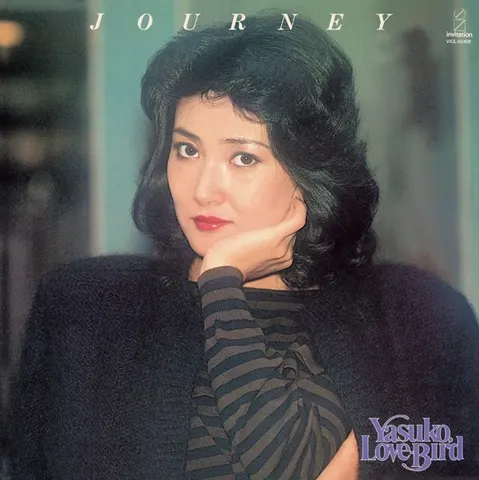
| 1987 | Yasuko Agawa | Ms. Mystery | Invitation | VIH-28288 | Producer (with David Garfield), keyboards | Japanese release; recorded in Los Angeles. |
| 1991 | Nestor Torres | Dance of the Phoenix | Verve Forecast | 314 511 028-2 | Producer, keyboards, arranger | Wrote "Sultry Song," "Nights in Love" and "The Feel." |
| 1998 | Will Downing and Gerald Albright | Pleasures of the Night | Verve Forecast | 557 613-2 | Producer (seven tracks), keyboards | Reached number 1 on Billboard's contemporary jazz albums chart. |
| 1999 | Roger Smith | Both Sides | Miramar | 09006-23131-2 | Producer, mixing, vocals | Reached number 24 among contemporary jazz albums; Foster sings on two tracks and wrote two. |
- George Benson - the longest sideman association: Good King Bad, Breezin', In Flight, Weekend in L.A. and Livin' Inside Your Love, plus production credits on On the Avenue and Cheshire Cat and a guest guitar spot on the latter.
- Grant Green - the guitarist whose live album Alive! (August 15, 1970) was Foster's first recorded sideman date and led to his Blue Note contract.
- George Butler - the Blue Note executive who signed him and produced or executive-produced his Blue Note and Columbia albums.
- Horace Ott - producer and arranger of Sweet Revival (1973).
- Wade Marcus - arranger of Two Headed Freap.
- Gene Bertoncini, George Duvivier - guitarist and bassist on Two Headed Freap.
- Pee Wee Ellis - horn arranger on On the Avenue.
- Phil Upchurch, Marvin Chappell - guitarist and drummer on On the Avenue; Chappell also drums on the Montreux trio set.
- Stevie Wonder - Foster plays organ on "Summer Soft" from Songs in the Key of Life (1976); Wonder also appears on Delight.
- Stanley Turrentine - club-scene colleague in the early 1970s and the leader of Wonderland (1987), on which Foster plays keyboards and is credited as producer and arranger.
- Earl Klugh - Crazy for You (1981), Low Ride (1982), Wishful Thinking (1984) and later albums; Foster shared a Grammy nomination for the arrangement on Crazy for You.
- Jimmy Smith - organ legend and early model; Foster plays on his Unfinished Business (1978) and The Cat Strikes Again (1980).
- Grover Washington Jr. - Time Out of Mind (1989), co-produced and opened by a Foster composition.
- Fuse One - Creed Taylor's CTI-label studio group; Foster plays keyboards on Fuse One (1980) and Silk (1981) and wrote and arranged "Sunwalk."
- David Sanborn - Foster contributed synthesizers, programming, an arrangement and a production credit on the track "Summer" on A Change of Heart (1987).
- Gerald Albright, Will Downing - the duo behind Pleasures of the Night (1998), which Foster produced.
- Yasuko Agawa - Japanese jazz singer whose Ms. Mystery (1987) he produced with David Garfield.
- Nathan East - bassist on Delight and on Agawa's Ms. Mystery.
- Djavan, Chayanne, Guilherme Arantes, Nestor Torres - singers and instrumentalists whose albums he produced.
- Chris Foster, Michael O'Neill - his son and a guitarist, the trio on Reboot and the 2024 European tour.
More Soul Jazz Artists
See all 171 Soul Jazz artists →More American Jazz Artists
See all 820 American artists →- Wikipedia: Ronnie Foster
- Wikipedia: Two Headed Freap
- Wikipedia: Sweet Revival
- Wikipedia: On the Avenue
- Wikipedia: Cheshire Cat
- Wikipedia: Alive! (Grant Green album)
- Wikipedia: Crazy for You (Earl Klugh album)
- AllMusic: Ronnie Foster biography
- Blue Note Records: Ronnie Foster
- Blue Note Records: Ronnie Foster Reboots
- Lowther Pavilion: Ronnie Foster, The Reboot Tour
- Discogs: Ronnie Foster (artist 29957)
- MusicBrainz: Ronnie Foster