 JAZZPROFILES lives in the music 2,303 Jazz Artists fully Profiled!
George Howard
Last updated November 7, 2026
Listen on Spotify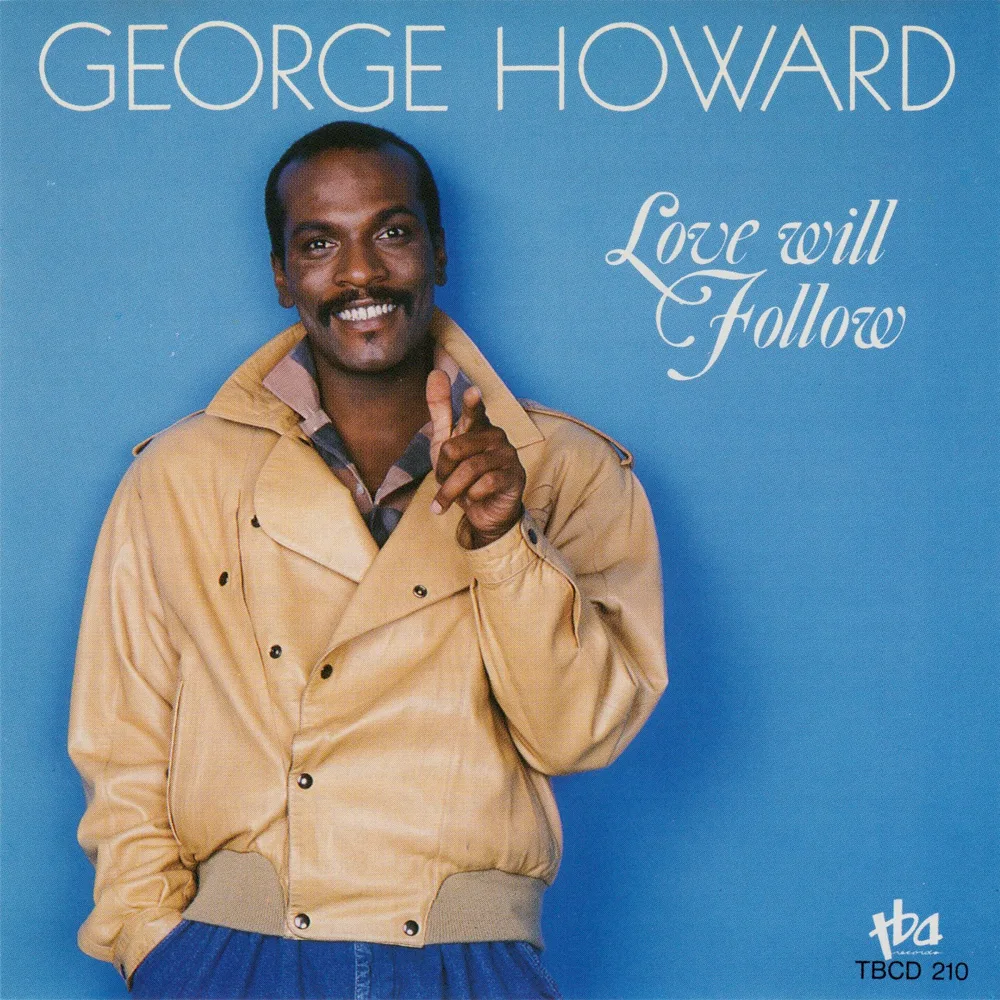
George Howard on the cover of his 1986 album *Love Will Follow* (TBA Records), cover photograph by Dale R. Council Album cover art (not a CC-licensed artist photo), used as the only available image showing the artist — Cover Art Archive: https://coverartarchive.org/release-group/3ce1a1fa-7a80-4a12-905d-ddc4382b4cdc
George Nathaniel Howard Jr. was born in Philadelphia on September 15, 1956. He started lessons at school at six, on clarinet and bassoon, and was soon steered into private study at the Settlement School of Music, where his first clarinet teacher, Shirley Curtis, had him working through Vivaldi and Handel's "Water Music" on clarinet, oboe and bassoon by the time he was ten. At thirteen he talked his public-school music teacher into lending him a tenor saxophone for the summer and taught himself on a Bundy student horn. He joined a neighborhood R&B band called the Citations, playing James Brown and Kool and the Gang, while his father pushed Charlie Parker and John Coltrane records at him at home. Coltrane and Wayne Shorter became his models, and he settled on the soprano saxophone partly because it reminded him of the bassoon. He kept up private classical lessons until fifteen, when his teacher dropped him after catching him playing jazz licks; he said he wanted a place where he could play and grow, and did not think the classical world offered one.
By fifteen he was on the road with Philadelphia-area rhythm and blues acts, among them Blue Magic, First Choice and Harold Melvin and the Blue Notes. Through the 1970s he worked as a sideman with local soul groups and became a session player for fellow Philadelphians Leon Huff and Dexter Wansel. In 1979 he joined Grover Washington Jr. on tour, a job that led to his own career and to eight years in Los Angeles before he moved to Atlanta around 1992. Washington was one of his idols, and Howard honored him in 1994 with the song "Grover's Groove."
According to his obituary in the Los Angeles Times, he had been turned down by 38 record companies before he landed a deal in 1982 with Studio City's TBA Records, an imprint of Palo Alto Records. His debut, Asphalt Gardens (Palo Alto Jazz, 1982), was produced by Howard and Kae Williams Jr., mastered by Bob Ludwig, and included a version of Stevie Wonder's "Rocket Love"; it reached No. 25 on the Billboard jazz albums chart. Steppin' Out (TBA, 1984), co-produced with keyboardist Dean Gant, went to No. 9 on that chart and No. 39 on the R&B chart. The rhythm section on it was Keni Burke and Nathan East on bass, Leon "Ndugu" Chancler on drums and David Williams on guitar, and the program mixed Howard originals with soprano-sax readings of Eurythmics' "Sweet Dreams (Are Made of This)" and "Human Nature." The closing "Dream Ride" was pushed in Britain in 1984 by the disc jockey Robbie Vincent and is still prized among soul and jazz collectors there.
The commercial peak came in the middle of the decade. Dancing in the Sun (TBA, 1985) spent three weeks at No. 1 on the Billboard Traditional Jazz Albums chart; it covered Lionel Richie's "Love Will Find a Way" and Diana Ross's "Telephone," with Billy Childs, Todd Cochran and Paulinho da Costa among the players. Love Will Follow (TBA, 1986), built around Kenny Loggins's title song, also reached No. 1, along with No. 22 on the R&B chart, and won the Soul Train Music Award for Best Jazz Album, Solo, at the March 23, 1987 ceremony in Santa Monica, ahead of Miles Davis's Tutu, Kenny G's Duotones and Sade's Promise. In the same year, 1986, he was the saxophone voice on Patti LaBelle's "Kiss Away the Pain," which reached No. 13 on the R&B singles chart.
Howard moved to MCA for A Nice Place to Be (1986), which spent two weeks at No. 1 on the Traditional Jazz Albums chart; George Duke produced two of its tracks, Stanley Clarke played on three, and the program included a version of Sade's "Sweetest Taboo" and the television theme "Spenser for Hire." Then came Reflections (1988), his own production, which topped the Contemporary Jazz Albums chart and earned him a Grammy nomination for Best R&B Instrumental Performance (Orchestra, Group or Soloist) at the 31st Grammy Awards. It includes his instrumental reading of "Love Will Conquer All." Personal (1990) carried his biggest hit single, "Shower You With Love," with Duke among the guests. When GRP took over many MCA artists' contracts in 1990, he went with them, and the label brought out one album a year for the next four years: Love and Understanding (1991), a No. 1 Contemporary Jazz record produced with Victor Bailey; Do I Ever Cross Your Mind? (1992), with Clarke, James Ingram and Phil Perry; When Summer Comes (1993), with Duke, Everette Harp, Sonny Emory, Paul Jackson Jr. and Clarke; and A Home Far Away (1994). The Recording Academy lists two Grammy nominations for him: the Reflections nomination, and a 1993 nomination at the 35th Grammy Awards for Best R&B Instrumental Performance, for "Just the Way I Feel" from Do I Ever Cross Your Mind?. That album also earned a Soul Train Music Award nomination for Best Jazz Album, which went to Najee.
His last years were hard ones. In 1996 his mother became ill and died and his marriage ended in divorce, and he made Attitude Adjustment (GRP, 1996) out of that upheaval, saying he wrote it as he lived it. He performed at a hospitality house for the continent of Africa during the 1996 Summer Olympics in Atlanta, had been to Africa several times, and said he put a tribute to the African drum on every album. GRP gathered his first five years on the label, plus some MCA recordings and two unreleased tracks, on The Very Best of George Howard and Then Some (1997). He told JazzTimes in early 1998 that he was ready to widen his focus, and Midnight Mood (GRP, January 1998) pointed that way: he produced it and added vocals, with Stanley Clarke, Jonathan Butler, Paul Jackson Jr., Lenny Castro, Munyungo Jackson and Sonny Emory among the musicians, and a multi-part piece called "Africa" at its center.
George Howard passed away from colon cancer at Piedmont Hospital in Atlanta on March 20, 1998, at the age of 41. He was survived by his daughter and two sisters. Blue Note issued There's a Riot Goin' On, a ten-track reworking of the 1971 Sly and the Family Stone album, in its cover series about two months after his death.
Howard played soprano saxophone with a smooth, vocal tone that came more from his R&B and soul apprenticeship than from the bebop tradition, though John Coltrane and Wayne Shorter were the players he named as his models and he went back to Coltrane's A Love Supreme in his last years. His records were built on dance-floor and quiet-storm grooves, programmed keyboards and covers of pop and soul songs by Stevie Wonder, Lionel Richie, Diana Ross, Kenny Loggins and Eurythmics, and he produced or co-produced most of his own albums. The Los Angeles Times credited him with helping popularize the "quiet storm" and "smooth jazz" styles, and noted that, like Kenny G, he was widely criticized by jazz writers for blending fusion with pop rhythms and melodies. AllMusic, which files him under crossover jazz, jazz-pop, quiet storm and smooth jazz, describes him as a soprano player whose mix of jazz, funk and soul brought him mainstream success in the 1980s and 1990s. His reviews were uneven, but the audience was steady: he sold consistently, remained a draw at clubs and festivals, and had recently been part of the Jazz Explosion tour when he died. By his own account he was a working musician who loved Coltrane, George Duke and Miles Davis, whose "Tutu" he played live, and who said he had found a niche and wanted room to stretch beyond it. His career sat on the smooth jazz and R&B side of the crossover line, resting on a real jazz apprenticeship.
- Asphalt Gardens (1982, Palo Alto Jazz) - His debut, produced with Kae Williams Jr., with a Stevie Wonder song and a No. 25 showing on the Billboard jazz albums chart.
- Steppin' Out (1984, TBA) - The second album, a No. 9 jazz record with Nathan East, Ndugu Chancler and the cult favorite "Dream Ride."
- Dancing in the Sun (1985, TBA) - The breakthrough, three weeks at No. 1 on the Traditional Jazz Albums chart, with his takes on "Love Will Find a Way" and "Telephone."
- Love Will Follow (1986, TBA) - A second No. 1 jazz album and the Soul Train Music Award winner for Best Jazz Album, Solo.
- Reflections (1988, MCA) - Self-produced, No. 1 on Contemporary Jazz, and the album behind his first Grammy nomination.
- Personal (1990, MCA) - Home of "Shower You With Love," his best-known single. Spotify - Personal Listen
- Do I Ever Cross Your Mind? (1992, GRP) - Stanley Clarke, James Ingram and Phil Perry guest, "Just the Way I Feel" drew his second Grammy nomination, and the album was a Soul Train nominee.
- When Summer Comes (1993, GRP) - A GRP set with George Duke, Everette Harp, Paul Jackson Jr. and Clarke. Spotify - When Summer Comes Listen
George Howard: Full Discography
Discogs artist: George Howard (132024) · Born George Nathaniel Howard Jr., September 15, 1956, Philadelphia · Died March 20, 1998, Atlanta
Leader: Studio Albums
| Album | Year | Label | Personnel & Notes | Charts | Listen | Buy |
|---|---|---|---|---|---|---|
| Asphalt Gardens | 1982 | Palo Alto Jazz (PA 8035) | Debut. Produced and arranged by George Howard and Kae Williams Jr.; Howard wrote every track except "Rocket Love," by Stevie Wonder. Engineered and mixed by Phil Nicolo; mastered by Bob Ludwig; executive producers Herb Wong and Al Evers | No. 25 Billboard jazz | — | — |
| Steppin' Out | 1984 | TBA (TB 201-N) | Co-produced by Howard and Dean Gant, who plays keyboards and synthesizer. Keni Burke and Nathan East (bass), Leon "Ndugu" Chancler (drums, timbales, percussion), David Williams (guitar), Brenda White King, Curtis King and Gwen Guthrie (backing vocals). Includes "Human Nature," "Sweet Dreams (Are Made of This)" and "Dream Ride" | No. 9 Billboard jazz, No. 39 R&B | — | — |
| Dancing in the Sun | 1985 | TBA (TB 205); reissued by GRP (GRD-9626) | Produced and arranged by Howard and Denzil Miller. Keyboards by Billy Childs, Denzil Miller, Kae Williams Jr., Philip Woo and Todd Cochran; Eddie Martinez and Ron Smith (guitar), Cornelius Mims (bass), Billy Johnson (drums), Paulinho da Costa (percussion); backing vocalists include Siedah Garrett, Billy Davis Jr., Phillip Ingram and Lynn Davis. Covers Lionel Richie's "Love Will Find a Way" and Diana Ross's "Telephone" | No. 1 Billboard Traditional Jazz (three weeks) | — | — |
| Love Will Follow | 1986 | TBA (TB 210); reissued by GRP (GRD-9659, 1991) | Produced and arranged by Howard, who plays soprano saxophone; recorded and mixed by Randy Tominaga at Larrabee Studios, West Hollywood; Ron Smith (guitar). The title song is Kenny Loggins's. Winner of the 1987 Soul Train Music Award for Best Jazz Album, Solo | No. 1 Billboard Traditional Jazz, No. 22 R&B | — | — |
| A Nice Place to Be | 1986 | MCA (MCA-5855) | Produced by Howard, with George Duke producing "Let's Live in Harmony" and "Pretty Face." Stanley Clarke plays on "Jade's World," "Spenser for Hire" and "Stanley's Groove"; Paul Jackson Jr. (guitar), Victor Bailey, Nathan East (bass), Paulinho da Costa (percussion), Wayne Linsey and Robert Brookins (keyboards). Includes Sade's "Sweetest Taboo" | No. 1 Billboard Traditional Jazz (two weeks), No. 2 Contemporary Jazz, No. 22 R&B | — | — |
| Reflections | 1988 | MCA (MCAD-42145) | Produced by Howard. Guests include George Duke, Nathan East and Robert Brookins, and Johnny Gill sings on "One Love." Includes "Funk It Out" and an instrumental reading of Lionel Richie and Greg Phillinganes's "Love Will Conquer All." Grammy nomination, Best R&B Instrumental Performance (Orchestra, Group or Soloist) | No. 1 Billboard Contemporary Jazz, No. 33 R&B | — | — |
| Personal | 1990 | MCA (MCA-6335) | Executive producers Howard and Louil Silas Jr. Includes "Shower You With Love," "I Want You for Myself" and "Piano in the Dark"; guests include George Duke and Preston Glass | No. 3 Billboard Contemporary Jazz, No. 39 R&B | Spotify | — |
| Love and Understanding | 1991 | GRP (GRD-9629) | His first original album for GRP. Produced by Howard and Victor Bailey, with George Duke producing the title track; executive producers Dave Grusin, Larry Rosen, Carl Griffin and Howard | No. 1 Billboard Contemporary Jazz, No. 32 R&B | — | — |
| Do I Ever Cross Your Mind? | 1992 | GRP (GRD-9669) | Produced by Howard and Rayford Griffin, with executive producers Grusin and Rosen. Stanley Clarke, James Ingram and Phil Perry appear. Includes "Just the Way I Feel," nominated for the Grammy for Best R&B Instrumental Performance; the album was a 1993 Soul Train nominee for Best Jazz Album | No. 3 Billboard Contemporary Jazz, No. 33 R&B | — | — |
| When Summer Comes | 1993 | GRP (GRD-9724) | Howard produced most tracks, with Keith Lewis and Rayford Griffin producing one each; executive producers Grusin and Rosen. Guests include George Duke, Everette Harp, Sonny Emory, Paul Jackson Jr. and Stanley Clarke | No. 4 Billboard Contemporary Jazz, No. 32 R&B | Spotify | — |
| A Home Far Away | 1994 | GRP (GRD-9780) | Howard is executive producer of the album, with Grusin and Rosen. Includes "Grover's Groove," a tribute to Grover Washington Jr., and "No Ordinary Love." Guests include Paulinho da Costa, Paul Jackson Jr. and steel-pan player Ken "Professor" Philmore | No. 2 Billboard Contemporary Jazz, No. 3 Jazz, No. 28 R&B | — | — |
| Attitude Adjustment | 1996 | GRP (GRD-9839) | Includes "Watch Your Back," "Best Friend," "Dianne's Blues" and "A Whole Lotta Drum in Me" | No. 3 Billboard Contemporary Jazz, No. 5 Jazz, No. 38 R&B | — | — |
| Midnight Mood | 1998 | GRP (GRD-9902) | Released January 1998. Produced by Howard with Darrell Smith, Eric Daniels, Morris Pleasure, Phil Davis and Sonny Emory. Musicians include Stanley Clarke (acoustic bass), Jonathan Butler and Paul Jackson Jr. (guitar), Sekou Bunch (electric bass), Lenny Castro and Munyungo Jackson (percussion), Sonny Emory (drums) and vocalist Marva King. Includes the multi-part "Africa" and a version of D'Angelo's "Smooth" | No. 5 Billboard Contemporary Jazz, No. 7 Jazz | — | — |
| There's a Riot Goin' On (The Blue Note Cover Series) | 1998 | Blue Note (CDP 7243 8 21431 2 3) | Released about two months after his death in March 1998. A ten-track reworking of Sly and the Family Stone's 1971 album, including "Family Affair," "Just Like a Baby" and "Africa Talks to You" | — | — |
Compilations
| Album | Year | Label | Notes |
|---|---|---|---|
| The Very Best of George Howard, Vol. 1 | 1988 | TBA (TBA 233) | LP drawing on his early Palo Alto and TBA albums: "Rocket Love," "Asphalt Gardens," "Dream Ride," "Sweet Dreams (Are Made of This)," "Love Will Find a Way," "Quiet as It's Kept," "Slow Walking" |
| The Very Best of George Howard, Vol. 2 | 1988 | TBA (TBA 239) | LP: "The Preacher," "Bright Eyes," "Human Nature," "A Tear of Spring," "Dancing in the Sun," "Love Will Follow," "September Rain" |
| The Very Best of George Howard and Then Some | 1997 | GRP (GRD-9885) | Eleven tracks from his GRP years and earlier, including "Love Will Follow," "Baby, Come to Me," "Everything I Miss at Home," "When Summer Comes," "Midnight Mood" and "Find Your Way" |
| The Very Best of George Howard | 2005 | Verve | Eleven-track compilation, including "Dancing in the Sun," "Too Bad," "Three Minute Warning," "Cross Your Mind" and "Love Will Follow" |
Selected Singles
Promotional and commercial singles that appear under his own name: "Brand New (And All Made Over)" (Palo Alto Jazz, 12-inch, 1982) · "Rocket Love" (Palo Alto, 7-inch promo, 1982) · "Steppin' Out" (TBA, 7-inch promo, 1984) · "Dancing in the Sun" (TBA, 7-inch promo, 1985) · "Love Will Find a Way" (TBA, 7-inch, 1985) · "Love Will Follow" (TBA, 7-inch promo, 1985) · "You and Me" (MCA, CD promo, 1990) · "Everything I Miss at Home" (GRP, CD promo, 1991) · "Hopscotch" (GRP, CD promo, 1991) · "Shadow" (GRP, CD promo, 1992) · "Cross Your Mind" (GRP, CD promo, 1992) · "Only Human" (GRP, CD promo, 1993) · "If You Were Mine" (GRP, CD promo, 1994) · "Miracle" (GRP, CD maxi promo, 1994) · "Within Your Eyes" (GRP, CD promo, 1998) · "Brave & Strong" (Blue Note, CD promo, 1998).
As Sideman and Guest (selected)
| Year | Project (Leader) | Title | Label | Catalog | Role | Notes |
|---|---|---|---|---|---|---|
| 1978 | Dexter Wansel | Voyager | Philadelphia International | JZ 34985 | Saxophone | Credited on the album; track not specified |
| 1986 | Stanley Clarke | Hideaway | Epic | FE 40275 | Saxophone (two tracks), backing vocals | Saxophone on "My Love, Her Inspiration" and "Basketball" |
| 1986 | Patti LaBelle | Winner in You | MCA | MCA-5737 | Saxophone solo | "Kiss Away the Pain," released as a single in 1986 and a No. 13 R&B hit |
| 1986 | Jeff Lorber | Private Passion | Warner Bros. | 9 25492-2 | Soprano saxophone (one track) | Credited on track 7 |
| 1986 | Tania Maria | The Lady from Brazil | Manhattan | ST-53045 | Saxophone (one track) | Credited on side two, track three |
| 1988 | Stanley Clarke | If This Bass Could Only Talk | Portrait | RK 40923 | Soprano saxophone | "Come Take My Hand" |
| 1990 | Paul Jackson Jr. | Out of the Shadows | Atlantic | 7 82065-1 | Soprano saxophone | "All for You" |
| 1992 | George Duke | Snapshot | Warner Bros. | 9 45026-2 | Soprano saxophone (track 14) | |
| 1992 | Tom Grant | In My Wildest Dreams | Verve Forecast | 849 530-2 | Soprano saxophone | "Show Me the Way" |
| 1992 | Alphonse Mouzon | The Survivor | Tenacious | Tenac 9201-2 | Soprano saxophone | "Games People Play," alongside Richard Elliot on saxophone |
| 1993 | Stanley Clarke | East River Drive | Epic | EPC 473797 2 | Soprano saxophone | Title track |
| 1997 | George Duke | Is Love Enough? | Warner Bros. | 9 46494-2 | Soprano saxophone (tracks 4 and 12) | Featured on "Love Songs" |
Awards and Nominations
| Year | Award | Work | Result |
|---|---|---|---|
| 1987 | Soul Train Music Award, Best Jazz Album, Solo | Love Will Follow | Winner |
| 1989 | Grammy Award, Best R&B Instrumental Performance (Orchestra, Group or Soloist) | Reflections | Nominee |
| 1993 | Grammy Award, Best R&B Instrumental Performance | "Just the Way I Feel" | Nominee |
| 1993 | Soul Train Music Award, Best Jazz Album | Do I Ever Cross Your Mind? | Nominee |
The Recording Academy lists two Grammy nominations and no wins. Discogs credits him on a long run of further compilations and guest appearances beyond those listed here; the full list is on Discogs.
- Grover Washington Jr. - his idol and, from 1979, his employer on tour; Howard's "Grover's Groove" (1994) is a tribute to him.
- Stanley Clarke - guest on Howard's A Nice Place to Be, Do I Ever Cross Your Mind?, When Summer Comes and Midnight Mood; Howard plays saxophone on Clarke's Hideaway (1986) and soprano saxophone on If This Bass Could Only Talk (1988) and East River Drive (1993).
- George Duke - produced two tracks on Howard's A Nice Place to Be and one on Love and Understanding, and appears on Reflections, Personal and When Summer Comes; Howard plays soprano saxophone on Duke's Snapshot (1992) and Is Love Enough? (1997).
- Paul Jackson Jr. - guitarist on When Summer Comes, A Home Far Away and Midnight Mood; Howard plays soprano saxophone on "All for You" on Jackson's Out of the Shadows (1990).
- Patti LaBelle - Howard is the featured saxophonist on her 1986 R&B hit "Kiss Away the Pain."
- Nathan East and Paulinho da Costa - bass on Steppin' Out and percussion on Dancing in the Sun and A Home Far Away, respectively.
- Jeff Lorber - Howard plays soprano saxophone on one track of Lorber's Private Passion (1986).
- Tania Maria - Howard is credited on saxophone on one track of her The Lady from Brazil (1986).
- Alphonse Mouzon - Howard and Richard Elliot are the saxophonists on Mouzon's The Survivor (1992); Howard's soprano is on "Games People Play."
- Dave Grusin and Larry Rosen - executive producers of Howard's GRP albums from Love and Understanding to Midnight Mood.
- Dean Gant, Kae Williams Jr., Denzil Miller, Victor Bailey, Rayford Griffin - producers and co-producers on his albums, from Asphalt Gardens to Do I Ever Cross Your Mind?.
- Jonathan Butler, Lenny Castro, Munyungo Jackson, Sonny Emory, Marva King - musicians on Midnight Mood, as named in JazzTimes.
- Leon Huff and Dexter Wansel - Philadelphia producers and writers for whom he did session work in the 1970s; he is credited on saxophone on Wansel's Voyager (1978).
- The Los Angeles Times obituary also lists Dianne Reeves, Patrice Rushen and Gerald Albright among the artists he worked with.
More Smooth Jazz Artists
See all 93 Smooth Jazz artists →More American Jazz Artists
See all 820 American artists →- Wikipedia: George Howard (jazz)
- Los Angeles Times: George Howard; Jazz Saxophonist, Multiple Grammy Nominee (March 28, 1998)
- JazzTimes: George Howard: Urban Renewal, by Patricia Myers (March 1, 1998)
- AllMusic: George Howard
- Grammy.com: George Howard
- Wikipedia: 1987 Soul Train Music Awards
- Wikipedia: 1993 Soul Train Music Awards
- Wikipedia: Palo Alto Records
- Wikipedia: Kiss Away the Pain
- Wikipedia: Steppin' Out (George Howard album)
- Wikipedia: Dancing in the Sun (album)
- Wikipedia: Reflections (George Howard album)
- Discogs: George Howard