 JAZZPROFILES lives in the music 1,002 Jazz Artists fully Profiled!
 Clifford Brown
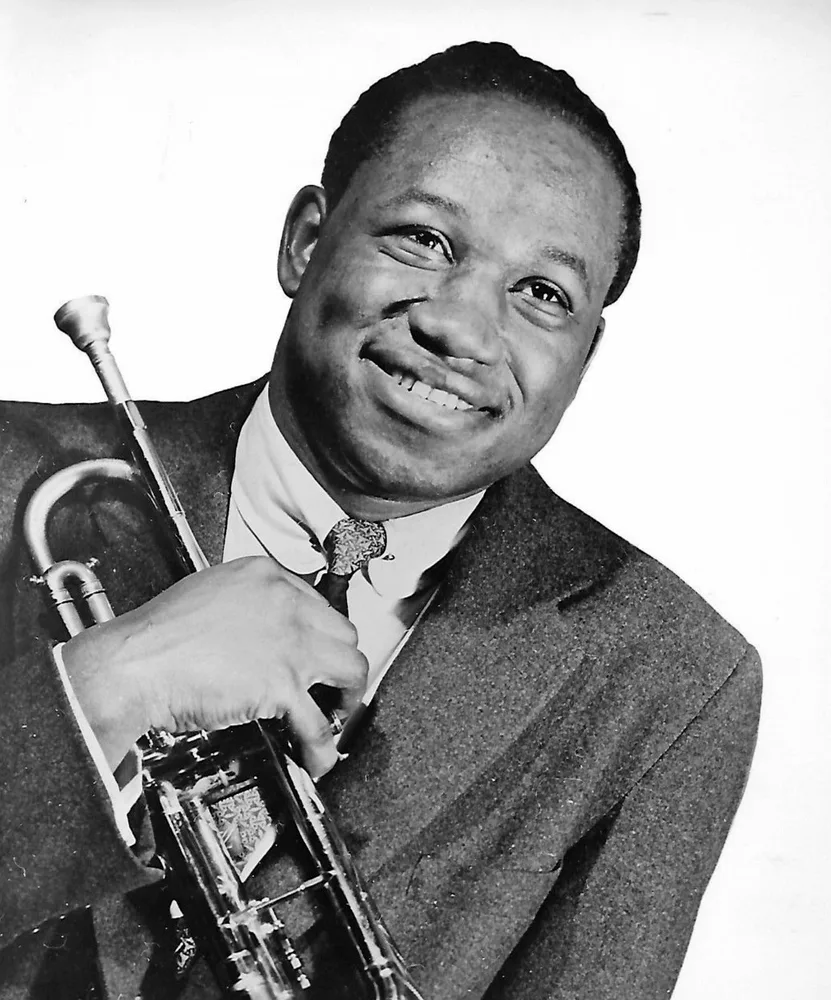
Publicity photo of Clifford Brown issued by his management, Associated Booking Corporation; published in The News Journal (Wilmington, Delaware), September 15, 1956. Public Domain (published before 1978 with no copyright notice) — Wikimedia Commons - https://commons.wikimedia.org/wiki/File:Clifford_Brown_1956.jpg

Clifford Benjamin Brown was born October 30, 1930, in Wilmington, Delaware, into a musical family that sang together as a home vocal quartet. He grew up fascinated by his father's trumpet, started lessons around age 13 with the Wilmington trumpeter and educator Robert "Boysie" Lowery, and by 1948 was already sitting in on the Philadelphia jazz scene, drawing encouragement from Dizzy Gillespie and Charlie Parker. He enrolled as a math major at Delaware State College before transferring in 1949 to Maryland State College on a music scholarship, where he studied composition and arranging and formed a close friendship with two players who would shape the rest of his short career: drummer Max Roach and trumpeter Fats Navarro, who quickly became his musical idol and primary influence. In June 1950 a serious car accident put Brown in the hospital for the better part of a year; Gillespie visited him there and urged him to keep pursuing music professionally. A month after the crash, Navarro died of a drug overdose, at 26.
Brown recovered and returned to work in 1952 as a member of R&B bandleader Chris Powell's group, the Blue Flames, before moving into more overtly jazz circles: touring and recording with pianist Tadd Dameron's group in 1953, and working with drummer Art Blakey. In June 1953, shortly before leaving the country, he cut his Blue Note debut as a leader, New Star on the Horizon, with altoist Gigi Gryce, tenor player Charlie Rouse, pianist John Lewis, bassist Percy Heath, and Blakey on drums. He then toured Europe that summer and fall with Lionel Hampton's orchestra; when Hampton barred his musicians from recording on their own, Brown and Gryce ignored the order and led a run of freelance sessions in Paris and Stockholm, including a well-documented sextet date recorded September 29 and October 8, 1953, with French rhythm players Henri Renaud, Jimmy Gourley, Pierre Michelot, and Jean-Louis Viale. Back in New York in February 1954, Brown recorded live at Birdland with a proto-Jazz Messengers version of Art Blakey's Quintet, alongside Lou Donaldson and Horace Silver, released as A Night at Birdland, Volume 1 and Vol. 2 on Blue Note.
By mid-1954 Brown had formed a new working quintet co-led with Max Roach, with tenor saxophonist Harold Land, pianist Richie Powell, and bassist George Morrow, recording their debut studio album, Clifford Brown and Max Roach, for EmArcy that December. That same year, DownBeat magazine's critics' poll named him its New Star of the Year, and he recorded as a sideman on Sarah Vaughan's self-titled EmArcy album (including "Lullaby of Birdland"). The Quintet followed with Brown and Roach Incorporated and, in January 1955, the ballads-focused Clifford Brown With Strings, arranged and conducted by Neal Hefti; Brown also guested that year on singer Helen Merrill's EmArcy album, arranged by Quincy Jones. Study in Brown, cut later in 1955, is often cited as one of the defining early hard bop records, built around originals such as "Sandu," "Joy Spring," and "Daahoud" that have since become standards. By early 1956 Sonny Rollins had replaced Land in the group, and the Quintet recorded its final studio album, At Basin Street, at Capitol Studios in New York in January and February of that year.
On June 26, 1956, Brown and Richie Powell were being driven from a Philadelphia jam session toward the band's next date in Chicago by Powell's wife, Nancy, so that the exhausted musicians could sleep. Driving at night in the rain on the Pennsylvania Turnpike west of Bedford, she lost control of the car, which left the road; all three were killed instantly. Brown was 25. He is buried in Mt. Zion Cemetery in Wilmington, Delaware. In 1972, DownBeat's critics inducted him into the magazine's Jazz Hall of Fame.
Brown's death was widely felt as one of the great losses in jazz history, in part because his colleagues so consistently described him as a model of discipline rather than only of talent. Sonny Rollins later said Brown "showed me that it was possible to live a good, clean life and still be a good jazz musician," and Lou Donaldson recalled him doing lip and mouth exercises constantly to maintain his technique. Tenor saxophonist Benny Golson, who had recorded alongside Brown in Tadd Dameron's band in 1953, wrote the tribute "I Remember Clifford" the year after his death; it has since become a jazz standard in its own right.
Brown played with a warm, full tone and a virtuosic command of bebop harmony that critics and fellow musicians alike considered nearly technically flawless, qualities he built directly on the example of his primary influence, Fats Navarro, while pushing the vocabulary further and cleaner. Where much of the first generation of bebop trumpet playing prized speed and harmonic daring, Brown paired that same fluency with a melodic clarity and warmth that made his improvisations feel composed even when they were not, and his original tunes ("Joy Spring," "Daahoud," "Sandu") entered the standard jazz repertoire within a few years of his death. Alongside Max Roach's rhythm section, he helped define the hard bop sound of the mid-1950s: a harder-edged, blues- and gospel-inflected reworking of bebop that pointedly rejected drugs and self-destruction as part of the jazz lifestyle, a stance Brown embodied personally as well as musically. His influence on the generation of trumpeters that followed, including Freddie Hubbard, Woody Shaw, and Charles Tolliver, has been cited repeatedly by critics as direct and foundational; more than half a century after his death he continues to be treated as a benchmark for trumpet technique and tone in jazz education.
- New Star on the Horizon (1953, Blue Note) - Brown's debut as a leader, recorded shortly before he left for Europe with Lionel Hampton's orchestra. Spotify - New Star on the Horizon Listen
- A Night at Birdland, Volume 1 (1954, Blue Note) - A live Art Blakey Quintet date, recorded February 21, 1954, that anticipated the Jazz Messengers. Spotify - A Night At Birdland (Volume 1/Live)
- Clifford Brown and Max Roach (1954, EmArcy) - The debut studio album of the co-led Clifford Brown-Max Roach Quintet. Spotify - Clifford Brown And Max Roach Listen
- Study in Brown (1955, EmArcy) - Widely regarded as one of the defining early hard bop albums, built around Brown originals that became standards. Spotify - Study In Brown Listen
- At Basin Street (1956, EmArcy) - The Quintet's final studio album, recorded with Sonny Rollins in Land's chair a few months before Brown's death. Spotify - Clifford Brown And Max Roach At Basin Street (Expanded Edition) Listen
- Sarah Vaughan (1954, EmArcy) - A sideman date with singer Sarah Vaughan that produced her version of "Lullaby of Birdland." Spotify - Sarah Vaughan
- Helen Merrill (1955, EmArcy) - A Quincy Jones-arranged vocal session with singer Helen Merrill, another of Brown's most celebrated sideman appearances. Spotify - Helen Merrill With Clifford Brown & Gil Evans Listen
Clifford Brown: Full Discography
Clifford Brown's working career ran barely four years (1952 to his death in June 1956), so unlike this catalog's hugely prolific bandleaders his own recorded output as a leader or co-leader is compact and is covered here in full. What is not compact is the posthumous reissue trail: Discogs lists well over 1,500 releases under his artist ID once compilations, various-artists anthologies, and reissues in every format and territory are counted. This table itemizes his actual recording sessions as leader/co-leader and his most significant sideman dates rather than every repackaging; it does not attempt to list every "Best of Brownie" compilation. Verified against the live Discogs API (artist ID 259082), cross-checked against Spotify.
A mechanical note on Brown's Discogs footprint for anyone extending this table: he is split across numerous named-group entities in addition to his main artist ID, including "Clifford Brown and Max Roach" (id 2664380), "Clifford Brown Sextet" (376089), "Clifford Brown Quartet" (1497493), "Clifford Brown All Stars" (529735), several Gigi Gryce co-billed entities, and "Clifford Brown Max Roach Quintet" (16561124). All of the sessions below were reconciled against his main artist page and against these named-group pages.
As Leader / Co-Leader
| Album Title | Recording Date(s) | Release Date | Label | Catalog Number | Format(s) | Personnel | Role | Reissue History | Spotify | Buy | Notes |
|---|---|---|---|---|---|---|---|---|---|---|---|
| New Star on the Horizon | 1953, shortly before Brown left for Europe | 1953 | Blue Note | BLP 5032 | LP, 10", Mono | Clifford Brown (trumpet), Gigi Gryce (alto sax, flute), Charlie Rouse (tenor sax), John Lewis (piano), Percy Heath (bass), Art Blakey (drums) | Leader | Reissued as side one of Memorial Album (Blue Note BLP 1526, 1956) and later on the compilation Brownie Speaks: The Complete Blue Note Recordings (2014) | Spotify - New Star on the Horizon | — | Brown's debut as a leader on record. |
| The Clifford Brown Sextet in Paris | September 29 and October 8, 1953, Paris | Originally issued in France; reissued on Prestige (PR/PRST 7794) in 1970 | Prestige | PR 7794 / PRST 7794 | LP, Compilation, Reissue | Clifford Brown (trumpet), Gigi Gryce (alto sax), Henri Renaud (piano), Jimmy Gourley (guitar), Pierre Michelot (bass), Jean-Louis Viale (drums) | Co-leader (with Gigi Gryce) | Reissued multiple times on Prestige, Vogue, and later CD compilations of the "Paris sessions" | — | — | Recorded while Brown was touring Europe with Lionel Hampton's orchestra; Hampton had barred his sidemen from recording independently, and Brown and Gryce made these dates anyway. |
| Clifford Brown and Max Roach | 1954 | December 1954 | EmArcy | MG 26043 | LP, 10", Mono | Clifford Brown (trumpet), Max Roach (drums), Harold Land (tenor sax), Richie Powell (piano), George Morrow (bass) | Co-leader | Reissued on EmArcy/Mercury LP and later CD box sets, including Brownie: The Complete EmArcy Recordings of Clifford Brown (1989) | Spotify - Clifford Brown And Max Roach | — | First studio album under the co-led Clifford Brown-Max Roach Quintet banner. |
| Brown and Roach Incorporated | 1954/1955 | 1955 | EmArcy / Mercury | MG 36008 | LP, Mono | Clifford Brown (trumpet), Max Roach (drums), Harold Land (tenor sax), Richie Powell (piano), George Morrow (bass) | Co-leader | Reissued on EmArcy/Mercury and later CD compilations | Spotify - Brown And Roach Incorporated | — | Introduced the Brown original "Sandu." |
| Clifford Brown With Strings | January 18-20, 1955 | 1955 | EmArcy | MG 36005 | LP, Mono | Clifford Brown (trumpet), Max Roach (drums), Richie Powell (piano), George Morrow (bass), Barry Galbraith (guitar), strings conducted and arranged by Neal Hefti | Leader | Reissued on EmArcy/Mercury and later CD | Spotify - Clifford Brown With Strings | — | A ballads-heavy set pairing the trumpeter with a string orchestra. |
| Study in Brown | 1955 | 1955 | EmArcy | MG 36037 | LP, Mono | Clifford Brown (trumpet), Max Roach (drums), Harold Land (tenor sax), Richie Powell (piano), George Morrow (bass) | Co-leader | Reissued on EmArcy/Mercury and later CD compilations | Spotify - Study In Brown | — | Widely cited as one of the defining early hard bop albums. |
| At Basin Street | January 4 and February 16-17, 1956, Capitol Studios, New York City | 1956 | EmArcy | MG 36070 | LP, Mono | Clifford Brown (trumpet), Max Roach (drums), Sonny Rollins (tenor sax, replacing Harold Land), Richie Powell (piano), George Morrow (bass) | Co-leader | Reissued on EmArcy/Mercury and later CD (including an "Expanded Edition") | Spotify - Clifford Brown And Max Roach At Basin Street (Expanded Edition) | — | The Quintet's last studio album before Brown's death five months later. |
As Sideman (selected major credits)
| Year | Project (Leader) | Title | Label | Catalog | Role | Notes |
|---|---|---|---|---|---|---|
| 1953 | J.J. Johnson | Jay Jay Johnson | Blue Note | BLP 5028 | Trumpet | Recorded with Jimmy Heath, John Lewis, Percy Heath, and Kenny Clarke. |
| 1953 | Tadd Dameron | Clifford Brown With Tadd Dameron Orch. | Prestige | PREP 1353 | Trumpet | Recorded live in New York, June 11, 1953, with Gigi Gryce, Benny Golson, and Idrees Sulieman also in the section; not released until 1954. |
| 1954 | Art Blakey Quintet | A Night at Birdland, Volume 1 | Blue Note | BLP 5037 | Trumpet | Recorded live at Birdland, February 21, 1954, with Lou Donaldson and Horace Silver; a proto-Jazz Messengers date. |
| 1954 | Art Blakey Quintet | A Night at Birdland, Vol. 2 | Blue Note | BLP 5038 | Trumpet | From the same February 21, 1954 Birdland engagement. |
| 1954 | Sarah Vaughan | Sarah Vaughan | EmArcy | MG-36004 | Trumpet | Recorded December 1954; includes "Lullaby of Birdland," with Paul Quinichette, Herbie Mann, Jimmy Jones, Joe Benjamin, and Roy Haynes. |
| 1954 | Dinah Washington | Dinah Jams | EmArcy | MG 36000 | Trumpet | Recorded live in the studio in Hollywood, August 14, 1954, alongside fellow trumpeters Clark Terry and Maynard Ferguson, altoist Herb Geller, tenor player Harold Land, pianists Junior Mance and Richie Powell, bassists Keter Betts and George Morrow, and Max Roach on drums. |
| 1955 | Helen Merrill | Helen Merrill | EmArcy | MG 36006 | Trumpet | Arranged by Quincy Jones, with Danny Bank, Jimmy Jones, Barry Galbraith, Oscar Pettiford or Milt Hinton, and Osie Johnson or Bobby Donaldson. |
Both Blue Note "A Night at Birdland" volumes and the two EmArcy vocal sessions (Sarah Vaughan, Helen Merrill) carry no track-level restriction on Brown's credit in Discogs' release data; each release's personnel block otherwise reads as a single working session, consistent with him playing throughout.
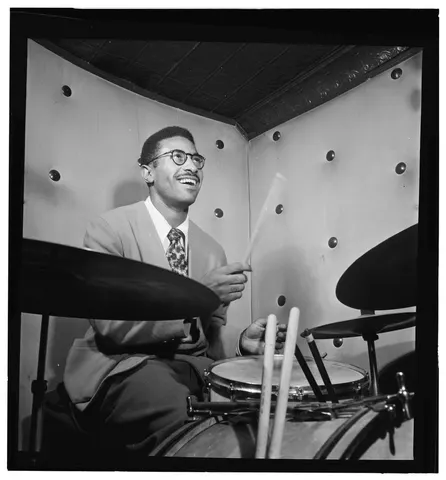
- Max Roach - co-led the Clifford Brown-Max Roach Quintet from 1954 until Brown's death in 1956; the two had first met as students at Maryland State College.
- Fats Navarro - Brown's primary trumpet influence and mentor figure, met around 1949; Navarro died the year after they met.
- Gigi Gryce - alto saxophonist and close collaborator on Brown's 1953 Blue Note debut and on the freelance sessions the two led in Paris during the Lionel Hampton tour.
- Harold Land - original tenor saxophonist in the Clifford Brown-Max Roach Quintet, 1954-1955, before being replaced by Sonny Rollins.
- Sonny Rollins - replaced Land in the Quintet in early 1956 and appears on its final album, At Basin Street.
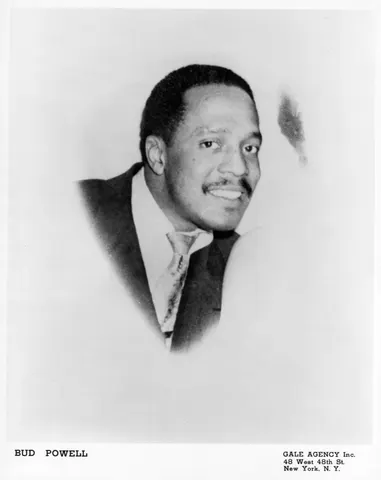
- Richie Powell - pianist in the Quintet from 1954 until his death alongside Brown in the same June 1956 car accident; younger brother of pianist Bud Powell.
- George Morrow - bassist in the Clifford Brown-Max Roach Quintet throughout its existence, 1954-1956.
- Art Blakey - drummer on Brown's 1953 Blue Note debut and on the 1954 live Birdland dates released as A Night at Birdland.
- Lou Donaldson and Horace Silver - bandmates on the 1954 Art Blakey Quintet Birdland sessions.
- Sarah Vaughan - featured as sideman trumpeter on her self-titled 1954 EmArcy album.
- Helen Merrill - featured as sideman trumpeter on her 1955 EmArcy album, arranged by Quincy Jones.
- Tadd Dameron - bandleader Brown recorded and toured with in 1953, including a June 1953 New York session also featuring Benny Golson and Gigi Gryce.
- Benny Golson - bandmate in Tadd Dameron's group in 1953; wrote the tribute standard "I Remember Clifford" the year after Brown's death.
- Kenny Clarke, John Lewis, and Percy Heath - rhythm section on Brown's 1953 sideman date under trombonist J.J. Johnson's name for Blue Note.
- Dinah Washington, Clark Terry, and Maynard Ferguson - fellow players on the August 14, 1954 Hollywood session released as Dinah Jams, alongside pianist Junior Mance.
- Wikipedia: Clifford Brown
- AllMusic: Clifford Brown - biography by Matt Collar, used for style/influence assessment and career chronology
- Discogs: Clifford Brown - used for identity verification (artist ID 259082), the artist's own biographical profile text, and the full discography via the live Discogs API