 JAZZPROFILES lives in the music 1,002 Jazz Artists fully Profiled!
 Sheryl Bailey
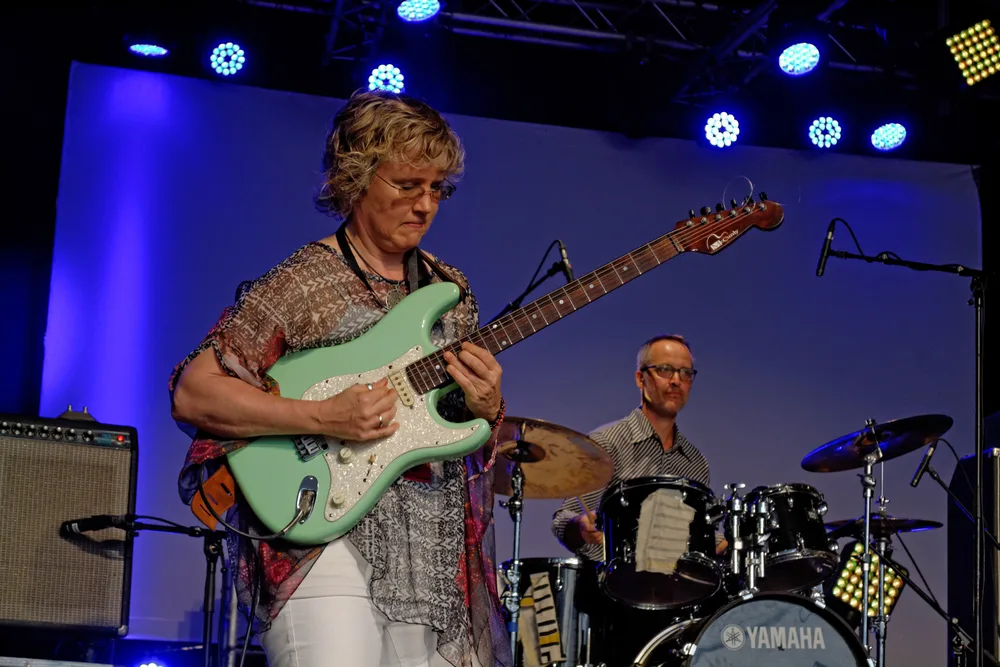
Sheryl Bailey performing with David Krakauer at the Espace Pierre Jakez Hélias during the Festival de Cornouaille, Brittany, France, on July 24, 2014 CC BY-SA 4.0 — Wikimedia Commons — https://commons.wikimedia.org/wiki/File:Festival_de_Cornouaille_2014_-_David_Krakauer_-_03.jpg (file: https://upload.wikimedia.org/wikipedia/commons/6/63/Festival_de_Cornouaille_2014_-_David_Krakauer_-_03.jpg)


Sheryl Bailey was born on May 20, 1966, and grew up on a farm outside Pittsburgh in a family where music was assumed rather than chosen. Her grandmother, Dr. Sally Tobin Dietrich, held a doctorate from Columbia and taught music, as had her own mother before her; Bailey's mother Sally played piano well enough to be asked to fill in on church organ, and raised four children alone. All of them took piano lessons, and all four went into the arts. Bailey took up trumpet in grade school after a second-grade aptitude test told her she was not band material, an insult she answered by making first chair and holding it into high school. She got her first guitar at thirteen, a Harmony bought from the J.C. Penney catalogue after a sustained campaign against her mother's better judgement, and spent the next several years on hard rock, working out Peter Frampton, Robin Trower and Van Halen solos by ear and slowing records down by weighting the turntable with a rock.
Jazz arrived from two directions at once: her older brother John came home announcing that he was into fusion, and Pittsburgh's public station WYEP gave her a music she found exotic and immediately meaningful. Her mother's response to a daughter who was skipping school to practice was to telephone Duquesne University and find her a teacher. That teacher, John Maione, ran her through the guitar tradition from the beginning, Charlie Christian and Eddie Lang and Carl Kress through Django Reinhardt and Joe Pass, and on to Wes Montgomery, Jimmy Raney, George Van Eps and Kenny Burrell. By fifteen she was practising six hours a day on a written schedule that split the time evenly between heavy metal and jazz. Maione brought her into Duquesne's summer jazz programs, where she first saw Tal Farlow play, and later Joe Pass, and where the Pittsburgh guitar institution Joe Negri taught. She spent a year at Duquesne, playing in the big band and in an ensemble led by the saxophonist Eric Kloss, before a fellow student talked her into leaving for Berklee College of Music.
Berklee gave her the harmony she had gone looking for. She studied with Ed Tommasi, Bruce Arnold, Bret Willmott, Jon Damian and Hal Crook, practised and transcribed for ten hours a day, and took her Bachelor of Music in 1988. In her last stretch there she played in the house band at Wally's Café, where Antonio Hart was in the band the summer before she left, and led her first billed jazz gig, a weekend at the Willow Jazz Club with the saxophonist Matt Otto and drummer Matt Wilson. Friends starting an Afro-pop group took her to Baltimore, and she stayed roughly from 1990 to 1995, booking her own gigs, working the house band at the Haven, playing in the trumpeter Allen Houser's band at Bertha's and in the organist Greg Hatza's trio, and meeting the pianist George Colligan and the trumpeter Alex Norris. She began teaching at Towson University around 1992, and in the same period toured Japan and the East Coast with the saxophonist Gary Thomas, taking the guitar chair Paul Bollenback had held. Her first album, Little Misunderstood, came out of that Baltimore circle, with Colligan on keyboards, Vince Loving on electric bass and Adrian Green on drums.
In 1995 she took third place in the Thelonious Monk International Jazz Guitar Competition at the Kennedy Center in Washington, behind Jesse van Ruller and Paul Pieper, in front of a panel of Jim Hall, Pat Martino, Pat Metheny, John Scofield and Mark Whitfield. She was the competition's first female instrumentalist finalist. By her own account she moved to New York officially in 1996 after a year of commuting from Baltimore; her own current biography dates her standing on the New York scene from 1998. Either way the pattern was the same: she rented a rehearsal room and ran sessions almost daily, played the Zinc Bar and Smalls nightly, and worked in the bassist Dwayne Burno's band alongside Myron Walden, with Jeff Ballard and Joe Farnsworth among the drummers. In 2000 the U.S. State Department made her a Jazz Ambassador for a South American tour built on Duke Ellington's repertoire, and a later program on Louis Armstrong sent her back into music she had never played.
The band that became her signature is the Sheryl Bailey 3, an organ trio she has kept running since 2001 and which holds a residency of more than fifteen years at New York's 55 Bar. Gary Versace on Hammond B-3 and Ian Froman on drums made The Power of 3 (2002), Bull's Eye (2003) and Live @ The Fat Cat, cut over two nights at the Christopher Street club in November 2005. Brian Charette took the organ chair for the Mel Bay concert film and disc Live in NYC (2008), and Ron Oswanski for A Meeting of Minds (Cellar Live, 2013), a program of twelve Bailey originals. Around the trio she has run a quartet in two forms, the Sheryl Bailey 4 of For All Those Living (2010), with Jim Ridl, Gary Wang and Shingo Okudaira and twenty percent of its sales given to the Ronald McDonald House of New York, and the current SBQ with Harvie S, Neal Smith and a rotating piano chair.
Her sideman work has always run wider than the organ trio suggests. She held the guitar chair in David Krakauer's Klezmer Madness and its successor Ancestral Groove for two decades, on Live in Krakow (Label Bleu, 2003), Bubbemeises: Lies My Gramma Told Me (2005), the John Zorn Book of Angels volume Pruflas (Tzadik, 2012) and Checkpoint (2014); Krakauer's funk-klezmer band Abraham Inc., co-led with Fred Wesley and Socalled, put her on lead guitar for eight of the nine tracks of Tweet Tweet (2009) and throughout Together We Stand (2019). She played the live "Liberty City" that closes the Japanese edition of Richard Bona's Munia: The Tale, recorded at the Jazz Standard in August 2002, and toured with Bona's Afro-pop band. She shared the guitar chair with Dida Pelled in Sherrie Maricle's DIVA Jazz Orchestra for the Johnny Mandel songbook The Man and His Music, recorded live at Dizzy's Club in May 2010 with Sharel Cassity on lead alto. Since 2016 she has held the guitar chair in the Anat Cohen Tentet, on Happy Song (recorded at Avatar Studios in August 2016) and Triple Helix (recorded at Sear Sound in January 2019), the second of which was nominated for the Grammy for Best Large Jazz Ensemble Album. In Boston she has become a regular in the tenor saxophonist Jerry Bergonzi's circle, on Bergonzi's Extra Extra (Savant, 2023), the co-billed Beantown Ballads (2024) and the bassist Bob Nieske's 8 Pieces for Sextet (2022).
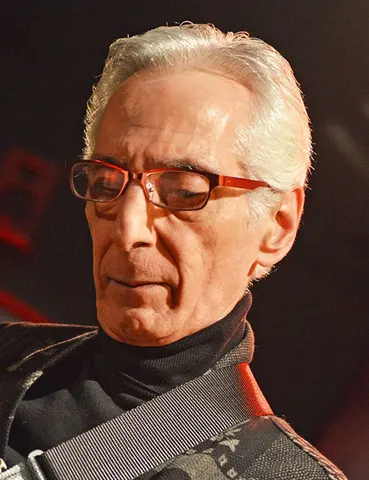
Two of her records are acts of advocacy. A New Promise (MCG Jazz, 2009) is a tribute to Emily Remler, the guitarist who died in 1990 at thirty-two, produced by Marty Ashby and scored by Mike Tomaro for the sixteen-piece Three Rivers Jazz Orchestra with Bailey as the solo voice; it takes in three Remler compositions and a Bailey title tune written in her memory. Bailey later wrote the liner notes for Remler's posthumous Cookin' at the Queens: Live in Las Vegas 1984 and 1988 (2024). Homage (PureMusic, 2023), her twelfth album as a leader, is a quartet record for Pat Martino, opening with "The Velvet Hammer," written for him, and it followed her appearance on the Alternative Guitar Summit's Honoring Pat Martino, Volume 1 (HighNote, 2022), where she and Ed Cherry share "Willow." She has been on the Berklee faculty as a professor of guitar since 2000, moved from New York to Boston in 2020 to become Assistant Chair of the college's Guitar Department, and taught at the Collective School of Music in New York from 2005 to 2019. Her Mel Bay book Moveable Shapes: Concepts for Re-Harmonizing II-V-I's appeared in 2009, and her Bebop Dojo curriculum is published through TrueFire.
Bailey is a bebop player who arrived at bebop through heavy metal, and both halves of that are audible. The technique is rock-bred, fast and even and unbothered by tempo, which is what people mean when they quote Lee Metcalf on her going from zero to blazing in two beats; the content underneath is Charlie Parker, worked out on the electric guitar with the phrasing intact rather than translated into guitar idiom. She has said that in Baltimore in the early 1990s other players kept asking what she was doing over fusion vamps with distortion and a wah pedal, and that the answer was simply the Omnibook. Her early models were the Berklee generation of Mike Stern, John Abercrombie and John Scofield; New York sent her backwards, to Grant Green, Wes Montgomery, Tal Farlow and Pat Martino, and it is Martino's long unbroken eighth-note line and Green's groove that the Sheryl Bailey 3 is built on. As a writer she names Horace Silver for his blues sense and comping, Thelonious Monk for the tunes, and the middle and late 1960s Blue Note records of Hank Mobley and Kenny Dorham for their feeling, with early Chick Corea close behind. Adam Levy in Guitar Player credited her with one of the most compelling tones of her generation, DownBeat's Phillip Booth called her one of the new greats of the instrument, and Berklee's own record lists her as a DownBeat Critics Poll Rising Star in each year from 2014 through 2019.
- A Meeting of Minds (2013, Cellar Live) - Twelve Bailey originals for the Sheryl Bailey 3 with Ron Oswanski on Hammond B-3 and Ian Froman on drums, the fullest studio statement of the organ trio she has led since 2001. Spotify - A Meeting of Minds Listen
- A New Promise (2009, MCG Jazz) - Her Emily Remler tribute, with Bailey as solo guitar in front of the sixteen-piece Three Rivers Jazz Orchestra in Mike Tomaro's arrangements, produced by Marty Ashby. Spotify - A New Promise Listen
- Bull's Eye (2003, Pure Music) - The Gary Versace and Ian Froman trio at its hardest-swinging, nine originals including "Elvin People" and "Swamp Thang" that became fixtures of the 55 Bar book. Spotify - Bull's Eye Listen
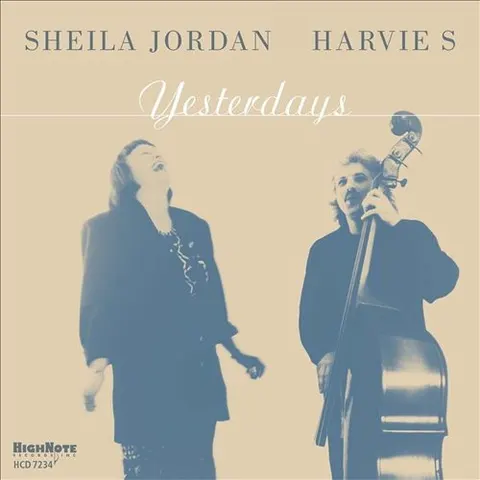
- Plucky Strum (2015, Whaling City Sound) - The acoustic duo with Harvie S, ten pieces for nylon-strung guitar and bass alone, including a Charlie Haden dedication. Spotify - Plucky Strum Listen
- For All Those Living (2010, Pure Music) - Her first quartet date as a leader, all eight compositions her own, with Jim Ridl, Gary Wang and Shingo Okudaira. Spotify - For All Those Living Listen
- Triple Helix (2019, Anzic) - As a sideman: the Anat Cohen Tentet's Grammy-nominated recording of Oded Lev-Ari's three-movement concerto, with Bailey in the guitar chair. Spotify - Triple Helix
- Checkpoint (2014, Label Bleu) - As a sideman: David Krakauer's Ancestral Groove at full strength, with Bailey's electric guitar as the band's rock voice alongside guest turns from Marc Ribot and John Medeski. Spotify - Ancestral Groove: Checkpoint
- Beantown Ballads (2024, AMM) - A co-billed date with Jerry Bergonzi cut in Westwood, Massachusetts, twelve Bergonzi compositions with Phil Grenadier on trumpet. Spotify - Beantown Ballads Listen
Sheryl Bailey: Full Discography
Identity confirmed against the live Discogs API: artist ID 965251 ("Sheryl Bailey," American guitarist, linked to sherylbailey.com), together with the four band entities Discogs files separately, The Sheryl Bailey 3 (7226068), The Sheryl Bailey 4 (10286656), The Sheryl Bailey Quartet (18191172) and Jerry Bergonzi & Sheryl Bailey (15300381). Her leader catalogue is split across those five entries, so the personal artist page alone shows only six of the titles below. The leader table is complete as far as it could be established; the sideman table is a selected set of her most significant credits rather than a full listing. The Buy column is a placeholder throughout.
As Leader / Co-Leader
| Album Title | Recording Date(s) | Release Date | Label | Catalog Number | Format(s) | Personnel | Role | Reissue History | Spotify | Buy | Notes |
|---|---|---|---|---|---|---|---|---|---|---|---|
| Little Misunderstood | Recorded in the Baltimore area, early 1990s; exact dates not documented | 1995 | Not listed on the Discogs release; the artist's own site credits PureMusic Records and Wikipedia credits Oasis Productions Limited | 6990 | CD, Album, Stereo | Sheryl Bailey (electric and acoustic guitar, guitar synthesizer), George Colligan (keyboards), Vince Loving (electric bass), Dave Ephross (acoustic bass), Glenn Cashman (tenor saxophone), Chris Battistone (trumpet), Rob White (percussion), Adrian Green (drums), Jon Seligman (drums, tracks 4, 7 and 11), Lenny Robinson (drums, tracks 3 and 5) | Leader | None found | — | — | Her debut, eleven tracks including "Nardis" and "Caravan". The year is contested: Discogs and Wikipedia give 1995, her own site gives 1993, and W. Royal Stokes records her handing him a copy at a Washington gig in 1994 |
| Reunion of Souls | Not documented | 2001 (Spotify: November 20, 2001; her own site gives 2000) | PureMusic Records | Not established | CD, Album | Sheryl Bailey (guitar), Chris Bergson (guitar), Ashley Turner (bass), Sunny Jain (drums) | Leader | None found | Spotify - Reunion of souls | — | A two-guitar date with her New York neighbour and frequent duo partner Ashley Turner on bass. Absent from Discogs altogether; personnel taken from her own site and Spotify |
| The Power of 3 | Recorded February 15 at Manfred Knoop Studios; the release does not state the year, which the 2002 issue date makes 2002 | 2002 | Pure Music Records | PMR21492 | CD, Album | Sheryl Bailey (guitar, all compositions, producer), Gary Versace (Hammond B-3 organ), Ian Froman (drums) | Leader (The Sheryl Bailey 3) | None found | Spotify - The Power of Three! | — | The organ trio's first record; eight Bailey originals. The spine and the Spotify listing both carry the exclamation point, the front cover does not |
| Bull's Eye | Not specified in Discogs data | 2003 (Discogs); 2004 on her own site; Spotify dates its issue May 24, 2005 | Pure Music Records | PMR21403 | CD, Album | Sheryl Bailey (guitar, all compositions), Gary Versace (Hammond B-3 organ), Ian Froman (drums) | Leader (The Sheryl Bailey 3) | None found | Spotify - Bull's Eye | — | Nine originals including "Elvin People" and "Swamp Thang". The Discogs release carries no credit block at all; personnel taken from her own site and the label announcement |
| Live @ The Fat Cat | Recorded live November 18-19, 2005, Fat Cat: Jazz and Billiards, 75 Christopher Street, NYC | 2006 | Pure Music Records | 21404 | CD, Album | Sheryl Bailey (guitar), Gary Versace (Hammond B-3 organ), Ian Froman (drums) | Leader (The Sheryl Bailey 3) | None found | — | — | Nine pieces, revisiting "Starbrite" from The Power of 3 and "Elvin People" and "Swamp Thang" from Bull's Eye. Not found on Spotify |
| The Sheryl Bailey 3: Live in NYC | Filmed live in New York City; date not documented on the release | 2008 | Mel Bay Publications, Inc. | MB21873CDVD | DVD-Video (NTSC) plus bonus CD of the full performance | Sheryl Bailey (electric guitar), Brian Charette (Hammond B-3 organ), Ian Froman (drums) | Leader (The Sheryl Bailey 3) | None found | — | — | Fifty-nine minutes, eight tunes including "Dark Eyes," "Heavy Bag Blues" and "Portrait of Emily," with an interview as a special feature. Her only concert film. Not found on Spotify |
| A New Promise | Not specified in Discogs data | 2009 (Discogs); the record was worked in 2010 and her own site and Spotify date it 2010 | MCG Jazz (Manchester Craftsmen's Guild) | MCGJ1028 | CD, Album | Sheryl Bailey (solo guitar) with the sixteen-piece Three Rivers Jazz Orchestra; arrangements by Mike Tomaro; produced by Marty Ashby | Leader | None found | Spotify - A New Promise | — | A tribute to Emily Remler, including three Remler compositions and Bailey's title tune written in her memory. The Discogs release carries no credit block; the orchestra, arranger and producer are documented by MCG Jazz and by W. Royal Stokes's 2010 interview |
| For All Those Living | Not specified in Discogs data | 2010 (Discogs); Spotify dates its issue May 1, 2011 | Pure Music Records | PM5111 | CD, Album | Sheryl Bailey (guitar, all compositions), Jim Ridl (piano), Gary Wang (bass), Shingo Okudaira (drums) | Leader (The Sheryl Bailey 4) | None found | Spotify - For All Those Living | — | Her first quartet date as a leader, eight originals. Twenty percent of sales were given to the Ronald McDonald House of New York |
| A Meeting of Minds | Not specified in Discogs data | 2013 (Discogs); Spotify dates its issue February 27, 2014 | Cellar Live Records | CL070113 | CD, Album | Sheryl Bailey (guitar), Ron Oswanski (Hammond B-3 organ), Ian Froman (drums) | Leader (The Sheryl Bailey 3) | None found | Spotify - A Meeting of Minds | — | Twelve pieces, the trio's longest program, with the organ chair passed to Oswanski. The catalogue number encodes a July 1, 2013 session date, which the release does not otherwise state |
| Plucky Strum | Not specified in Discogs data | 2015 (Spotify: April 7, 2015) | Whaling City Sound | WCS 072 | CD, Album | Harvie S (acoustic bass), Sheryl Bailey (acoustic guitar) | Co-leader (duo) | None found | Spotify - Plucky Strum | — | Ten pieces for guitar and bass alone, including "Charlie Haden" and "Broken Glass," the latter also on A Meeting of Minds |
| Plucky Strum: Departure | Not specified in Discogs data | 2017 (Spotify: June 23, 2017) | Whaling City Sound | WCS 095 | CD, Album | Sheryl Bailey (acoustic guitar), Harvie S (acoustic bass) | Co-leader (duo) | None found | Spotify - Departure | — | Eleven pieces, with Stephen Stills's "Suite: Judy Blue Eyes" and Joni Mitchell's "The Hissing of Summer Lawns" set beside originals. The Discogs release carries no credit block |
| Homage | Not documented | 2023 | PureMusic Records; the vinyl pressing is self-released by the quartet | 843563153550 (LP barcode) | LP, Album; also digital | Sheryl Bailey (guitar), Miki Hayama (keyboards), Harvie S (bass), Neal Smith (drums) | Leader (The Sheryl Bailey Quartet / SBQ) | None found | — | — | Eight originals for Pat Martino, opening with "The Velvet Hammer," written for him, with Hayama on Fender Rhodes throughout. Described by All About Jazz as her twelfth album as a leader. The single "Walk Up" is on Spotify; the album is not |
| Beantown Ballads | Recorded 2023 in Westwood, Massachusetts, engineered by Peter Kontrimas | November 1, 2024 | AMM | 90 | 12 x File, FLAC, Album | Jerry Bergonzi (tenor saxophone), Sheryl Bailey (electric guitar), Phil Grenadier (trumpet, flugelhorn), Johnny Åman (acoustic bass), Anders Mogensen (drums) | Co-leader (billed Jerry Bergonzi & Sheryl Bailey) | None found | Spotify - Beantown Ballads | — | Twelve Bergonzi compositions. Released by the Danish label AMM as a digital-only album |
As Sideman (selected major credits)
| Year | Project (Leader) | Title | Label | Catalog | Role | Notes |
|---|---|---|---|---|---|---|
| 1996 | Dan Gottshall, featuring Gary Thomas and Dennis Chambers | The Golem Shuffle | Timbre Records | Guitar | From her Baltimore period, in the orbit of the Gary Thomas bands she toured with in the early 1990s | |
| 2003 | Richard Bona | Munia: The Tale | Universal / EmArcy (Japan) | UCCV-1051 | Guitar, track 12 only | She plays the live "Liberty City," recorded at the Jazz Standard, NYC on August 24, 2002. That track is a Japanese-edition bonus: the US Verve pressing (B0001064-2) has eleven tracks and no Bailey credit |
| 2003 | David Krakauer's Klezmer Madness! with Socalled | Live in Krakow | Label Bleu | LBLC 6667 | Electric guitar | Recorded over five nights of three sets each in Krakow. The closing bonus track is titled "Sheryl Pounds The Table" |
| 2005 | David Krakauer and Socalled with Klezmer Madness! | Bubbemeises: Lies My Gramma Told Me | Label Bleu | LBLC 6677 | Electric guitar (album-wide) | Recorded November 4-9 at Studio Gil Evans, Amiens, and mixed in Paris in February 2005; the release states the days but not the year |
| 2005 | Deborah Weisz Trio | Trio | Va Wah | Guitar | Also on the trombonist's quintet record Grace (For Will) the same year | |
| 2009 | Abraham Inc. (David Krakauer, Fred Wesley, Socalled) | Tweet Tweet | Label Bleu / Table Pounding | LBLC 6711 | Lead guitar, tracks 1 to 3 and 5 to 9 | Recorded at Avatar Studios, NYC, January 14-17, 2008. Allen Watsky takes the lead on track 4 and plays rhythm guitar throughout |
| 2009 | Shingo Okudaira, featuring Toshiyuki Honda | The Force: Live at Shinjuku Pit Inn | Pit Inn | Guitar | Recorded in Tokyo with the drummer who would join her own quartet a year later | |
| 2010 | Johnny Mandel, Sherrie Maricle and the DIVA Jazz Orchestra with Ann Hampton Callaway | The Man and His Music | Arbors Records | ARCD 19419 | Guitar (one of two, with Dida Pelled) | Recorded live at Dizzy's Club Coca-Cola, Jazz at Lincoln Center, May 25-26, 2010; Sharel Cassity on lead alto, Mandel arranging and co-producing |
| 2012 | John Zorn and David Krakauer | Pruflas: The Book of Angels, Volume 18 | Tzadik | TZ 7396 | Guitar (album-wide) | Eight Zorn compositions arranged by Krakauer, recorded and mixed at Eastside Sound, NYC |
| 2014 | David Krakauer's Ancestral Groove | Checkpoint | Label Bleu | LBLC1715 | Electric guitar (album-wide) | Basic tracks recorded at Flux Studios, NYC, September 11-12, 2013, with Marc Ribot and John Medeski as guests on one track each |
| 2014 | David Krakauer | Hear the Big Picture | Label Bleu | Guitar | ||
| 2017 | Anat Cohen Tentet | Happy Song | Anzic Records | ANZ-0058 | Guitar (album-wide) | Recorded at Avatar Studios, NYC, August 2016; released October 6, 2017. Ten-piece band under Oded Lev-Ari as music director, with Anat Cohen on clarinet, Tal Mashiach on bass, Vitor Gonçalves on piano and accordion, Rubin Kodheli on cello, Owen Broder on baritone saxophone and bass clarinet, Nick Finzer on trombone, Nadje Noordhuis on trumpet and flugelhorn, James Shipp on vibraphone and percussion, Anthony Pinciotti on drums |
| 2019 | Abraham Inc. | Together We Stand | Label Bleu | LBLC6729 | Guitar (album-wide) | Thirteen tracks, again with Fred Wesley and Socalled; Allen Watsky the second guitarist |
| 2019 | Anat Cohen Tentet | Triple Helix | Anzic Records | ANZ-0065 | Guitar (album-wide) | Recorded by Brian Montgomery at Sear Sound, NYC in January 2019, mastered at Battery Mastering in April, released June 14, 2019. Christopher Hoffman takes the cello chair in place of Kodheli. Nominated for the Grammy for Best Large Jazz Ensemble Album |
| 2022 | Bob Nieske 6 | 8 Pieces for Sextet | Francesca Records | 1003 | Electric guitar | Recorded October 20 and November 17, 2021 at PBS Recording, Westwood, MA, with Jerry Bergonzi, Phil Grenadier and Joel Yennior |
| 2022 | Alternative Guitar Summit (Joel Harrison, producer) | Honoring Pat Martino, Volume 1 | HighNote Records | HCD 7333 | Guitar, track 4 only | She and Ed Cherry play "Willow," with Dezron Douglas on bass; recorded in 2021 at Figure 8 Recording, Brooklyn. Martino heard the sessions by video stream before his death on November 1, 2021 |
| 2023 | Jerry Bergonzi | Extra Extra | Savant | SCD 2212 | Guitar (album-wide) | Recorded at RVS Studio, January 23-24, 2023; produced, recorded and played by Harvie S, with Phil Grenadier and Luther Gray |
| 2024 | Emily Remler | Cookin' at the Queens: Live in Las Vegas 1984 and 1988 | Resonance Records | HLP-9076 | Liner notes (not a playing credit) | A posthumous double release drawn from May 28, 1984 and September 19, 1988; first pressing limited to 2,300 |
| 2026 | Alternative Guitar Summit | Honoring Pat Martino, Volume 2 | HighNote Records | Guitar, track 4 only | She and Ed Cherry again, on "Blues for Mickey O," with Dezron Douglas and Allan Mednard |
Her Discogs credit list also takes in K.J. Denhert's Girl Like Me (2003), Richard Bona's African Tale concert DVD (2005), Paul Engle's Ladybug Sandals (2006), Marsha Heydt's One Night (2007), Sherri Roberts's Anybody's Spring (2017), Gary Portnoy's Pushing Sixty (2017), the Deborah Weisz Quintet's Grace (For Will) (2005) and several compilation appearances, along with a 1992 track on the Simple Machines various-artists box Neapolitan Metropolitan that predates her jazz recording career. Discogs holds no entry for the co-billed Taurus Power with Mary Ann McSweeney, Jerry Bergonzi, Mike Fahn and Austin McMahon, which her SmallsLIVE page lists among her recent releases.
- Ian Froman - the drummer of the Sheryl Bailey 3 from its founding, on The Power of 3 (2002), Bull's Eye (2003), Live @ The Fat Cat (2006), Live in NYC (2008) and A Meeting of Minds (2013), the longest-running partnership in her catalogue.
- Gary Versace - Hammond B-3 in the trio's first incarnation, on the three Pure Music records of 2002 to 2006.
- Brian Charette - organ on the Mel Bay concert film and disc Live in NYC (2008).
- Ron Oswanski - organ from A Meeting of Minds (2013) onward, and in the trio's touring lineup since.
- Harvie S - her acoustic duo partner in Plucky Strum, on Plucky Strum (2015) and Departure (2017), the bassist of the current SBQ quartet and of Homage (2023), and the producer and bassist of Jerry Bergonzi's Extra Extra (2023).
- David Krakauer - two decades in the guitar chair of Klezmer Madness and Ancestral Groove, from Live in Krakow (2003) through Bubbemeises (2005), Pruflas (2012) and Checkpoint (2014), and in his funk-klezmer band Abraham Inc. with Fred Wesley and Socalled.
- Anat Cohen - guitarist of the Anat Cohen Tentet since its first record, on Happy Song (2017) and Triple Helix (2019), alongside Oded Lev-Ari as musical director, Tal Mashiach on bass and Vitor Gonçalves on piano and accordion.
- Jerry Bergonzi - the Boston tenor circle she joined after moving north, on Extra Extra (Savant, 2023), the co-billed Beantown Ballads (2024) and Bob Nieske's 8 Pieces for Sextet (2022).
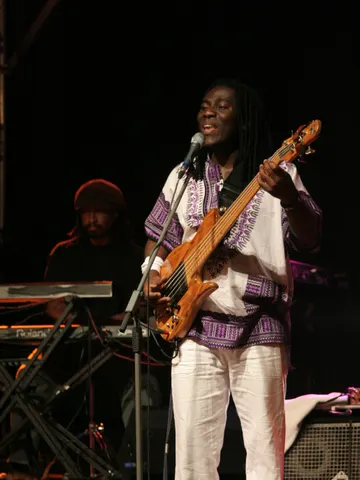
- Richard Bona - years in his touring band, and the guitar on the live "Liberty City" that closes the Japanese edition of Munia: The Tale.
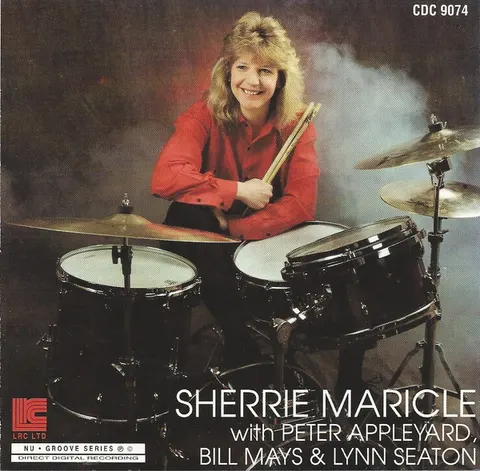
- Sherrie Maricle - one of the two guitarists in the DIVA Jazz Orchestra for the Johnny Mandel program The Man and His Music, recorded at Dizzy's Club in May 2010.
- Jim Ridl - pianist of the Sheryl Bailey 4 on For All Those Living (2010) and a returning guest in the current quartet.
- George Colligan - her Baltimore contemporary, on keyboards on Little Misunderstood (1995).
- Gary Thomas - the saxophonist whose band she toured Japan and the East Coast with in the early 1990s, and on whose orbit her first records were built.
- Neal Smith and Miki Hayama - the drummer and keyboardist of the SBQ quartet on Homage (2023).
- Joel Harrison - the Alternative Guitar Summit's organiser, who put her and Ed Cherry together on "Willow" for Honoring Pat Martino, Volume 1 (2022) and again on "Blues for Mickey O" for Volume 2.
- Wikipedia: Sheryl Bailey
- Discogs: Sheryl Bailey (artist 965251)
- Berklee College of Music faculty page: Sheryl Bailey, Assistant Chair, Guitar
- All About Jazz: Sheryl Bailey musician page
- Jazzhouse Diaries: W. Royal Stokes interviews guitarist Sheryl Bailey (April 2010, from a February 26, 2005 taping)
- Hancock Institute of Jazz: 1995 Thelonious Monk International Jazz Guitar and Bass Competitions
- SmallsLIVE: Sheryl Bailey artist page and performance archive
- Anzic Records / Bandcamp: Anat Cohen Tentet, Triple Helix (credits and recording data)
- Sheryl Bailey official site: About, Bands and Music pages
- All About Jazz: Jim Josselyn review of Homage (May 15, 2023)
- All About Jazz: David Bixler, "Sheryl Bailey: Shifting Gears," Liner Notes podcast (January 27, 2021)