 JAZZPROFILES lives in the music 2,303 Jazz Artists fully Profiled!
Andrzej Zaucha
Last updated November 2, 2026
Listen on Spotify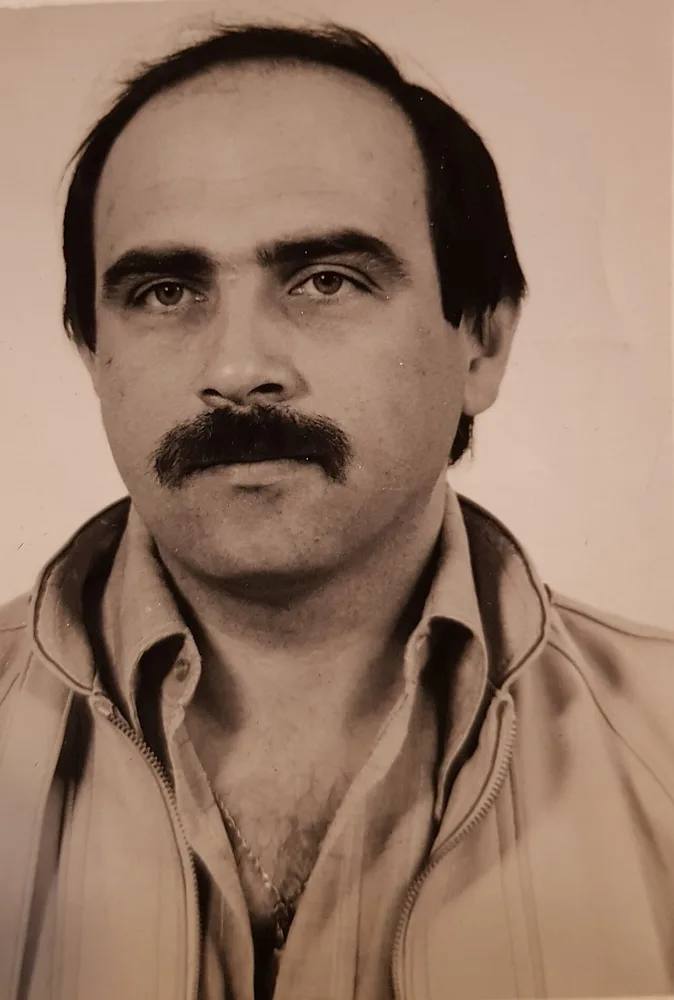
Andrzej Zaucha, c. 1990 CC BY-SA 4.0 — Wikimedia Commons, https://commons.wikimedia.org/wiki/File:Andrzej_Zaucha_%281949-1991%29.jpg (photograph by Małgorzata i Tomasz Bogdanowiczowie)

Andrzej Rudolf Zaucha was born on January 12, 1949 in Kraków and grew up in the city's Pychowice district. His father, Roman, drummed and sang in bands that played at parties and dances, and at eight Andrzej made his first public appearance by sitting in for him on the drums. He never studied music and never took a singing lesson. As a teenager he was a serious canoeist, winning junior national titles in the singles and fours in 1964 and being considered for the Polish squad for the Tokyo Olympics that year, before he dropped sport to play drums in a Kraków band called Czarty. He left secondary school in his final year and trained as a typesetter.
He sang for the first time in student clubs in 1966; enthralled by the records of Ray Charles, he changed the way he used his voice. In early 1969 the bassist Marian Pawlik and the drummer Benedykt Radecki, who had heard him perform at the Polfa club, took him on as lead singer of their jazz-rock group Dżamble, which was linked to the city's Helikon jazz club. That year Dżamble won a special award at the Jazz nad Odrą festival in Wrocław, with an individual prize for Zaucha, and he won first prize at the Student Song Festival in Kraków; the band was named discovery of the year for 1969 in a poll run by the monthly Jazz. In 1970 the group appeared at the Lublin meetings of jazz vocalists, spent a week at Zofia Komeda's Casino Jazz at Night in Sopot, and played the twelfth Jazz Jamboree in Warsaw and the Zaduszki Jazzowe in Kraków.
The band's one album, Wołanie o słońce nad światem (Polskie Nagrania Muza), was recorded in February 1971 with leading Polish jazz players as guests: Tomasz Stańko on trumpet, Janusz Muniak on flute and saxophones, Zbigniew Seifert on saxophone, and Michał Urbaniak on saxophones and electric violin. Zaucha wrote part of the music, including "Naga rzeka," the first song he composed. When Dżamble broke up in May 1972 he joined Anawa, the Kraków group led by the pianist Jan Kanty Pawluśkiewicz, which mixed poetry with avant-garde and jazz-rock arrangements and took part in the cultural programme around the 1972 Munich Olympics. The group's only record with him, Anawa, appeared in 1973.
Soon after it he left Anawa to concentrate on playing, and the following years were his most jazz-oriented. He sang and played with the Kraków traditional-jazz band Old Metropolitan Band, touring Poland and giving a series of concerts in Hanover before leaving it in 1984, and Polish Wikipedia lists the traditional-jazz groups Beale Street Band and Playing Family among his collaborators as well. Between 1973 and 1979 he worked in clubs and pubs in West Germany, Austria, Switzerland and the Netherlands, and from 1976 he played tenor saxophone. At the end of 1978 he revived Dżamble, which cut singles for Tonpress in 1979, recorded material by other artists including Maanam and Maryla Rodowicz, and stopped working in 1981.
His solo career began in 1980 with the song-play Pozłacany warkocz by Katarzyna Gärtner, a single on Tonpress, and blues recordings with the band Kasa Chorych. The first solo album, Wszystkie stworzenia duże i małe (Polskie Nagrania Muza, 1983), carried a popular title duet with Ewa Bem and had the jazz saxophonist Henryk Miśkiewicz among its players. He sang at the National Festival of Polish Song in Opole in 1985 and returned most years afterwards, released Stare, nowe, najnowsze (Wifon, 1987), built mostly from Polish Radio recordings of 1980 to 1986, with "Bądź moim natchnieniem" and "C'est la vie (Paryż z pocztówki)," and won a distinction at Opole in 1988 for "Byłaś serca biciem," one of his biggest hits. He also sang the title music for the television series Przybysze z Matplanety and, in 1990, the theme of the Polish version of Gummi Bears, and played small parts in the films Misja specjalna (1987) and Trzy dni bez wyroku (1991).
The jazz side of the 1980s peaked in 1989, the year he marked twenty years as a vocalist. His album Andrzej Zaucha (Polskie Nagrania Muza, SX 2565) was recorded with the big band of the jazz arranger and bandleader Wiesław Pieregorólka, who had also composed "C'est la vie (Paryż z pocztówki)" for the 1987 record, and its songs have English lyrics. At Opole that year he received a distinction for "O cudzie w tancbudzie" and the city of Opole's prize for achievement in song performance. His wife, Elżbieta Witkowska, whom he had known since 1966, passed away on August 31, 1989, at 39. In the early 1990s he toured Poland in a cabaret and music programme with Andrzej Sikorowski and Krzysztof Piasecki, and in 1990 and 1991 he played the title role in the musical Pan Twardowski at Teatr STU in Kraków, directed by Krzysztof Jasiński.
On October 10, 1991, after a performance of Pan Twardowski, he and the actress Zuzanna Leśniak walked to a car parked on ulica Włóczków. Her husband, the French director Yves Goulais, opened fire; Zaucha was killed on the spot, and Leśniak died in hospital afterwards. Goulais was convicted and sentenced to fifteen years in prison. Zaucha was 42. He was buried on October 16 beside his wife in Kraków's Batowice Cemetery, with several thousand mourners present. The album Ostatnia płyta followed in 1992, with music by Jerzy Dobrzyński and words by Zbigniew Książek, and since 2009 an annual festival, Serca Bicie, has been dedicated to his memory. A star for him was unveiled on the Opole Walk of Fame on June 14, 2015, and his songs are still sampled, with "Byłaś serca biciem" reworked by the rapper Taco Hemingway in 2025.
Zaucha was a Polish rhythm and blues and pop-jazz singer, and most of his catalogue is exactly that: songs in Polish for the pop, festival and television audience, together with film and cartoon themes, a cabaret programme and a leading role in a stage musical. Jazz was where he learned the trade rather than where he stayed. The traditional-jazz bands, the jazz club where Dżamble was based, his drumming and later his tenor saxophone were his schooling, and his first album was recorded with leading Polish jazz soloists as guests. His vocal style came from rhythm and blues: enthralled by the music of Ray Charles, he changed the way he sang in the mid-1960s.
His jazz-related recordings are few and mostly early: the Dżamble album of 1971, the Anawa album of 1973 and the 1989 big-band record with Wiesław Pieregorólka. The rest is Polish pop and rhythm and blues, and the Jazz Pop and Jazz Rock tags describe those parts of his career rather than a body of straight-ahead jazz. In Poland he is remembered above all for his songs, for the festival and Opole star dedicated to him, and for the way his career ended; his recordings have since been sampled by Polish rappers including Taco Hemingway and PRO8L3M, and Kuba Badach recorded a tribute album of his songs in 2009.
- Wołanie o słońce nad światem (1971, Polskie Nagrania Muza) - The Dżamble debut, a jazz-rock and rhythm and blues album with guest solos from Tomasz Stańko, Michał Urbaniak, Janusz Muniak and Zbigniew Seifert, and the first Zaucha composition on record.
- Anawa (1973, Polskie Nagrania Muza) - His one album with Jan Kanty Pawluśkiewicz's Anawa, a concept record on human nature that sets poems by Leszek Aleksander Moczulski and Ryszard Krynicki to a sung-poetry, progressive and jazz-rock backing.
- Wszystkie stworzenia duże i małe (1983, Polskie Nagrania Muza) - The solo debut, including the title duet with Ewa Bem, with guest playing from the jazz saxophonist Henryk Miśkiewicz and the pianist Wojciech Karolak. Spotify - Wszystkie stworzenia duże i małe (feat. Ewa Bem) Listen
- Stare, nowe, najnowsze (1987, Wifon) - The pop album with "Bądź moim natchnieniem" and "C'est la vie (Paryż z pocztówki)," the latter composed by the jazz arranger Wiesław Pieregorólka. Spotify - Bądź moim natchnieniem Listen
- Andrzej Zaucha (1989, Polskie Nagrania Muza) - English-language songs with the big band of Wiesław Pieregorólka, the most openly jazz-oriented record of his solo career.
- "Byłaś serca biciem" (1988) - One of his biggest hits, honoured at the 1988 Opole festival and a fixture of his later compilations. Spotify - Byłaś serca biciem Listen
- Ostatnia płyta (1992, Selles Records) - The posthumous album of songs by Jerzy Dobrzyński and Zbigniew Książek, recorded before his death.
Andrzej Zaucha: Full Discography
Discogs artist: Andrzej Zaucha (834365) · Real name Andrzej Rudolf Zaucha · Born January 12, 1949, Kraków · Died October 10, 1991, Kraków
Zaucha recorded mainly Polish pop, rhythm and blues, film and children's television songs. The jazz-related records are the Dżamble and Anawa albums of 1971 and 1973 and the 1989 big-band album with Wiesław Pieregorólka, and they are marked in the notes below. His Discogs releases are filed under three ids: his own, Dżamble (1236629) and Anawa (347194).
Solo Albums
| Album | Year | Label | Personnel & Notes | Listen | Buy |
|---|---|---|---|---|---|
| Wszystkie stworzenia duże i małe | 1983 | Polskie Nagrania Muza (SX 2119) | His solo debut and a concept album with an animal theme, with music and arrangements by Tadeusz Klimonda, lyrics by Wojciech Jagielski and backing from Grupa Doktora Q. Players include the jazz saxophonist Henryk Miśkiewicz (alto saxophone, three tracks), Wojciech Karolak (electric piano, one track) and Józef Skrzek (keyboards). The title song is a duet with Ewa Bem | Spotify - title song (feat. Ewa Bem) | — |
| Stare, nowe, najnowsze | 1987 | Wifon (LP-114) | Second solo album, assembled mostly from Polish Radio recordings made between 1980 and 1986 plus two tracks recorded for Wifon in 1987. Contains "Bądź moim natchnieniem," "C'est la vie (Paryż z pocztówki)" (composed by Wiesław Pieregorólka), "Jak na lotni," "Baw się lalkami" and "Myśmy byli sobie pisani" | Spotify - Bądź moim natchnieniem | — |
| Andrzej Zaucha | 1989 | Polskie Nagrania Muza (SX 2565) | Jazz-related. Recorded with the big band of Wiesław Pieregorólka (leader, composer and recording supervisor); eight songs with English titles and lyrics by Jerzy Siemasz, including "Love Shining Through," "The Second Time Around" and "C'est la vie - Just a Pipe Dream" | — | — |
| Ostatnia płyta | 1992 | Selles Records | Posthumous album of songs with music by Jerzy Dobrzyński and words by Zbigniew Książek, recorded before his death | — | — |
Co-billed Album
| Album | Year | Label | Personnel & Notes | Listen | Buy |
|---|---|---|---|---|---|
| Kolędy w Teatrze STU | 1991 | Polskie Nagrania Muza (SX 3065 / SX 3066) | Double LP of carols with Halina Frąckowiak and Alicja Majewska, arranged and accompanied by Włodzimierz Korcz; Zaucha sings and reads. Reissued on CD in 1992 | — | — |
With Dżamble
Dżamble was a Kraków jazz-rock group (1966 to 1981) that Zaucha fronted from early 1969 until May 1972 and again from late 1978 until 1981.
| Album | Year | Label | Personnel & Notes | Listen | Buy |
|---|---|---|---|---|---|
| Wołanie o słońce nad światem | 1971 | Polskie Nagrania Muza (SXL 0704) | Jazz-related. The group's only album, recorded in February 1971 from material of 1969 and 1970. Zaucha (vocals), Jerzy Horwath (organ, piano), Marian Pawlik (bass, guitar), Jerzy Bezucha (drums). Guests: Michał Urbaniak (saxophones, electric violin, on tracks A1, A3 and B1 to B4), Janusz Muniak (flute, soprano and tenor saxophone, A4 to B4), Zbigniew Seifert (saxophone, B1, B2 and B4), Tomasz Stańko (trumpet, B1, B2 and B4), Jerzy Bartz and Józef Gawrych (percussion, A1, A5 and B4), Marek Ałaszewski and Marek Pawlak (vocals). Reissued on LP in 1987, on CD by Intersonus in 1993 (as Dżamble i Andrzej Zaucha, with three bonus tracks), by Universal in 2002 and by Polskie Nagrania in 2013 | — | — |
| Opuść moje sny (sound postcard) | 1970 | Ruch (R-0212) | Flexi-disc postcard single credited to Dżamble and Andrzej Zaucha | — | — |
| Szczęście nosi twoje imię / Lady Love | 1979 | Tonpress (S-294) | Single from the revived group. The same series includes Jak zmienić świat / Just the Way You Are (S-268) and Bezsenność we dwoje / Jeszcze w sercu radość (S-299) | — | — |
| Każdy marzy, każdy śni | 2017 | GAD Records (GAD CD 063) | Archive CD of 1979 radio recordings | — | — |
| W noc i w dzień: nagrania archiwalne z lat 1969-1972 | 2024 | Kameleon Records (KAMCD 127 / 128 / 129) | Three-CD archive collection of radio and television sessions from 1969 to 1972. Credits include Włodzimierz Nahorny (alto saxophone), Michał Urbaniak (saxophones), Janusz Muniak (flute, saxophone), Marek Bliziński (guitar) and the Polish Radio Jazz Studio orchestra on two tracks | — | — |
With Anawa
Anawa was the Kraków group led by the pianist and composer Jan Kanty Pawluśkiewicz. Zaucha sang with it from the summer of 1972.
| Album | Year | Label | Personnel & Notes | Listen | Buy |
|---|---|---|---|---|---|
| Anawa | 1973 | Polskie Nagrania Muza (SXL 1066) | Jazz-related. A concept album with poems by Leszek Aleksander Moczulski and Ryszard Krynicki, music and arrangements by Jan Kanty Pawluśkiewicz. Zaucha (vocals, percussion), Jan Kanty Pawluśkiewicz (piano), Anna Wójtowicz (cello), Zygmunt Kaczmarski (violin, guitar), Jan Gonciarczyk (double bass), Zbigniew Frankowski (guitar, vocals), Tadeusz Kożuch (viola, trumpet), Eugeniusz Makówka (percussion), Benedykt Radecki (percussion, guest). Eleven tracks, including "Abyś czuł" and "Nie przerywajcie zabawy" | — | — |
| Linoskoczek / Ta wiara | 1974 | Ruch / RSW Prasa-Książka-Ruch | Two sound-postcard singles credited to Anawa | — | — |
| Uwierz w nieznane: Radio Sessions & Live Recordings 1972-1973 | 2023 | Kameleon Records (KAMLP 34) | Limited-edition LP of archive recordings: radio sessions on side A (one track from 1972, three from 1973) and a 1973 television studio performance on side B. Zaucha (lead vocals, percussion) with the 1973 lineup | — | — |
Singles
| Single | Year | Label | Notes |
|---|---|---|---|
| "Wieczór nad rzeką zdarzeń" / "Dom złej dziewczyny" | 1980 | Tonpress (S-340) | His first solo single |
| "Spocznij Kapturku, zaraz cię zjem, czyli marzenia głodnego wilka" / "Wszystkie stworzenia duże i małe" | 1983 | Polskie Nagrania Muza (SS 810) | Taken from the 1983 album, with Grupa Doktora Q |
| "Łańcuszek szczęścia" / "Narodziny uczucia (W prowincjonalnej knajpie przy dźwiękach grającej szafy)" | 2025 | GAD Records (GAD SP 003) | Seven-inch single; side A is taken from the 2025 compilation Magia to ja, side B appears only here. Orchestra of Polish Radio and Television in Łódź |
Compilations and Archive Releases
| Year | Title | Label | Notes |
|---|---|---|---|
| 1991 | Andrzej Zaucha | Polskie Nagrania Muza (PNCD 187) | Fourteen-track CD compilation spanning the Dżamble and Anawa years and the solo hits, including "Byłaś serca biciem" and "Czarny Alibaba" |
| 1992 | Drzazgi | Kophaus (KCD-001) | Compilation of film music by Zaucha, seventeen tracks, three of them instrumental |
| 1999 | Czarny Alibaba | not found | Złota kolekcja series |
| 2004 | C'est la vie | Polskie Radio | Five-CD set |
| 2013 | Nieobecność / C'est la vie | Pomaton | Two-CD set |
| 2017 | To co zostało | Polskie Radio Katowice | Limited CD |
| 2023 | Dwa kroki w chmurach | not found | Compilation |
| 2024 | Winyloteka: Andrzej Zaucha | Warner Music Poland | LP compilation |
| 2025 | Magia to ja | not found | Compilation |
Guest and Sideman Appearances (selected)
Discogs lists 49 appearance credits and 97 track appearances, mostly on compilations. The table covers the ones that bear on his jazz and stage associations.
| Year | Project (Leader) | Title | Label | Role | Notes |
|---|---|---|---|---|---|
| 1987 | Krystyna Giżowska | Przeżyłam z tobą tyle lat | Polskie Nagrania Muza (SX 2532) | Featured vocalist on "Dwa odbicia w szkle" (A5) | Duet |
| 1988 | Okolicznościowo-Rozrywkowy Syndykat Wały Jagiellońskie | Wały Jagiellońskie 1978-1988 | Poljazz (PSJ 210) | Percussion (guest) | Compilation LP; some tracks were recorded at the Teatr STU studio in Kraków |
| 1989 | Alicja Majewska | For New Love | Polskie Nagrania Muza (SX 2750) | Duet vocalist on "Sunrise, Sunset" (B2) | Music and arrangements by Włodzimierz Korcz, English lyrics by Jerzy Siemasz, the lyricist of Zaucha's own 1989 album |
| 2013 | Jan Kanty Pawluśkiewicz | Antologia Vol. 1: Andrzej Zaucha | Polskie Radio (PRCD 1671) | Lead vocals (Anawa) | CD with the complete 1973 Anawa album plus Polish Radio archive recordings of 1972 and 1973 |
| not dated | Ryszard Rynkowski, Stanisław Sojka, Zbigniew Wodecki and Andrzej Zaucha | Musical Pan Twardowski | Polonia Records (C014) | Billed artist | Cassette of the stage musical; track credits not itemized |
- Dżamble - the Kraków jazz-rock group he fronted from early 1969 to 1972 and again from late 1978 to 1981; members included Marian Pawlik (bass), Jerzy Horwath (organ and piano), Benedykt Radecki and later Jerzy Bezucha (drums).
- Tomasz Stańko, Michał Urbaniak, Janusz Muniak, Zbigniew Seifert - the jazz soloists who worked with Dżamble and played on Wołanie o słońce nad światem (1971); Polish Wikipedia names all four as collaborators of the band.
- Jan Kanty Pawluśkiewicz and Anawa - the Kraków group he sang with from 1972 on the album Anawa (1973).
- Old Metropolitan Band - the Kraków traditional-jazz band (founded 1968) he sang and played with until 1984.
- Beale Street Band and Playing Family - traditional-jazz groups with which Polish Wikipedia lists him as a collaborator; the dates are not documented.
- Wiesław Pieregorólka - the jazz bandleader and arranger whose big band accompanied him on Andrzej Zaucha (1989) and who composed "C'est la vie (Paryż z pocztówki)."
- Jan "Ptaszyn" Wróblewski and Jarosław Śmietana - Polish Wikipedia lists both among the jazz musicians he worked with; no specific recording is documented.
- Henryk Miśkiewicz and Wojciech Karolak - Polish jazz musicians on Wszystkie stworzenia duże i małe (1983), Miśkiewicz on alto saxophone on three tracks and Karolak on electric piano on one.
- Ewa Bem - duet partner on "Wszystkie stworzenia duże i małe" (1983).
- Andrzej Sikorowski and Krzysztof Piasecki - partners in the early-1990s cabaret and music programme Sami.
- Alicja Majewska and Halina Frąckowiak - fellow singers on the 1991 carol album Kolędy w Teatrze STU.
More Jazz Pop Artists
See all 80 Jazz Pop artists →More Polish Jazz Artists
See all 4 Polish artists →- Spotify artist page
- Discogs
- MusicBrainz
- Polish Wikipedia
- His profile on jazzprofiles.com
- r/CrossoverJazz
- Wikipedia: Andrzej Zaucha (singer)
- Polish Wikipedia: Andrzej Zaucha
- Polish Wikipedia: Dżamble
- Polish Wikipedia: Anawa (zespół muzyczny)
- Polish Wikipedia: Old Metropolitan Band
- Polish Wikipedia: Wiesław Pieregorólka
- Discogs: Andrzej Zaucha
- Discogs: Dżamble
- MusicBrainz: Andrzej Zaucha
- Wikidata: Andrzej Zaucha
- Rzeczpospolita: famous circumstantial trials
- Radio Kraków: 30 years since the death of Andrzej Zaucha